Fall rose care, the way I practice it, comes down to one simple theme: Stop doing that! In a climate with a true winter, I stop deadheading, stop fertilizing six to eight weeks before the first frost, stop worrying about a bit of disease, and leave my plants standing. The one job I don't stop is keeping up with the mulch.
In my introductory article, The Complete Guide to Natural Rose Care, one of the overarching principles is to work with nature, not against it. Nature has been "gardening" a lot longer than we have, and part of our job is to recognize and work with the rhythms it has developed over time. Sometimes, that means getting out of the way.
The first part of this blog is for those who, like me, live in a climate with a true winter or, in other words, a natural dormant season. This is when plants lose their leaves and go to "sleep" for the winter. For those of you without a true winter, stay tuned. We'll cover that, too!
Why Fall Rose Care Means Working With Nature's Rhythms
There are two parts to fall care: enjoying the magnificent fall bloom and setting your roses up for winter. Sounds great, but these two goals are often in conflict. The first is about keeping the roses going. The second is about putting them to bed. This is where nature's rhythms come in.

Why Roses Flower Better in the Fall
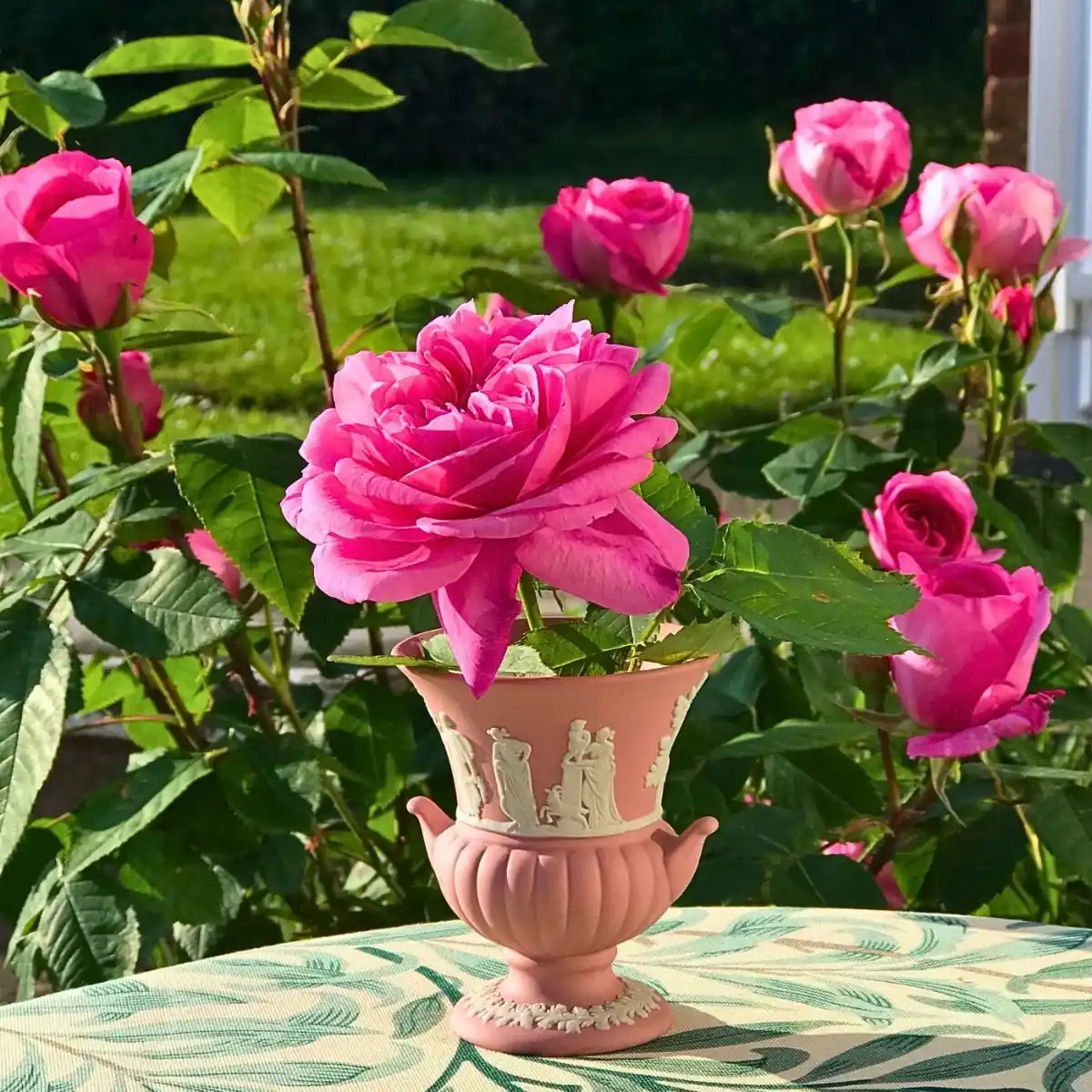
Fall in climates with a true winter is often the second-best bloom season after spring. Summers can be hot, producing smaller flowers that don't last as long. As the nights, and then the days, turn cooler, the flowers get larger and stay on the plant longer.
Simply put, summer heat forces roses to open faster, which means they don't develop as fully. Cooler temperatures mean they open more slowly, allowing them to grow larger and keeping them from fading and falling off as quickly.
So enjoy that!
Five Fall Rose Care Jobs in a Climate With a True Winter
Should You Deadhead Roses in the Fall?
A natural instinct in the fall is to keep deadheading our roses to encourage more flowering. This works because plants reproduce through flowers. The flowers fade, seeds or hips (seed pods) form, and the plant has done its job. There is no longer a need to produce more flowers, so the plant begins preparing for winter dormancy.
Deadheading means cutting off flowers that have finished blooming before they can develop seeds or hips. By removing them, we encourage the plant to produce another round of flowers. Many modern roses are "self-cleaning," meaning they drop their spent flowers on their own, but the principle is the same.
As I mentioned, part of nature's rhythm in the fall is to go to sleep, or become dormant. Deadheading works against that process because we are encouraging the plant to keep producing flowers rather than allowing it to complete its reproductive cycle.
By deadheading, we are telling the plant to stay awake, while nature is telling it to go to sleep through shorter days and lower light levels.
Guess which one needs to win?
Nature!
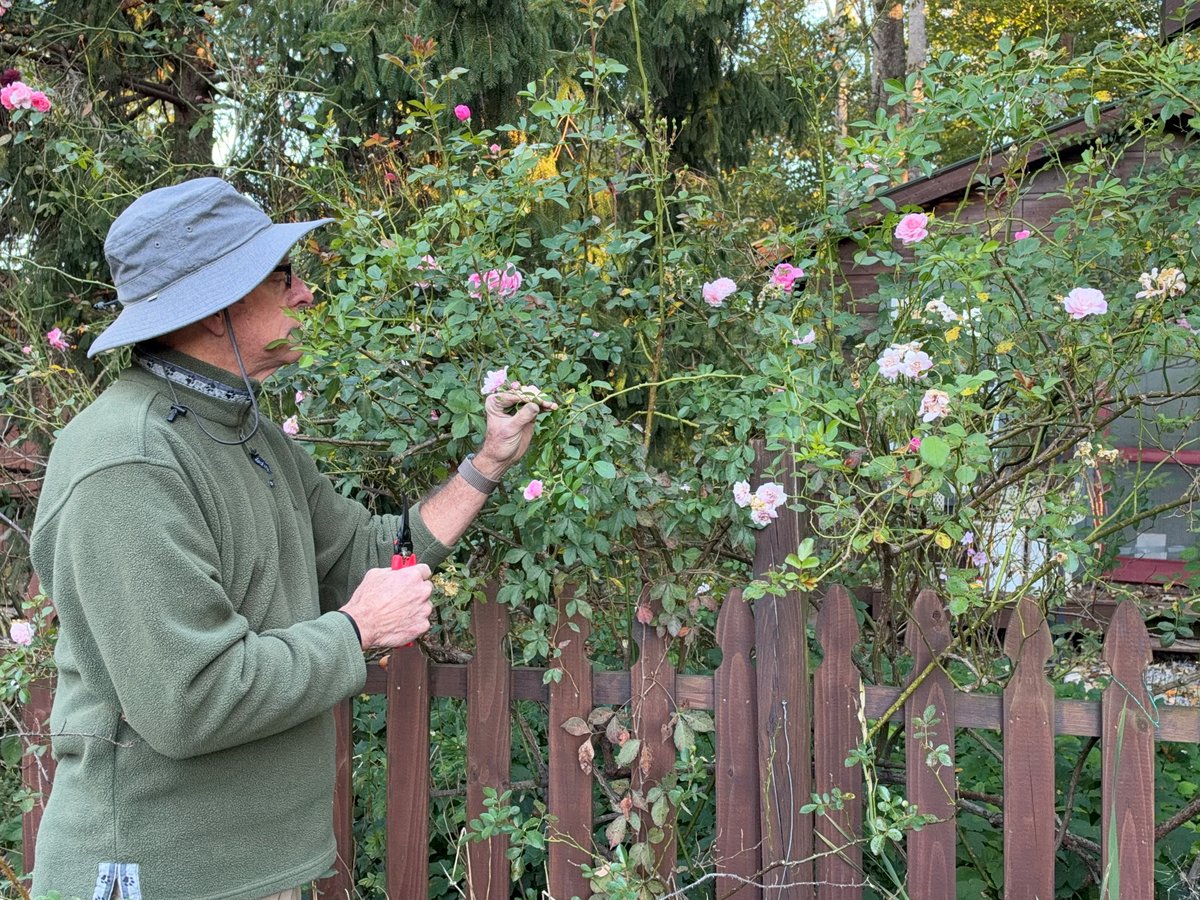
In the fall, enjoy the flowers, but stop deadheading. Go ahead and cut a few for the house, but by and large, leave them on the plants.
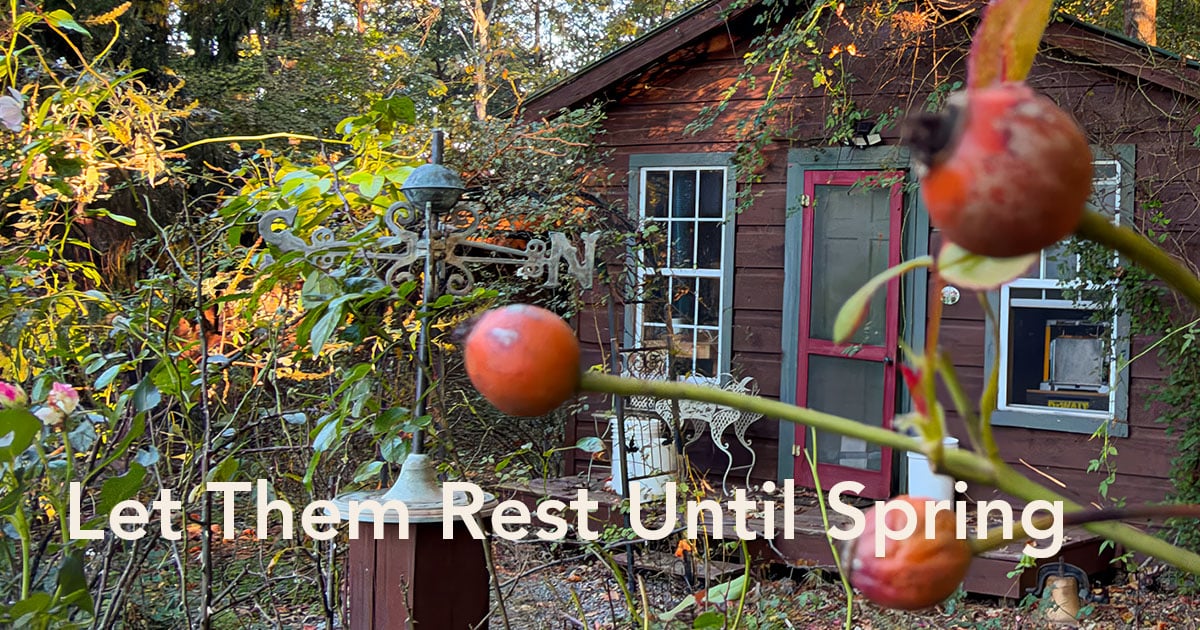
On many roses, rose hips will develop. These are the colorful, berry-like seed pods you see on some varieties, often in bright shades of orange and red. They contain the rose seeds, signaling that the plant has completed its reproductive cycle and can continue preparing for dormancy.
As a bonus, those hips provide a valuable winter food source for birds.
On roses that are self-cleaning, simply leave the plants alone and let them gradually stop producing flowers as the season progresses.
That is your first fall job: Stop deadheading.
When Should You Stop Fertilizing Roses?
In the introductory article, I talked about a simple fertilizing program that alternates an organic granular fertilizer with an organic foliar feed. This helps keep roses actively growing during the growing season and encourages continued flowering.
But, in keeping with our fall theme, we don't want to encourage continued growth and flowering indefinitely. When should we allow our roses to begin preparing for dormancy by stopping the fertilizer program?
This is simple and all about your first frost date.
Your first frost date is the average date you can expect the first frost in your area. Fortunately, finding this information is easy. Simply Google "first frost date" together with your ZIP code or postal code. That should give you an approximate date for your area.
Once you know that date, count back six to eight weeks and stop fertilizing.
For me, that date is November 1, so I stop fertilizing in early September.
Stopping fertilization doesn't mean the roses won't continue growing and producing flowers. On the contrary, as I mentioned earlier, fall can be a very active period for roses. Mine often grow by leaps and bounds in September.
However, that new growth is tender and needs time to harden off before winter. Continuing to fertilize encourages that tender growth to keep developing longer than it otherwise would.
How does the plant know when to slow down naturally?
Nature's rhythms!
That is your second fall job: Stop fertilizing.
Why Roses Show More Disease in the Fall
Disease on roses is often more prevalent in the fall. That's a simple fact. As roses begin shutting down for the season, their natural defenses may change, and this time of year often brings cooler temperatures, morning dew, and increased moisture.
This is normal, so expect to see some disease on your roses.
You can remove diseased leaves and clean up fallen leaves in your garden, but beyond that, don't overreact. A few blemished leaves at the end of the season aren't necessarily something you need to worry about.
That is your third fall job: Stop worrying about disease.
Why Mulch Still Matters Before Winter
So, are there jobs you should continue doing in a climate with a dormant season?
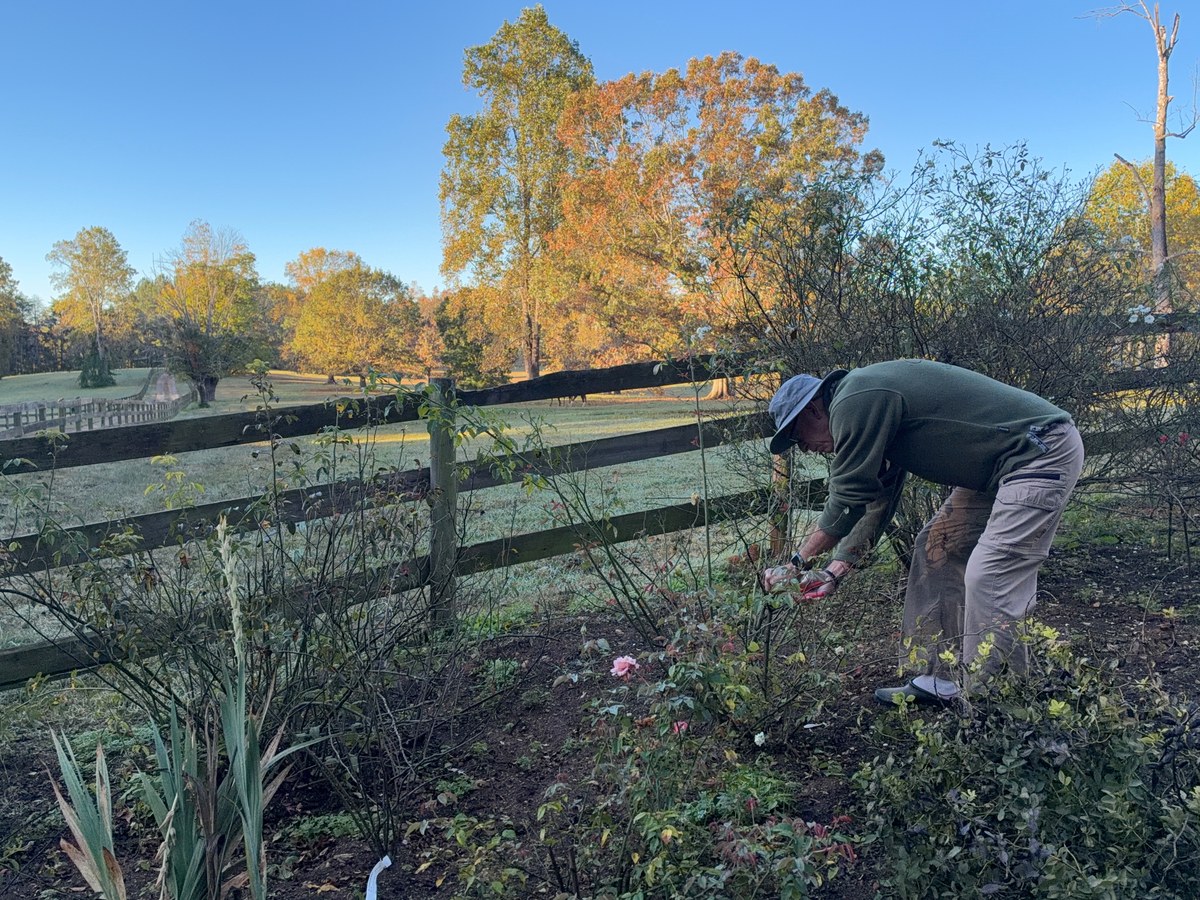
Yes, and keeping an eye on your mulch levels is an important one.
Mulch helps moderate soil temperatures, retain moisture, and support soil health as it breaks down. Just as mulch helps keep soil temperatures from getting too hot in summer, it can also help insulate the soil against extreme cold in winter.
Check your mulch levels and replenish them before winter if needed.
That is your fourth fall job: Don't stop keeping up with the mulch!
Leave the Rough Foliage Standing for Beneficial Insects
The last thing I want to talk about regarding fall care in a climate with a dormant winter is insects.
In the introductory article, I discussed attracting and keeping beneficial insects in the garden. How you prepare your garden for fall and winter is a big part of helping those beneficial insects survive until spring, when they can get back to work controlling the insects you don't want.
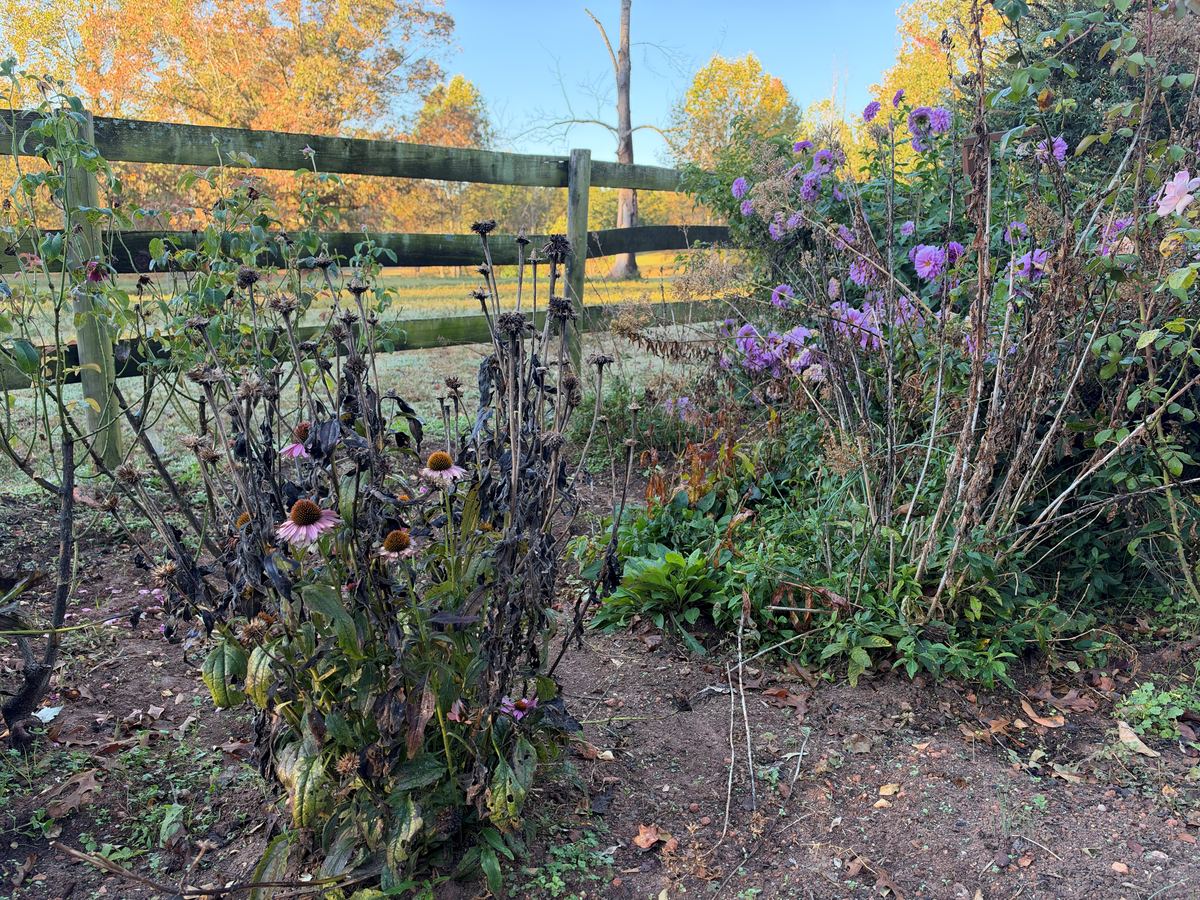
Leaving many of your plants, including perennials, shrubs, and ornamental grasses, standing through the winter is an important part of this process. Many beneficial insects overwinter in plant stems, foliage, and other garden debris.
Gardeners sometimes refer to this as leaving the garden's "rough foliage."
For example, the stems of many perennials, such as Echinacea and Rudbeckia, can provide shelter for insects that overwinter in the garden. Cutting those stems down and throwing them away may mean getting rid of a lot of the good guys!
Leave them standing, and you'll give those beneficial insects a better chance of emerging in spring already in your garden and ready to go to work.
That is your fifth fall job: Don't cut back your plants.
That covers the essentials of fall rose care in a climate with a true winter and a dormant season. As I mentioned at the beginning, it's all about working with nature's rhythms. Plants need to become dormant, and beneficial insects need places to shelter through the winter. Let them rest until spring.
Quite honestly, I think letting us gardeners rest a little is a good thing, too!
What About Climates Without a Dormant Winter?
So, what about those of you who garden in a climate without a true dormant season?
Your natural rhythm is often one of hot, drier summers and cooler, wetter winters. Your roses don't necessarily go dormant in winter. In fact, winter is often a very active growing and blooming season for you.
In your case, working with nature's rhythms means encouraging your roses to grow and flower. That's the opposite of what those of us with a true winter need to do.
This is what I experienced when I lived and gardened in Los Angeles, California, before moving to the Upstate of South Carolina.
Keep Deadheading and Feeding in Mild-Winter Climates
Keep up with deadheading. Your flowers will often be better now that the heat of summer has passed, so enjoy those larger roses!
Feel free to cut flowers for the house and deadhead the rest to keep your roses blooming.
The same goes for fertilizing. Keep going with your program.
Organic fertilizers are a useful part of a regular feeding routine, but more isn't always better. If you want to increase your foliar feeding slightly, you may be able to do so, depending on the product. Instead of applying it every four weeks or so, you might move to every three weeks.
Be sure to read the instructions for the product you use, and never exceed the recommended application rate or frequency.
When to Prune Roses Without a Dormant Season
The last point I want to address for those of you in climates without a true dormant season is pruning.
Without a natural winter dormancy, when should you prune your roses?
There is no single, universal date, but in many mild-winter climates, pruning is done in early January. I had a rose garden care company in Los Angeles, and that was when we would typically prune.
This meant my clients could enjoy roses on their holiday tables in December, and then, right after the first of the year, we would start pruning.
I didn't worry about stopping fertilizing or deadheading before pruning. We simply continued our normal routine until we actually pruned the roses.
We did stop fertilizing when we pruned, so follow that practice. Then wait until the roses begin growing again. When you see the first true sets of leaves appearing after pruning, you can resume fertilizing.
Work With Nature, Not the Calendar
The two very different approaches to fall care, depending on your climate, are a great example of working with nature's rhythms rather than blindly following a calendar or a care protocol that doesn't take your conditions into account.
Many rose care protocols assume we all experience a dormant winter, or that we live in a milder version of the colder climates farther north. I've even seen recommendations that don't take winter conditions into account at all.
My goal here is to give you guidelines you can adapt to your specific area and even your own microclimate. You can do that by observing and tuning in to the nature all around you, then applying what you observe to your own garden.
Don't fight nature.
Watch, observe, and work with it.
Your roses – and you – will be better off for it.
My Fall Rose Care Checklist
In a Climate With a True Winter
- Enjoy the fall flowers, but stop deadheading and let the hips form.
- Stop fertilizing six to eight weeks before your average first frost date.
- Expect some disease. Remove diseased and fallen leaves, but don't overreact.
- Check your mulch levels and replenish them before winter.
- Leave perennials, shrubs, and ornamental grasses standing for beneficial insects.
In a Climate Without a Dormant Winter
- Keep deadheading and cutting flowers for the house.
- Keep fertilizing. Foliar feeding every three weeks instead of four may be possible, but never exceed the product's recommended rate or frequency.
- Prune in early January in many mild-winter climates, stop fertilizing when you prune, and resume when the first true sets of leaves appear.
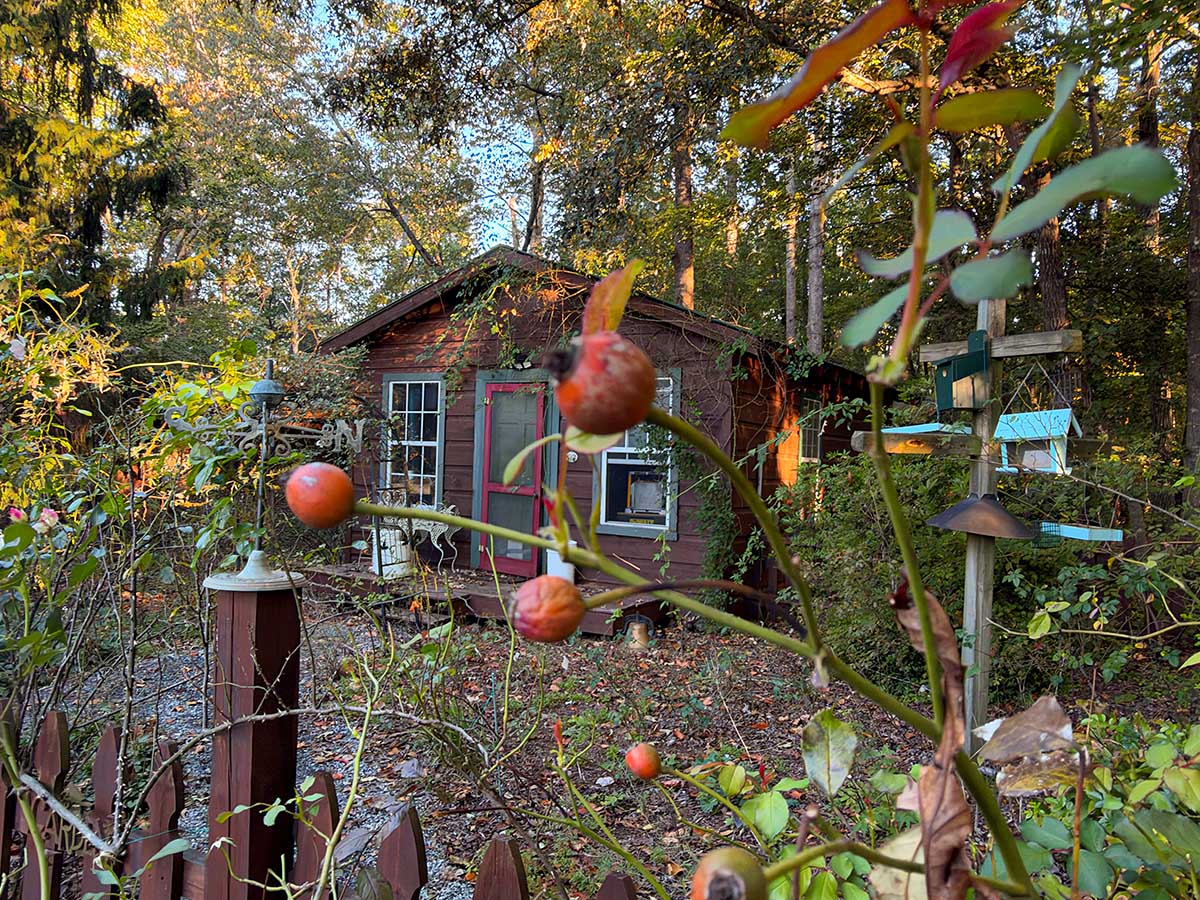
Header and featured image: rose hips in my garden in the fall. Photo by Paul Zimmerman.