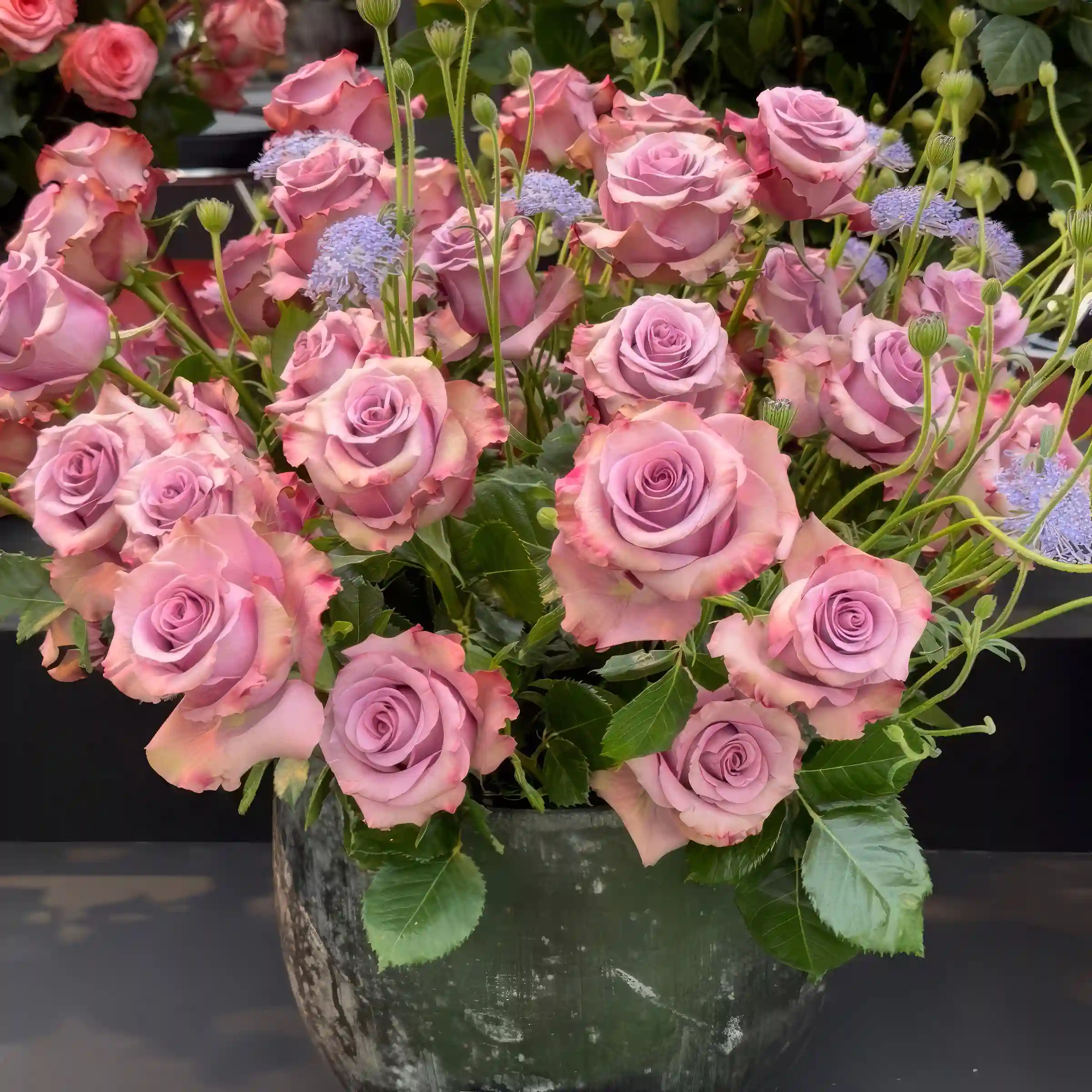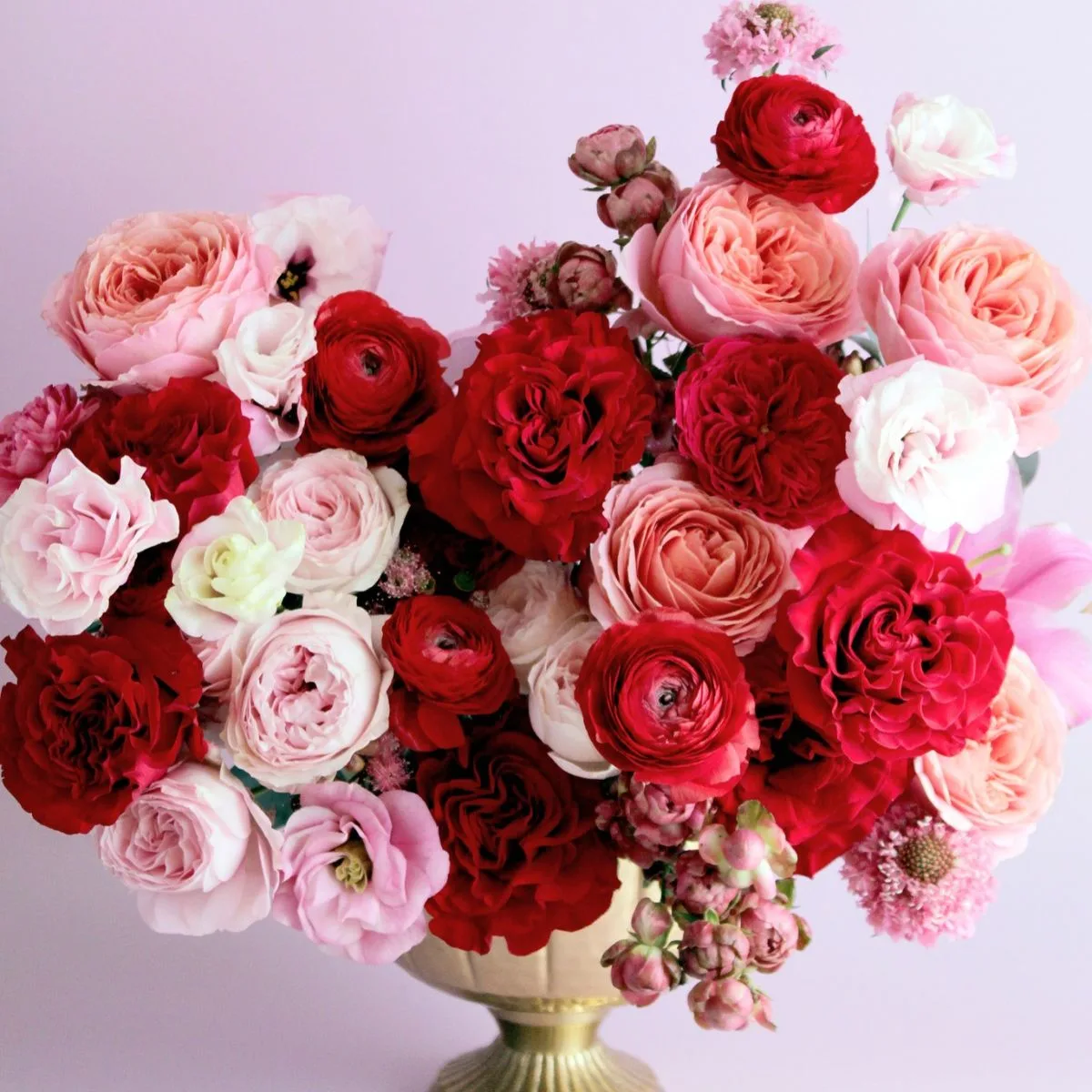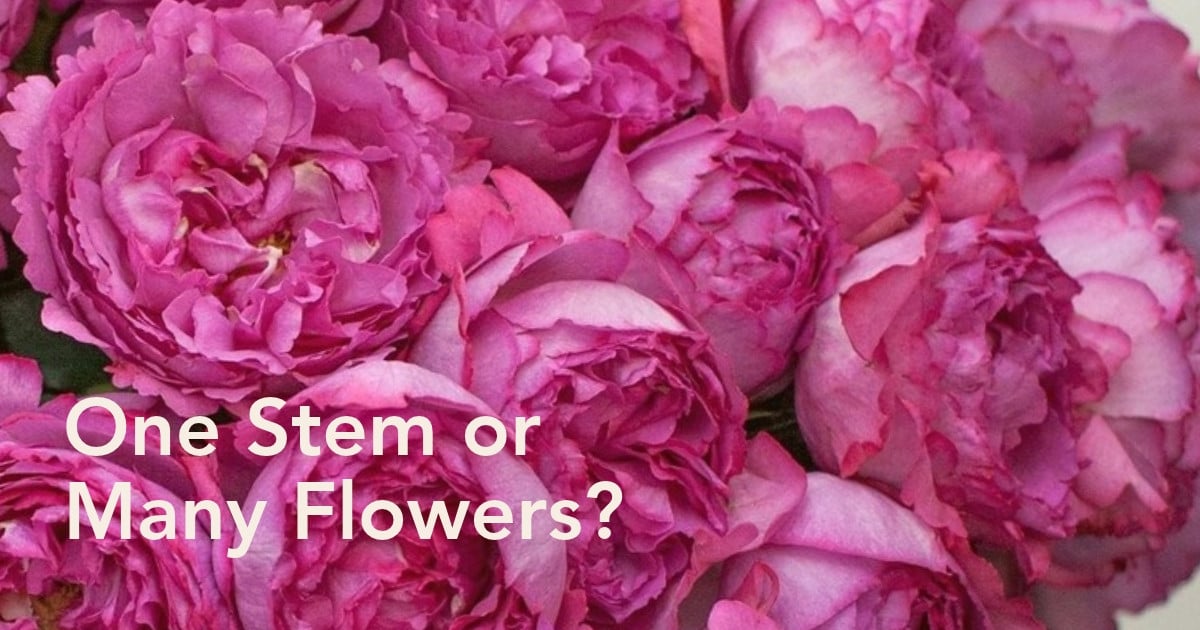
Pick up a bouquet and look at a single stem. Is there one big flower on top of a long, straight stem? Five little ones branching off near the tip? Or one soft, ruffled cup that looks like it wandered in from someone's garden? That stem tells you more about the types of roses than the color ever will.
So how many types of roses are there? For the roses you'll actually meet, there are two families. Cut roses are grown for the vase: large-headed standard roses, intermediate and sweetheart roses, spray roses, cut garden roses, and spray garden roses. Then there are the garden classes you plant: hybrid tea, floribunda, grandiflora, climbing, rambling, shrub and English, groundcover, miniature, old garden, and wild species roses. That's 15 types, and you can tell most of them apart in under a minute. One warning first: "garden rose" means two different things, depending on whether you're talking to a florist or a gardener. This guide keeps them apart.
How to Tell Types of Roses Apart (Start With the Stem)
Growers and florists don't sort roses by color first. They count. How many flowers sit on one stem, how wide does the head open, and, for a plant in the ground, how does it grow? Here's the cheat sheet for all 15 types of roses, the ones in your vase first.
| Rose type | How to recognize it | Example |
|---|---|---|
| Large-headed standard rose Vase |
One big flower on a long, straight stem | Madam Red, Athena |
| Intermediate and sweetheart rose Vase |
One smaller flower per stem, often in supermarket bunches | Head of 2.5 to 5 cm |
| Spray rose Vase |
Several small flowers branching from one stem | Mykonos, Speaking Blossoms |
| Cut garden rose Vase |
One full, ruffled or cupped flower per stem, often scented | Powder Puff, Juliet |
| Spray garden rose Vase |
Small ruffled flowers in clusters on one stem | Loli, Hana |
| Hybrid tea Garden |
One shapely, high-centered flower per long stem | Peace, Yves Piaget |
| Floribunda Garden |
Flowers in clusters, flowering in flushes all summer | Iceberg |
| Grandiflora Garden |
Hybrid tea flowers in small clusters on a tall plant | Queen Elizabeth |
| Climbing rose Garden |
Long, stiff canes you tie to a wall; most flower again | Eden, New Dawn |
| Rambling rose Garden |
Long, flexible canes; one big flush, usually in June | Often trained into trees |
| Shrub and English rose Garden |
Bushy plant, rosette flowers, strong scent | Gertrude Jekyll |
| Groundcover rose Garden |
Grows low and wide over a bank or border | Flower Carpet series |
| Miniature and patio rose Garden, pot |
Small flowers and small leaves on a compact plant | Pot roses |
| Old garden rose Garden |
From a class older than 1867, often with a strong scent | Damask, gallica, alba |
| Wild species rose Garden, hedgerow |
Simple flowers, usually 5 petals, hips in fall | Rosa banksiae, dog rose |
Got a rose in front of you that fits two rows? That happens. Breeders cross the classes all the time, and a cut rose in your vase is usually a hybrid tea at heart.
Types of Roses You'll Find in a Bouquet
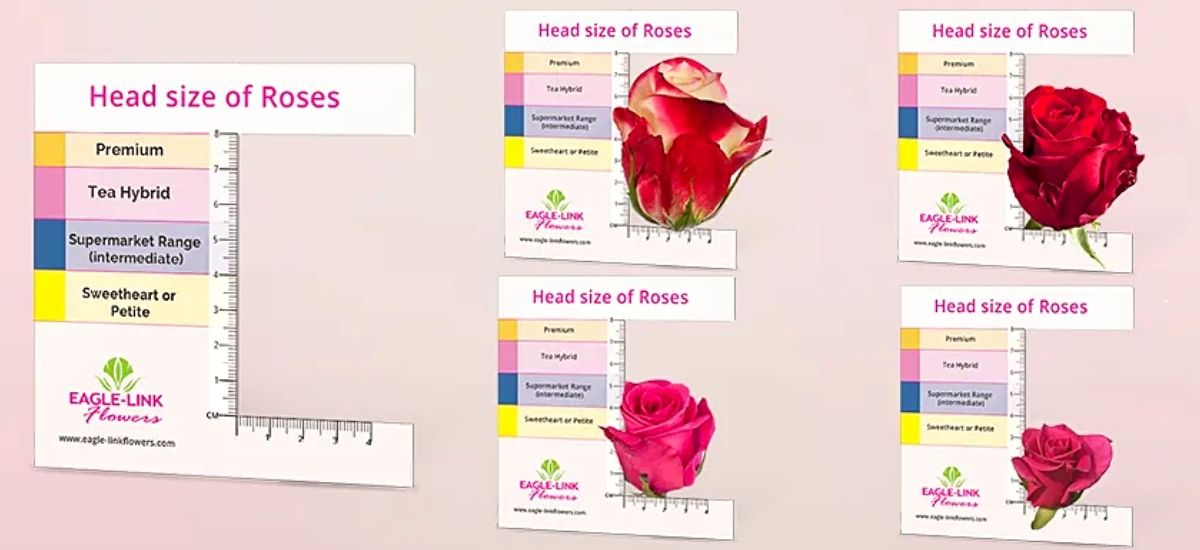
The roses in a flower shop come from greenhouses and farms in places like Kenya, Ecuador, Colombia, Ethiopia, and the Netherlands. The trade sorts them by head size, the width of the flower once it opens, and then by stem length. The guide to rose head sizes has the full measuring chart. Here's what that looks like in your hand.
1. Large-Headed Standard Roses
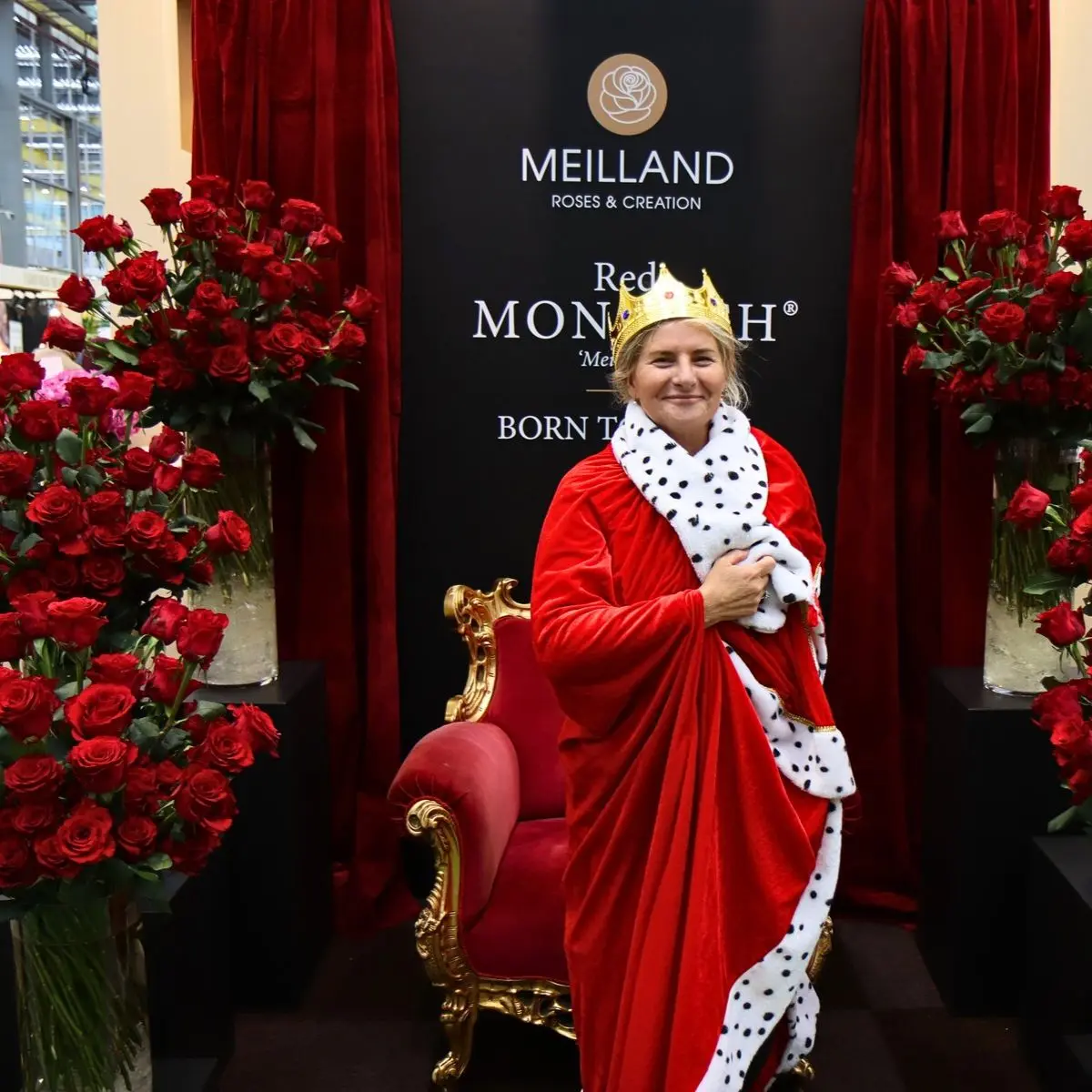
One flower, one long stem, a head the size of a small fist. This is the rose most people picture, and the one that fills a dozen at Valentine's Day. In the trade, the biggest heads are called premium roses, at about 7 to 8 cm (2.8 to 3.1 inches) across, mostly from high-altitude farms in Ecuador and Colombia. The next size down, the T-hybrid, opens to about 5.5 cm (2.2 inches). Altitude does a lot of the work: roses grow slower up there, so stems get thicker and heads get bigger.
Want to know which varieties make the cut? Breeder De Ruiter shared its own top 10 in Kenya versus Ecuador, and the list of the most popular Kenyan roses names the farms that grow them, from Rose Athena to Rose Madam Red.

2. Intermediate and Sweetheart Roses
Same build, smaller head. Intermediate roses open to 4 to 5 cm (1.6 to 2 inches), and the trade also calls them supermarket roses for a reason: that's where you'll find most of them. Sweetheart roses are the smallest, at 2.5 to 3.5 cm (1 to 1.4 inches). They're still one flower per stem, which is how you tell a sweetheart from a spray rose. A single small head on a straight stem? Sweetheart. A little bunch of heads on one stem? Read on.
3. Spray Roses
A spray rose carries several flowers on one stem, usually small ones, branching off near the top. One stem can look like a little bouquet by itself. A variety like Speaking Blossoms from breeder United Selections gives 4 to 6 buds on a stem of 50 to 60 cm (20 to 24 inches), as found in the piece asking why florists love spray roses. They used to be a wedding flower. Now they're in bouquets all year, in every color you can think of.
For a closer look at the varieties, see the spray rose collection of Rosaprima and the special spray roses of Jan Spek Rozen.

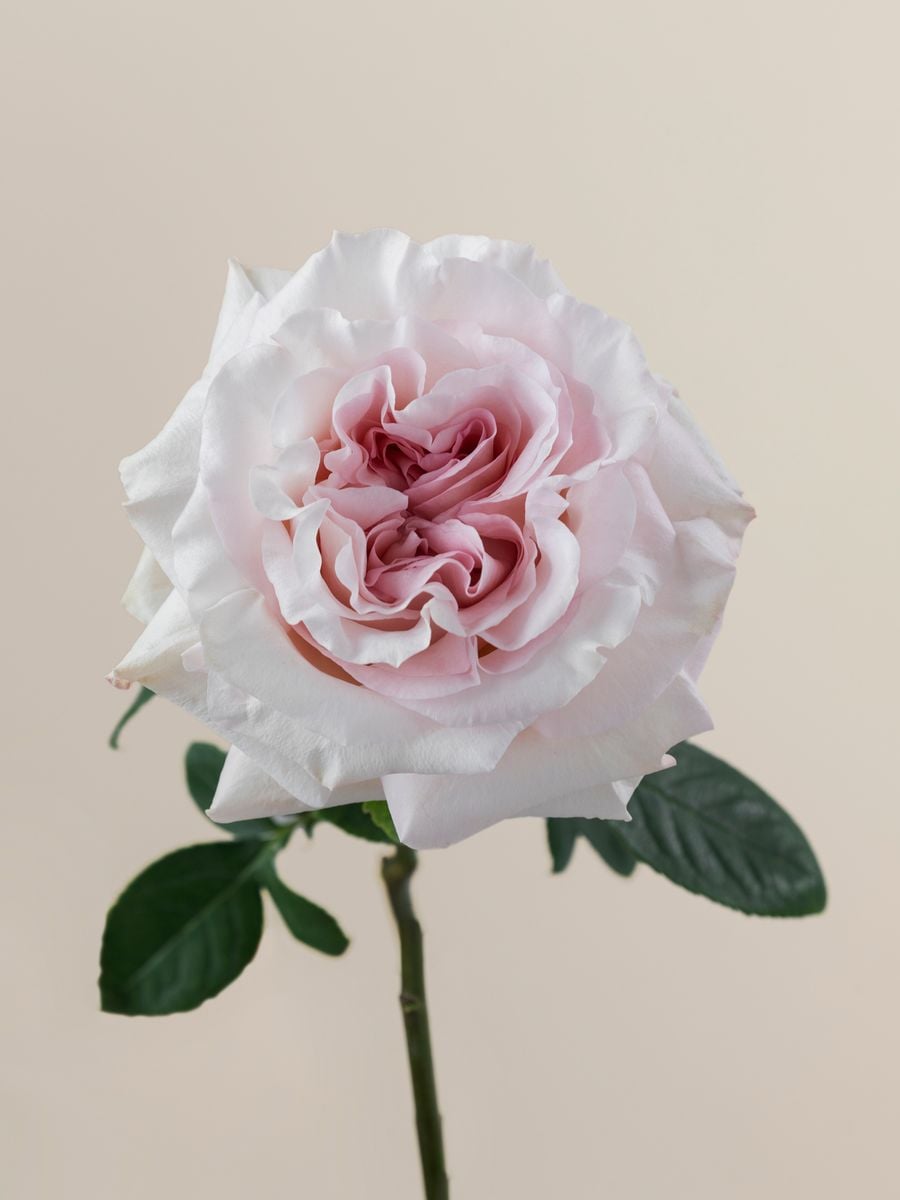
4. Cut Garden Roses
Here's the first meaning of "garden rose." In a flower shop, it's a cut rose with the look of an old-fashioned garden flower: one big head per stem, full of petals, ruffled or cupped, and often with a real scent. Florists love them for weddings. A good example is Powder Puff, a soft pink rose bred in Ecuador, described on Thursd as "one big flower per stem, with the full, ruffled shape of a garden rose" in the Powder Puff report from Expo Flor Ecuador. José Vergara of grower Josarflor put it simply at the fair:
"It's a variety that really catches the eye because of the size of the bud and the way it opens. It's something different from the other varieties."
Two other names you'll see on the buckets: Alexandra Farms in Colombia, whose garden rose farm grows varieties like Rose Juliet and Rose Leonora, and breeder David Austin, whose wedding roses were introduced here.
5. Spray Garden Roses
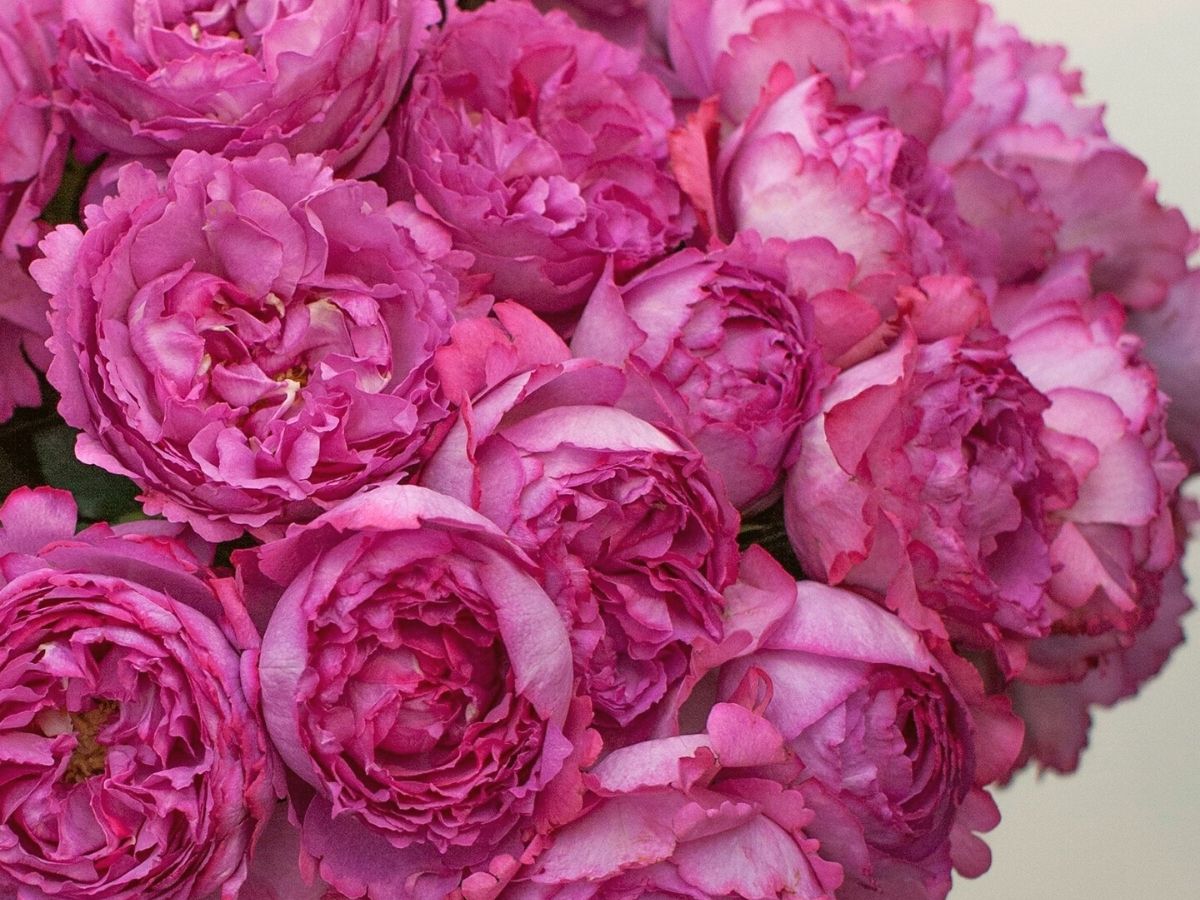
Put the two ideas together, and you get a spray garden rose: several small, ruffled garden-style flowers on one stem. Designers use them in floral arrangements to add volume and texture without adding another flower. If you've got a stem with three or four little rosettes on it, this is probably your rose. Read more in the piece on spray garden roses.

Types of Roses in the Garden: The Rose Classes
Now the second meaning. Walk into a garden center, and the label won't say "spray" or "sweetheart." It'll say hybrid tea, floribunda, or climber. These are the classes rose societies use. The American Rose Society (ARS) draws one big line in 1867, the year the first hybrid tea, 'La France', was introduced: older classes are old garden roses, newer ones are modern roses. Wild species sit outside both. Rose grower Paul Zimmerman, who writes for Thursd, has grown roses for more than 30 years, and he's the reason a few of these classes come with a story.
6. Hybrid Tea Roses
Hybrid tea roses are the long-stemmed classic: one large, shapely flower per stem, with 30 to 50 petals, flowering in cycles about every six to seven weeks. It's the garden version of the rose in your vase, and the most popular class of modern roses: the American Rose Society counts more than 10,000 hybrid tea roses bred by the late 20th century. The rose 'Peace', introduced in the United States in 1945, opened the modern hybrid tea era. In his guide to natural rose care, Zimmerman explains what came next:
"What resulted was several decades of breeding roses in search of that 'perfect' hybrid tea: a high-pointed center on a long stem."
Beautiful, yes. Easy, not always. Zimmerman links that era to roses that needed chemicals to stay clean, so if you're planting one today, look for disease resistant rose varieties. Rose Yves Piaget, a peony-shaped hybrid tea from Meilland, is one with a famous scent.
7. Floribunda Roses
Floribunda means "many-flowering," and that's the giveaway: the flowers come in clusters, not one per stem, and floribunda roses bloom continuously instead of in flushes. As a class, floribundas are hardier, easier to care for, and more reliable in wet weather than hybrid teas. Iceberg, with its pure white clusters, is one of the best known. Breeder Select Breeding offers almost twenty floribundas for patio and garden, growing 50 to 70 cm (20 to 28 inches) tall and some up to 90 cm (35 inches).

8. Grandiflora Roses
Cross a hybrid tea with a floribunda, and you get a grandiflora: hybrid tea-style flowers, often in small clusters, on tall stems. The class was created for 'Queen Elizabeth' in 1954, a rose that can reach 1.8 to 2.4 m (6 to 8 feet tall). You won't meet many grandiflora roses in a bouquet. You'll meet them at the back of a border, looking over everyone else's shoulder.
9. Climbing Roses
Climbing roses grow long, arching canes that you tie to a wall, fence, trellis, arbor, or pergola. They don't climb on their own, so they need your help. Most of them flower more than once a season, according to the Royal Horticultural Society. The light pink Eden, also sold as 'Pierre de Ronsard', can reach 3.7 m (12 feet). The list of the best climbing roses has seven more.

10. Rambling Roses
Ramblers look like climbers at first glance, but their canes are longer and more flexible, and they'll scramble up a tree or over a shed if you let them. The big difference is timing. A rambler flowers only once, usually in June, while most climbers repeat. It puts on quite a show when it does. Not sure which one you have? The RHS tip is to watch the next season's growth: a rambler sends up lots of vigorous shoots without flowers; a climber makes less vigorous growth that does flower.
11. Shrub and English Roses
Shrub roses are the big, bushy ones that grow as wide as they grow tall, from 1.5 to 4.5 m (5 to 15 feet) in the right climate. The ARS splits them into hybrid kordesii, hybrid moyesii, hybrid musk, hybrid rugosa, and shrub, and many shrub roses are hardy, vigorous plants with plenty of clusters. The best known are the English roses of David Austin. As the piece on the 100th birthday of David C. H. Austin explains, his idea was to combine the scent and character of old garden roses with the repeat flowering of modern ones. His first, 'Constance Spry', came out in 1961. Look for full rosette-shaped flowers with a strong fragrance: that's how most David Austin roses give themselves away. The pick of the best David Austin rose shrubs shows a dozen.

12. Groundcover Roses
Groundcover roses grow low and wide instead of up. They're the roses you see covering a slope or filling a border where nothing else wants to grow. The RHS points to the Flower Carpet series for massed planting. If your rose is knee-high and spreading sideways, this is it.
13. Miniature and Patio Roses
Everything is smaller here: the flowers, the leaves, the plant. Miniature roses usually stay around 38 to 76 cm (15 to 30 inches) tall. Patio roses are a little bigger and made for containers. And the potted rose you buy for the kitchen table? That's a pot rose, bred to flower indoors, as explained in the world of pot roses.

14. Old Garden Roses Such as the Damask Rose
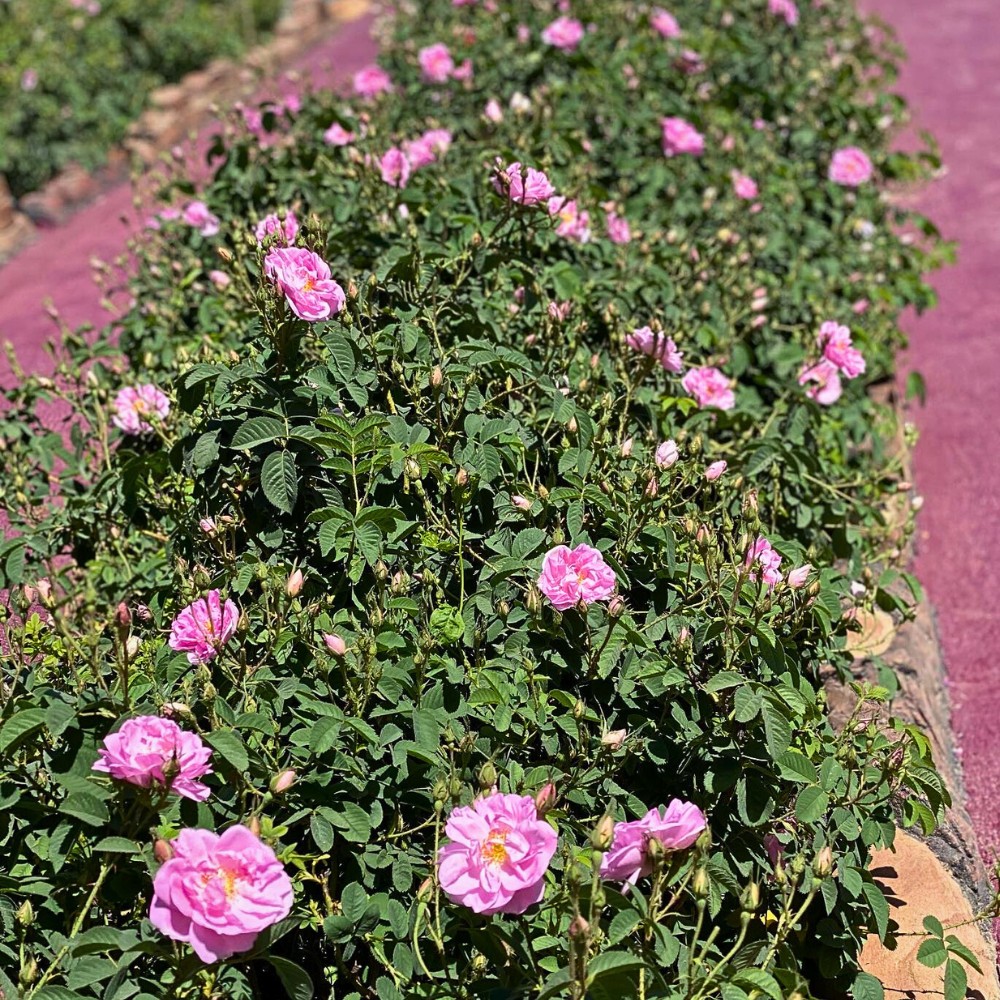
Old garden roses belong to classes that existed before 1867: damask, gallica, alba, centifolia, and more. Many flower only once a year, and many smell wonderful. The damask rose is the perfumer's rose. In Taif, high in the mountains of Saudi Arabia at about 1,800 m (5,900 feet), more than 900 farms grow a 30-petaled damask rose for rose oil, as the piece on the city of roses shows. Soft pink, loose petals, and a scent that fills the room: that's the old rose look.
15. Wild Species Roses
Every rose above started here. Wild roses usually have simple flowers with 4 to 8 petals, flower once, and range from 0.6 to 6 m (2 to 20 feet). Most come from the cooler parts of the Northern Hemisphere. After flowering, many set bright rose hips. The Lady Banks rose, Rosa banksiae, here in its yellow form, is a wild species that can climb to 6 m (20 feet) and has almost thornless stems. Seen a rose with five petals in a hedge? You've met the oldest members of the rose family.

Old Garden Rose Classes, From Gallica Roses to Hybrid Perpetuals
Type 14 is a whole family on its own. The American Rose Society defined old garden roses in 1966 as the types that existed before 1867, and it lists more than a dozen classes inside that group, from alba to tea. You don't need to learn them all. These are the ones you're most likely to meet in a nursery catalog or an old garden, and each has one trait that gives it away.
Gallica Roses
Hybrid gallicas are compact, 0.9 to 1.2 m (3 to 4 feet tall), and winter hardy. They flower once, but they make it count, with fragrant flowers in brilliant colors.
Alba Roses
Albas are known as the white roses. The plants are upright, often climbing, with dense blue-green foliage, and they're disease resistant, which you can't say about every old rose.
Damask Roses
The damask is the scent class, best known for its intense, heavy fragrance, which is why the farms in Taif grow it for oil. Plants reach 0.9 to 1.8 m (3 to 6 feet tall), and some varieties repeat bloom.
Centifolia Roses, the Cabbage Roses
The name points to the petals: centifolia flowers often have more than 100 of them. Dutch breeders developed the class, and you've probably seen these cabbage roses without knowing it, in 17th-century Dutch flower paintings. The plants grow 1.2 to 2.4 m (4 to 8 feet tall), are winter hardy, and flower once.
Moss Roses
Moss roses are named for the mossy growth on the flower stalk, just below the bloom. Rub it between your fingers, and it gives off a pine-scented resin. Try it once. The plants are generally winter hardy, 0.9 to 1.8 m (3 to 6 feet tall), and some repeat. Not to be confused with the moss rose on a sunny windowsill, which is a portulaca and no rose at all.
China Roses
China roses come from Southeast Asia, and they gave the rose world its most useful gift: repeat bloom. The plants vary in height and have relatively few thorns, and the flowers tend to come in small clusters. They don't like the cold, though. Below USDA zone 7, most won't make it through winter.
Portland and Bourbon Roses
Portland roses are a small class named after the Duchess of Portland, bred from crosses of gallica, damask, centifolia, and hybrid China roses. They're small, usually about 1.2 m (4 feet tall), repeat bloom, and hold their flowers on very short stalks.
Bourbon roses were the first repeat-flowering roses, developed from hybrid Chinas. The name comes from the Île de Bourbon in the Indian Ocean, today's Réunion, where the first members of the class were found. Plants range from 0.6 to 4.5 m (2 to 15 feet tall).
Noisette Roses
This class started in the United States, with Philippe Noisette of Charleston, South Carolina, who took his roses to France when he moved there in 1817. Noisettes are large and sprawling, up to about 6 m (20 feet tall), with fragrant clusters. The RHS picks the Noisette 'Madame Alfred Carrière' for a shady or north-facing wall.
Tea Roses and Hybrid Perpetuals
Tea roses have large flowers on weak stems, so the heads nod. They're fairly tender in winter and do best with light pruning. Here's why they matter: tea roses are one of the direct ancestors of the modern hybrid tea.
Hybrid perpetuals were the 19th century's favorite. They repeat bloom, grow upright to about 1.8 m (6 feet tall), carry a good scent, and come mostly in pinks and reds. Put a hybrid perpetual's habit together with a tea rose's elegant buds, and you have 'La France', the first hybrid tea, bred by the Frenchman Guillot. That's where the modern roses begin.
Two More Modern Rose Classes: Polyantha and Miniflora
The 15 types above cover what you'll see most. Two smaller modern classes show up on labels often enough to know.
Polyantha roses are smaller but sturdy plants with large clusters of small flowers, about 2.5 cm (1 inch) across. Gardeners use them for massing, edging, and hedges. If a floribunda looks like it shrank in the wash, check the label for polyantha.
The ARS added miniflora as a class in 1999 for roses that sit between miniatures and floribundas, in both bloom size and foliage. It's the in-between size, made official.
Reading the Label: Repeat Bloom, Growth Habit, and Flower Form
Once you know the type, three more things on the label tell you what you're actually taking home.
Repeat bloom or once blooming. Check this first, because it decides whether you get one big show or flowers until fall. Modern classes like floribundas and hybrid teas repeat. A floribunda keeps going, while a hybrid tea comes back in flushes every six to seven weeks. Some old garden roses give one spring crop, and ramblers flower once, usually in June, so early summer. Once blooming isn't a flaw. Many of those rose bushes pay you back in autumn with rose hips, and shrubs and old garden roses have the edge there.
Growth habit and size. Growth habit is how the American Rose Society sorted the modern classes in the first place, and the heights on the label are real. A miniature stays at 38 to 76 cm (15 to 30 inches), a grandiflora can pass 2.4 m (8 feet tall), and a shrub can spread 4.5 m (15 feet) in every direction. Before you buy rose bushes or other rose plants for a small bed, measure. Then measure again.
Flower form and petal count. Rose varieties run from five petals to 50 or more, and the flower form changes with the class. Old garden roses brought the globular, quartered, flat, rosette, and pompon shapes. Hybrid teas, grandifloras, floribundas, and miniatures added the high-centered bloom form, often called exhibition form. The leaves vary too, from glossy to matte and from light green to dark green, some with a bronze tint.
One more thing for warmer climates: petal substance. The more starch a petal holds, the better the flower copes with heat. Once it gets above about 32 °C (90 °F), a rose with little substance loses moisture and starts to droop.
Count the Flowers, Then Look at the Plant
Next time a rose lands on your table, start with the stem. One big head means a standard or a garden rose, a small one a sweetheart, and a little bunch a spray. In the garden, look at how it grows: tall and single-flowered, clustered, climbing, sprawling, or low. Once you know the type, the color is the next story, and that one is covered too in rose color meanings, from red roses to pink roses. Spot a bright blue one? Read whether blue roses exist before you believe it. And if roses got you curious about the rest of the flower world, the guide to types of flowers picks up where this one stops.
Featured image: Rose Gertrude Jekyll by @garden_with_malika. Header image: Rose Yves Piaget by Star Roses and Plants.