Some of the best work begins with an impossible ask. This is one of those stories. A Friday brief, a Sunday confirmation, and six days unlike any our studio had seen.
Friday: The Brief Arrives
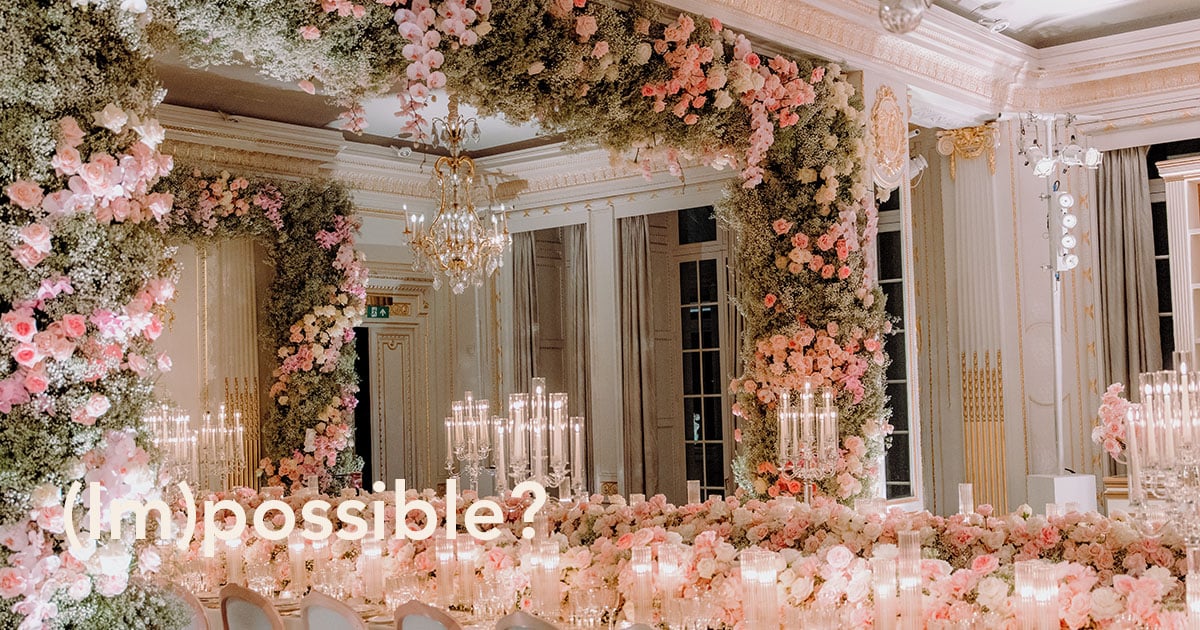
The brief came on Friday. Their planners emailed with a clear vision: a sprawling, opulent wedding inside the grand dining hall of the Mandarin Oriental Hyde Park, London. To be held a week tomorrow.
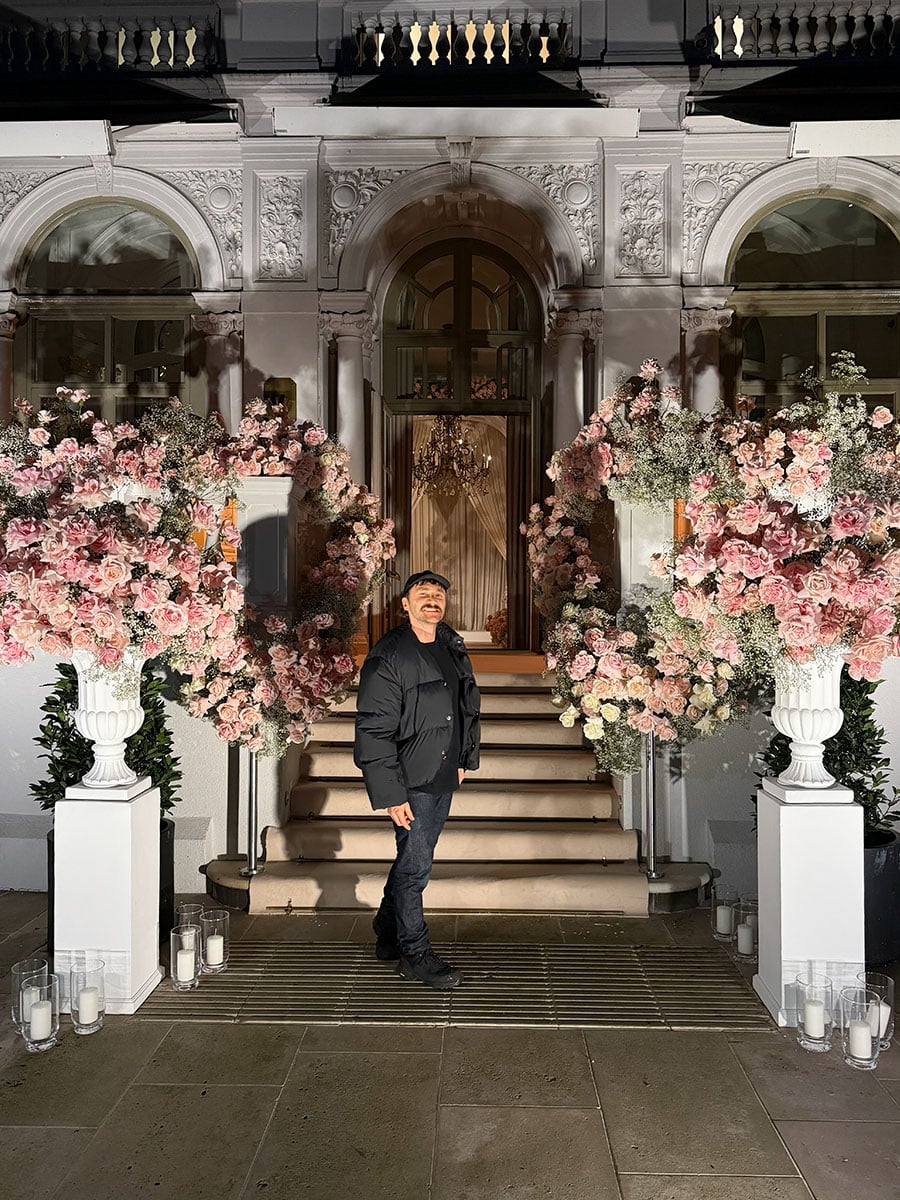
We sent a proposal the same day. Our answer was yes before we'd worked out whether it was possible.
Sunday: Confirmed
Confirmation arrived Sunday afternoon, and the pressure point came within hours. An event at this scale normally takes months to plan, weeks to brief suppliers, and days of transport. We had six days. That meant sourcing tens of thousands of stems, specific varieties, at a speed the supply chain simply isn't built for.
Monday Morning: Straight to Site
The venue space is one that demands to be read in person: double-height ceilings, fluted columns rising to ornate cornicing, a formal symmetry that rewards scale and punishes anything that doesn't meet it.
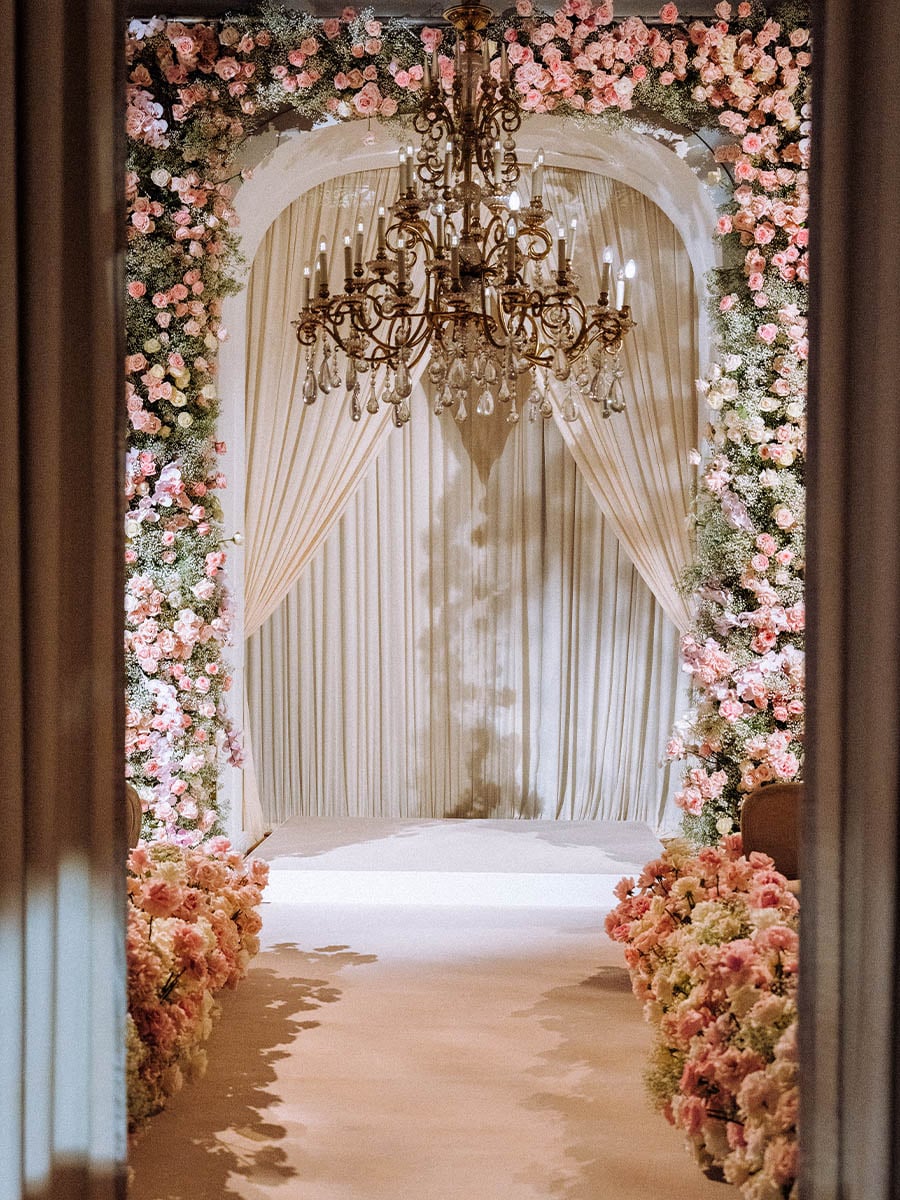
Standing inside it, the design direction sharpened. The clients' instinct had been to drape the columns in flowers. Looking at the architecture, we suggested something different: building large structural frameworks around them instead, connecting the columns to the ceiling so the floristry worked with the room's verticality rather than simply decorating it. Same spirit, different logic. Their original idea was beautiful, but the space needed something that would hold at that scale.
By mid-morning, the brief changed. The couple doubled the size of the wedding. An updated proposal was sent and signed off by the afternoon. The order we had been building in our heads had to be rebuilt at an altogether different volume.
We gathered the studio team and told them what was in store: the scale, the timeline, the fact that our full Christmas contract schedule would need to keep running alongside it, given we were in November. A job like this would take an army.
Monday Afternoon: The Wholesalers
The conversation with our wholesalers was blunt. This volume, at this notice, should have been arranged weeks in advance. For a few hours, the answer was genuinely uncertain.
What turned it was the one thing you cannot buy at short notice: years of relationship. They backed us because the trust runs both ways, and we've worked together long enough that it meant something. Once they committed, we placed the full order of 27,500 stems by Monday evening.
The honest answer on whether six days forced compromise is yes, but on choice and cost, not on standards. Our non-negotiables are responsible sourcing and quality, and those don't bend regardless of deadline.
We couldn't be precious about exact varieties; we took what was available at the volume we needed and paid a premium to secure it. But the standard held. If anything, the pressure proved the point: the things we'd never trade held even when everything else had to flex. Every single stem for this build was FSI-accredited.
Wednesday: The Flowers Arrive
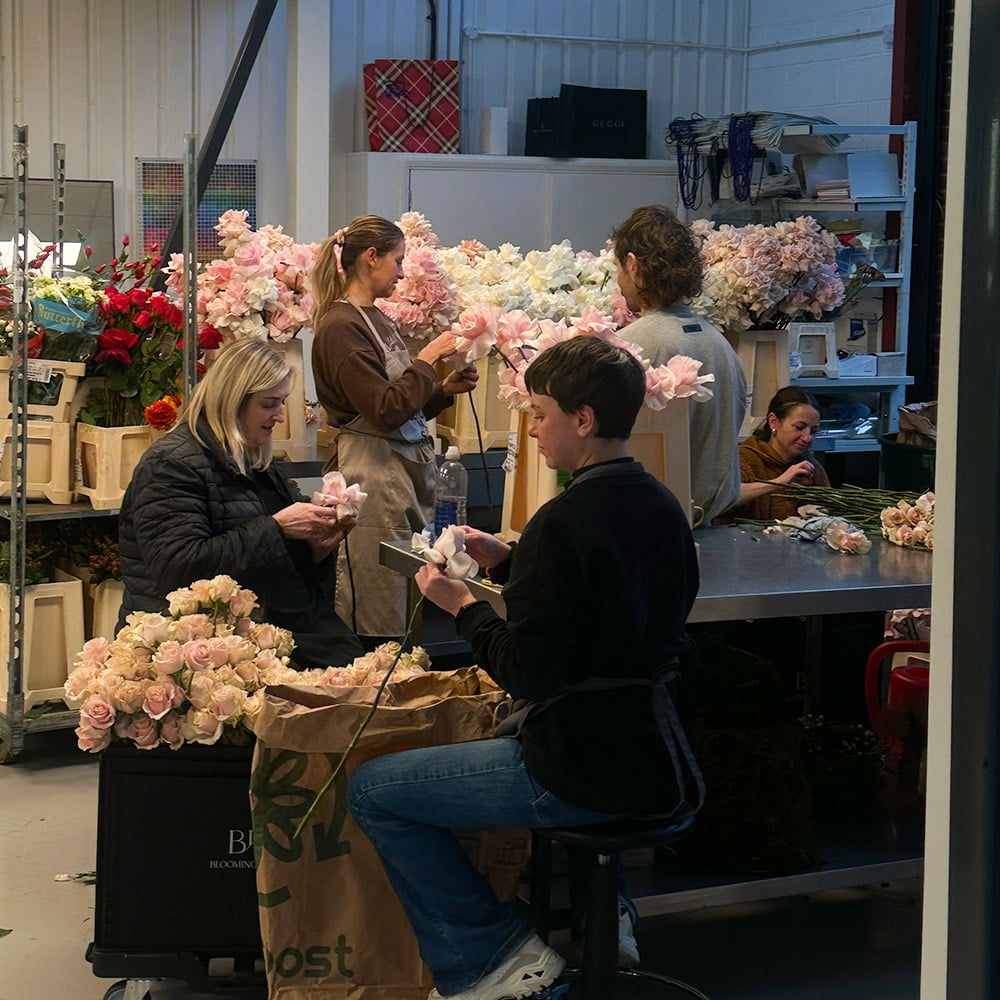
The first batch arrived Wednesday, straight to the studio where the team moved immediately onto receiving and conditioning: stripping leaves, recutting stems, removing guard petals. The second batch arrived on Thursday and was processed alongside the first.
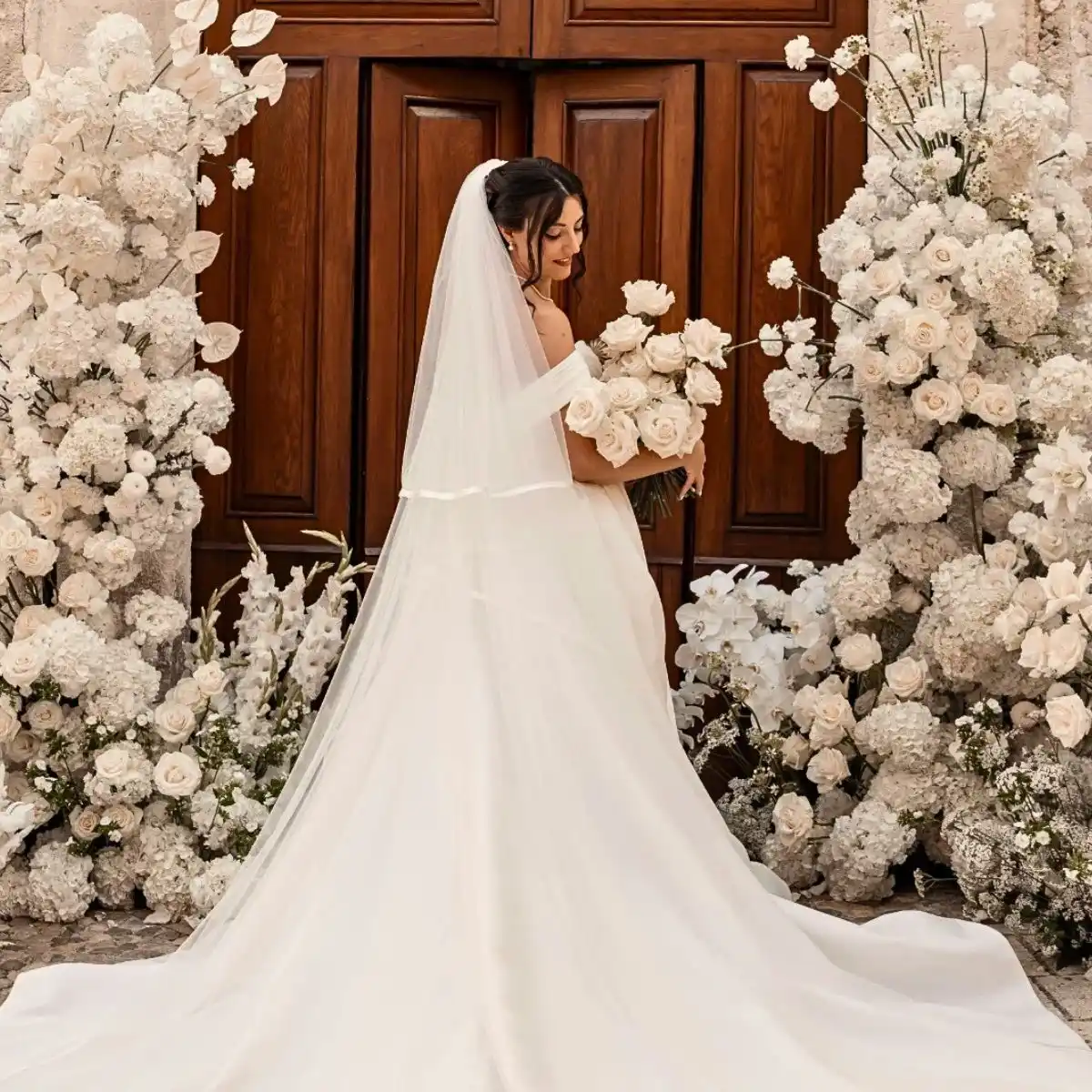
27,500 stems in total. The striking thing, looking at it, was how concentrated the order was. Nearly half, around 12,000 stems, was a single flower: gypsophila. The remainder was largely roses, a mix of garden and standard varieties, with Phalaenopsis orchids as accents. In November, almost all of it was imported.
At this volume, a single rose variety came from several growers simultaneously. That works in our favor: slight variation between growers gives an arrangement more life than perfectly uniform stock. Luxury at this level isn't uniformity but feeling the sum of every decision behind the design.
In-studio preparation turned out to be more than half the total work. Over two days, our team built four-meter-high arches designed to span six meters across the ceiling, constructed frameworks with the help of the production company, and prepared hundreds of vessels, containers, and crystal candelabras for the days ahead.
Thursday: The Design
From the beginning, the brief carried the warmth and opulence of a Middle Eastern celebration. Our job was to hold that richness and give it the restraint the venue demanded. A British luxury dining room asks for something specific: abundance, not excess.
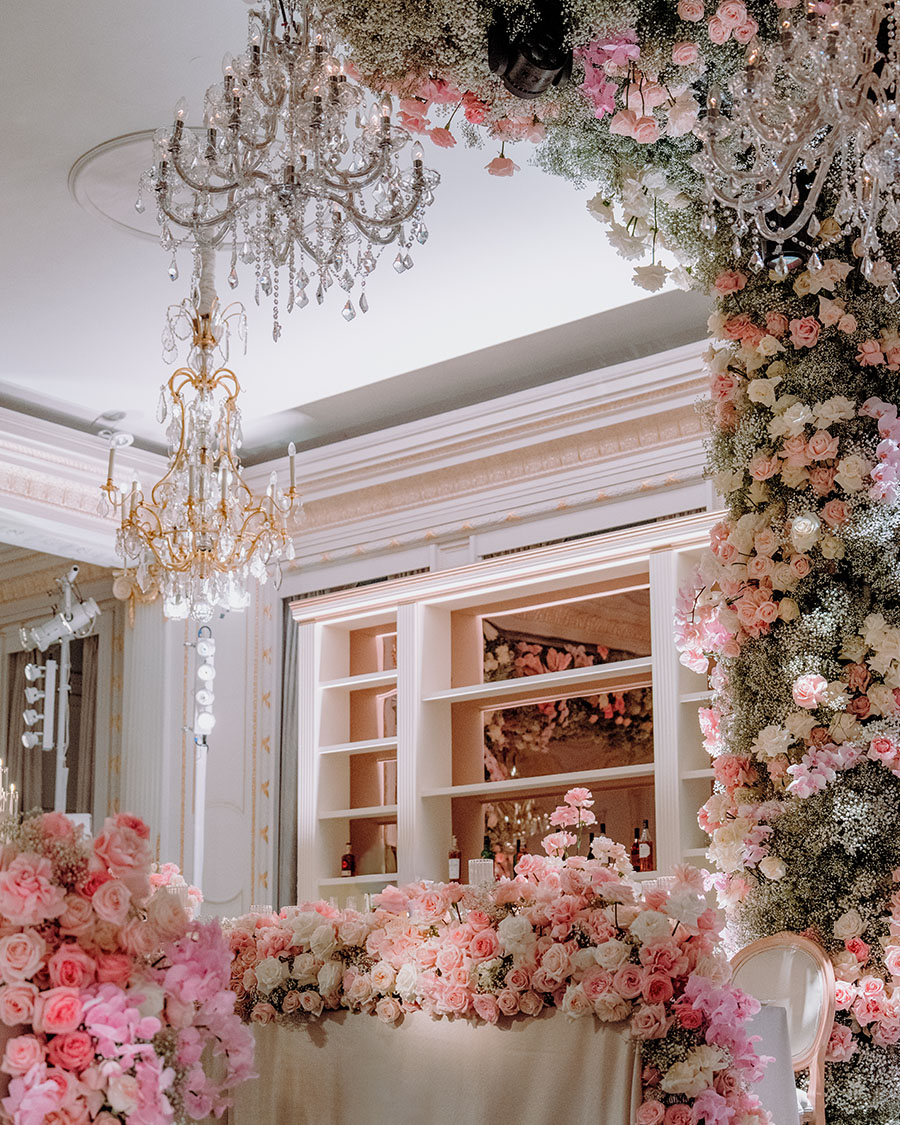
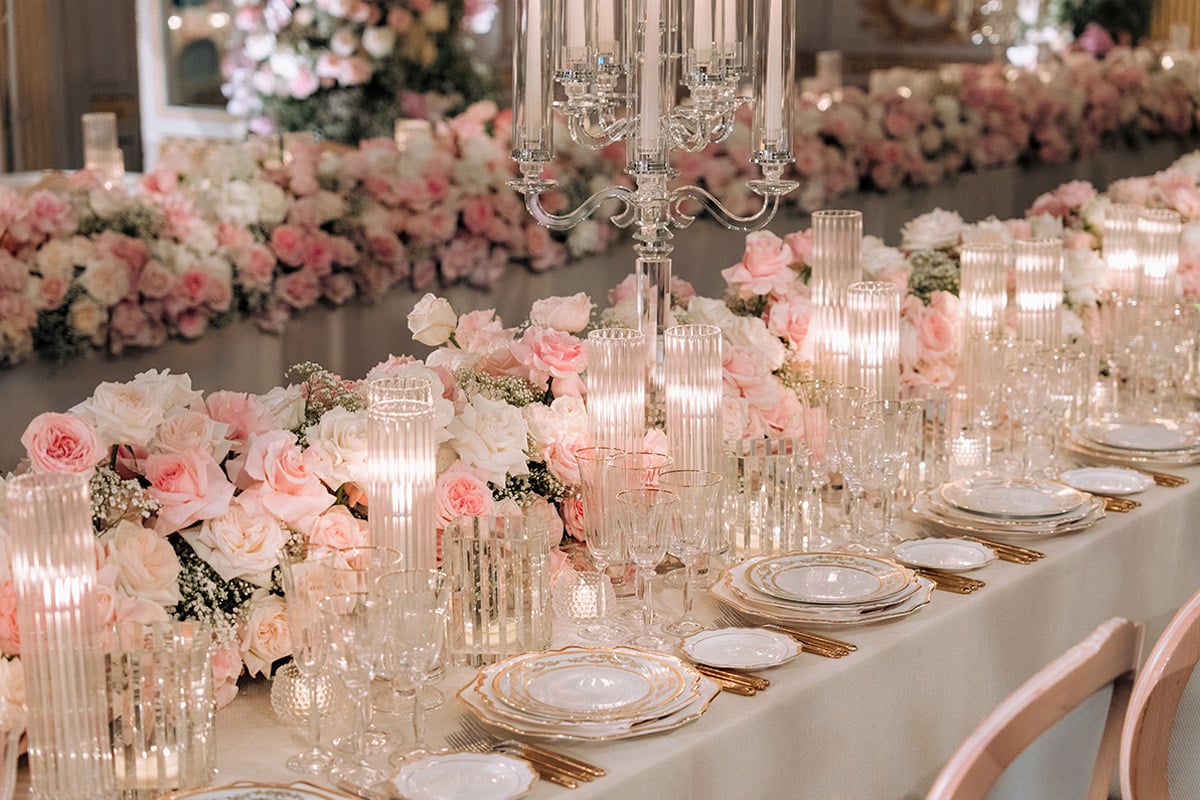
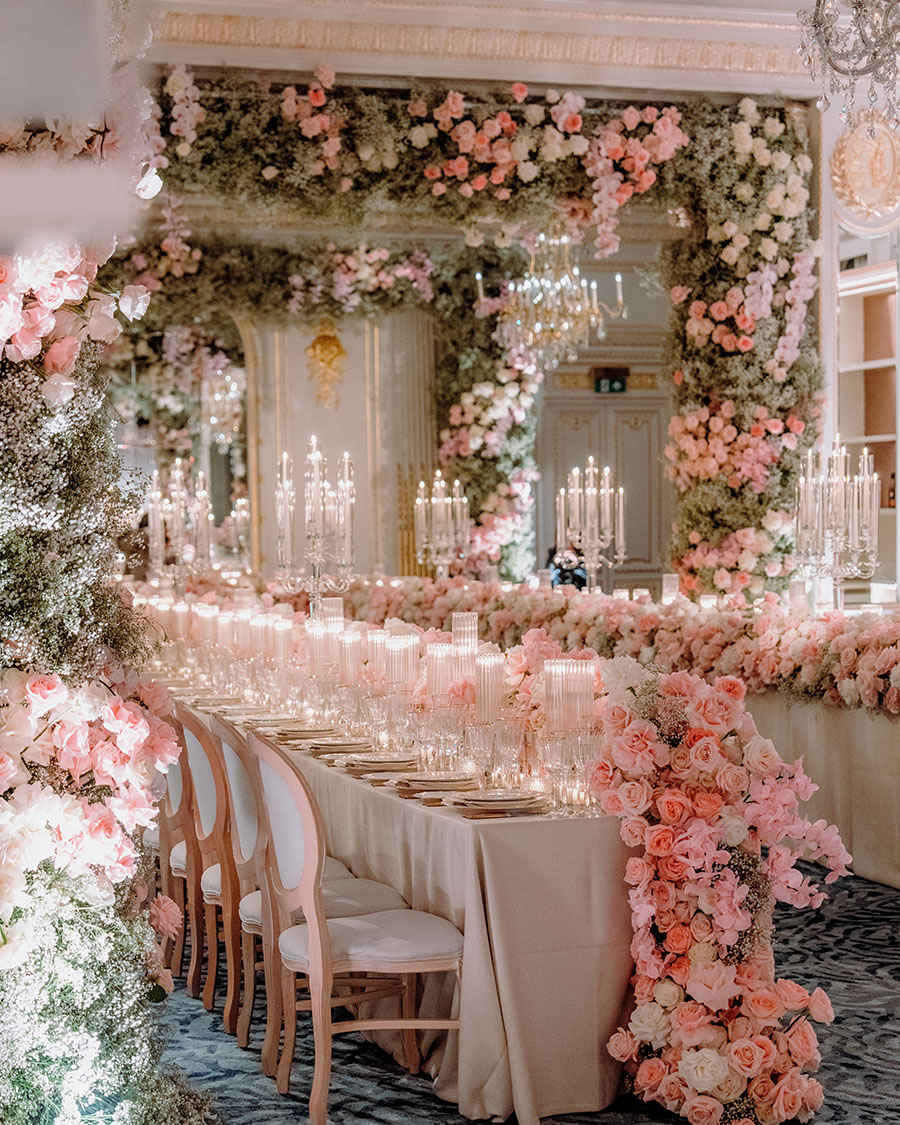
The Gypsophila was never filler. Used in several weights from ultra-light to the heavier, more expensive varieties, it became the element that gave the whole design pattern and gradation. In contrast to the roses, movement through the arches where phalaenopsis orchids trailed through the structure. Every element is placed with hierarchy in mind: where the eye lands first, where it travels, where it rests.
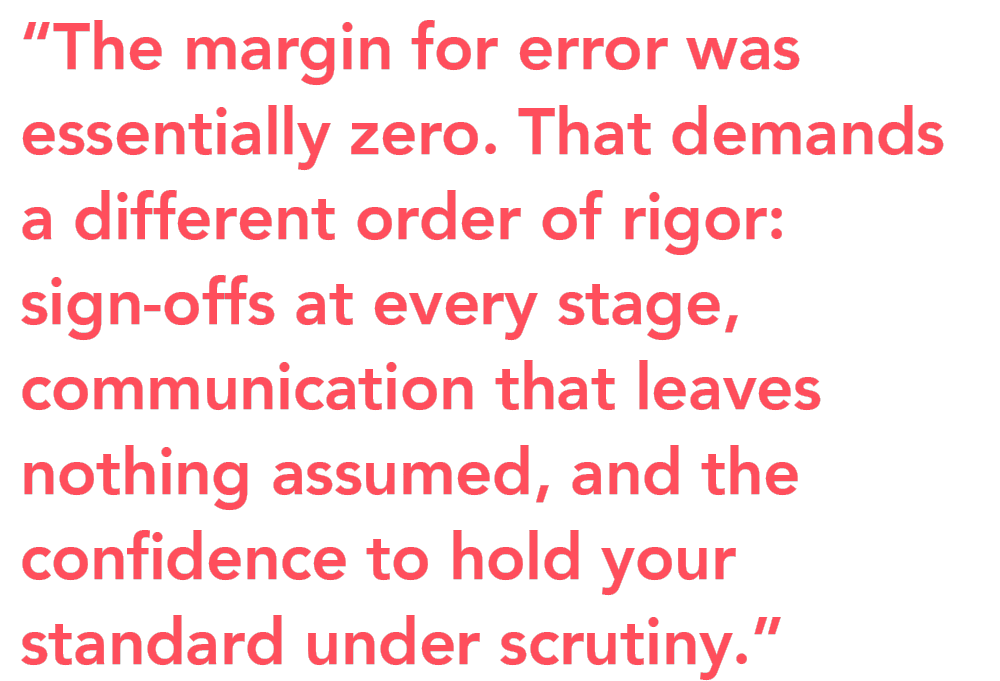
The margin for error was essentially zero. That demands a different order of rigor: sign-offs at every stage, communication that leaves nothing assumed, and the confidence to hold your standard under scrutiny.
Availability shapes the stems you can use. It doesn't have to shape the design itself. The color story, the texture, the scale, the structure; none of that changed because of what we could or couldn't source. Constraint, it turned out, sharpened the design rather than limiting it. With a fixed palette of what the market could give us in six days, every decision became more deliberate.
Friday: The Build
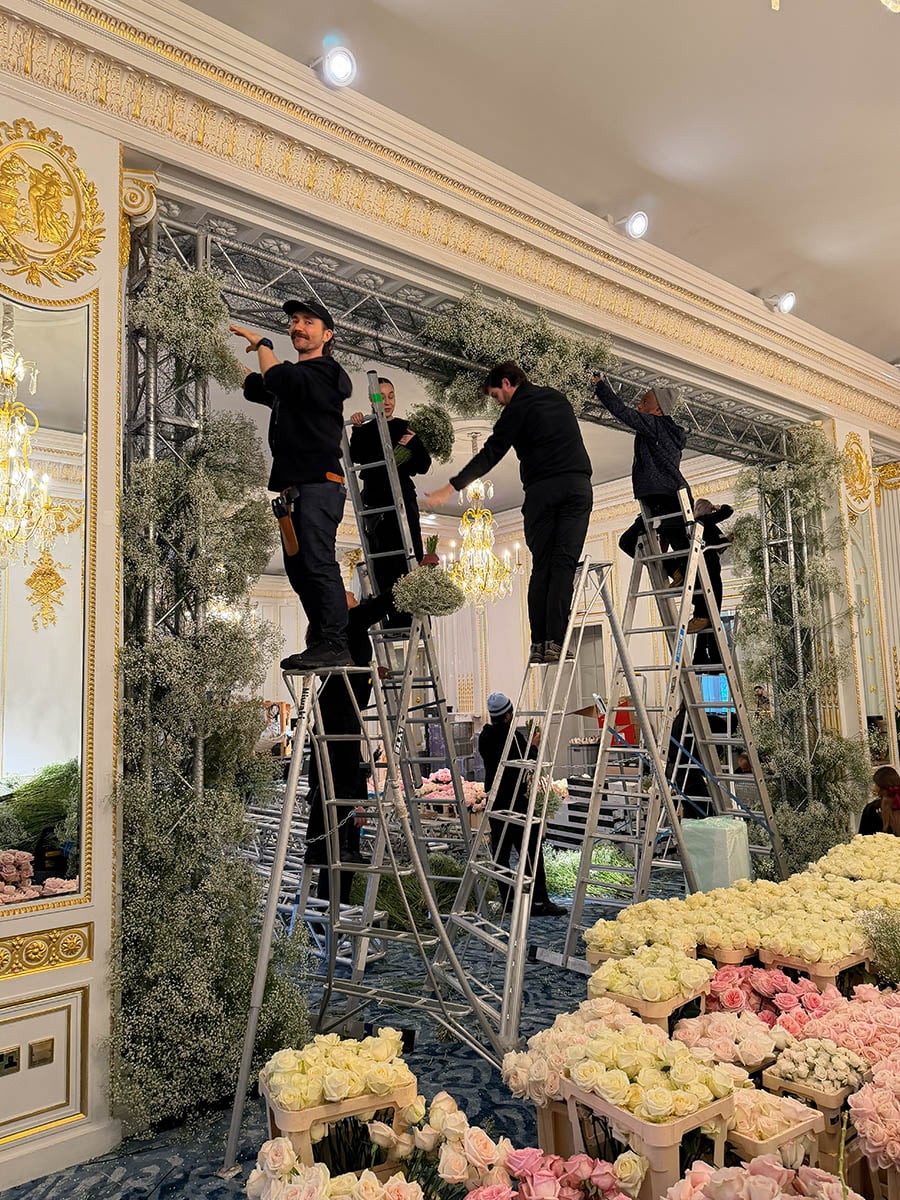
Seven vans. Twenty-eight people on site over two days, alongside event production, audio, and lighting crews. Our head of events, Melissa, led the project. Our head of floristry and operations, Michalina, executed it on the floor. Michael oversaw sourcing and sustainability standards; Michal held the creative vision and kept a pulse on every design decision as the room took shape. A job this size lives or dies on the hands on the stems, and we are fortunate to have a network of freelance florists without whom none of this would have been possible.
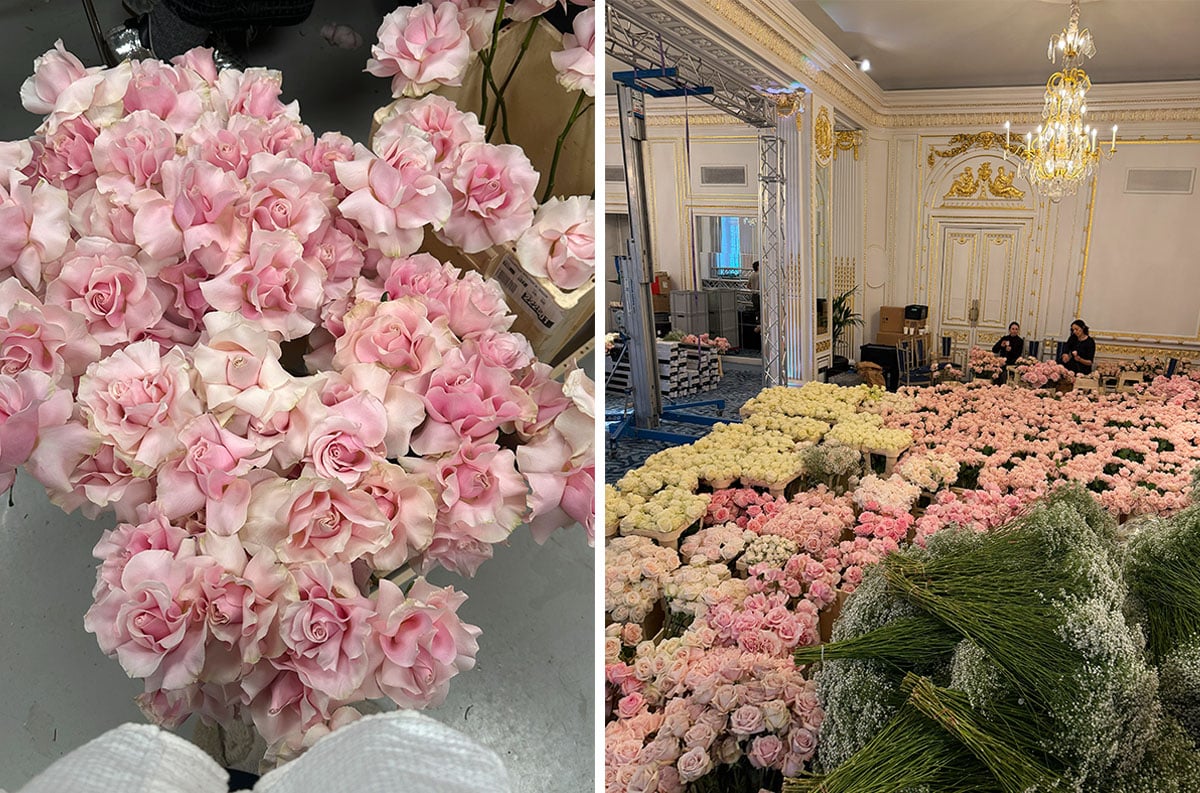
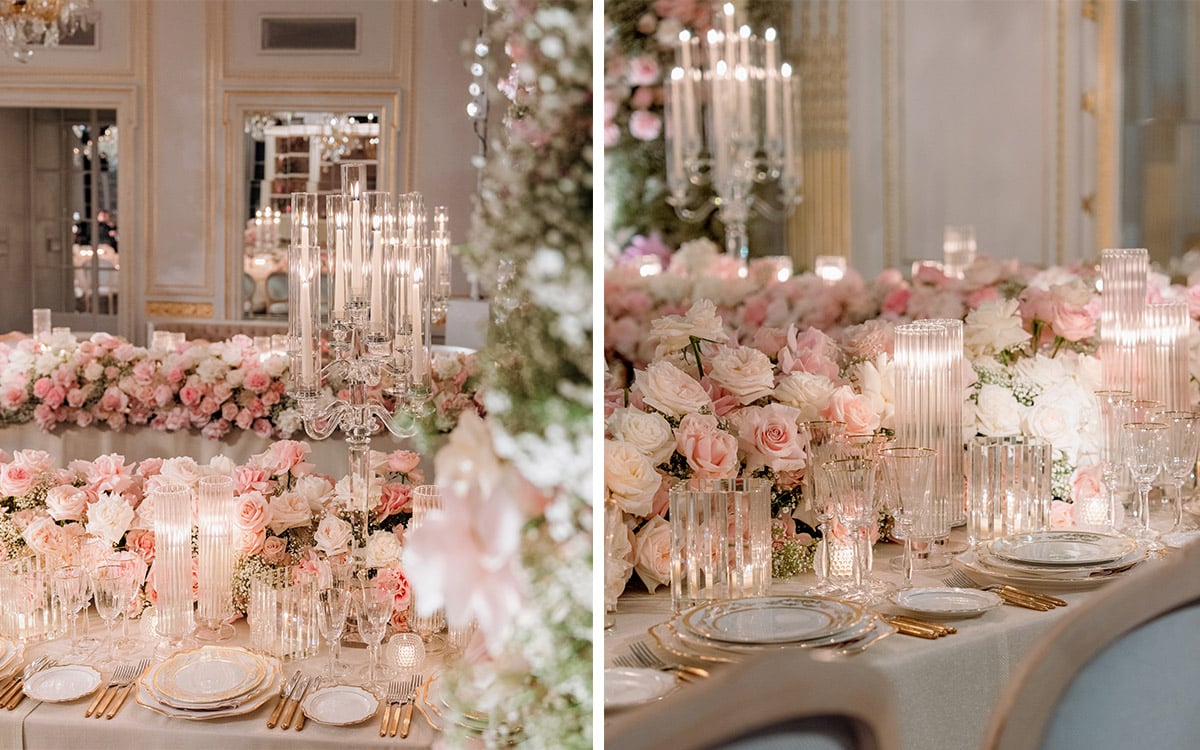
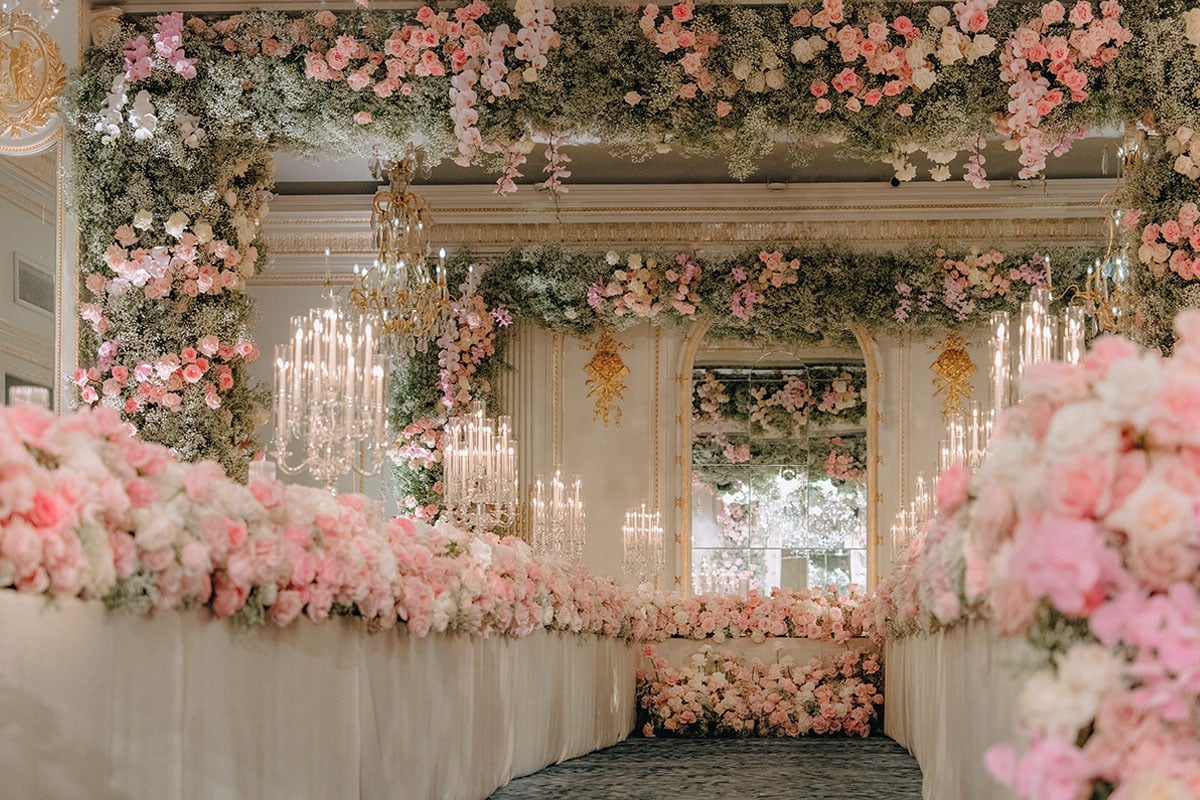
On the first morning, the room was an empty shell. By the end of the second day, floor-to-ceiling arches framed the entire room, dense with Gypsophila, blush and ivory roses, and trailing orchids. The table runners ran the full length of the dining room, low and abundant, with tall crystal candelabras rising through them. The fluted columns with their gold gilding, now framed rather than wrapped, drew the eye upward to where the room's original grandeur met what we had built inside it. A space where those inside felt surrounded by art, by fragrance, by the sense of an evening about to unfold.
Saturday: The Room
Walking into a finished room before anyone else has seen it is a particular feeling. You are aware of the sheer scale of what has been made, and you feel the weight of every hour that went into it.
Almost 30,000 stems. Four-meter arches spanning floor to ceiling. Table runners the length of a grand dining room, candlelit from within. The space had a completeness that made it feel permanent, as though it had always looked this way, and at the same time, you knew with absolute clarity that it existed for a single day and would never be seen again. That tension is, in some ways, the whole point of what we do.
The bride walked in, looked up, and thanked us. Everything that had gone into it, the scramble, the hours, the window where it could have gone the other way, culminated in that moment.
Early hours of Sunday: Leaving Without a Trace
The breakdown was planned before we cut a single stem. Choosing mechanics for how an installation comes apart and what happens to the material afterward shapes every structural choice made during the build. Reusable frames, reusable mesh, basalt-based foam rather than petrochemical. If you design for disassembly from the beginning, the breakdown at 2 AM is fast and clean; nothing gets improvised, nothing is left next to a skip.
That night, everything came back to the studio. Floral waste was separated from mechanics and sent to compost via our COM:POST partnership. The reusable frames and mesh were cleaned and stored. The basalt foam, which breaks down into inert minerals rather than microplastics, went to compost. Not a single element from this wedding went to landfill.
Six Months On
A project of this scale and pressure didn't change our thinking. It tested it and proved it holds.
It's much easier to maintain standards when you have months to plan. This job was the opposite of that, and what it demonstrated is that our standards are not conditional on having time. Ordered within four hours, every stem was still FSI-accredited. Broken down at 2 AM after a 27,500-stem wedding, nothing went to landfill.
The challenge didn't lower the bar. Limitations sharpened the design rather than weakening it. Scale and pressure don't have to dilute the work. They can concentrate it.
That's the part that stays with us. And if we could change one thing? A summer date might have made the sourcing just a little easier.