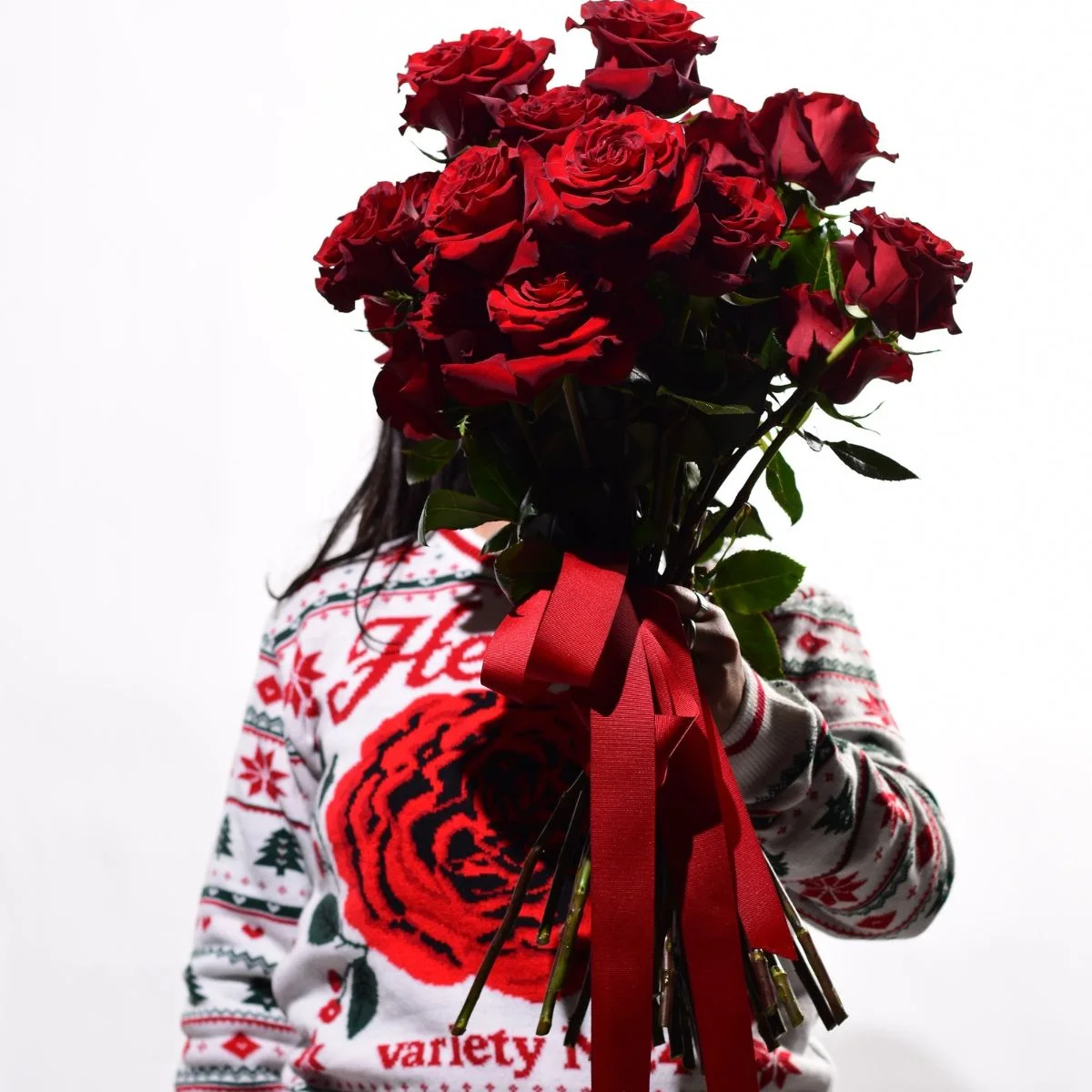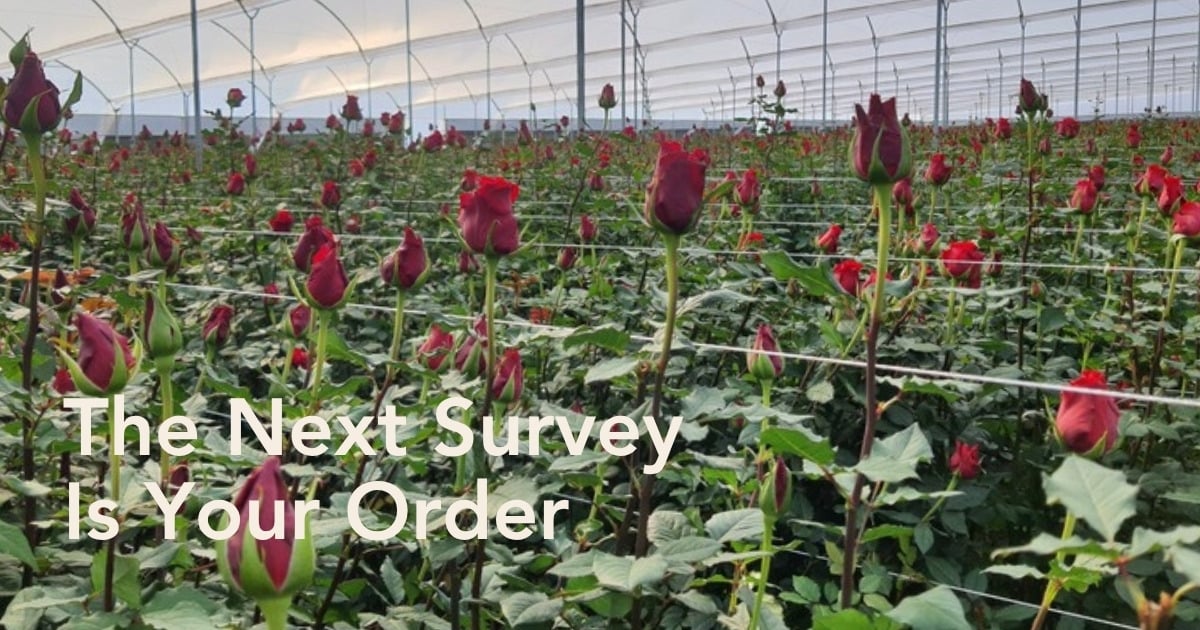
Ask the farms that grow it, and the Born Free rose pays its way. In De Ruiter Ecuador's May 2025 survey, half of the growers who answered said Born Free earns more per square meter than the other reds in their greenhouse. Only three in eighteen said it earns less.
Ask the market, and the name is still catching up with the plant. That gap is the story, and it's getting smaller.
Why Growers Back the Born Free Rose
Start with Valentine's Day, because that's where a red rose earns its year. Growers time a flush for it, and on that flush Born Free pulls away. Marcelo Vallejo, general manager of De Ruiter Ecuador, puts numbers on it:
"On a flush, you can get 4.2 to 5 stems per plant, compared with 2.5 to 3 for Freedom."
-Marcelo Vallejo, General Manager, De Ruiter Ecuador
That's up to twice the red stems from the same plant, in the week it counts. Or turn it around: fewer plants for the same Valentine's order.
Across the whole year, the gap is smaller but still there. De Ruiter's averages put Born Free at 1.4 to 1.6 stems per plant per month, against 1.0 to 1.2 for Freedom and 0.8 to 1.0 for Explorer. You can do the math on a square meter yourself.
The growers see it too. Asked in 2025 what sets Born Free apart from other reds, they put productivity first by a distance: 15 of 32 answers. Color and opening came second with four, and zero blackening third with three.
The same survey asked what growers thought of De Ruiter's promotion of the rose. One answer says more about the red rose trade than about any campaign:
"Great because it helps position the variety, since everything is sold based on trends rather than characteristics, and as a farm, it helps us have a productive red that sells."
-A Born Free grower in Ecuador, De Ruiter survey, May 2025
Would they recommend it? Twelve of 17 growers said they'd likely recommend Born Free to other growers or distributors, eight of them very likely. In February, we called it the red rose growers quietly make money with. Half of them now say so themselves. And they keep planting it: Born Free now ranks among the ten best-selling De Ruiter varieties in Ecuador ever.
The Part of the Survey Buyers Should Read
Now the other half of the same survey. Fifteen of 17 farms had no standing order for Born Free. And when growers were asked what their customers say about the rose, the most common answer was that customers don't know it, "therefore, neither florists nor retailers ask for it."
That was the picture in 2025, and it's changing. Since 2024, the Born Free name has picked up, and more of the market asks for it each season, De Ruiter says. Buyers are starting to know the name, although a fair share still goes out in mixed boxes. The growers are building the name in the market, just as De Ruiter is.
So the name is catching on, but slower than the rose itself. That isn't a quality verdict. It's a visibility problem, and the trade can fix it faster than any breeder can.
What Born Free Gives You as a Buyer or Florist
So why would you put it on the order? Here's what De Ruiter and the growers point to.
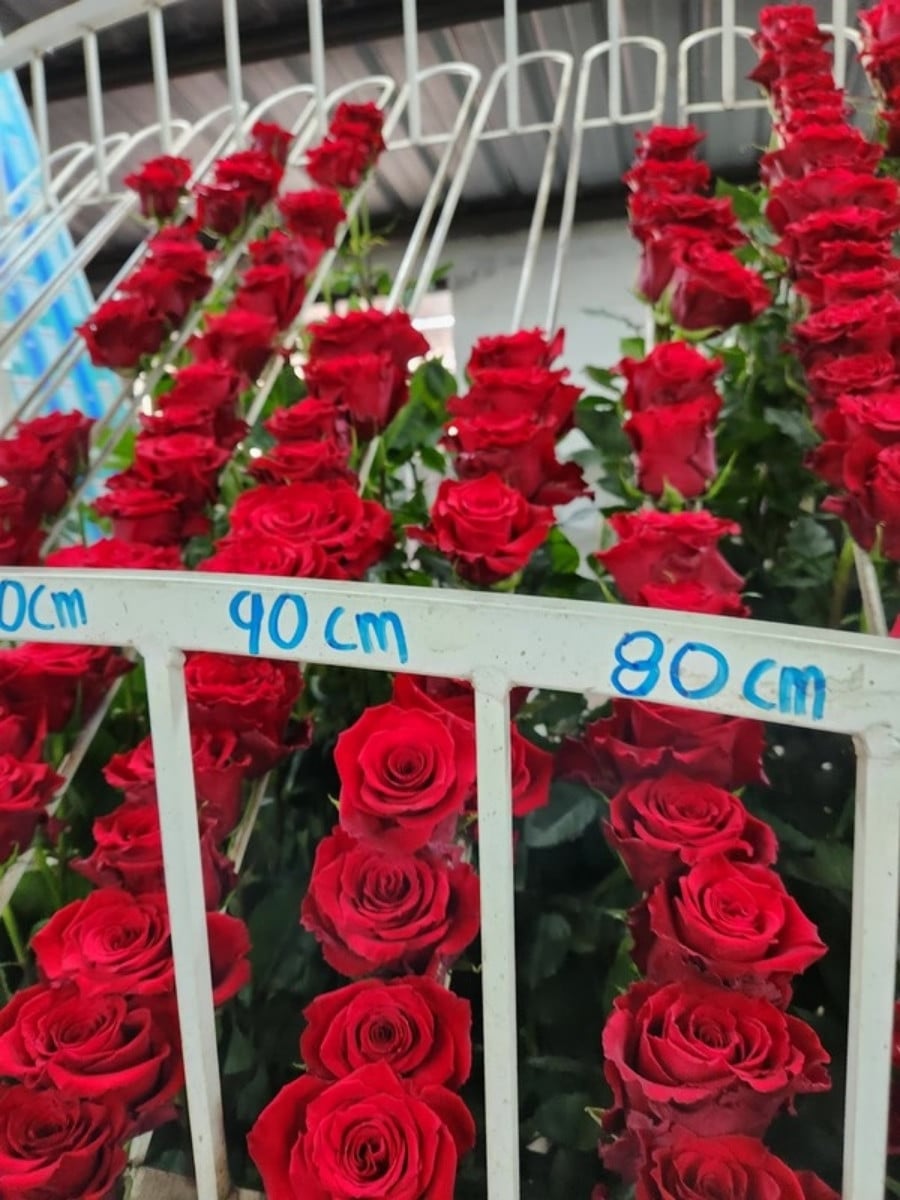
Volume when it counts. More stems per plant on the Valentine's flush means more red to go around in the one week every buyer needs it.
It sells as red. Born Free doesn't need its name on the sleeve to do its job. De Ruiter says it can be sold simply as "red," and some growers' customers already take it as a replacement for other reds.
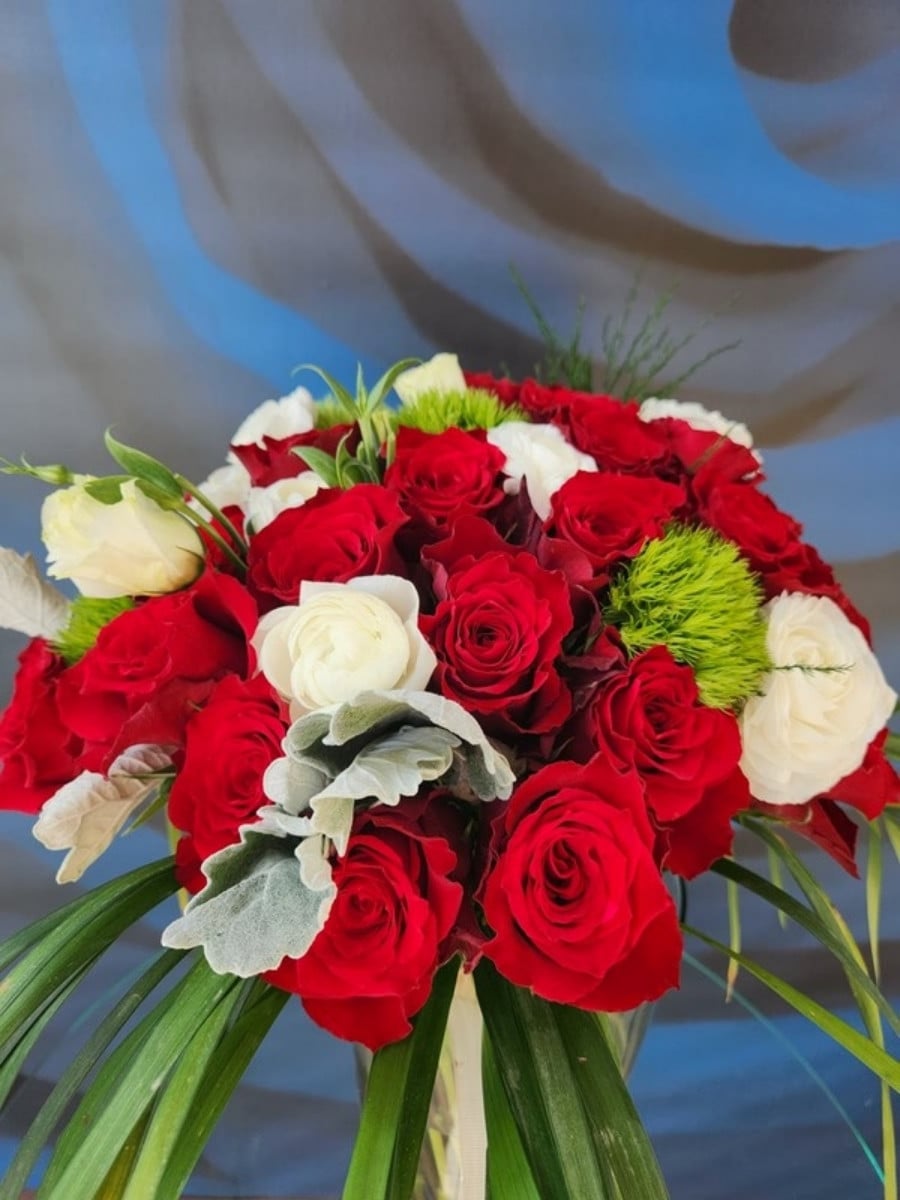
It's built for bouquets. De Ruiter positions it for bouquets and for arrangements that look different from what you'd make with Explorer or Freedom. One grower's expectation in the 2024 survey fit in five words: "It is excellent for bouquets."
It lasts. In 2024, the growers whose customers had tracked it reported 14 to 15 days of vase life.
It's nearly thornless. Fewer thorns mean less time spent cleaning each stem, whether you're bunching on the farm or binding at the bench. In 2025, 14 of 21 growers said few thorns matter to their market.
It travels. Growers call it a good traveler, and De Ruiter says it handles sea freight and dry storage well. About half the growers didn't know that last part yet, which tells you how much of this story still has to reach the trade.
Where to Buy Born Free Roses Before Valentine's Day
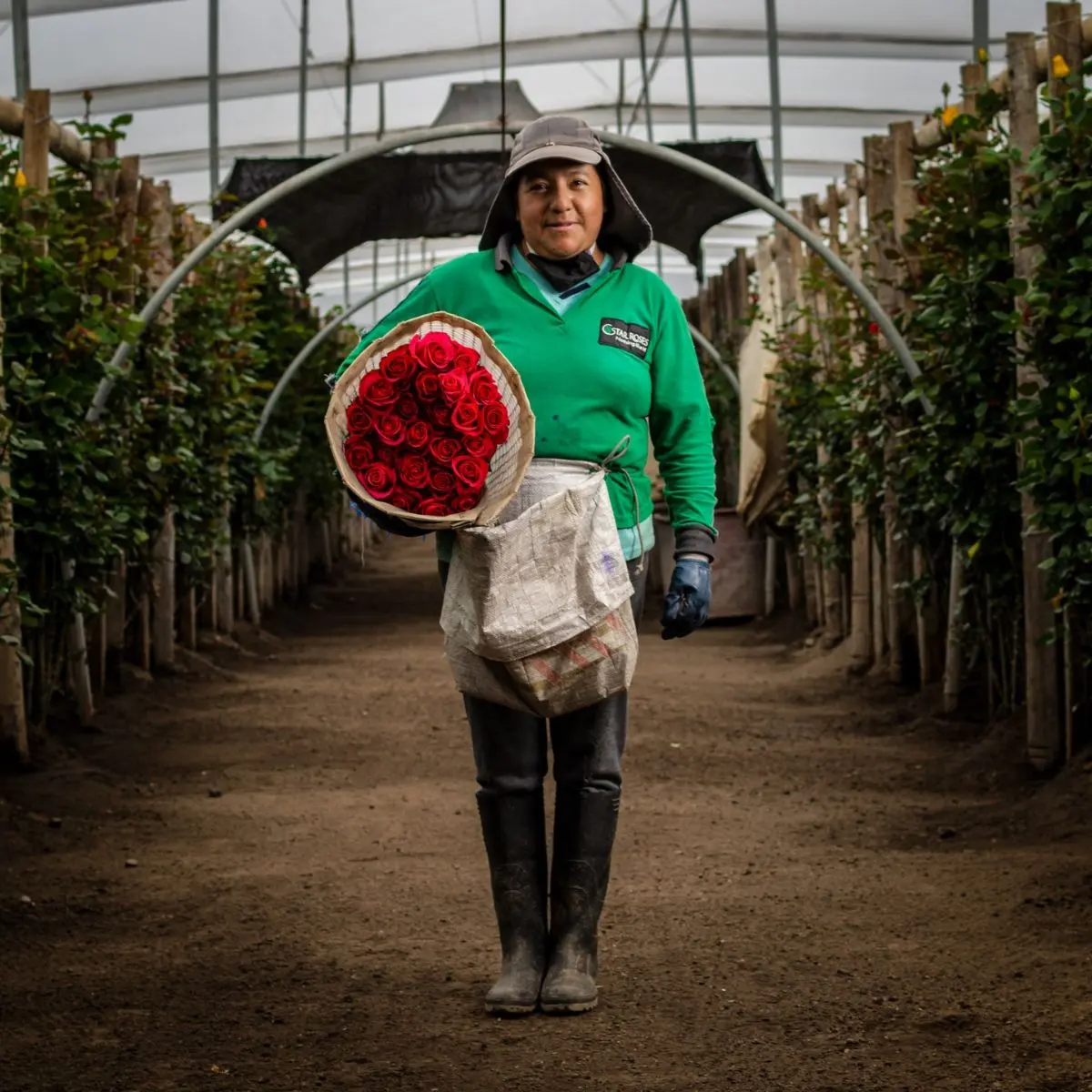
Born Free is grown in Ecuador only, by 26 farms today:
- Agrivaldani
- Agrocoex
- Agroterranorte
- Alegría Farms
- Andrearoses
- Anniroses
- Denmar
- Ecuaplanet Roses
- El Trebol
- EQR
- Foreverflor
- Galápagos
- Growflowers
- Killuyurak
- La Rosaleda
- Latina Farms
- Monterosas
- Much Flowers
- Native Blooms
- Neofarms
- Rosadex
- Rosaprima
- Rosas del Corazón
- Sánima Gardens
- Stampsybox
- Star Roses
More farms will start producing Born Free soon.
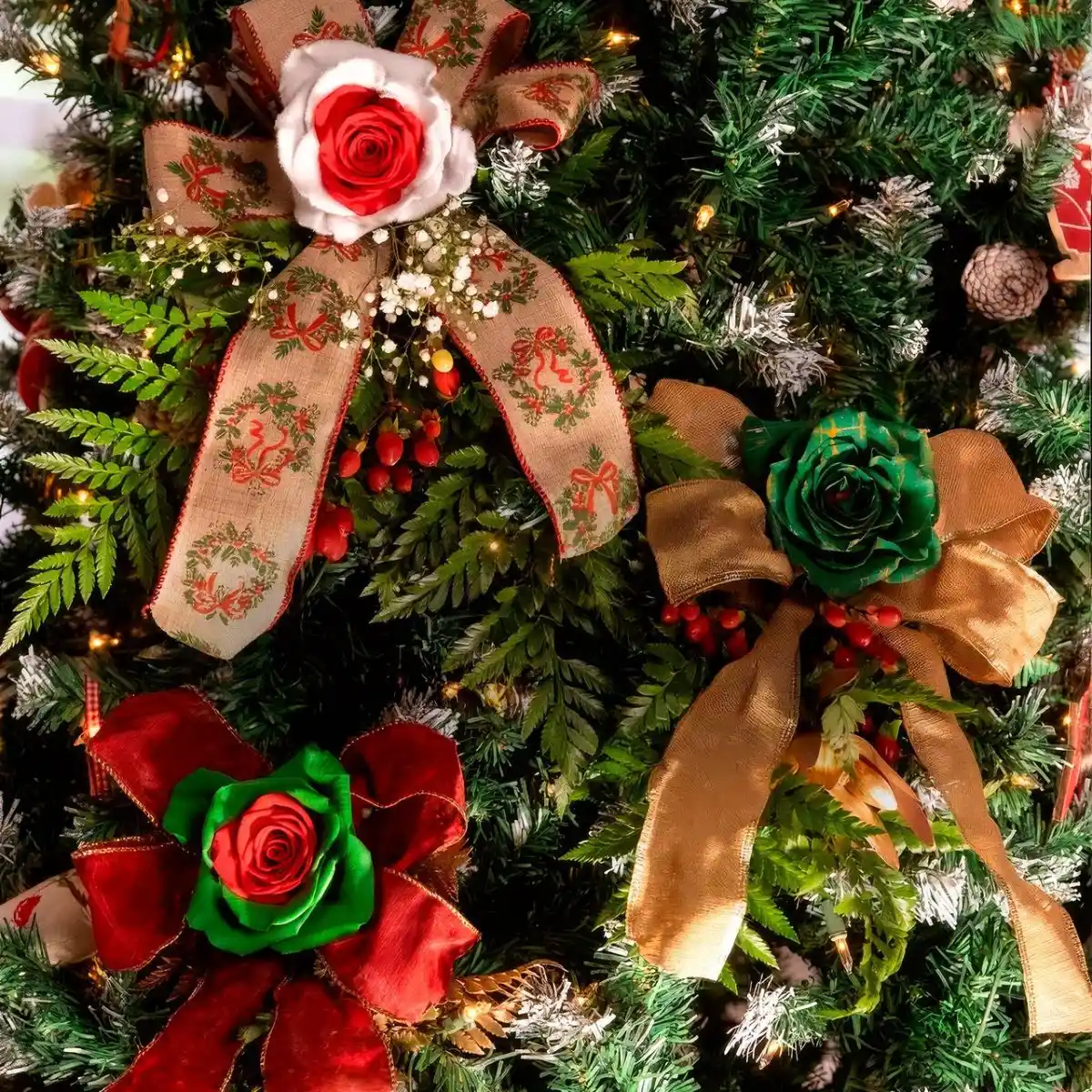
If you buy reds for Valentine's Day or Women's Day, ask your exporter for it by name and put it on the standing order. That's how a variety gets out of the mixed box. Designers have already shown what they do with it.
The growers have made up their minds. The next survey is your order.