No flower is truly black. Dark flowers get as close as a petal can, with so much deep red or purple pigment that they read as black until the light hits them. Ask a florist for something in black, and that is what you get: the darkest shade a breeder has managed to push a rose, a tulip, a Dahlia, or a calla toward. In goth-styled weddings, Halloween arrangements, and moody editorial shoots, that near-black is exactly the point.
Why Almost No Flower Is Truly Black
There is no black pigment in a flower's toolkit. Petals get their color from a handful of pigment families: anthocyanins for red, purple, and blue, carotenoids for yellow and orange, and a few smaller families for the shades in between. None of them is black on its own, and a petal has no separate "black" ingredient to reach for.
So how does anything read as black? A flower piles on anthocyanin until there is almost nothing left for a petal to do but absorb light. When a flower's cells stack an extremely high concentration of anthocyanin, and the shape of those cells helps trap what little light would otherwise bounce back out, the petal soaks up nearly the whole visible spectrum. The small amount that does bounce back reads as black to the human eye, even though the same petal, held up to strong light, usually shows a deep maroon, plum, or burgundy underneath. That is the mechanism a 2022 review in Horticulture Research lays out for how black color accumulates in ornamental and food crops.
Thursd's own Marcel de Romph put it more bluntly back in 2020, in No Such Thing as a Black Flower:
"There is no such thing as a black flower. Simply because black is no color in nature."
He is still right. Six years on, the closest breeders get is a catalog name: Black Baccara, Black Magic, Black Hero, and a long list of others that borrow the word because black sells, not because the flower reads black under a lab light. What you are actually buying, every time, is the darkest shade a breeder has managed to push a variety toward. That is not a lesser thing. It is, if anything, the more interesting one: a rose or a tulip pushed right to the edge of a color that should not exist on a petal at all.
The Darkest Flowers You Can Actually Buy or Grow
If true black is off the table, dark is very much on it. Here is where the darkest of each popular flower type lives, and the full Thursd guide behind each one.
Black Roses

Start with the classic. Black Baccara comes closest among cut roses: a rose so deep red it photographs black under studio light, and the variety behind most "black rose" bouquets a florist will actually sell you. Some black roses on the market are dyed rather than bred, and the difference matters if you are buying one as a gift. Thursd's guide to black roses covers every dark variety worth growing or buying, the dyed ones included.
Black Tulips

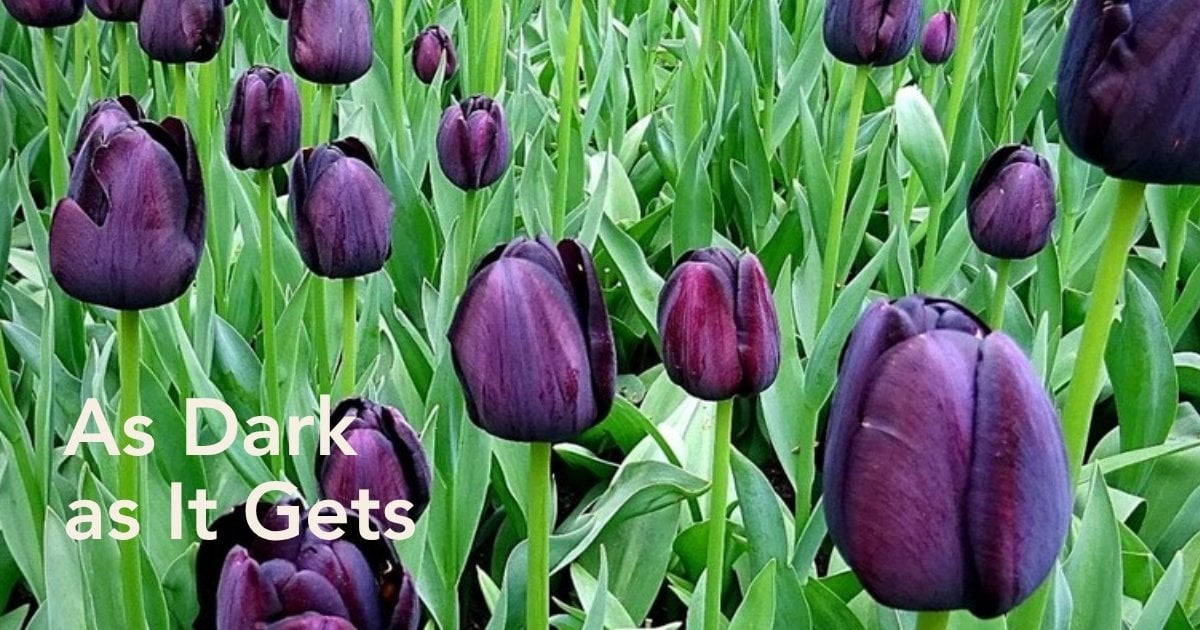
Tulips have the most famous origin story of the bunch. Alexandre Dumas wrote an entire novel, La Tulipe Noire, about the hunt for one in the Dutch Golden Age. Queen of Night comes closest today, a tulip so deep purple it reads black in a bed of spring color, with Black Hero and Paul Scherer close behind it. Thursd's guide to black tulips covers the darkest varieties, planting, and vase life.
Black Dahlias

Dahlias carry a double meaning here: the flower, and the unrelated 1947 case that gave the name "Black Dahlia" its darker fame. On the flower side, Karma Choc and Chat Noir are two of the deepest-colored Dahlia varieties a cut-flower grower can offer, both dark enough to earn the name honestly. Thursd's guide to the black Dahlia covers the varieties, what a black Dahlia means, and how to grow and style one.
Black Calla Lilies

Calla lilies do their own version of dark, with near-black varieties bred from Zantedeschia that read almost like velvet in a bridal bouquet. Calla Odessa and Calla Black Diamond are the two a florist is most likely to find as cut flowers, while 'Black Star' and 'Schwarzwalder' turn up as garden rhizomes. Thursd's guide to the black calla lily covers the darkest varieties, how to grow them, and how florists use them.
Kat Von D's Goth Garden

Not every dark garden is subtle. Tattoo artist and gardener Kat Von D built an entire black tulip field and a goth-styled garden around her home, planted almost entirely in near-black flowers and foliage. Thursd toured it and turned it into a plant-by-plant guide for building a goth garden of your own: black tulips, black Dahlias, and the rest of the darkest plants that will actually hold up in a border. Read Kat Von D's goth garden guide.
Best Black Houseplants for Halloween

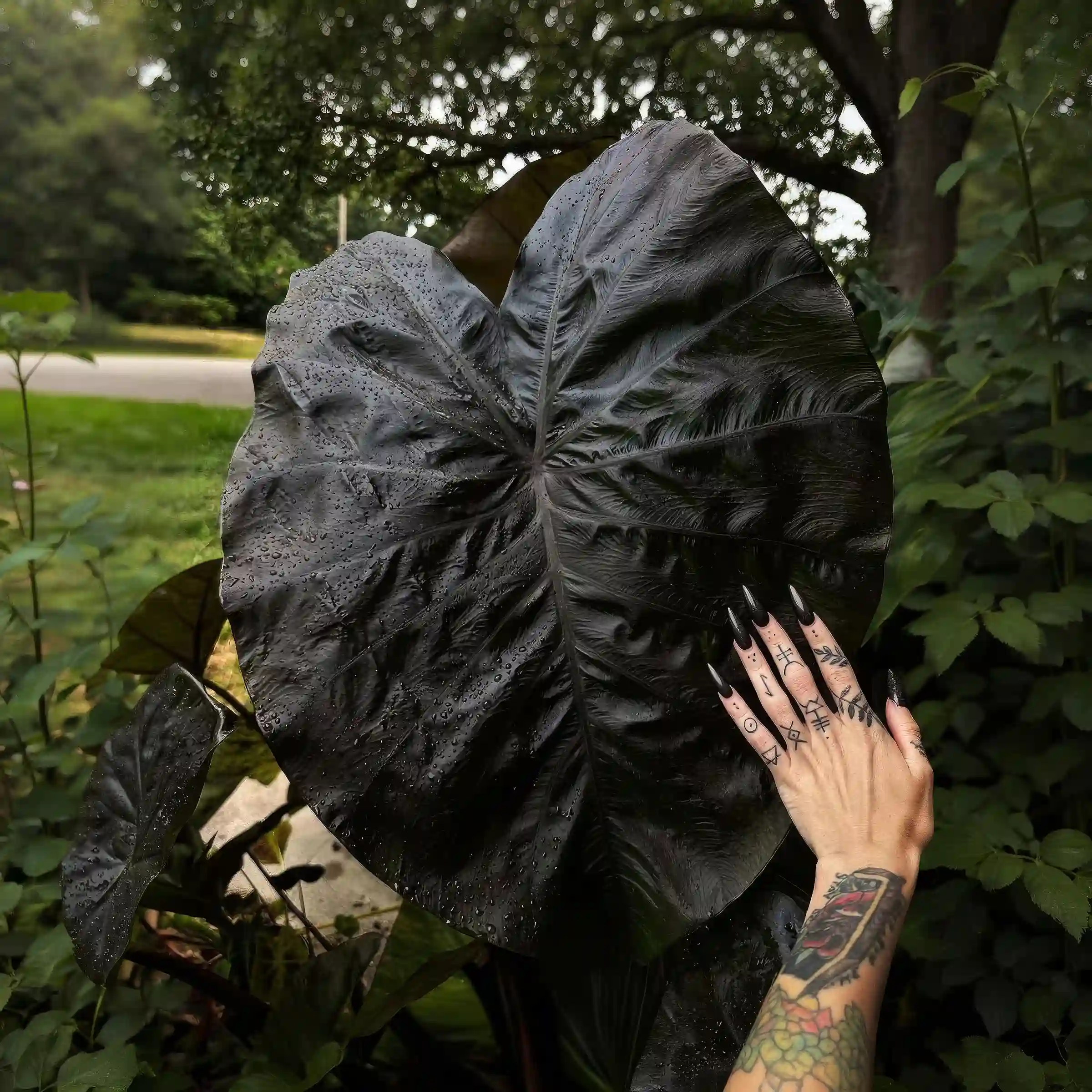
Dark is not just for the border and the bouquet. Indoors, black and near-black foliage plants like the Raven ZZ plant and Colocasia Black Magic do the same job on a windowsill that a black rose does on a table, and they hold their color a lot longer than a cut flower will. Thursd's guide to the best black houseplants for Halloween covers ten of them, with the care tips that keep their leaves dark instead of fading back to green.
Dark Flowers in Design, the Gothic Aesthetic, and Halloween
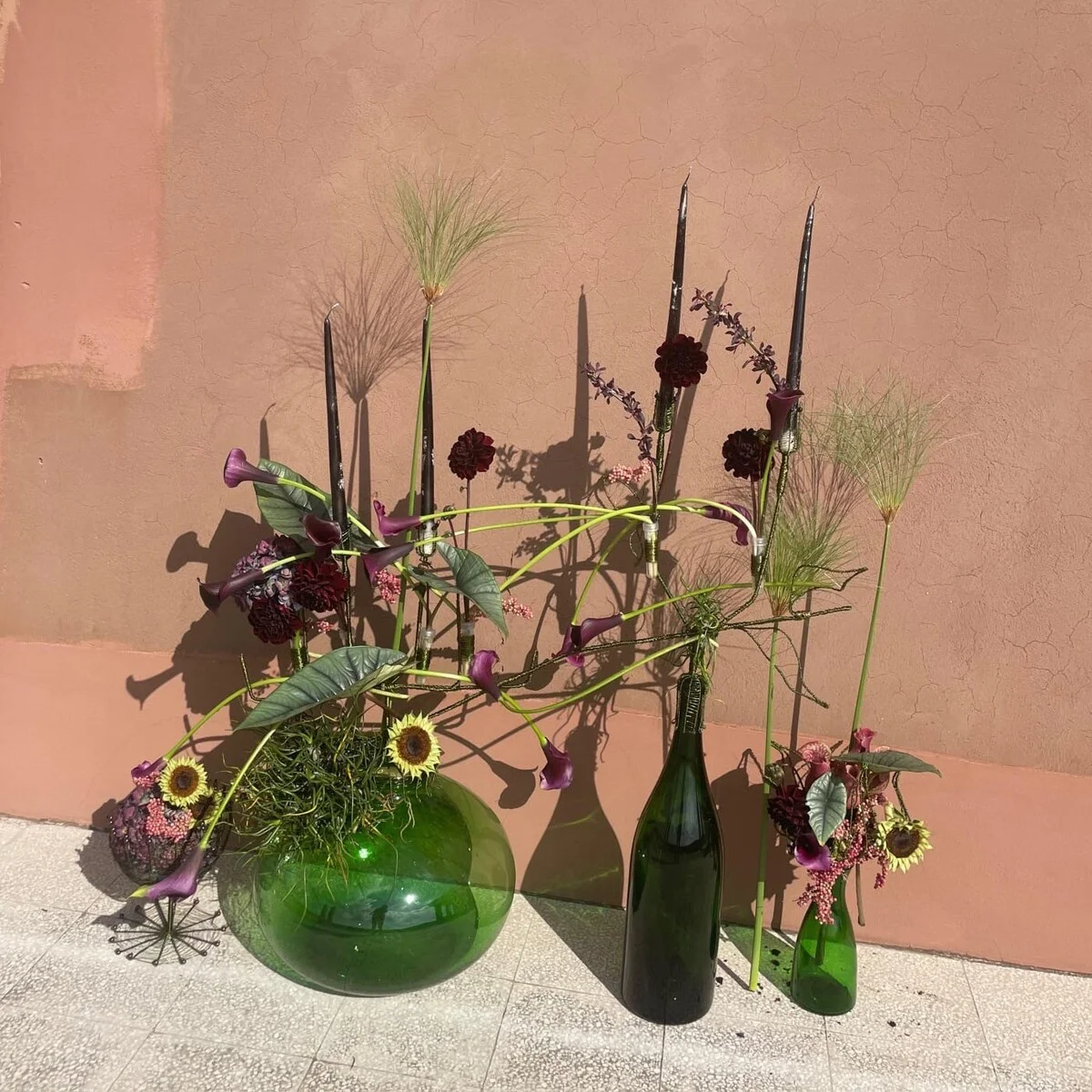
Dark flowers have long been tied to mourning, but that is no longer the main reason anyone buys them. The gothic aesthetic has pulled them firmly into weddings, editorial florals, and everyday arrangements over the past decade. A bouquet built from Black Baccara roses, Queen of Night tulips, and Chat Noir Dahlias reads as dramatic and romantic rather than somber, especially set against white or blush. Halloween is the other big moment for dark flowers: a centerpiece built around black Dahlias and near-black houseplants does the seasonal decorating job without a single plastic pumpkin in sight.
For florists, dark flowers also solve a design problem. They anchor a mixed arrangement the way navy or charcoal anchors an outfit, giving the lighter blooms around them something to stand out against instead of competing for attention.
None of this needs an actual black flower to work, and maybe that is the appeal. Dark flowers ask you to look twice: is that rose really black, or just the deepest red there is? For the 15 flowers that get closest to true black, across genus and season, see Thursd's full roundup of the 15 best black flowers.
Sources: Marcel de Romph, No Such Thing as a Black Flower, Thursd, 2020; Why Black Flowers? An Extreme Environment and Molecular Perspective of Black Color Accumulation in the Ornamental and Food Crops, Horticulture Research, 2022.
Featured image: Rose Black Baccara in an arrangement, photo by @ladyflores.la. Header image: dark tulips at Keukenhof, photo by @gabriela_zver.