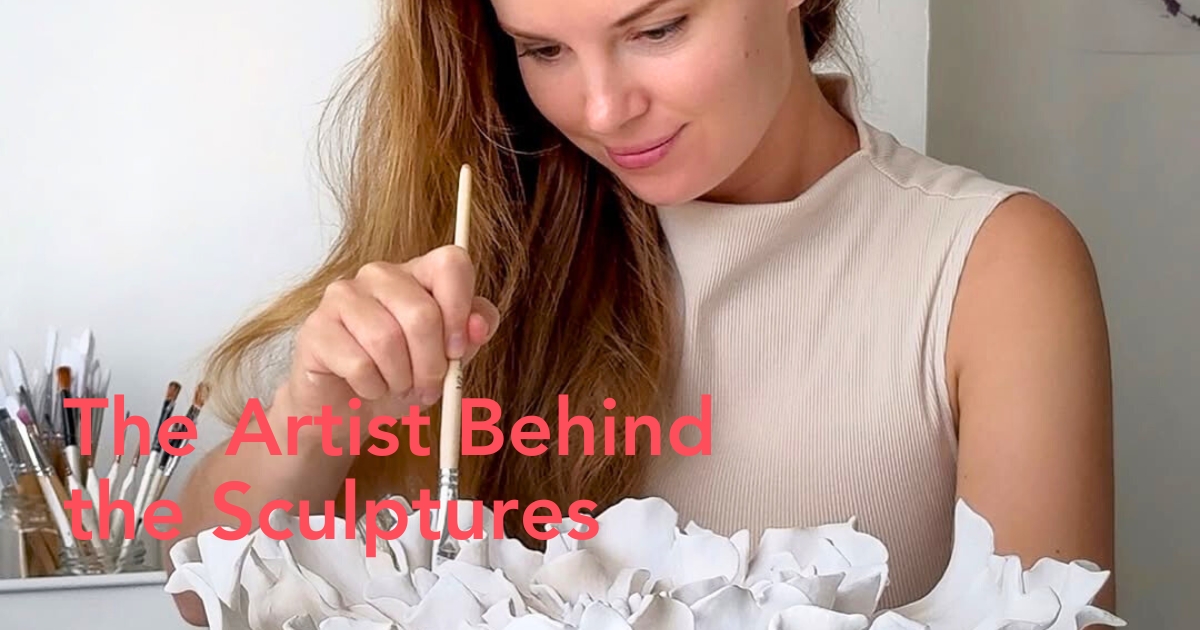
Mila Ilingina’s work doesn’t resemble traditional floral art. Her flowers never lived in real life. At least not in the botanical sense... Born in Russia and now based in the United Arab Emirates, Ilingina arrived at floral sculpture through an unusual combination of paths: graphic design, filmmaking, and ceramics. All three left traces on her practice. The precision of design, the framing instincts from film, and the tactile fluency of clay come together in the objects she makes today.
Mila Ilingina – Contemporary Artist and Flower Sculptor
Mila's studio output centers on hand-shaped wall sculptures made from air-dry clay and finished with oil paint. Each piece is created individually, built slowly, without molds or shortcuts. The method relies on repetition, muscle memory, and the kind of attention that develops when work is done at the pace of the material.
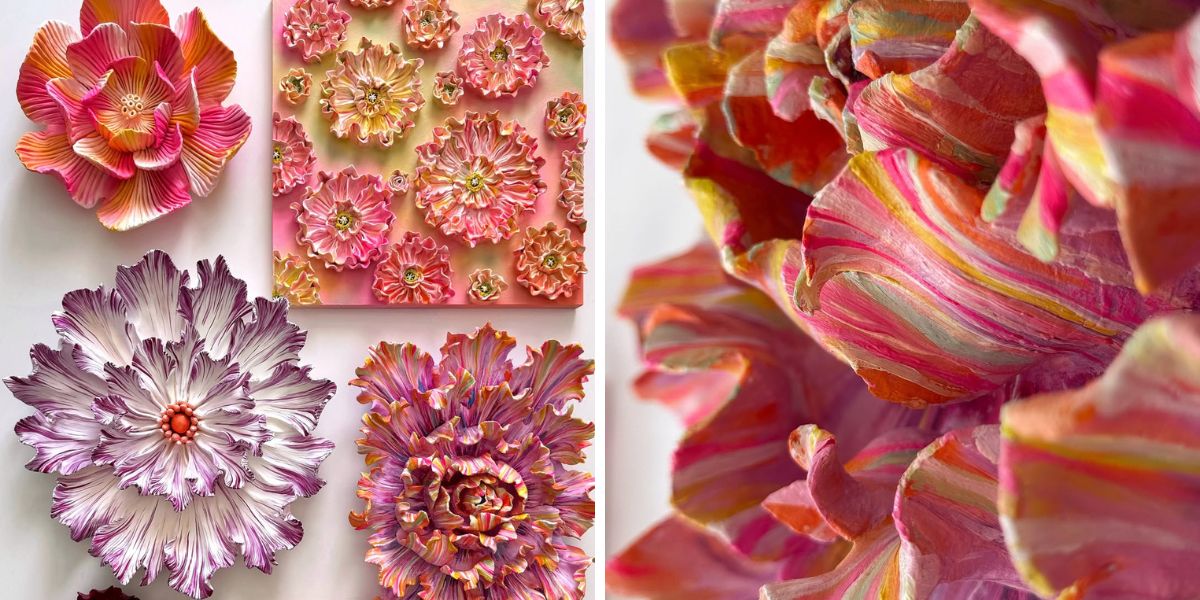
A few of her floral sculptures, ready to decorate any space at home
The sculptures begin as sheets or fragments of softened clay. Ilingina folds, presses, and stretches them until the surface starts to hold tension. Edges thin out, curves settle into place, and the piece starts to guide its own direction. She allows these small physical decisions to accumulate, creating forms that feel steady and strong, ready to be painted soon.
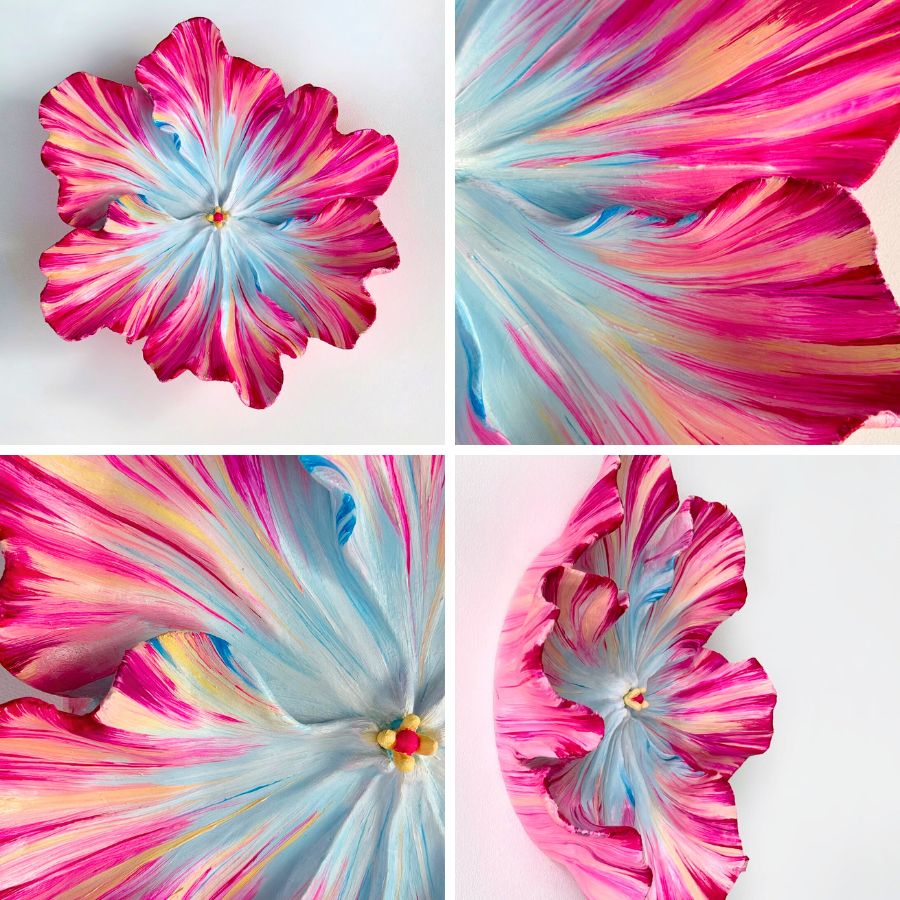
Once the structure is dry, color becomes another layer of work. Oils are brushed on in thin passes, sometimes transparent, sometimes heavier, always following the shifts and rises of the clay. This way of painting builds a surface that changes with light throughout the day. Instead of only decorating, the pigment helps set a rhythm across the sculpture.
A Language of Shape and Surface Through Floral Art
The artist's work echoes natural structures since there are folds, arcs, and layered contours that feel familiar to anyone who has spent time observing organic growth, fabric movement, or the slow erosion of material. In the MARBLED Collection, color moves through the sculptures in diffused gradients and marbled patterns. The palette ranges from muted neutrals to concentrated tones. Each piece has its own internal logic with a small environment shaped by touch, pressure, and pigment, three of Mila's most important foundations for her work.
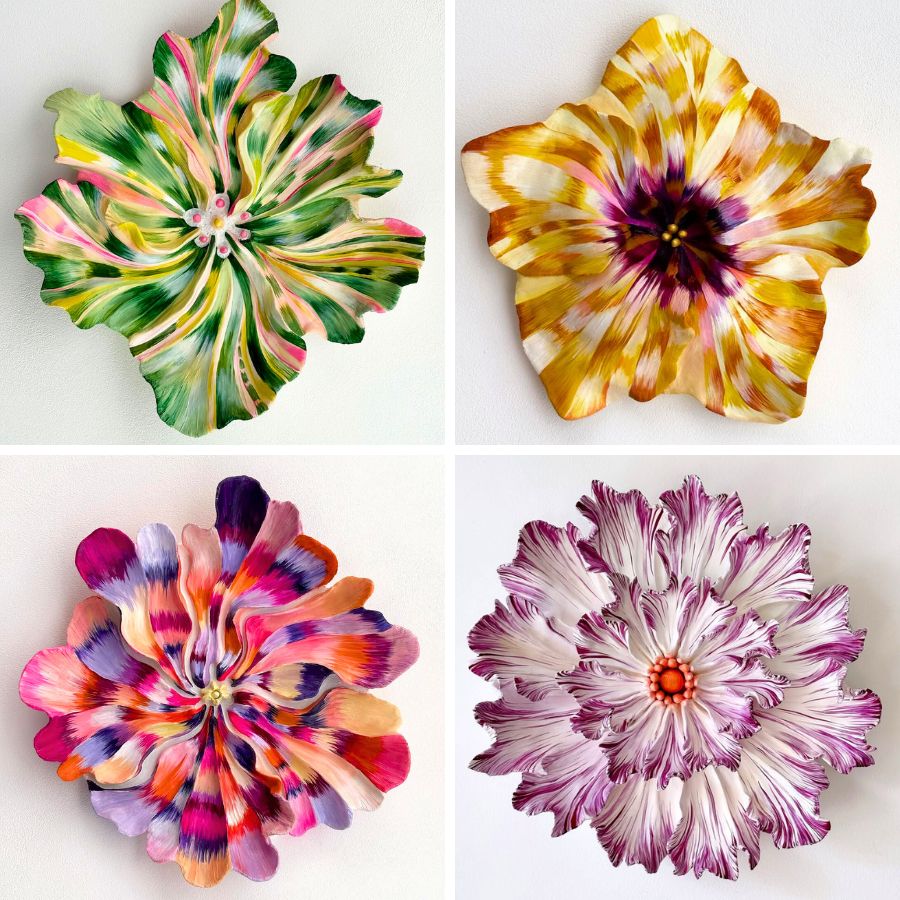
Ilingina’s sculptures are built through a fully hands-on process. She constructs each piece herself, handling the framework, layering, and finishing without external fabrication. This method keeps the work technically unified, with every stage following the same set of decisions and standards, resulting in forms that are structurally clear and internally consistent.
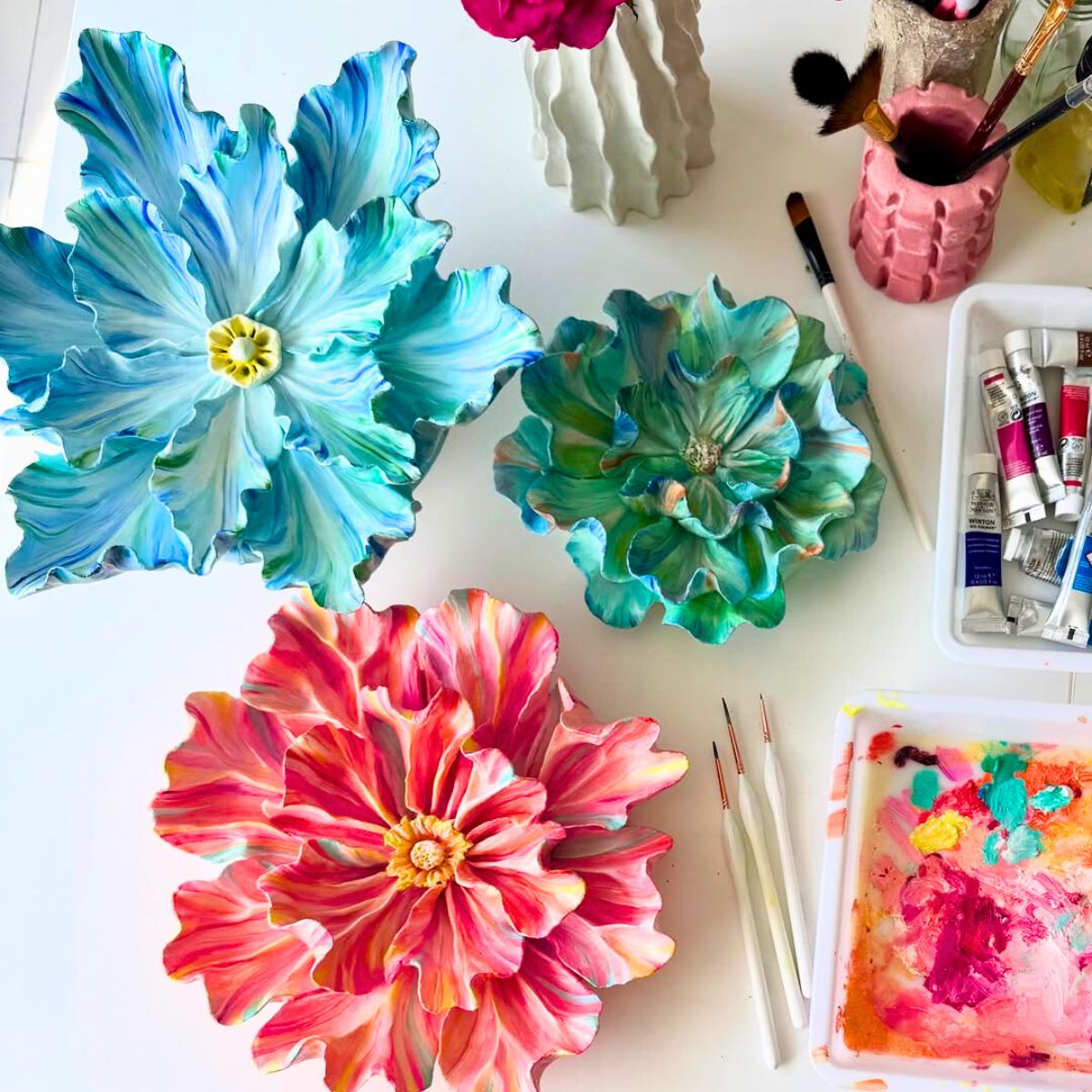
Her surfaces are the outcome of repeated adjustments in which edges are tightened and transitions clarified until the object reaches a stable configuration. In her work, proportions are very important and measured, while volumes are kept steady and detailed. This allows details to be introduced only when they support the overall form.
Across her practice, this approach creates a body of work identifiable by its construction logic. Their unity comes from the way she translates plant structure into volume. Curved 'petals', stacked layers, and stem-like supports follow the same shaping and assembly methods.
To see her full portfolio, make sure to visit Mila's Instagram account.
Photos: @mila_ilingina.