Inside San Juan's Coliseo de Puerto Rico José Miguel Agrelot, Bad Bunny's 'No Me Quiero Ir de Aquí' residency turns the arena into a landscape of mountain paths, weathered concrete, plantain leaves, and the familiar roofline of a Puerto Rican home. Designed by STURDY, with Adrian Martinez in collaboration with Bad Bunny, the production builds its atmosphere through place before scale, as the island’s architecture and terrain are at the center of the performance.
A Puerto Rican Landscape Inside El Choliseo
The residency, which ran across thirty nights in 2025 with early tickets reserved for Puerto Rico residents, was a major cultural event for San Juan. Its staging gave that larger moment a physical language. A stage mimicking a mountain faced a smaller B-stage shaped as la casita, so the arena becomes a cross-section of Puerto Rican memory, from countryside to front yard.
At the heart of Bad Bunny’s show is la casita, a typical one-story Puerto Rican house that works as a second stage and entry point. Set design studio STURDY shapes a pink facade, rattan patio furniture, a flat gray roof, and an air-conditioning condenser, leaning into details that many audience members could recognize at once. Production designer Mayna Magruder collaborated with art director Natalia Rosa on the house, which was modeled after a real home in Humacao featured in the Debí Tirar Más Fotos film.
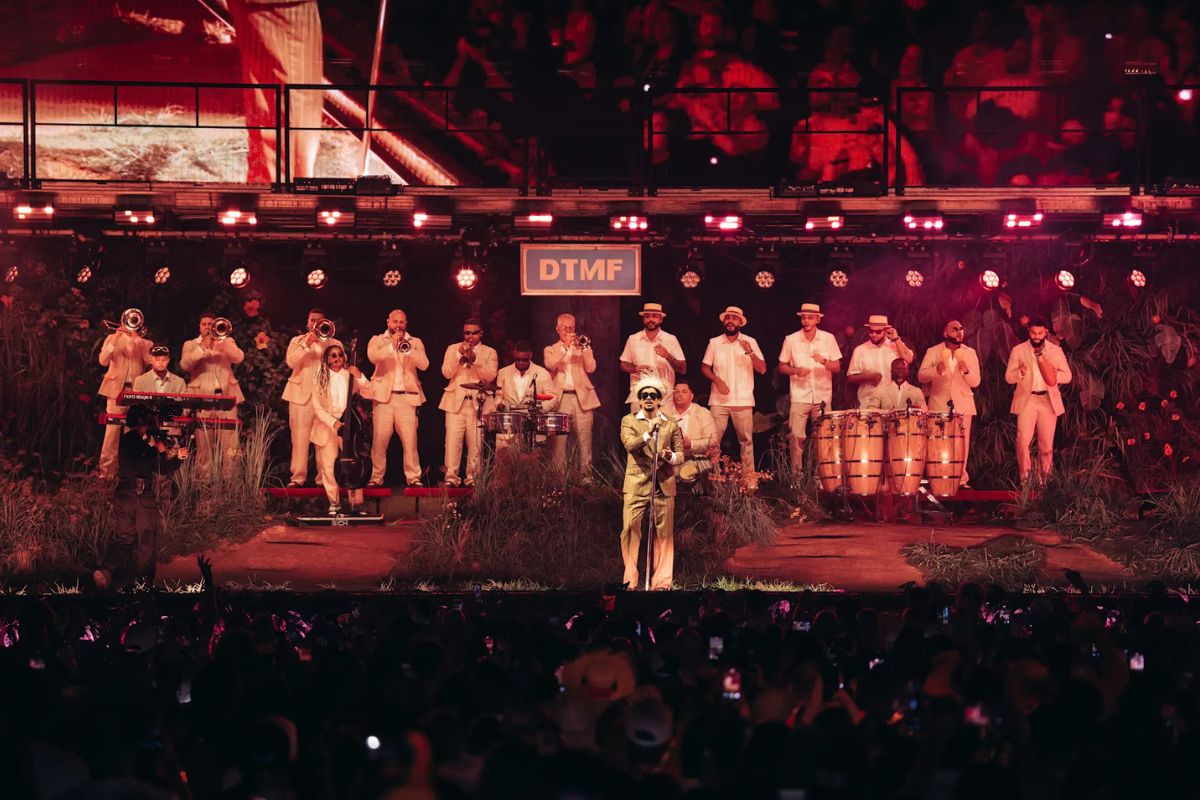
The house carries the emotion of the residency because it looks built from memory instead of from arena logic. Bad Bunny and guest performers move through the yard and roof, while selected fans and celebrities occupy the porch during the show. From the upper seats, the roof is the strongest image, with a deliberately worn surface that shows something seen from across the street or from a family balcony.
A Green Mountain Built for Music
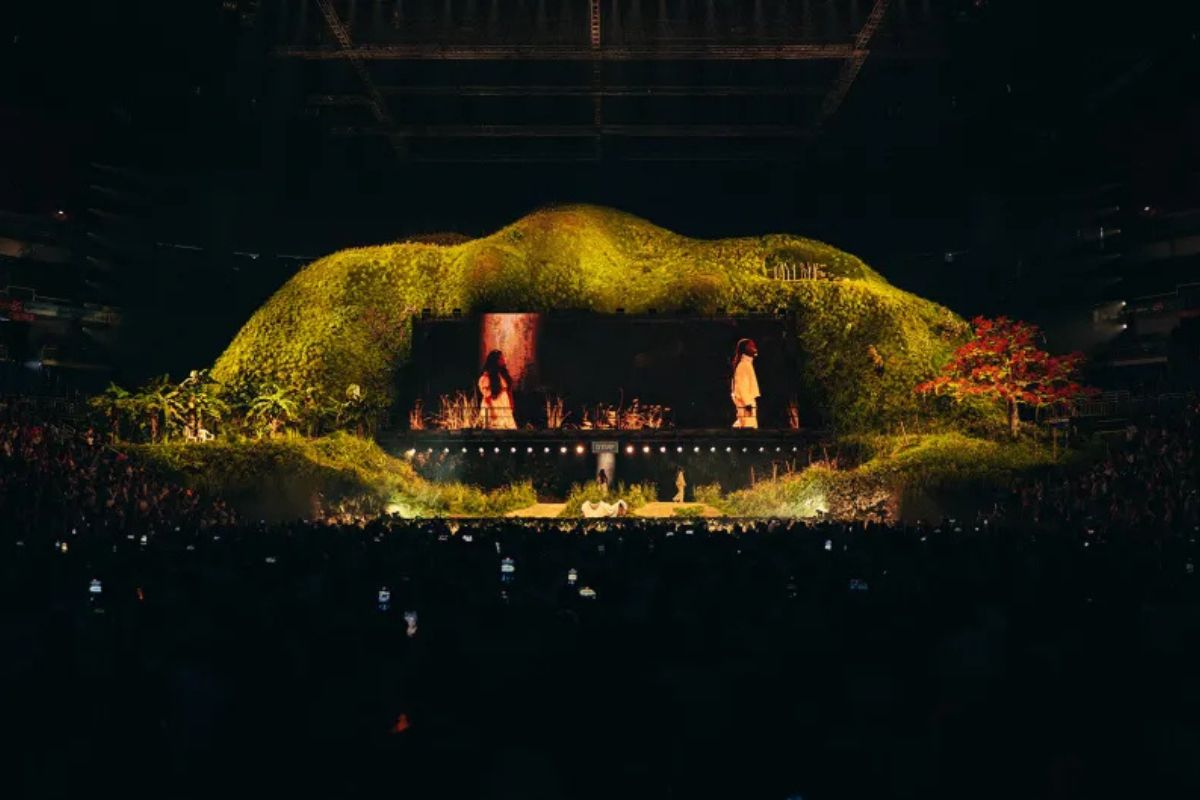
Across the venue, the main stage rises as a mountain inspired by Puerto Rico’s countryside, with references to the Cordillera Central and the mountainside town of Adjuntas. Production designer Mónica Monserrate developed the first concept drawings, while architect Gabriela Escalera translated the idea into a buildable structure with scaffolding, access points, lights, and stage circulation. The form avoids symmetry, giving each side its own trails and vegetation.
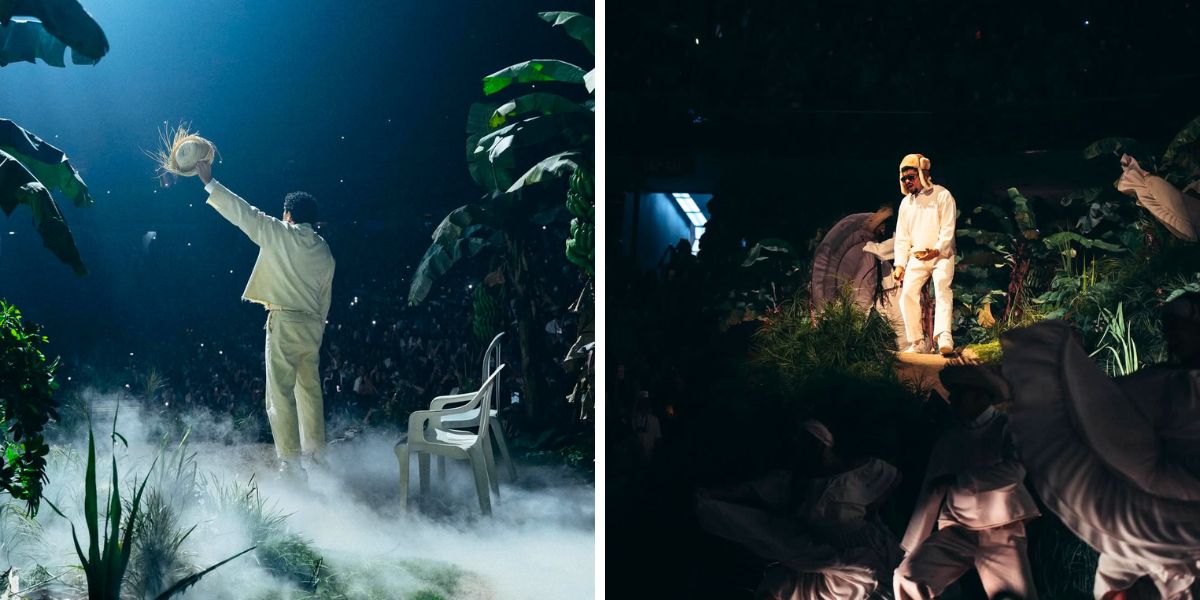
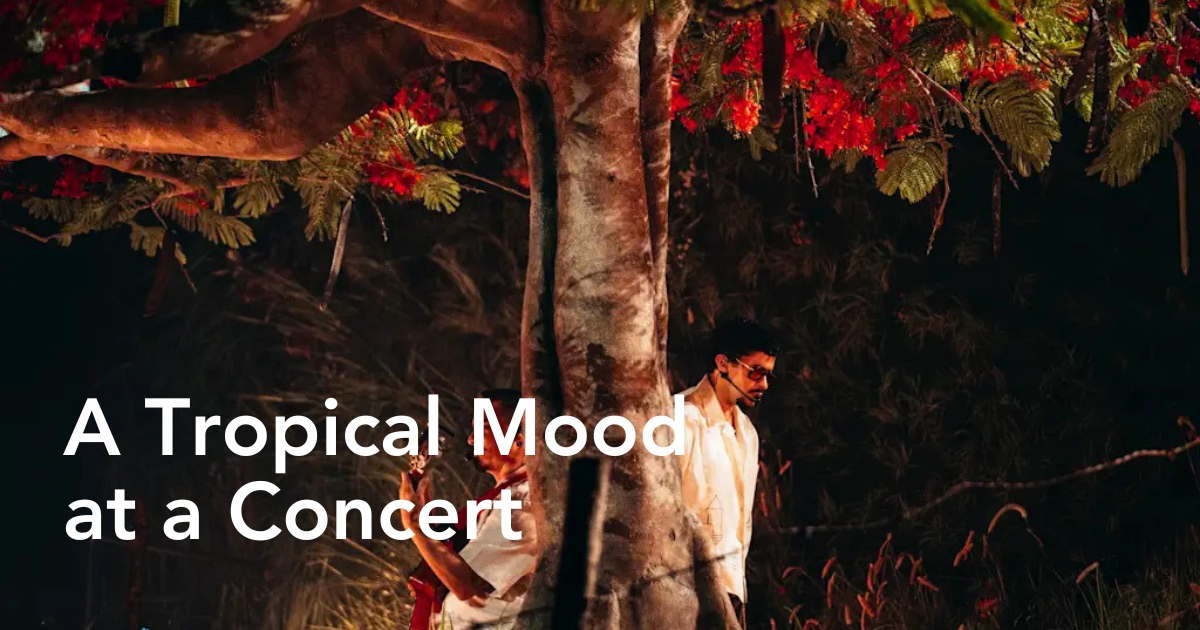
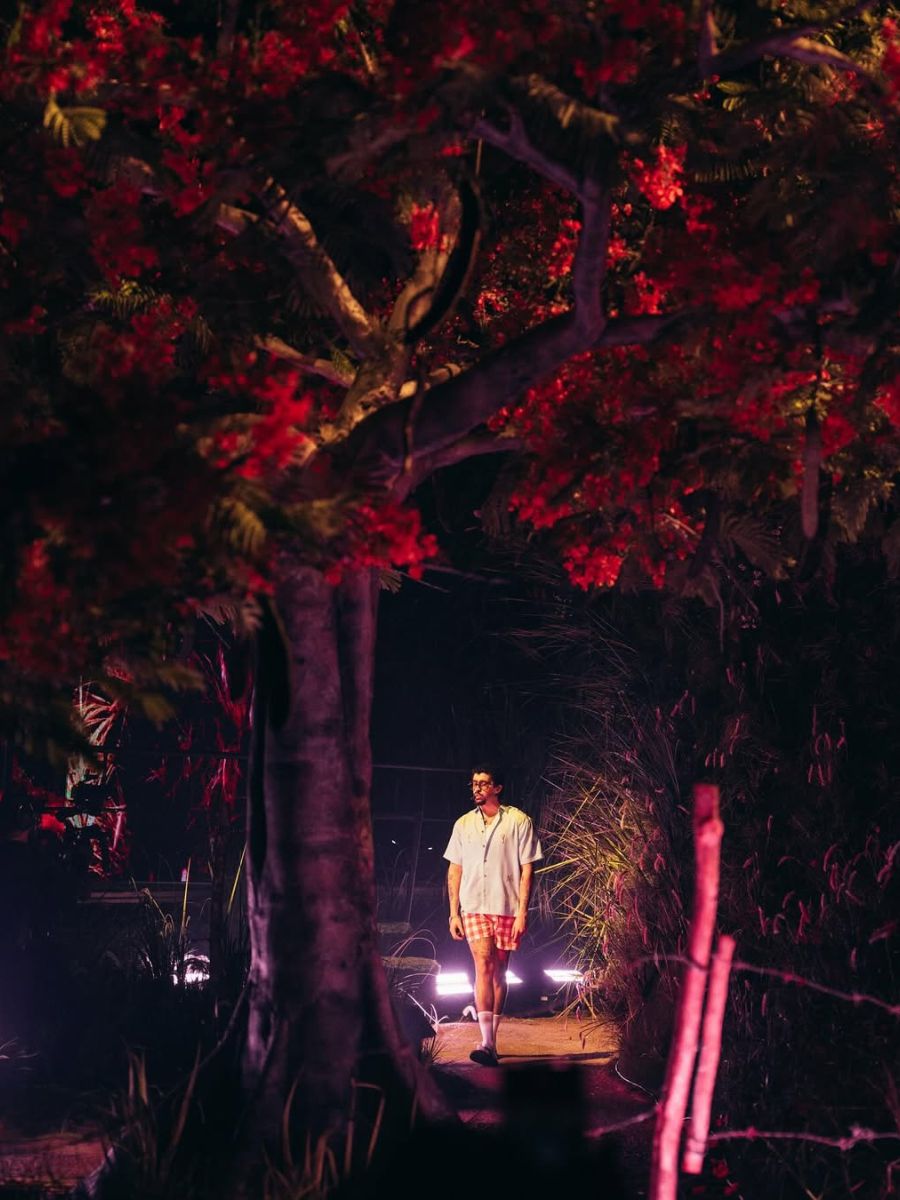
The mountain is filled with scenic detail. A plantain farm sits to one side, a flamboyán tree to the other, and a small cave appears near the top. A thirty-foot billboard-style LED mesh screen is worked into the stage, used for Puerto Rico facts before the performance and for live visuals once the show begins. The plants were individually handled, while the dry plantain leaves included natural material treated for safety across the residency.
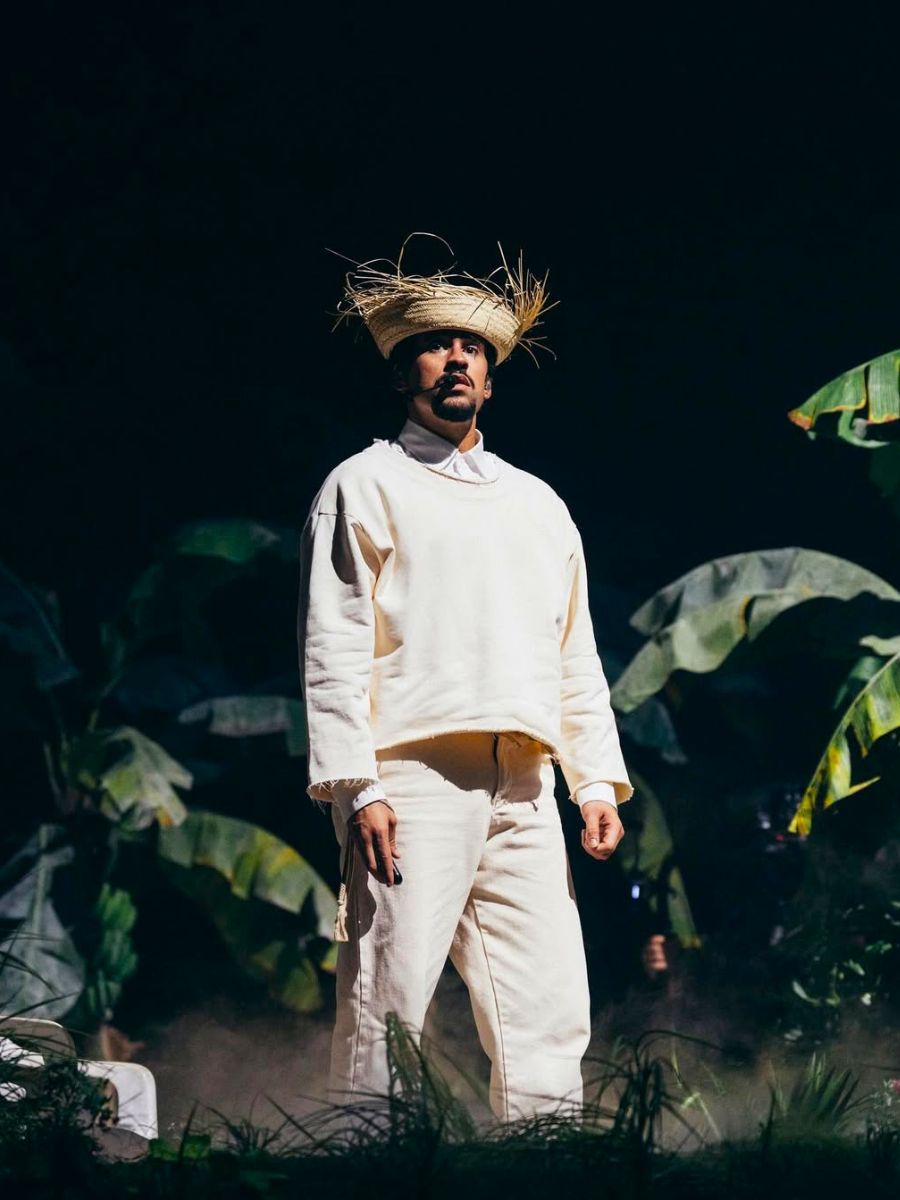
The fixed residency format gave the team room to make decisions that a touring show could rarely carry. The overhead screen, hidden audio deployment, and dense scenic construction were possible because the production stayed in one venue.
Photos by: @sturdy.co.