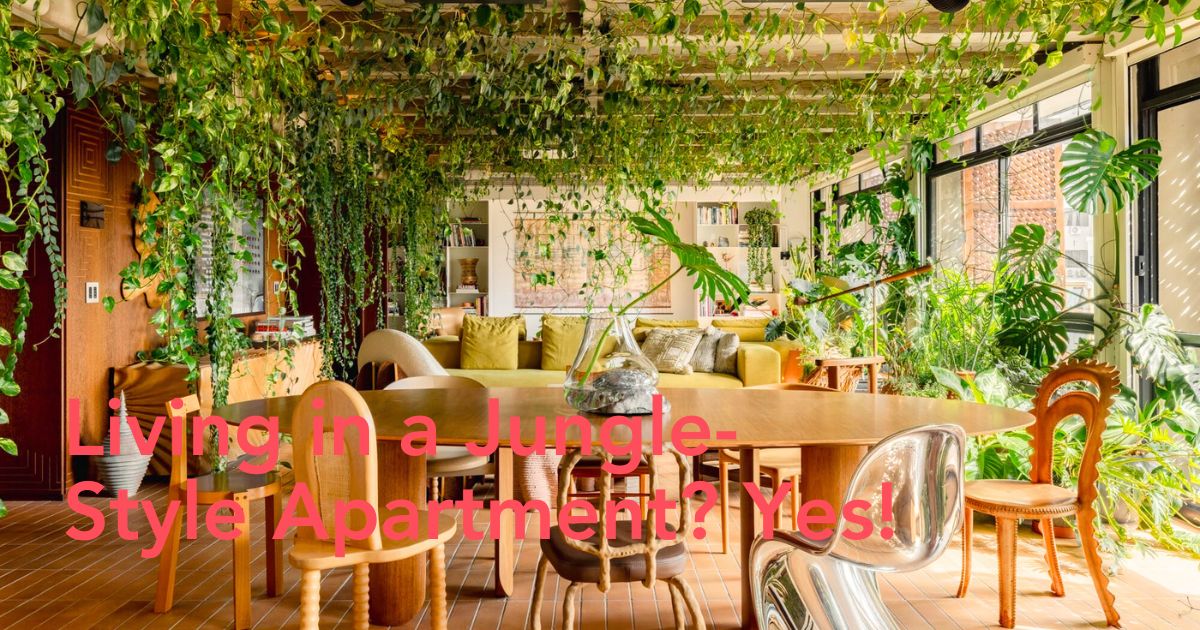
Apartamento Varanda is a residential renovation in São Paulo designed by architect Guto Requena. The original apartment was built in 1962 and follows modernist planning principles, including an open layout and exposed structural logic. The renovation keeps the existing architectural framework intact and introduces a large-scale plant system as a permanent spatial element. Keep reading to get your dose of architectural greens for the year.
Apartamento Varanda by Guto Requena as a Controlled Green System
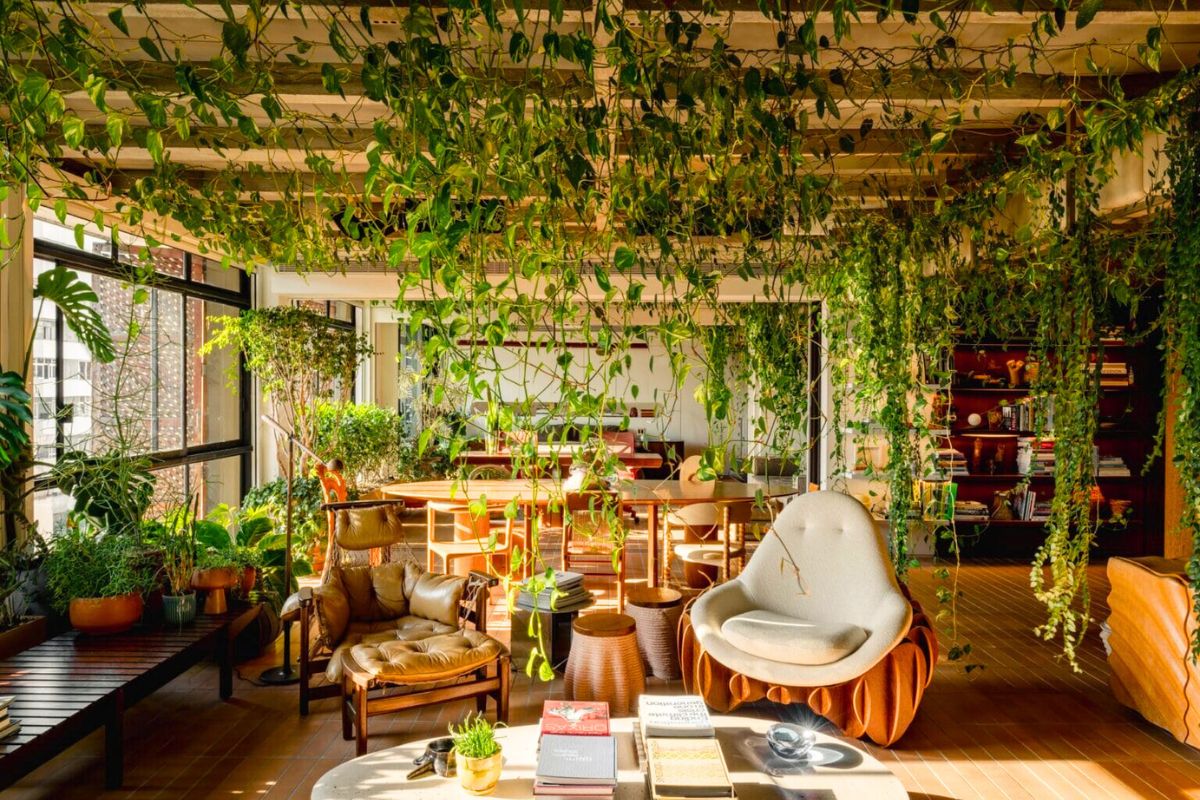
Vegetation is integrated across the apartment using suspended structures, ceiling-mounted supports, and custom frameworks. Plants occupy vertical and horizontal space, influencing circulation, sightlines, and enclosure. Green is looked upon as a spatial component, not a visual layer, one of the characteristics that visually makes this project and its green designs stand out.
A Spatial Infrastructure of Vegetation
Draped from rafters or bespoke frameworks, Brazilian botanicals create a green oasis indoors. What Requena describes as a 'true urban forest' is then complemented by a range of iconic furnishings from both modernist and contemporary eras. Plants are distributed throughout the apartment to create zones without constructing new walls. Hanging vegetation lowers perceived ceiling height in some areas, while floor-based planting defines boundaries between living, dining, and transitional spaces. This strategy maintains openness while controlling scale.
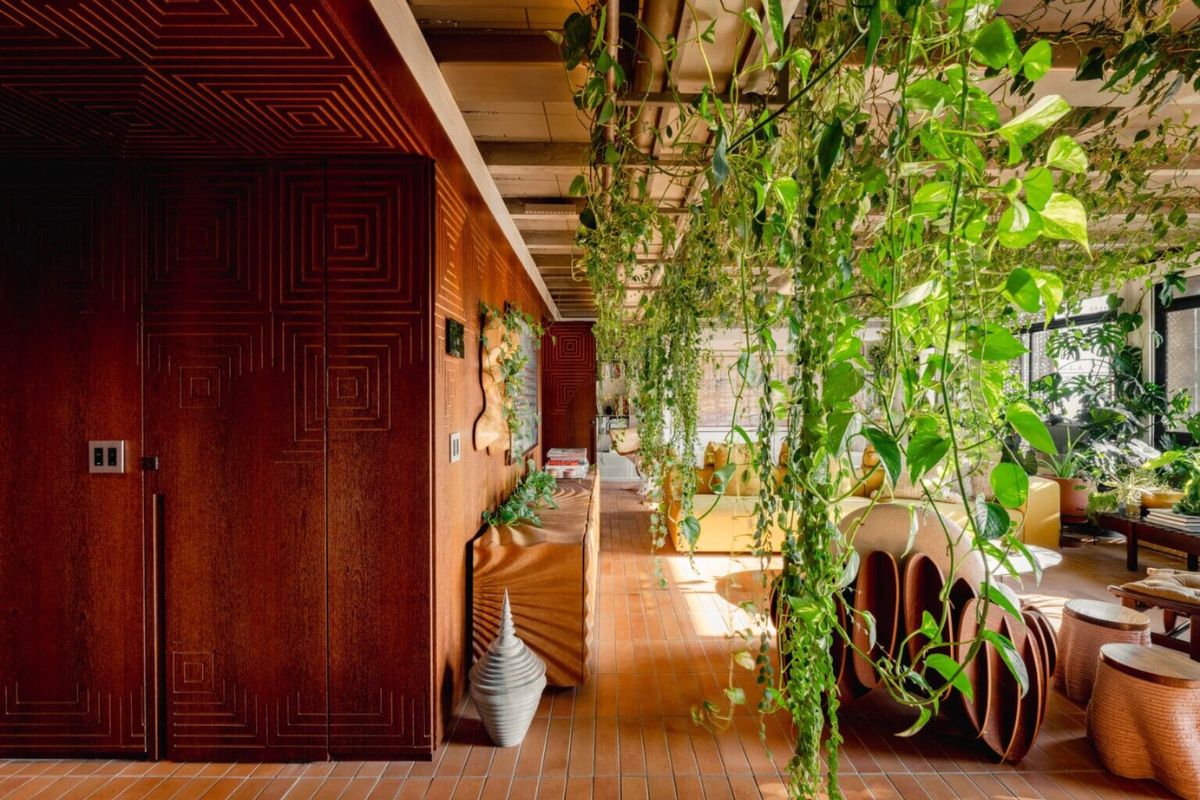
The plant system affects environmental conditions. Vegetation contributes to temperature moderation, air filtration, and acoustic absorption. These functions reduce reliance on mechanical solutions and contribute to daily comfort. Maintenance access and irrigation are factored into the structural design.
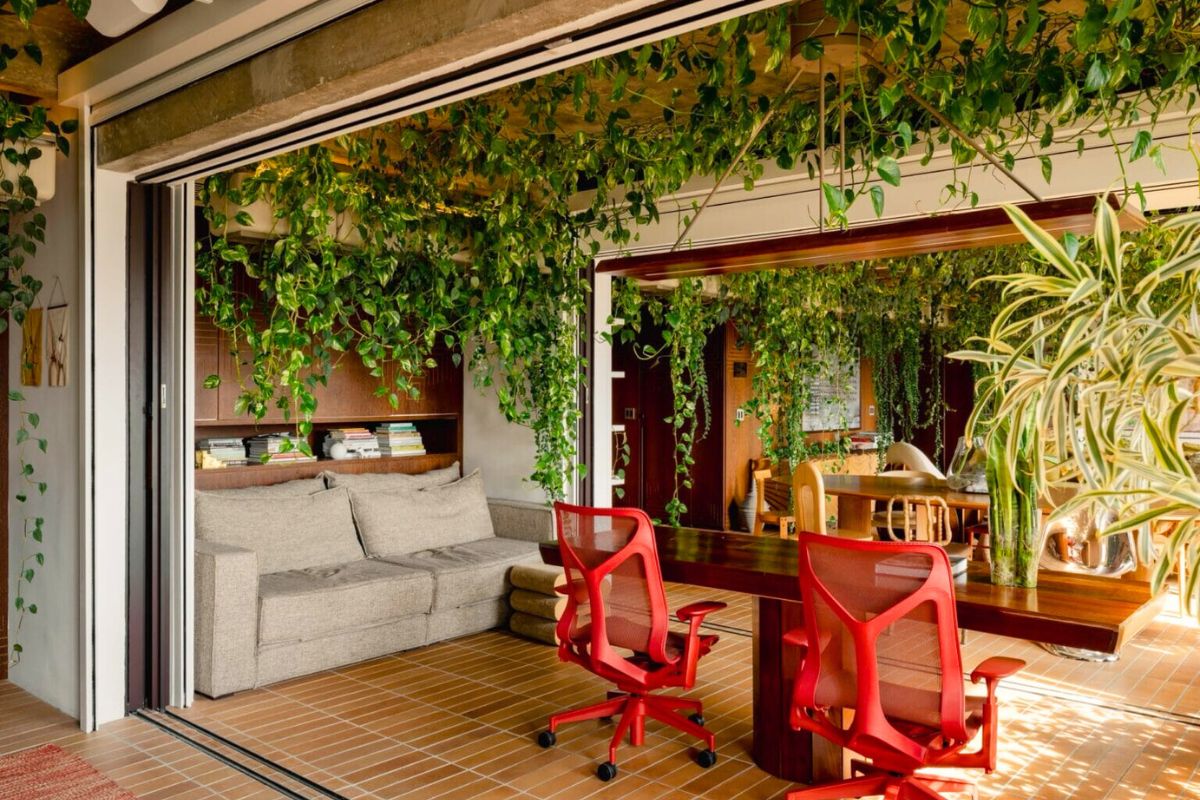
Use of Green to Regulate Light and Movement
As you can observe in the architectural project, natural light enters through existing openings and is filtered by plant density. This reduces glare and creates diffuse lighting conditions across interior surfaces. Movement through the apartment follows planted paths, with vegetation guiding circulation instead of partitions. It's important to notice how plants visually connect different areas of the apartment, making long sightlines look preserved, and views layered through leaves and branches. This creates depth without closing space.
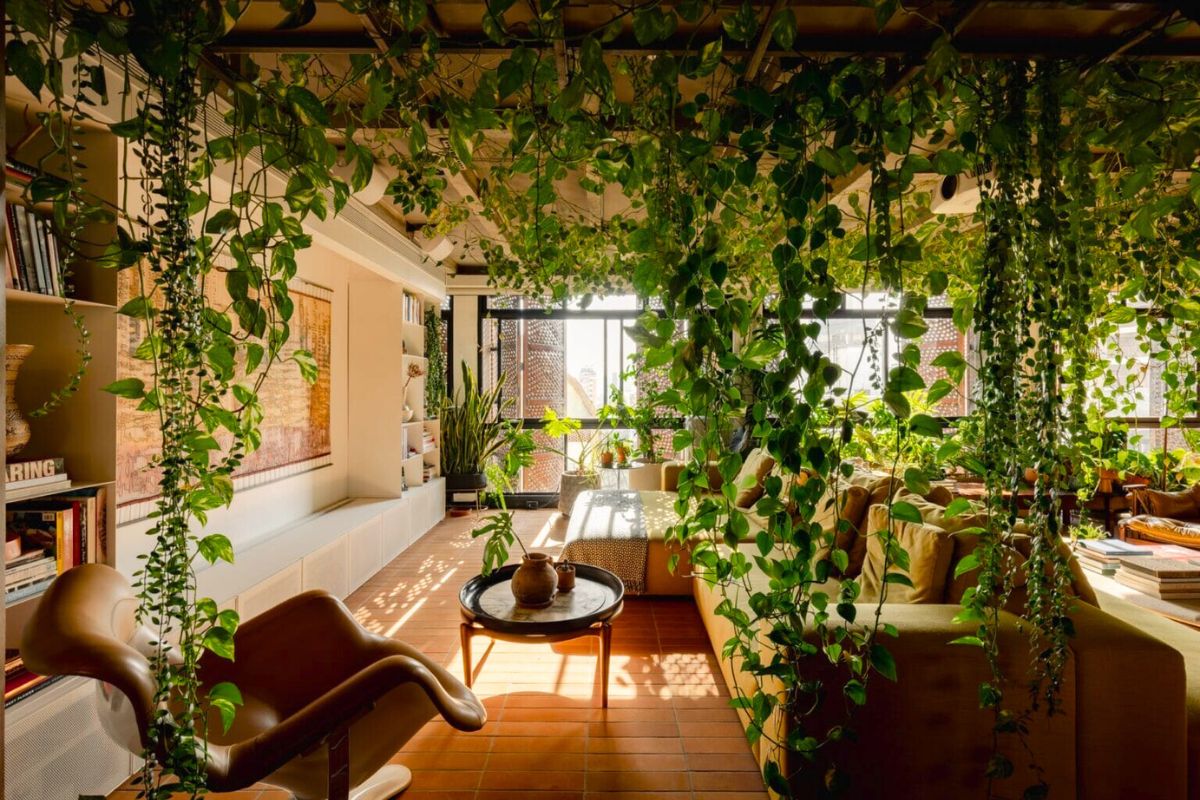
Relationship Between Furniture and Planting at Apartamento Varanda
Furniture selections span modernist and contemporary periods but are secondary to the plant system. In this case, furnishings are positioned to accommodate growth patterns and maintenance access, while scale and material choices support the dominance of green without visual competition.
Hard materials such as wood, metal, and concrete remain exposed and are balanced by the softness and irregularity of plant forms. The interior appears cohesive due to the consistent presence of vegetation throughout all rooms.
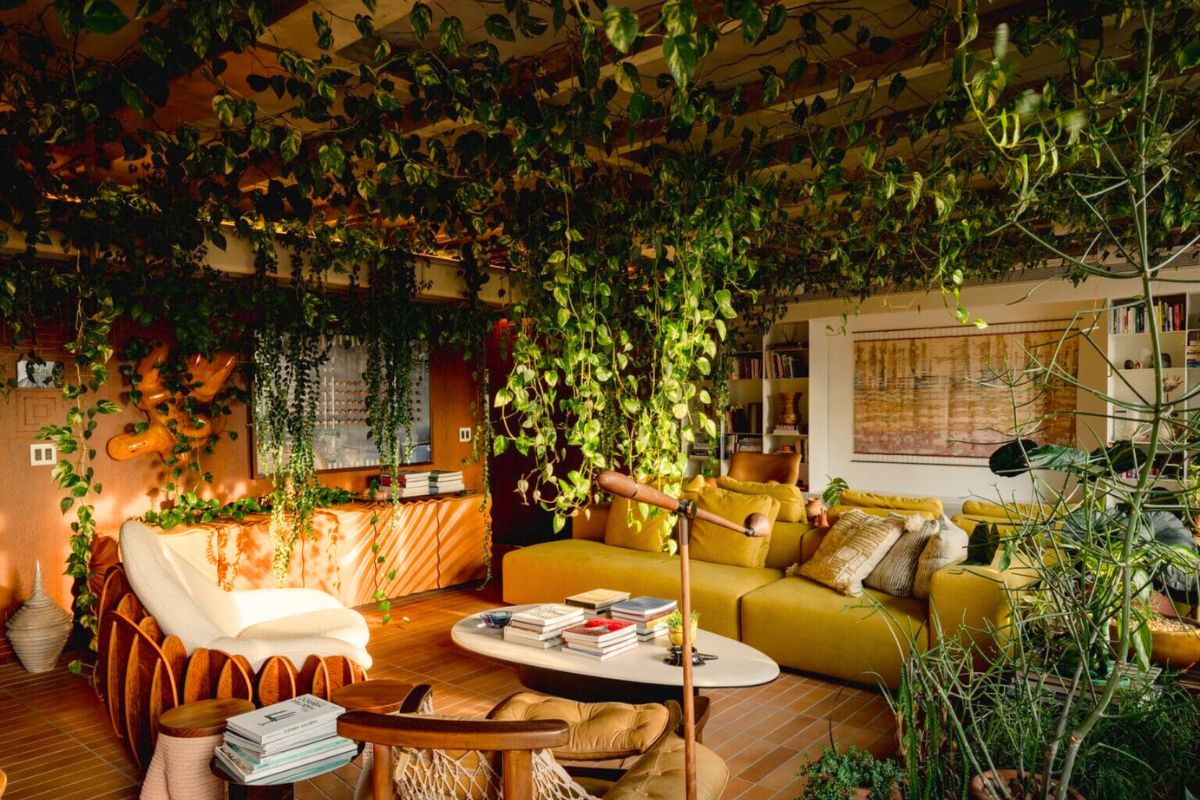
Additionally, the apartment is located in a dense urban environment. The interior planting system functions as a buffer against external heat, pollution, and noise. The presence of extensive greenery improves indoor air quality and supports thermal comfort. Brazilian plant species are used to match local climate conditions. This reduces stress on the system and aligns the project with regional ecology. The final result is an apartment that operates as an indoor green zone within the city fabric.
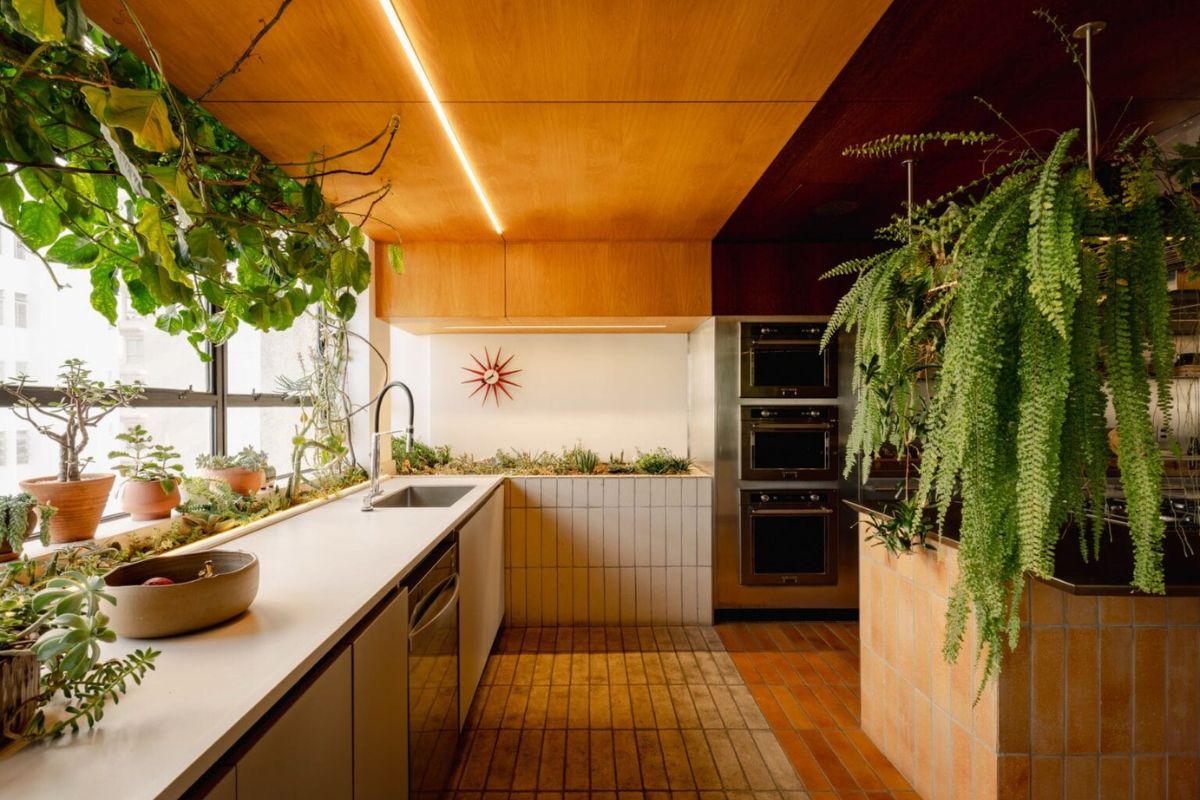
In Apartamento Varanda, greenery defines structure, scale, atmosphere, and function.
Photos: @estudiogutorequena.