For three days in October, Feria Valencia was once again the place where Spain's ornamental plant and flower business met its customers. The 55th edition of Iberflora, held from October 6 to 8, 2026, filled two floors with plants, trees, flowers, landscaping, and technology, and the aisles were busy from the first morning. There was a lot of talking, a lot of laughing over coffee or the occasional glass of wine in the afternoon, and a lot of negotiating. This is a fair where business actually gets done.
The numbers back that up. Together with Eurobrico, the DIY and hardware fair held alongside it, Iberflora brought together more than 400 brands on more than 40,000 square meters, and visitor numbers rose by 5% compared with the previous edition, according to Feria Valencia's closing figures. That increase is still provisional, because the last day had not yet been counted when the organizers published their results.
Buyers From Forty Markets
The buyer program for Iberflora and Eurobrico reached 40 markets this year, twice as many as in the previous edition. Portugal had the strongest presence, followed by France, the Netherlands, Morocco, and Germany, and the list of markets stretched as far as the Middle East.
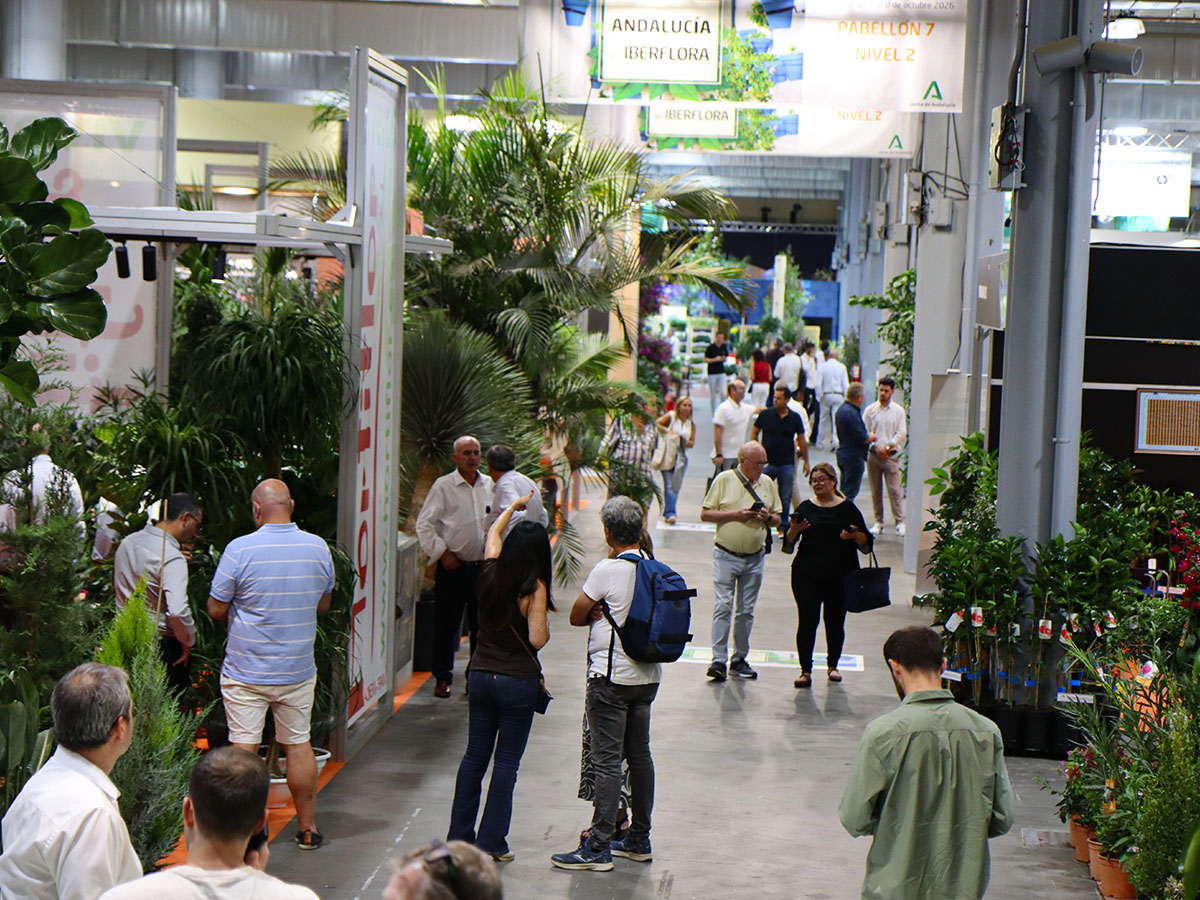
"Spain is a strong exporting country, and the growing number of professionals who choose us proves it," says Máximo Solaz, director of Iberflora and Eurobrico.
The export figures support him. Spanish exports of flowers and live plants reached €743 million in 2025, up 5% from the previous year, and cut flowers grew fastest, up 34% to €107 million.
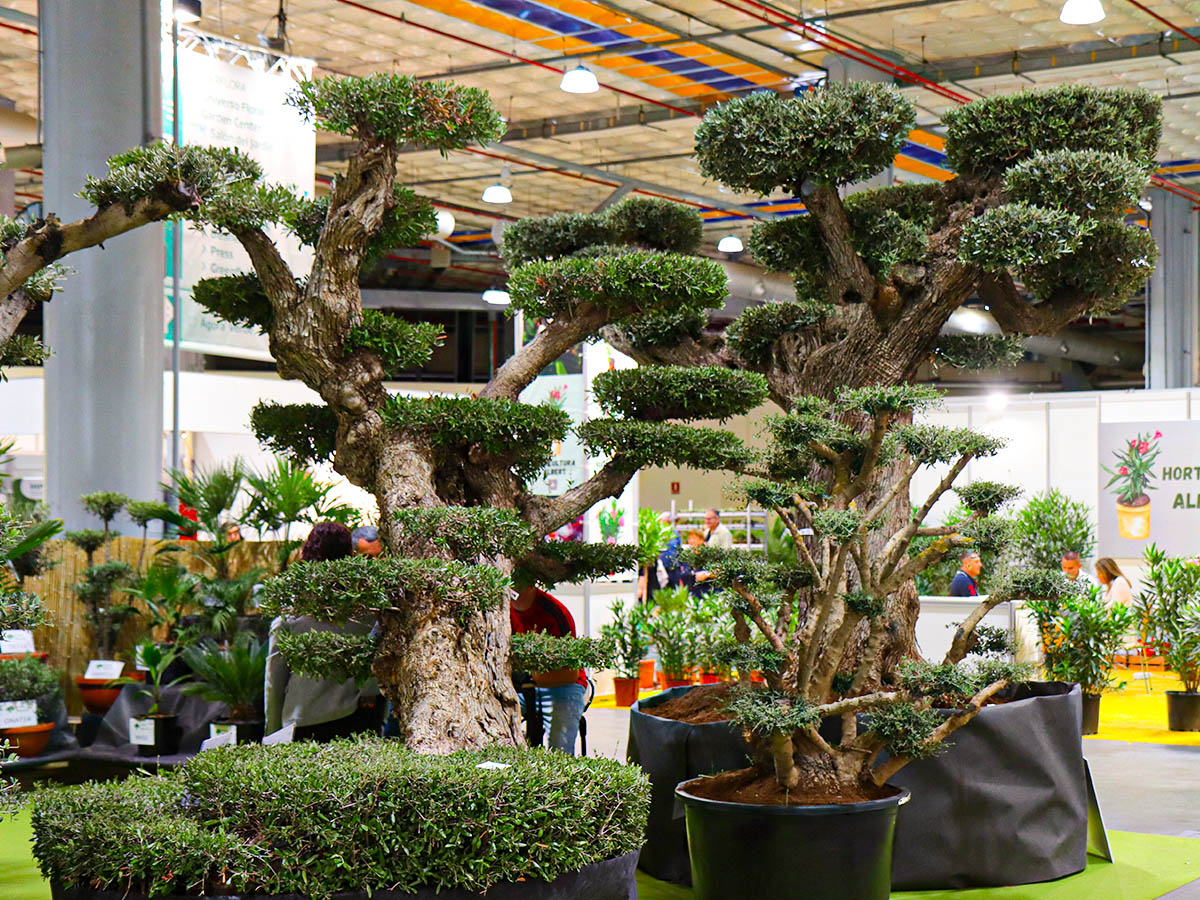
The exhibitors' own sales maps tell the same story. Coplant, a plant trading company with four nurseries in southern Galicia, sells half its production abroad, mainly in the Netherlands and France. According to Adrián Villa, Coplant's head of operations, Poland and then Hungary are next.
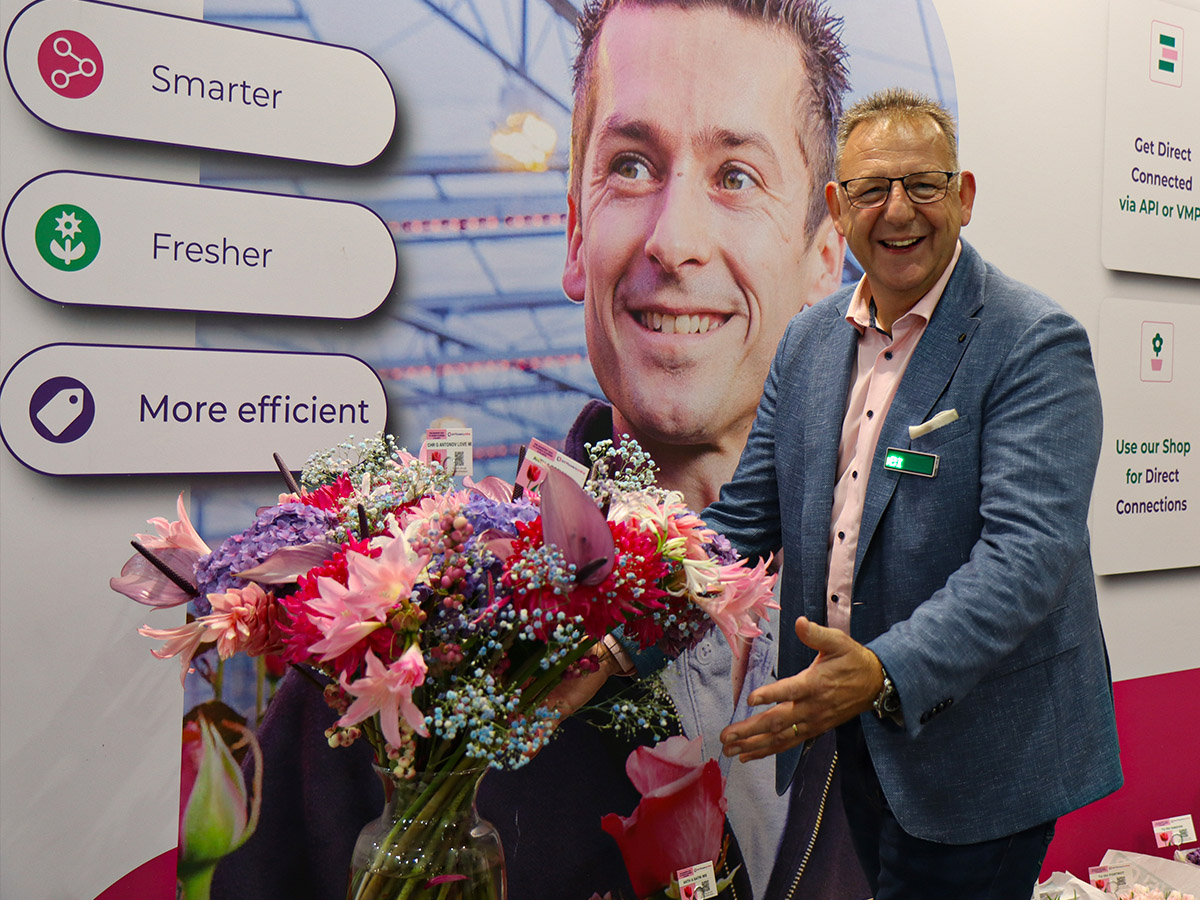
Foreign companies come to Valencia for the same reason. Ed de Groot runs 247flowers.online, a five-year-old company in Aalsmeer that supplies customers in around twenty countries without holding stock. "They cut it in the morning, they bring it, we ship it," he says. He came to Iberflora because he already has customers in Spain.
"I think Spain is simply a big export country, and a lot comes from here," De Groot says. "But you have to try to pick out the newest things that others don't have and you do."
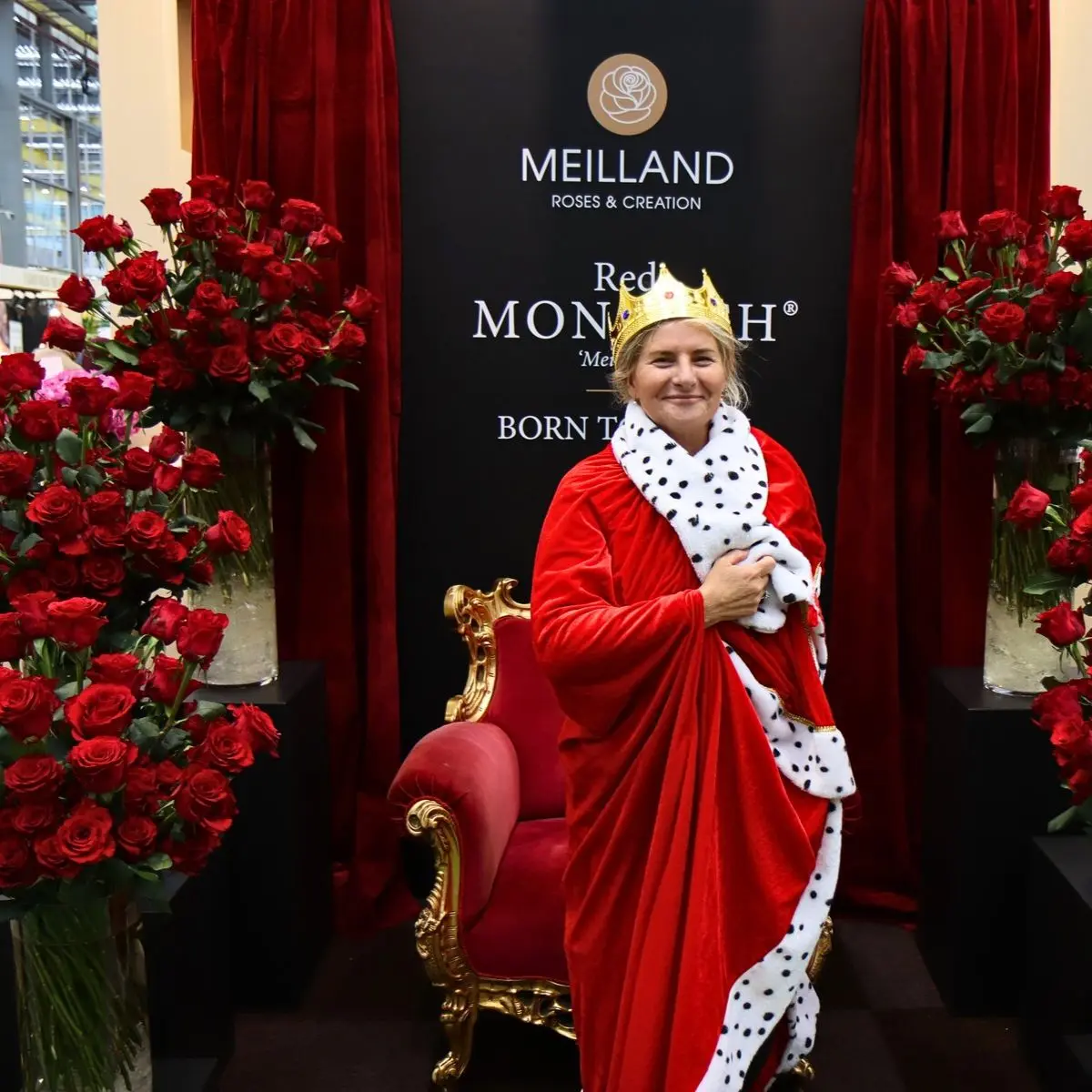
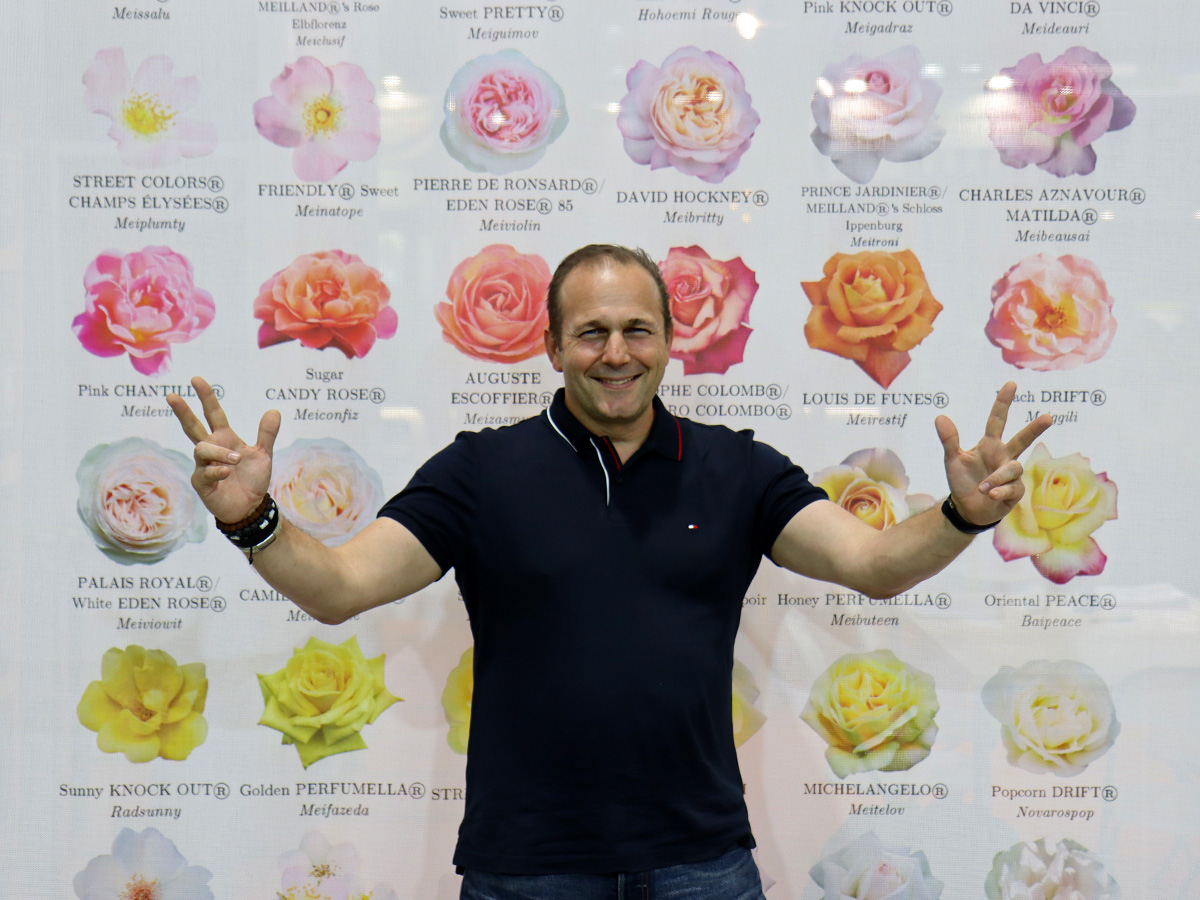
One of the more notable visitors was Matthias Meilland of renowned French rose breeder Meilland. The company is usually represented at Iberflora by its Spanish agent Rosales Ferrer, but this year Meilland came himself, after a meeting in Madrid of the breeders' organization CIOPORA, on whose board he sits. Meilland will continue at IPM Essen in 2027, he says, but he wants his team to see "where the new spots are for presenting our product." What he found in Valencia surprised him.
"There were a lot of French buyers," Meilland says laughing. "It was really interesting, because French buyers usually don't go to Spain to buy. They turn toward the Netherlands, they turn toward Germany. And suddenly they come here."
He used those conversations to reassure them that the Spanish growers offering Meilland varieties are licensed. "It was good to tell them: it's a legal seller, and you can buy from them."
Spain's Growing Regions Under One Roof
Iberflora also offered a cross-section of Spanish production. Associations from the Valencian Community, Andalusia, Catalonia, Galicia, and the Canary Islands took part, among them ASFPLANT, VAME, Asociaflor-Andalucía, COEXPHAL, and ASOCAN. Andalusia alone brought 35 companies, and in 2025 it was Spain's leading region for flower and plant exports, with €199.4 million in foreign sales.
Veraleza, which has exhibited at Iberflora for about 20 years, shows how much that mix has changed. The Galician company is both a grower and a trader, with plant production from Galicia and northern Portugal to Almería and cut flowers from Portugal, Galicia, and Colombia.
"It's true that the Valencia fair used to be more specialized in trees," says Álvaro Flores of Veraleza. "There were lots of ficus and palms, pure Mediterranean. Now you see a mix of different regions coming here to exhibit. We Galicians come, the Canary Islanders come, the Andalusians come, the Catalans come. It's all the diversity we have in Spain.""
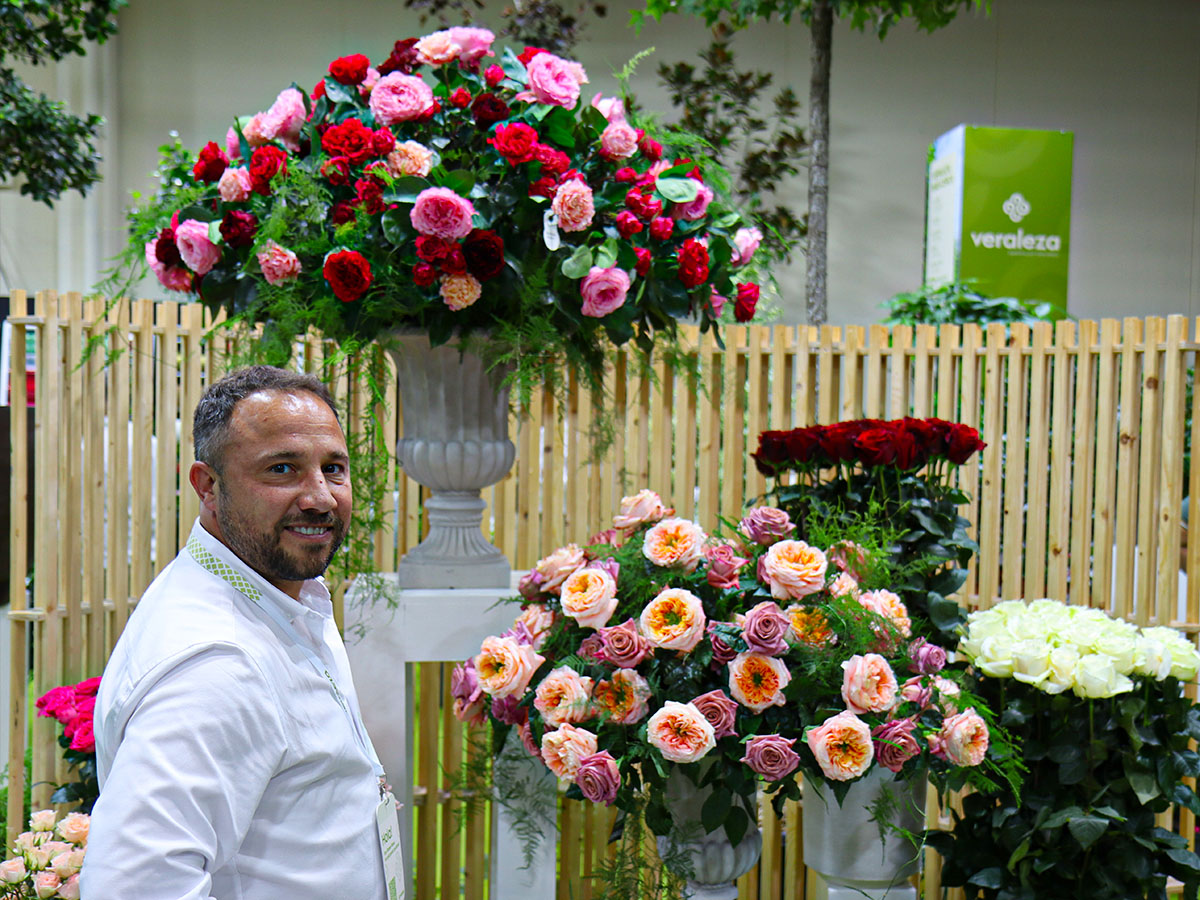
Cut flowers, he thinks, are on the rise as well. That is already increasingly visible at Iberflora, for instance with the floral design stage Universo Floral.
Growers Are Adapting to a Changing Climate
That diversity is shifting with the weather. "We often say it now rains more in the Levante than in Galicia," Flores says. "That wasn't the case before. We have an Atlantic climate with a lot of rain and humidity, and every day it's getting drier."
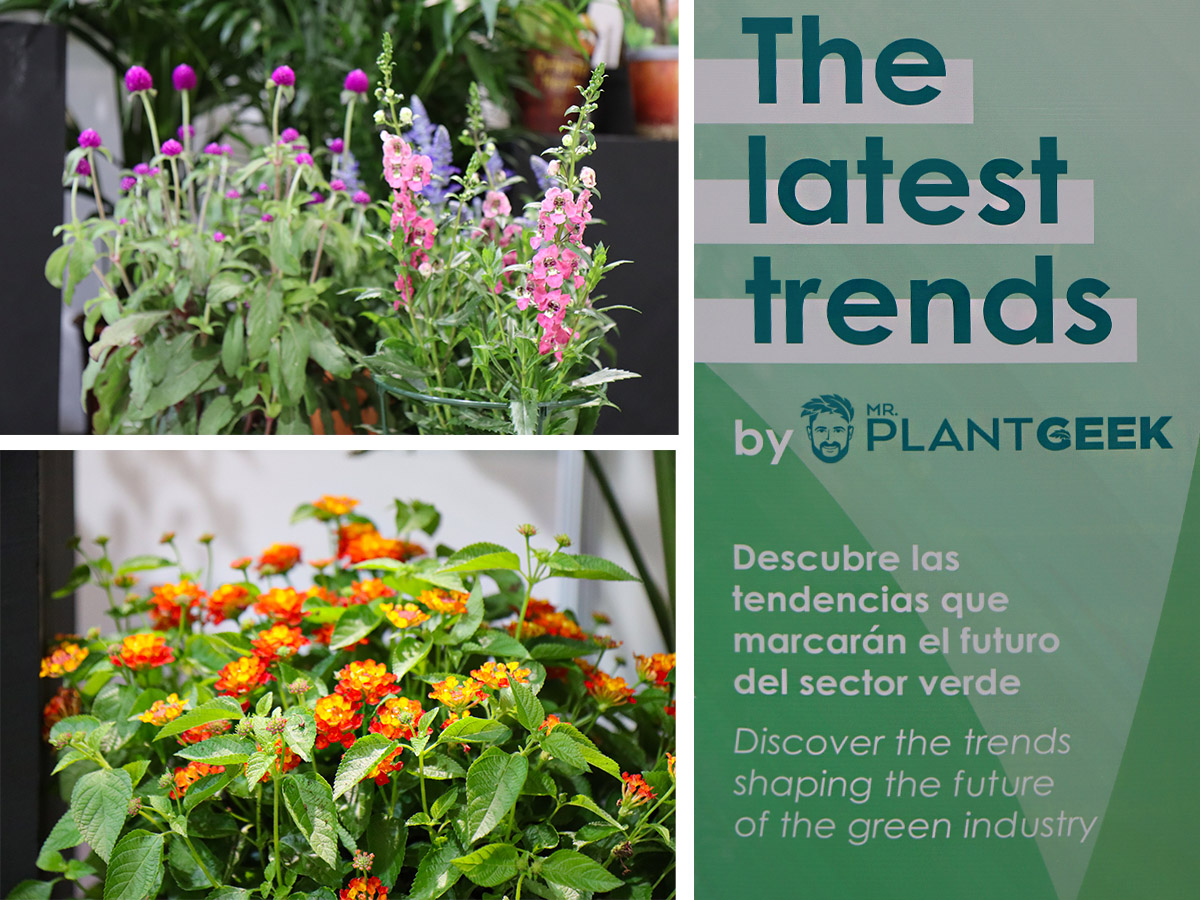
Coplant's range shows how growers respond. Camellias are its main crop, with up to one million cuttings a year, and they do best in cooler climates such as those of northern Spain, France, or the Netherlands. Phormium, by contrast, suits warmer areas and needs less water. Ornamental grasses and annuals for landscaping are in high demand right now, Villa says, both in Spain and abroad.
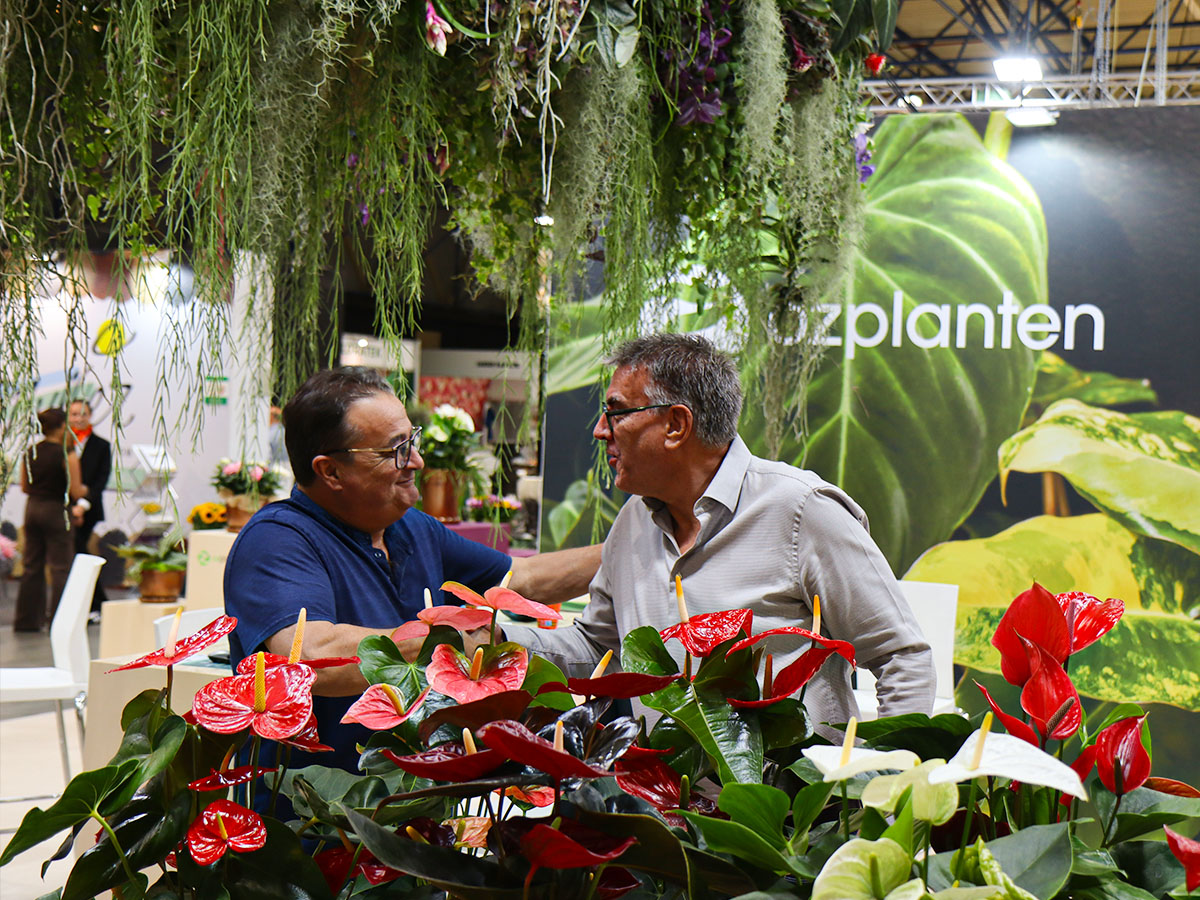
Buyers hear about the consequences too. Jurgen Eekhoff of Dutch plant exporter OZ Planten uses the fair to hear from Spanish growers, which he calls "valuable information."
"It has to do with climate, it has to do with energy," Eekhoff says. "It has been 35, 36 degrees here, and the heat created gaps in production. If you can explain that well to your customers, the damage is smaller. So, it is really good and useful to be here at Iberflora again."
Universo Floral and the Road to Murcia
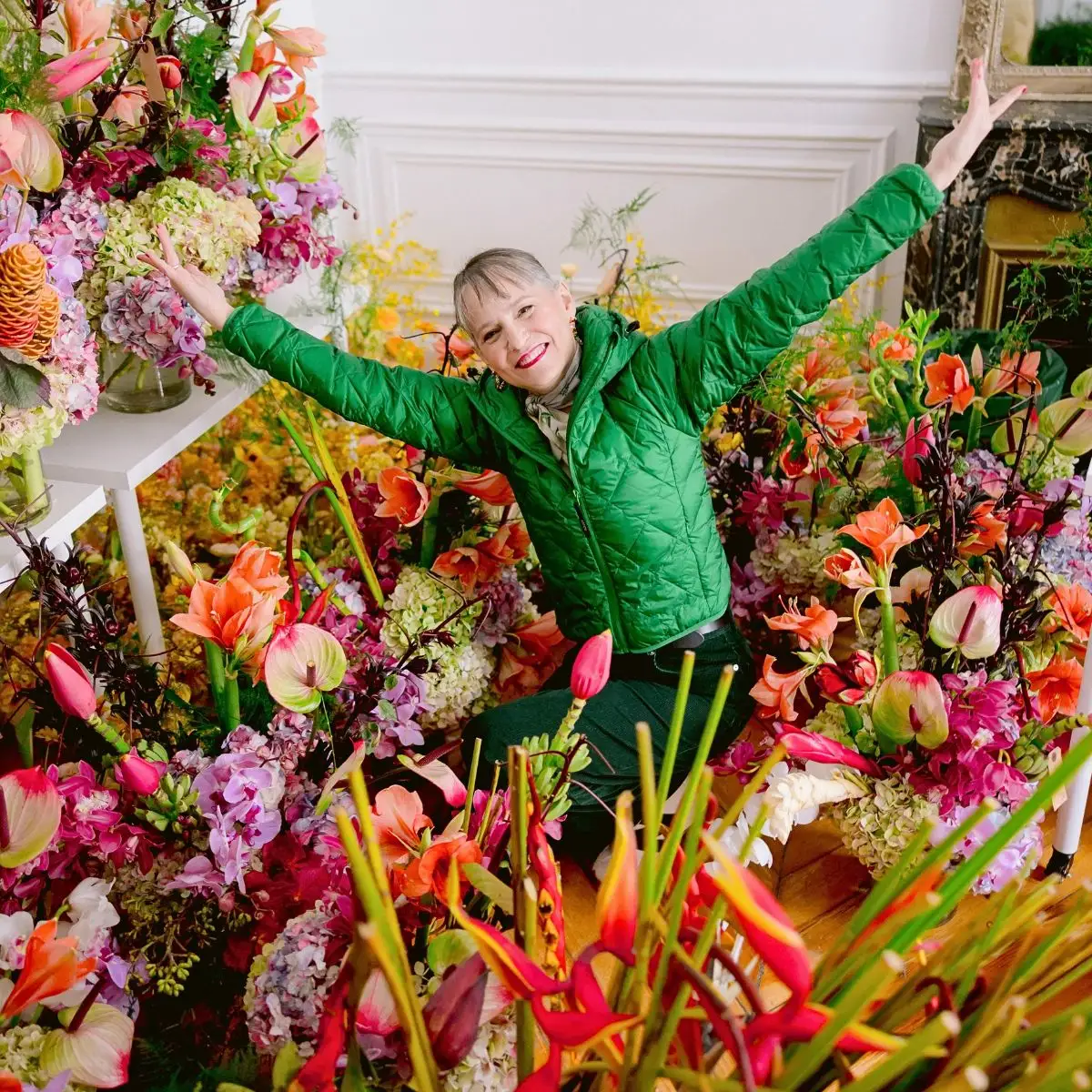
For florists, the natural starting point was Universo Floral, with sessions on artificial intelligence in flower shops, a show by floral artist Carlos Curbelo, and workshops on window dressing, vertical gardens, floral jewelry, and preserved flowers.
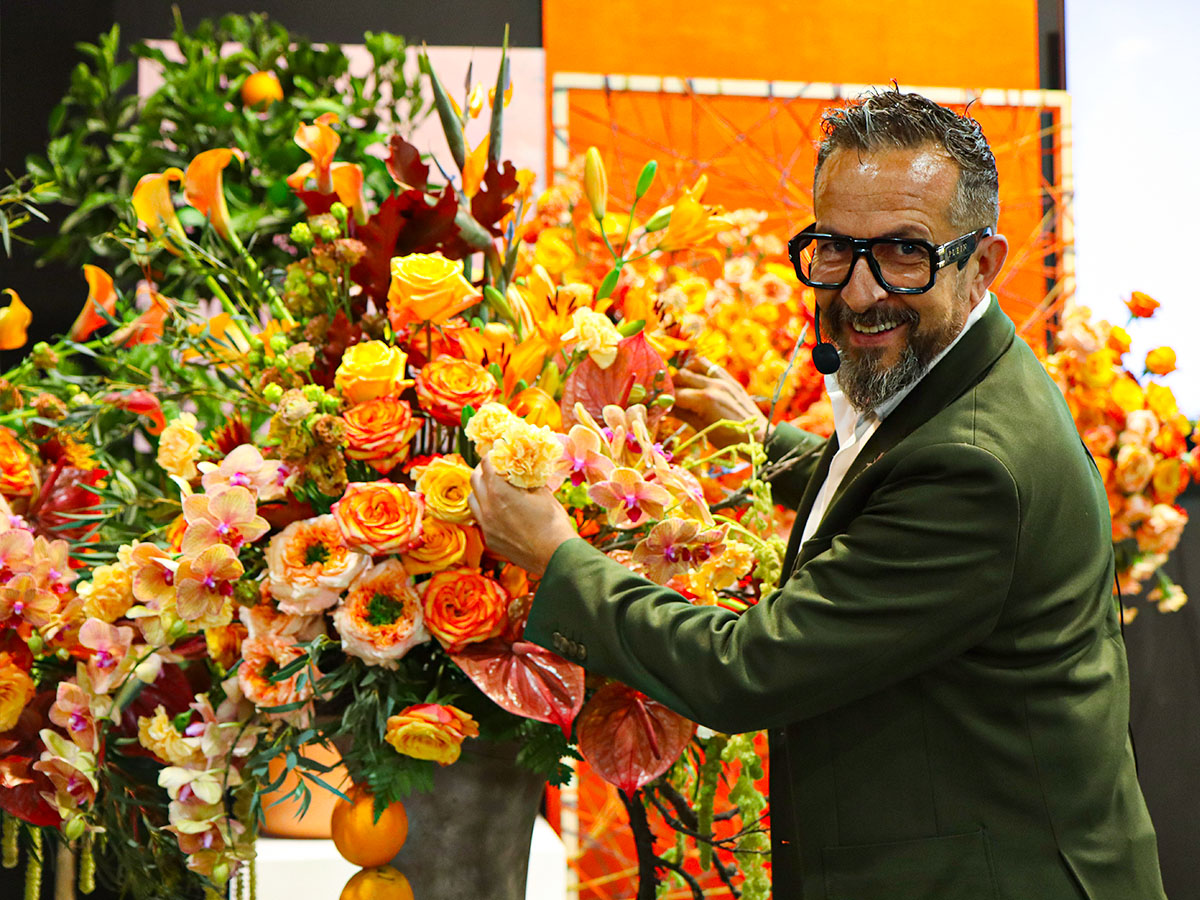
The Spanish Association of Florists (AEFI) used the stage to present the European Cup of Floral Art, which will be held in Murcia in 2027, with demonstrations by the two florists who will represent Spain. This event will be fully covered on Thursd as well. Pere Padrós, winner of the 2026 Spanish Cup of Floral Art, runs a family flower shop in Barcelona that his grandfather started in 1958. Junior champion Hugo Vega, 22, comes from a family flower shop in Zamora and focuses on weddings and events.
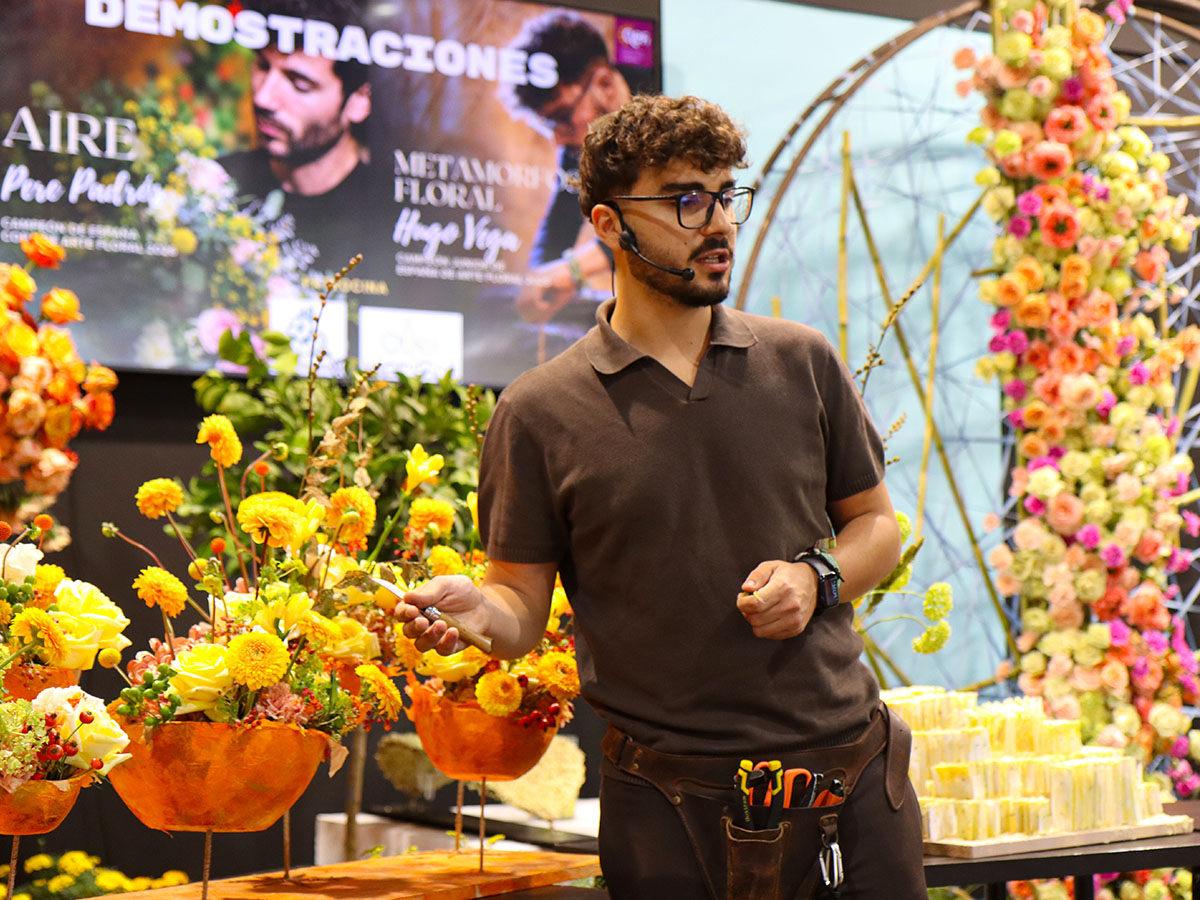
Padrós built his hand-tied bouquets on wire structures. That explains the theme of his demonstration 'Aire', which means 'Air'.
"Sometimes the space a flower doesn't occupy is as important as the flower itself," he said. "The air we leave between one flower and the next matters too. Leaving empty spaces on purpose can also create an atmosphere of interest."
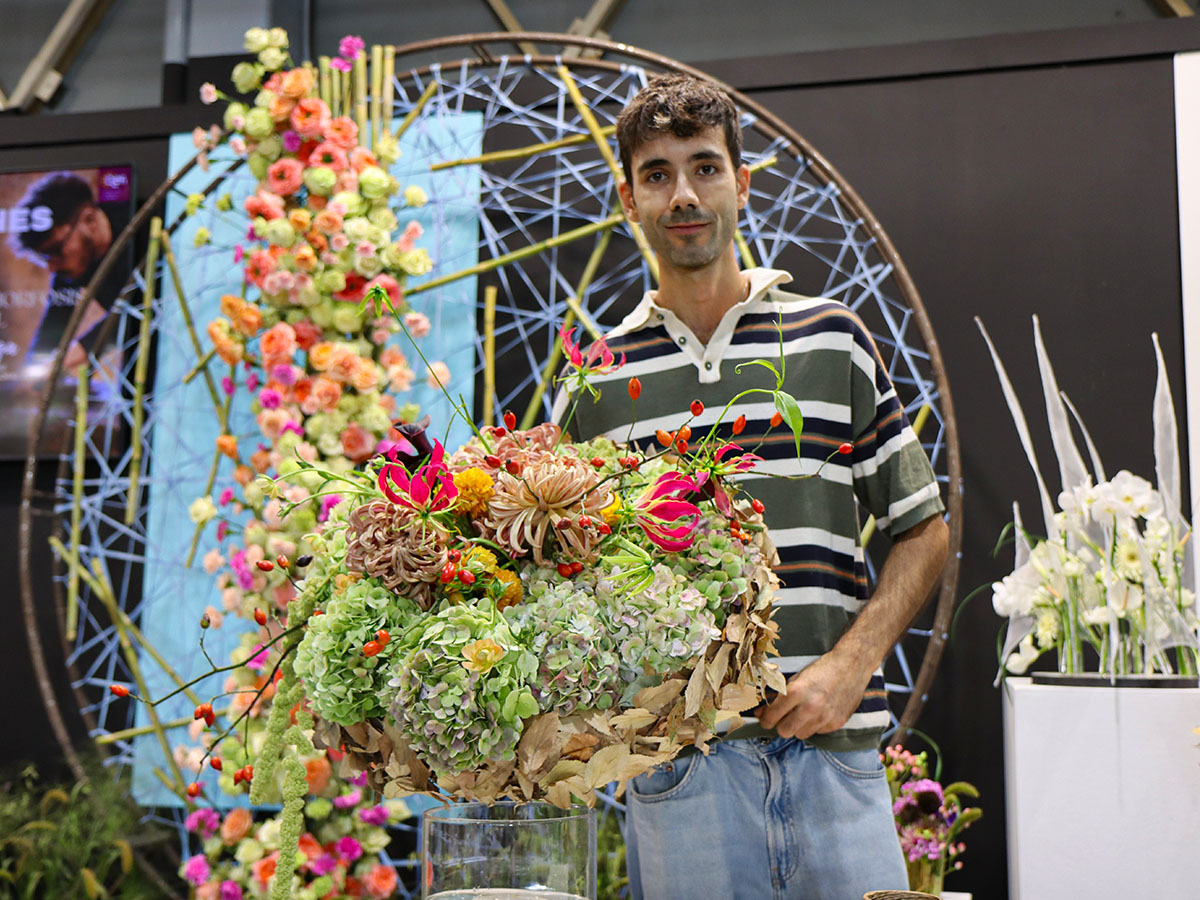
Vega focused on table decorations that can be taken apart and reused in different settings, from a long imperial table to a single round one. His point was practical: prices differ from region to region in Spain, so the same technique has to work at different budgets.
AEFI president Fernando Ríos expects a strong Spanish turnout in Murcia. "They are really happy," he says of the florists he spoke to at the fair. The association has around 600 members, and the competition will take place in the streets of Murcia.
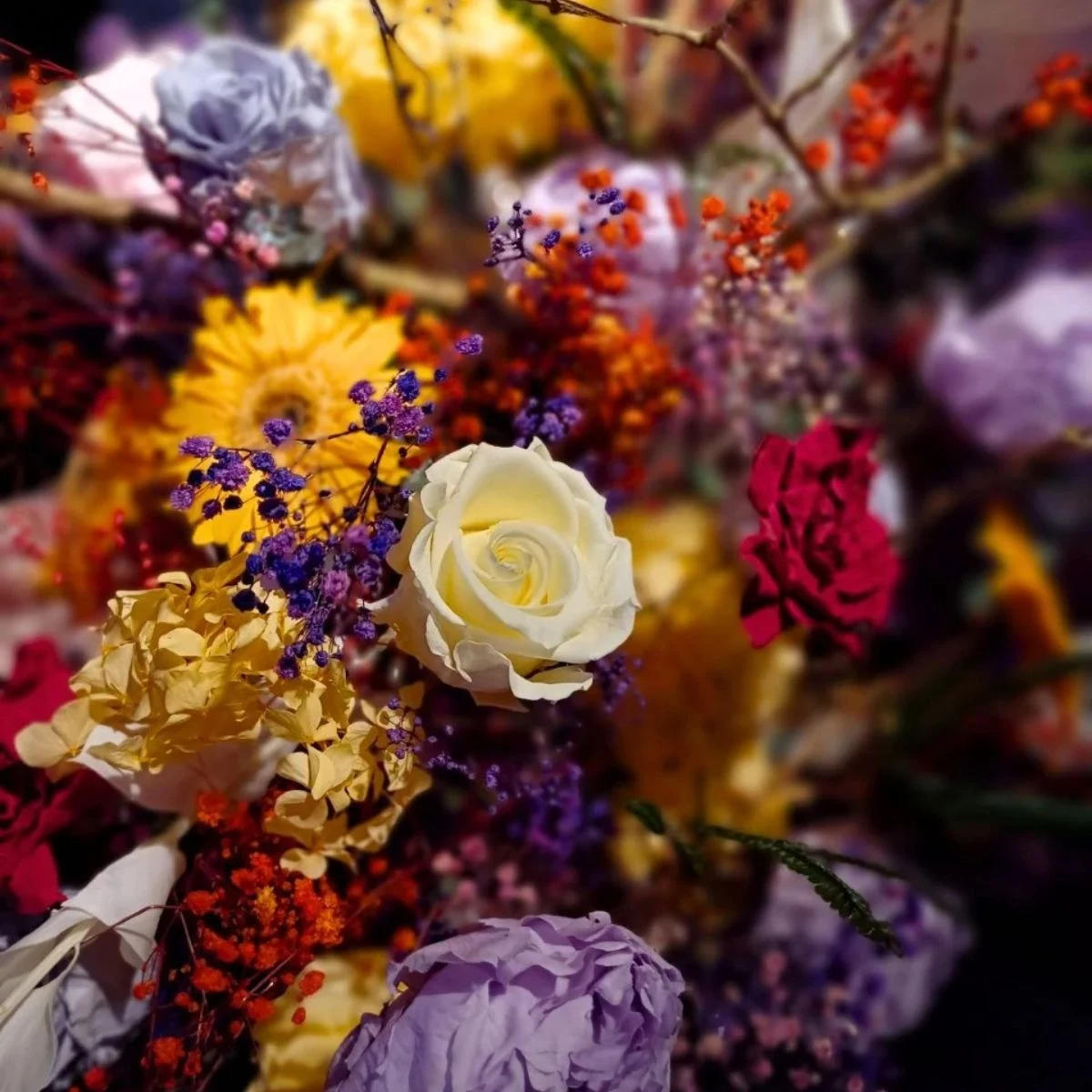
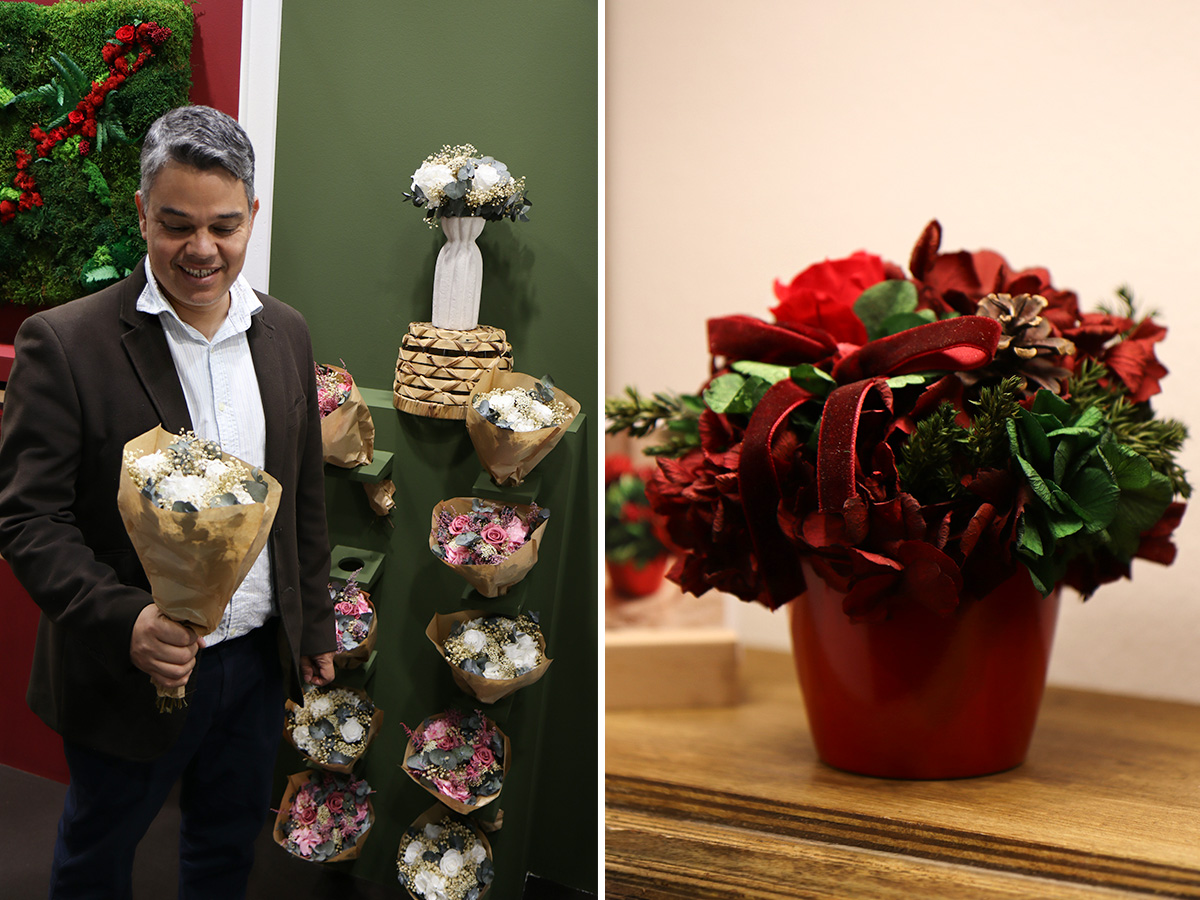
Preserved flowers had a strong presence as well. Verdissimo, based in nearby Paterna, returned after about five years with a new Valentine's collection and a soft "vintage pink" carnation. "They are natural flowers," says Rodrigo Pérez Chaustre of Verdissimo. "That's what we need to remind people of: this was growing. It's more or less like magic, but it's not magic. It's all natural!"
Why Exhibitors Keep Coming Back
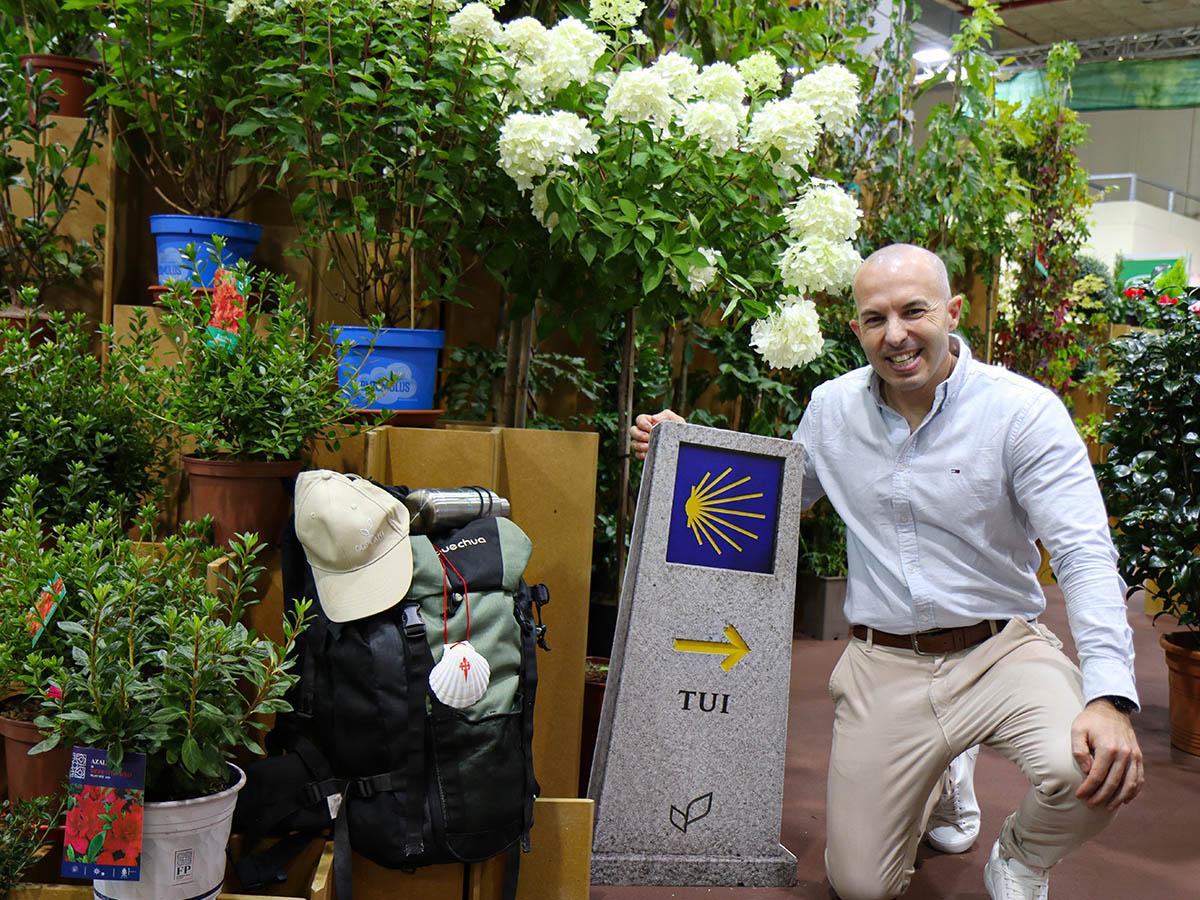
Many exhibitors have been coming for decades, and not to introduce themselves. Coplant has exhibited every year since the company was founded 22 years ago, and this year with a stand themed around the Camino de Santiago. Still, Villa is clear about why the company is there, although he says it with a big smile: "Here we sell. We have to sell, because this has to be paid for too."
For Flores, the fair is about being present. "Everyone in Spain knows us," he says. "We're here to greet customers, friends, and suppliers." What matters most, he adds, is "being able to share these days with the customers you deal with every day and see each other face to face." Orders get placed as well. Export customers from elsewhere in Europe use the fair to settle their spring programs, and others ask whether they can reserve plants for next year.
Innovations With a Practical Edge
Among the entries for the fifth Iberflora Innovation Awards, Semillas Diago presented a system that lets the same bucket be reused for cut flowers from the farm to the point of sale. Others included growing media with less peat, a narrow-growing holm oak (Quercus ilex) for small urban spaces, and a seaweed-based fertilizer that helps plants cope with drought.
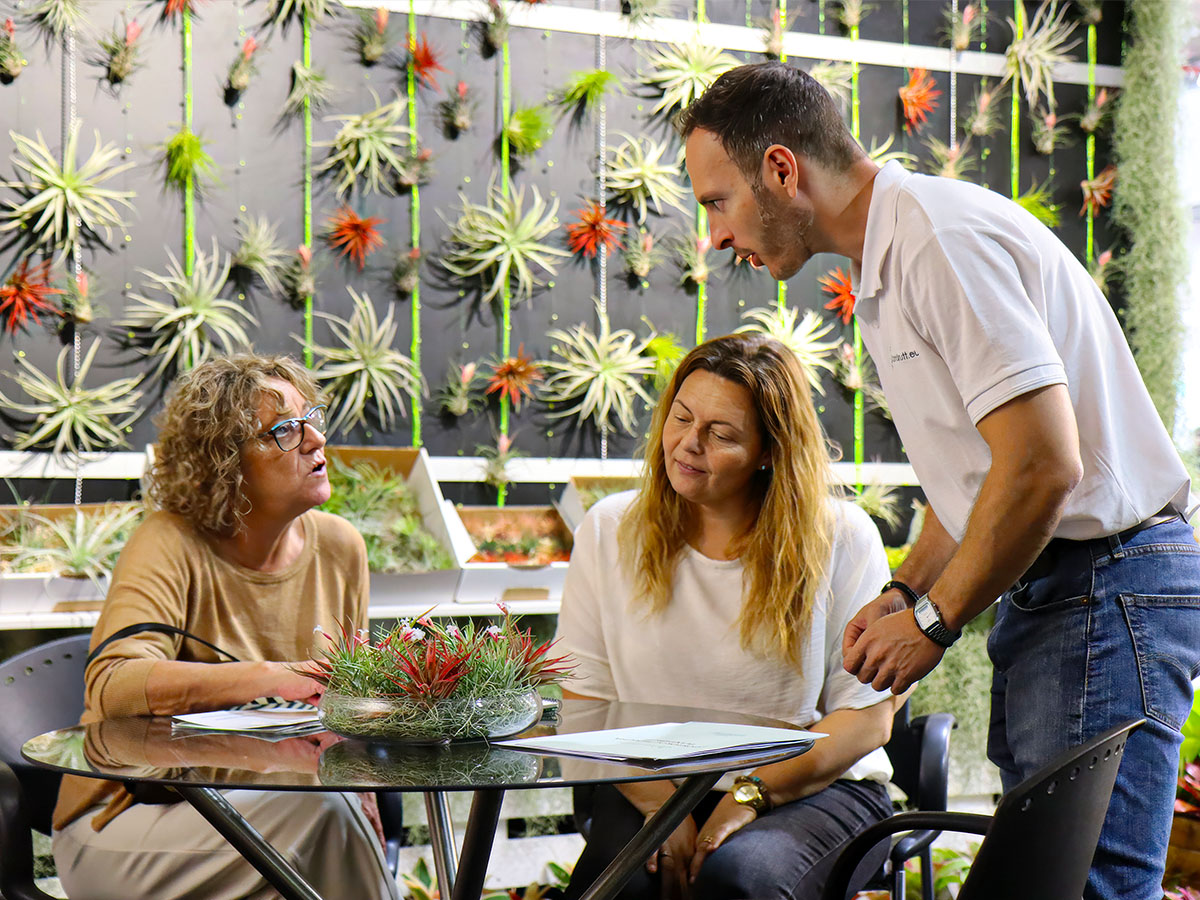
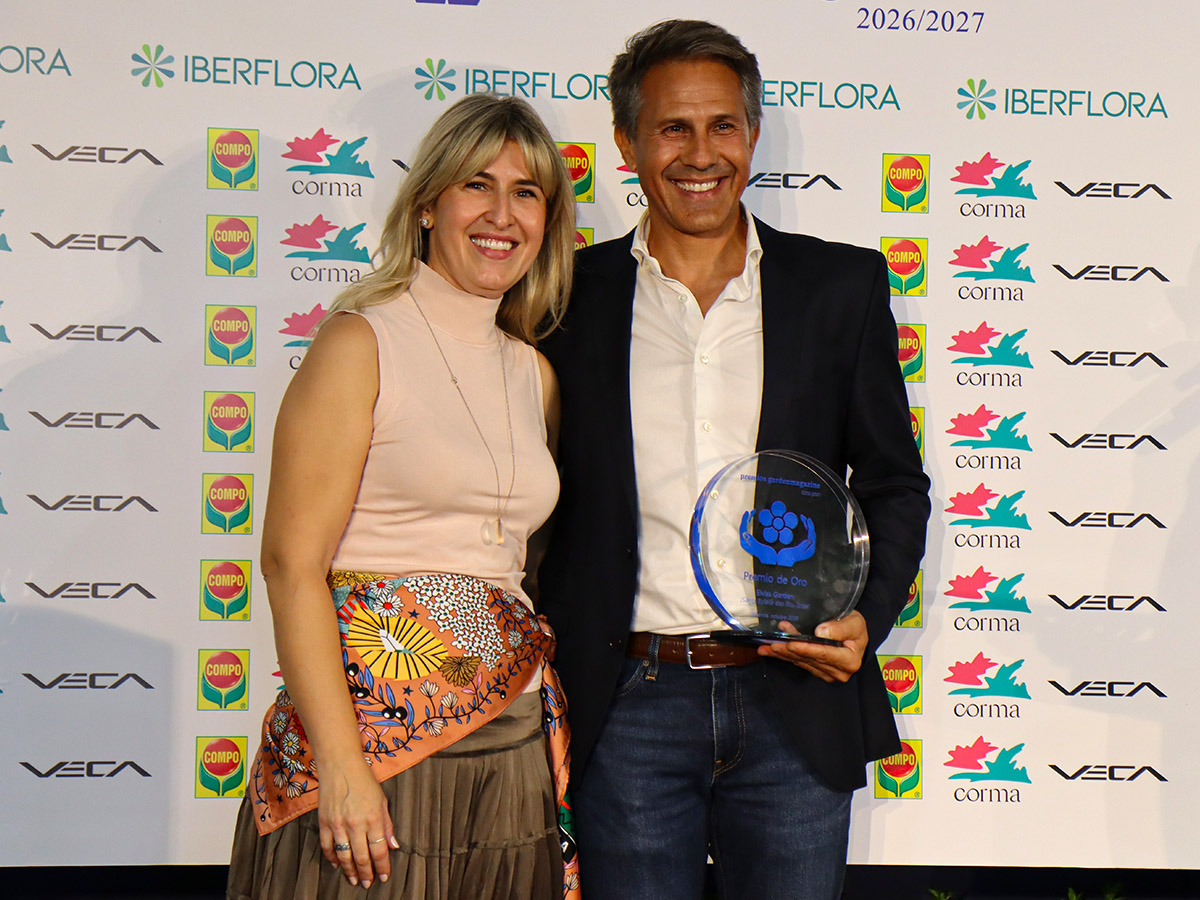
Eiviss Garden from Ibiza has been recognized as the Best Garden Center in Spain. They commented on this prestigious honor:
"Yes, we are still absorbing it. This 'Premio de Oro' is an award that makes us very excited because behind it there are years of work, evolution, learning, and above all, many people making this project grow every day. Thanks to Garden Magazine, to all the professionals in the sector who have recognized our work, and to all the people who are part of Eiviss Garden, this award is also yours."
Landscape Design as a New Line of Business
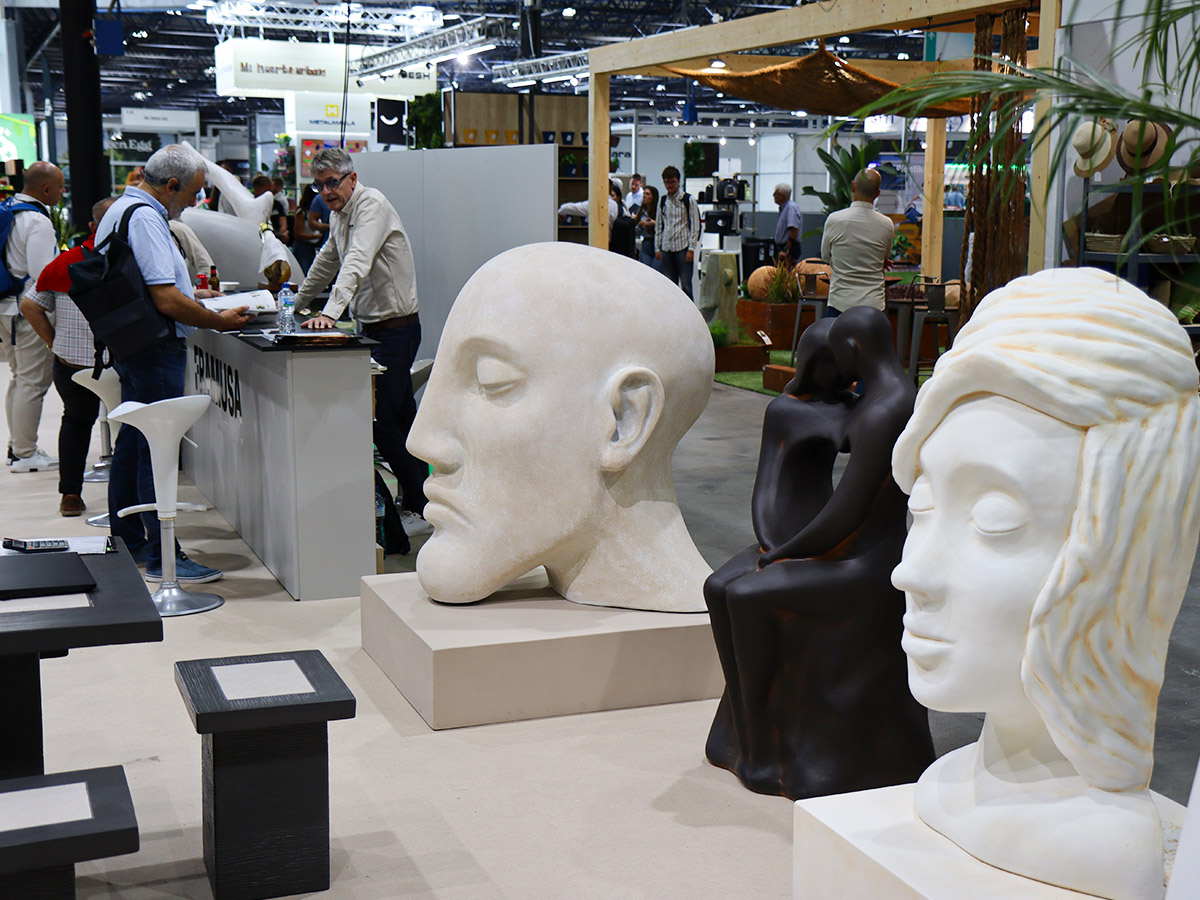
Landscaping started at the door, with Valencia City Council's "Nature Islands" at the entrance. Inside, the North Forum hosted "Bosque infinito" (Infinite Forest) by Sofía Fernández Juan of ESSSE Paisajismo, winner of the first Iberflora Landscape Designer Awards, a competition launched in July. Trees and shrubs from four Mediterranean bioclimatic zones grew out of mirrored platforms, so the forest appeared to continue without end.
Add the technical sessions in Ágora Verde, outlined in Thursd's preview of the agenda, and Eurobrico next door, and the fair covered a lot of ground. For Solaz, the combination says something about where the sector is going.
"Business opportunities increasingly depend on opening up to new markets, but also on understanding which solutions, products, and knowledge professionals need today," he says. "We wanted it to be a meeting point where those three dimensions, business, internationalization, and knowledge, came together for three days at Feria Valencia."
Next Opportunity in Valencia: 5-7 October, 2027
Most exhibitors and visitors return to Iberflora after their first experience. Many have been there for many years, even decades. This makes Iberflora one of the most regular fairs on the calendar, and one not to miss if you aim to do business in the Iberian Peninsula. So, block your agenda already for the first week of October next year, because from Tuesday 5 until Thursday 7 it's showtime again!
All photos are copyrighted by Thursd.com.