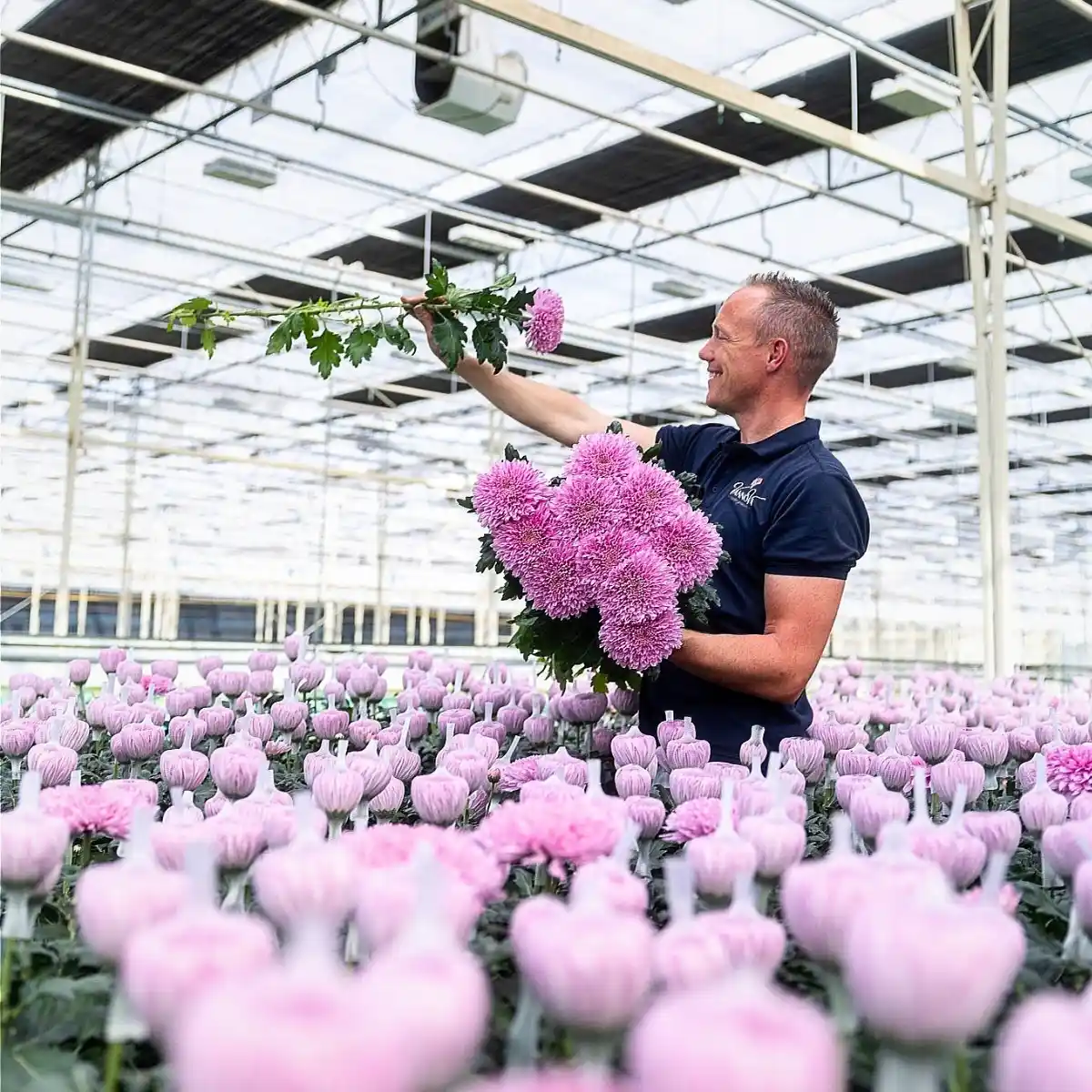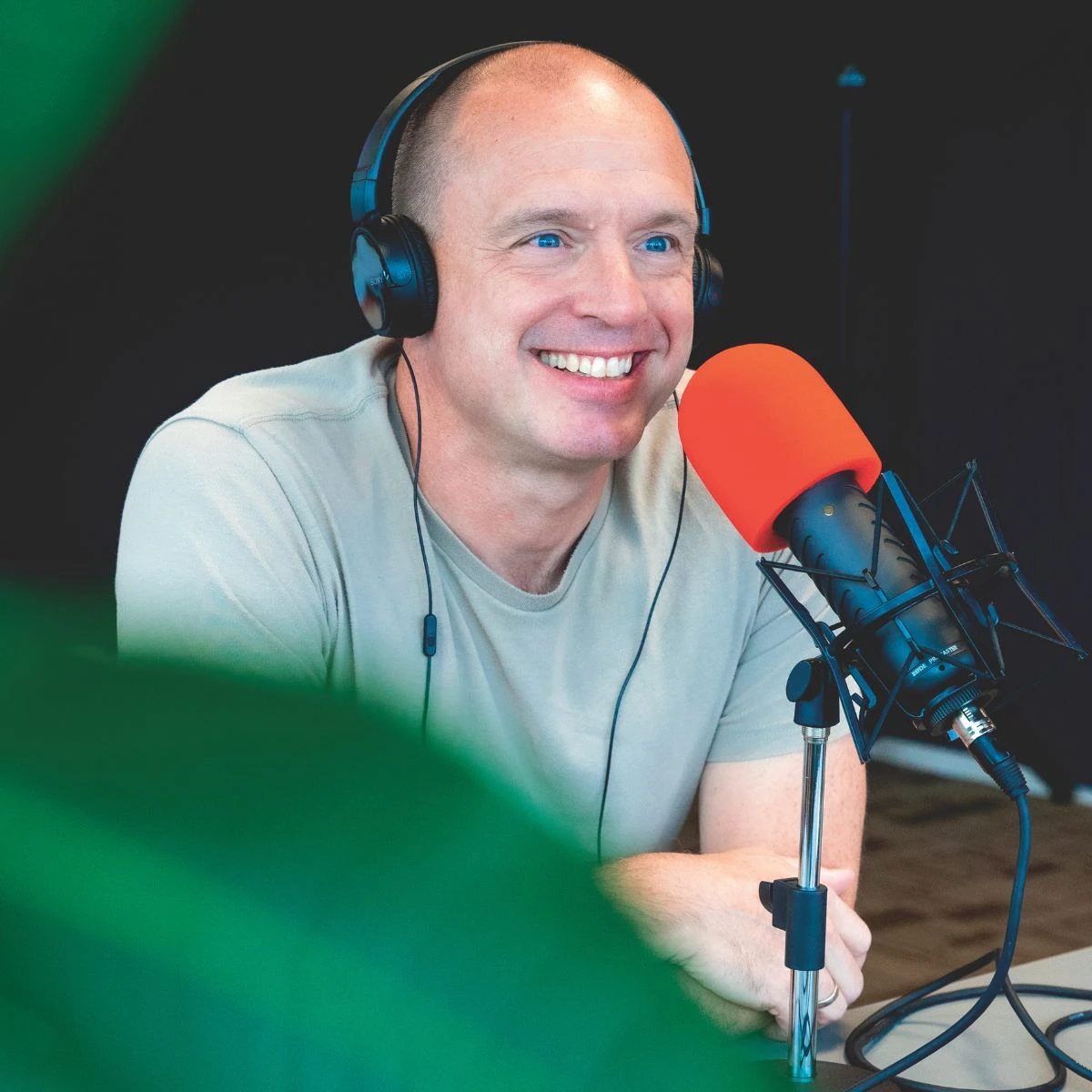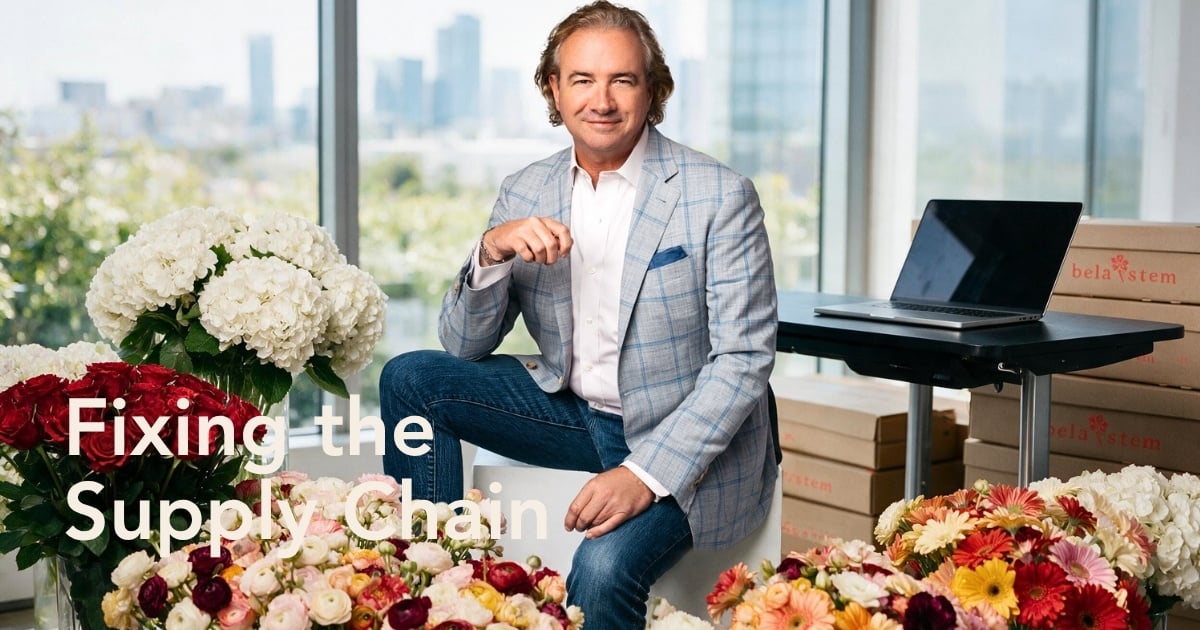
Most industries have that person who comes in, looks at how things have always been done, and figures that there's a lot that needs to change. And they change it. In floriculture, Jeffrey Gannon is one such person. He did not quite come up through a wholesale house or flower farm, but through conservation, international agricultural sustainability work, and two decades figuring out how broken supply chains hurt those at the bottom.
Jeffrey is the founder of BelaStem, a farm-direct marketplace that cuts out the middleman between South American flower growers and U.S. floral professionals, and if you ever get to chat with him, you’ll realize there is so much to him. He, for starters, is not your average floriculture entrepreneur, even though this is his latest line of work. Yet, when he turned his attention to flowers, he already had a lingering question: "Who really benefits from the way the floral supply chain system is designed?"
His Career Is Built Around Solving This Same Problem
Jeffrey opines that in the floral trade, it has not often been the growers who really benefited; neither have the buyers quite consistently. The many agents, importers, and regional wholesalers in between benefited more. That is the observation that led to his creation of BelaStem.
But before all this, how did it start? Jeffrey's floriculture career certainly looks unconventional; that’s until you see the pattern in it. He held director-level roles at the Sierra Club and the National Parks Conservation Association, which gave him grounding in environmental advocacy and mission-driven operations.
He later served at the Rainforest Alliance as Director of Individual Giving, building relationships with major donors to fund one of the world's leading sustainability certification bodies. This role took him to flower farms in Kenya and then Colombia, where something clicked that he could not quite let go of.
Jeffrey:
“It was a surprisingly natural progression. For years, I worked in conservation, protecting wildlands and wildlife habitat in the U.S. and internationally. But I quickly realized that if you actually want to make a lasting environmental impact, you can’t stop at the fence line of a protected area. You have to look at what’s happening on the land right next to it, and for most of the world, that land is agricultural. So changing how commercial agriculture operates isn’t adjacent to conservation work but a core part of it.”

The insight is what initially led him to work at the Rainforest Alliance, which certifies sustainable practices across agriculture, including the cut flower sector. Through this work, he visited flower farms in Kenya and then Colombia, and was struck by the beauty and the complexity of the operations.
Jeffrey:
"I remember thinking it would be a fascinating industry to work in someday. Years later, that ‘someday’ arrived when I was recruited as Senior Vice President of Sustainability and Marketing at BloomKonnect/Kabloom."
That was his first formal job in the floral industry, with a company that was actively trying to change the supply chain to make it more direct and efficient. The company ran both a traditional wholesale and several retail operations, and his role was to help not only with sustainability efforts but also to market and think through how to build a successful vertical integration of the floral supply chain that connects growers directly with floral professionals across the U.S.
The thinking was that the majority of B2B procurement and sourcing has moved to online, marketplace-style operations. The floral industry was very much stuck in another era of logistics and fulfillment. He also saw, up close, just how antiquated the floral supply chain infrastructure really was then.
Most People and Florists Don’t Know Much About Their Flowers
The idea of building an Amazon-style marketplace for the wholesale floral supply chain came to mind one day, and he could not see any other way forward. So he walked away from BloomKonnect and started building it. Yet, what he kept coming back to in conversations with florists was how little they really knew about the product they were buying.
Jeffrey:
“I’m always surprised about how little American florists and buyers know about how the flowers that they procure are actually grown and shipped to the United States. They have a concept about the production and shipping of the flowers, but it’s not something they spend a lot of time thinking about.”

He noted that there was definitely a ‘black box’ sort of area where most American florists purchase their products primarily from a traditional wholesaler, and then from various other sources such as auctions. Few use marketplaces where they can buy directly from the farm, where they might learn about how the flowers they purchase are grown.
Talking to hundreds of floral professionals while building the BelaStem marketplace, they all had some version of the same thing: “We kind of know where our flowers actually come from.” They know it’s probably Colombia, Ecuador, or Holland, but that’s about it. They don’t know how long that rose sat in a cooler in Miami or at a regional wholesaler, whether it’s about to open too fast, or whether it’ll make it through a wedding, which is a striking thing to note about an industry moving billions of dollars of product every year.
Florists buying through conventional wholesale channels are, in his view, working with a structural blindness that the system itself created: knowing roughly where the flowers are from, but not much about who grew them, how they were handled, how many intermediaries they passed through, or whether any of that is reflected in the price.
Jeffrey:
“Except at the very top price points, most people are buying with bated breath, just hoping the product holds up. That kind of direct feedback from buyers is a big part of why BelaStem isn’t just a place to buy flowers, but also a way to learn about the farms, the cut stages of different varieties, and a bunch of other stuff buyers just haven’t had access to before.”
BelaStem, he says, gives buyers direct access to information about how flowers are grown, at what cut stage different varieties ship, and what third-party sustainability certifications the farm holds. For a generation of floral professionals who will increasingly expect to know their sourcing, the way specialty coffee buyers know their single-origin beans, this traceability will hardly be optional.
StemTrackr, Rosie, and the Technology Behind BelaStem
BelaStem's tools include StemTrackr, the platform's inventory and operations management system for farms, which came right out of grower feedback during the beta phase. When growers saw demos of the marketplace backend, many said they had nothing comparable or were stuck with software designed for a different industry. So BelaStem built StemTrackr, giving farms a real-time dashboard for product listings, pricing, export documentation, and customer storefronts.
Integrated throughout the system is Rosie, BelaStem's AI assistant. For buyers, Rosie searches by variety, color, stem length, or occasion. For growers, she generates sales reports on voice command, flags low inventory, and automates the documentation work that traditionally consumed hours. Export documents can be prepared and printed in a fraction of the time that traditional methods take. Jeffrey also considers the fact that BelaStem has been building through the current wave of AI development a structural advantage, which the platform uses.
Setbacks and What He Does About Them
Jeffrey does not describe BelaStem's course without also accounting for the friction. On the buyer side, the offer is a sustainably certified, cut-to-order product at transparent, all-inclusive prices, delivered to a business address in 24 to 48 hours. Yet the resistance is largely behavioral.

Jeffrey:
"[But] old habits are hard to break. If you have been buying your product from certain wholesalers your whole career, even if you don't like it and might feel a little trapped, it is hard to adjust your procurement process to something new, even if on the surface it is more efficient and will save you time and money."
Cold chain concerns during last-mile delivery are also a concern, and Jeffrey does not wave them away; rather, he addresses them with competitive pricing and trial periods, letting the quality of cut-to-order freshness make the case once a buyer has experienced it.
But with growers, the situation is different. Most are actively interested in new customers and in building direct buyer relationships. What holds them back is not the concept, but the volume question, because marketplace relationships take time to scale, and growers are accustomed to large wholesale accounts. StemTrackr is partly Jeffrey's answer to this. It gives farms a reason to stay present and operational on the platform while the buyer network grows, instead of just waiting for volume to arrive before committing.
On Sustainability Without the Label
Jeffrey’s relationship with sustainability is clearer-cut than most. It has been shaped by years of working with the organizations that set and verify international standards. He notes that over the years, he found out that many companies engage in greenwashing, saying they are doing good things for the environment, but really not providing any significant change in how they conduct business.
Yet his own approach is the triple bottom line: People, Planet, Profits. Every decision at BelaStem, he argues, weighs the impact on the people involved, the environmental consequence, and the financial return; all three together. He points to third-party certifications like Florverde and Rainforest Alliance because they require documented, assessable practice changes. A sustainability claim without such external verification is, in his view, just copy.

So when it comes to sustainability (and greenwashing), BelaStem's design works within the same framework and does not just assert it. Removing intermediaries improves grower income, direct traceability reduces overproduction waste, and shorter supply chains mean fewer days in transit and less product loss. All these are sustainability outcomes built into the very algorithm of the platform, not added to the marketing materials afterward.