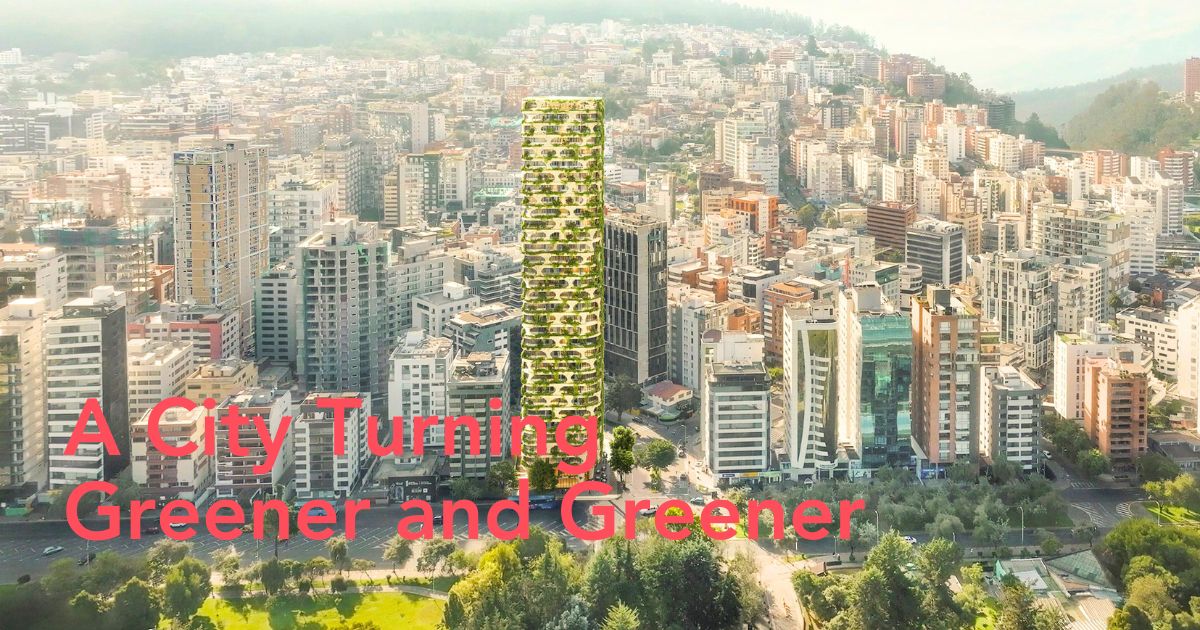
Japanese architecture studio Kengo Kuma and Associates has released designs for a residential skyscraper in Quito, Ecuador, the studio's first in the city. The 'Qapital' tower is set to be 32 stories at 128.5 meters (420 feet) tall and joins a growing number of projects in Quito by international architecture studios developed by local office Uribe Schwarzkopf, including recently completed projects by BIG and Safdie Architects. Best of all? It's green, which everyone likes, and it's filled with hundreds of hanging plants.
Kengo Kuma and Associates Has Released Designs for Its First Project in Quito
Like these two other towers, Qapital will border La Carolina Park in Quito's central business district. It will contain 509 'micro' studio apartments ranging from 21 square meters (226 square feet) to 36.15 square meters (389 square feet), as well as three commercial floors on its lower levels and amenities spaces such as a rooftop pool, a pet spa, and a spa, and lots and lots of green and nature surrounding it to feel more grounded and connected to plants.
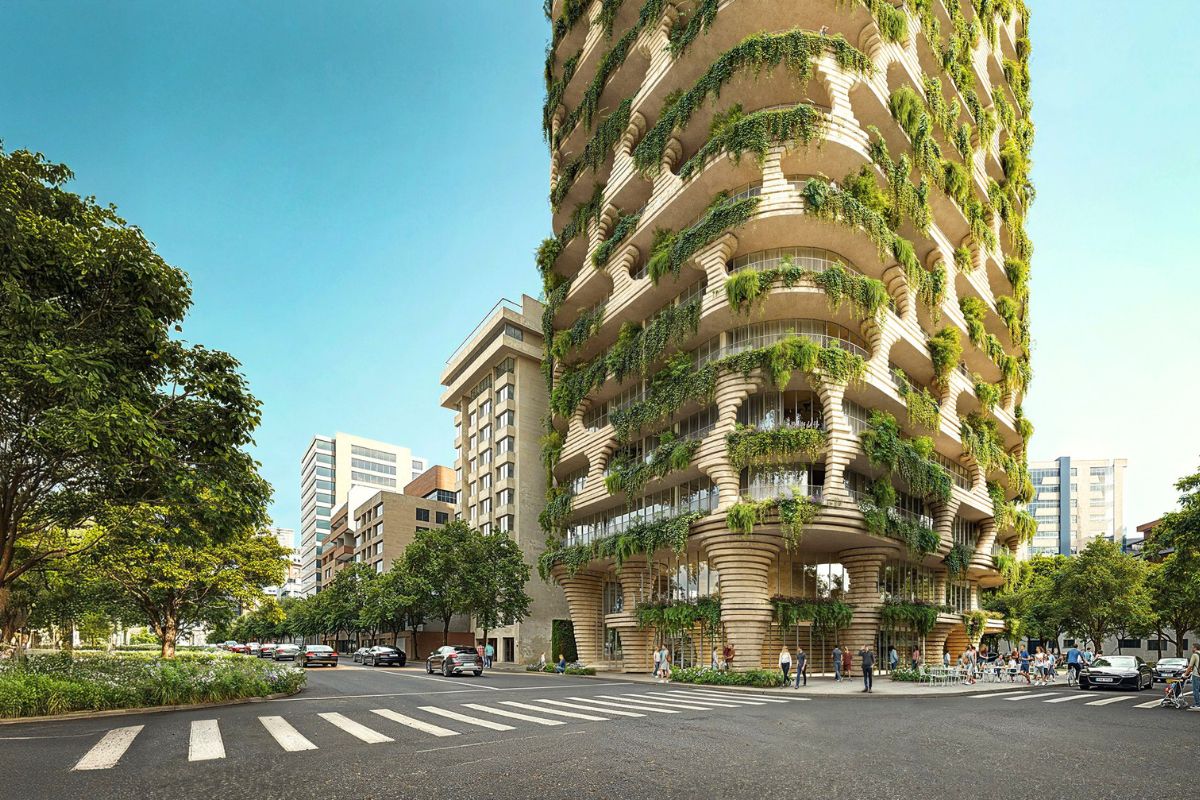
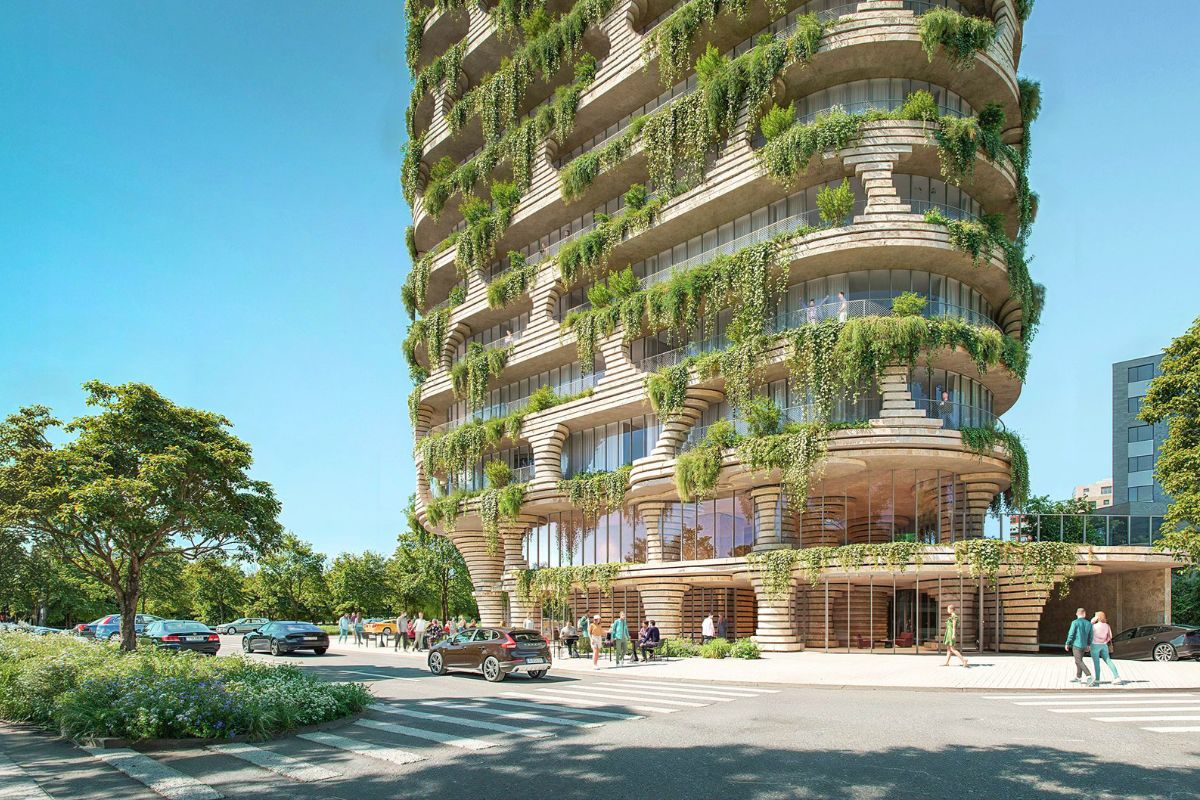
Renders depict a facade with large openings cut away from the building. It will be made of striated stacks of stone, and plants are shown pouring off balconies. According to architect Kengo Kuma, its textured facade was informed by his personal interest in ceramics.
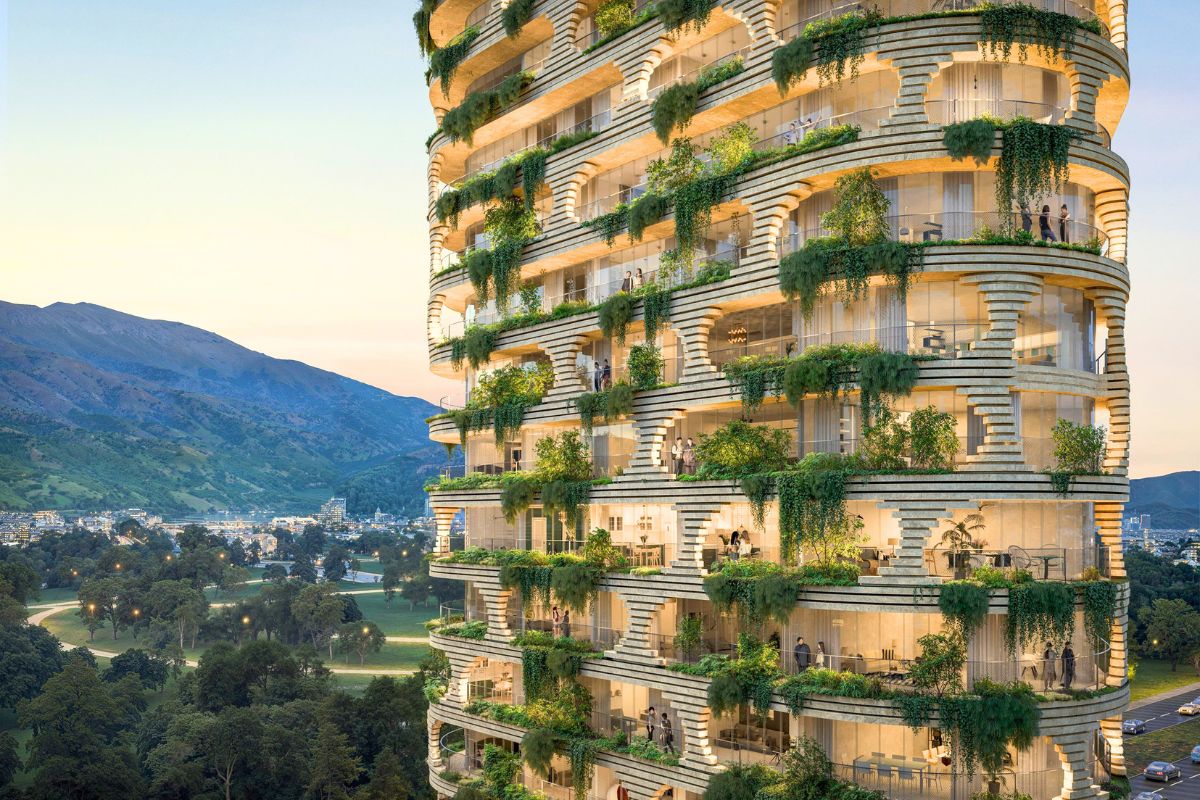
The Qapital Skyscraper Filled With Showering Plants
Kuma stated that he has long been interested in the similarities between ancient ceramics in Japan and Ecuador, particularly their shared sensitivity to form and the appreciation of natural materials.
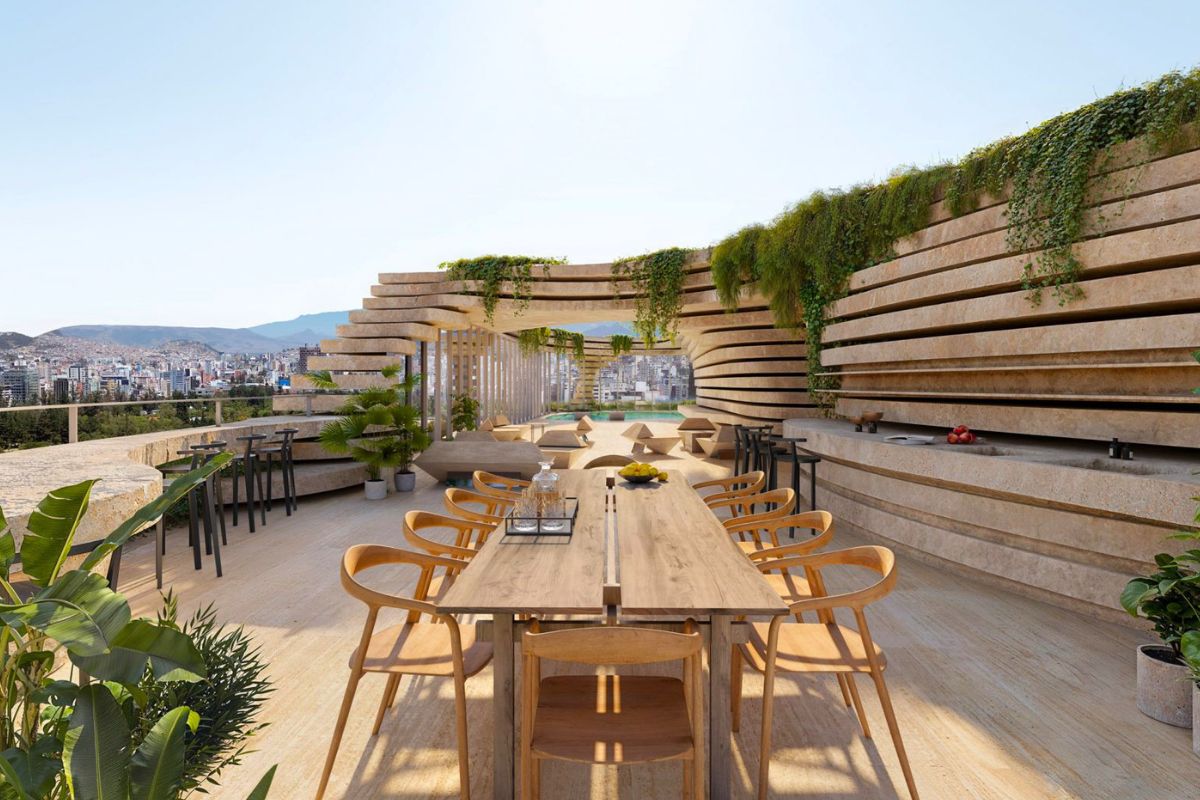
He explained that, with Qapital, this focus on nature and texture became the starting point for the design, expressed through the building’s carved façade and the integration of natural elements into the heart of the city. According to the team, the design was also informed by the 'rugged beauty' of the Andes mountain range, which runs down the western coast of South America and cradles Quito. The tower's balconies take cues from the porous surface of Andean rocks, for instance, which provide ample space for plants to grow within their crevices.
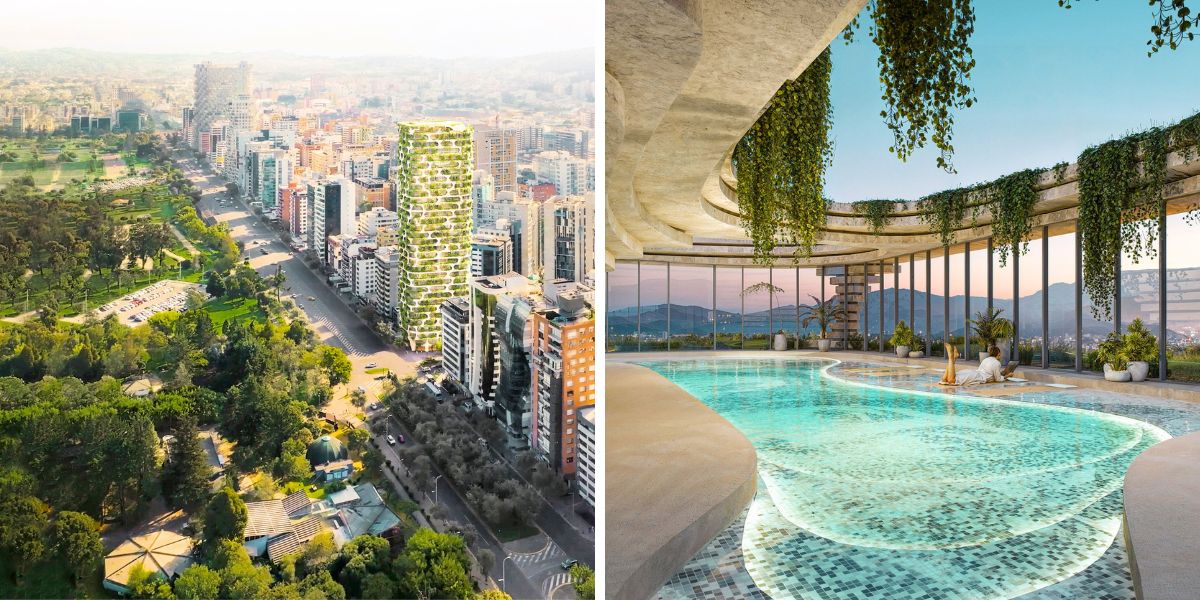
Interior renderings show a compact model bedroom lined with a light wood. Ammenity spaces are pictured as sprawling, organically shaped, and cavernous. The building combines functional design with compact living space, offering a flexible and dynamic opportunity for both living and investment.
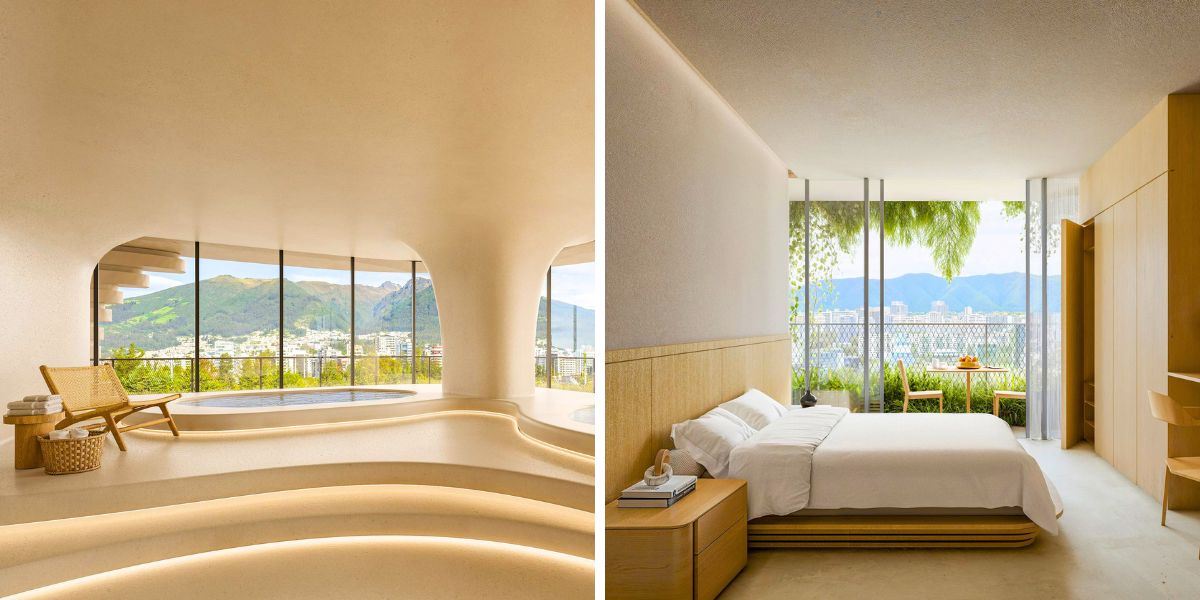
The project is also characterized by an abundance of cascading, showering plants throughout, with greenery flowing across terraces, façades, and interior spaces. This layered vegetation creates an immersive atmosphere, surrounding the structure with plant life at every level and reinforcing the connection between architecture and nature.
Photos: Kengo Kuma Studios.