Marcin Rusak is a Polish artist and designer whose practice sits between sculpture, design, and material research, with a strong focus on the poetic and conceptual potential of organic matter. Growing up in a family of flower growers, he developed an early awareness of the life cycle of plants and the value of materials that are usually seen as temporary or disposable. This background continues to inform his work, where flowers are seen as living matter with memory and structure.
Flowers, Nature, and the Revaluation of the Ephemeral by Marcin Rusak
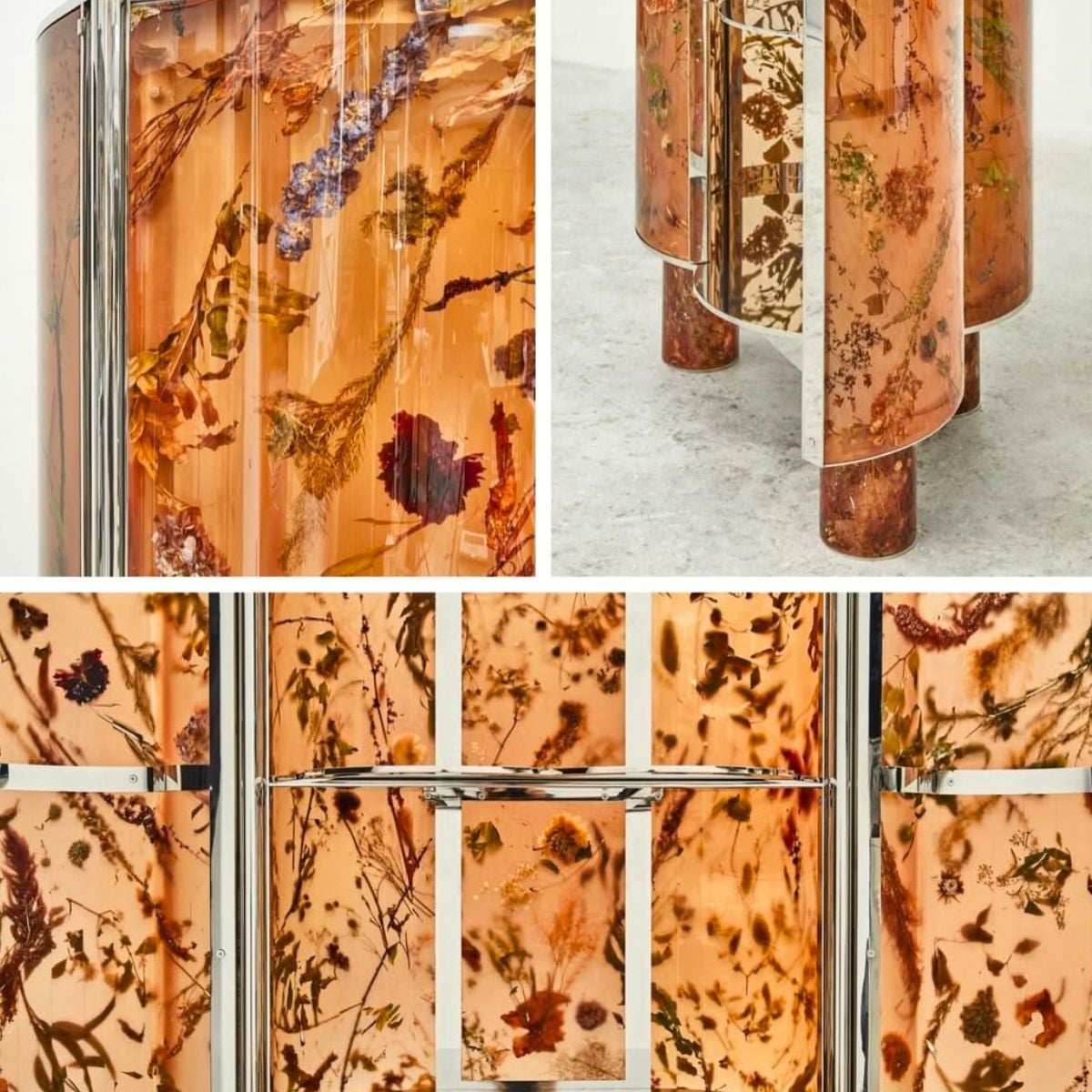
Phenomena at the crossroads between nature and culture, botany and economy, and the digital and the material prompt Marcin to conduct new bodies of research and develop alternative approaches to materiality and production. Central to his practice is the transformation of ephemeral organic matter – particularly waste flowers – into sculptural and furniture pieces. Through a thoughtful process of preservation, layering, and material experimentation, he elevates these discarded floral elements into complex compositions that capture the sensations of decay and permanence, challenging conventional distinctions between beauty and waste.
By using overlooked materials such as discarded metal, he creates works that embody design as a system for producing disposable, short-lived commodities. His pieces reframe value through transformation and memory, encouraging the owner to become a custodian of the object and to develop an emotional, long-lasting attachment to it, always with the company of flowers and botanical elements.
Flowers, Nature, and the Living Archive of Material Transformation
From ideation to implementation, he maintains full control over the creative process, developing custom methodologies for each project. His 'Unnatural Practice' embraces independent research across contemporary visual arts and design, industrial production, manual work, and engineering. Drawing from these intersecting disciplines, he often reinvents his processes, translating them into new material outcomes, critical works, and exhibition concepts that reframe perceptions of the natural world.
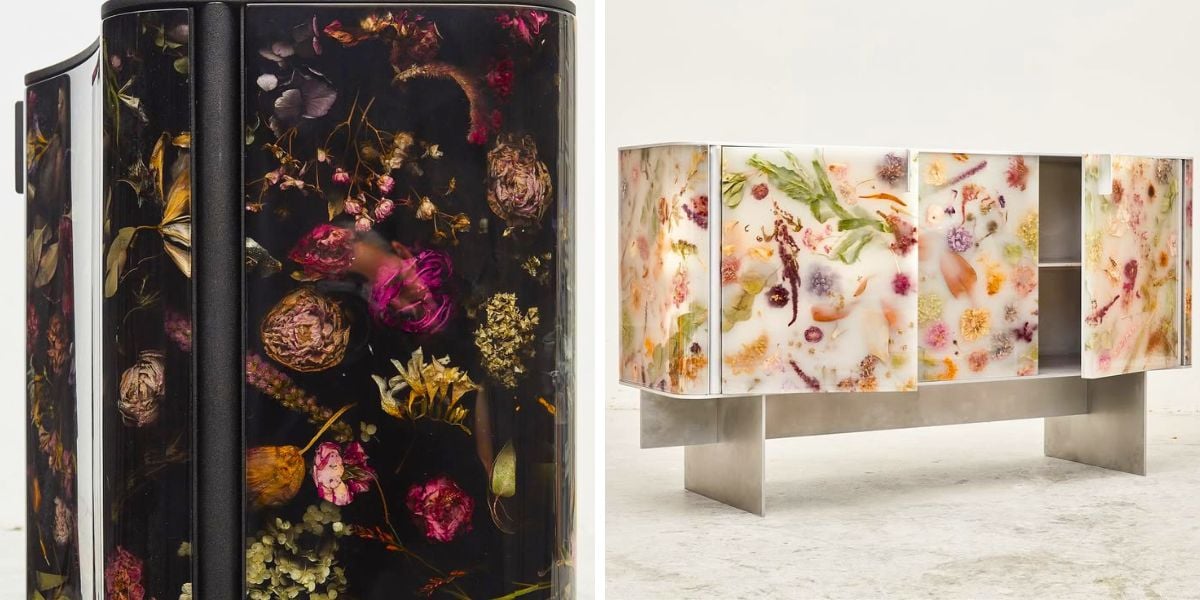
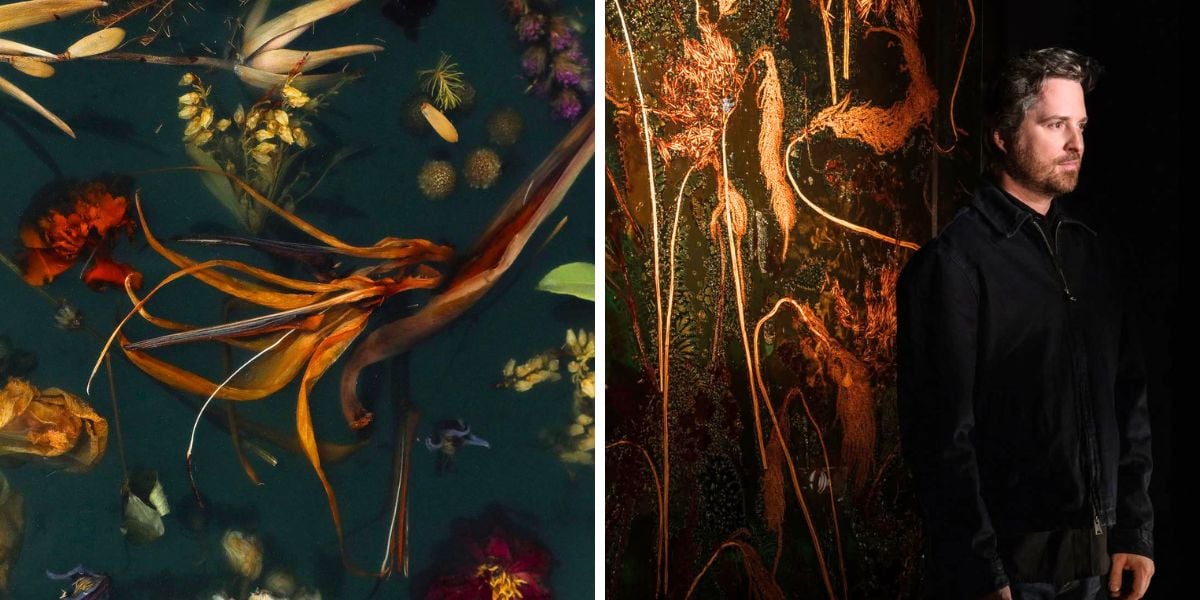
His extensive material library – a 'Living Archive' – is built from both organic (degradable) and synthetic (durable) matter, with a particular focus on floral waste sourced through an extended network of collaborators. These discarded flowers are not treated as remnants, but as core material – reconstructed into floral composites that preserve traces of their former life while forming entirely new sculptural and functional identities.
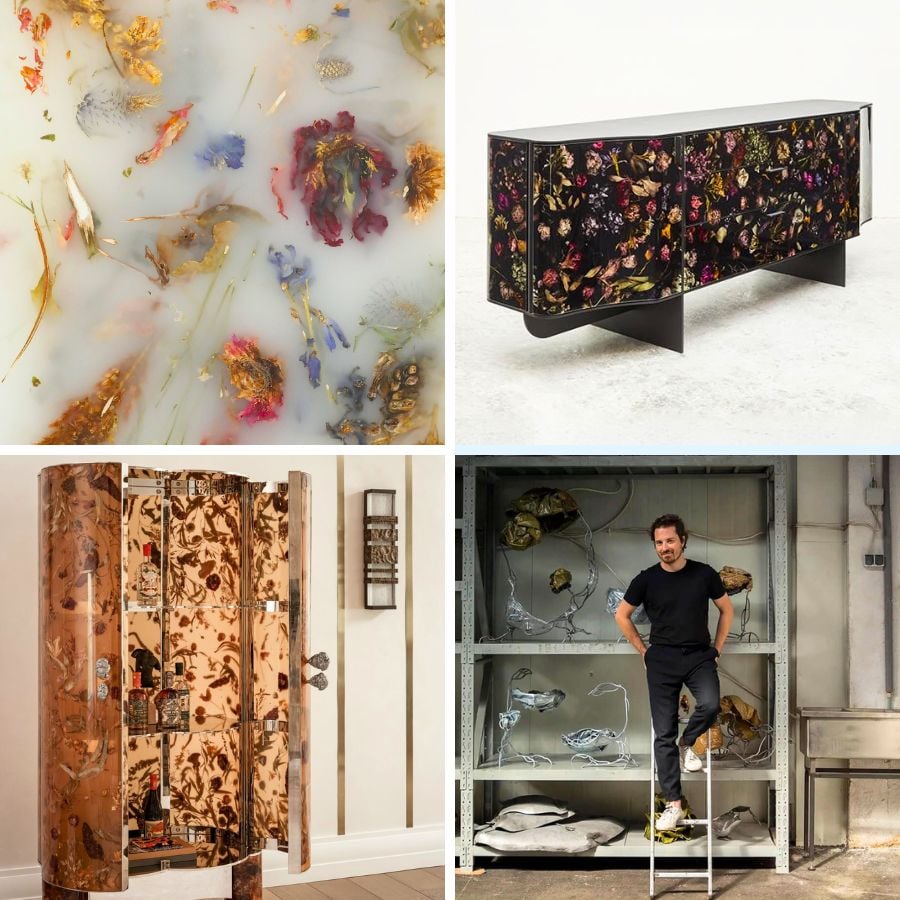
He shares:
"My work is a reaction to the way we consume beauty and time. I explore how organic matter, so often discarded, can speak of memory, loss, and transformation. What fades is often what matters most."
Floral resin furniture, anyone?
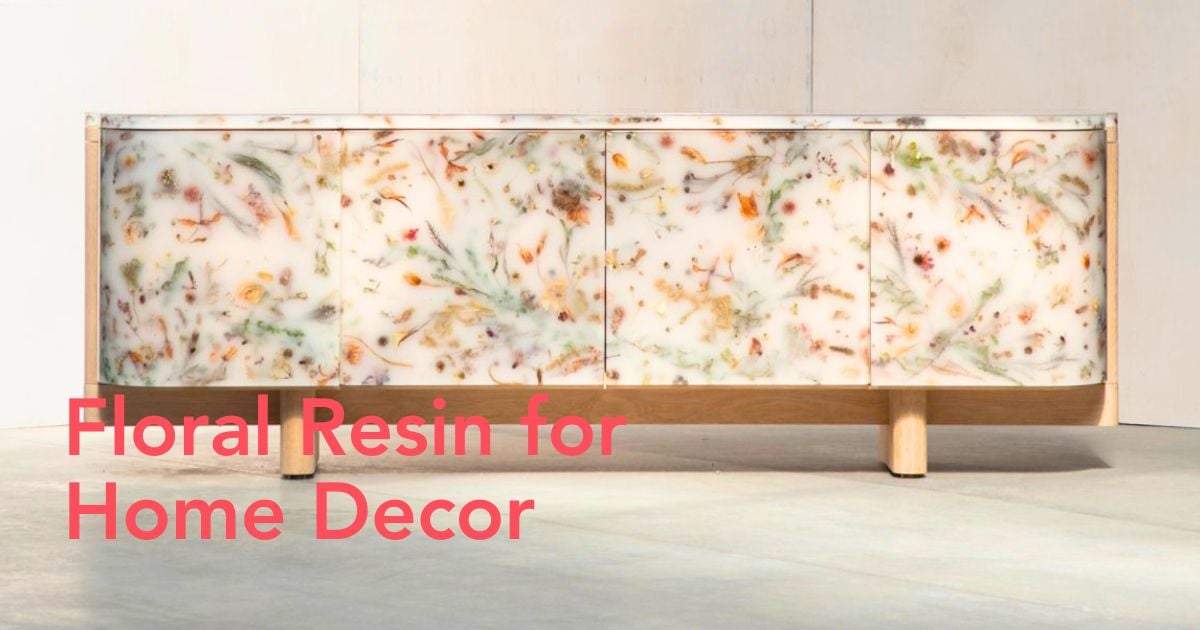
The Warsaw-born designer and artist has made an international name for himself through material innovation by molding botany into objects that seem to exist somewhere between life and the afterlife. His iconic Flora Collection encases dried flowers in resin, forming richly textured cabinets, tables, and wall panels where time appears to stand still. Here, opposing forces are at play: the delicate fragility of petals suspended in the enduring, almost clinical permanence of synthetic resin. The artificial polymer carries within it the biodegradable potential of nature, creating a dialogue between the natural and the industrial.
What piece would you choose to decorate your spaces?
Photos: @marcinrusak.