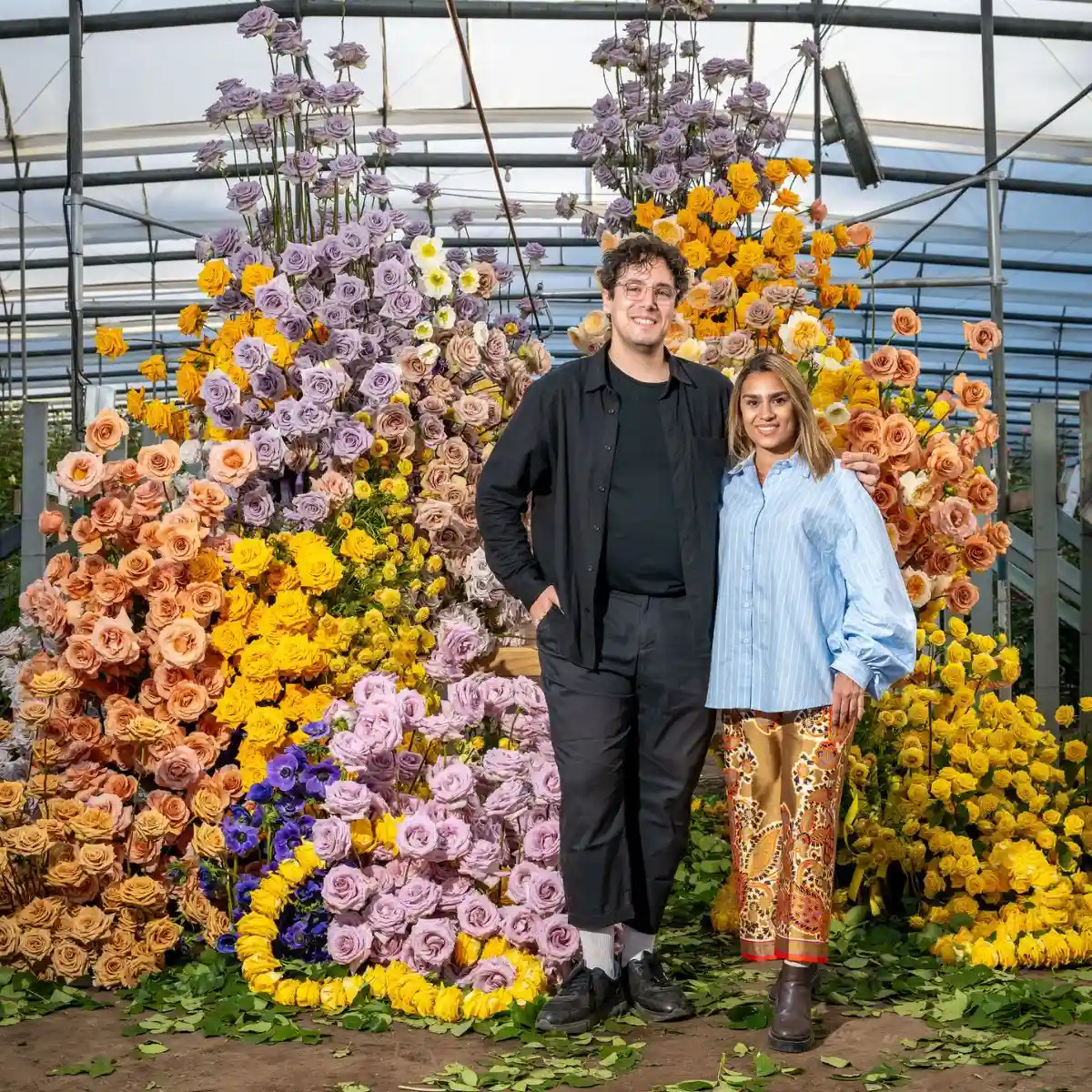
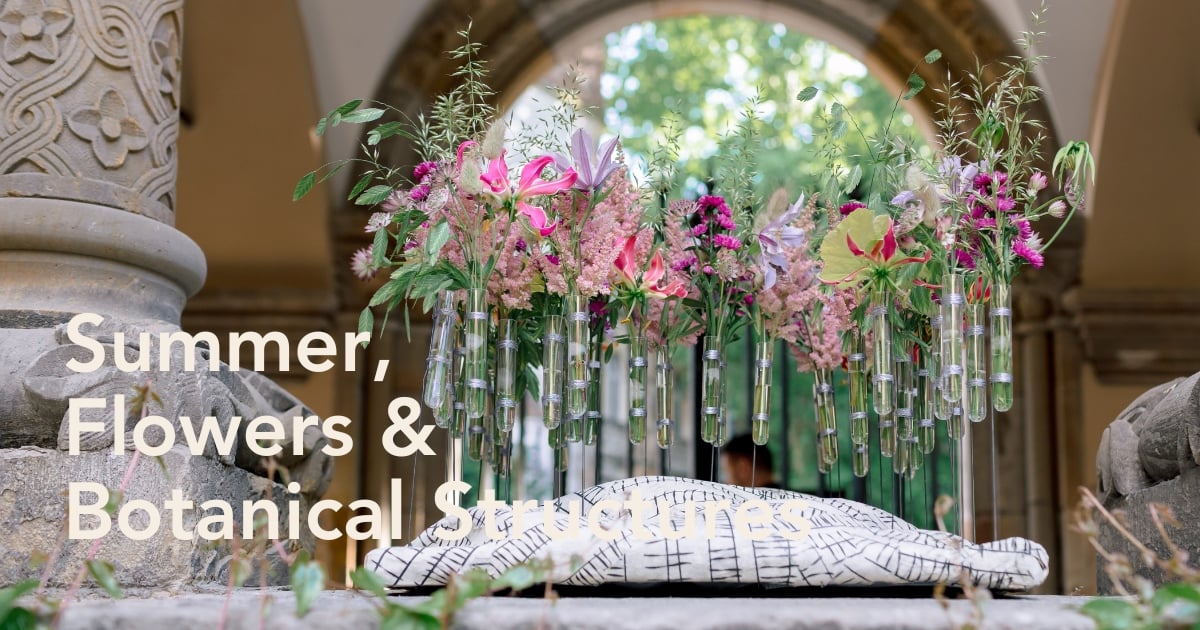
Krisztián Kövér, the founder of floral design studio Botanic Art, often defines himself as a lover of nature and colors. He often consciously uses these elements in his compositions, creating designs that are a harmonious blend of wild nature, sentient color use, and high intuition.
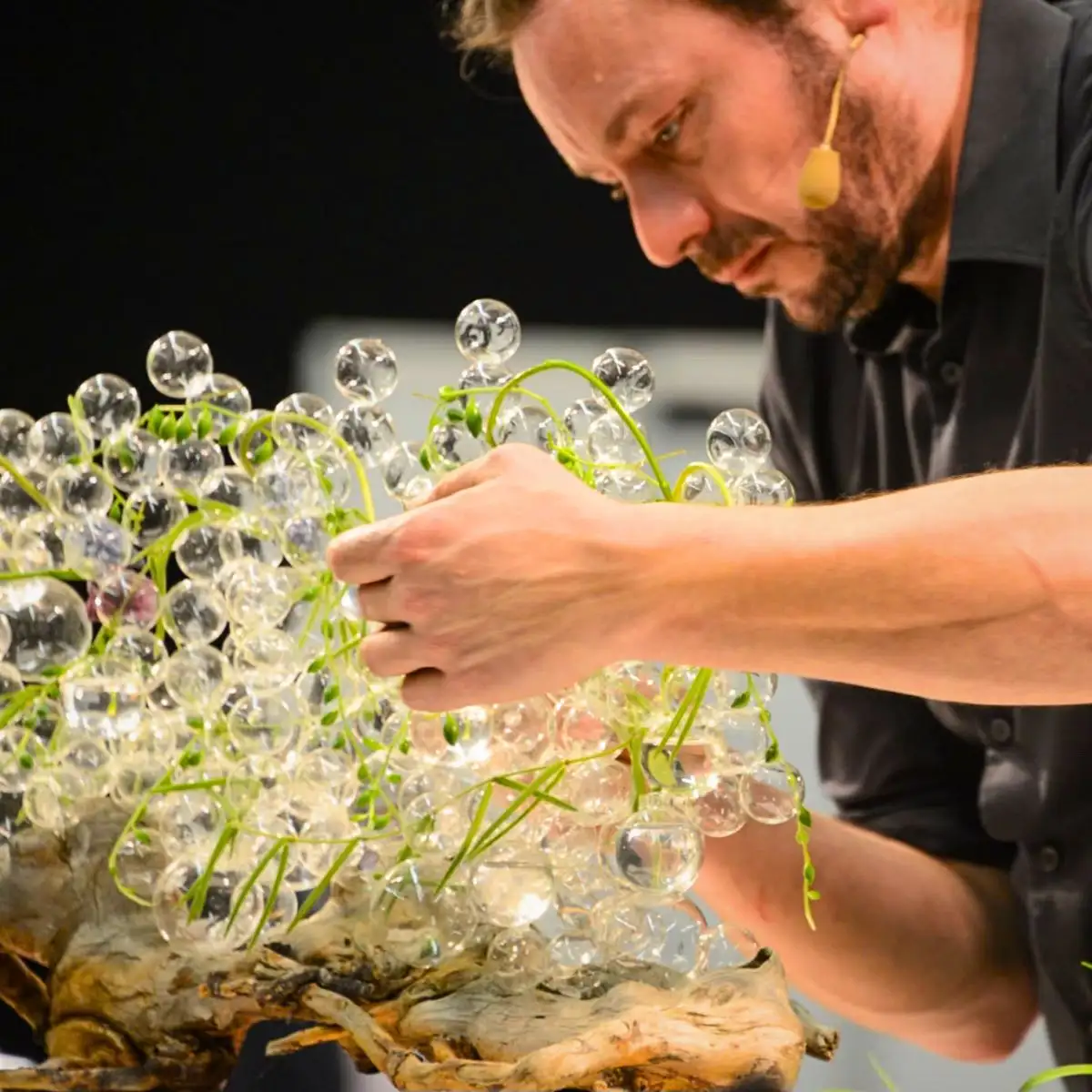
He returns with his Botanical Structures collection, made with Marginpar's specialty summer cut flowers. This time, his designs lean more into practicality and technique, making use of elements like test tubes, glass vessels, wire, handmade bases, and other sustainable materials like yarn and string.
Vessel as the Anchor of the Design Idea
An ideal floral design also largely involves decisions about how the flowers are arranged. Vases, baskets, or hand-tied arrangements are all choices that shape how flowers are viewed and experienced. Köver's work in the Botanical Structures project speaks a lot about this. The armature, base, or vessel has meaning, communicating and interpreting how the flowers are perceived.
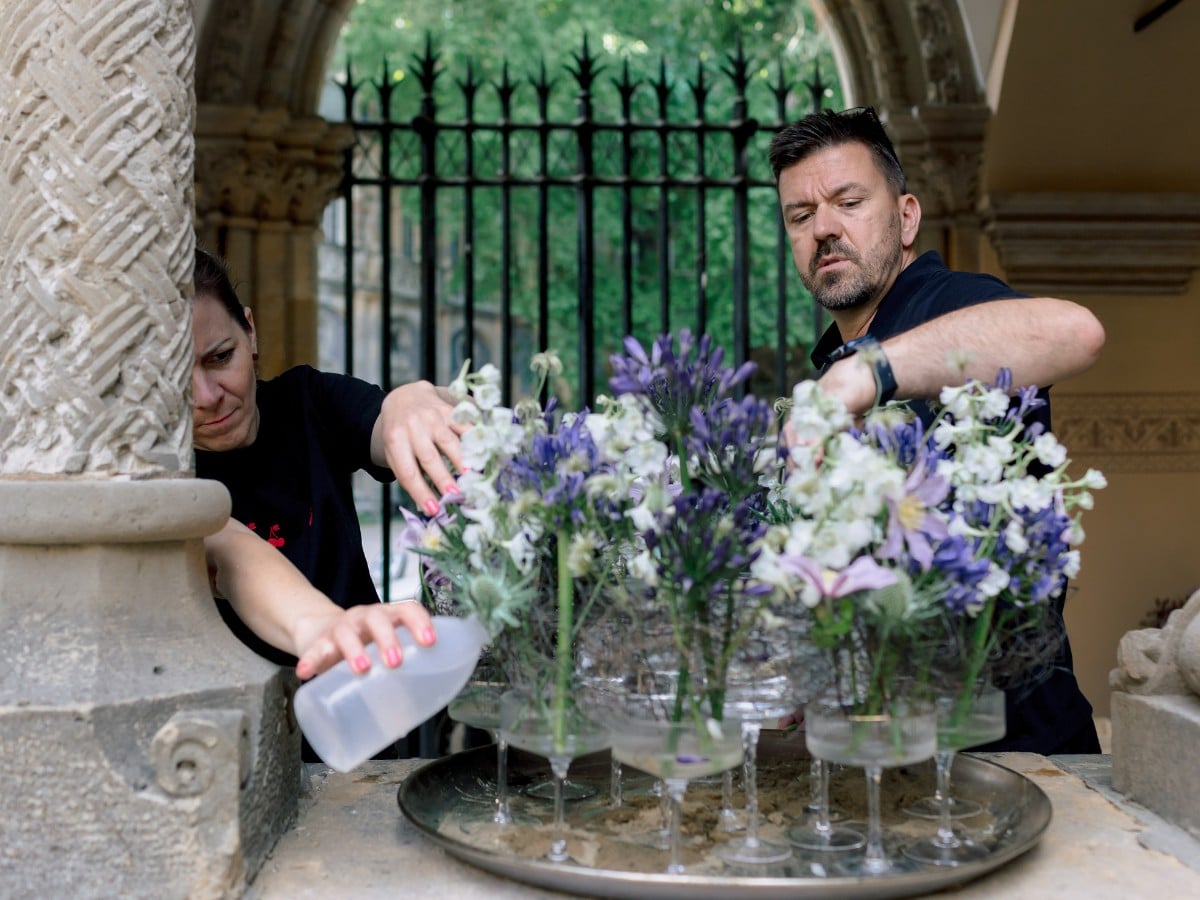
Köver’s work is shaped by an engagement with the natural world and the formal potentials of contemporary design; he puts these interests together in compositions where the choice and method of assemblage of the designs are as well-thought-out as the flower selection itself. The test tubes hold flower stems in open air, the hand-formed base expresses what sustainability looks like in design, and glass vessels let the flowers stand on their own. So here’s a more detailed look at the designs.
1. Creating Depth and Height
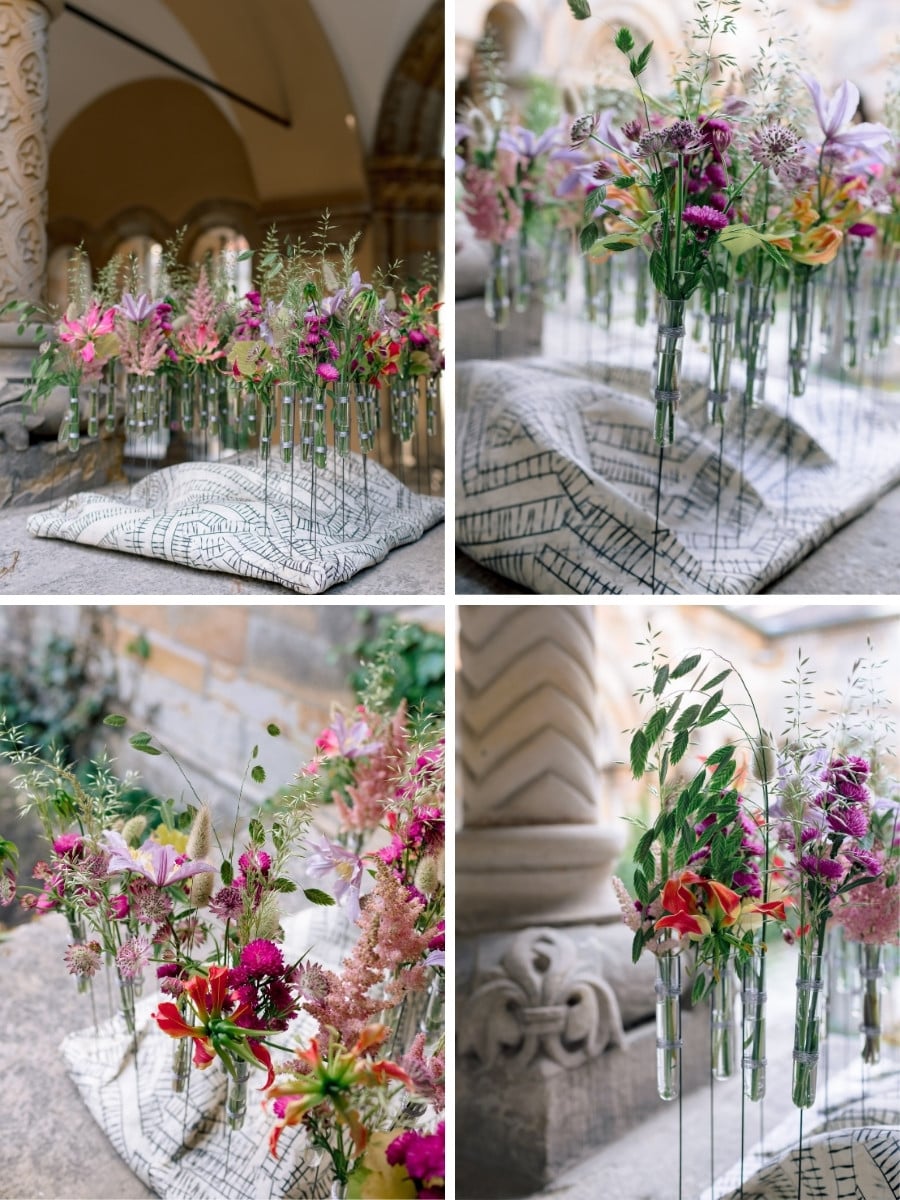
In this design, individual test tubes hold individual flower stems above a folded paper structure, so the flowers appear to float and not sit in a conventional arrangement. Köver chose bright summer colors to play against the neutral base, while the form's flowing lines keep the piece from seeming static.
Clematis Amazing® London, Gloriosa Simba Fifty Shades, and Astrantia Roma® carry most of the summer feeling, their warm and varied tones doing much against the pale base. The repeated placement of flower heads creates a sense of order, while small variations in height and direction prevent the design from settling into anything too formal.
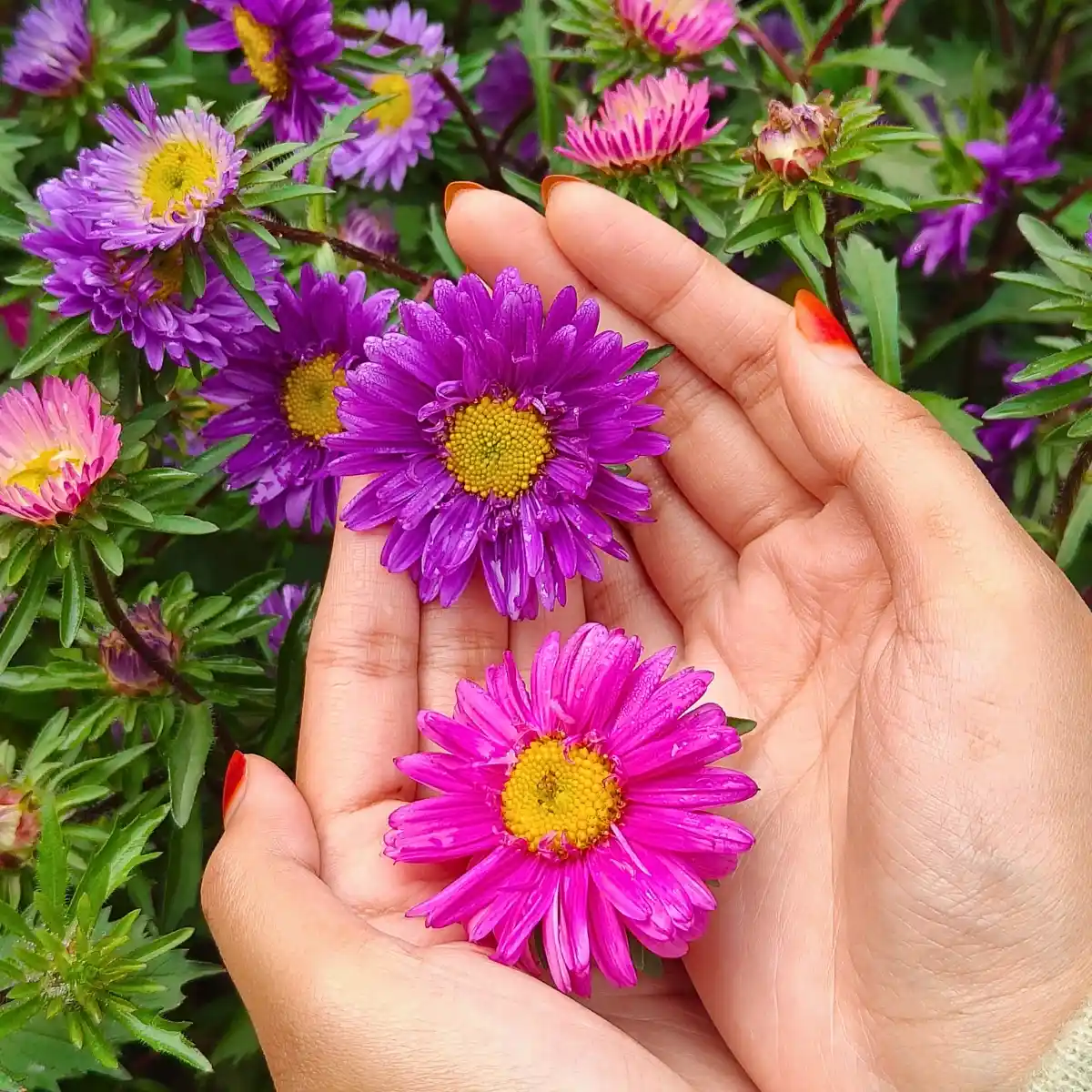
Aster Flash and Astilbe Vision Inferno fill the smaller gaps, and the airy seed heads of Chasmanthium Mantis move through, hardly competing for attention. As a result, the finished arrangement feels as structured as it is natural. It is organized on one hand and let loose on the other, a balance Köver notes works particularly well at a larger scale, where depth and movement are essential.
2. Sustainability in Contemporary Floral Design
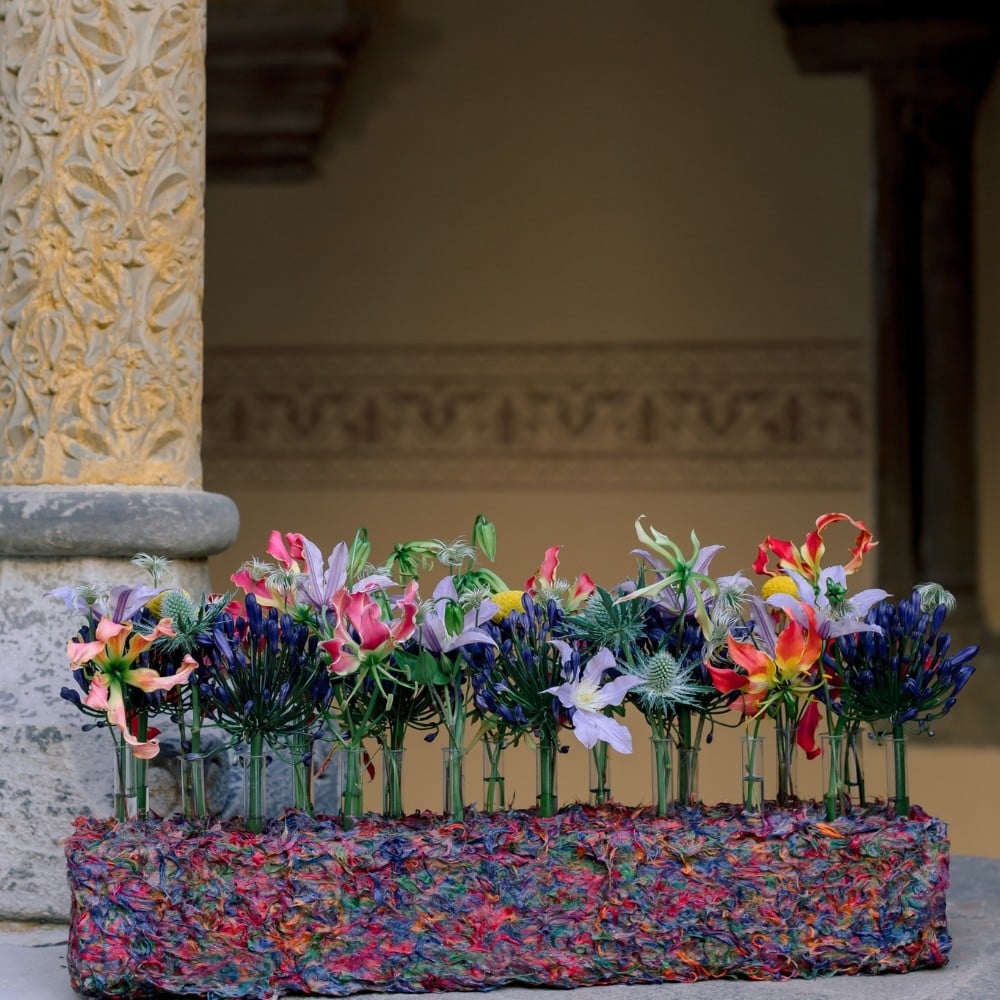
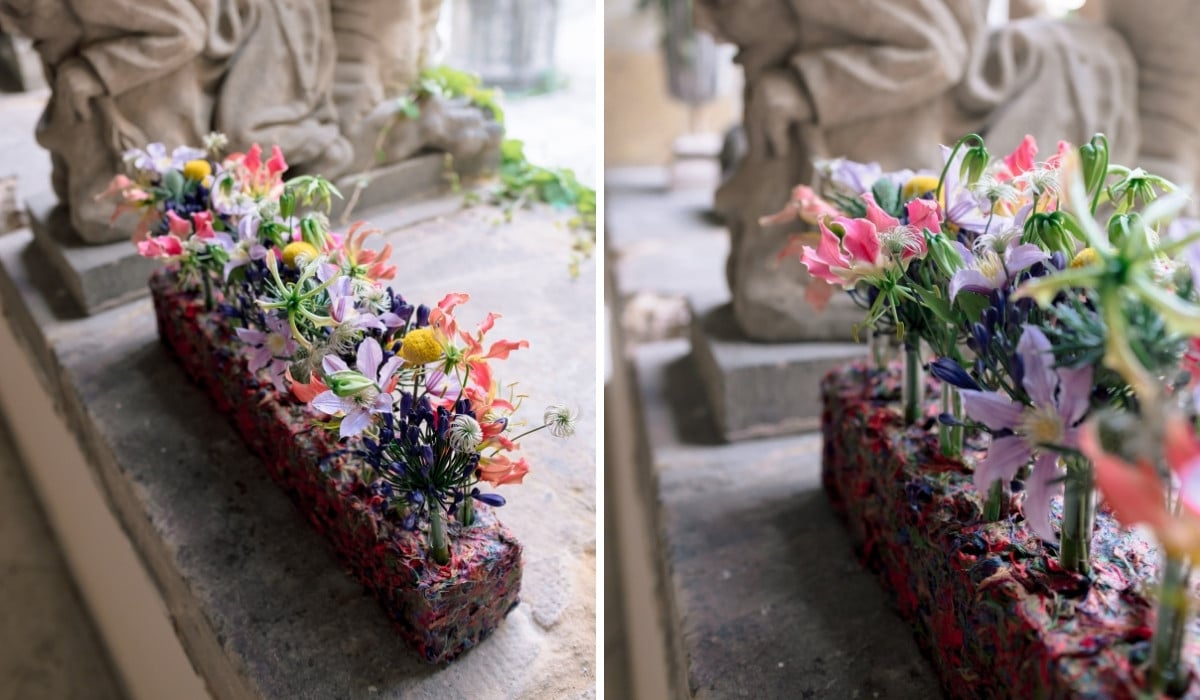
Sustainability has become a working concern for florists, much more than just a talking point. This design brings it out as a starting material, and not an afterthought. The base of the design is built from pieces of yarn and string, bound with natural adhesive. Sustainability holds the design structure together and also serves as a design element on its own, in the form of a fibrous surface that fits the hand-formed look popular in contemporary floral work.
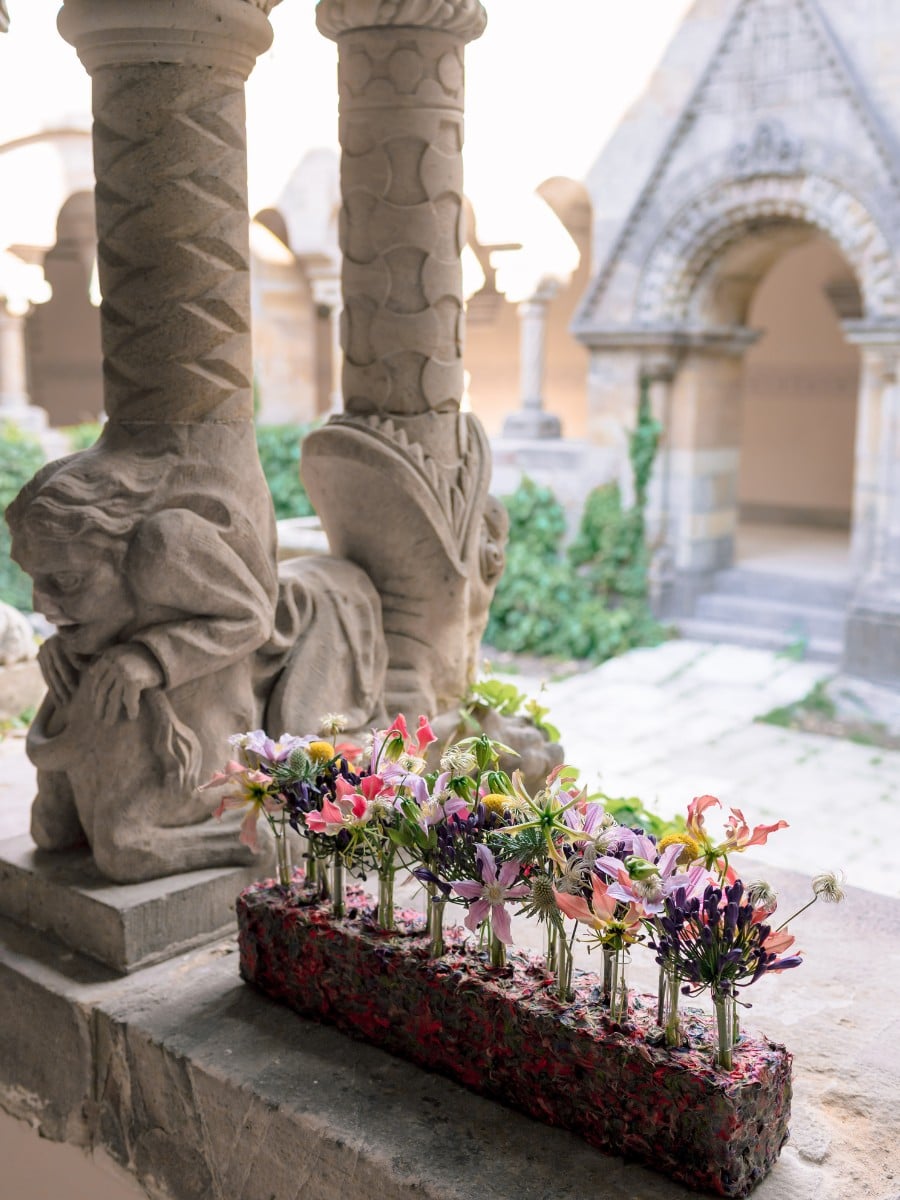
Set against that texture are Gloriosa Simba Fifty Shades, Clematis Amazing® London, and Clematis Amazing® Kibo, which are delicate (and contrast with the base by comparison0, yet this contrast is the point of the design. Craspedia Paintball Pop adds its clean yellow spheres, Eryngium Gemini Questar® brings its familiar spiky structure, and Agapanthus Eyfori Blue, a new addition to the Marginpar assortment, along with Agapanthus Poppin' Star, brings in blue and lavender notes.
The test tubes built into the base give the flowers a water source, so the practical side of the design is right beside the conceptual side. Sustainability here does not mean working without water or giving up flower longevity, but rethinking what the supporting materials are made from, how they are used, and how long they can be reused.
3. Silent Rhythm
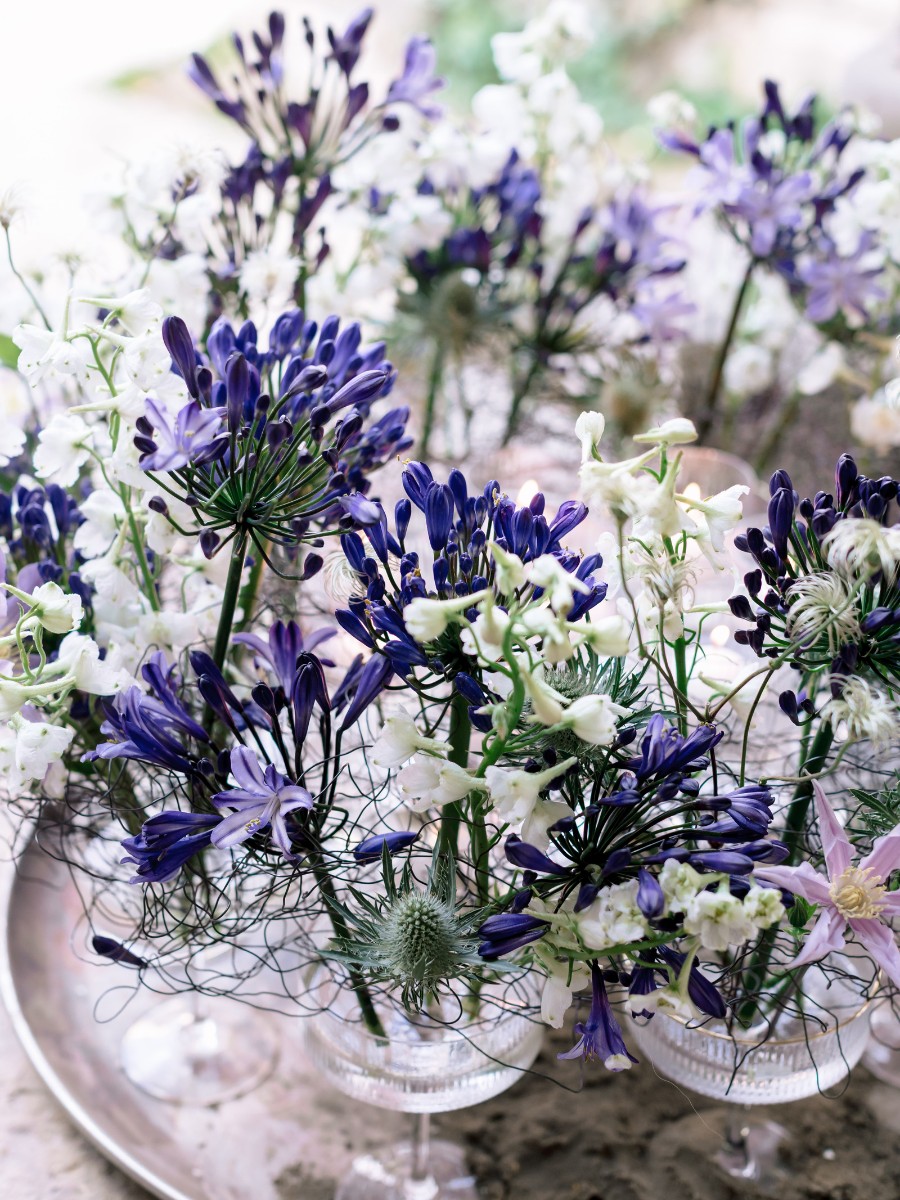
The unique flower heads of Agapanthus always bring a sense of elegance and lightness to a floral composition. In this design, deep blue and violet dominate the composition, built around the spherical flower heads of the newly added Agapanthus Eyfori Blue. Their rounded form sets a visual rhythm that repeats across the design, while Clematis Amazing® London and Clematis Amazing® Kibo add lighter, star-shaped breaks between the heavier blue tones, with Delphinium Bella Andes White for contrast.
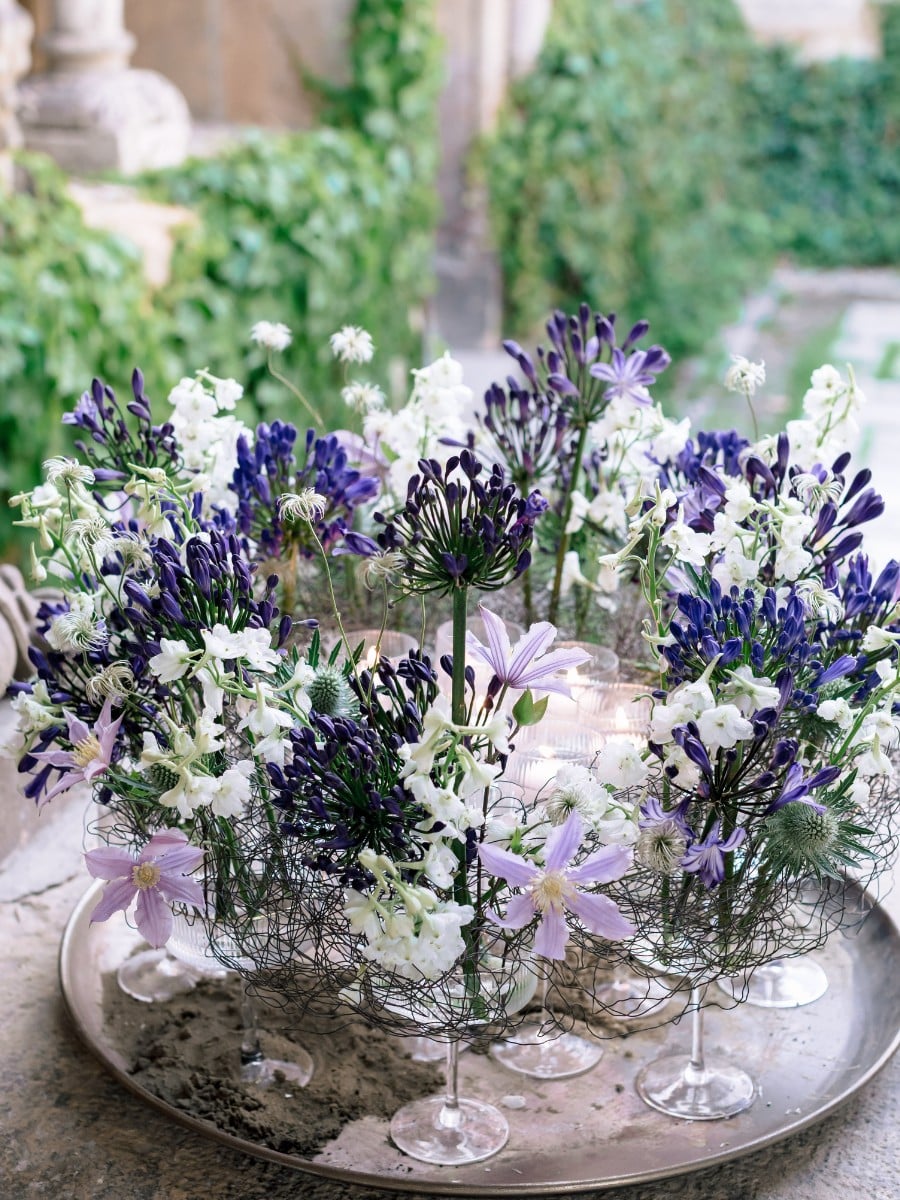
These looser companion flowers also provide gentle transitions and visual movement, while Eryngium Gemini Questar® adds its structural, spiky form among the softer shapes, preventing the rhythm from being too even. The technical choice defining the piece is its use of glass vessels in which the flowers are arranged. The glass is nearly invisible once filled and placed, so attention remains on the flowers and how they interact ‘without any visible mechanics’ holding them up.
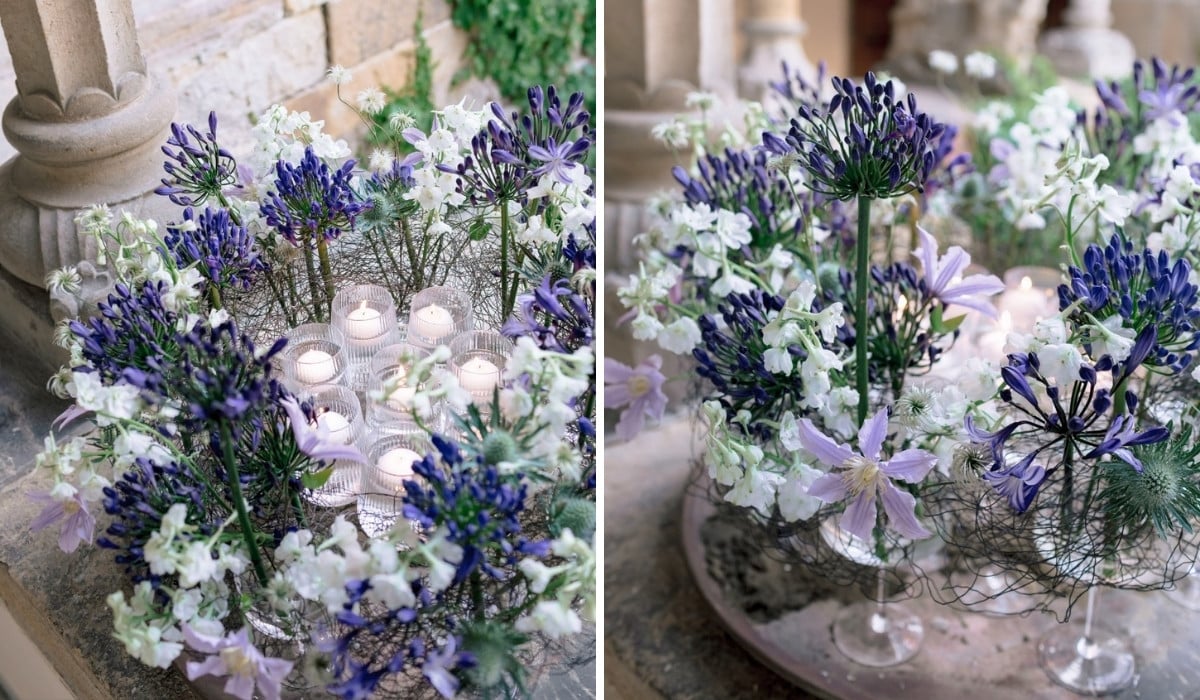
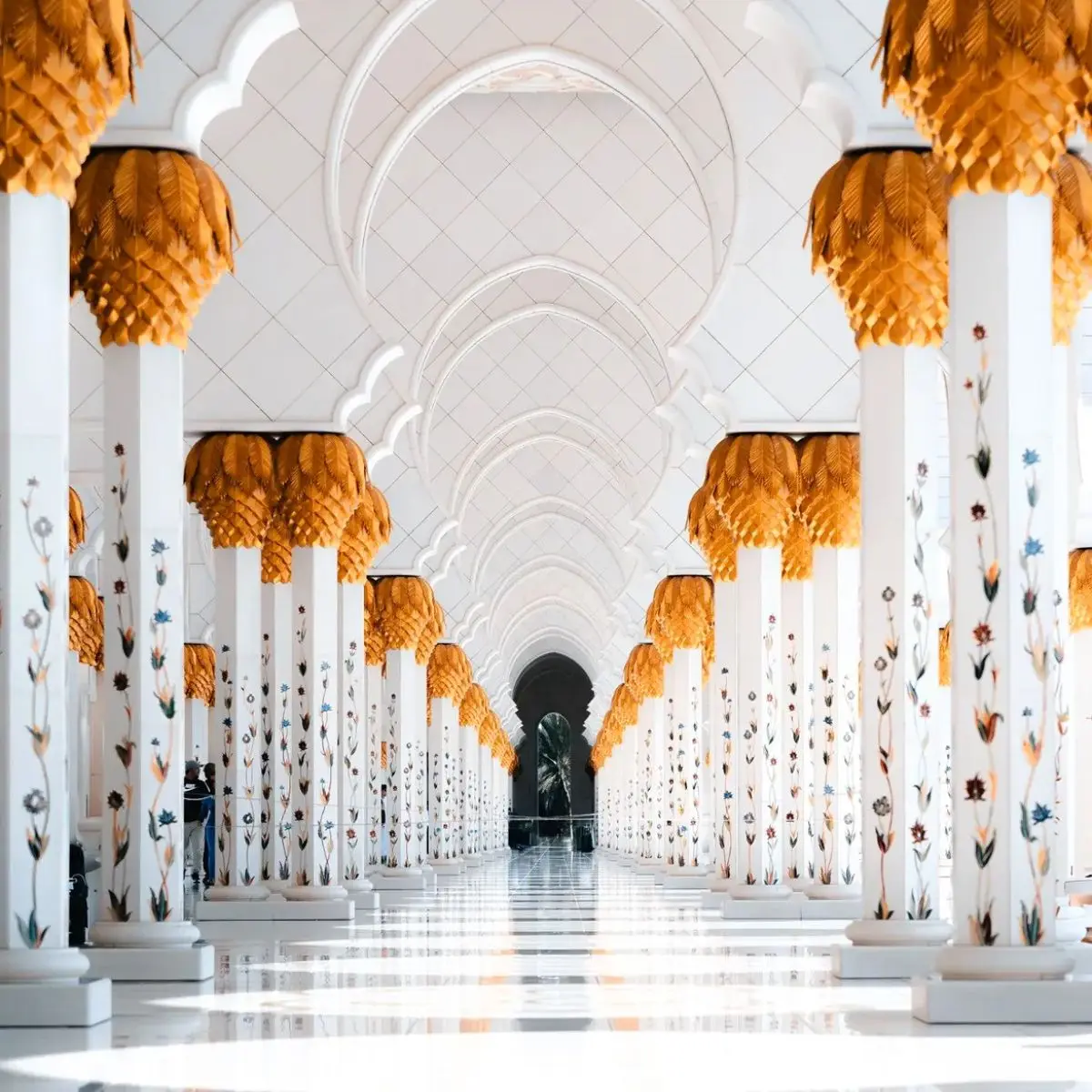
A dark wire frame wraps around the arrangement, adding depth and a sense of contrast against the flowers' softer lines, enhancing the overall visual impact. Set against the backdrop of historic architecture, the piece creates a dialogue between the old setting and a contemporary floral language. It presents the idea of an airy yet expressive composition that celebrates the beauty of individual flowers and the harmony they create together.
4. Floating World
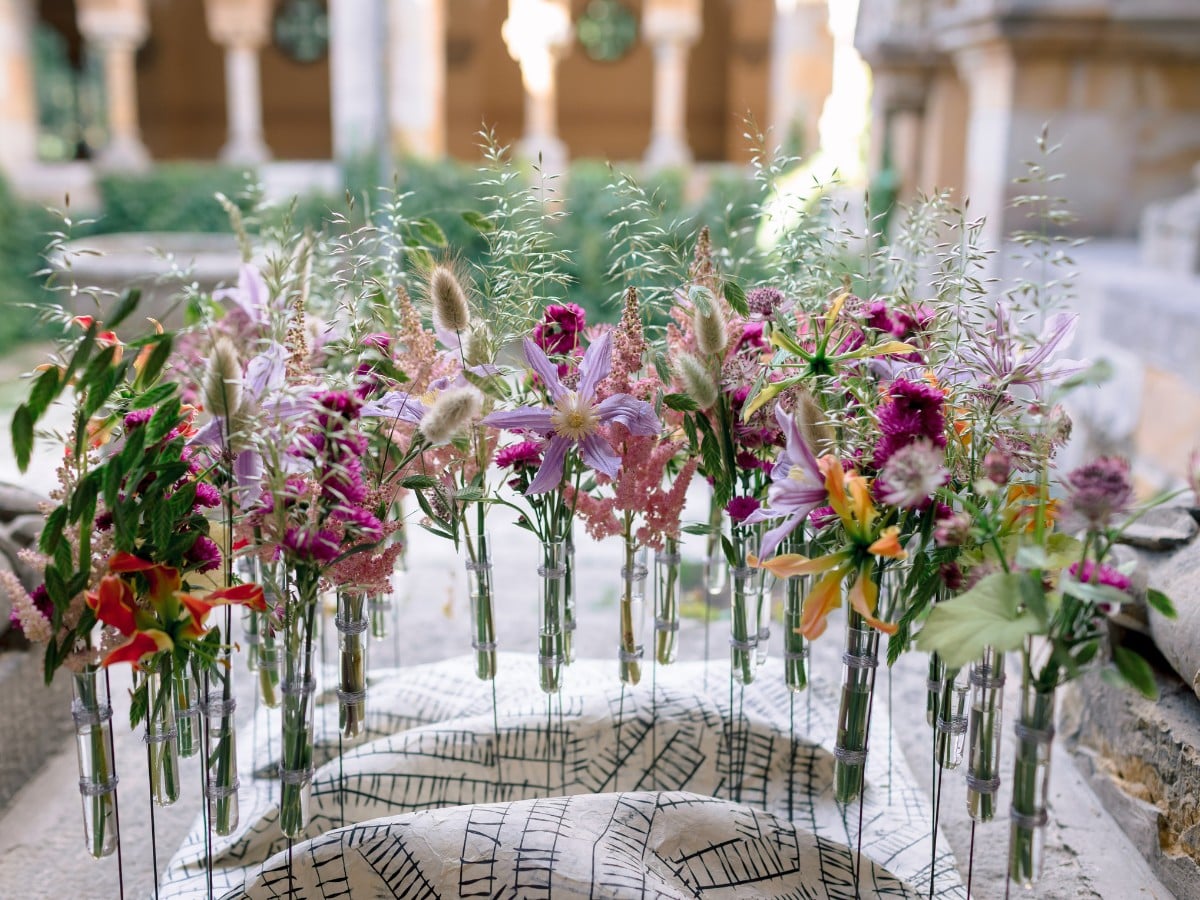
One of the greatest advantages of floating installations, Köver says, is their ability to give each flower its own space. This is what this design is pretty much about. It returns to the test tube approach, but this time pushes it further. Every flower stem is placed in its own tube, fully detached from its neighbors, which does more than look interesting. This means each flower gets a clean, remote water source, allowing it to remain fresh for longer while showcasing its unique quality.
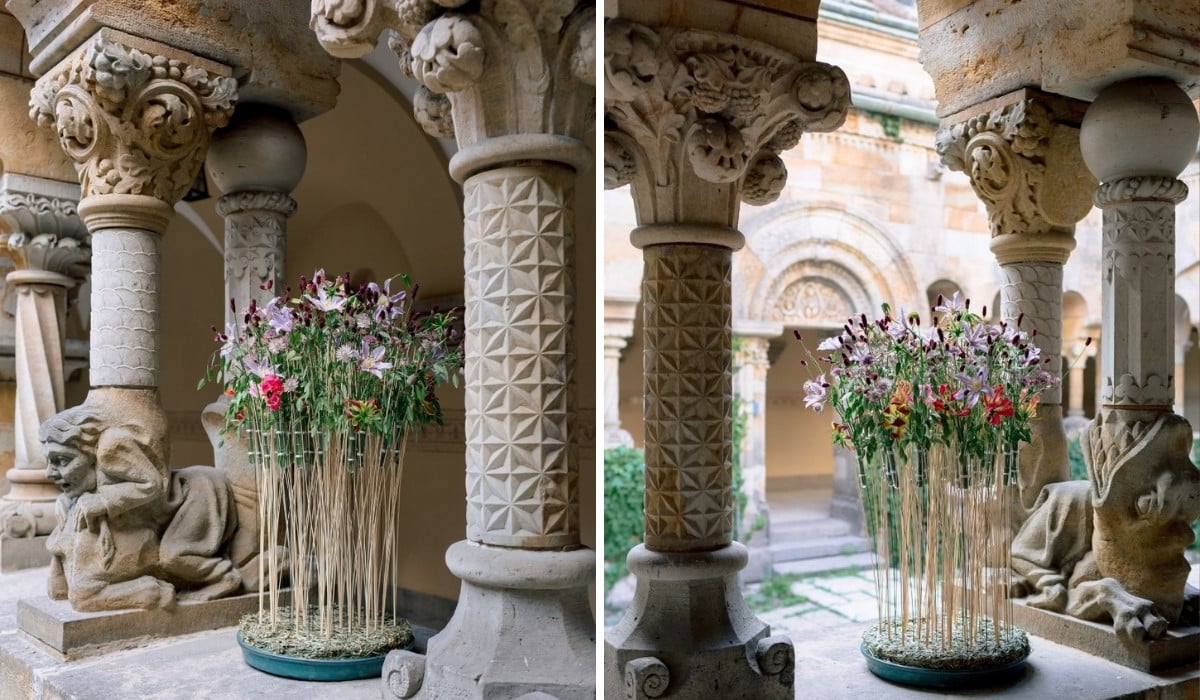
Gloriosa Simba Fifty Shades holds the look of the design with its theatrical, flame-shaped petals, while Clematis brings balance and a lighter, airier presence that inhibits the overall feel from seeming too dense. Astrantia Roma® and Sanguisorba Red Dream® supply the smaller transitional details, easing the eye between the larger forms, and Chasmanthium Mantis threads through with its loose, grassy texture.
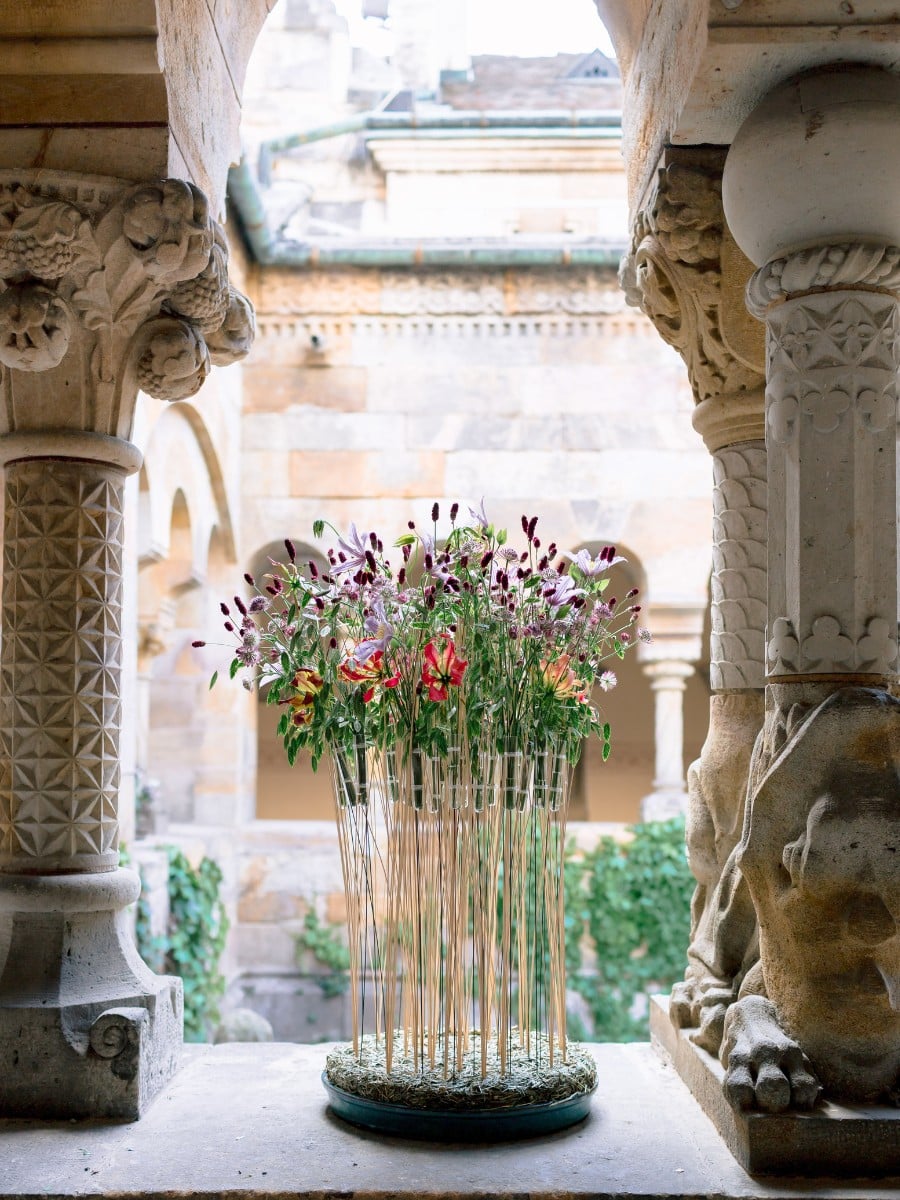
Since every flower in this kind of 'floating design' remains fully visible, proportion has to be carefully planned; there is nowhere for a frail placement to hide. The resulting design looks effortless, which is, practically, the product of suitable spacing, prior planning, and a clear sense of where each flower needs to be, even before the design was structured.
How the Flowers and Designs Are Connected
Together, these designs from Botanical Structures show how the master florist works through some important questions, but from different angles. How much support does a flower need? How visible should that support be? How does sustainability manifest in designs? Köver’s compositions answer these questions.
And while the test tubes, glass vessels, and string-built bases answer the queries differently, all the arrangements deliberately allow the individual flowers used to shine and hold their own space. Even still, Köver’s sense of sustainability in contemporary floral design easily mirrors his choice of Marginpar’s sustainably grown flowers to use.
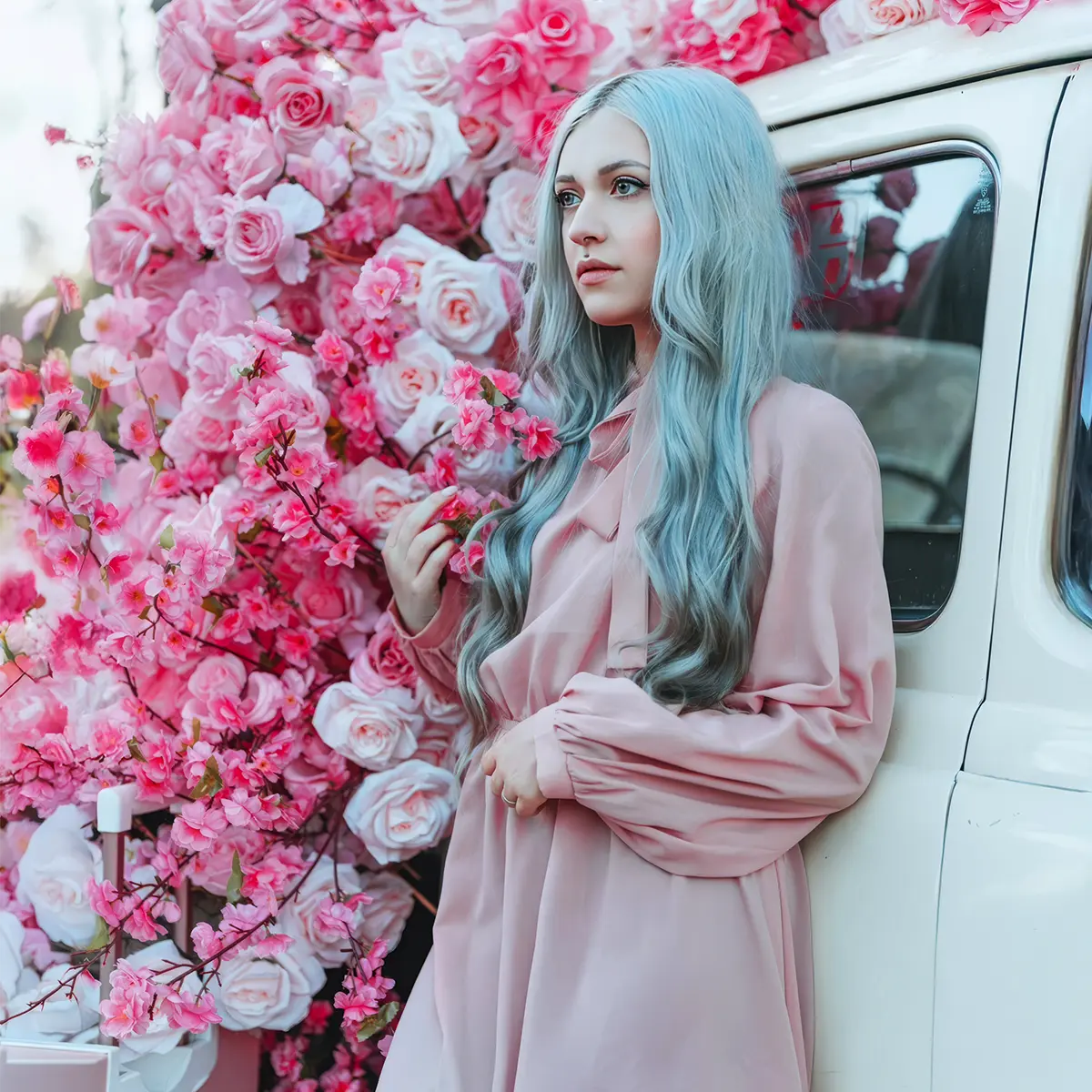
Botanical Structures Credits: Flowers: Marginpar (@Marginpar) | Design: Krisztián Köver (@botanicart.kover.krisztian) | Photographer: András Rabloczky (@rabloczkyandras) | Assistant: @rovidzsuzsi, @richterkriszta | Model: @ekhanna0221 | Make up: @szilviadobrovitz | Sponsors: @hr.thewireman, @dunavirag_centrum, @salababv, @magyarszarazviragkft.