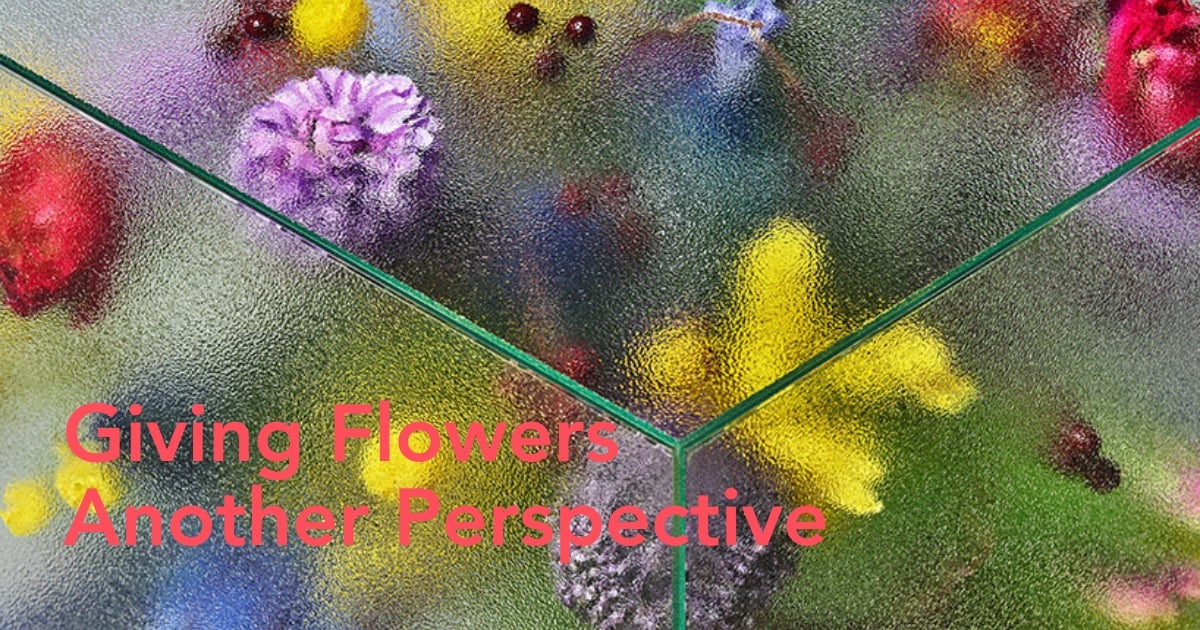
Dutch artist and designer Marius Boekhorst uses patterned glass to change how people perceive floral arrangements. His Violet series brings flowers and geometric glass structures together, creating three-dimensional still lifes in which botanical forms become fragmented compositions of color. The flowers remain visible, but the glass's texture and repeated patterns interrupt their shapes.
The Visual Contrast Between Organic Forms and Geometric Patterns
The sculptures are built around a simple visual contrast: flowers have irregular shapes, overlapping petals, and natural variations, while the glass introduces a consistent geometric pattern. When the two are viewed together, the floral arrangements lose some of their familiar details. Petals become patches of orange, purple, and pink, and foliage breaks into different shades of green. The result resembles an abstract painting, although the composition exists as a physical object with depth and volume.
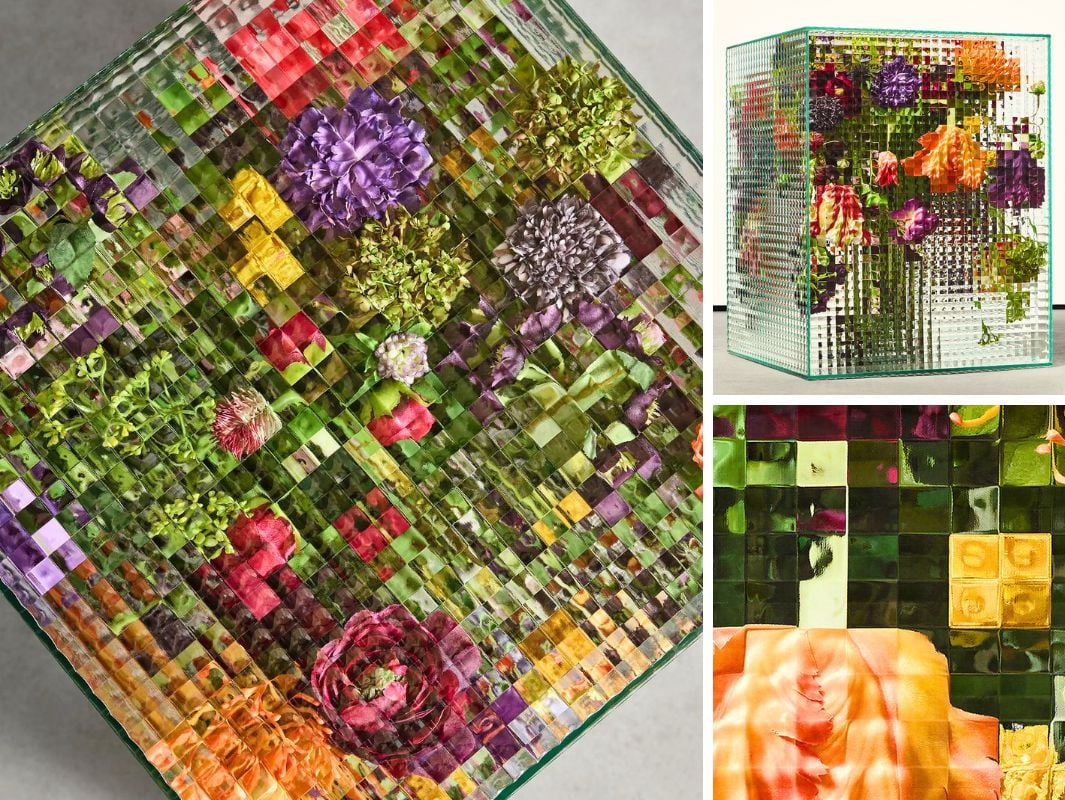
Boekhorst's approach focuses on how an everyday material can change the appearance of something familiar. The flowers are not digitally altered. Their colors and outlines are filtered through the glass, which changes what the viewer can distinguish. Depending on the surface and viewing angle, parts of the arrangement become clearer or more difficult to identify.
Framing Nature Through Architectural Glass
Patterned glass is commonly found in domestic windows, doors, and interior partitions. Its textured surface allows light to pass through while limiting a clear view of what lies on the other side. Boekhorst takes this architectural material and gives it another function, arranging it into geometric structures that frame floral compositions.
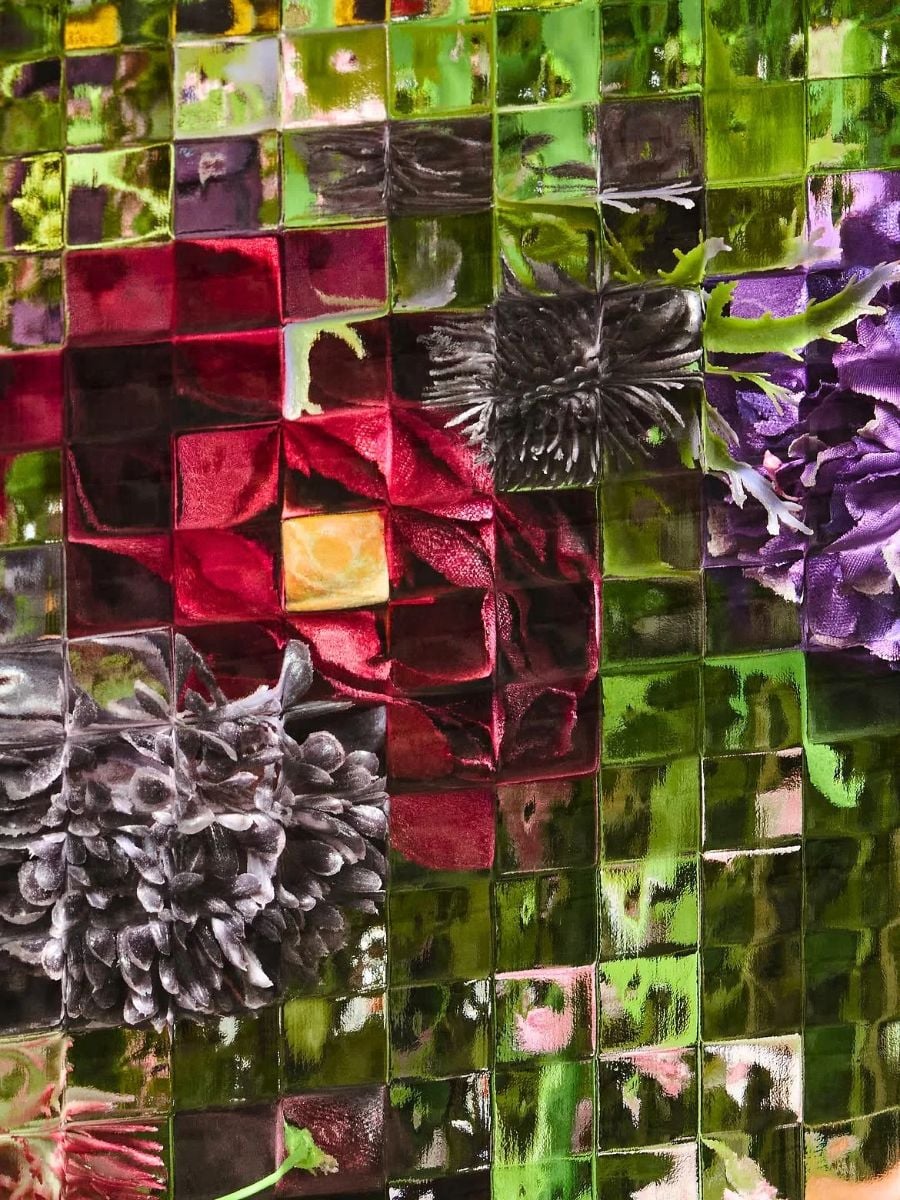
In the Violet works, the glass forms an enclosure around the flowers. Its repeated texture breaks the view into smaller sections, changing the way colors and shapes appear across the surface. A petal that would normally be seen as one continuous form can become several colored fragments. Leaves and stems are also interrupted, making it harder to read the arrangement as a traditional bouquet.
This effect is particularly visible in Violet Pixel, where the patterned panels create a grid-like appearance. The flowers appear as separate sections of color, almost like pixels in a digital image. The sculpture remains transparent, so the viewer can still see the floral composition behind the glass, but the texture prevents a complete view of its details.
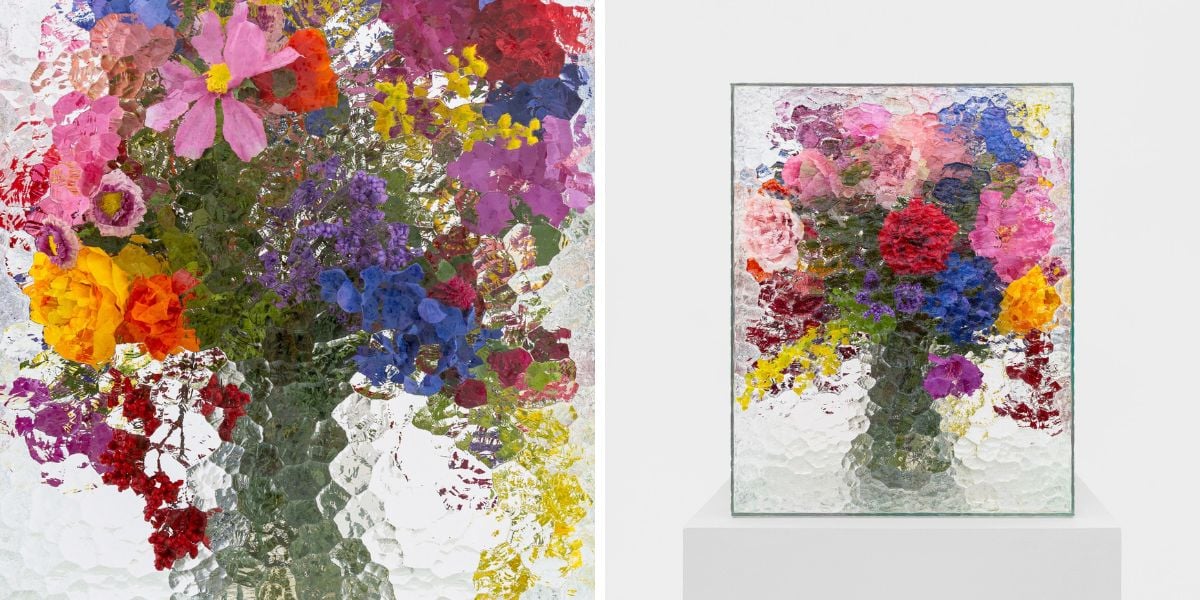
Violet Frosted approaches the same idea through a softer surface. Its translucent glass reduces the clarity of the arrangement, blending individual petals and leaves into blurred areas of color. The flowers are still present, but their outlines become less defined. The difference between the works lies in how the glass controls visibility, from the more fragmented appearance of Violet Pixel to the softened image seen through Violet Frosted.
A Different Way of Looking at the Natural World
The relationship between the geometric glass structures and the organic forms of the flowers is central to the Violet series. The glass introduces repetition and order, while the floral arrangements bring variation. Neither element takes complete control of the composition. Instead, the two remain visible at the same time, creating an image that sits between a recognizable still life and an abstract artwork.
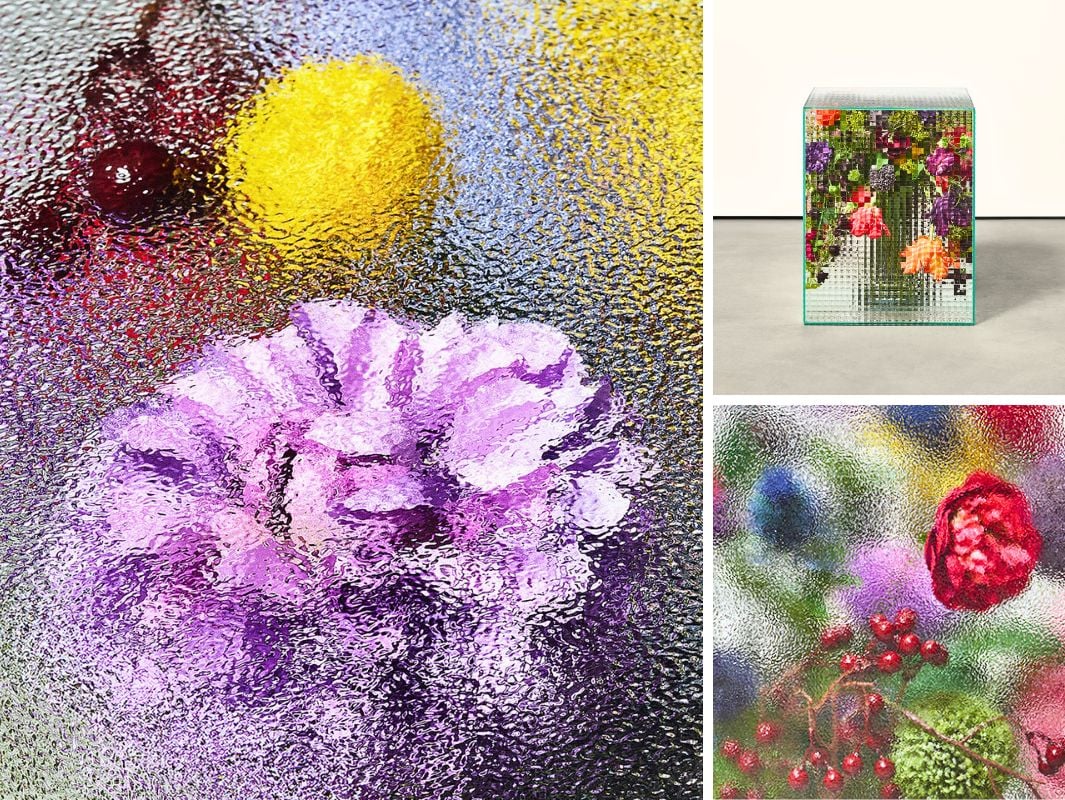
Marius describes the glass as a canvas and the flowers as paint. This comparison explains how the material changes the role of the floral arrangement. The flowers provide the colors and forms, while the glass determines how they are presented. Their appearance is shaped by transparency, blurred details, distance, and the viewer's position in relation to the sculpture.
Because the works have three-dimensional structures, they can be viewed from different sides. Each angle offers another arrangement of shapes and colors through the patterned surfaces. Some details remain recognizable, while others merge into the texture of the glass. The experience is therefore different from looking at a conventional floral still life or a flat image.
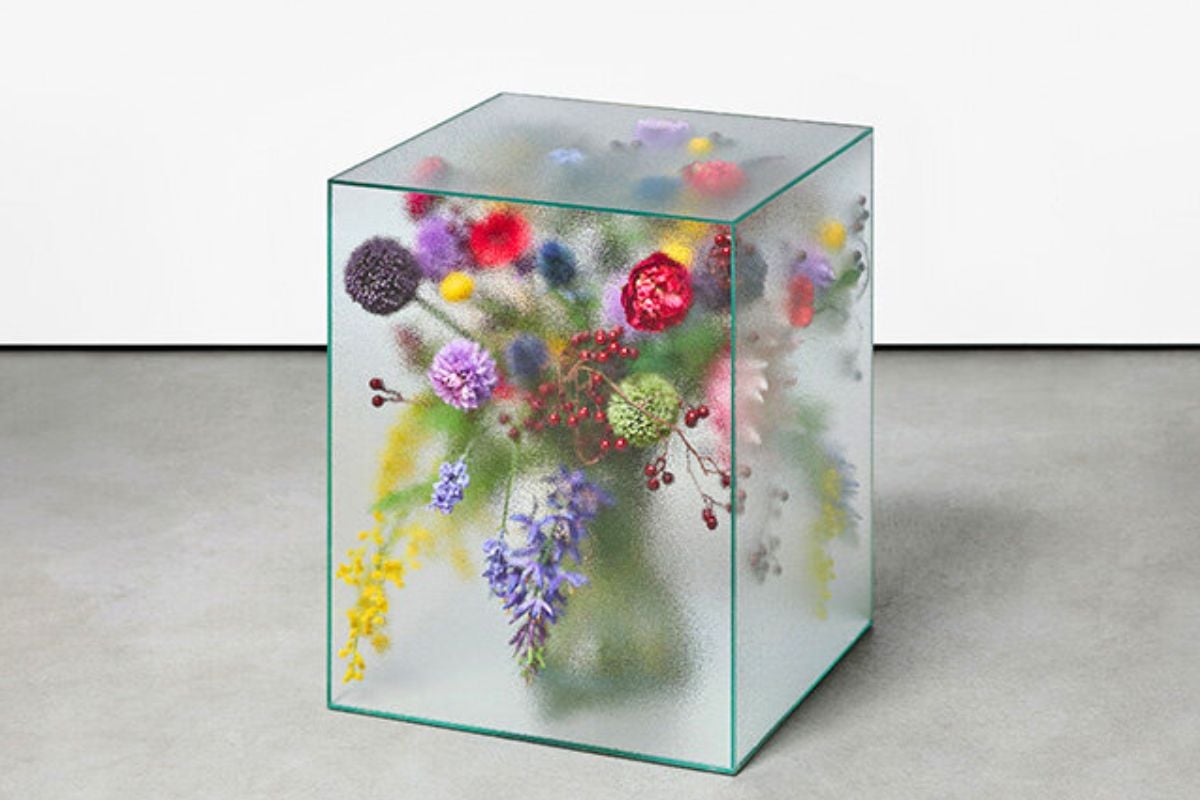
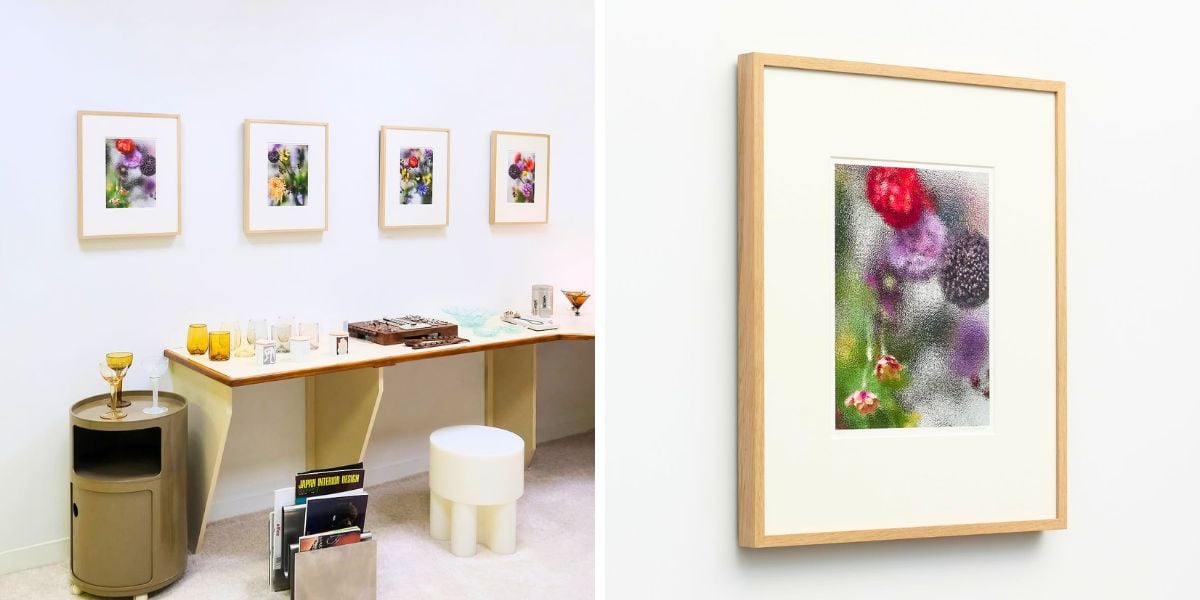
The series includes Violet, Violet Frosted, and Violet Pixel, each examining the visual relationship between flowers and patterned glass. Boekhorst has also translated the compositions into two-dimensional art prints. These retain the fragmented floral imagery but remove the depth of the original sculptures, moving the work from a three-dimensional object to a flat surface.
Photos by @marioboekhorst.