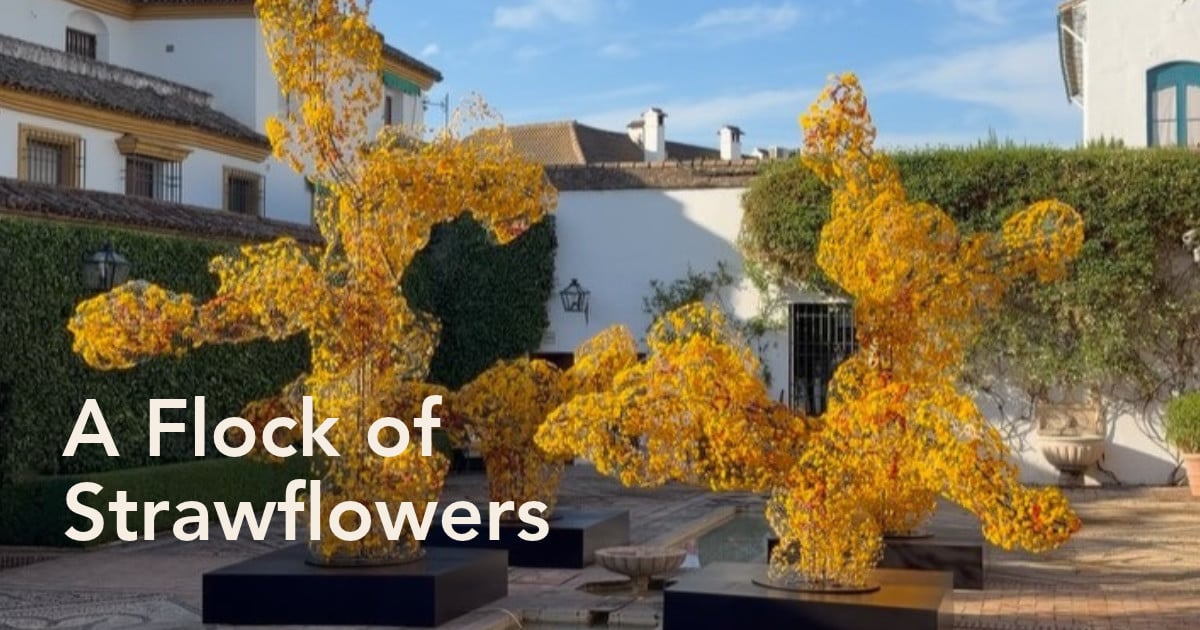
Every October, Córdoba hands its most beautiful courtyards over to the world's boldest floral artists. For the ninth edition of FLORA, the International Festival of Flowers, which ran from 12 to 22 October 2026, the theme was the ephemeral: everything that changes, fades, and never looks the same twice. Few artists could have been better suited to that brief than Hamish Powell. In the Patio de las Columnas of the Palacio de Viana, he created El Murmullo, an installation that does not stand still for a single second.
Who Is Hamish Powell?
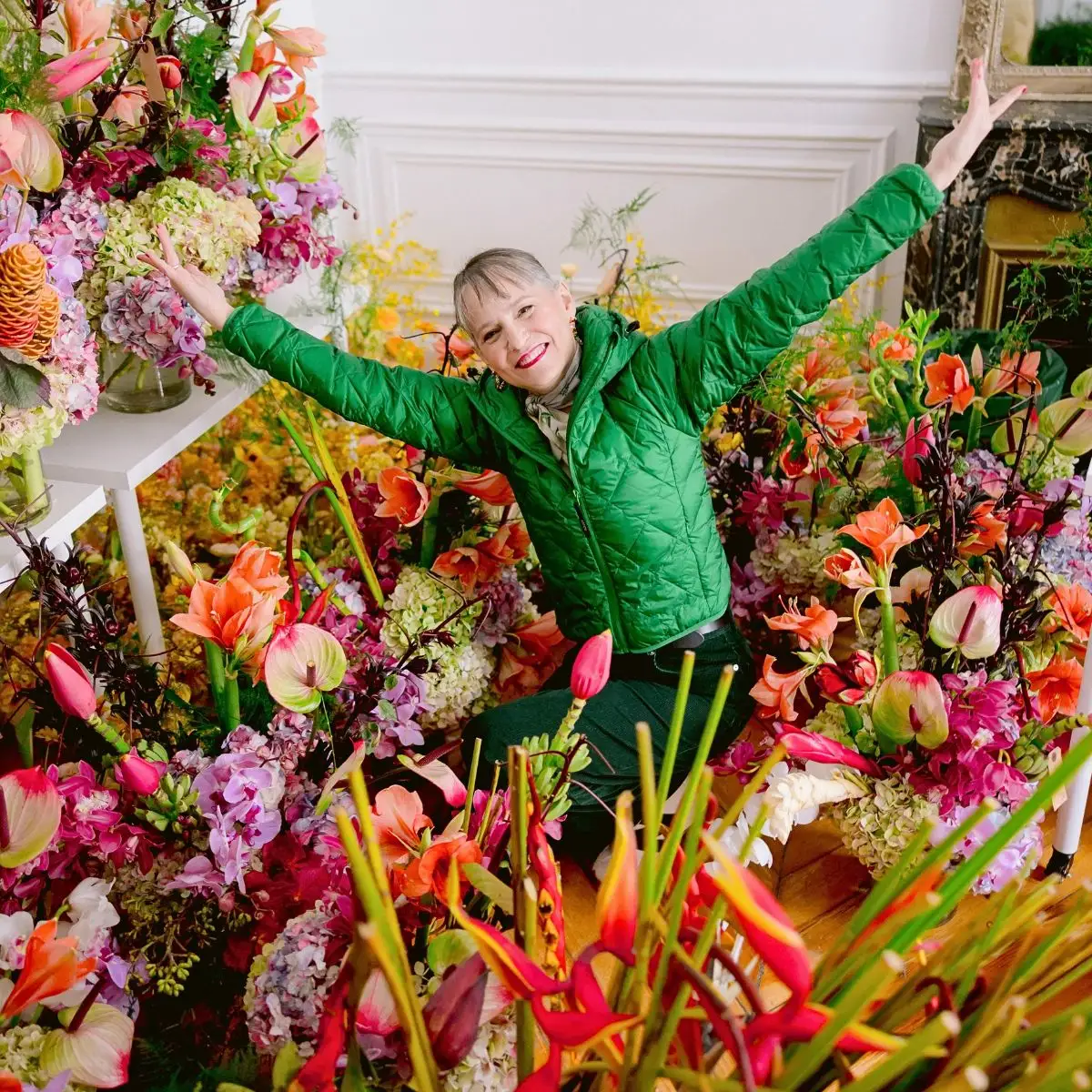
Hamish Powell was born in Harare, Zimbabwe, in 1998 and is now based in London, where he works as a multidisciplinary floral artist. Plants run in the family: his father is a flower farmer and his mother a gardener. Yet floristry was never the plan. He studied plant microbiology at university and took a part-time job in a Manchester flower shop to support himself, washing vases and sweeping floors. He stayed after his shifts to experiment with leftover stems, taught himself technique by technique, and by the time he graduated, he was managing the shop.
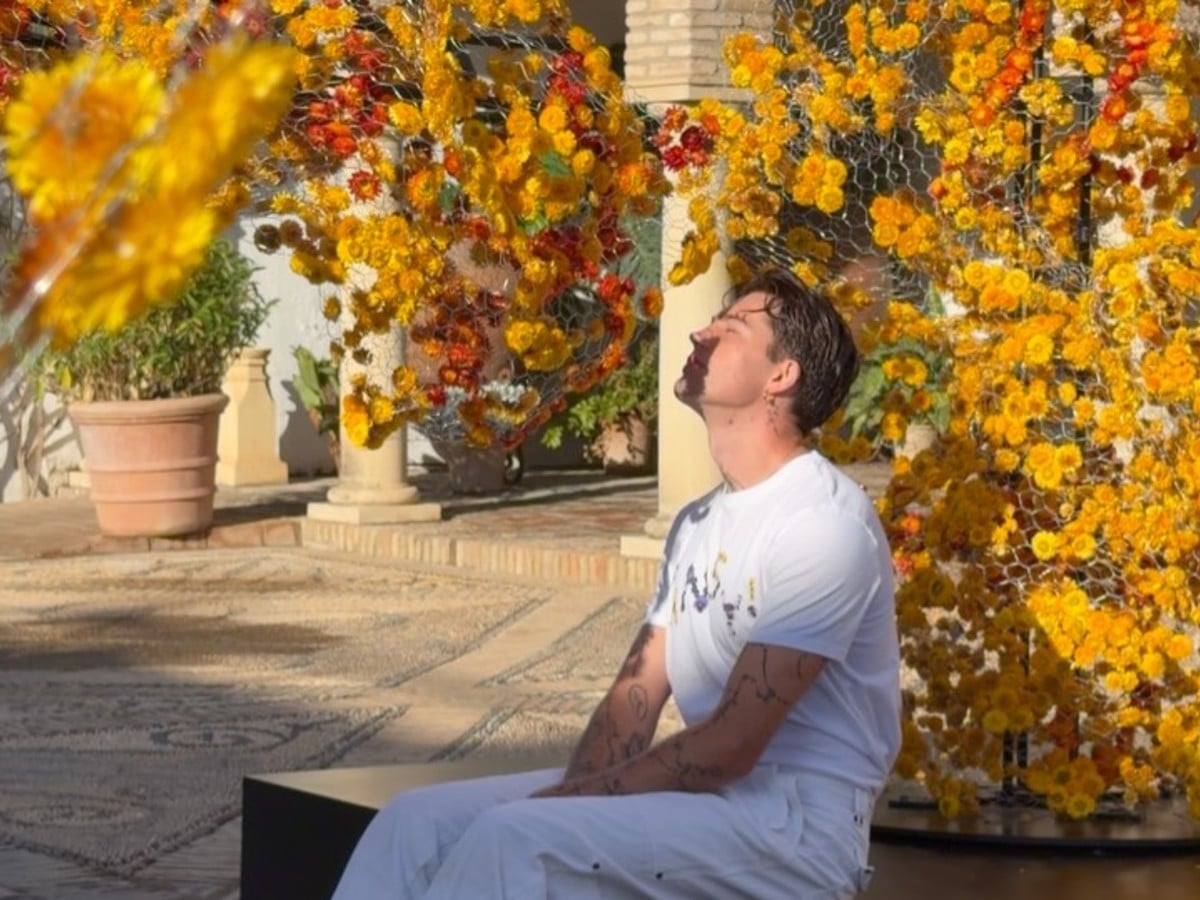
A London florist then discovered his work on Instagram and offered him a position, which settled the choice between plants as science and plants as art. In 2022, at the age of 23, he launched his own creative laboratory, Hamish Powell Studio. Loewe was his very first client. Today he works with a team of florists, food stylists, and set designers, and his portfolio includes projects for Hermès, Burberry, Diptyque, Penhaligon's, Acne Studios, YSL, Claridge's, Ruinart, and Tom Ford, alongside artist residencies in Singapore and Tanzania. He also created the bridal bouquet for Charli XCX's wedding, a design that looked as if it had been picked straight out of a Hieronymus Bosch painting.
What sets him apart is not the luxury clientele but the way he thinks about time. Powell is as fascinated by decay as he is by bloom. He sees the short life of a flower as its greatest strength, because something that is always there eventually stops being noticed. When he is not arranging flowers, he is writing poetry about them, and both practices circle the same idea: how fleeting beauty makes us pay attention.
El Murmullo: The Concept
The Spanish title translates as "The Murmur," but it refers specifically to a murmuration: those vast, shape-shifting clouds that thousands of starlings draw across the evening sky. A murmuration is never the same from one moment to the next. It folds, stretches, splits, and regroups, and then it is gone. For Powell, that was the perfect image of ephemerality, and the perfect answer to FLORA's 2026 theme.
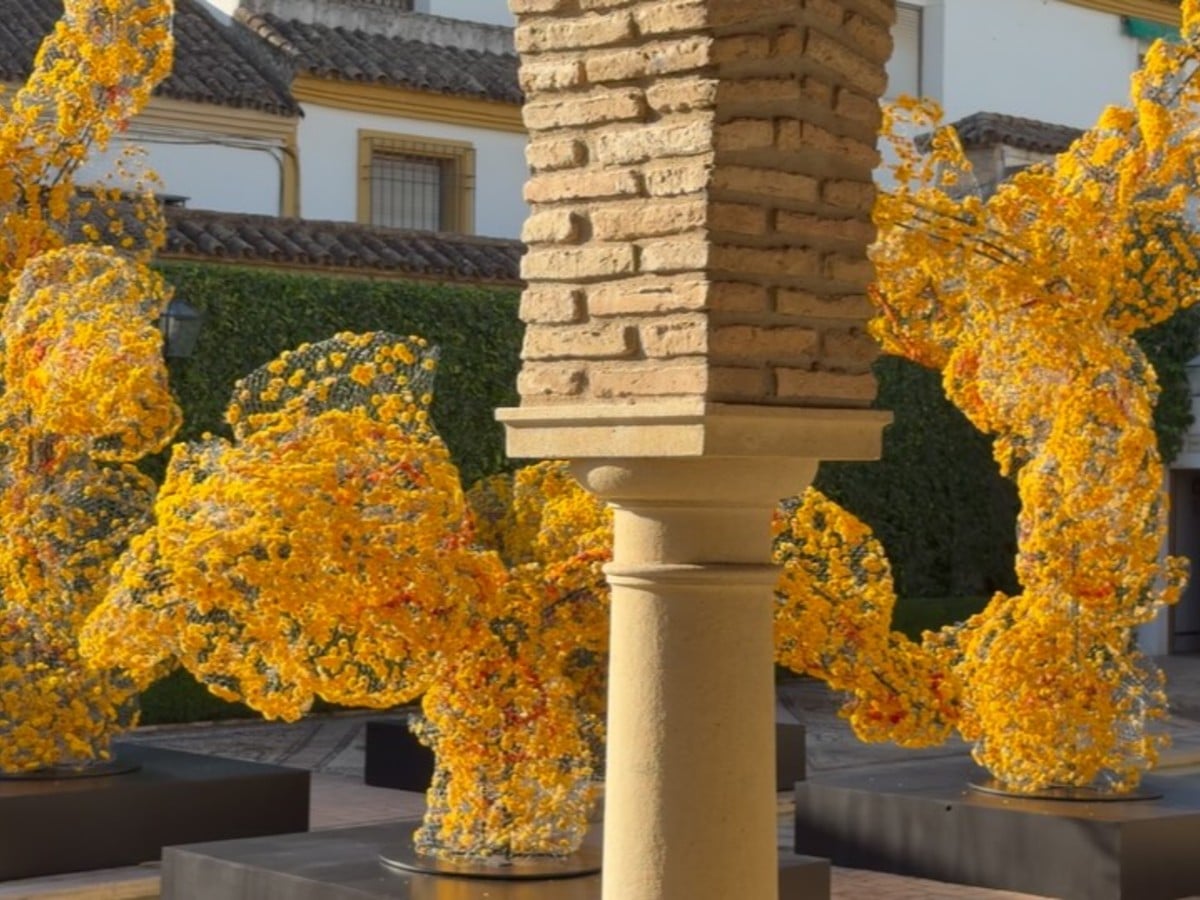
Rather than placing an object in the courtyard, he treated the entire patio as one living composition. The sky above the columns, the shifting sunlight, the birds passing overhead, and the water in the central pond all became part of the work. Because each of those elements changes constantly, no two visits to El Murmullo are ever quite the same.

The Design: Four Moving Sculptures
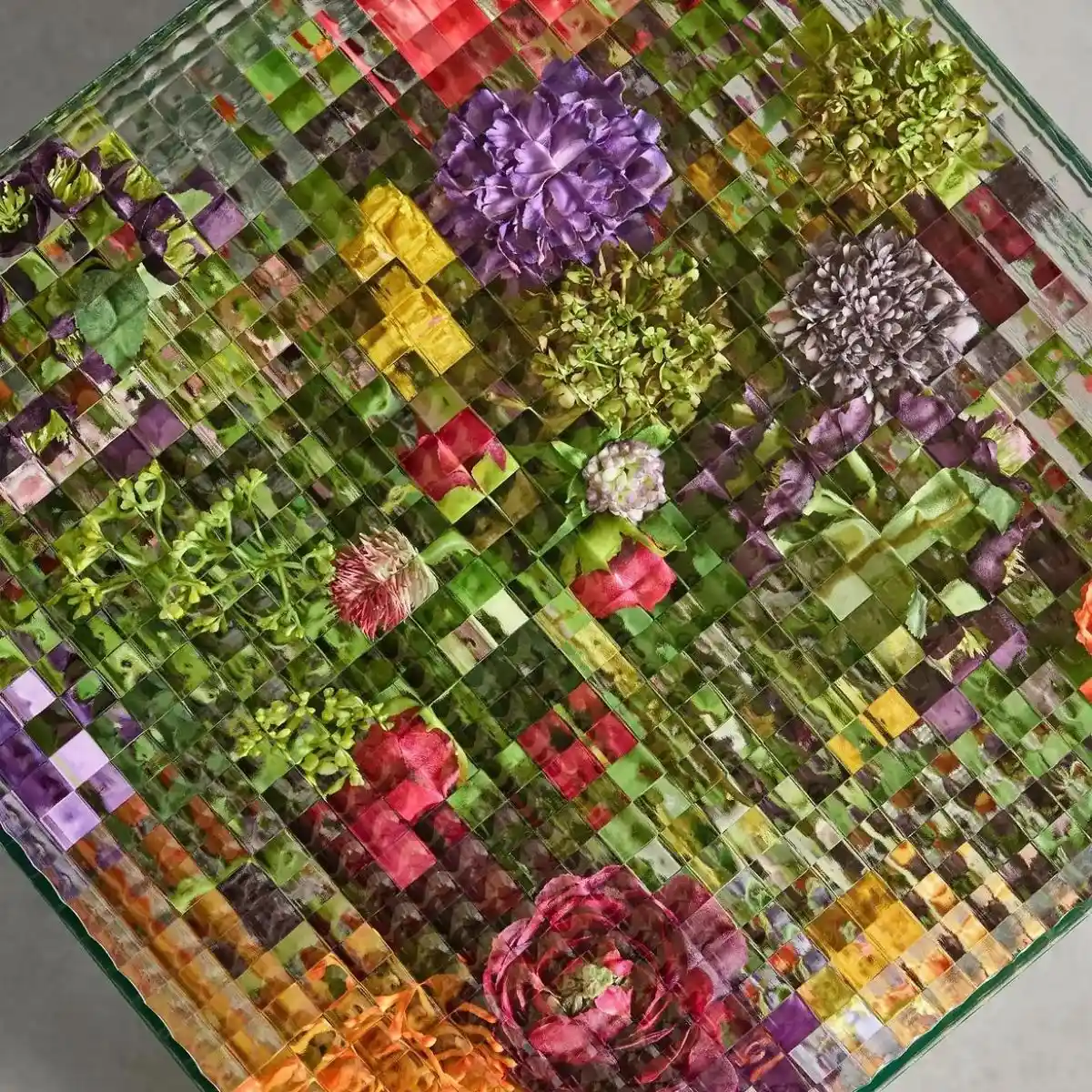
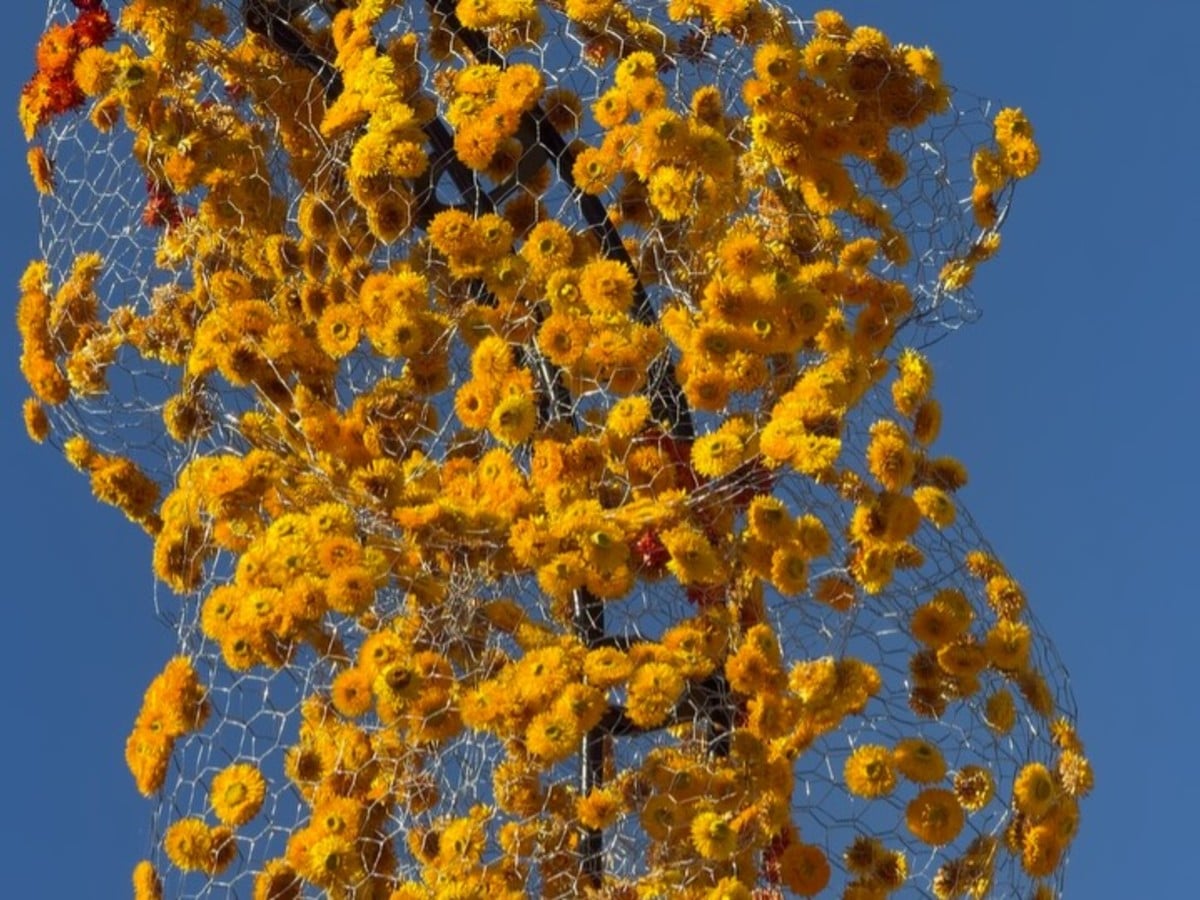
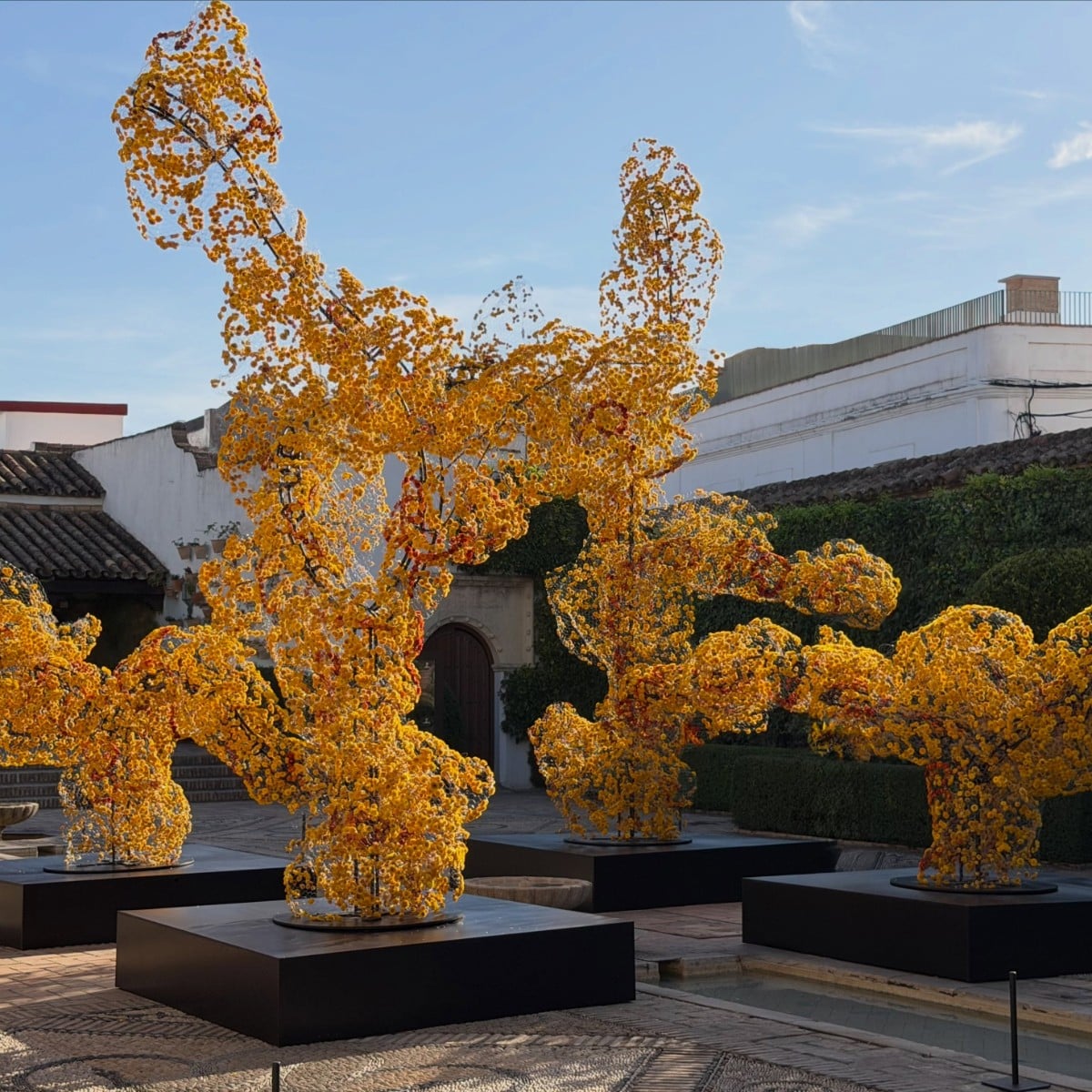
The installation consists of four sculptural forms built on metal structures in continuous, slow movement. Each form is covered with a mesh onto which thousands of flowers of a single variety were placed by hand: Helichrysum, also known as Strawflower or Paper Flower. As the structures turn and shift, their silhouettes overlap and separate, echoing the way a flock of starlings constantly reshapes itself in flight.
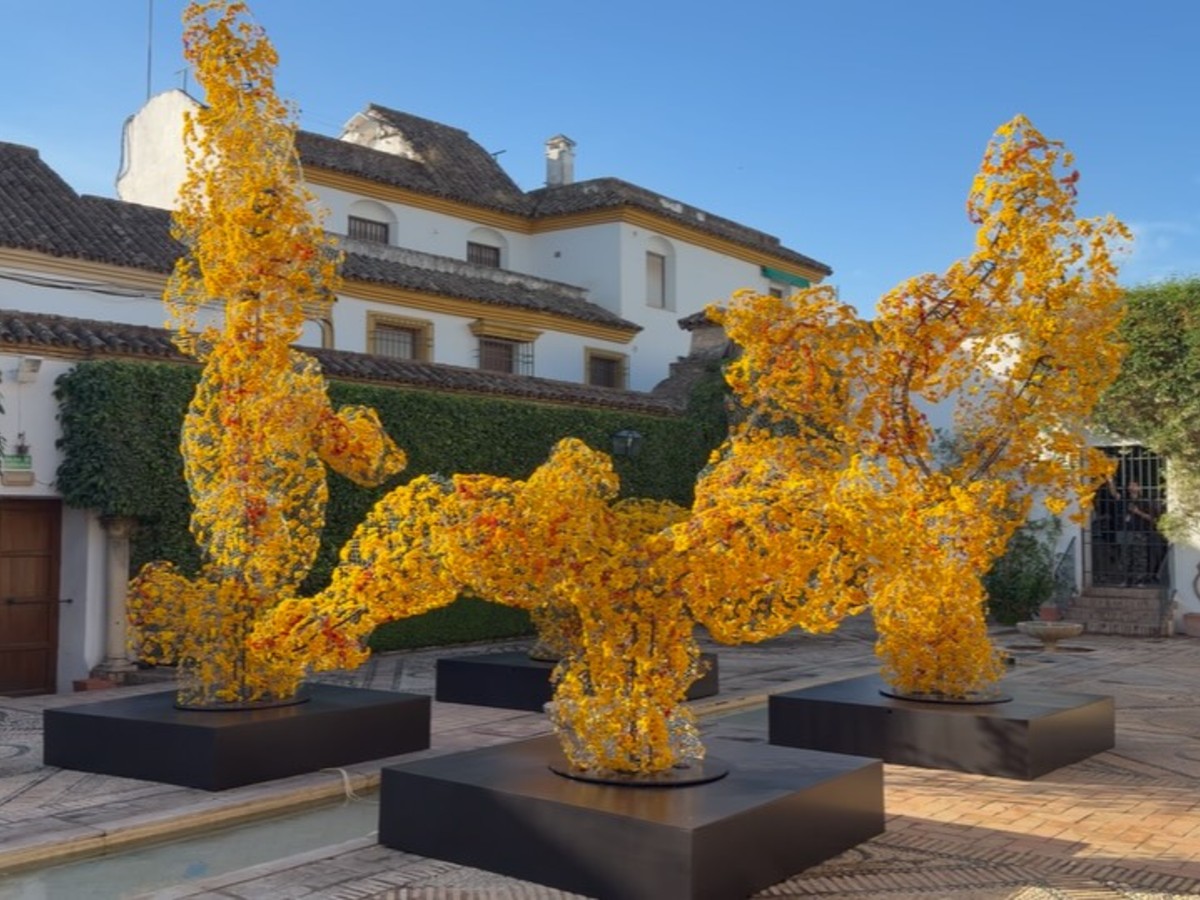
Watch the sculptures move in Hamish Powell's own post:
The palette is restrained to yellows and ochres, the natural colors of the Helichrysum. Against the pale stone of the Patio de las Columnas and the deep blue Andalusian sky, the effect is warm and luminous, like a cloud of birds caught in late-afternoon sun.
Why Helichrysum?
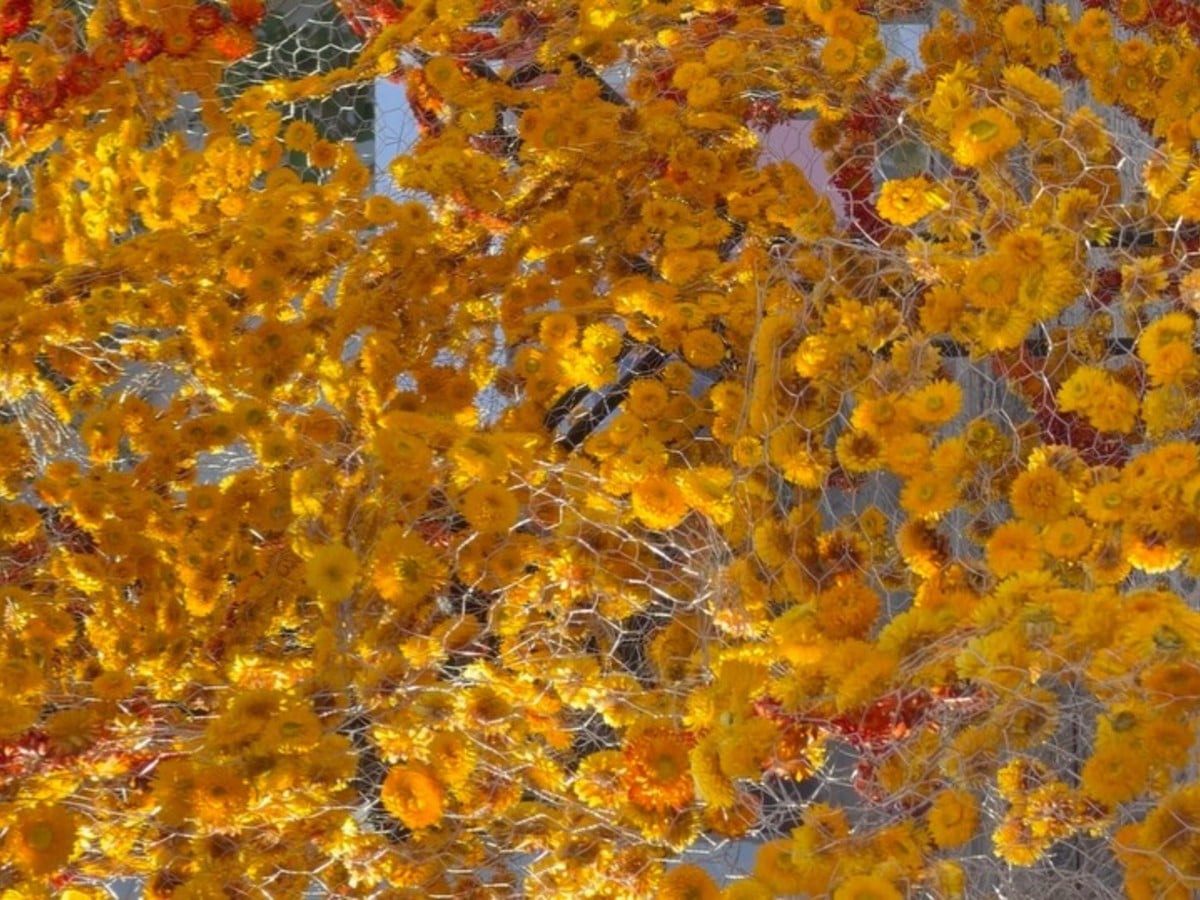
The choice of flower is a quiet stroke of intelligence. Helichrysum is an everlasting flower: its papery bracts keep their shape and color as they dry. In a festival devoted to the ephemeral, Powell chose a bloom that resists time, and then set it in perpetual motion. The flowers barely change, yet the work never stops changing. It is a subtle play between permanence and transience that runs through much of his practice, where he likes to frame the fleeting nature of flowers with something more lasting.
Using a single variety in such large numbers also turns the flower into texture. Up close, you see every individual Strawflower head. From a distance, they dissolve into one golden surface, much like individual starlings disappear into the shape of the flock.
Draw Your Own Murmuration
El Murmullo also invited visitors to participate. Beside the installation stood a lectern with transparent paper and a marker, where anyone could look through the sheet at the moving sculptures and trace the silhouette they saw at that moment. Powell plans to use these drawings after the festival to compose a new digital work. In other words, thousands of fleeting impressions from thousands of visitors will become a murmuration of their own.
FLORA 2026 at a Glance
FLORA was founded in 2017 by Zizai Cultura and is widely regarded as the most important festival of contemporary floral art in the world. Each year, five international artists create site-specific works in Córdoba's historic patios and compete for the festival's prizes. The installations must be made with real flowers and plants.
Alongside Hamish Powell, the 2026 lineup featured Sohee Park from South Korea with Halcyon at the Patio de los Naranjos of the Mezquita-Catedral, FLOVER NYC from the United States at the Palacio de la Merced, Taller Banegas from Spain at the Archaeological Museum, and Mas Rasa from France at the Palacio de Orive. Mas Rasa took first prize with Cataclismo, while FLOVER NYC came second.
Powell's installation was made possible with the support of the Fundación Kutxabank, and during the festival the Palacio de Viana opened its twelve historic patios, gardens, and stables to the public free of charge.
A Fitting Home
The Palacio de Viana is famous for its courtyards, and Córdoba's centuries-old patio culture is all about care: tending plants daily, season after season, knowing that what blooms today will be gone tomorrow. El Murmullo fits that tradition remarkably well. It does not try to freeze a moment of beauty. Instead, it shows beauty in motion, always arriving and always leaving, and asks us to look before it changes again.
Featured and Header Image by @hamishpowell. All photos are used with the permission of Hamish Powell.