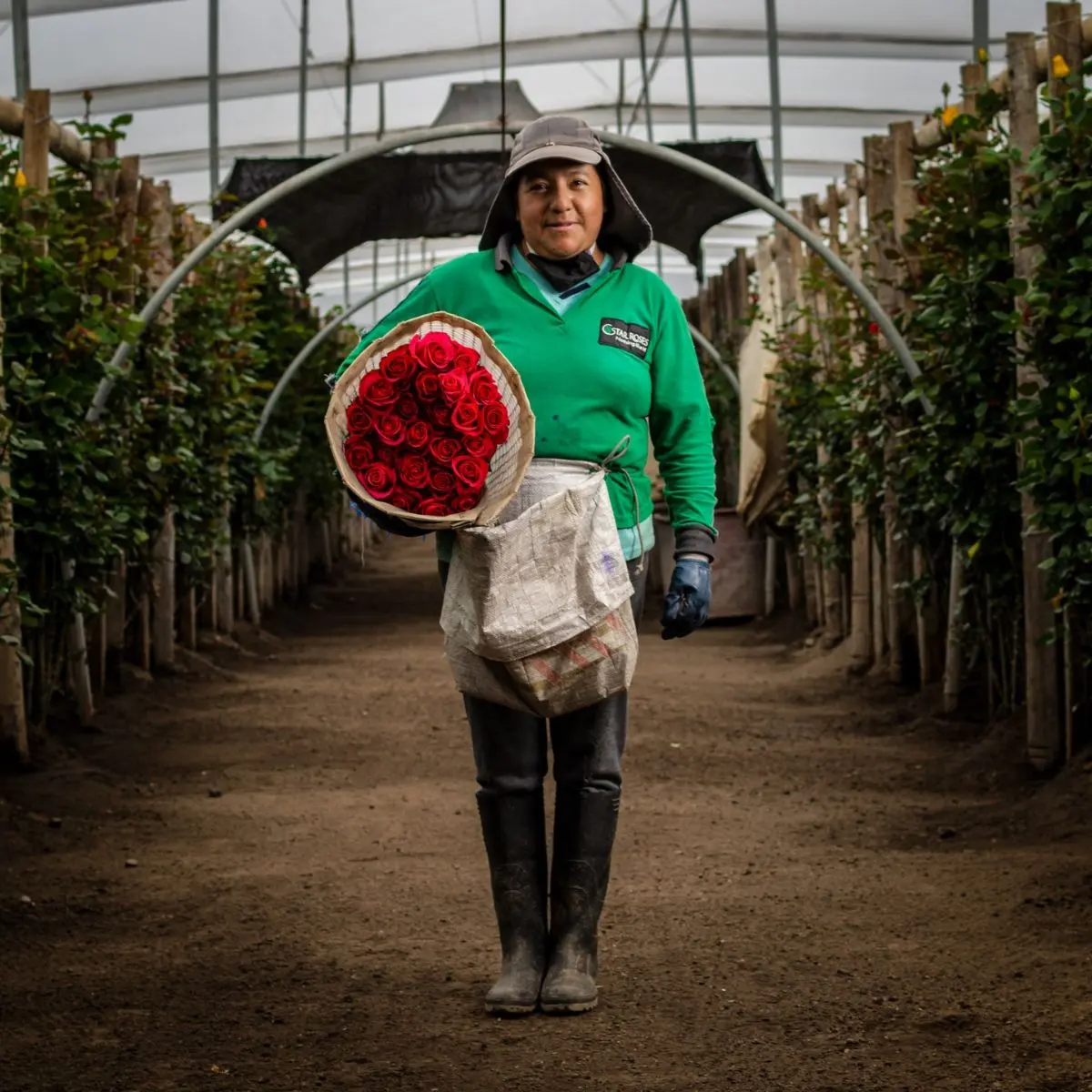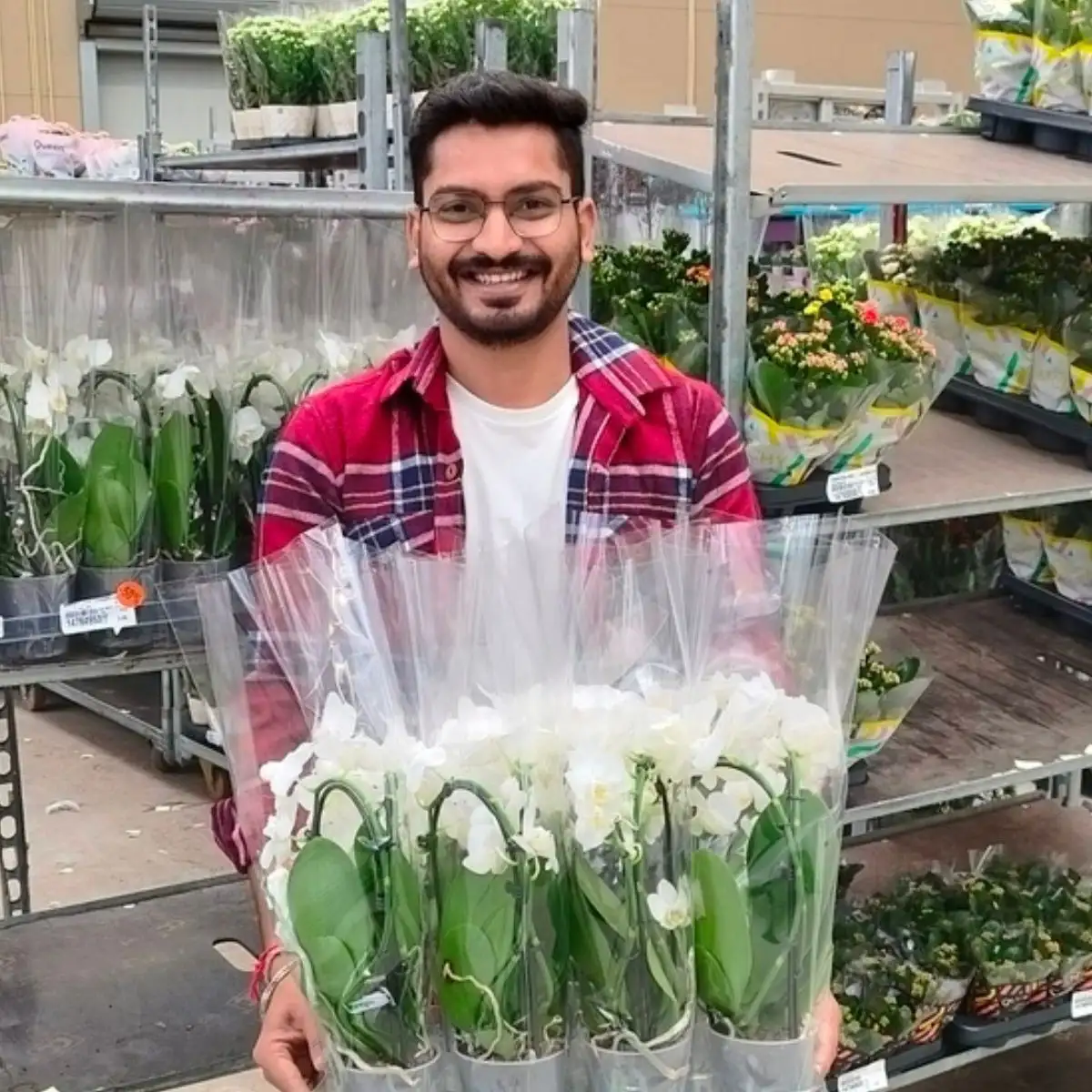
For De Ruiter Innovations, bringing Revolution to the retail market is about more than introducing another red rose. It is about taking a variety that has been tested, evaluated, and shaped around market needs, and giving it the chance to prove itself where it matters most: with growers, retailers, and consumers. For Rohit Patil, Sales & Marketing Manager at De Ruiter East Africa, a commercially successful rose has to do more than look good.
It has to perform for the grower, meet market expectations, offer the right characteristics for retail, and ultimately deliver an experience that makes consumers want to buy it again. As he put it during the interview, liking a variety isn't enough. The market has to like it too. That thinking sits at the heart of Revolution, the result of years of breeding, testing, scaling up production, and listening to what the market is asking for.
A Red Built for Retail
Color is one of Revolution's defining characteristics. The variety brings a bright red to the market, answering continued demand for strong reds while giving growers and retailers another option in an established, competitive category. Patil pointed to this as central to Revolution's fit: a color the market was asking for, paired with the production characteristics growers need to actually make it work.

But the proposition doesn't stop at color. Revolution has a bud length of around 4.5 to 5.0 cm, a stem length in the 50 to 70 cm range, and a vase life of roughly 14 to 16 days, a combination built to cover a wide span of bouquet and retail applications while still looking good in the consumer's home days after purchase.
From Trial to Early Adopters
Getting a rose from breeding prospect to commercial production takes years, not seasons. Patil described a progressive testing process, moving from a handful of plants to 5, then 15, then 50, and eventually into the hundreds, with each stage generating more data and confidence before scaling further. De Ruiter first flagged Revolution's potential around 2022 and has been building toward retail since.

Among the first growers to embrace the variety were East African Growers-Shalimar, recognized as the first adopter in the region, Nini Flowers (Herburg International), and Van den Berg Roses, which planted this rose in April last year. Both Kneppers Rozen and Panda Flowers also adopted Revolution into their commercial planting last year in that sequence. Their early adoption helped demonstrate the variety's potential under Kenyan growing conditions and brought it to the attention of the wider cut flower market.
The Grower's Equation
Behind all of this is a simple, practical measure of success: grower profitability. For a variety to gain momentum, growers need a reason to plant it, and that reason is economic, not aesthetic. Patil's definition of success is straightforward. If a grower can produce Revolution well and make money doing it, that's the case for planting it.

Retail approval is a milestone, not a finish line. Retailers need consistency, and consistency takes volume that has to be built even after a variety has proven itself in trials, which is why new varieties rarely leap straight from testing into large-scale commercial supply.

For Revolution, entering retail marks the next test: can it move from a promising trial variety to one retailers actively want to stock, at the volumes they need? The red rose market is already crowded with established varieties. Still, markets evolve, and Patil suggested that as Revolution builds volume, it could reshape the positioning of other reds already on the market while still leaving room for further expansion in the category overall.
Success Means Being Asked For
Asked what success would look like for Revolution, Patil's answer was simple: the market starts asking for it. Retailers recognizing its potential, growers seeing a viable return, and consumers responding to the flower itself. For Kenya's flower industry, a successful new variety also means a more diversified offering, another way for growers and exporters to respond to shifting demand across international markets.
The journey of a rose is rarely visible to the person buying a bouquet, who sees only the color, the shape, and the finished flower, not the years of breeding, testing, and market evaluation behind it. Revolution has now reached the point where that journey moves into retail, and the market will have the final say. A rose becomes commercially successful not when it leaves the breeding program, but when a grower wants to plant it, a retailer wants to stock it, and a consumer chooses to take it home. For Revolution, that next chapter is just beginning.