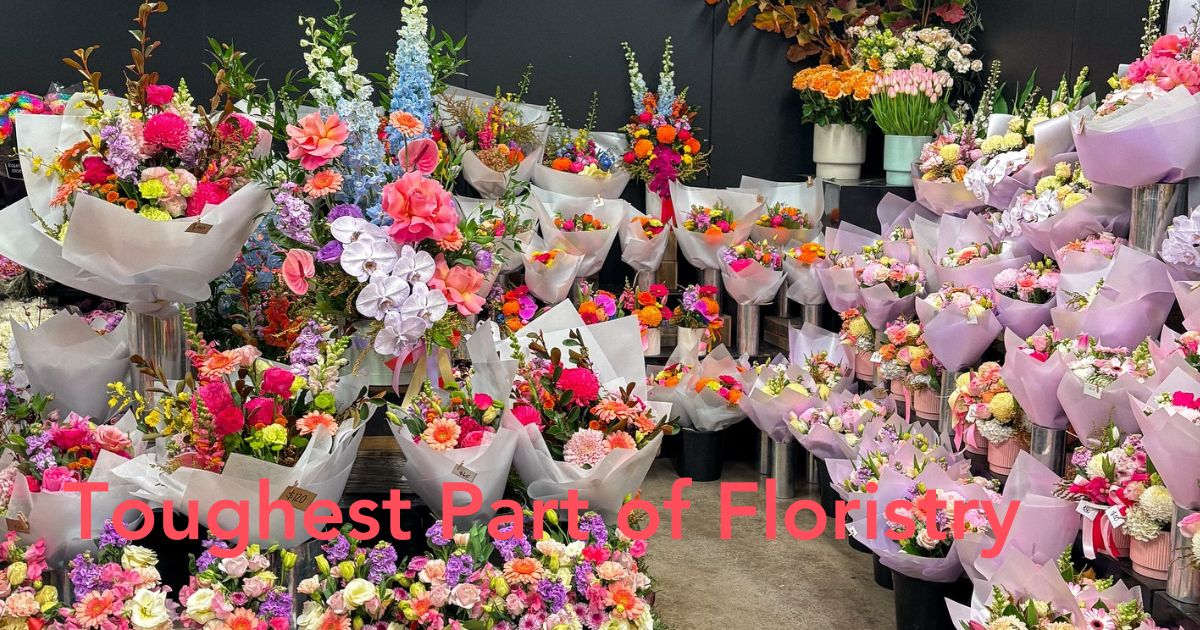
Event work can be the best and toughest part of floristry. The work is meaningful, the impact is immediate, and the pace is intense. But it also puts you in situations where you're visible, time-boxed, and expected to be, while you're trying to do precise work with your hands.
If social anxiety shows up for you at weddings, corporate events, hotel lobbies, or on-site setups, you're not alone. It doesn't mean you're bad at your job. It usually means your brain is reacting to uncertainty, evaluation, and sensory load, three things that events have in abundance.
This article isn't about being more confident.” It's about building a practical workflow that reduces the triggers you can control, so you have more capacity for the parts you can't.
Why Events Can Spike Anxiety Even for Skilled Florists
In a studio, you control your space. At events, you walk into someone else's space with someone else's timeline, and you're judged in real time.
Common anxiety triggers in event floristry include:
- Last-minute changes with unclear decision-makers
- being watched while you work
- Client emotions are running high
- unfamiliar venues and loading rules
- time pressure plus perfection pressure
- sensory overload (noise, lights, heat, fragrance, crowds)
Anxiety often isn't about talking to people. It's about being interrupted, evaluated, and rushed while you're trying to deliver a complex result.
The Simplest Fix Is Removing Uncertainty Before You Arrive
Social anxiety feeds on unknowns. Your best tool is a tighter pre-event system.
Create a One-Page Event Brief
Keep it short, but include what you actually need on-site:
- contact names and phone numbers
- load-in instructions and parking
- venue restrictions (ladders, water access, tape rules, open flame rules)
- timeline for installs and room access
- Who approves changes on-site
- floor plan images or reference photos
When you have this in your pocket, you ask fewer panic questions later.
Use Checklists That Reduce Decision Fatigue
Use two lists: pack list and site list.
The pack list is what you bring every time (tools, tape, ties, snips, gloves, cloths, extra blades). Site list is what's unique to this event (vases, mechanics, signage, candles, floral food, extra stems).
If you want a structure for this, Thursd has covered practical planning habits that help florists stay consistent when working under deadline pressure. You can read the article here: Floral Content Ideas for Social Media Marketing Success
(Use the planning mindset, not just the content ideas.)
Scripts Beat Improvisation When You Feel Put On the Spot
When anxiety hits, improvising “the perfect response” becomes hard. Scripts remove that load.
Here are event-safe scripts that keep things professional and short:
- “Yes, we can adjust. Can you confirm you’re the decision-maker for changes?”
- “I can do that if we remove something else. Which part matters most to you?”
- “I want to deliver this on time. I’ll make one change pass at 2:30 and show you options.”
- “I hear you. Let me check what’s possible with time and mechanics.”
- “For safety and stability, I can’t place that there, but I can offer two alternatives.”
These lines do two things: they slow the moment down, and they move the conversation from emotion to process.
A Quick Note on Neurodiversity and Social Anxiety
Some florists find that their event anxiety isn’t only “nerves,” but a pattern tied to sensory sensitivity, masking, burnout cycles, or difficulty switching tasks under interruption. If that resonates, a simple self-reflection tool like an am I neurodivergent quiz can help you put language to what you experience. It’s not a diagnosis, but it can be a starting point for building better supports, boundaries, and coping strategies.
Design Your Role On-Site to Reduce Exposure
Not every florist needs to be the front-facing person during installs. If you have a team, even one assistant, define roles clearly.
A simple split that works:
- Installer lead: handles client/venue questions and final approvals
- Build lead: focuses on mechanics, finishing, touch-ups
- Runner: water, clean-up, missing items, stem replacement
If you work solo, you can still “role split” by batching. For example: 20 minutes build time with no conversation, then 5 minutes check-in window. People accept boundaries when you present them calmly.

Manage Sensory Load Like It’s Part of the Job
Events are sensory-heavy. Sensory overload makes anxiety worse and reduces fine motor control.
Practical adjustments:
- Keep one pair of gloves that feels “right” for you (texture matters)
- Carry unscented wipes and a neutral hand cream (sticky residue can be a trigger)
- Wear layers you can remove (heat stress increases irritability)
- Use earplugs designed for conversation environments if noise is a major trigger
- Step outside for a 60-second reset if you feel your nervous system tipping
Floristry is already physical work. If your body is overloaded, your mind will follow.
For a broader look at how plants and nature-based routines can support stress regulation (without turning it into a “wellness trend”), this is a relevant internal read: The Psychology of Plant Therapy and How Plants Improve Mental Well-Being
Handle Client Emotions Without Absorbing Them
Weddings and milestone events come with strong emotions. Clients can be lovely and still intense.
Two rules help:
Don’t mirror panic. Stay slow, neutral, and specific.
Offer options, not debates. People calm down when they feel choices exist.
If someone escalates, you can use:
“I’m here to make this beautiful and stable. Let’s choose the best option that fits the time we have.”
It’s firm without being cold.
On-Site Micro-Tools That Work in Real Time
When you feel anxiety rising mid-install, you don’t need a perfect mindfulness routine. You need micro-tools that fit the environment.
Try:
- Hands-first grounding: notice pressure in your feet, then focus on a simple task (tape, tie, wipe, water)
- Breathing that doesn’t look obvious: slow exhale while you trim stems or rinse tools
- Visual reset: look at a fixed point for 5 seconds (edge of table, corner of frame), then return to work
- Time anchors: “Next 10 minutes, I finish these centerpieces. Then I check in.”
A small structure reduces spiraling.
Recovery Matters Because Event Work Is Not “Normal Work”
Many florists crash after events. That doesn’t mean you’re weak. It means your system ran hot for hours.
A reliable recovery routine:
- clean tools and reset your kit the same day (reduces next-day dread)
- shower and change clothes quickly (sensory reset)
- eat something simple and consistent (blood sugar swings worsen anxiety)
- avoid rehashing the event on your phone for an hour
- sleep without “planning tomorrow” in bed
If you want to improve long-term resilience, treat recovery as part of your pricing. Events cost energy. Your pricing should reflect that reality.
When It’s Worth Getting Extra Support
If social anxiety is affecting your ability to take jobs, communicate with clients, or recover after events, professional support can help. It’s especially useful if anxiety is paired with panic symptoms, insomnia, or burnout cycles.
You don’t need a label to deserve support. But understanding your patterns, sensory load, masking, perfectionism, and fear of evaluation helps you choose better strategies and protect your career.
Event floristry doesn’t become easier by “trying harder.” It becomes easier when you reduce uncertainty, use scripts instead of improvisation, design roles and boundaries on-site, and manage ssory load like it’s a real factor.
You can be excellent at this work without being the loudest person in the room. Your systems can do the heavy lifting, so your talent can stay focused on the flowers.