You have probably seen one on a wall: a staghorn fern, green antlers reaching out of a plank of wood, no pot in sight. It looks like a hunting trophy, and in the wild it does hang like one: high on a tree trunk, where it catches rain and falling leaves. That is also why a pot of soil on a sunny windowsill is about the worst place for one.
Good staghorn fern care starts with one fact: Platycerium grows on trees, not in the ground. Get the mount and the watering right, and the rest is light and patience. Below is what the plant is, which species you will meet, how to mount one on a board, how to water it, and what brown fronds really mean, with the elkhorn fern name explained on the way and a look at how a Dutch fern nursery sends them out.
What Is a Staghorn Fern?
Staghorn ferns are a group of about 18 species in the genus Platycerium, part of the polypody family, Polypodiaceae. They grow wild mainly in Africa, Australia, and Southeast Asia, and one species, Platycerium andinum, comes from the Andes of Peru, according to University of Wisconsin-Madison Extension. The genus name comes from the Greek platys, meaning broad, and keras, meaning horn, the Missouri Botanical Garden explains. Staghorn fern and elkhorn fern are used for the same plants, although the ones with thinner fronds are more often called elkhorn ferns, Wisconsin Extension adds.
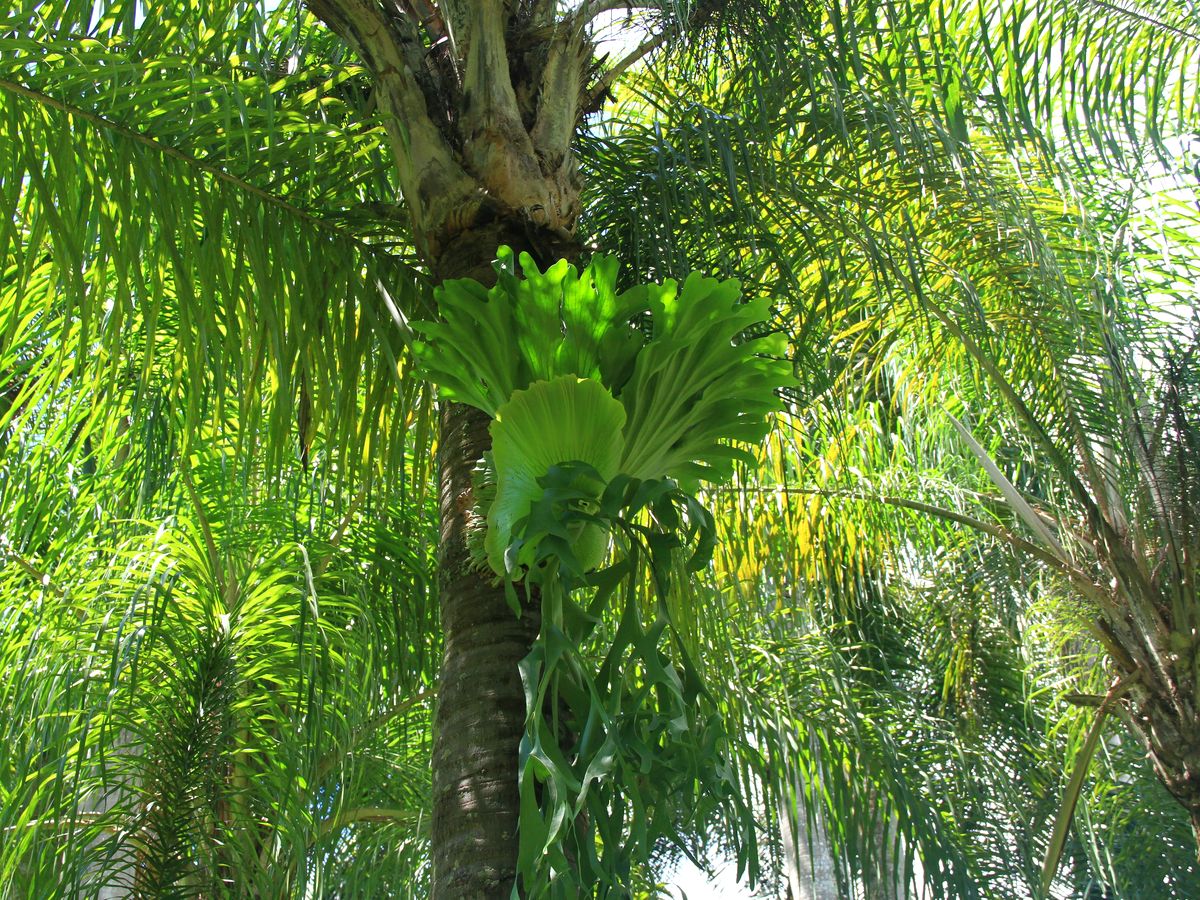
All of them are epiphytes. They sit on tree trunks, branches, or even rocks, and they take their moisture and nutrients from rain and from the plant debris that collects around them, UF/IFAS Extension notes. They do not feed on the tree; they use it as a place to live.
Shield Fronds and Antler Fronds
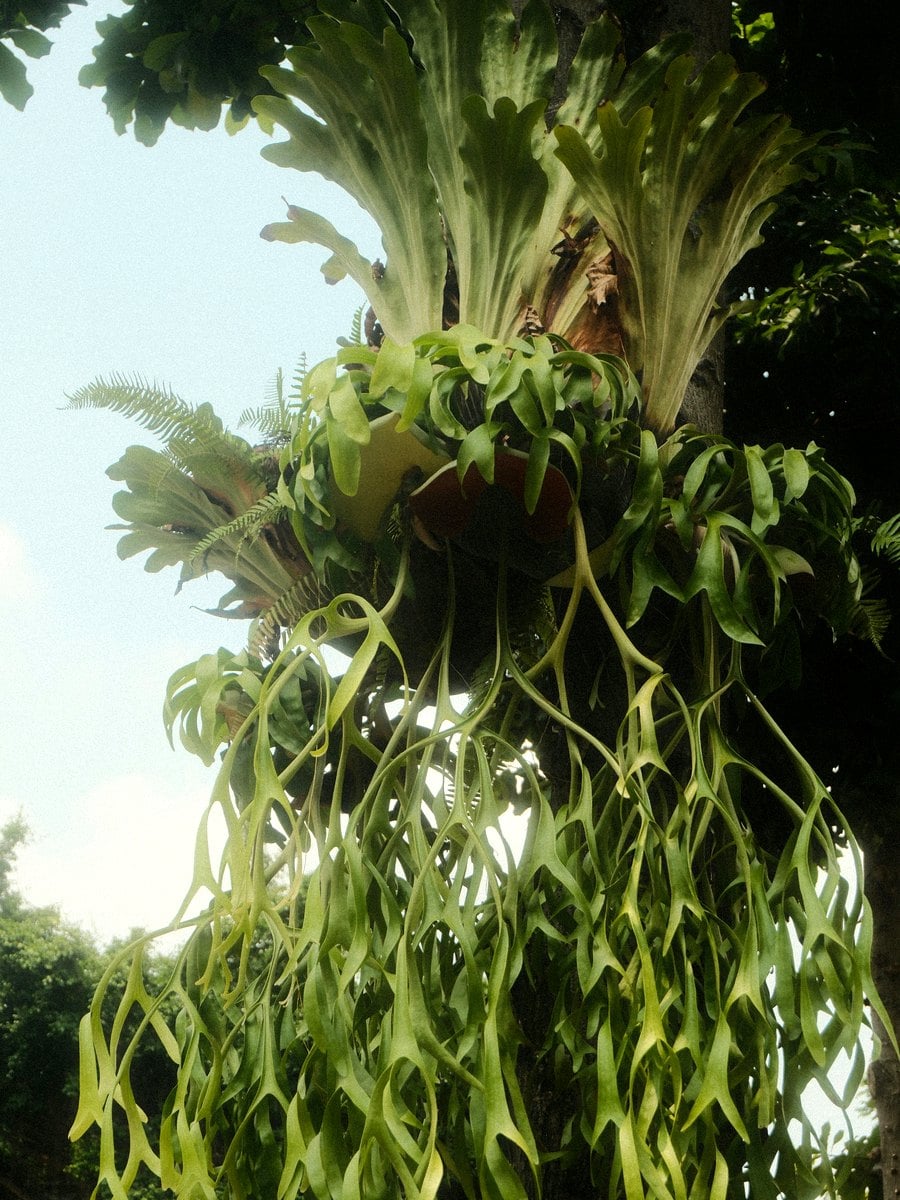
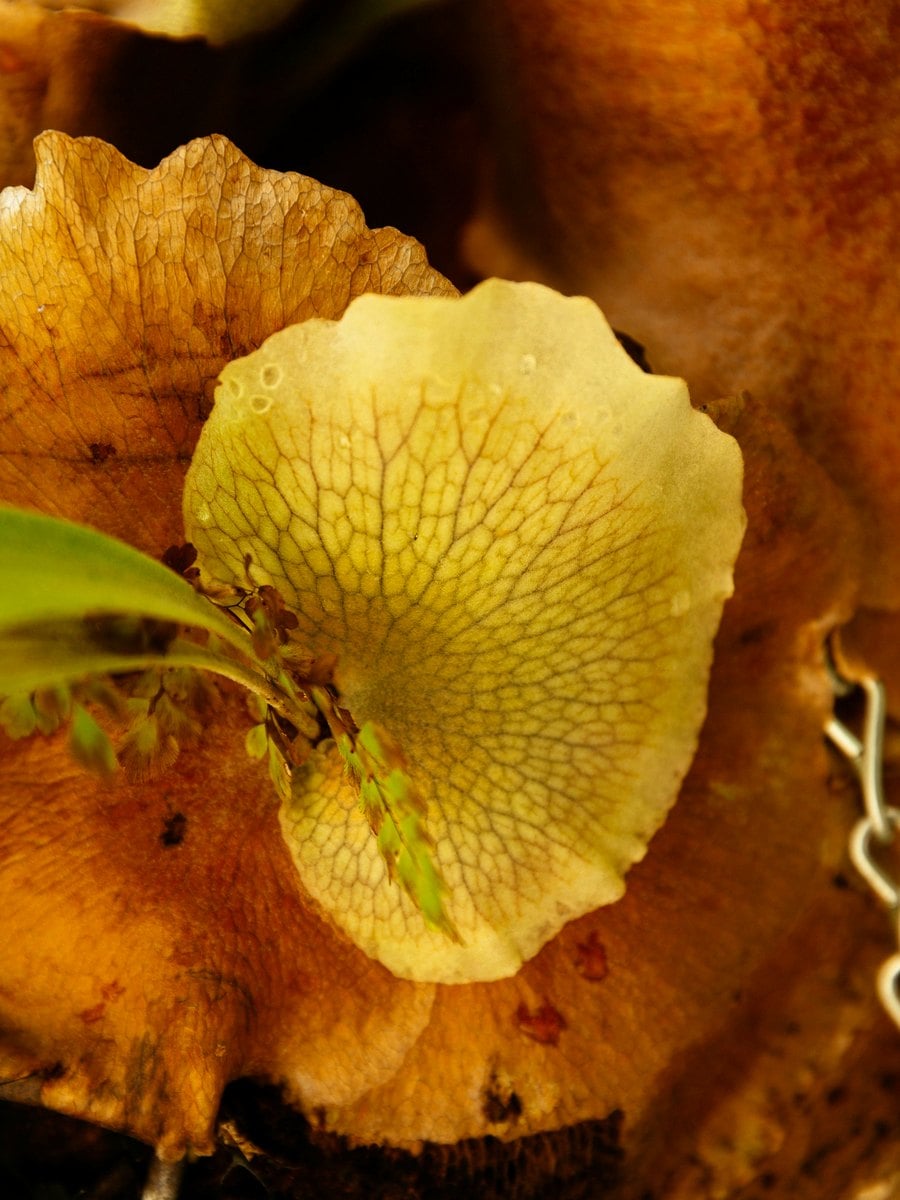
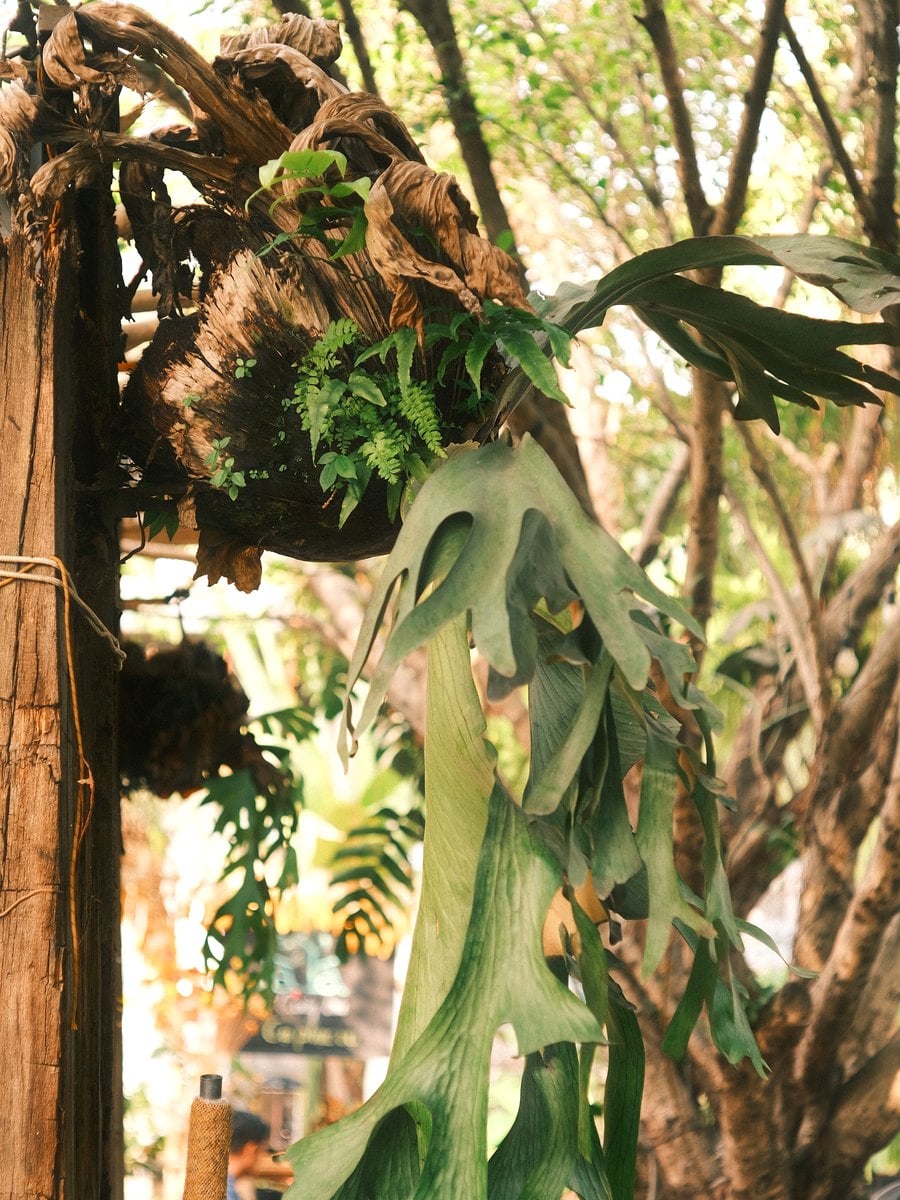
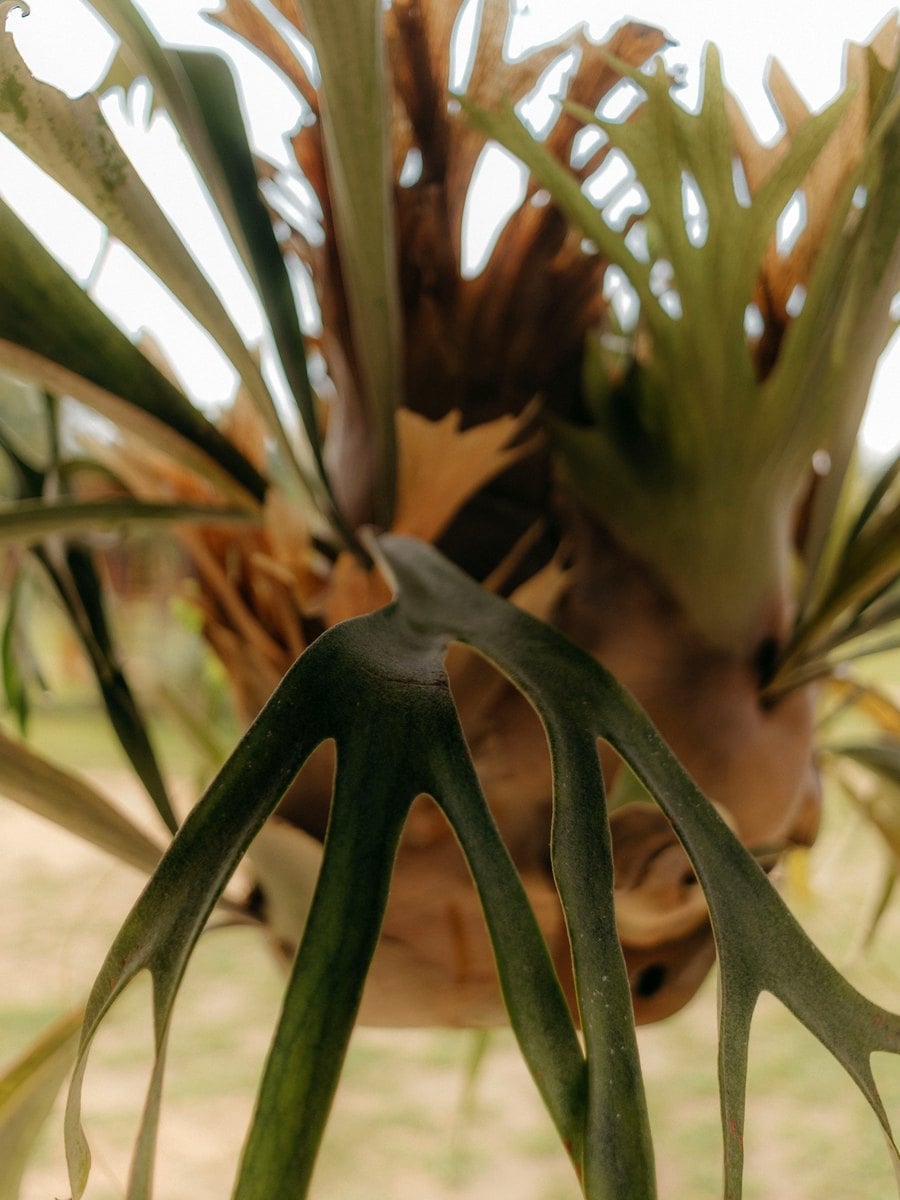
Every staghorn fern makes two kinds of fronds, and knowing them is half of the care. The basal fronds, also called shield fronds, are the round, flat ones pressed against the tree or the board. They are sterile. They cover the short rhizome and the roots, and they catch water and fallen leaves that break down into food for the plant. They start out green and fleshy and turn papery tan to cinnamon brown with age, Wisconsin Extension describes. That brown is supposed to be there.
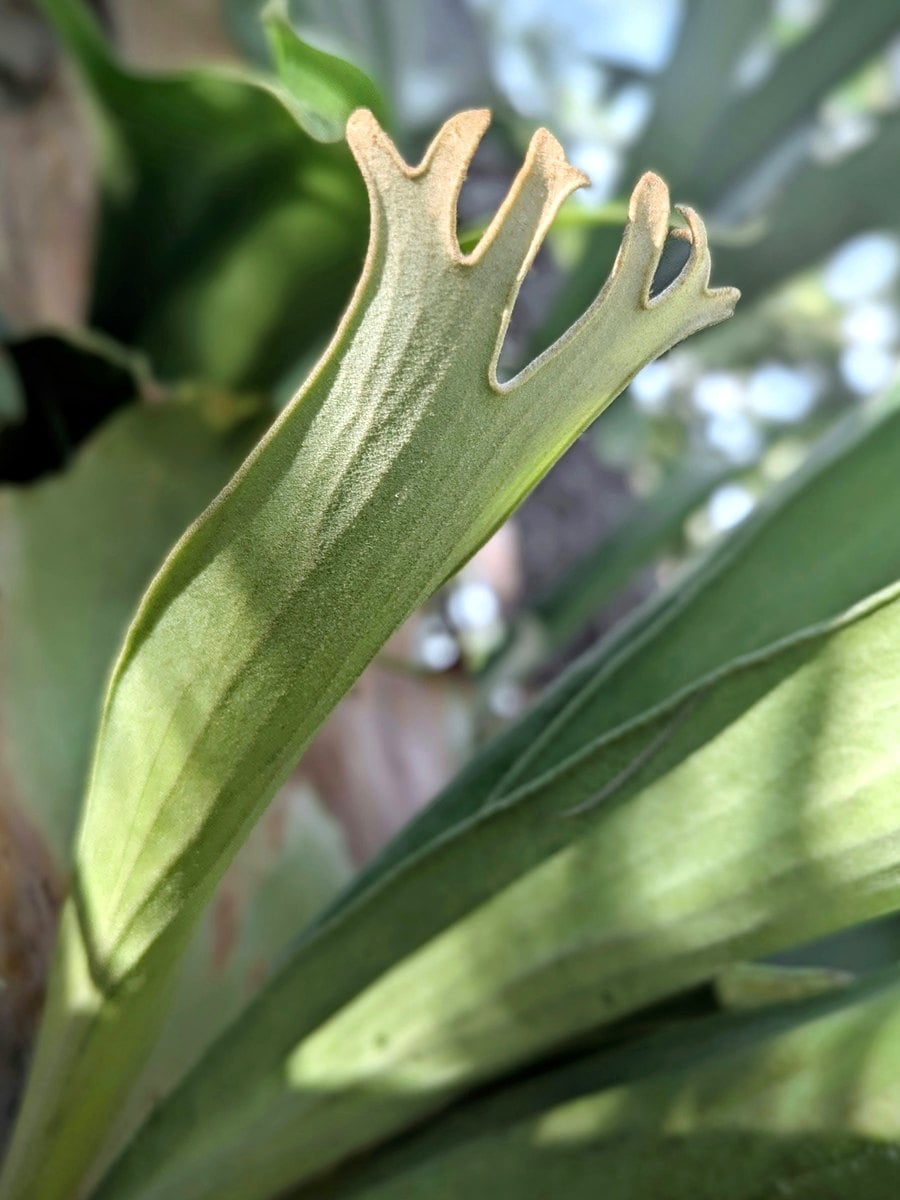
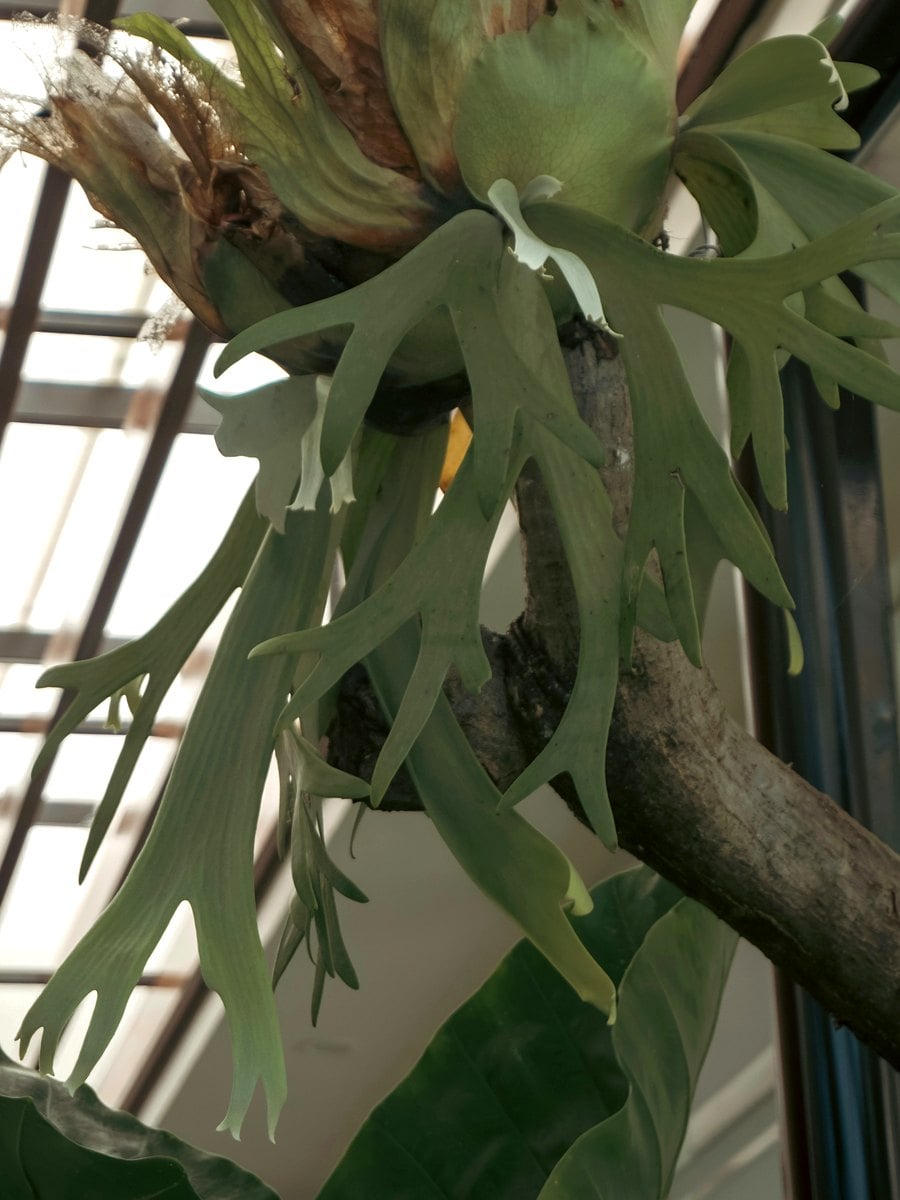
The fertile fronds are the forked antlers that give the plant its name. They carry the spores in brown, felt-like patches on the underside of the tips. Gardeners sometimes worry that this brown felt is a disease, but UF/IFAS says it is just the normal sporangia. Both kinds of fronds also carry tiny star-shaped hairs that give them a silvery cast. Those hairs help the plant hold moisture and keep some insects off, so Wisconsin Extension warns against wiping them away.
A Plant That Lives in a Colony
A staghorn fern is rarely one plant. Platycerium bifurcatum keeps making pups, small new plants that sprout from its spreading rhizome, so each clump is really a collection of offsets crammed together, Wisconsin Extension explains. On Lord Howe Island, between Australia and New Zealand, biologist Kevin Burns of Victoria University of Wellington noticed that the wild colonies held up to hundreds of individuals, each doing a different job.
His team found that about 40 percent of the colony members could not reproduce, mostly the brown, spongy nest fronds that soak up water, while the green strap fronds steer rain toward the center. Eight of the ten colonies they tested were genetically identical, Science News reported in June 2021 on the study in the journal Ecology. Burns thinks this division of labor may be the first sign of a plant society that works the way ants and termites do. For your wall, the lesson is simpler: a staghorn is built to grow in a crowd, and UF/IFAS confirms it tolerates crowded conditions.
Common Staghorn Fern Species
Most staghorn ferns sold as houseplants are Platycerium bifurcatum, the common staghorn fern. It is the species cultivated most, probably because it is the easiest to grow, and it received the Royal Horticultural Society's Award of Garden Merit in 1993, Wisconsin Extension notes. Collectors go much further. These are the species you are most likely to meet, with only what open botanical and extension sources confirm.
| Species | Where it grows wild | What to know |
|---|---|---|
| Platycerium bifurcatum common staghorn fern, elkhorn fern |
Java, New Guinea, and southeastern Australia | The easiest one to grow. Makes plenty of pups, can reach about 90 cm (3 feet) across, and survives brief dips to about -1°C (30°F). |
| Platycerium superbum upright nest, no pups |
Eastern Australia (Queensland and New South Wales) | Builds an upright nest of wide, forked shield fronds that traps leaves, with fertile fronds hanging 60 to 90 cm (2 to 3 feet) below. Touchy about cold, heat, and overwatering, and grown only from spores. |
| Platycerium grande solitary collector's fern |
The Philippines | Shield fronds up to 1.2 m (4 feet) across and fertile fronds up to 1.8 m (6 feet) long. Does not pup, is easily overwatered, and is tender below 15.5°C (60°F). Young plants look a lot like P. superbum. |
| Platycerium ridleyi Ridley's staghorn fern |
Thailand, Sumatra, Peninsular Malaysia, Singapore, and Borneo | The only staghorn whose fertile fronds point upward. Named after Henry Nicholas Ridley, the first director of the Singapore Botanic Gardens. Grows high in trees, does not pup, and is difficult to grow. |
| Platycerium willinckii also labeled P. bifurcatum subsp. willinckii |
Java, the Lesser Sunda Islands, and Sulawesi | Botanists disagree on its rank. The GBIF taxonomy files it as a subspecies of P. bifurcatum, so labels may carry either name. |
UF/IFAS adds Platycerium alcicorne, Platycerium hillii, and Platycerium veitchii to the easy-to-grow list. It also warns that most species cannot take temperatures below 13°C (55°F), while P. bifurcatum and P. veitchii handle short spells close to freezing.
How to Mount a Staghorn Fern
Most Staghorn Ferns Start Out in a Pot
Staghorn ferns are rarely grown in pots, except as small plants raised for sale, UF/IFAS notes, and that is how most of them leave the nursery. Raadschelders Varens, a family fern nursery in De Kwakel, close to the Aalsmeer flower auction in the Netherlands, lists Platycerium bifurcatum on its own website in pots of 12, 20, 26, and 29 centimeters (about 5 to 11 inches), next to Asplenium, Nephrolepis, Phlebodium, and the rest of its fern range. According to its grower page on Thursd, the nursery grows on two sites covering 5.5 hectares (about 13.6 acres) and sells to exporters, cash and carries, and garden centers.
A small potted staghorn can stay in its pot for a while, in a rich and very well-drained mix, and NC State Extension notes that a potted plant can be watered from the bottom. Once the shields start reaching for something to grab, it is time to mount it. Plant shops even run mounting workshops now, as Thursd saw when it looked at why Gen Z is so obsessed with plants.
How to Mount a Staghorn Fern on a Board, Step by Step
This is the method from the staghorn fern mounting tutorial and fact sheet of UF/IFAS Extension, with two warnings from Wisconsin Extension.
- Soak a few handfuls of sphagnum moss in water for a couple of hours.
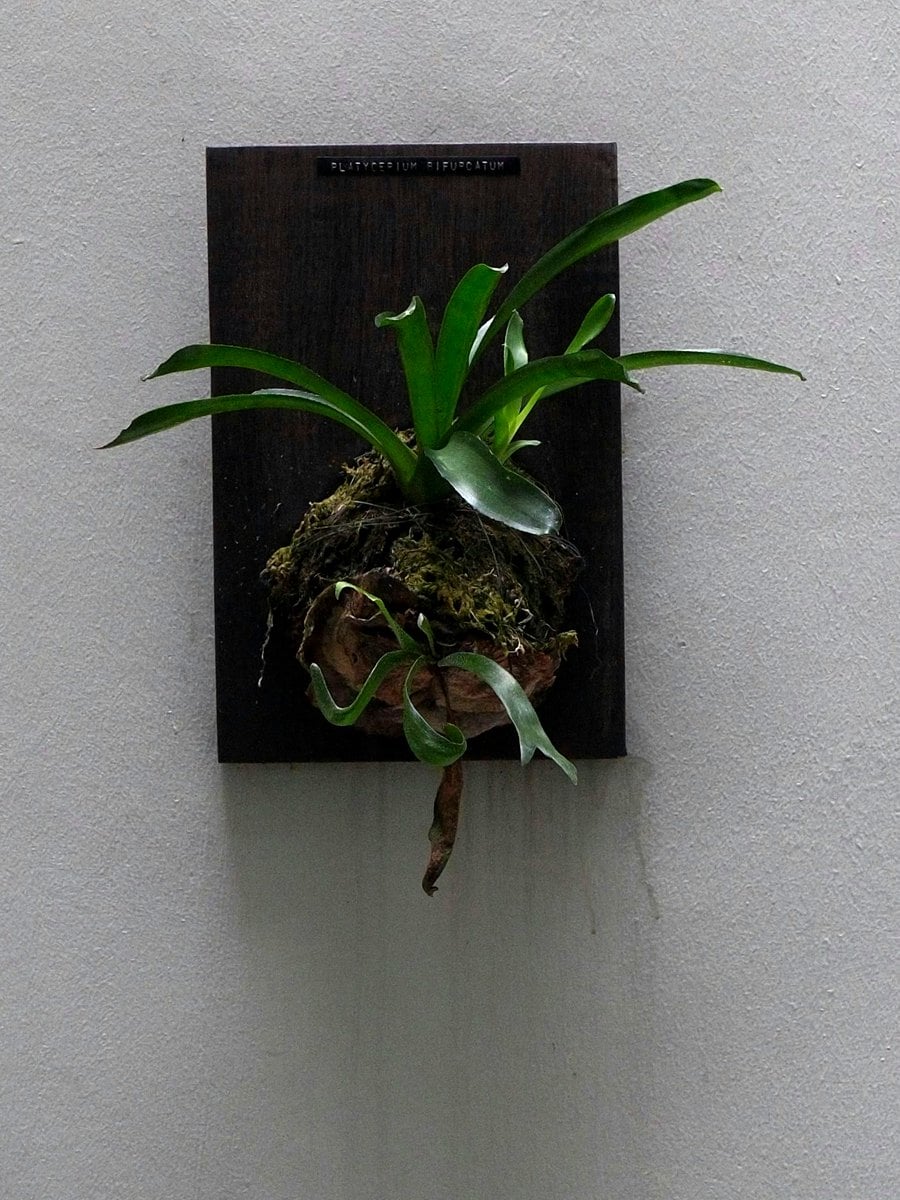
- Pick a board of untreated wood, a slab of cork bark, or a piece of tree fern fiber, a little bigger than the plant, so the shields have room to spread. Fix the hanger to the back before you start.
- Shape the wet moss into a round mound, slightly below the center of the board.
- Take the fern out of its pot. If the root ball is too bulky to sit flat, cut away some of the old roots and plant matter, as UF/IFAS did in its tutorial.
- Set the fern on the moss so the shield fronds touch it, and tuck more moss around the root ball.
- Tie it on with old nylon stockings, plastic strips, or fishing line, wrapped over the older brown shields and never over the soft green fronds. Stockings rot away over time instead of cutting into the plant. Never use copper wire.
- Soak the whole mount, let it drain, and hang it upright in bright, indirect light. New shield fronds will grow over the ties and grip the board on their own.
Mounting in a Wire Basket
A wire basket works too. Cut the liner down so the plant can grow through the wire side, add enough moss for the fern to sit near the top, pull a few fronds through the edge so it grows upright, and cover the roots with more moss. Hang the basket on its side, and in time pups will grow out of the back and sides until they cover it, UF/IFAS describes. Its tutorial also suggests a bromeliad or an orchid on top for company, the same pairing as the board above.
When to Remount
Remount when the shield fronds have grown to the edges of the board. A large plant can also be divided into separate plants, UF/IFAS explains. Some staghorns grow so big that remounting stops being practical, and UF/IFAS says there is no need to worry about that. Years of old shields simply pile up behind the new ones.
How Do You Care for a Staghorn Fern?
Once the fern hangs on its board, staghorn fern care is mostly about getting the water right. Light comes second, and the rest follows.
Water It by Soaking
In staghorn fern care, watering is the part that takes practice. A staghorn fern takes up water through its fronds as well as its roots, so the target is the shield fronds and the moss behind them, not a quick splash on the antlers, Wisconsin Extension advises. Indoors, the easiest way is to take the mount down and soak it. The Missouri Botanical Garden suggests putting the whole root ball, without the fertile fronds, under water for several minutes and letting it drain before you hang it back up.
How often depends on your room. UF/IFAS gives once a week in warm, dry weather as a rule of thumb and less in cool or cloudy weather. It also suggests waiting until the fern wilts slightly, because the outer moss can look dry while the inner layers and the shields are still soaked. A slightly wilted fern recovers quickly after a soak, while an overwatered one rots and dies. Older plants with a thick, spongy pad of old shields cope with dry spells better than young ones, UF/IFAS adds. Rainwater is best if you have it, according to Wisconsin Extension.
Give It Bright, Indirect Light
Staghorn ferns want bright, indirect light, up to several hours of filtered sun, and no full sun, the Missouri Botanical Garden advises. UF/IFAS describes the ideal as the dappled light under a shade tree or on a covered porch, about 600 to 2,000 foot-candles (roughly 6,500 to 21,500 lux), and warns that very low light means slow growth and more pests and disease. A staghorn can take more direct sun when the air is warm and humid, but it then needs more water, Wisconsin Extension notes. Thursd's houseplant light guide helps you read the light in your own rooms.
Humidity and Temperature
Good air circulation and moderate humidity suit it best. When indoor air is dry, mist often, and if the light is right, a bathroom with its regular bursts of steam is an ideal spot, Wisconsin Extension suggests; Thursd's guide to plants in the bathroom covers the rest. Keep it in normal household temperatures above 13°C (55°F).
In summer, a houseplant staghorn can go outside once nights stay at about 4 to 9°C (the 40s Fahrenheit), moved gradually into brighter light, and it should come back in before autumn nights drop to that range again. In frost-free climates, it lives outdoors all year. It has naturalized in Florida and Hawaii, where it is considered invasive on the islands, Wisconsin Extension notes, and the UF/IFAS assessment of non-native plants asks Florida gardeners to plant Platycerium bifurcatum with caution and manage it so it does not escape.
Feeding
Feed it with a balanced 1:1:1 fertilizer such as 20-20-20 once a month in the warm growing months and every other month when growth slows, UF/IFAS recommends. A mature staghorn does fine with one or two feeds a year. Wisconsin Extension suggests a diluted liquid fertilizer or slow-release pellets tucked into the moss.
Pups and Division
Platycerium bifurcatum makes pups, and that is how you share it. Cut a pup away with a sharp knife, making sure it has shield fronds, fertile fronds, and roots of its own, wrap the roots in damp sphagnum, and tie it to its own mount. Keep the new plant warm and moist, because it can take a long time to settle, Wisconsin Extension warns. Growing staghorns from spores is possible but slow and difficult. Species that do not pup, such as P. superbum, P. grande, and P. ridleyi, cannot be divided, so they are raised from spores.
Why Are the Fronds Turning Brown?
In staghorn fern care, brown is not always bad news. Read it by where it shows up:
- Brown, papery shields at the base: normal aging. They anchor and protect the plant, so leave them until they fall off on their own, Wisconsin Extension advises, while new green shields grow over them.
- Brown felt under the tips of the antlers: spores, not disease.
- Black spots on the shields that spread: the fungus Rhizoctonia, which comes with too much water and can kill the plant once it reaches the growing point. Stop watering for a while and lower the humidity to slow it, UF/IFAS advises.
- A soft, rotting base: overwatering. Staghorns rot easily, so let the mount dry out more between soaks.
- Withered antler fronds: these can be cut off.
- Small bumps or white fluff: scale insects or mealybugs. UF/IFAS notes that oil-free insecticides are safer on staghorn ferns than oil-based ones.
Once your staghorn fern care routine is settled, the rest of the fern world is on Thursd too. There are seven indoor ferns with simple care tips, a guide to foxtail fern care, tips for the finicky maidenhair fern, and a look at what ferns represent, where the staghorn stands for protection and strength. It also appears among the houseplants with the most unique leaves and on Thursd's ferns page. Just do not confuse it with the staghorn sumac, a North American shrub named for its velvety, antler-like young branches.
Sources: University of Wisconsin-Madison Extension, Staghorn Fern, Platycerium bifurcatum (Susan Mahr); UF/IFAS Gardening Solutions, Staghorn Ferns and Staghorn Fern Mounting Tutorial; UF/IFAS Assessment of Non-Native Plants in Florida's Natural Areas, Platycerium bifurcatum; Sydney Park Brown, UF/IFAS, Staghorn Ferns at a Glance (revised 2007, republished by the Texas Fern and Exotic Plant Society); Missouri Botanical Garden, Platycerium bifurcatum; NC State Extension, Platycerium bifurcatum; NParks Flora and Fauna Web, Platycerium ridleyi; GBIF, Platycerium bifurcatum subsp. willinckii, Platycerium grande, and Platycerium superbum; ASPCA, Common Staghorn Fern; Jake Buehler, Science News, These ferns may be the first plants known to share work like ants (June 7, 2021); Raadschelders Varens, Platycerium bifurcatum.
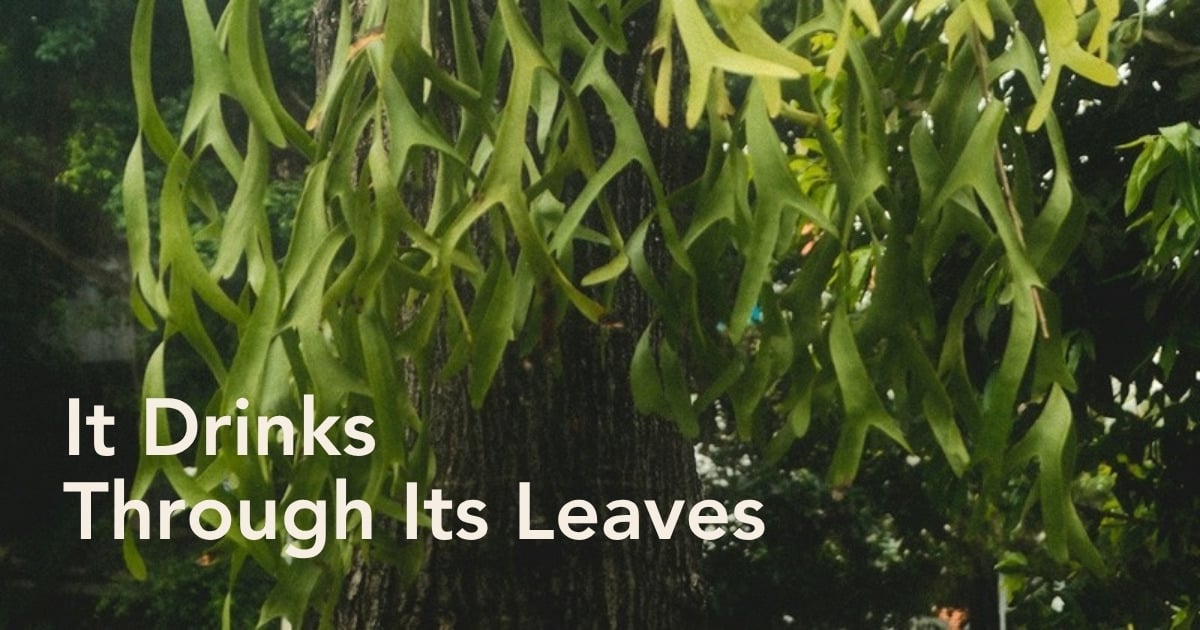
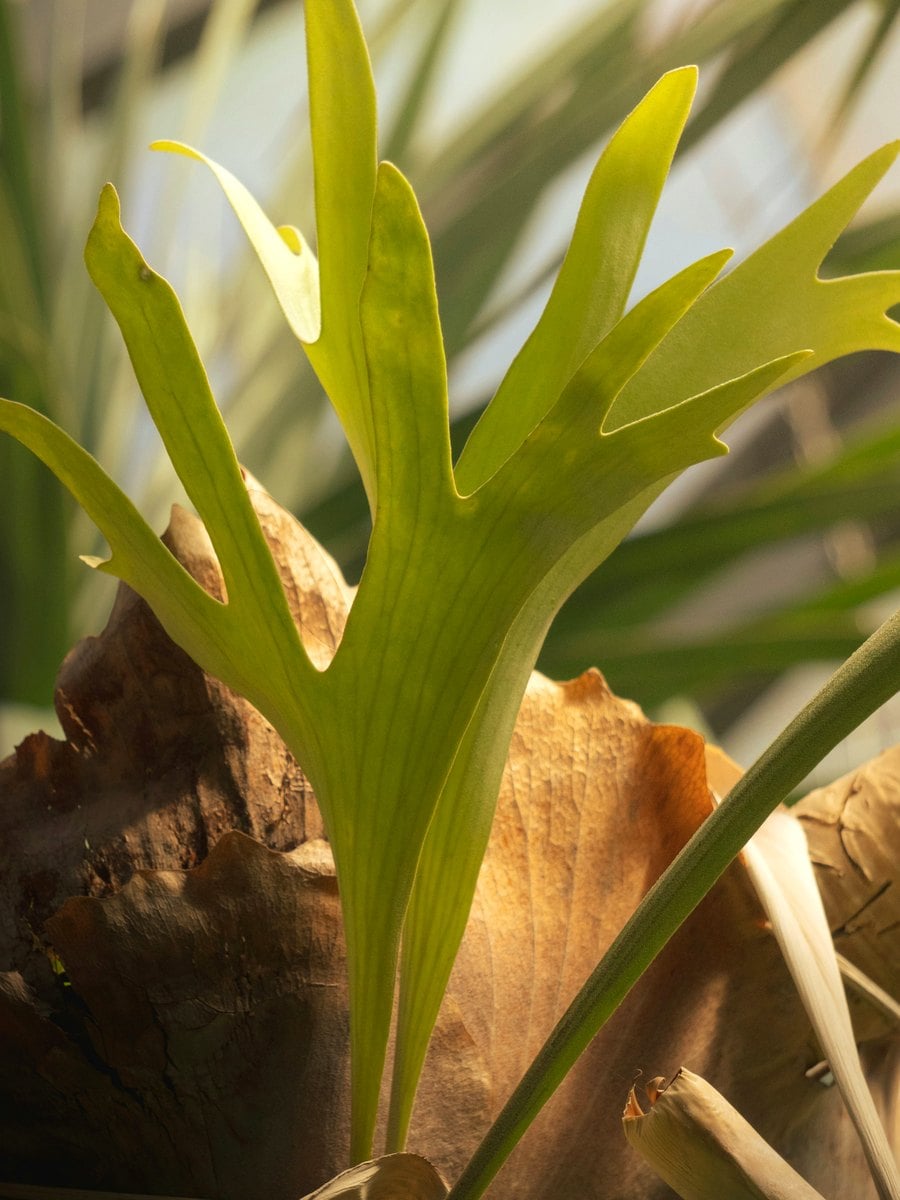
Featured image: a staghorn antler frond rising over brown shield fronds in the greenhouse of the Jardin Botanique de Metz by Frédéric LO BRUTTO on Unsplash. Header image: staghorn fern fronds hanging from a tree by Ngoc Nguyen Phuong on Unsplash.