There is no single correct way to sort flowers. Ask a botanist, a gardener and a florist for the main types of flowers and you will get three different answers, all of them right. The botanist sorts by family, the gardener sorts by life cycle and season, and the florist sorts by the job a stem does in an arrangement.
Most guides pick one of those and pretend it is the whole picture. This one runs all four, because which system you need depends entirely on what you are trying to do: identify something, plant something, or build something.
Types of Flowers by Color
Color is how most people actually search, and it is a legitimate classification for choosing rather than for identifying. It also carries meaning, which is why it drives so many decisions.
Red is passion and love, and it is the most commercially significant color in the flower trade by a wide margin. Thursd's red flowers guide covers the range beyond roses.
White reads as purity, sympathy and formality, and it is the backbone of wedding work. See white flowers.
Yellow is friendship and optimism, and it is the color that shifts most between cultures, so it is worth checking local reading before sending it. Thursd covers yellow flowers and their meanings.
Orange sits between the two, and Thursd's orange flowers guide covers its types, meanings and how to grow them.
Blue is the rarest color in nature, because relatively few plants produce delphinidin, the pigment behind a true blue. That scarcity is exactly why blue flowers carry a sense of the unattainable. Thursd has blue flower symbolism.
Black does not exist. What is sold as black is very deep purple, maroon or red, and Marcel de Romph made that case on Thursd in no such thing as a black flower. The near-black varieties are still worth knowing, and the 15 best black flowers covers them.
Types of Flowers by Life Cycle
This is the gardener's system and the one that decides whether a plant comes back.
Annuals germinate, flower, set seed and die inside one season. Cosmos, sunflower, Zinnia, larkspur in the strict sense. They flower hard and fast because they have one shot at reproducing, which is why annuals dominate cutting gardens.
Perennials live for years, usually dying back to the ground in winter and returning from the root. Delphinium, peony, Echinacea, Phlox. They give less in year one and much more in year three.
Biennials take two seasons: leaves in the first year, flowers in the second, then they die. Foxglove and sweet william are the common examples, and this is why a foxglove that produced nothing all summer is not a failure.
Bulbs, corms, tubers and rhizomes store energy underground and are grouped together as geophytes. Tulip, lily, Dahlia, Amaryllis, Ranunculus. Commercially this group matters more than any other, because storable underground organs can be shipped, chilled and forced, which is how you get tulips in December.
Shrubs and woody plants keep a permanent above-ground structure. Roses, Hydrangea, lilac, Viburnum. They are the longest-term investment in a garden and they supply most of the branch material florists use in winter.
Types of Flowers by Season
Season is the practical classification for anyone buying or planting, and it has been blurred by imports without being erased. Peonies still have a season. So do tulips, Dahlias and hellebore.
Spring belongs to the bulbs: tulip, Narcissus, hyacinth, plus blossom branches. Summer is the widest window, from peony in early summer through sunflower, Dahlia and the whole field-grown range covered in Thursd's summer flowers guide. Autumn shifts to Chrysanthemum, aster, Nerine and the berried branches. Winter narrows to hellebore, Amaryllis, forced bulbs and evergreens.
There is also a personal calendar layered on top. Every month has its own flower, and Thursd runs the whole birth month flowers series.
When the Seasons Run the Other Way: South Africa
Flip the globe and the calendar flips with it. Coral Shortt, a European Master Certified florist who runs Epanouir in South Africa, sorts her year into three piles. The first is imported and there all year: Hydrangea, calla, peonies, and roses ("a lot come from Kenya," she says). Out of season, hyacinths and tulips are imported as well, and Cymbidium sometimes flies in too. Not every tulip is imported, though: "We have 1 tulip grower, who grows year round here."
The second pile is local and year-round: Chrysanthemum, stocks, Gerbera, carnations, Anthurium, fillers, and both Asiatic lilies and the larger Orientals. The third is local and seasonal, and it's the one that tells you where you are: Freesia, Ranunculus, anemones, iris, Chamelaucium, grasses, Scabiosa, Delphinium, Digitalis, and Dahlia.
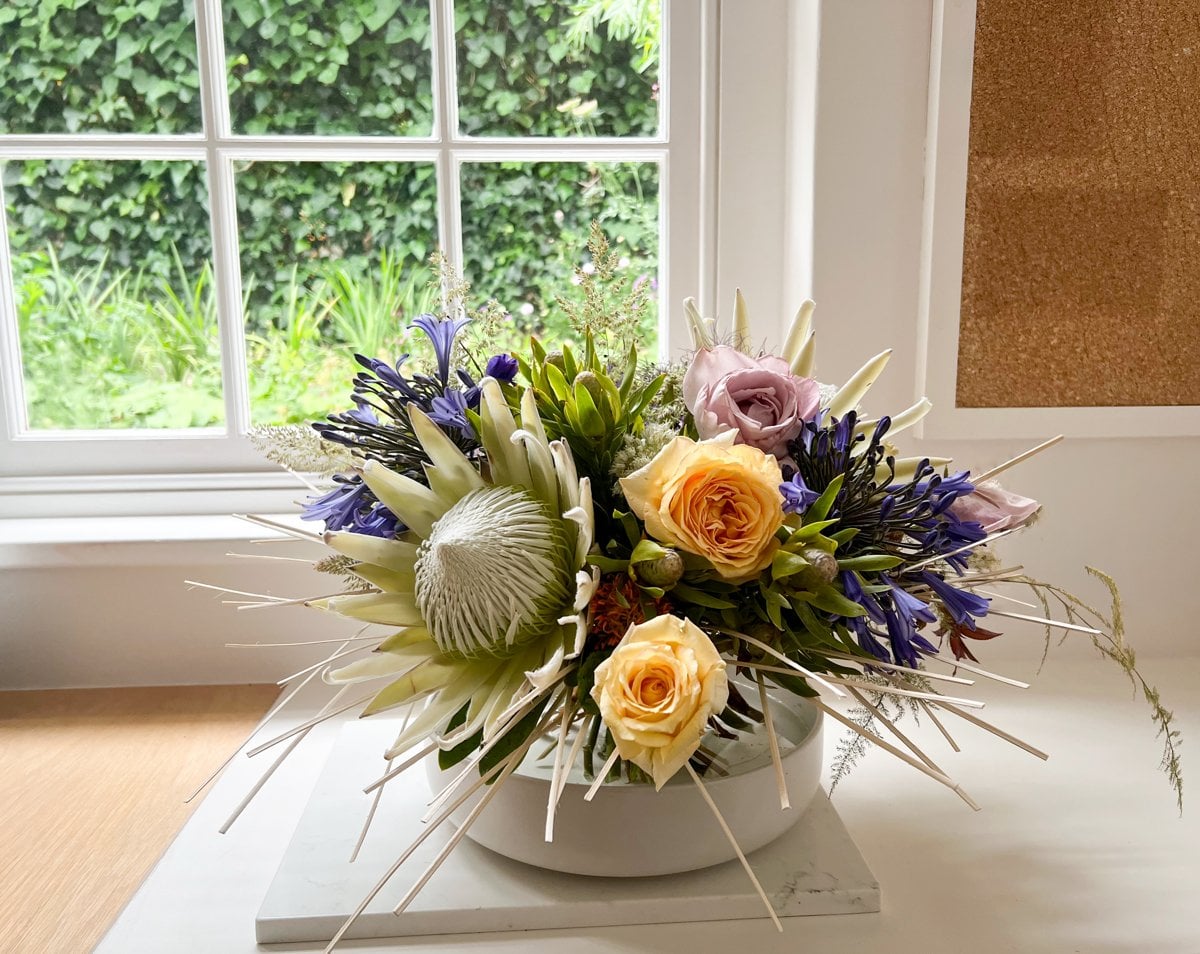
And then there's Protea. Most of the Proteaceae are grown at home, mostly in winter, and as Shortt puts it, "I doubt South Africa would ever import" them. Local roses are another story; she says they "don't really compete with the Kenyan roses on petal count or size."
How Florists Actually Classify Flowers
This is the system that gets left out of consumer guides, and it is the most useful one if you are making something rather than reading about it. Florists sort by the job a stem does.
Focal flowers are the ones the eye lands on. Large, round, visually heavy: rose, peony, Hydrangea, sunflower, Amaryllis. You use few of them, and they set the budget.
Line flowers are tall and vertical, and they define the shape and height of an arrangement. Delphinium, larkspur, Gladiolus, snapdragon, stock. Without line material an arrangement stays round and flat.
Filler flowers occupy the space between, softening transitions and hiding mechanics. Gypsophila, waxflower, Solidago, astrantia, spray Chrysanthemum.
Foliage and texture hold everything together and are usually the largest volume by stem count. Eucalyptus, ruscus, leatherleaf, ivy, pittosporum.
A balanced arrangement uses all four. Someone who buys ten focal stems and nothing else is buying an expensive bunch that will not sit together, and that is the single most common mistake made by people buying flowers wholesale for the first time.
Not every school teaches it this way, by the way. Shortt is certified at European Master (EMC) and International Master Florist (IMF) level, and she says EMC and IMF "don't really focus on that too much." Their training is "much more design schema focused," built on the design schema of German master florist Gregor Lersch.
Botanical Families Worth Recognizing
You do not need taxonomy to enjoy flowers, but four families cover a surprising share of what you will meet, and recognizing them predicts behavior.
Asteraceae, the daisy family, is the largest: sunflower, Chrysanthemum, aster, Dahlia, Gerbera, cosmos. What looks like one flower is a composite head of many tiny florets.
Rosaceae, the rose family, includes roses, but also cherry and apple blossom, spiraea and potentilla.
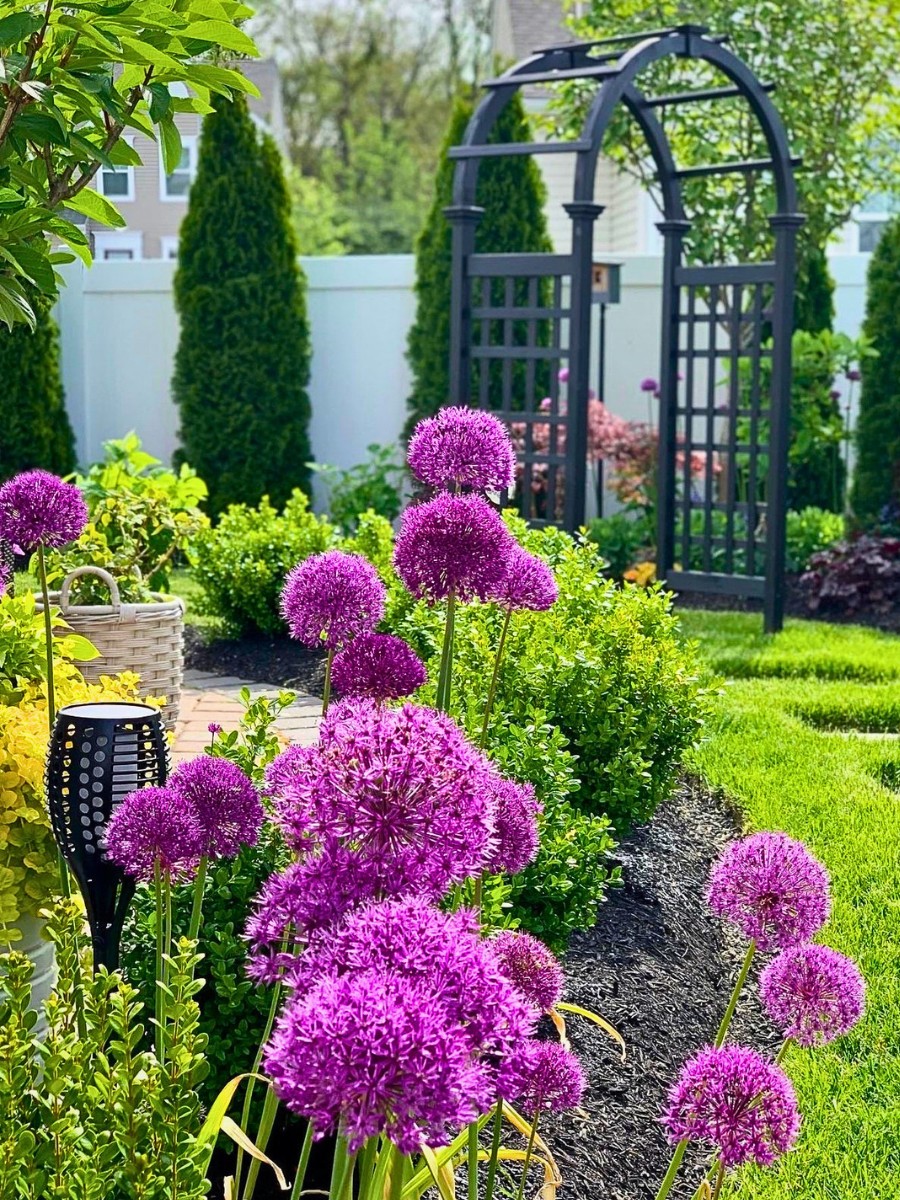
Amaryllidaceae covers Amaryllis, Narcissus, Nerine, allium and the spider lilies, and many of its members are toxic in the bulb.
Ranunculaceae, the buttercup family, holds Delphinium, larkspur, Anemone, Ranunculus, hellebore and Clematis. It is worth knowing as a group because a great many of them are toxic and several are strongly ethylene sensitive. The North Carolina Extension plant finder and the Royal Horticultural Society both let you search by family and by growing type.
Florists learn plants for the same reason. Shortt says the EMC nomenclature project documented about 450 species by her estimate, and the focus was on care: storage temperature, ethylene sensitivity, food needs, and origin.
To go from a category to an actual variety, Thursd's product directory carries individual pages for hundreds of named cut flowers and plants, each with the breeder or grower behind it.
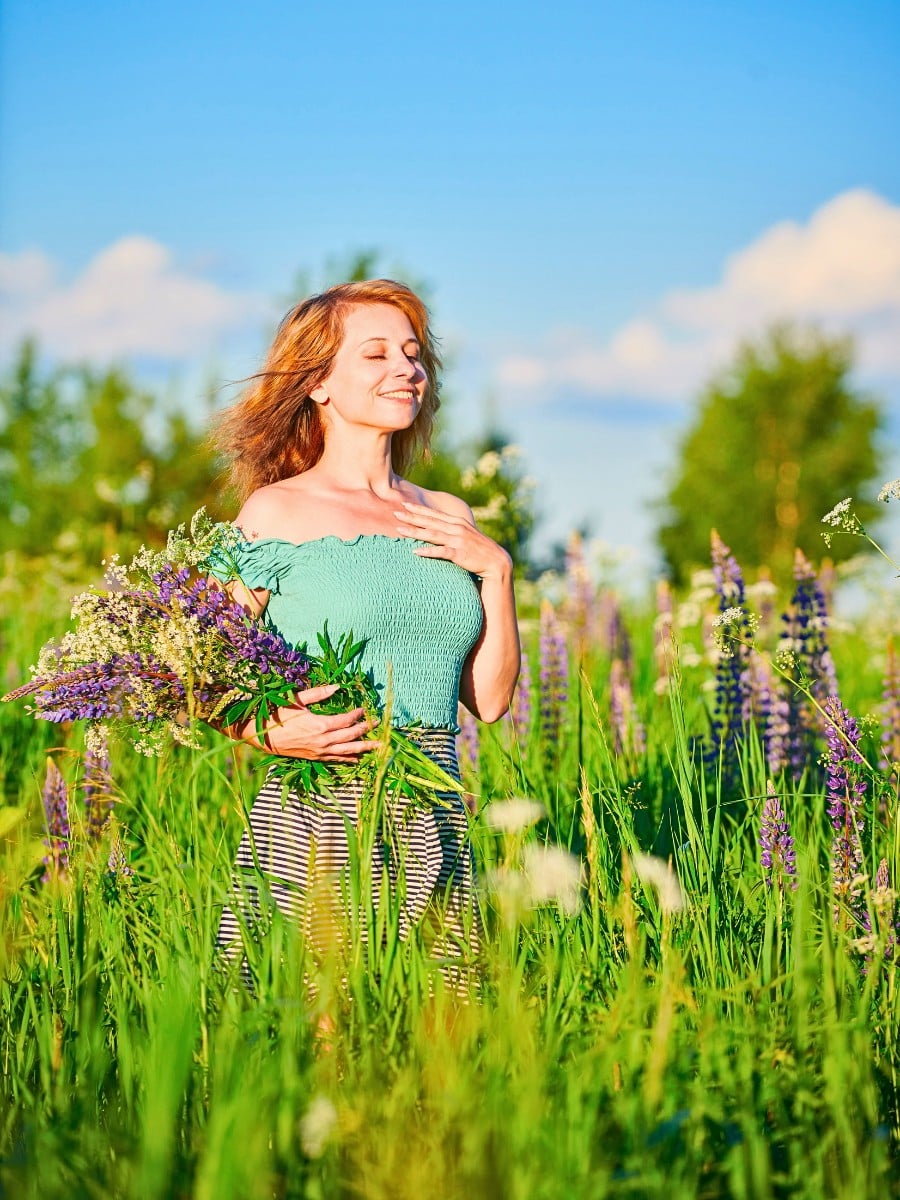
Featured image: an armful of wildflowers in a lupine field, photo by Vika Glitter. Header image: red Dahlia by @Darcys Dahlias, lily of the valley by @_soffitto, daffodil by @khilborn1, eryngium by @marginpar.
About the author: Melissa Maingot has been a Senior Content Editor at Thursd since 2022, writing flower and plant stories worldwide, including on-the-ground reporting from flower farms. Connect with Melissa on LinkedIn.