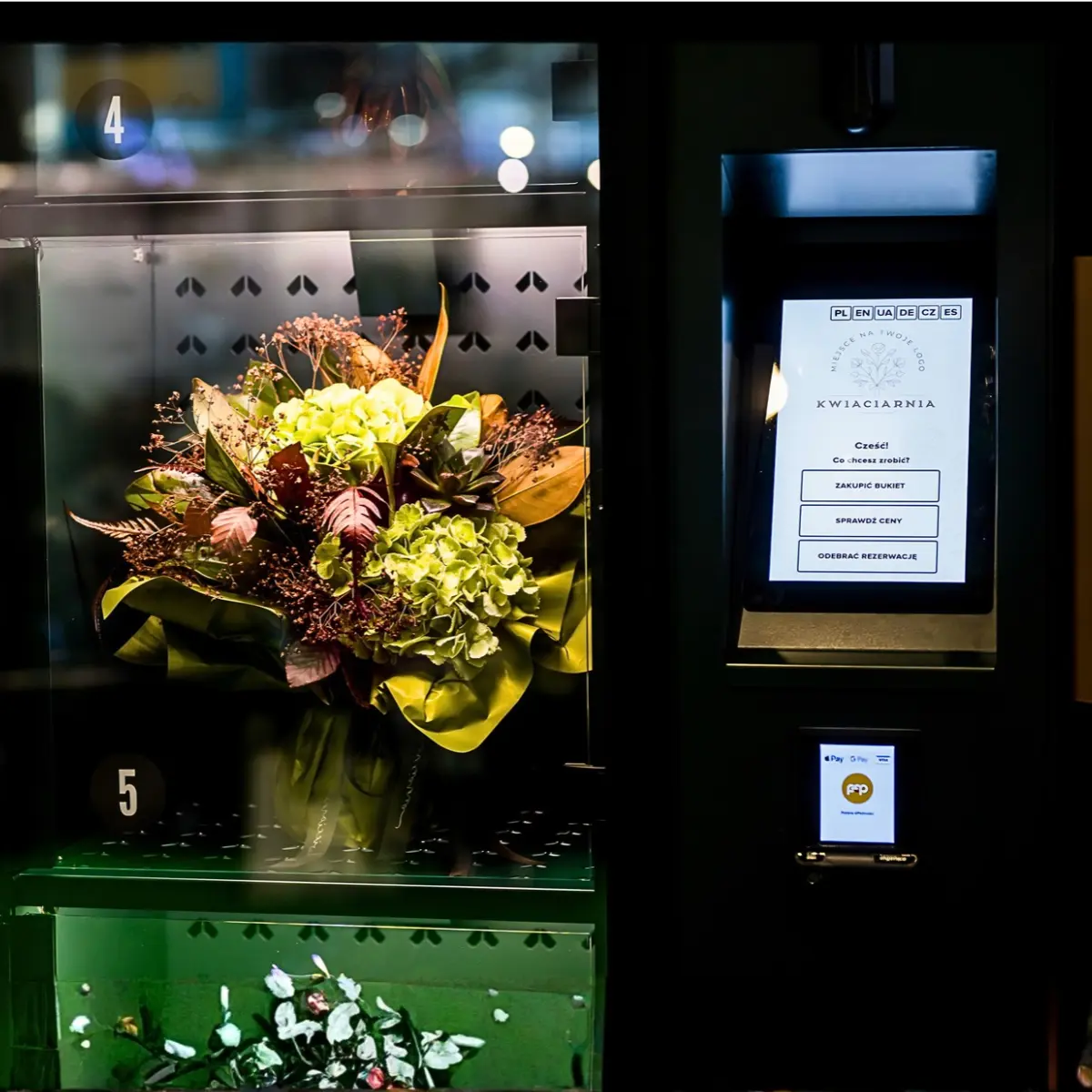
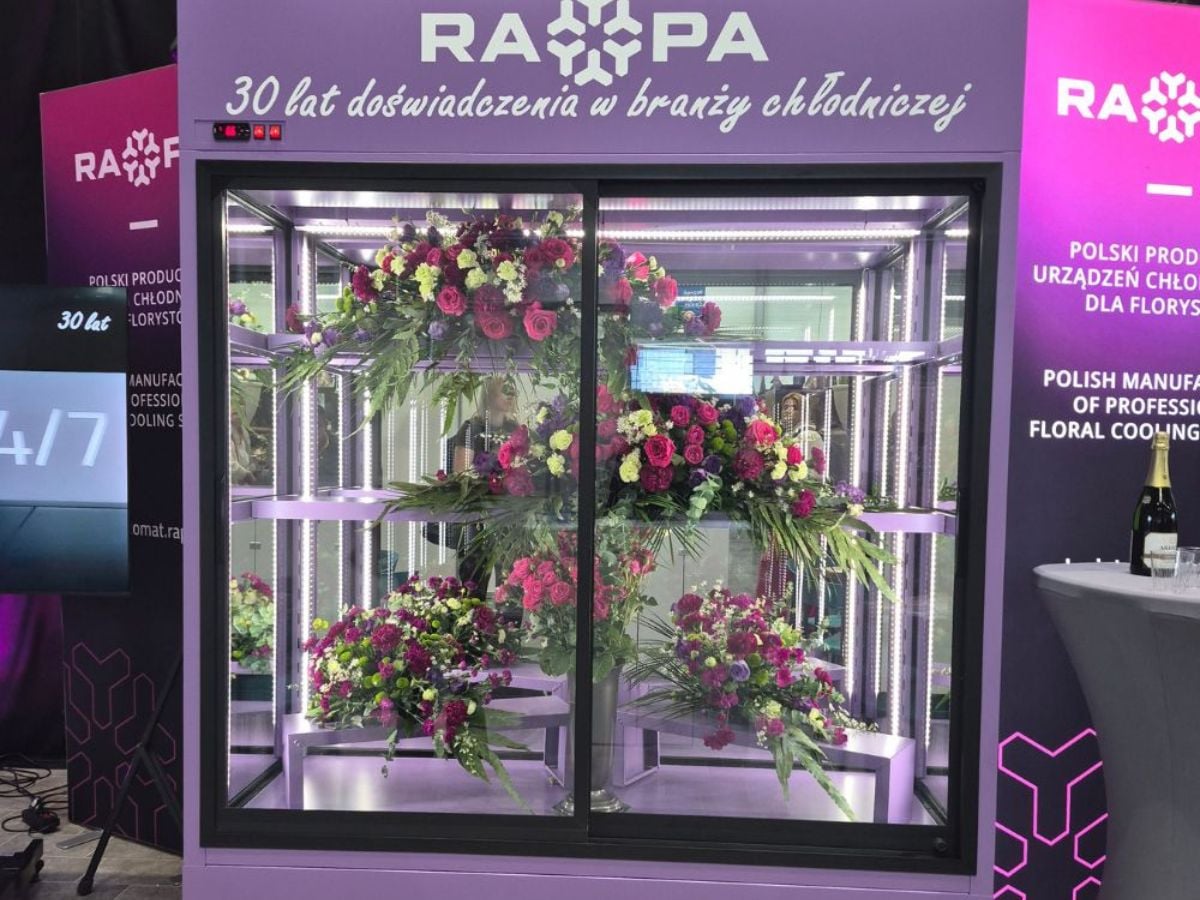
Gardenia is the kind of trade show where I walk the aisles past growers, suppliers, and new ideas, nod at most of it, and forget. Then I turned a corner and saw a tall black machine with glowing glass doors, and behind each one, a perfectly wrapped bouquet, lit like jewelry in a store window. Across the top, in bold white letters, was a name that looked more like a boutique than a vending machine. There was no line, no "we're closing in ten minutes," and no waiting while someone found the ribbon. All I had to do was tap the screen, pick a bouquet, pay, and a little door would open. I stood there longer than I'd like to admit, and one question took over the rest of my trip: why don't we have these at home?
Why Does Africa Need a Flower Vending Machine?
Here's how it usually goes for me. I remember (usually too late) that it's an anniversary, a birthday, or an overdue apology. I call a florist, describe what I want, and wait for a quote, then a confirmation, then a delivery slot. If I'm lucky, the flowers arrive on time and look like the picture. And if it's 7 PM, the flower shop is closed. Sunday evening? Good luck. A midnight decision? The moment is gone. Florists are talented, and I wouldn't want to replace them, but their business hours are human, and love, grief, and guilt don't keep office hours. A flower vending machine fixes that one specific gap: it's always open, always stocked, and always right where I already am. The design I saw is clever in small ways too. Every bouquet sits in its own glass compartment like a mini store window, a touchscreen lets me browse and choose, and lockers of different sizes hold everything from small posies to big statement arrangements. The lighting makes a simple bunch feel like a gift rather than an afterthought. To me, it's retail with the friction removed.

Where Could Flower Vending Machines Take Root in Africa?
This is the part that kept me up at night, because I already know where we spend our days. Malls are full of shoppers in a spending mood, and I can picture a machine near the entrance or the movie theater catching them at exactly the right moment: dinner date tonight? Grab flowers on the way in. Hospitals are where I've rarely seen anyone arrive with a gift prepared, so I imagine a lobby machine putting a get-well bouquet thirty seconds away and giving a patient some color in a room that badly needs it.
Restaurants and hotels could handle proposals, birthdays, and "sorry I'm late" dinners without any planning. Bus stops and transport hubs would let me and other commuters pick up something for whoever is waiting at home, and universities, airports, and gas stations would cover graduations, arrivals, and the stop before my in-laws' house. Anywhere I need something quickly, flowers fit.
A Quieter, More Tender Idea: Funerals
This one deserves special care, but I think it matters. In times of loss, I believe people need to do something, and flowers are one of the oldest ways we say what words can't. Yet grief arrives on its own schedule, families are overwhelmed, and finding a florist who can deliver quickly is the last thing I would want to manage. I can picture funeral homes, chapels, and memorial venues hosting machines stocked with sympathy bouquets, small tributes, and condolence arrangements so that mourners can pay their respects on the spot.
Larger wreaths wouldn't fit a locker, but I imagine the screen letting families pre-order a full wreath for delivery while smaller tributes are collected immediately. It would be dignified and quiet, and it would take one task off a family on the hardest days.
The Business Case (Yes, I Think There Is One)
Flowers are perishable, which is exactly what makes this interesting to me. A machine is open 24/7, so sales don't stop when the florist's shutters come down. Overhead is lower, with no rent for a full store in prime mall space and fewer staff hours spent standing around. It's impulse-friendly, because I know how easily I buy flowers on a whim when it's easy. It also opens up local sourcing: Africa grows some of the world's most loved flowers, and many are shipped abroad, so I see a machine network putting fresh local stems in front of local buyers too. And in markets where we pay by phone, mobile money fits naturally.

What Are the Honest Challenges of Flower Vending Machines?
I'm excited, not naive. Power outages are a real risk, so I know backup power or solar would be essential to keep the cooling running. Stock has to be rotated and restocked often, or the idea collapses. Machines need security, monitoring, and cleaning, and I know customers will want to see exactly what they're getting, so clear displays and a simple refund policy matter. Importing machines is expensive, so I think building them locally, or partnering with local florists to stock them, may be the smarter route.
None of this is a dealbreaker for me. Each is a problem an enterprising person could solve.
Florists, Don't Panic
The best version of this isn't machines versus florists. It's machines with florists. I'd love to see local florists design and stock the bouquets, with the machine acting as a 24-hour storefront that extends their business. Custom orders, weddings, and big events stay with the artists, and the everyday "I need flowers now" moments get handled by the box.
Why I Can't Stop Thinking About It
Flowers are about moments: the surprise, the apology, the celebration, the goodbye. The moments themselves are never the problem. The logistics usually are. A glass door on a trade show floor in Poznan made that clear to me, and if the hardest part of giving flowers disappears, I believe more of us will give them. So here's my question for you: where would you put the first flower box in your city? Maybe someone reading this will turn the idea into a business.
Header image and featured image by Reginah Mwangi.