For years, florists could rely on traditional search: create service pages, add location keywords, and climb search engine rankings through link building and basic search engine optimization. That still matters, but the search landscape has changed. Search engines increasingly combine classic indexing with machine learning algorithms, natural language processing, and AI systems that interpret meaning, context, and user intent.
Today, a florist’s competition isn’t only the shop down the street. It’s also directories, marketplaces, social platforms, and publisher pages that can dominate search engine results pages. On top of that, AI-powered search engines and AI search platforms are now providing AI-generated responses and AI answers that summarize what users want without always requiring a click.
SEO Is Not Dead
From my perspective, this is not “SEO is dead.” It’s “SEO practices must evolve.” Florists, floral designers, and even growers and wholesale traders can still win relevant traffic if they understand how AI-powered systems read and rank content.
The practical implication is clear: you need to optimize content for both traditional search results and AI-generated results. That means you must build pages that satisfy search intent, answer search queries clearly, and help AI search understand your services, location, specialties, and credibility.
Why Search Engines Still Matter Even When AI Search Is Rising
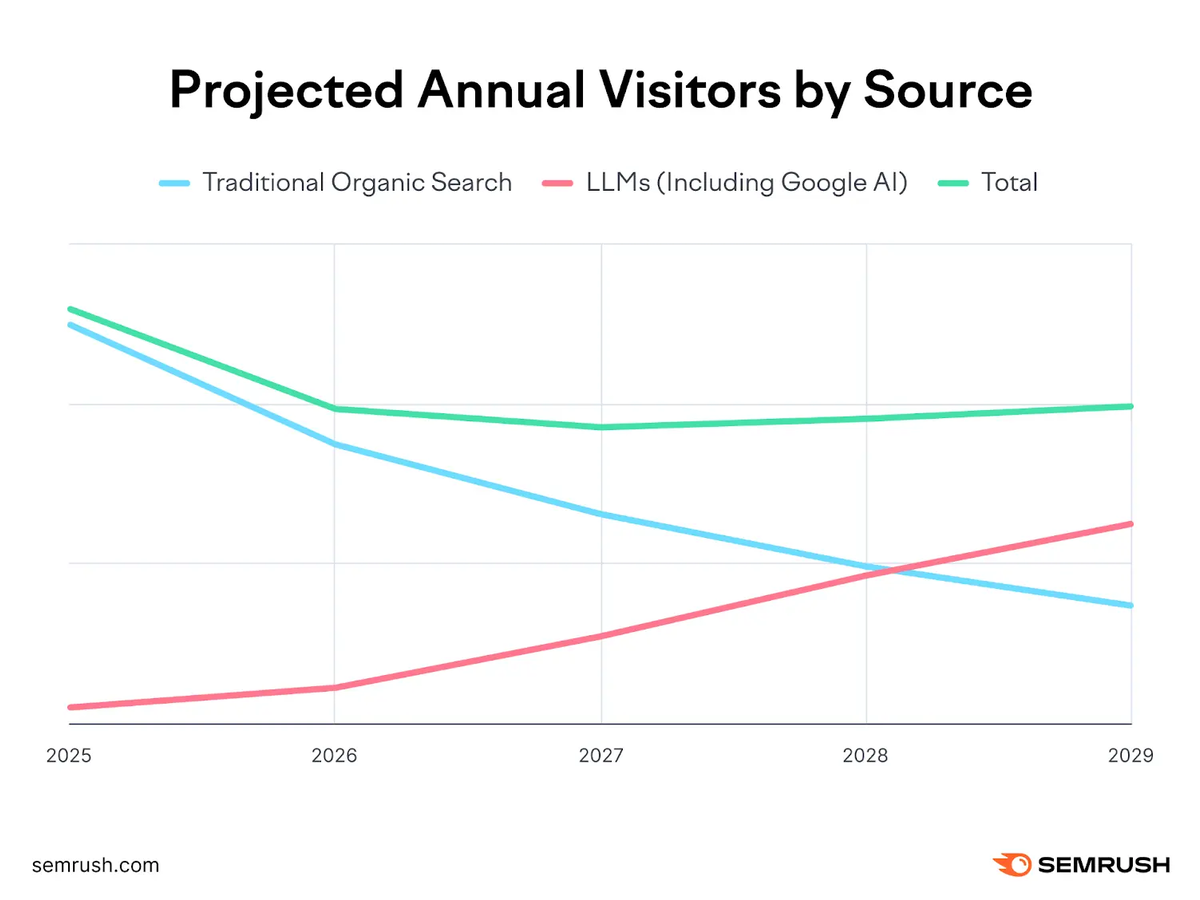
A lot of people ask me whether AI search will replace search engines. In reality, AI search is built on search engines. The data feeding AI search tools often originates from the same crawled web. AI search engines still depend on signals like structure, authority, and relevance, even if the experience looks different.
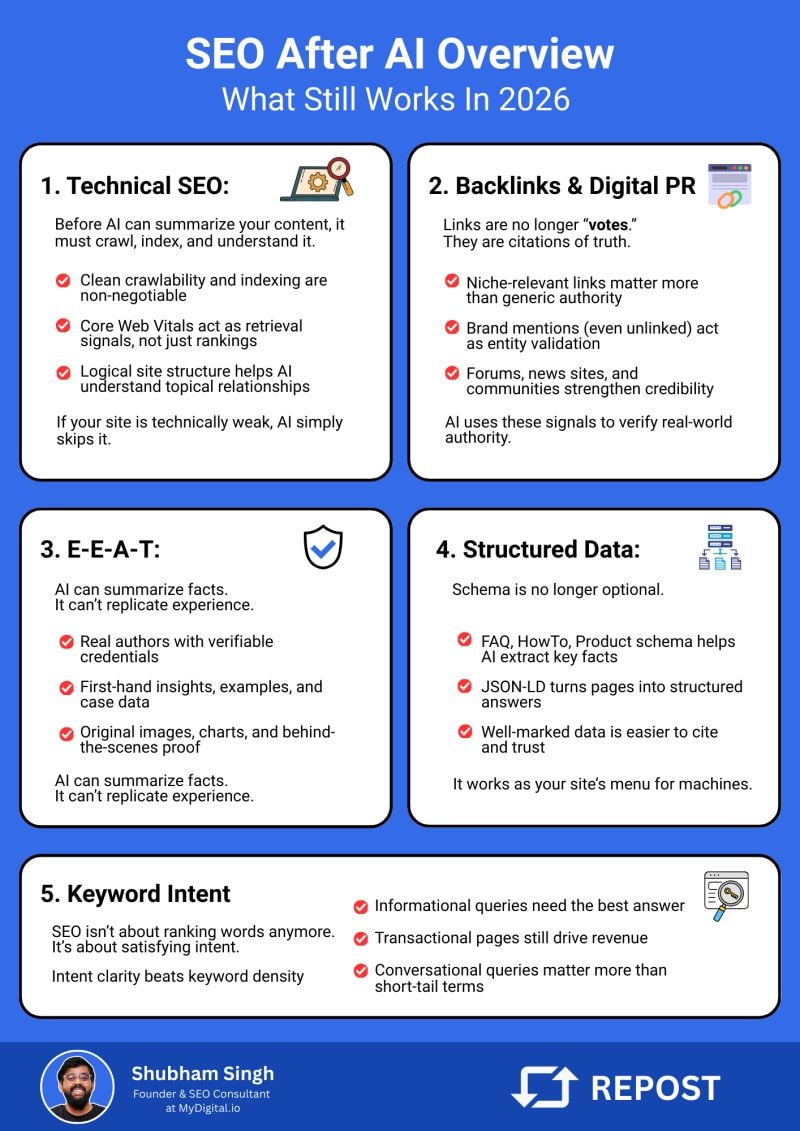
For florists, the big shift is in how search results are presented:
- More Google AI overviews appear at the top of search engine results pages.
- Personalized search results are more common, based on user behavior and location.
- Traditional search results can be pushed down, even if you rank well.
- AI-generated answers can cite or paraphrase content from publishers, business directories, and high-trust sources.
So yes, the “blue links” still matter. But now, the goal is broader: search visibility isn’t only about being #1; it’s also about being mentioned where AI systems pull summaries and recommendations.
This is where SEO becomes a visibility strategy, not only a ranking strategy. And it’s why I suggest site owners in floriculture keep strengthening their foundation in search engine optimization, but pair it with AI-driven SEO so your brand can show up across the entire search engine results ecosystem.
What Florist Customers Are Actually Searching For in AI
If you run a local flower shop or design studio, you already know people search differently depending on the moment. What’s changed is that AI-powered experiences interpret these queries more deeply. Here are common florist-driven search queries that show how user intent shifts:
- “same-day flower delivery near me”
- “wedding florist [city] modern romantic.”
- “sympathy flowers delivery [hospital]”
- “corporate flowers weekly subscription”
- “dried flowers bouquet minimalist”
- “rose varieties from Ecuador or Kenya” (often relevant to wholesalers and traders)
- “where to buy Ranunculus stems wholesale” (grower/wholesale angle)
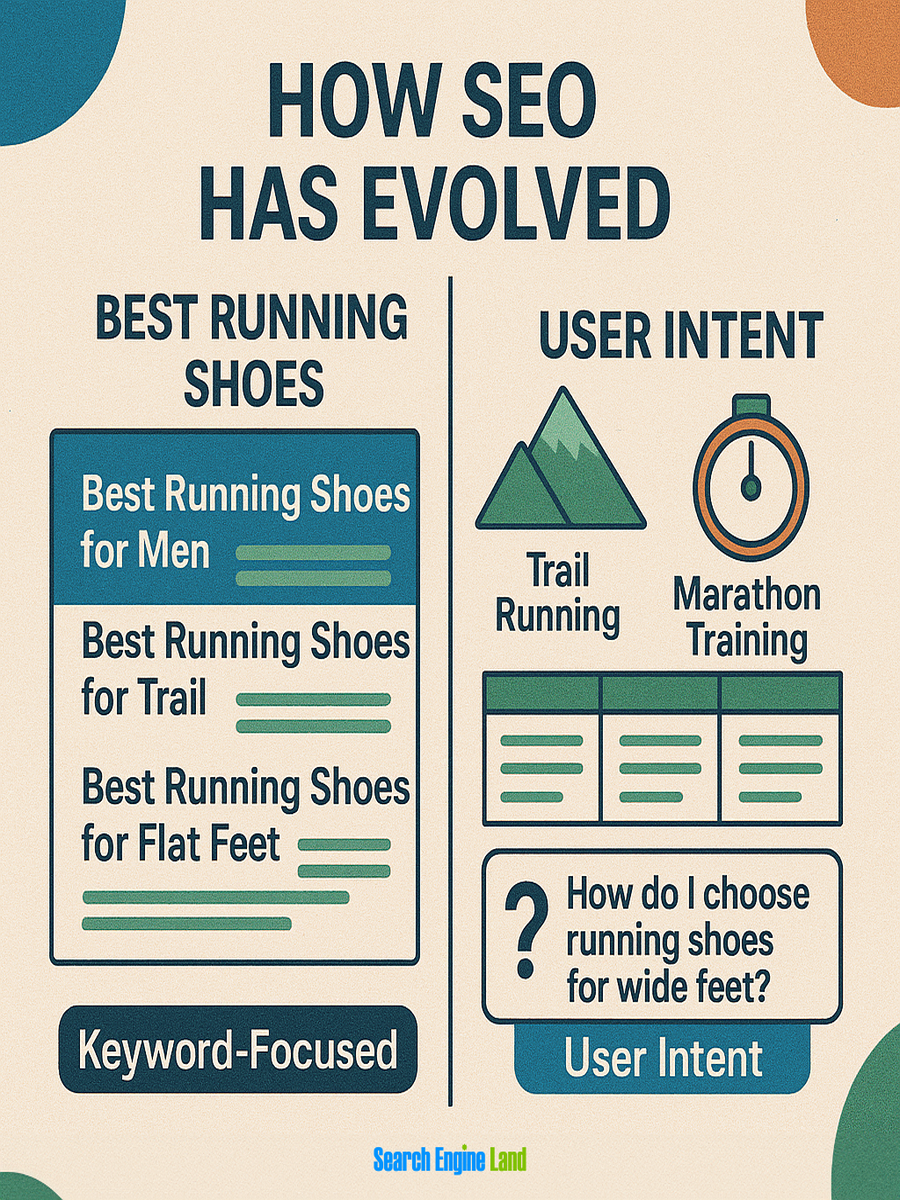
AI search is trained to interpret the meaning behind those phrases. It’s not just matching words; it tries to predict what the user's intent is and which results satisfy it best.
This is why relevant keywords still matter, but keyword density alone won’t win. You can publish a page with “wedding florist” repeated 40 times and still lose to a page that explains packages, styles, timelines, and pricing signals clearly - because AI systems read context and semantic relevance.
For florist teams, that’s the opening - build pages that are genuinely helpful and aligned with search intent, and your search rankings improve naturally.
Traditional SEO vs AI SEO – What Has Changed and What Hasn’t
Let’s separate this cleanly.
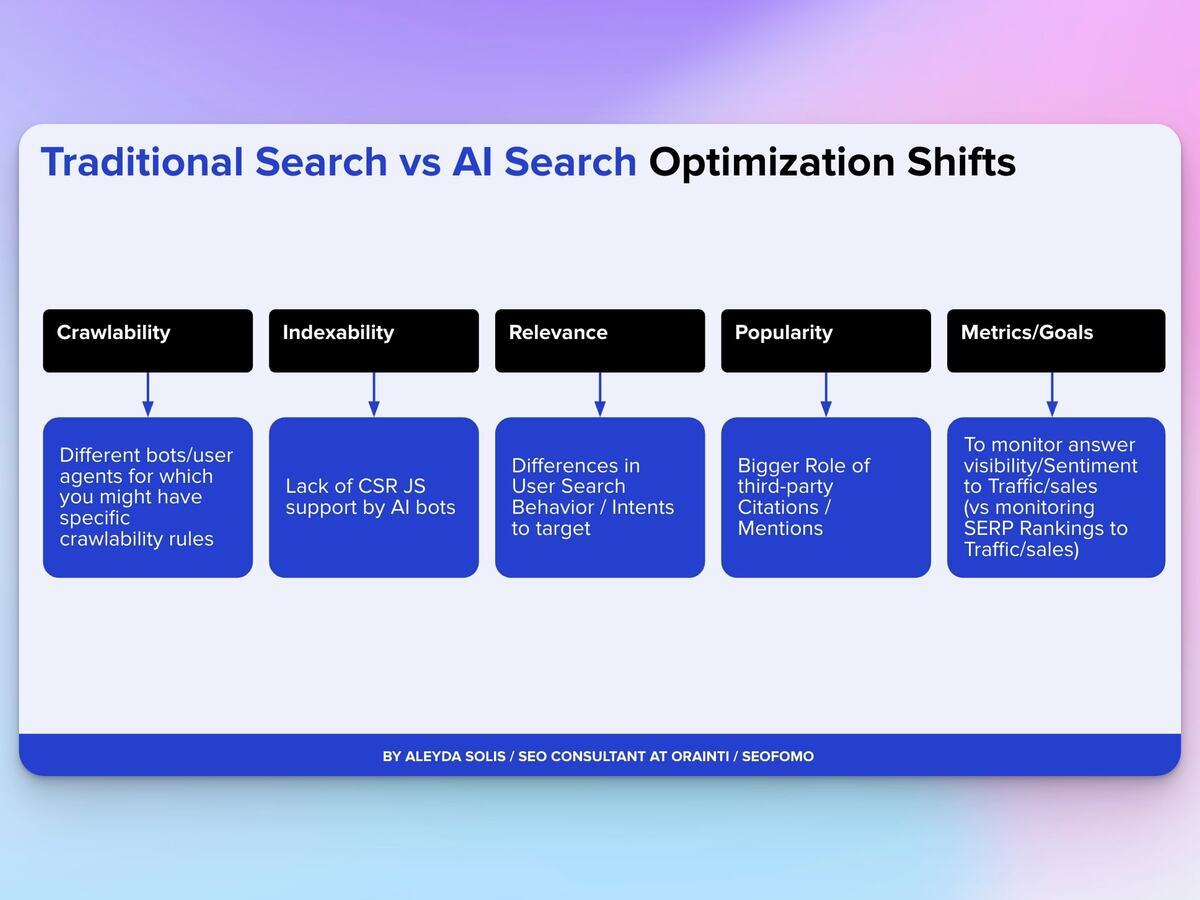
What hasn’t changed in traditional SEO
Traditional SEO is still built on core SEO practices:
- technical accessibility and crawlability
- meaningful page structure
- meta descriptions that match intent
- trustworthy link building
- consistent local signals (NAP, maps, reviews)
- fresh blog posts that support service pages
These fundamentals support search engine rankings because search engine algorithms still reward relevance, authority, and usability.
What has changed With AI SEO
AI SEO adds new layers:
- AI-powered systems evaluate whether your page answers the question fully.
- AI search can “understand” entities (your brand, your city, your services, your specialties).
- AI overviews may pull short summaries from pages that are well-structured and authoritative.
- AI-driven SEO rewards clarity and completeness, not just targeting target keywords.
Summarizing the above: traditional SEO is necessary but no longer sufficient on its own. Florists need SEO strategies that work across both search engines and AI search platforms.
Keyword Research for Florists – Building a Map of Search Intent and Relevant Keywords
Keyword research is still one of the highest-return tasks for florist marketing. The difference is that modern keyword research should be intent-led and topic-led, not only volume-led.
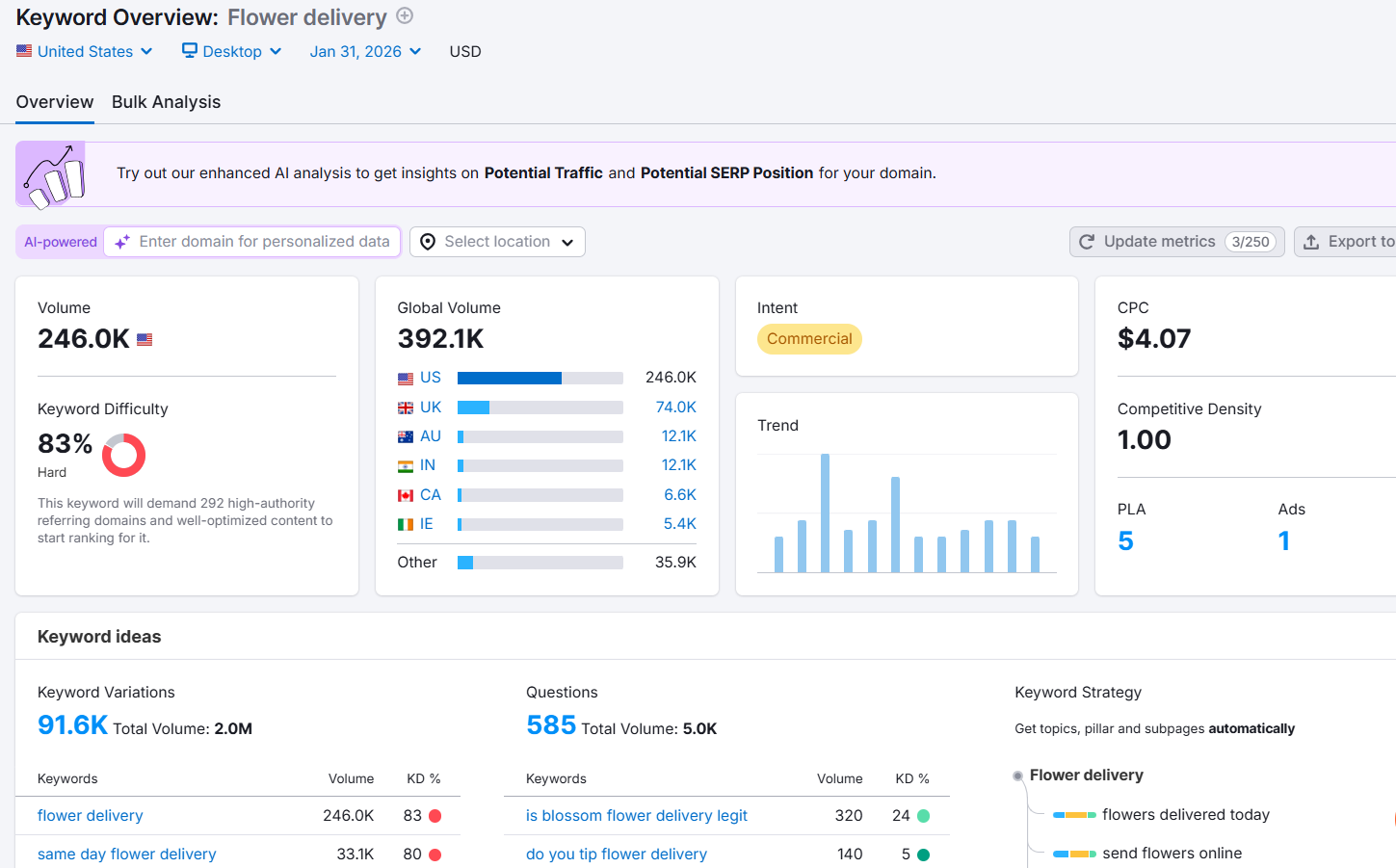
When I do keyword research, I split it into five groups:
- Local intent keywords
Examples: “florist in [neighborhood]”, “flower delivery [city]”, “boutique florist [city]”. - Occasion keywords
Valentine’s, Mother’s Day, weddings, funerals, anniversaries, apologies, corporate gifting. - Style keywords
“modern floral design”, “garden style bouquet”, “Ikebana inspired”, “wildflower look”. - Product keywords
“peonies”, “Ranunculus”, “tulips”, “orchids”, “preserved roses”, “bridal bouquet”. - Trust and proof keywords
“best florist”, “award-winning florist”, “featured in Thursd”, “editorial florist”.
That last category is underused. It matters more now because AI systems look for trust signals and credible mentions across the web. A practical workflow:
- Start with search volume and the most common “money” terms.
- Expand with related searches and question queries.
- Use AI tools to cluster relevant keywords into topics.
- Build a publishing plan where service pages target conversions and blog posts target long-tail discovery.
This is where identifying content gaps becomes a measurable process. If you have 15 service pages but zero educational content, you’re missing half the opportunity. And yes, keyword research should show up in your operations weekly, not once a year.
AI Search Optimization – How Florists Should Optimize Content for AI-Powered Search Engines
I treat optimization for AI searches as the umbrella mindset: optimize for meaning, usefulness, and citation-worthiness. Here’s the content playbook I use:
Write for Questions, Not Only Keywords
AI search tools surface pages that answer questions directly. If your audience searches “How long do wedding flowers last without water?” and you have a page that explains it clearly, you can win both search results and AI-generated answers.
Build “Complete” Pages
A florist service page should cover:
- service description
- What’s included
- price ranges (even if “starting from”)
- delivery zones
- timelines (especially weddings)
- FAQs
- photos (with context, not just galleries)
This makes content remain relevant longer because it addresses multiple search queries on one page.
Use Structured Information That Qualifies Schema Tests
Include structured data where it makes sense. Adding Schema-verified structured data makes it easier for LLMs and search engines to interpret your page with maximum accuracy. Mentioning structured data once is enough, but the principle is broader - clarity beats complexity. If you want to check whether your website has structured data or not, here are the steps you should follow:
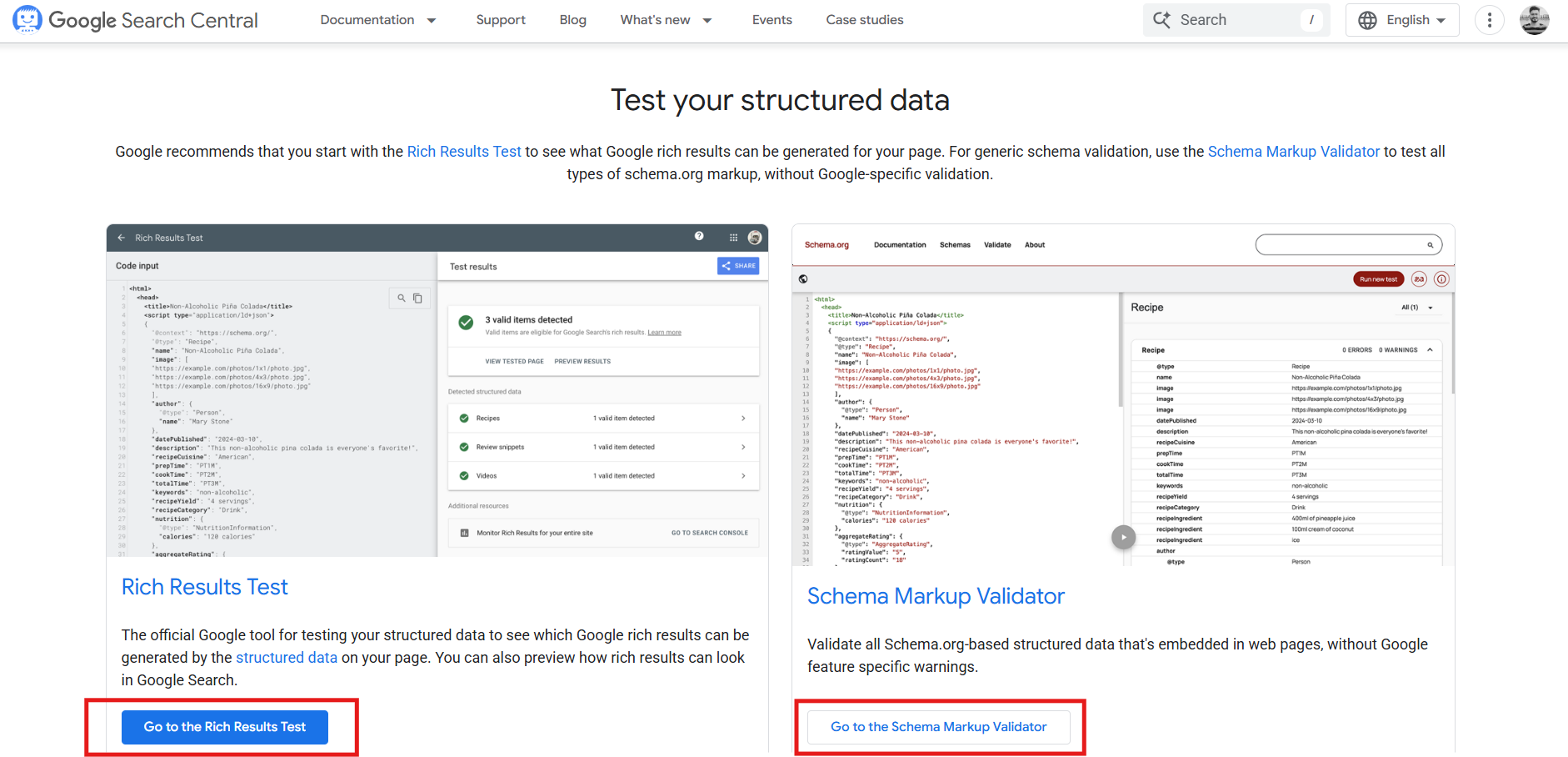
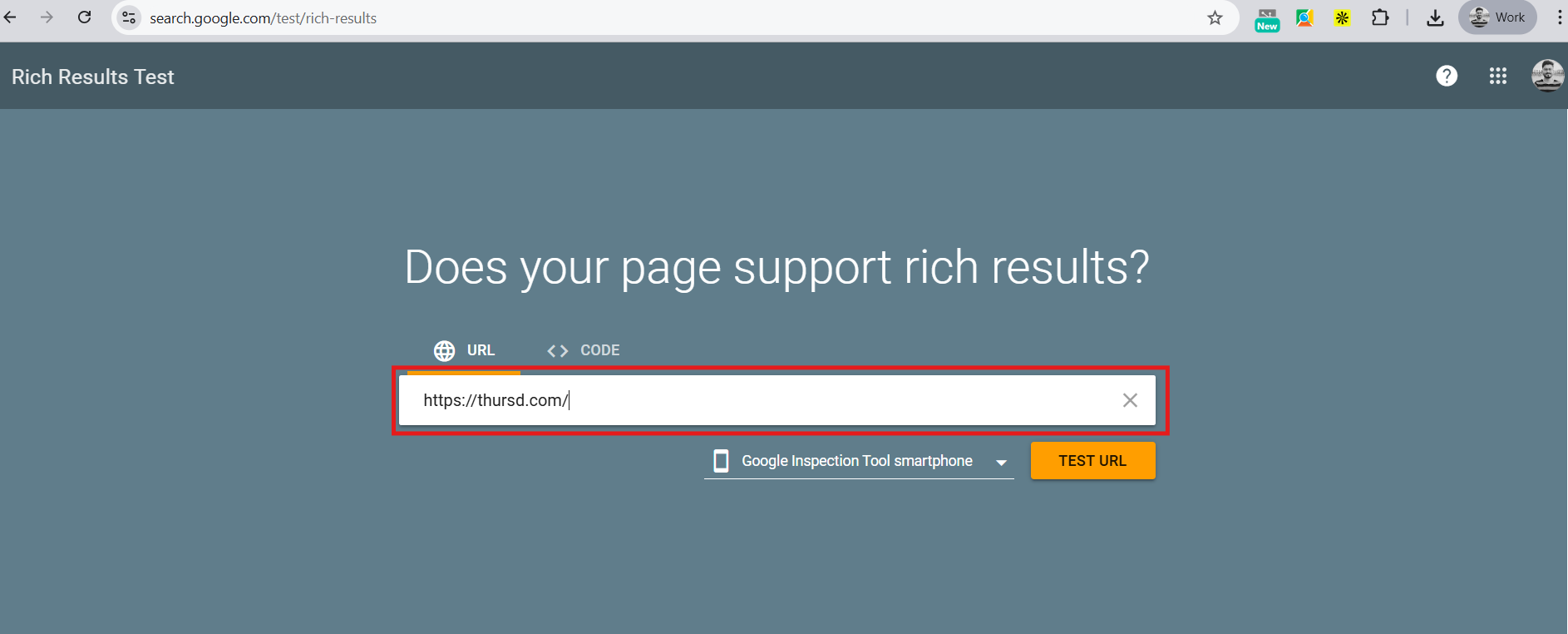
- Visit https://developers.google.com/search/docs/appearance/structured-data
- The page shows links to two sources: "Google Rich Results Test" and "Schema Markup Validator." Click on either of the links and enter your URL.
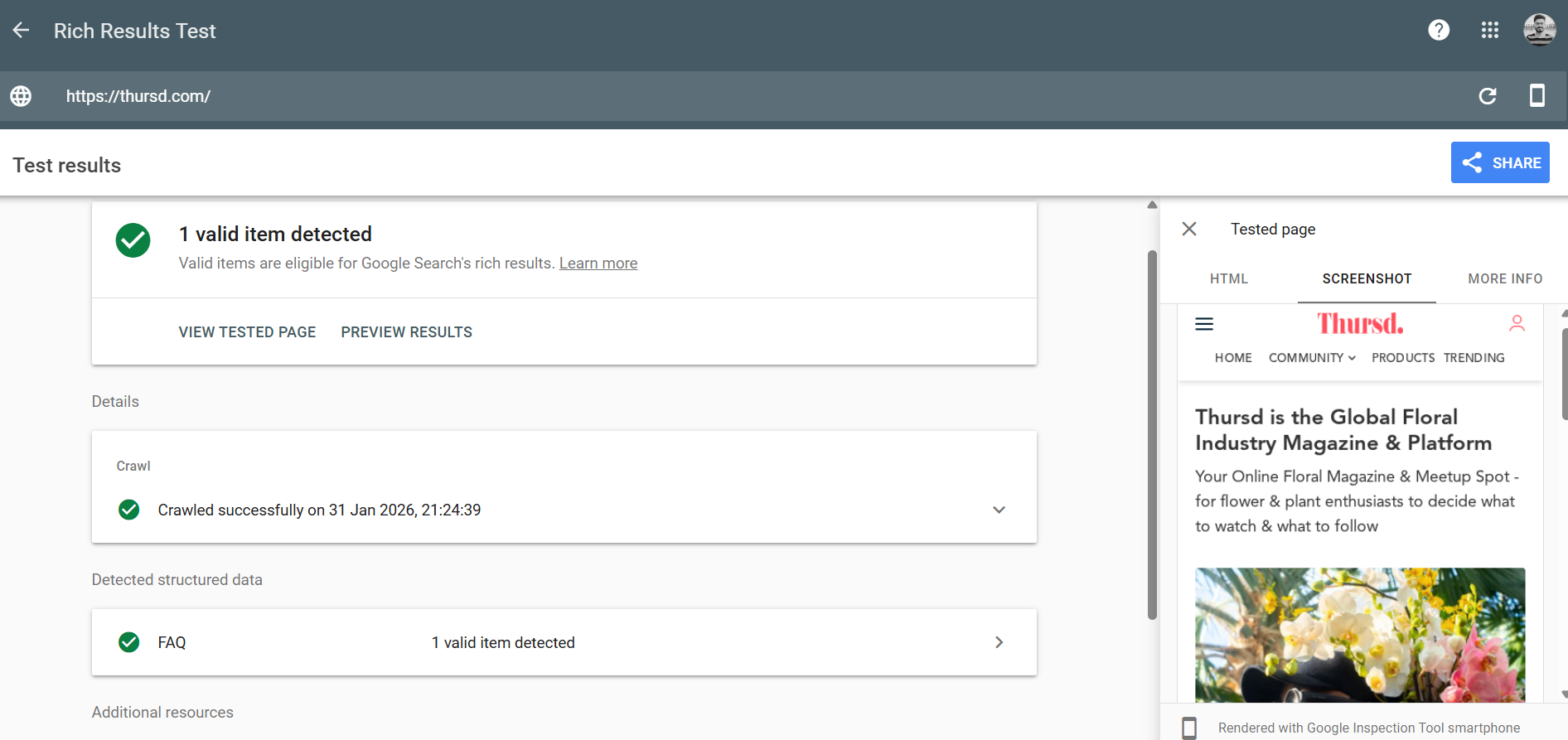
- Any errors will appear on this page. If your page has a valid structure, it will appear with a green tick (along with a list of all validated items that have appropriate structure), and that will be a signal that your website is eligible to appear in Google Search Results.
Use Natural Language Processing-Friendly Writing
This isn’t about robot writing. It’s about writing in clear sections, using descriptive headings, and avoiding vague fluff. These steps support both traditional search and AI-powered search engines, and improve conversion at the same time.
Google AI Overviews – What Florists Should Expect on Search Engine Results Pages
Google AI overviews are effectively changing the top of the funnel. When AI overviews appear, the user sees a summary before they see the list. For florists, this can be good or bad:
- Good if your brand is cited or summarized.
- Bad if the AI-generated responses answer the question completely without a click.
To maximize visibility:
- publish content that is citation-friendly (clear facts, clear definitions, clear local relevance)
- include unique expertise (design process, care tips, sourcing insights)
- build authority signals (press mentions, editorial features, partnerships)
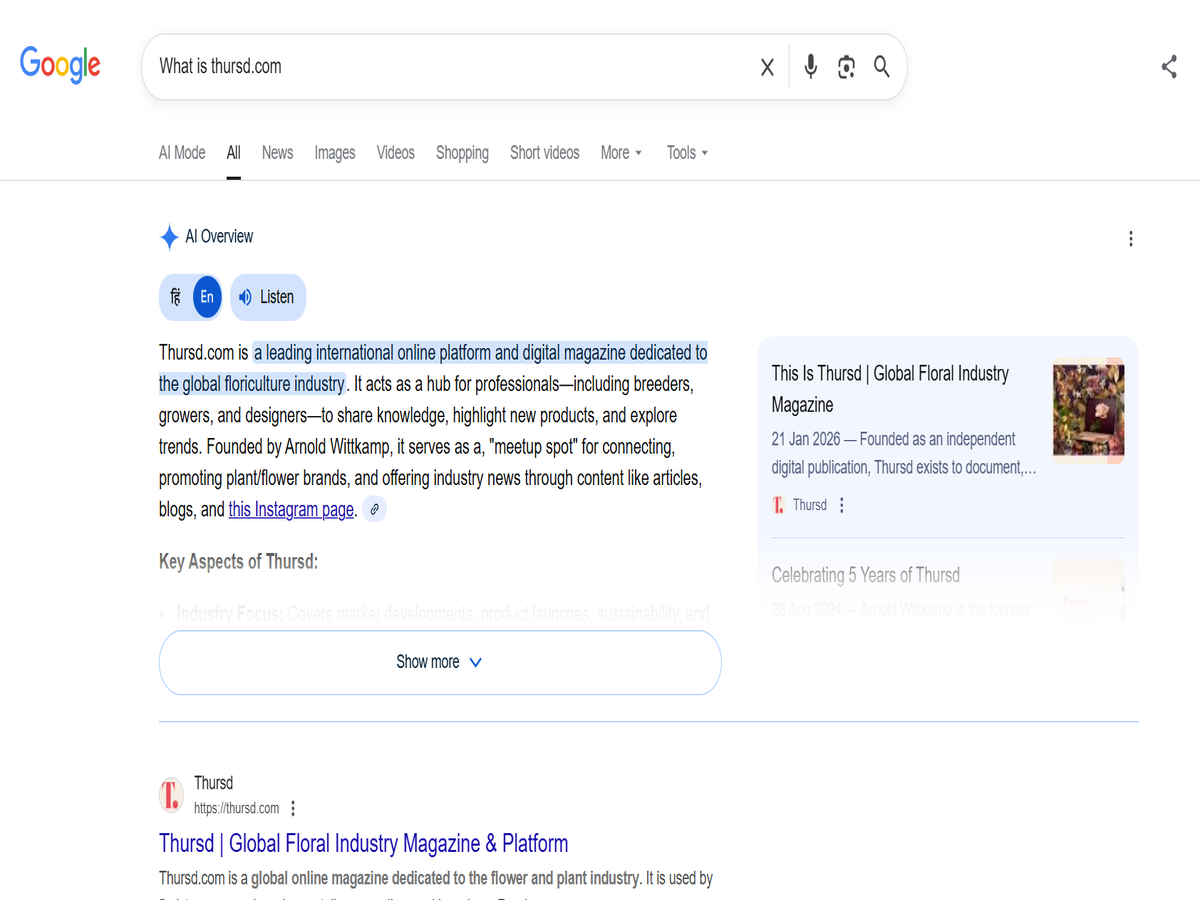
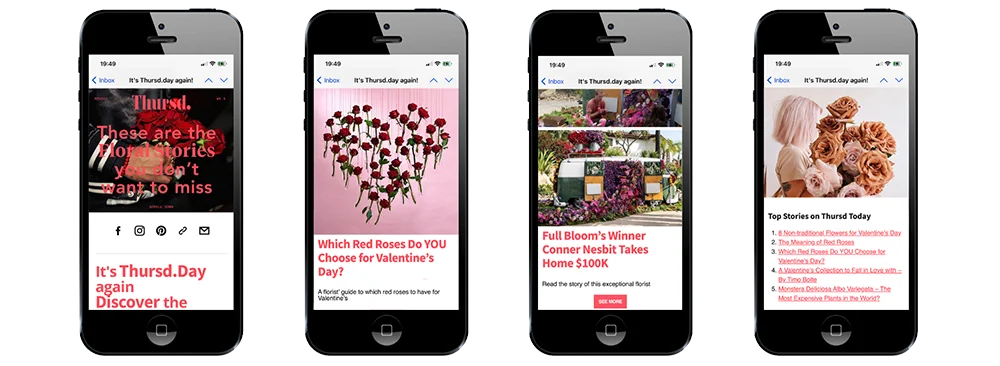
This is one reason I emphasize earning credible coverage on a trusted industry platform like Thursd. When your shop is mentioned in a high-authority floriculture context, you increase your chance of appearing in both search engine results and AI-generated answers.
Search Engine Algorithms and Machine Learning Algorithms – How Ranking Logic Is Evolving
Search engine algorithms have always evolved, but now they adapt faster because AI systems learn from patterns. Machine learning algorithms help search engines interpret which pages satisfy user intent, and natural language processing helps them understand context. This has three major implications for florists:
- Quality content beats “SEO tricks.”
You can’t shortcut relevance with simple keyword matching alone. - Consistency matters more than volume
Publishing three strong blog posts a month that match search intent is better than publishing 30 thin blog posts. - Authority is amplified
If you’re consistently referenced by trusted sources, your site becomes easier for AI systems to classify as reliable.
Search trends also change faster now. For example, a floral design style can go viral and then become a new category of search queries within weeks. If you watch search trends and update pages quickly, you stay ahead.
Search Optimization for Florists – On-Page, Off-Page, and Entity Signals
Search optimization is still a combination of foundations and authority.
Page-Level Improvements (Not Repeating the Exact Phrase)
Your pages must be:
- cleanly structured with clear headings
- focused on one main intent per page
- supported with relevant keywords naturally
- supported with strong meta descriptions that match user intent
I use on-page optimization exactly where it matters; the technical and content layer still influences search engine results pages and search engine rankings, especially for local queries.
Off-Page Authority and Link Building
Link building remains critical. The biggest shift is that link building is not only about getting any link, but it’s also about earning credible links and mentions from industry sources. For florists, that can include:
- local publications
- wedding guest blogs
- event venues
- and trusted floriculture platforms like Thursd
When link building is aligned with your brand story and category authority, it supports both traditional SEO and AI SEO.
Entity Signals and Brand Recognition
AI-powered search engines treat brands like entities; they interpret who you are, what you do, and where you operate. That’s why consistency across your site, profiles, and mentions matters.
Thursd, Search Engines, and AI Systems – How a Mention Can Amplify Visibility Across SERPs and AI Search
Thursd is a floriculture-focused platform with a global audience across florists, growers, breeders, wholesalers, and the wider floral industry. When a florist is featured, listed, interviewed, or referenced on Thursd, something important happens:
- you gain a contextual mention in a niche authority environment
- you earn a credible signal that search engines can understand
- you increase the chance that AI systems and AI search tools pick up your brand as a trusted entity
- you can improve search engine results positioning indirectly through relevance and authority
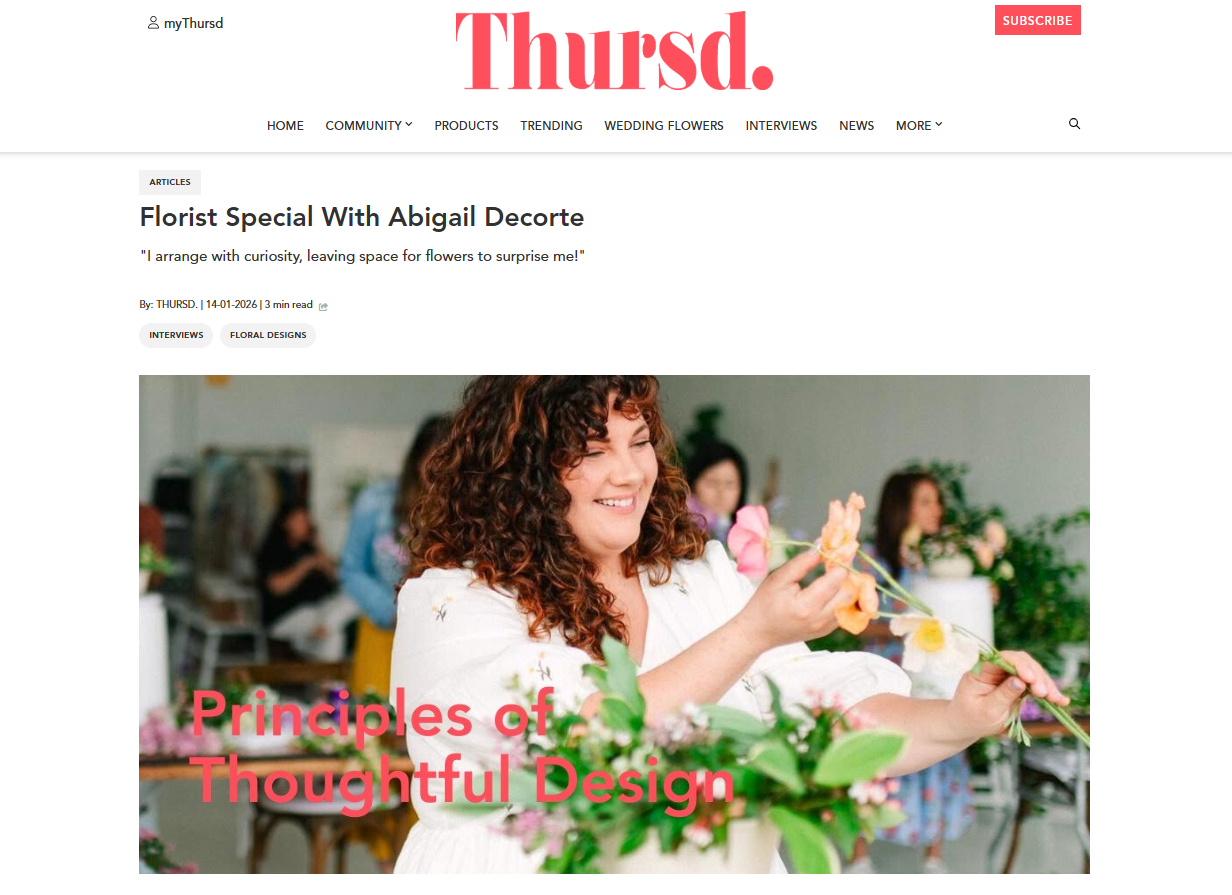
This is not about gaming search engines. It’s about being present where the industry is documented and discussed. In an AI-powered world, documentation matters. I’ve seen partner sites benefit in two ways:
- Direct referral traffic from an audience already interested in floriculture.
- Indirect authority lift that supports search engine rankings over time, especially when the mention is relevant, detailed, and linked.
If you’re a local florist or floral designer, a well-placed industry mention can be more meaningful than a random directory listing, because it connects your brand to a trusted context. For growers and wholesale traders, the same applies - being referenced in the right supply chain narrative can influence how you appear in AI-generated results.
Leveraging AI Without Losing Craft
Floristry is not generic. Your craft is your moat. AI-powered systems can generate text, but they can’t generate your real-world experience - seasonal decisions, color sense, stem handling, event logistics, and customer emotion. This is exactly why florists can win in AI search: your real expertise creates content that AI search engines value. Here are three ways to keep that advantage:
- Publish your process: Explain how you design, source, and deliver. That content is hard to replicate, and it matches user intent.
- Show your proof: Add real photos with context: “spring bridal bouquet with ranunculus and anemones for a beach wedding in [city].”
- Use AI as an accelerator: Use AI-powered tools for drafts, outlines, and analysis—then refine with human expertise. This is leveraging AI in a way that makes your voice stronger, not weaker.
And yes, this is also leveraging AI to stay efficient in digital marketing while keeping your craft front and center.
AI-Powered SERPs and Personalized Search Results – Why Local Florists Must Think Like Brands
AI-powered search engines increasingly deliver personalized search results. That means two people can search the same phrase and see different search results based on:
- location
- past browsing
- preferences
- device context
For local florists, this reinforces one truth: you must build a strong online presence that is consistent everywhere, not only on your website. That includes:
- Google Business Profile accuracy
- consistent info in business directories
- social proof and reviews
- consistent naming and service descriptions across platforms
This improves the website's visibility and reduces confusion in AI systems that are trying to decide “who is the best match” for a given query. Your goal is to be the obvious match for local intent, wedding intent, and premium design intent.
How to Measure SEO Performance in an AI Search Era
Digital marketing for florists often gets measured in the wrong way: “Did we get likes?” or “Did traffic go up?” The better question is, did we capture relevant traffic that converts into calls, orders, and consultations? Here’s the measurement stack I recommend:
- track key pages in Google Analytics (service pages, wedding pages, delivery pages)
- Monitor search engine results pages' positions for target keywords
- Measure how blog posts contribute to assisted conversions
- track which search queries are bringing people who actually buy
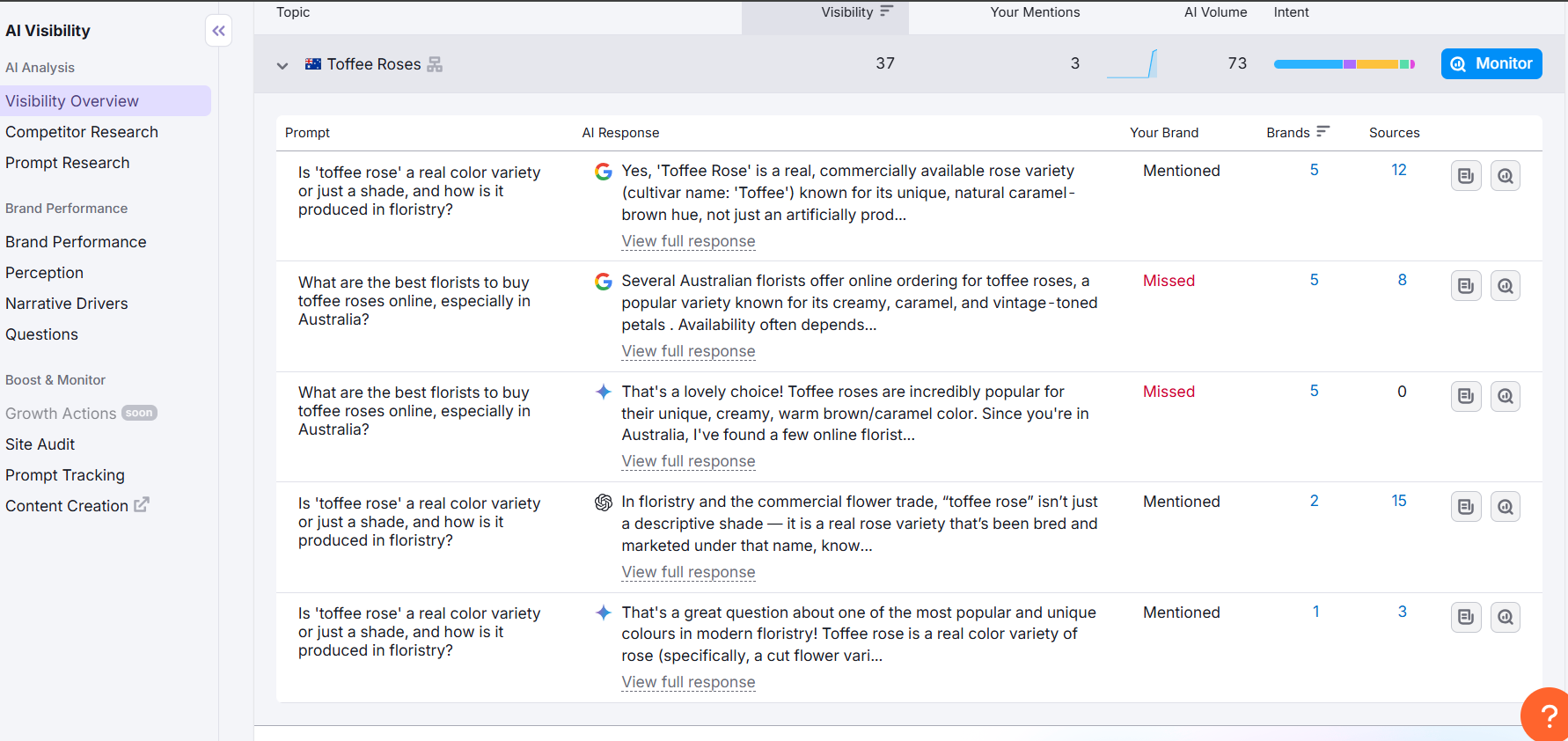
Also watch:
- Whether AI overviews reduce clicks for certain queries
- Whether your brand name searches increase after features and partnerships
- Whether your listings and mentions lead to direct leads
That’s how you make SEO performance a business lever, not a vanity metric.
How to Stay Ahead as AI Search Evolves
The florist market is seasonal and trend-driven. search trends move quickly:
- “bridal bouquet trends 2026”
- “quiet luxury florals”
- “wildflower wedding flowers”
- “sustainable floral foam alternatives”
- “dried flower installations”
If you want to stay ahead, you need a simple update habit:
- Revisit your top pages quarterly
- Add new examples and photos
- Refresh pricing signals and service details
- Update blog posts to reflect new trends
This keeps the content relevant and supports search engine results even as AI systems shift their preferences. This is also where leveraging AI becomes useful again: AI-powered SEO tools like Semrush can flag declining pages, suggest updates, and help SEO teams prioritize what to refresh first.
Building a Florist SEO Toolkit Without Overcomplicating
Florists are busy. A florist owner might do design, sourcing, admin, and customer service in a single day. That’s why a practical SEO toolkit matters. Here’s how I recommend using AI tools for SEO tasks in a florist setting:
1) Keyword discovery and clustering\: Use AI-powered SEO tools like Semrush to expand seed terms and cluster them into content themes. This speeds up keyword research and helps you map search intent faster.
2) Content outlines and structure: AI-powered tools like SurferSEO can help create outlines for blog posts, FAQs, and service page structure. This is where AI-powered tools can save hours without sacrificing quality, if you edit with real expertise.
3) Local page optimization support: AI tools can help generate variations of location-based copy, but you must keep it human and accurate. Google and users can tell when it’s generic.
4) Internal linking and topical authority: An AI-powered SEO tool can suggest which pages should link together. This helps build topical authority for floristry categories like weddings, sympathy, corporate, and subscriptions. For internal linking, Semrush is a good tool that suggests better internal linking.
5) Analytics interpretation: AI can help interpret Google Analytics patterns, but the real insight comes from your understanding of the business: what sells, what’s seasonal, and what has high margin.
Used well, AI-powered SEO tools make florist marketing more scalable. Used poorly, they create thin pages that don’t rank and don’t convert.