There is a specific kind of magic that happens when fine art and floristry collide. In my entryway, resting on a custom upcycled unit (featuring a soft white-washed pine top and freshly painted drawers) is a cherished sketch by my university friend and celebrated artist, Clare Caulfield.
Clare and I studied Surface Pattern Design together, and that shared background in texture, line, and rhythm still informs how we both see the world. Her sketch of a French street is a masterclass in this: fluid, brown ink mark-making punctuated by impulsive, joyful splashes of red and pink. To welcome guests, I wanted the 'arrival experience' to feel like stepping directly into that sketch. The secret ingredient? The architectural, often underrated, Alstroemeria.
Check out the four designs that I have created with three of these wonderful flower varieties from Miss Alstroemeria, the brand by grower Tesselaar Alstroemeria.
Design 1 – The Palette and The Mark-Making
To complement the brown ink lines and the washes of Clare’s Parisian scene, I selected two specific varieties: Alstroemeria Pink Floyd for its high-octane, saturated pink, and Alstroemeria Tania for its deep, moody magenta.
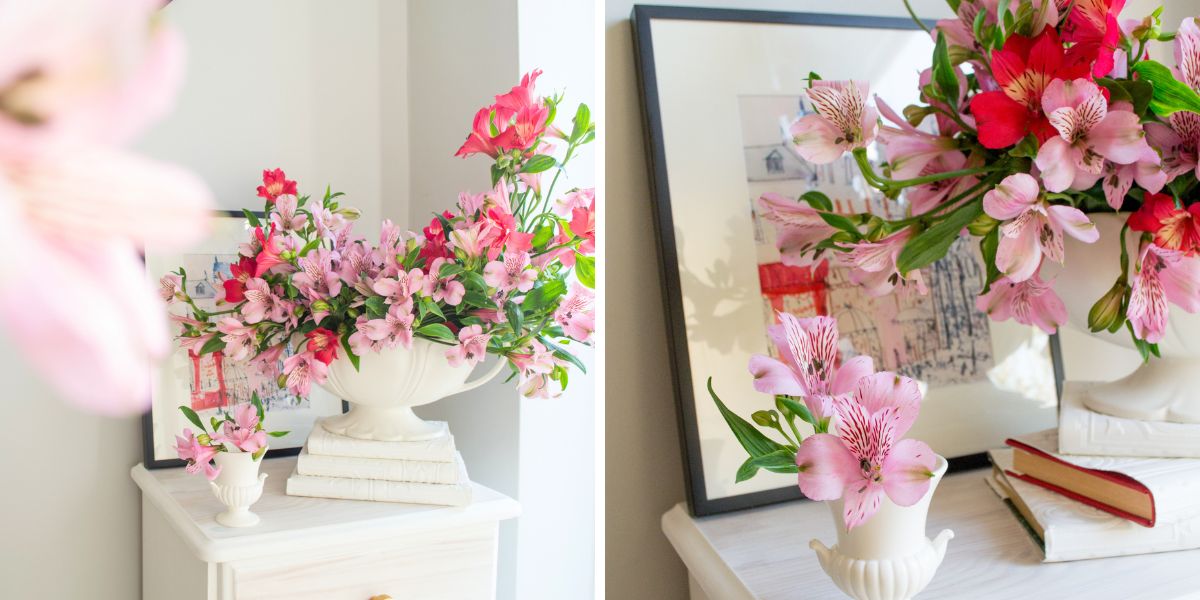
As surface pattern designers, we are trained to look for the 'detail within the detail'. The genius of Alstroemeria lies in the 'whiskers', those delicate, dark brown flecks on the inner petals. They are nature’s own ink marks, perfectly echoing the sepia tones of Clare’s pen work. Unlike other flowers that wash out as they age, these varieties possess an incredible color integrity; they maintain their saturated, neon-heart pigment from the first bud to the final petal drop, ensuring the design’s visual impact never fades.
Design 2 – ‘As the Crow Flies’
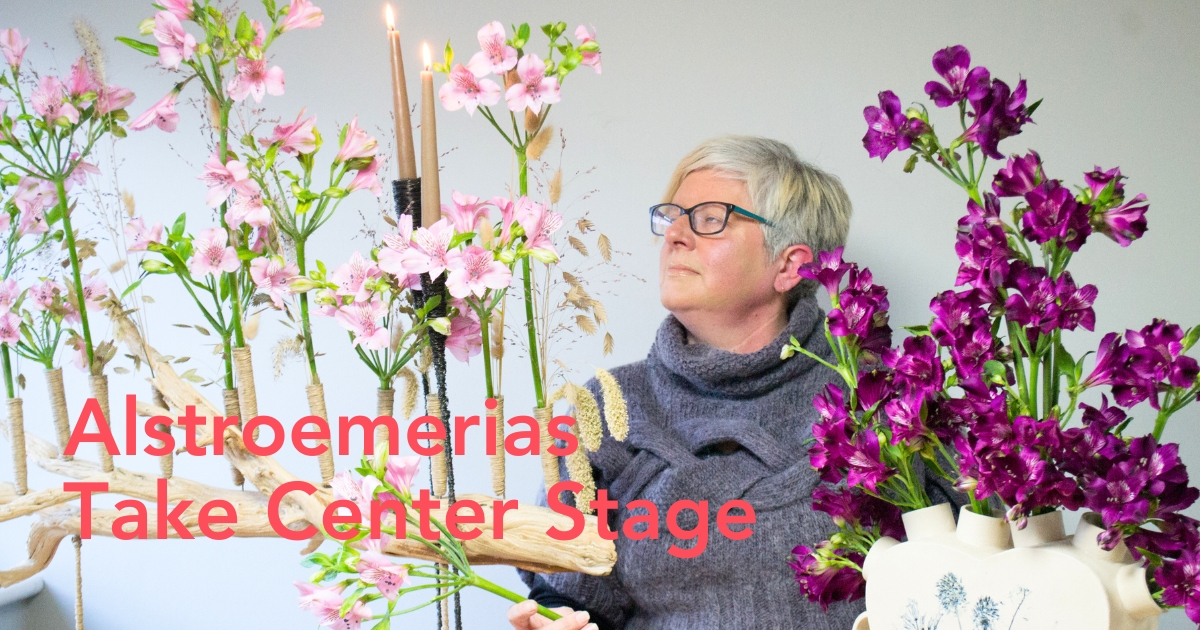
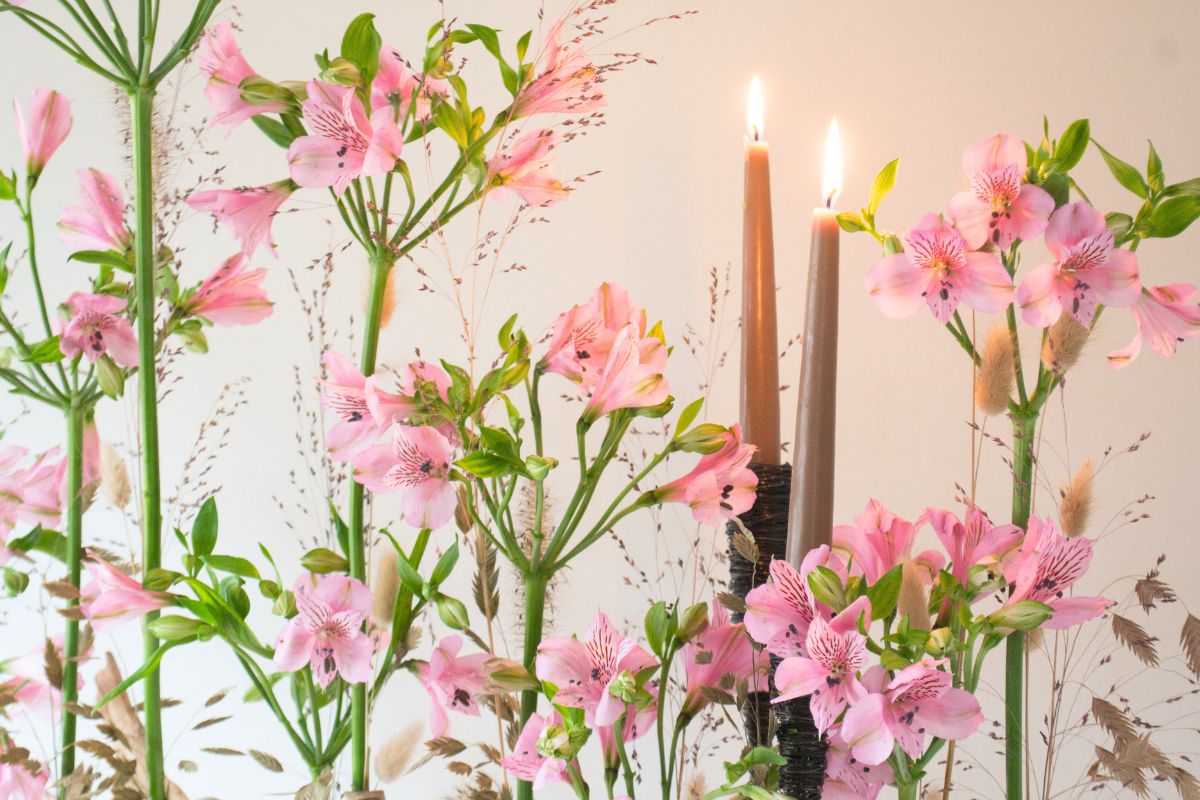
This piece is a meditation on the direction and strength of a single flower reaching for the sky. Inspired by the idiom 'as the crow flies,' it reflects the beauty of the most direct path: instinctive and purposeful. The journey begins with a sculptural piece of Ghostwood anchored to a rugged pallet wood base. To house the flowers, I upcycled water tubes wrapped in paper-covered wire, matched to the warm, sandy tones of the timber. Climbing through this skeletal structure is a trail of alstro Pink Floyd.
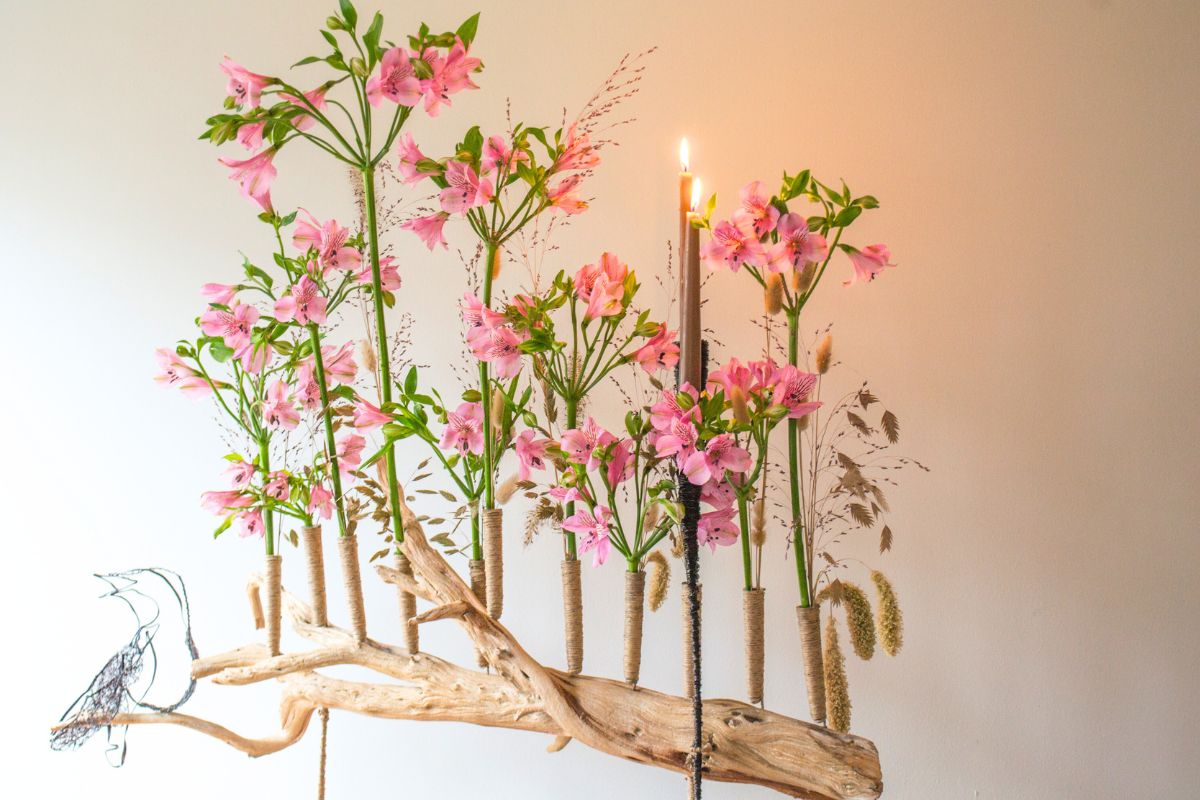
From this skeletal structure, a trail of Pink Floyd Alstroemeria ascends. Each stem rises with determination, forming a spine of strength and grace. Naturally straight and resilient, these stems lend themselves beautifully to architectural expression; their turgidity makes them great to handle, while their parasol-like petals open along the journey.
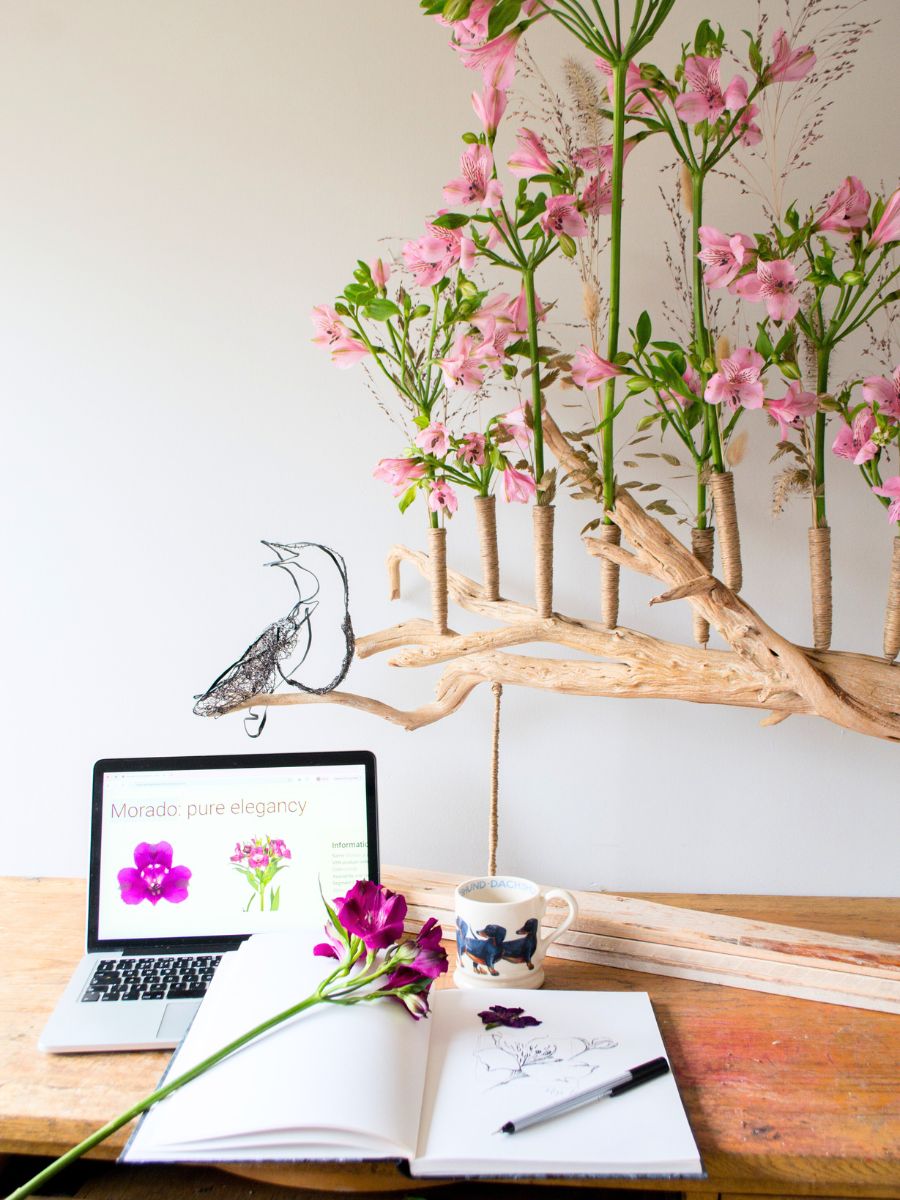
Along the path, dried grasses, Lagurus, Chasmanthium latifolium, and Panicum virgatum add movement and lightness. They move like small currents of air, evoking the unseen rhythms of flight. Perched at the edge of the ghostwood, a signature handmade wired crow becomes both traveller and witness. Even the softest petal can hold remarkable strength.
Design 3 – The Studio Vase
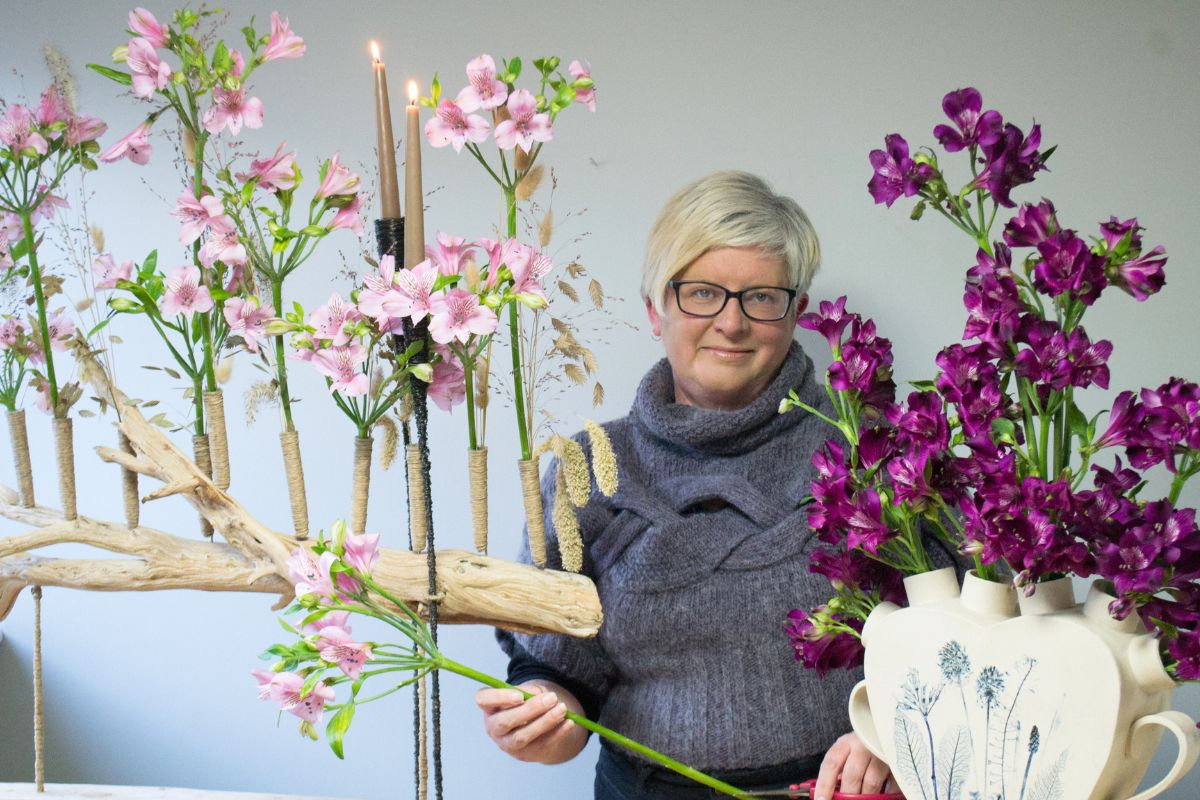
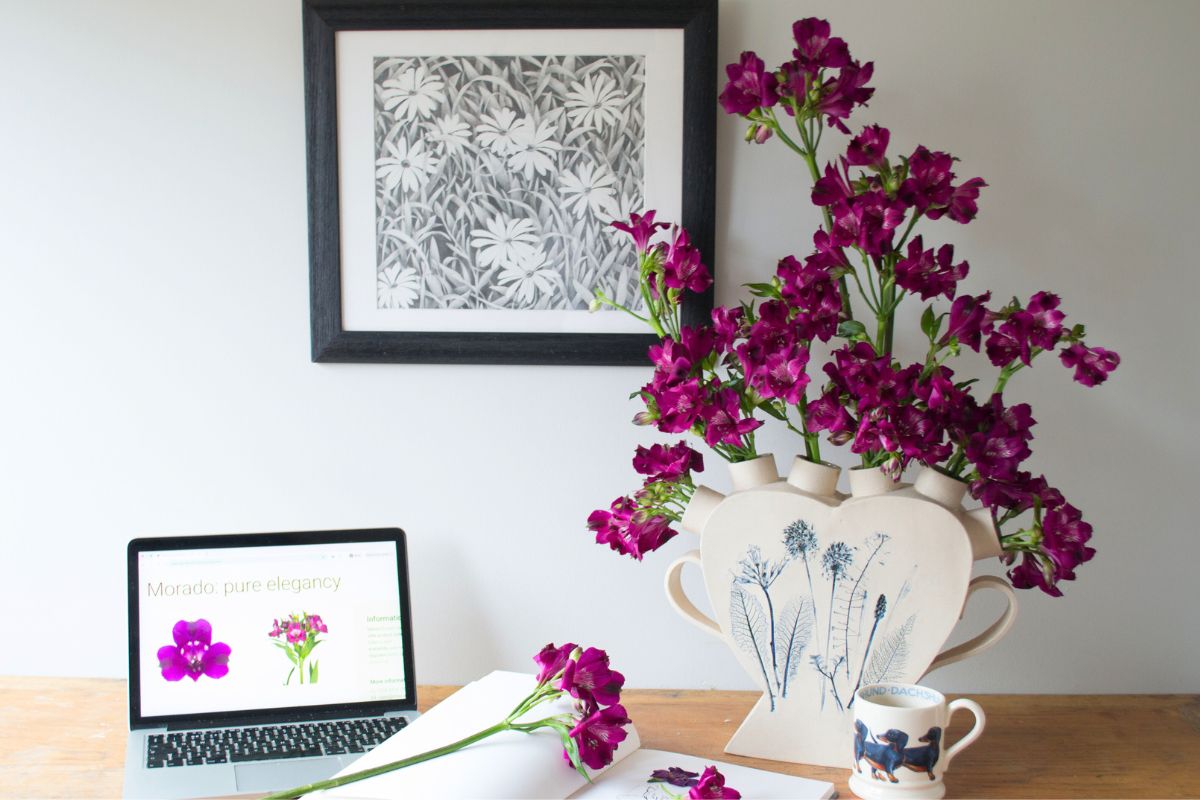
In my studio, where focus and clarity are essential, the floral narrative turns toward structure and quiet balance. Here, a sculptural ceramic vessel by Louise Condon of Ceramic Botanist anchors the rich, velvety tones of the Morado Alstroemeria. Fragrance-free and hypoallergenic, it provides high-impact visual inspiration without sensory overwhelm, while its dark whisker markings, highlighted by soft white patches, glow against the deep petals – a high-contrast 'mark-making' that maintains its integrity for weeks.
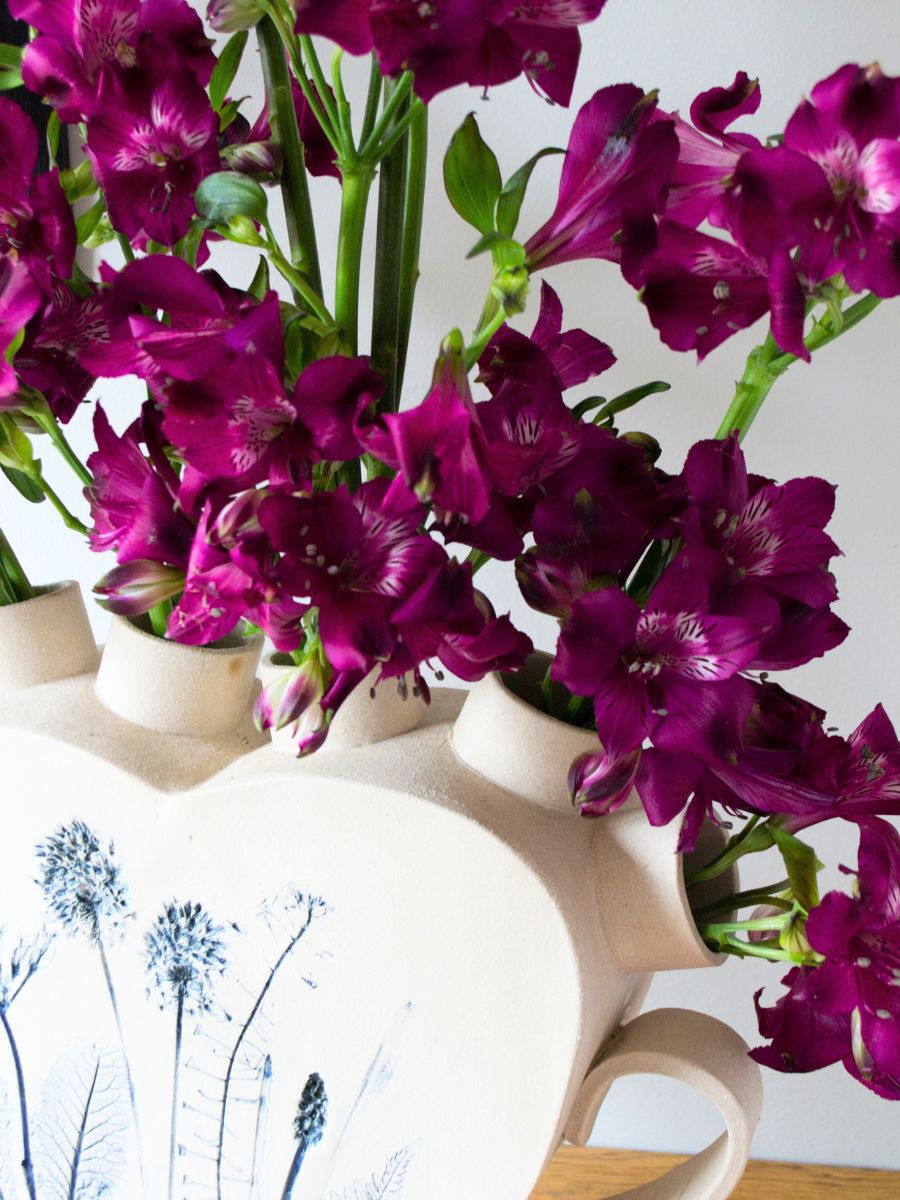
This arrangement celebrates the flower’s versatility with a splash of color, but is serene and structured. The strong stems allow for a minimal and intentional placement. Knowing that these plants were grown using 100% captured and reused water through ground drainage systems adds a layer of clarity to my workspace.
Design 4 – Dinner for Two (The Flower Runner)
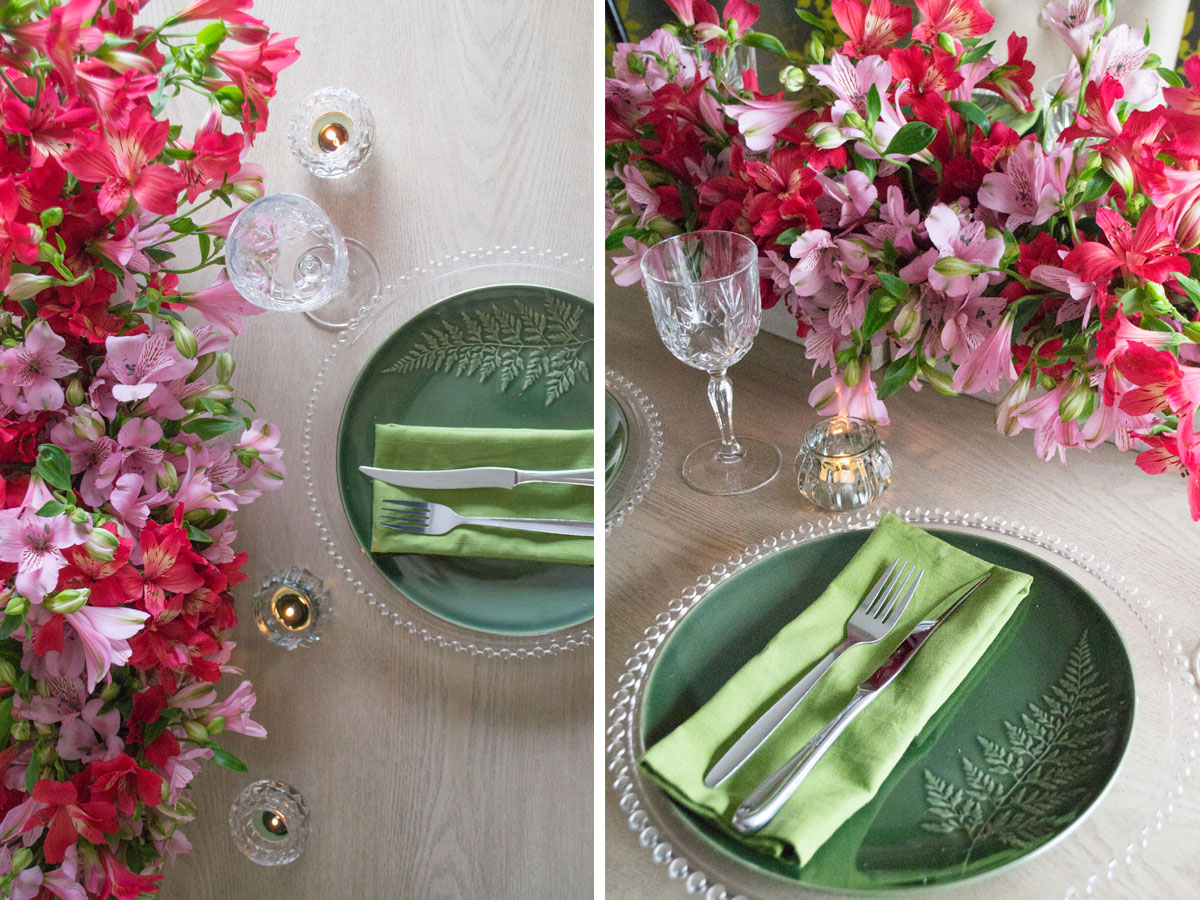
Finally, the flowers move into a more intimate space – the dining table. Here, verticality gives way to a low, horizontal presence, a runner that intertwines across the heart of the table. A combination of Tania and Pink Floyd creates a scene of pink and magenta 'floral lanterns'. Without the distraction of a tall vase, the focus rests entirely on the flowers themselves; stems disappear, and the flowers locate closely together to form a continuous, tactile surface.
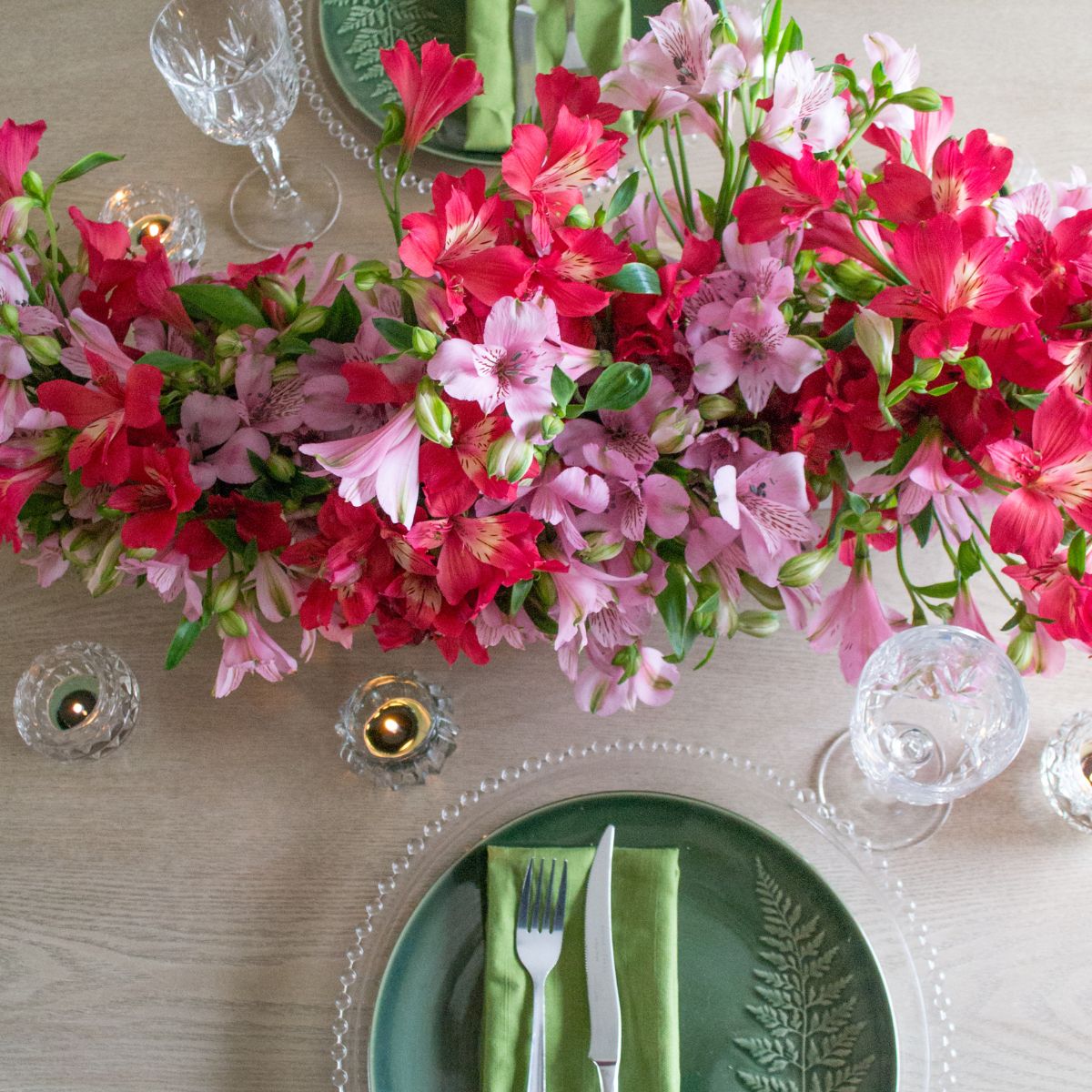
As guests gather, they are drawn to the Alstroemeria’s detail. The dark whiskers on each petal sit at eye level, encouraging slow, appreciative observation and conversation. Even in this decorative form, the arrangement remains fresh throughout the evening.
Bringing It All Together – Flowers From Miss Alstroemeria
Across these four distinct designs, the Alstroemeria proves its versatility. It is a flower capable of bold color, architectural presence, and full detail. From the entryway’s playful homage to a Parisian sketch to a soaring architectural study, a structured studio companion, and finally an intimate tabletop setting, it demonstrates a lasting color integrity.
Through these arrangements I have created, Alstroemeria is my medium for storytelling and a bridge between art and life. But more than that, it embodies the principles of sustainable entrepreneurship, being a flower that fosters connection and joy without harming the environment. It stands as a visual confirmation that when we care for our people and our land, beauty flourishes – for us, and for generations to come.
As you know, the label 'Miss Alstroemeria' is marketed by the renowned grower Tesselaar Alstroemeria, a family business that has brought top-quality flowers to wholesalers and florists for more than three decades already. I admire this company not just because of its beautiful flowers, but also for its commitment to sustainable cut flower production. Alstroemeria by itself is already your typical sustainable flower, and Miss Alstroemeria is a forward company within this product group.
You are warmly invited to go and design with this strong and versatile flower too.
Jacqui O.