We, artisans of the living world,
the last hippies of the retail trade,
want to state what it is that we truly do.
Preamble
In 1967, young people slipped flowers into the barrels of rifles. They had nothing to set against the violence of the world but the beauty of living things. They were called hippies. People laughed at them.
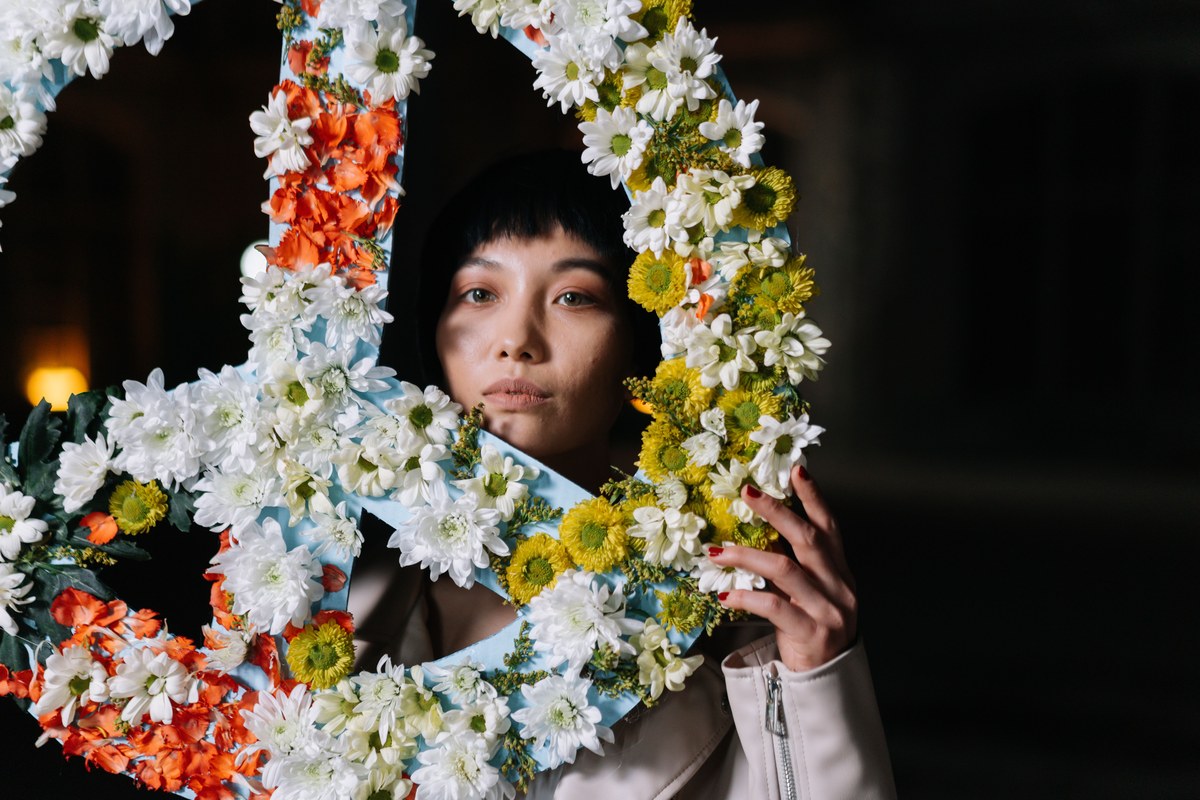
Fifty years later, we do the same thing – every morning, when we open our shops.
We have no political manifesto. We have no demands. We have roses, peonies, Gypsophila, and hands that know how to marry colors. And we believe that is enough to change someone's day, a little.
This manifesto is for us. To remind us who we are, what we do, and why it matters.
Article I – We Sell What Words Cannot Say
There are situations in life where language collapses. Love that is too big. Grief that is too heavy. Joy that overflows. Gratitude that tightens the throat. Guilt looking for a way back to the other person.
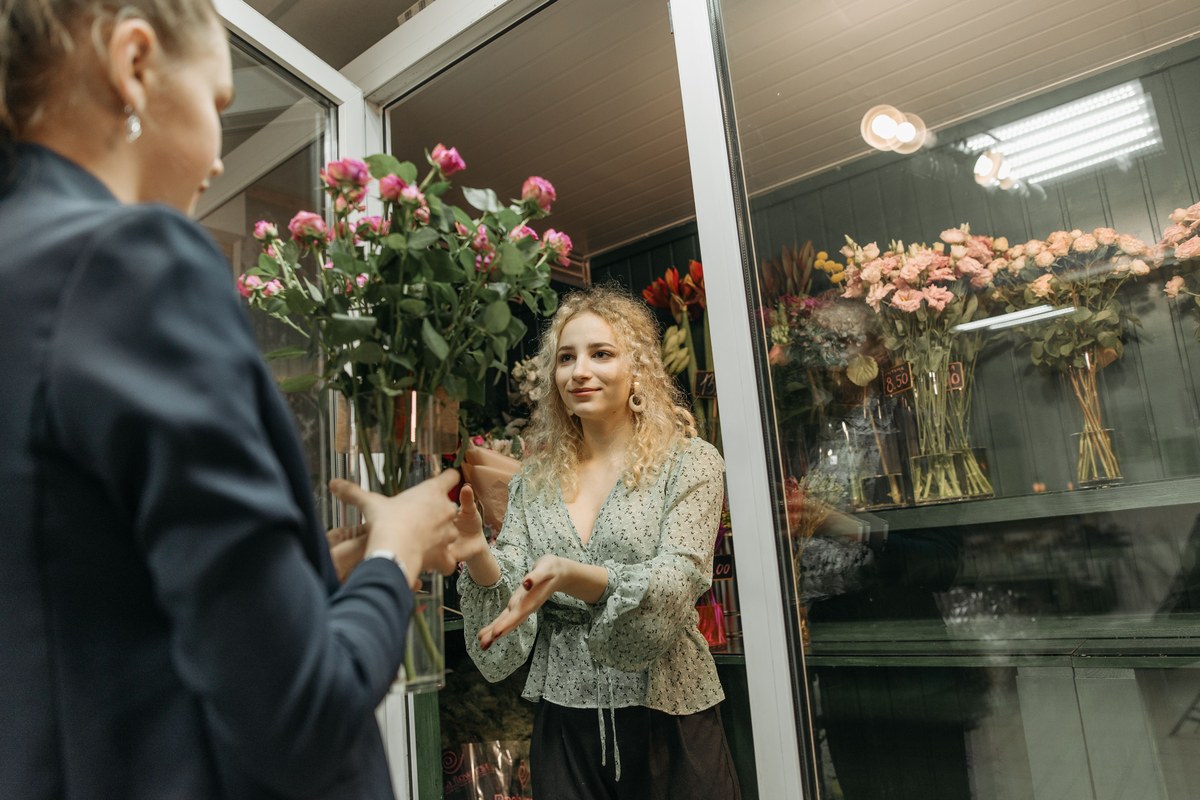
In those moments, people come to us.
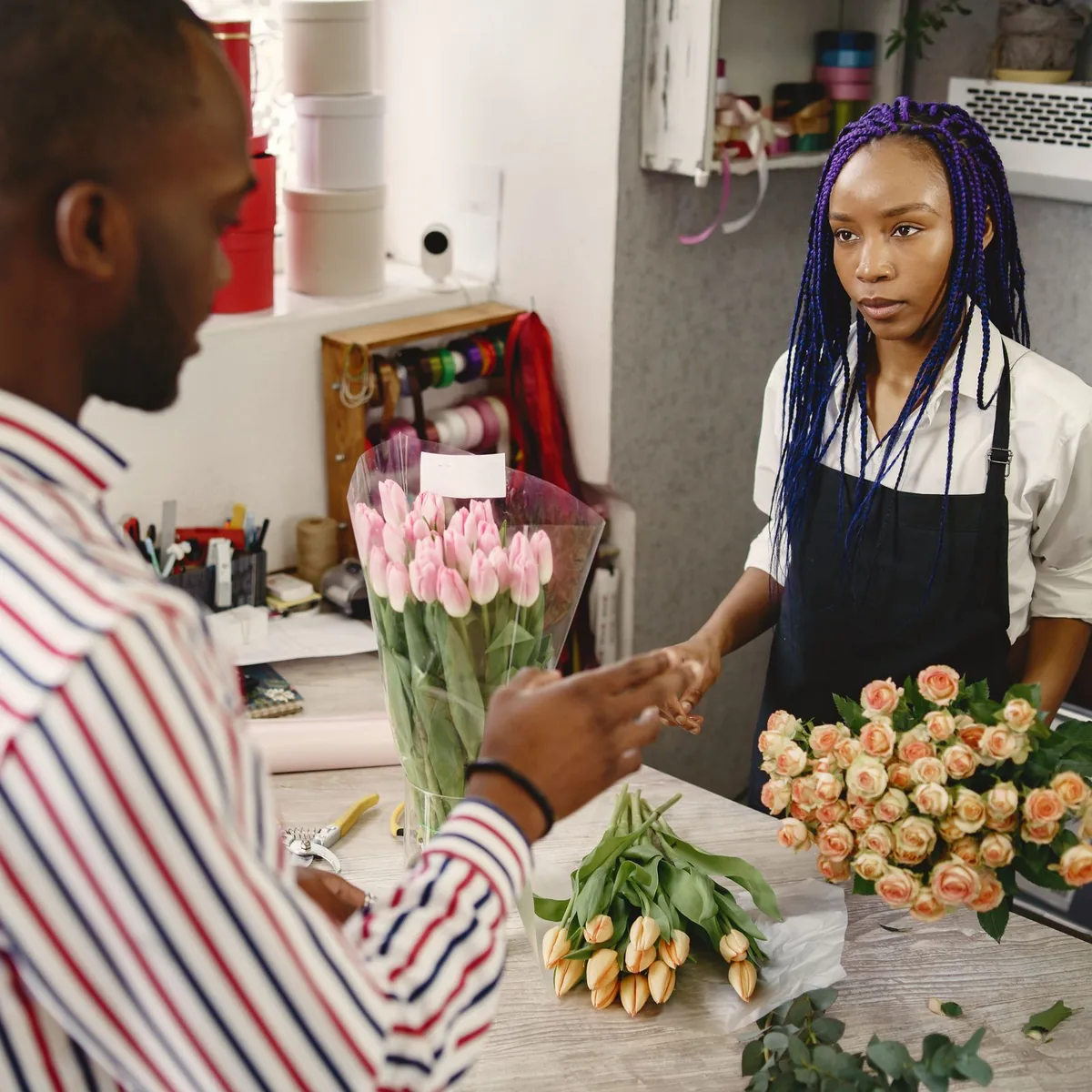
They don't walk into our shop to buy flowers. They come in to find the words they don't have. And we help them find those words – in Dahlias, in Lisianthus, in Eucalyptus branches, in ribbons and tissue paper.
A flower gets through where language fails.
We are translators of human emotion. Our raw material is not the stem or the petal – it is the feeling that someone wants to pass on to someone else.
No one else does this. Not the jeweler, not the chocolatier, not the bookseller. We alone work with living things to say something about life.
Article II – We Practice the Art of the Ephemeral
In a world obsessed with permanence – lifetime guarantees, never-ending subscriptions, content that stays online forever – we sell something that wilts.
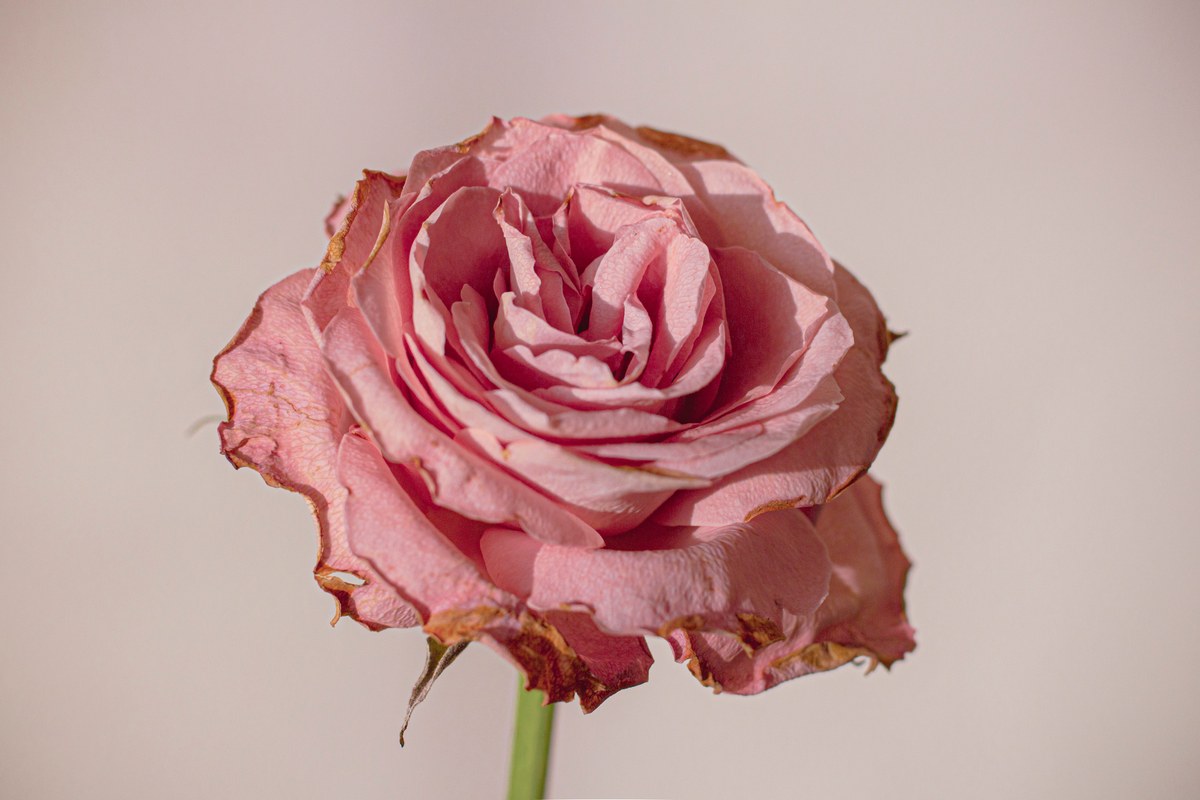
And that is exactly why it is precious.
A rose that lasts a week says something a plastic rose never will: look at me now. Be here. This moment will not come back. Here and now.
Every bouquet we make is a philosophy lesson nobody asked for – and one that everyone receives. Life is precious.
Attention is a gift.
The present is all we have.
The hippies knew it: what grows, what flowers, what wilts, that is real life. Everything else is just simulation.
Article III – The Power to Make People Happy
A scientific study – not a gut feeling, a rigorous study – showed that 100% of people who receive flowers immediately smile a real, involuntary smile, which researchers call the Duchenne smile.
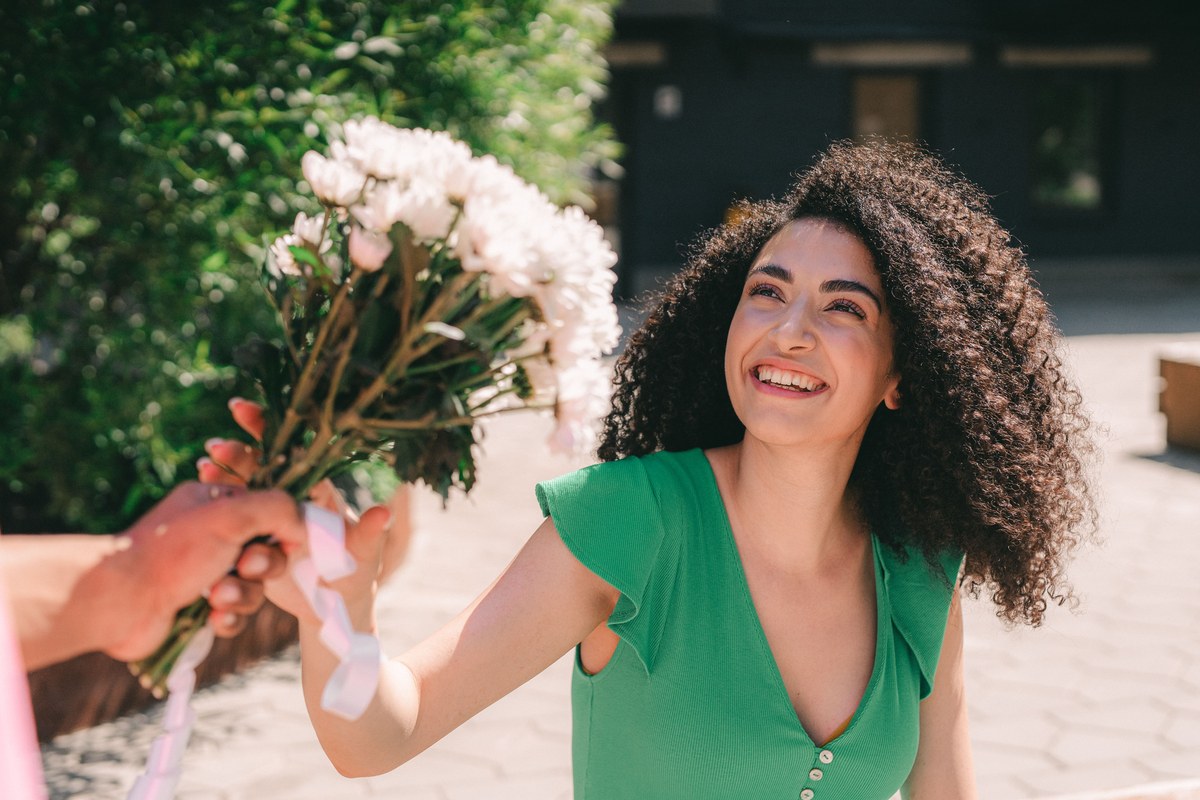
One hundred percent. No other gift in the world reaches that score.
We are the most effective feel-good industry there is – and one of the least recognized.
Giving flowers will change someone's emotional state.
The customer who walks in stressed leaves calmer, because they are about to make someone happy. The person who receives the flowers stops, smiles, and slows down. Those who see them in a room enjoy them without even realizing it.
We are dealers of good cheer. It's legal, it's beautiful, and the world is sorely short of it.
Article IV – We Keep People Connected With the Living World
Life in front of screens, ultra-processed food, a disconnection from nature.
Then they cross the threshold of our shop.
And they smell. And they see. And they touch something that grew in soil, under a sun, with water. Something real.
We are one of the last places where people still meet nature.
Peonies in May, sunflowers in July, holly in December – our shop is a natural calendar in a world that has forgotten the seasons. We give our customers a sense of time that nobody teaches anymore.
The hippies wanted to go back to the land. We bring the land to the people who cannot go back to it. That is our way of resisting a world that is losing its connection.
Article V – We Are There in the Moments That Matter
Think about your life. About all those intense moments. The birth of a child. A wedding. A funeral. A reconciliation. A declaration of love. A farewell.
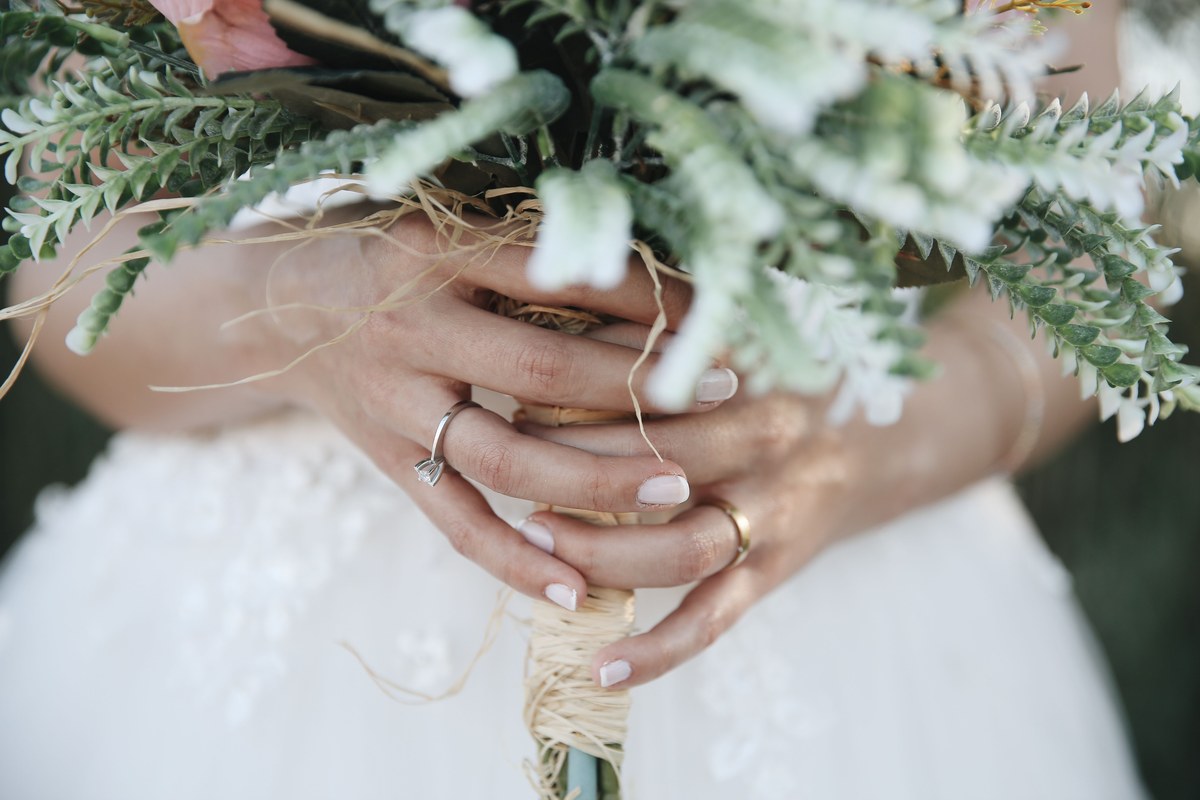
We were there.
Not us personally, but our work. A bouquet we made has pride of place in the family photos of strangers. A funeral spray we put together may have been the last gift a family gave to one of their own. Flowers we chose have accompanied two people toward a new beginning.
No other trade can say that.
We do not carry this responsibility as a burden. We carry it with pride.
Article VI – We Resist the Dematerialization of Feeling
Today, there is an emoji for every feeling. A red heart. A pixelated rose. An animated bouquet that appears on a screen for two seconds before it disappears.
We do the opposite.
We insist that feelings take up space – in the hands, in a room, in the space between two people. We insist that they have weight, a scent, a color that cannot be adjusted in the settings.
In a world that dematerializes everything, we still give emotions a body.
When someone chooses to give flowers instead of sending a message, they commit an act of resistance. They are saying: you are worth more than a screen. I want you to hold something in your hands. I want your room to be different because I have passed through your life.
We help people commit this act of resistance. We give them the means to do it. It is a role we are proud of.
Article VII – We Are Not a Business Like Any Other
People talk to us about margins, purchase costs, stock turnover, and profitability. That is fair enough – we have a business to keep alive, wages to pay, and rent to meet.
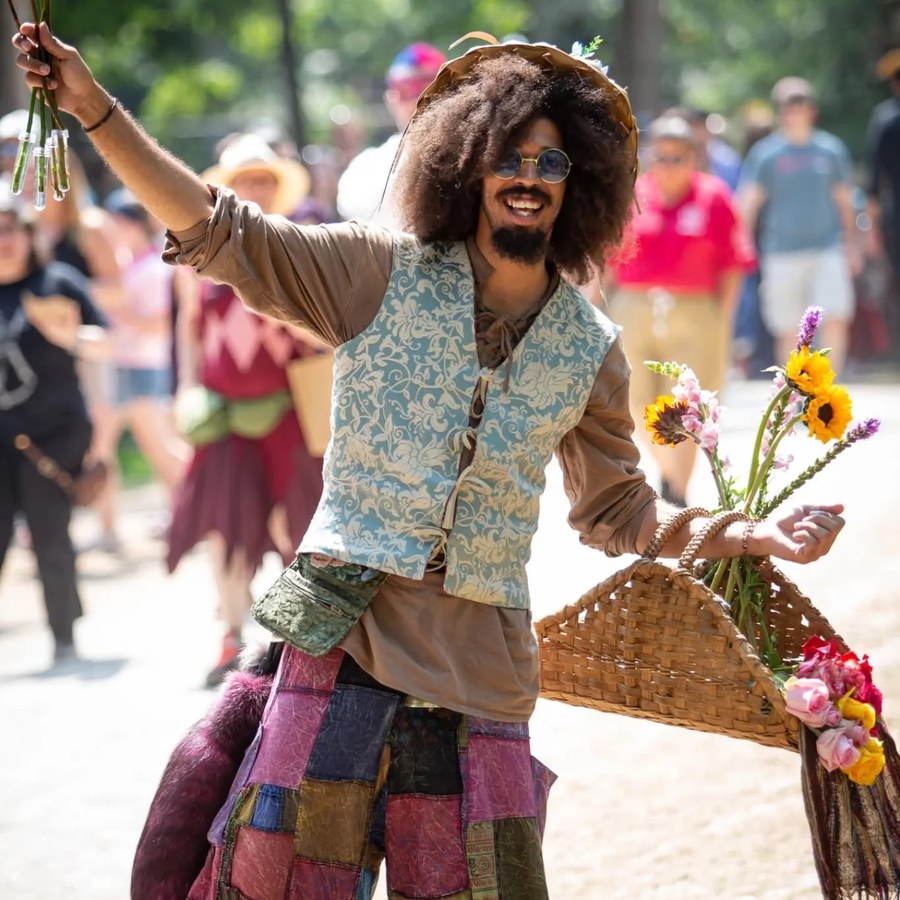
But we don't just sell products.
We practice a craft in a century that has forgotten craftsmanship. We work with our hands, with our sense of beauty, with our knowledge of living things. Every arrangement is unique. Every bouquet is signed, even without a signature.
We are artists, creators of connections.
Our gallery is our shop window. Our opening night is every morning, when we set out the first stems. Our audience is the person walking past on the sidewalk who slows down because something has stopped them: a combination of colors, a scent drifting out the door, an arrangement that says something they could not put into words themselves.
Article VIII – The Responsibility We Carry
We work with living things. We know that better than anyone, because every day we see the most beautiful things nature produces, and what it demands in return.
This closeness to living things gives us an awareness we cannot pretend not to have.
We know where flowers come from. We know what it means when a rose is flown in from Ecuador, when a peony is grown in a greenhouse, when a bouquet is wrapped in plastic. We also know the beauty of a seasonal flower, picked nearby, that has not crossed the world to end up in a vase.
We choose to look this reality in the face.
Taking care of flowers is taking care of yourself. Taking care of your customers is taking care of others. Taking care of origin, of the cycle, of waste, and of packaging – that is taking care of the planet.
These three gestures are not separate. They are one and the same gesture, repeated every day, with every arrangement, every choice of supplier, every bouquet we refuse to wrap in something that does not break down.
We do not claim to be perfect. But we do claim to be aware. And awareness, when it is honest, always ends up changing what we do.
We want to help build a world that is livable and lovable, because we spend our lives making it a little more beautiful.
Our Commitment
In return, we promise never to forget why we do this work.
Never to make a bouquet without putting something of ourselves into it. Never to forget that the person who walks into our shop is not there to buy stems – they are there because they have something to say to someone.
To keep working with the seasons, with living things, with our hands. To keep bringing a little nature into the cities. To keep being there in the moments that matter.
To remain creators of connections, in a world where everything has come undone, and everything is waiting to be tied together again. And never to forget our Flower Power!
Love flowers.
Flowers Community – 2026
I first published this manifesto in French as Le manifeste de la communauté des fleuristes on LinkedIn on October 12, 2026.
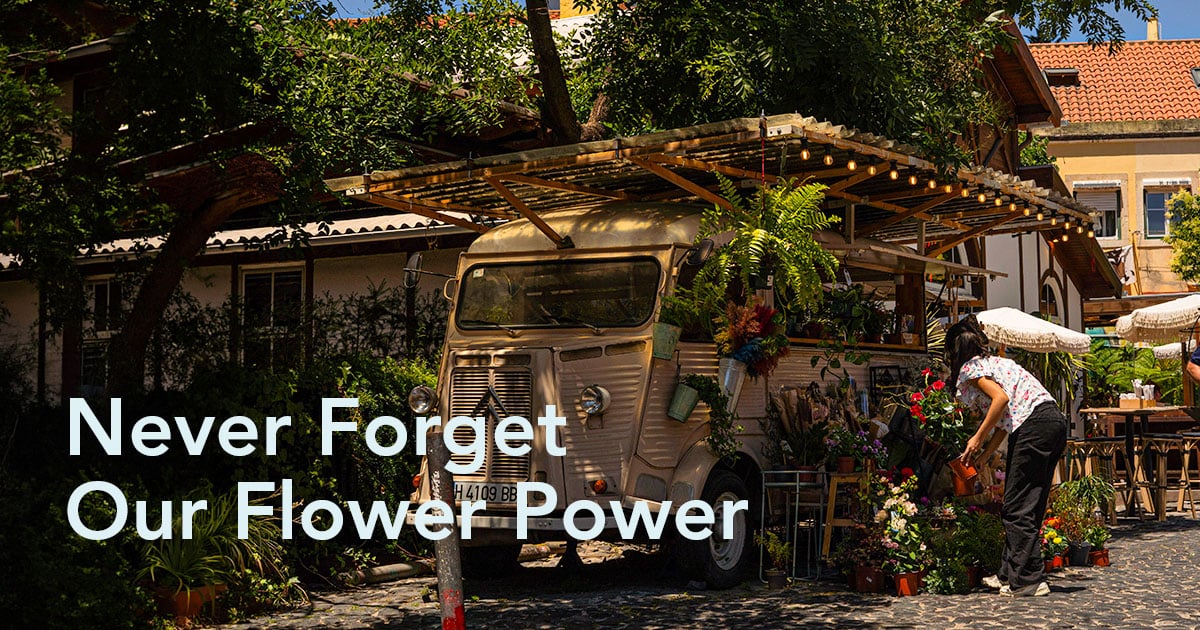
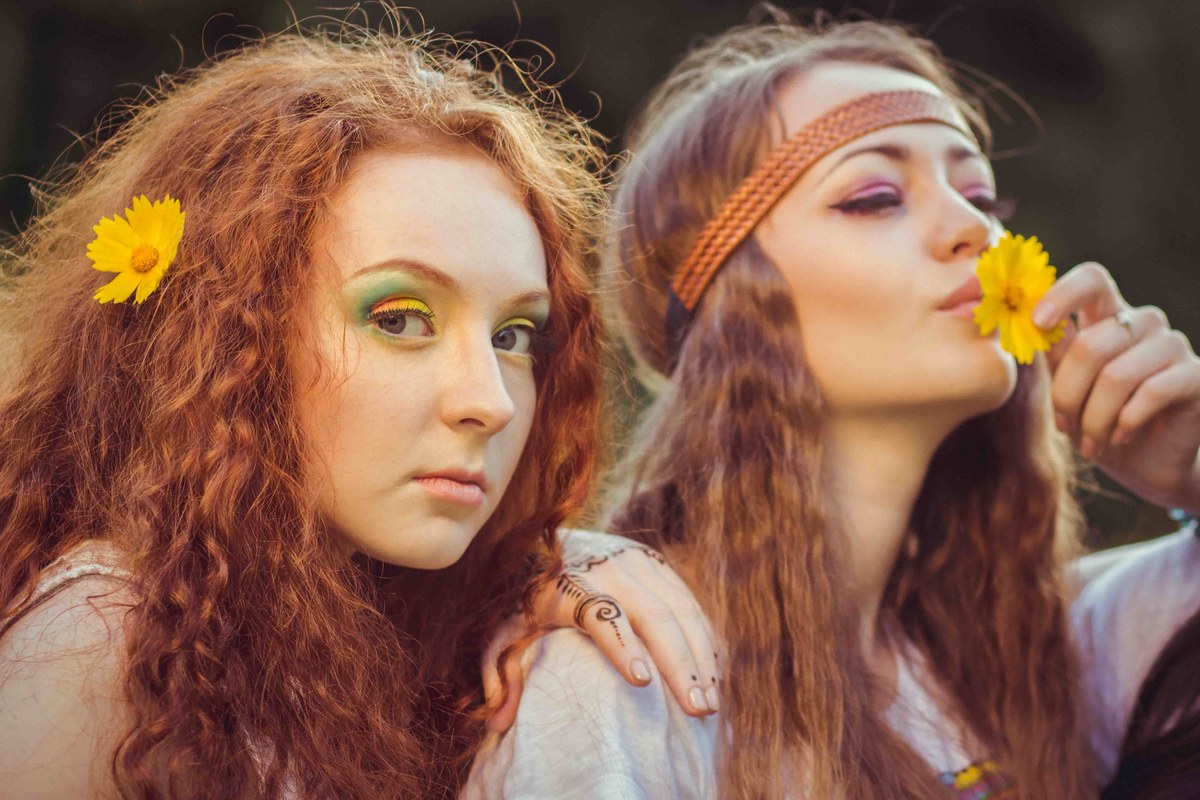
Header: a vintage van turned into a flower stall. Photo by Joel Hägele on Pexels. Featured image: Two women in hippie style with yellow flowers in their hair. Photo by Natalie Bond on Pexels.