This year, I took part in Flora Expo Astana 2026, the International Exhibition of Floriculture and Landscaping in Astana. I had planned to visit the exhibition in advance, but I decided that I did not want to go there simply as a visitor. I wanted to take part in the exhibition in a professional capacity.
A year earlier, the organizers of Flora Expo Astana had approached me with an invitation to participate. At that time, we did not yet know exactly what my role would be. A year later, the Dutch brand Decorum came up with the idea of inviting me as a florist from Central Asia to represent their brand at the exhibition. Decorum traditionally works with well-known florists from different countries to present its products. This year, they chose me.
More Than a Personal Professional Recognition
Of course, I was especially pleased to receive an invitation from Decorum. It is a well-known Dutch brand of premium flowers and plants that collaborates with respected florists. The opportunity to represent Decorum at an exhibition in our region was a great honor for me.
I believe my floral show in Bishkek in 2025 may have played a role in this invitation. The project received considerable international attention and was noticed far beyond Kyrgyzstan. I think that after this show, Decorum felt confident I could represent their brand to an international professional audience.
This was important to me for another reason as well. When a major European brand invites a florist from Kyrgyzstan to represent it at an international exhibition, I see it as more than personal professional recognition. For me, it is also another sign that florists from our part of the world are becoming more visible on the international floral scene.
Decorum representative and brand ambassador Warja Abrosimova contacted me, and together we began discussing the program and concept for our presentation at the exhibition.
An Enormous Amount of Work, Many Orders, and Almost No Free Time
Our preparations began before March 8 and continued immediately afterward. It was a difficult period for my team. Every florist knows how intense the days around International Women's Day can be. There is an enormous amount of work, many orders, and almost no free time. At the same time, we were preparing for the exhibition, so the workload was particularly heavy.
We had to finish the main part of our preparations a little earlier because all the structures and materials we had created needed to be transported to Astana in advance. Two companies from Bishkek helped us with this. Flora Service Bishkek, headed by Lilia Petrovna, and Seven Flowers Bishkek in Kyrgyzstan, headed by Nadira.
I am sincerely grateful to them for helping transport all my structures and materials to Astana and for supporting the organization of my presentation. Without their help, many of the logistical and organizational issues would have been much more difficult to solve.
The Floristry Competition
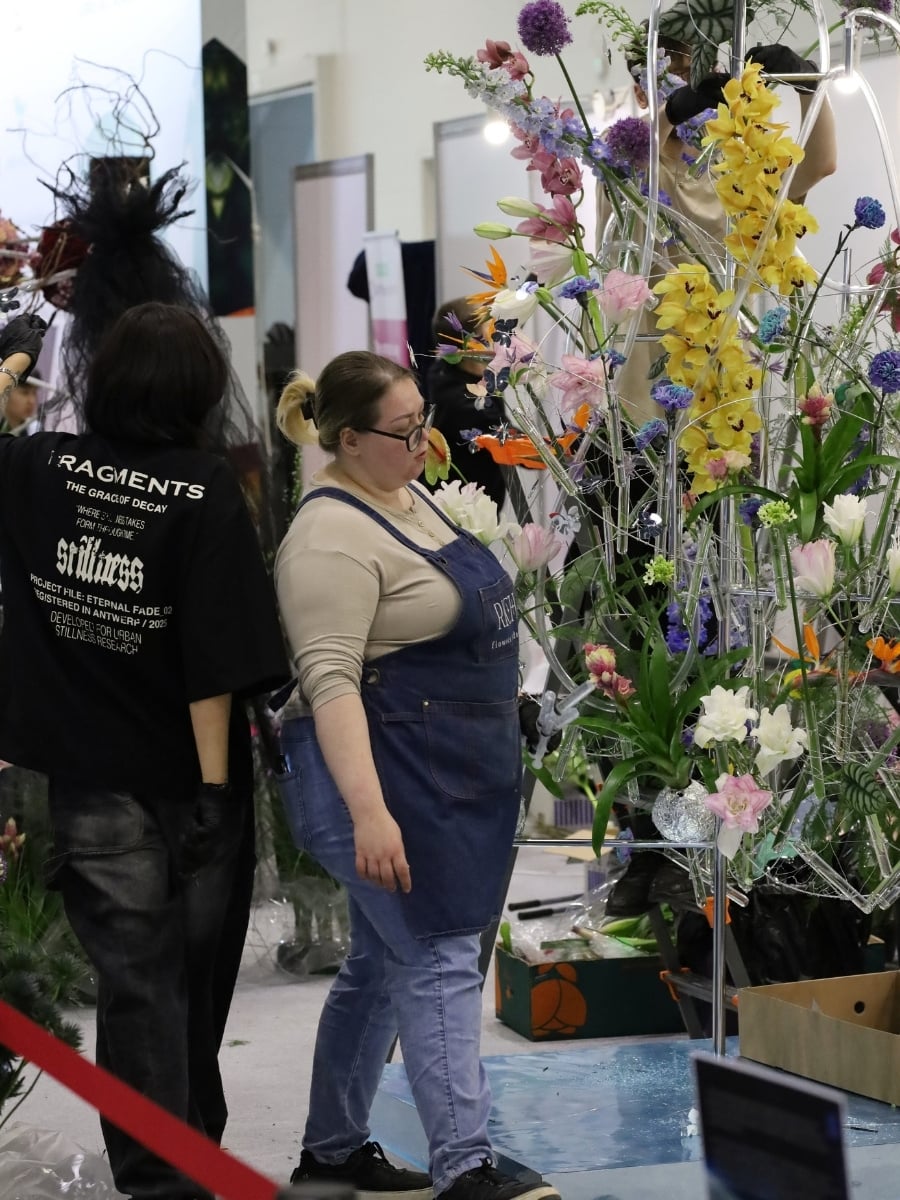
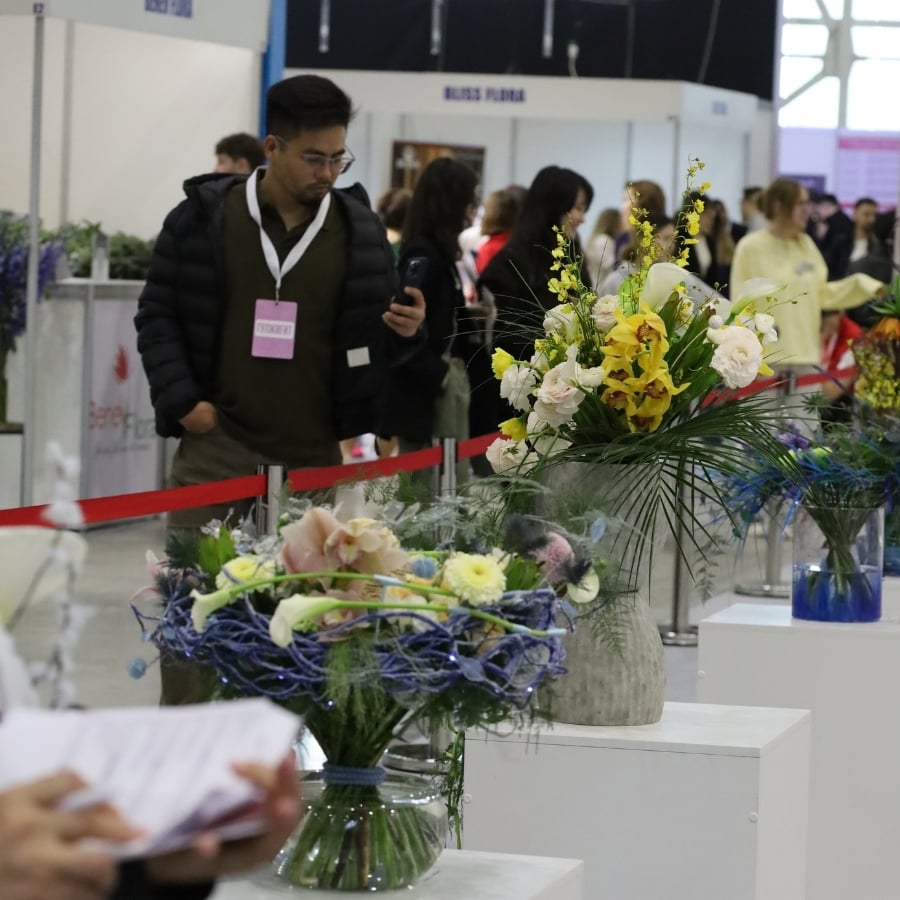
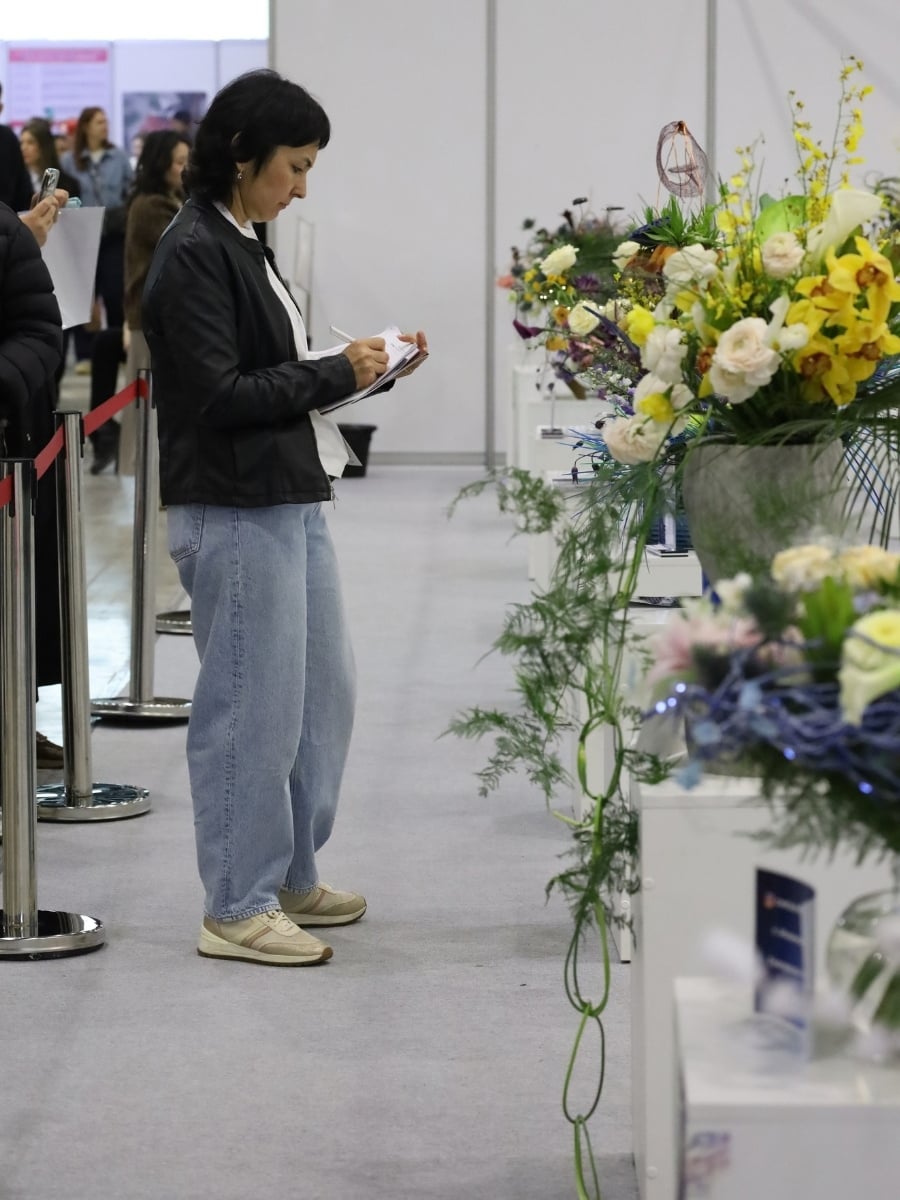
When I arrived in Astana, my assistant Yana Prokudina was already waiting for me. I was very happy that Yana had agreed to assist me during the event. At the same time, she had another important role. Yana was also a participant in the floristry competition held as part of the exhibition. I was also a member of the judging committee and chaired the creative jury.
Looking ahead a little, I can say that the competition was genuinely interesting. The participants included florists not only from Kazakhstan but also from other countries.
Professional competitions like this have always been of great interest to me. I love competitions and consider them an important part of a florist's professional development. That development begins long before the actual day of the competition. While preparing, a florist searches for new solutions, studies materials and techniques, looks at the work of other professionals, and expands their own knowledge.
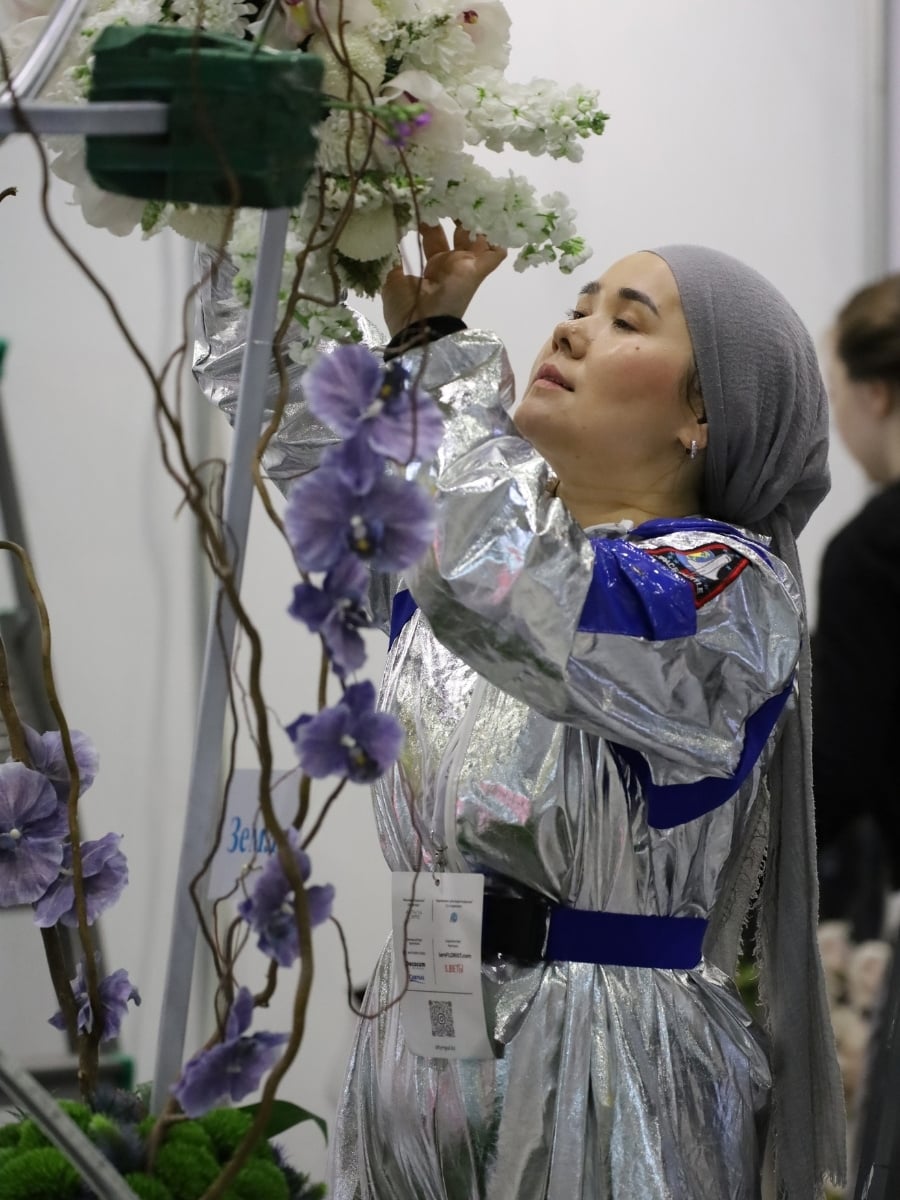
For me, the value of a competition is therefore not only about the final result or the place someone receives. The preparation itself pushes a florist forward, encourages learning, and takes them beyond their everyday professional routine.
A High Level of Professional Skill
The judging results were particularly interesting. The professional jury and the creative jury evaluated the competition works independently and did not discuss the results with each other. In the end, our decisions coincided. The participant who received first place from the professional jury also received the highest evaluation from the creative jury, which I chaired.
Her work also caught my attention personally.
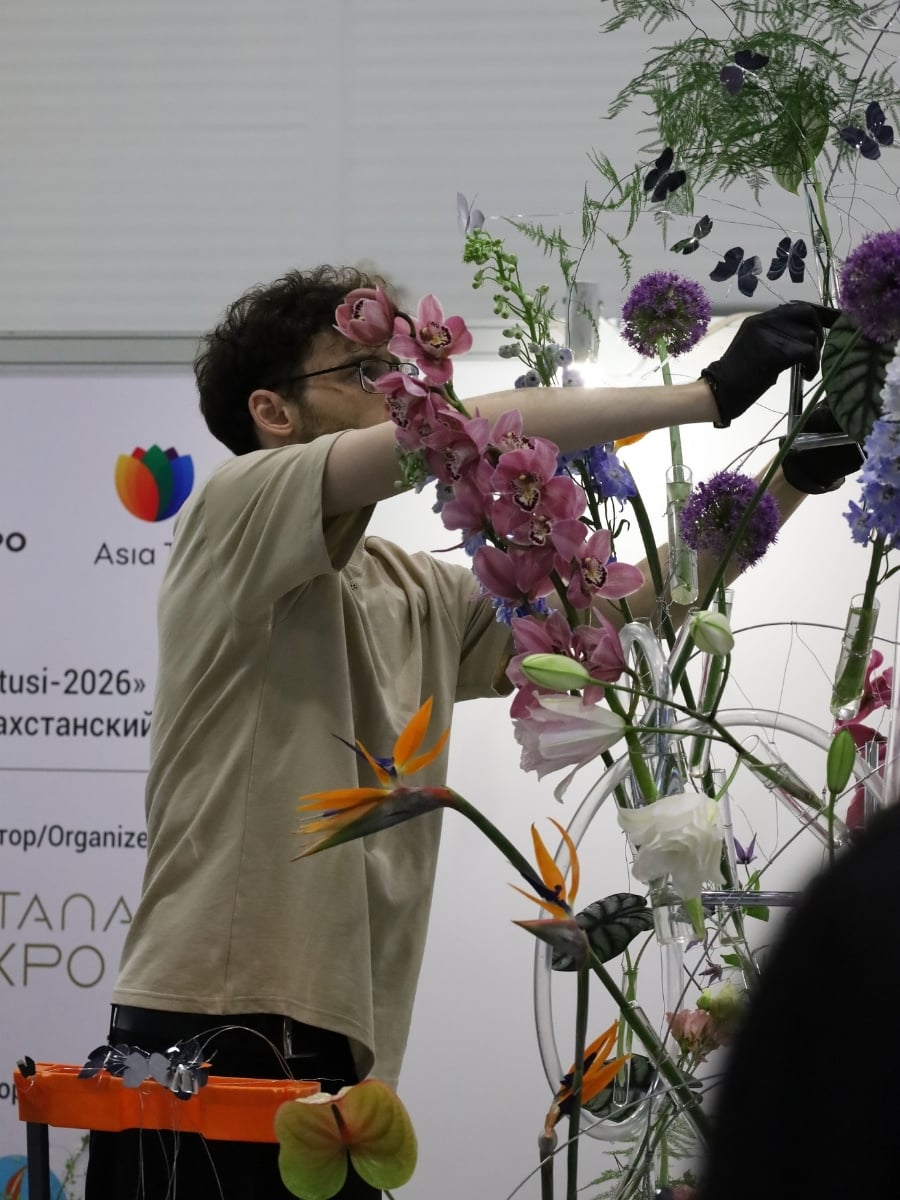
I have my own criteria that I often use when looking at the level and complexity of floral work. When I look at a composition and cannot immediately understand how it was made, I consider that one of the signs of a high level of professional skill. The technical side of such a work is hidden so well that the viewer sees the image, form, and idea first, rather than the methods used to create it.
Of course, as an experienced professional, in this particular case I understood how the work had been created. But if I looked at it through the eyes of an ordinary visitor, it came very close to what I consider an ideal. The viewer sees a complete composition and admires it without immediately understanding how it was technically achieved.
For me, this is one of the most interesting levels of floral craftsmanship. Complex technique becomes almost invisible and serves the artistic idea completely.
Two Days on Stage
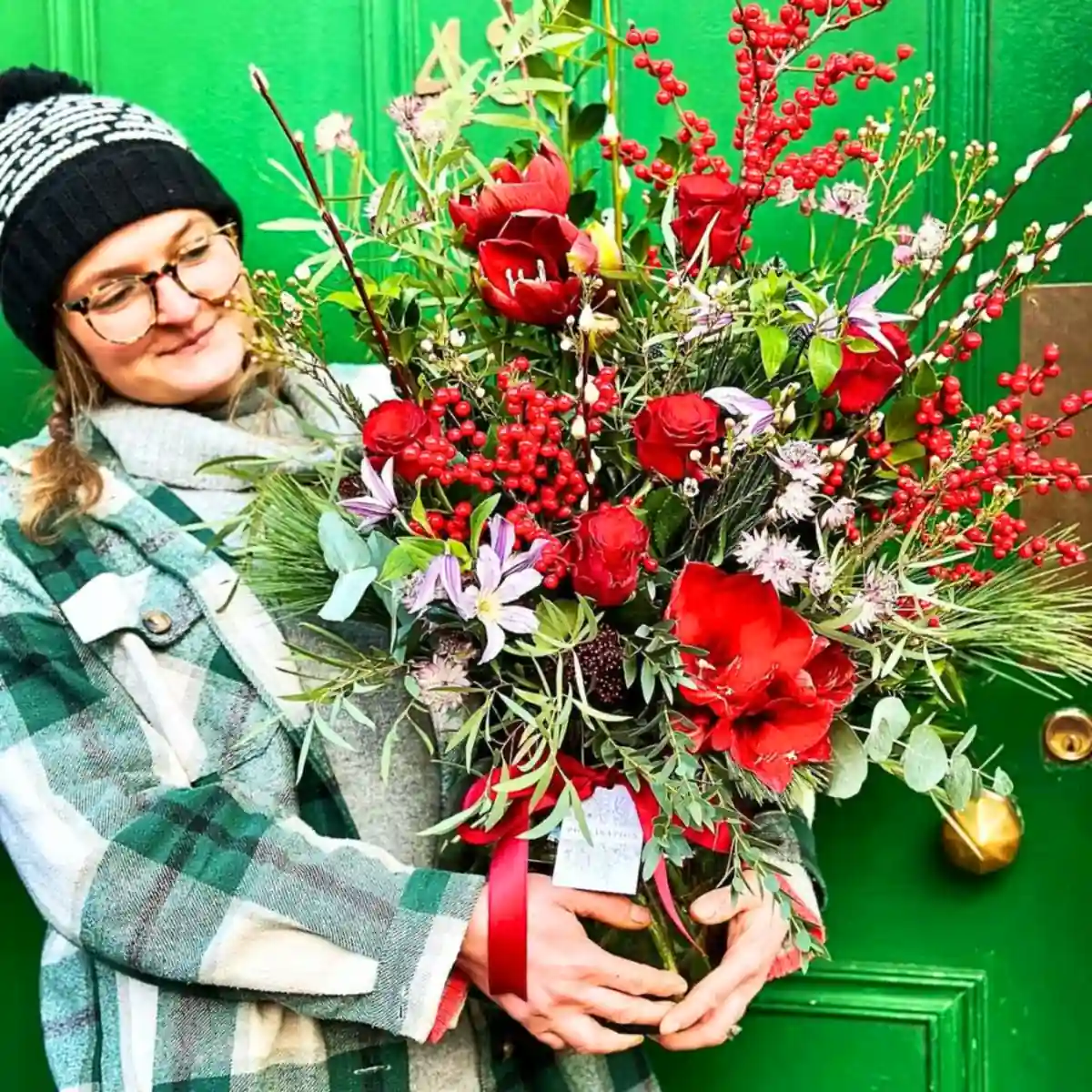
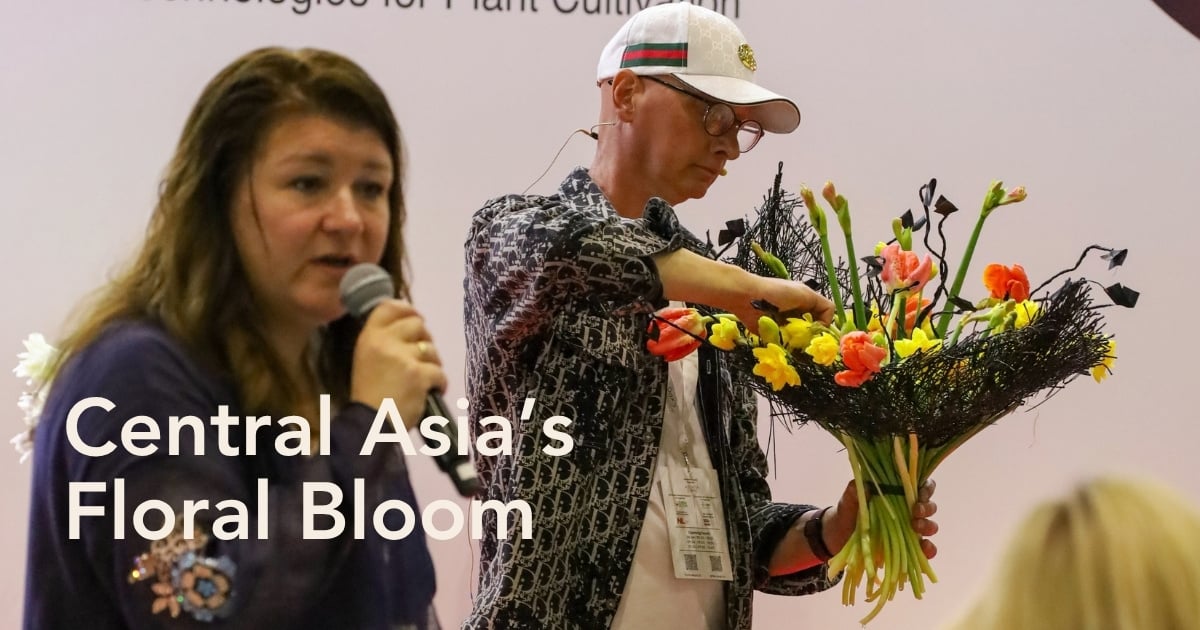
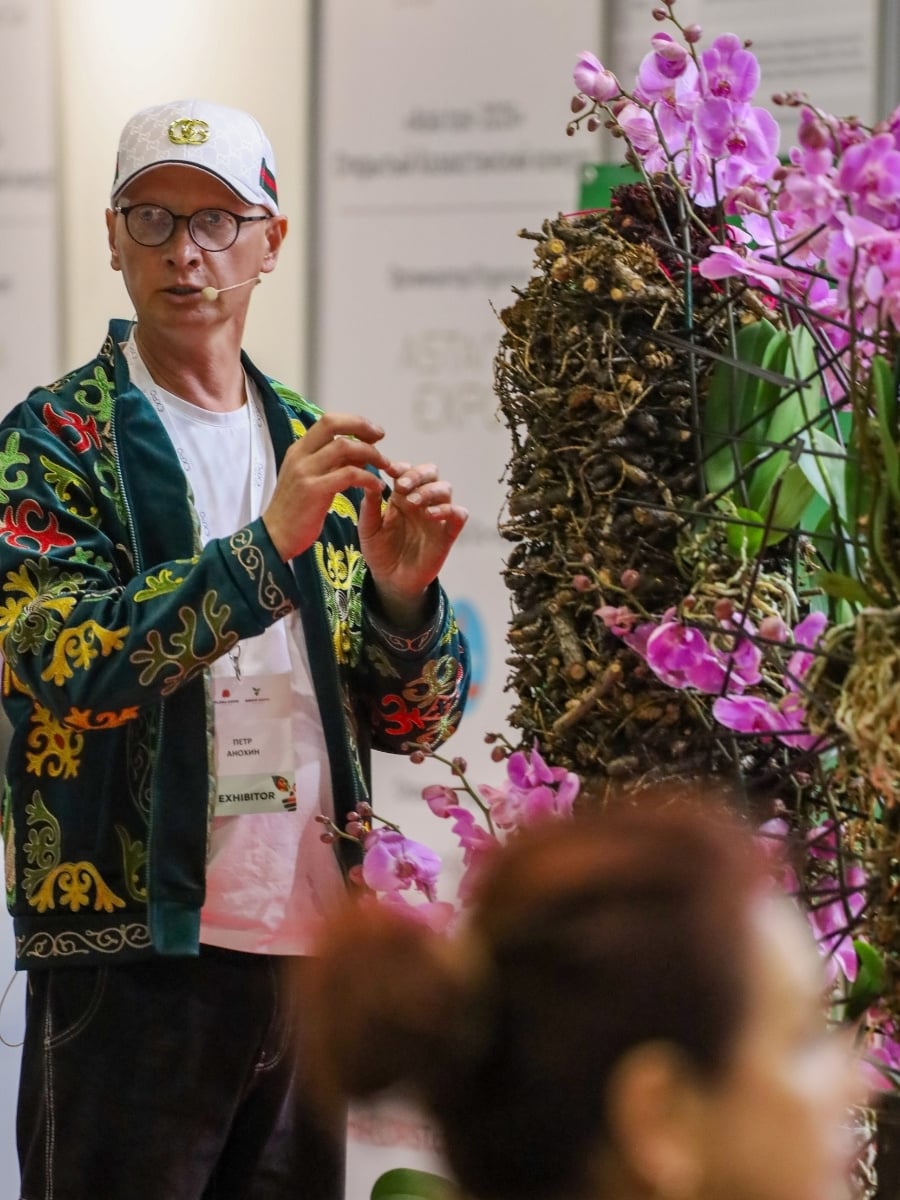
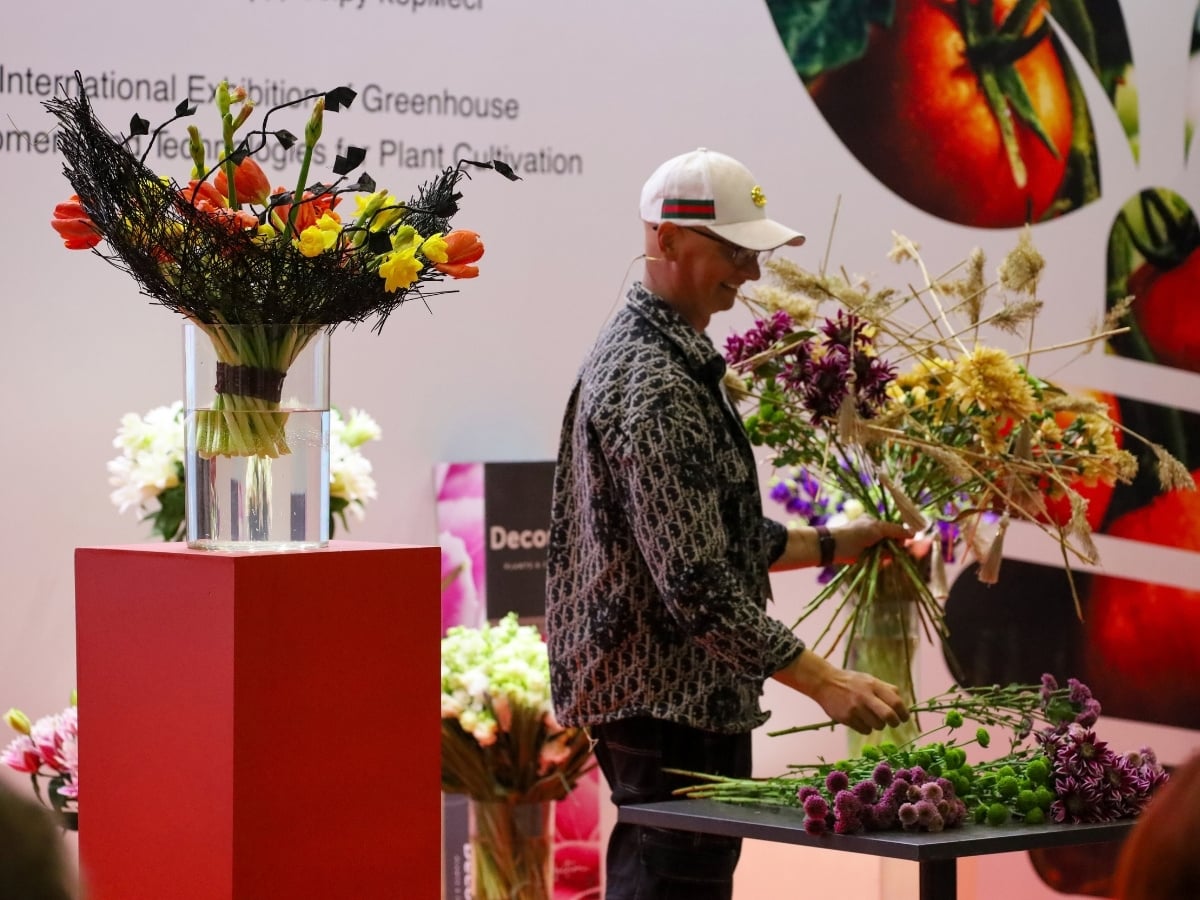
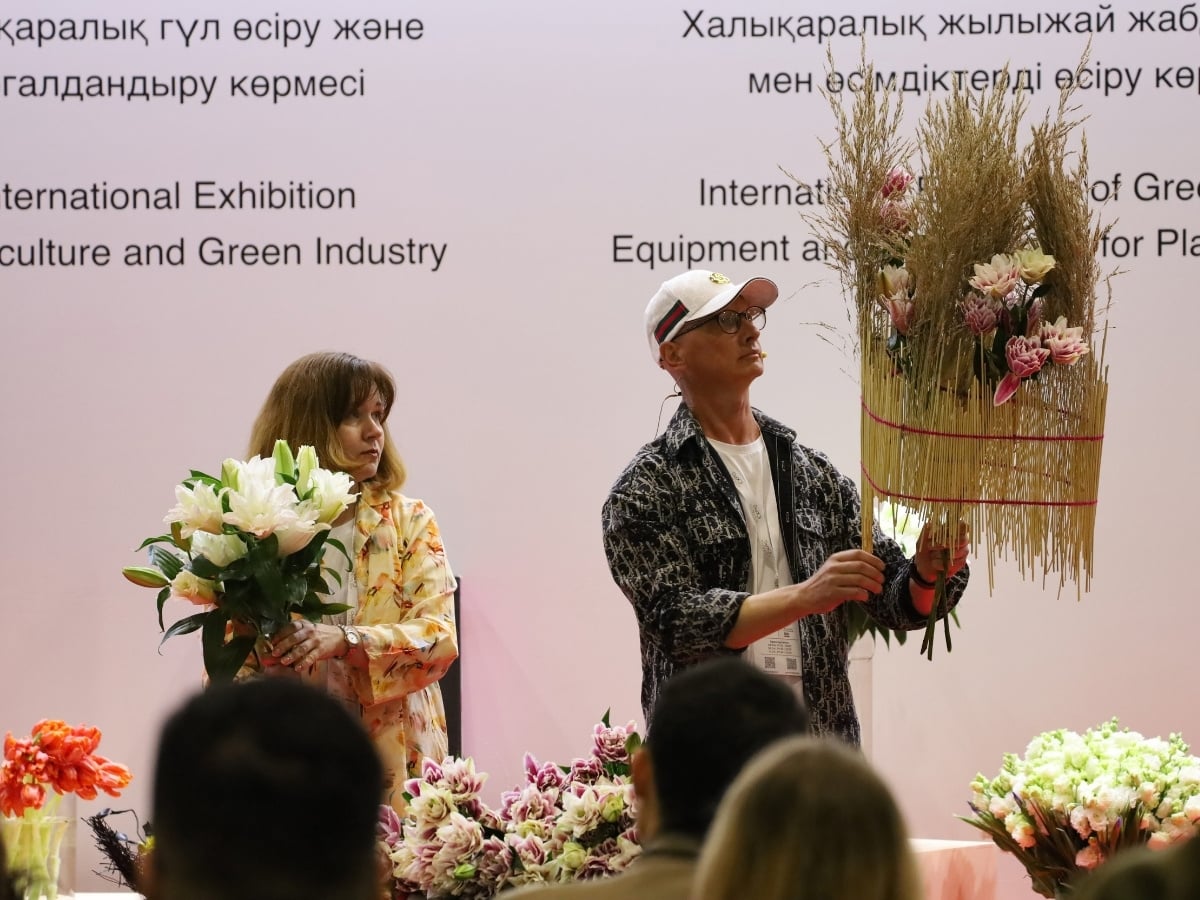
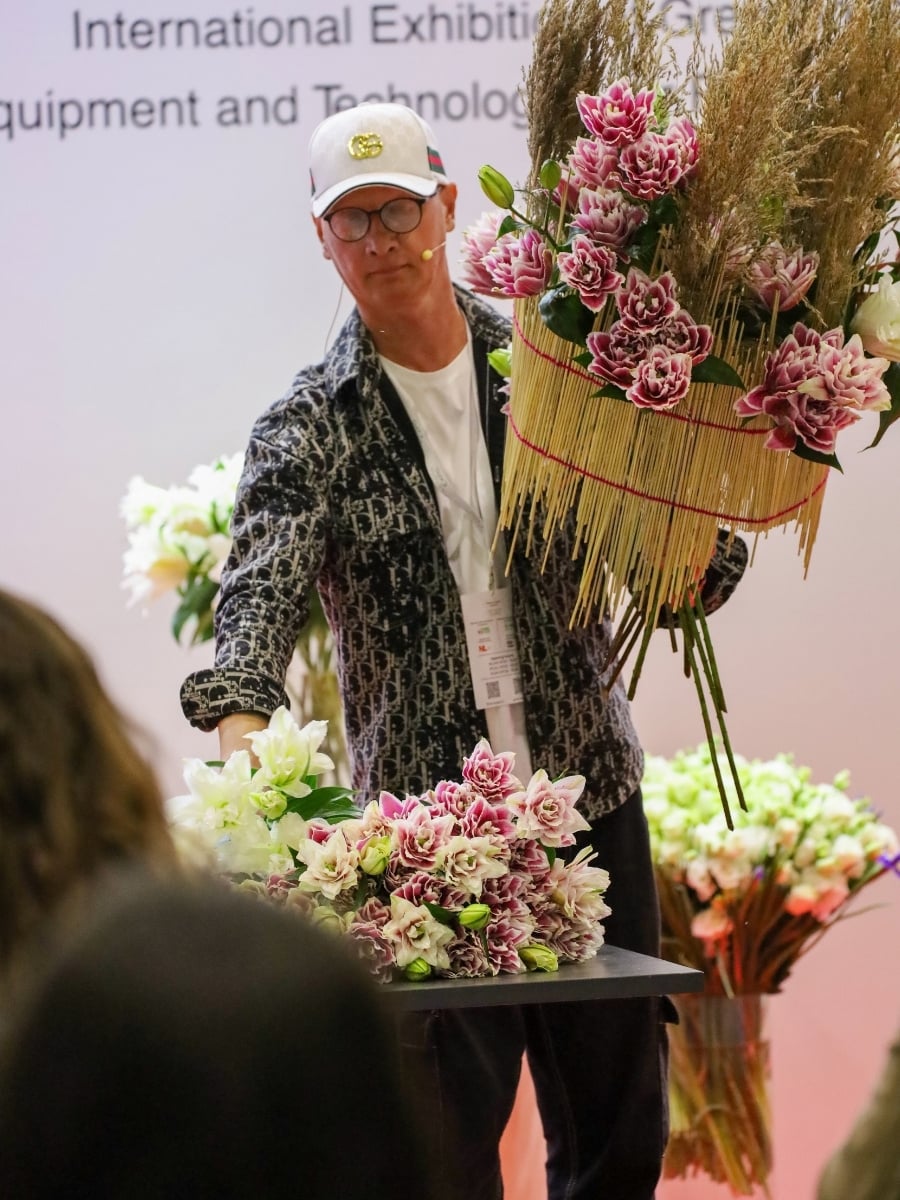
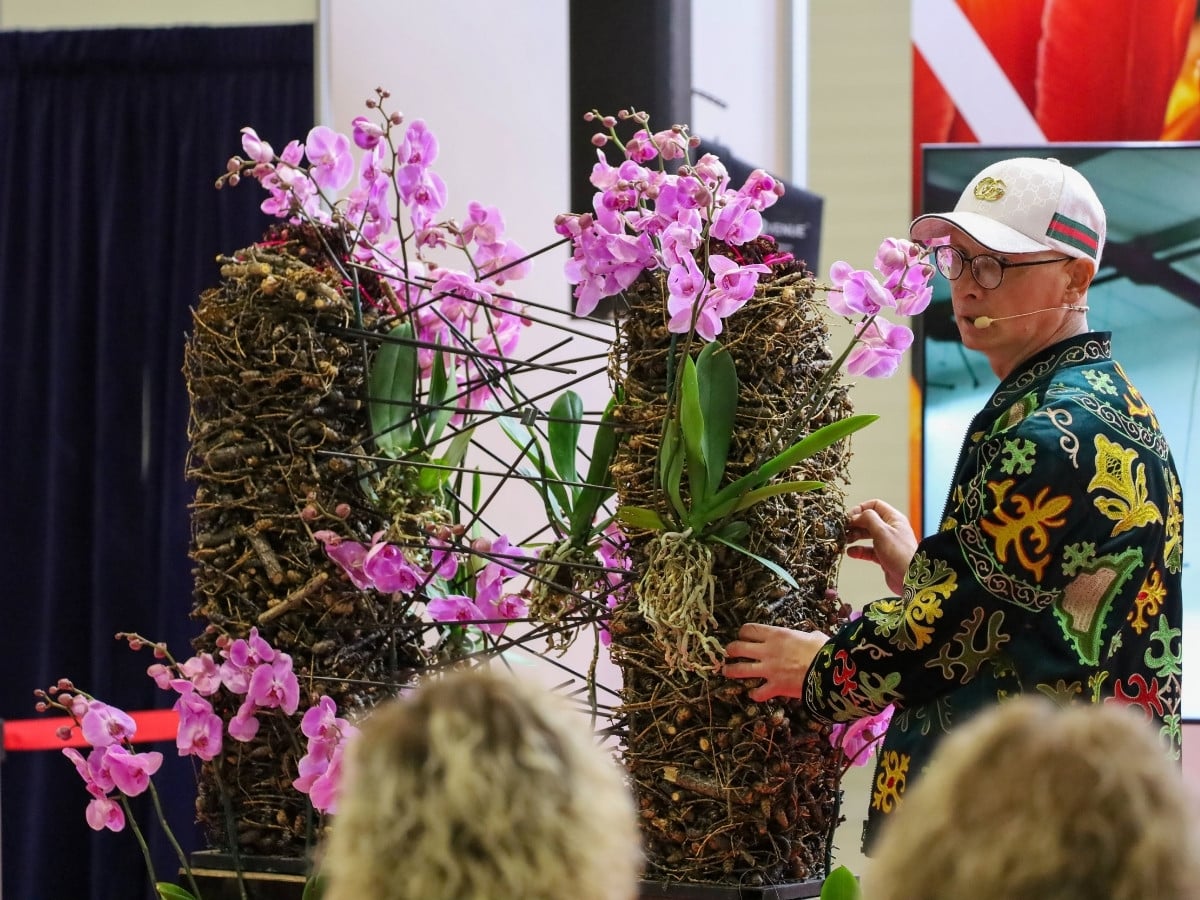
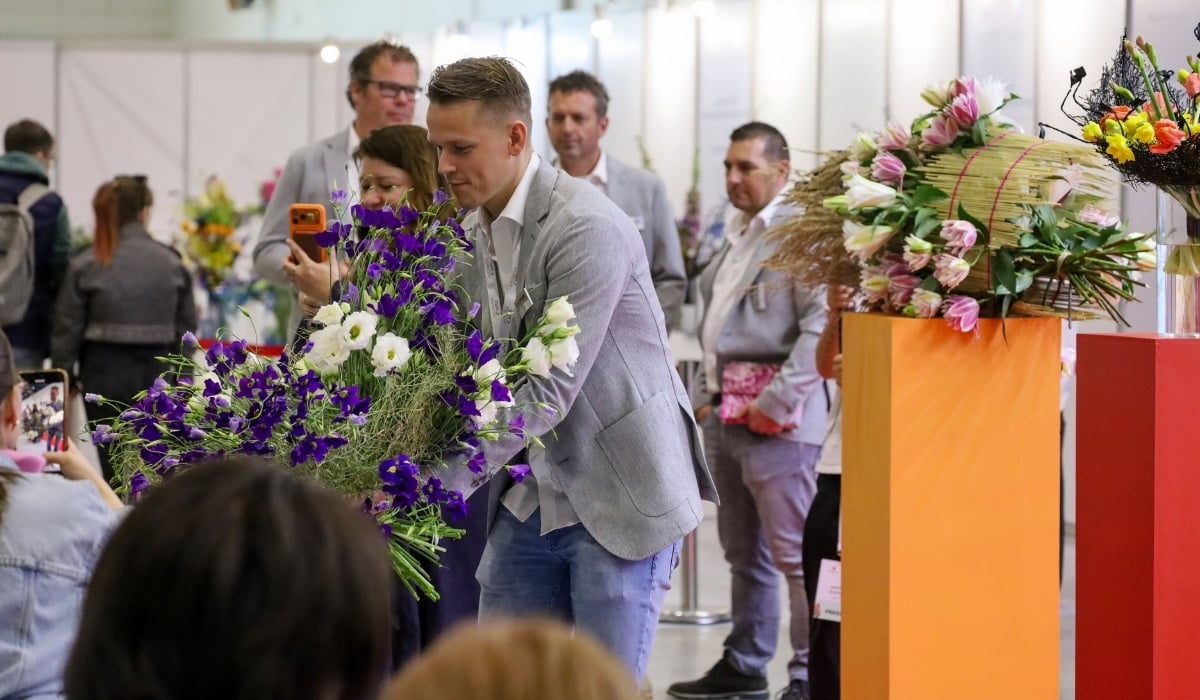
My presentation at the exhibition lasted two days. The first day was dedicated to bouquets. I often try to build my stage presentations not simply as demonstrations of floral technique but as performances. This time, my team and I also prepared a concept and a storyline. It was based on the idea of five elements. Each element was represented by a separate bouquet that I created in front of the audience.
We presented the elements of wind, fire, water, and air. The fifth element remained a mystery to the audience until the right moment. The fifth element was love.
It is difficult for me to say which of these bouquets my favorite was. I generally do not divide my work into favorites and non-favorites. The audience, however, clearly had its own favorite. It was the bouquet called ‘Air.’
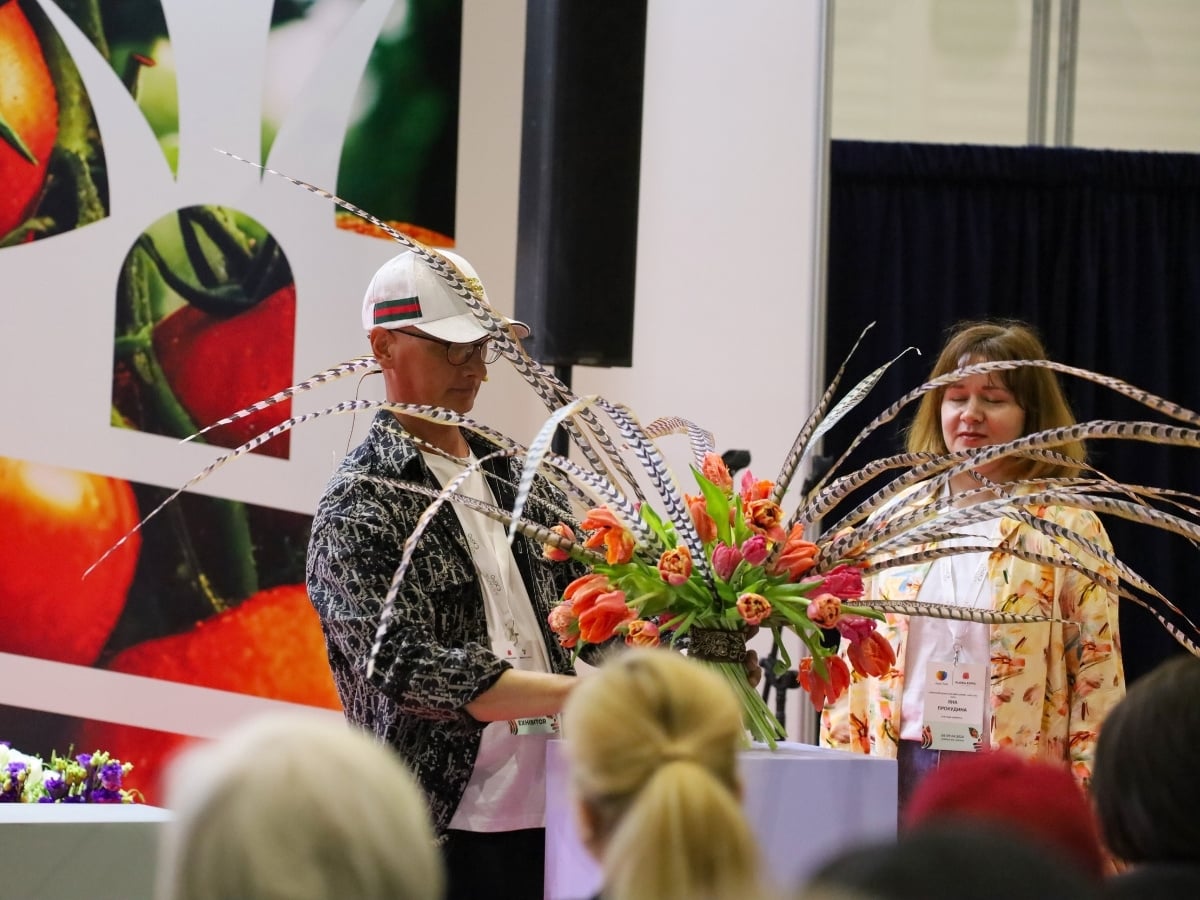
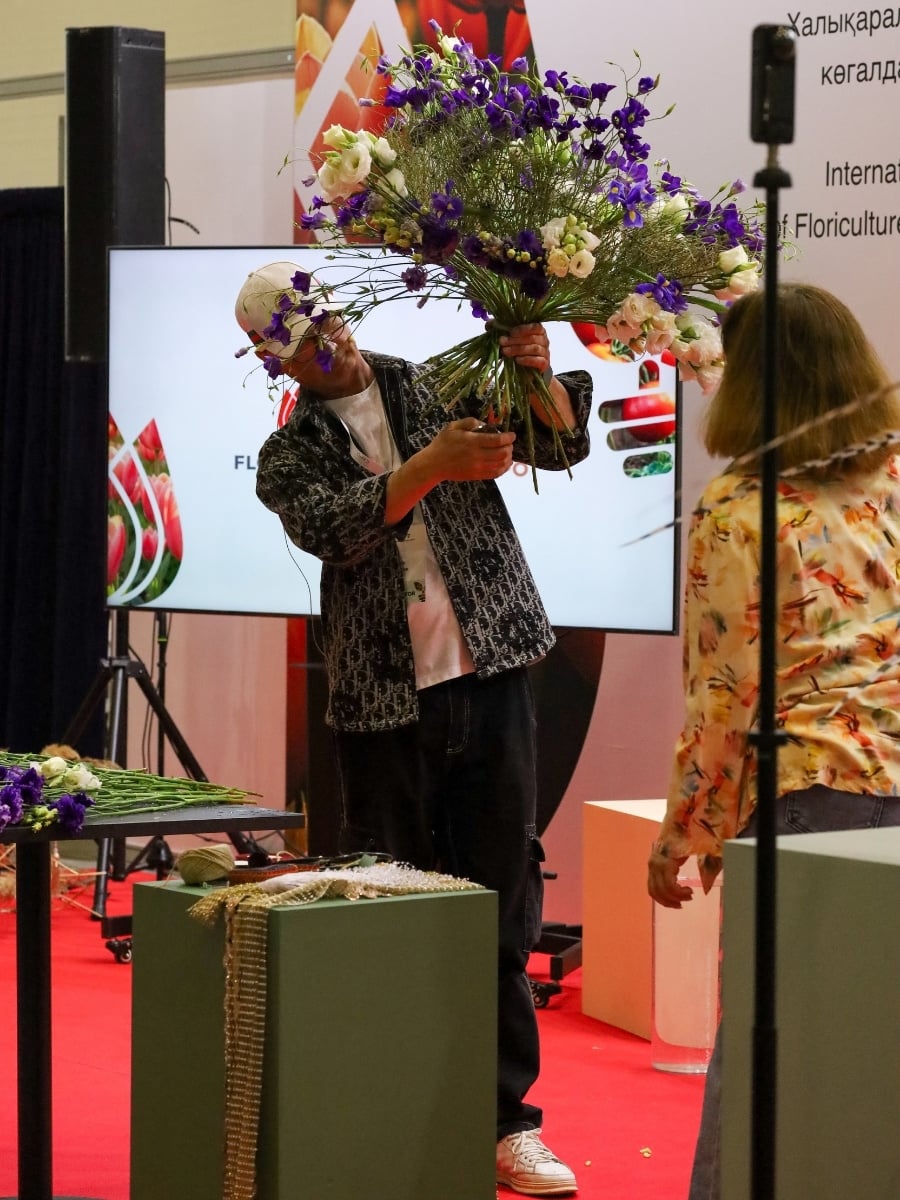
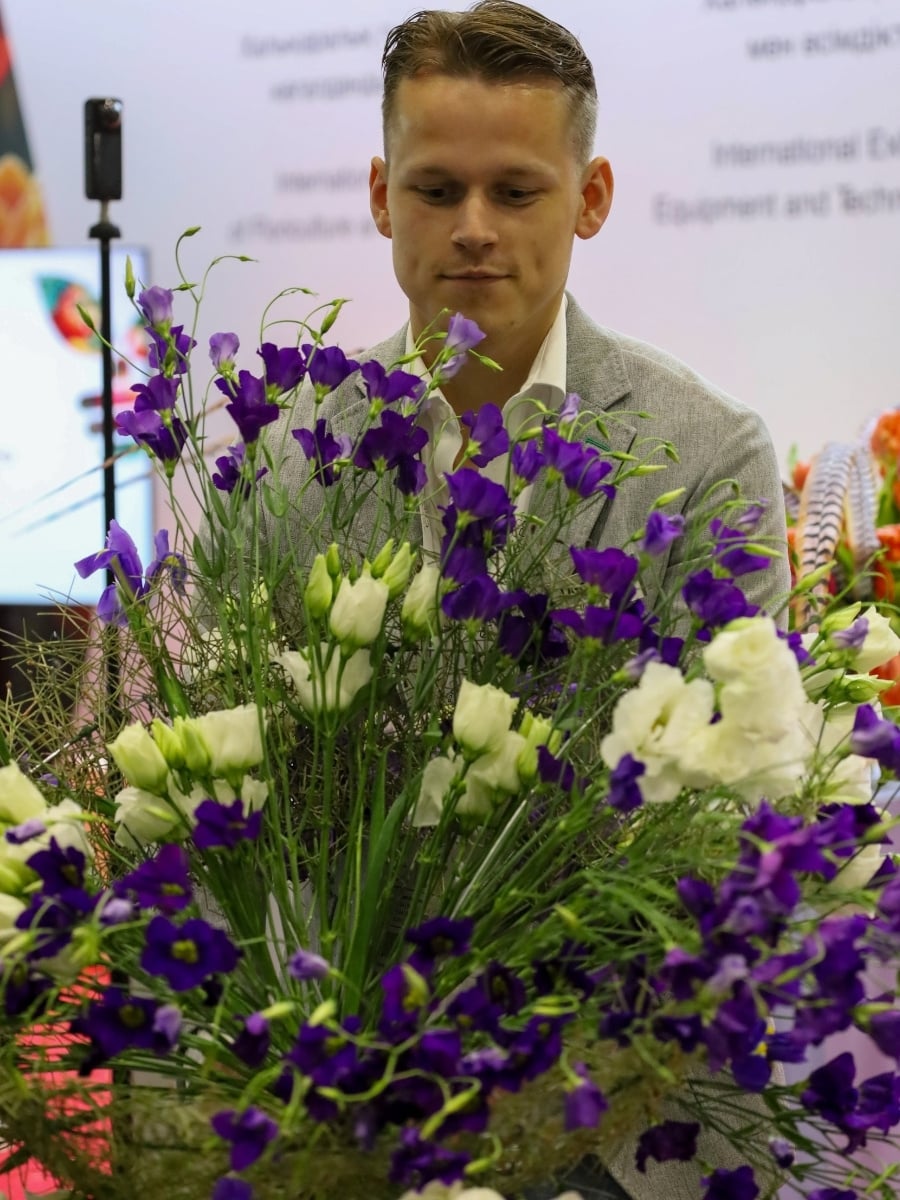
Interestingly, many people initially thought it represented fire because the bouquet was based on bright scarlet tulips. I combined them with long pheasant feathers that brought movement into the composition.
While creating the bouquet in front of the audience, I deliberately moved it so that people could see how its elements responded to the air. The feathers and flowers began to move. I drew the audience's attention to the way the air and wind brought the entire bouquet to life. That was why it represented the element of air.
In the end, this became one of the most memorable bouquets for the audience.
Working on Stage and Communicating With People
I really enjoy working on stage and communicating with people. It is important to me that a presentation does not become simply a demonstration of a florist at work. I enjoy a live dialogue where the audience becomes part of what is happening on stage.
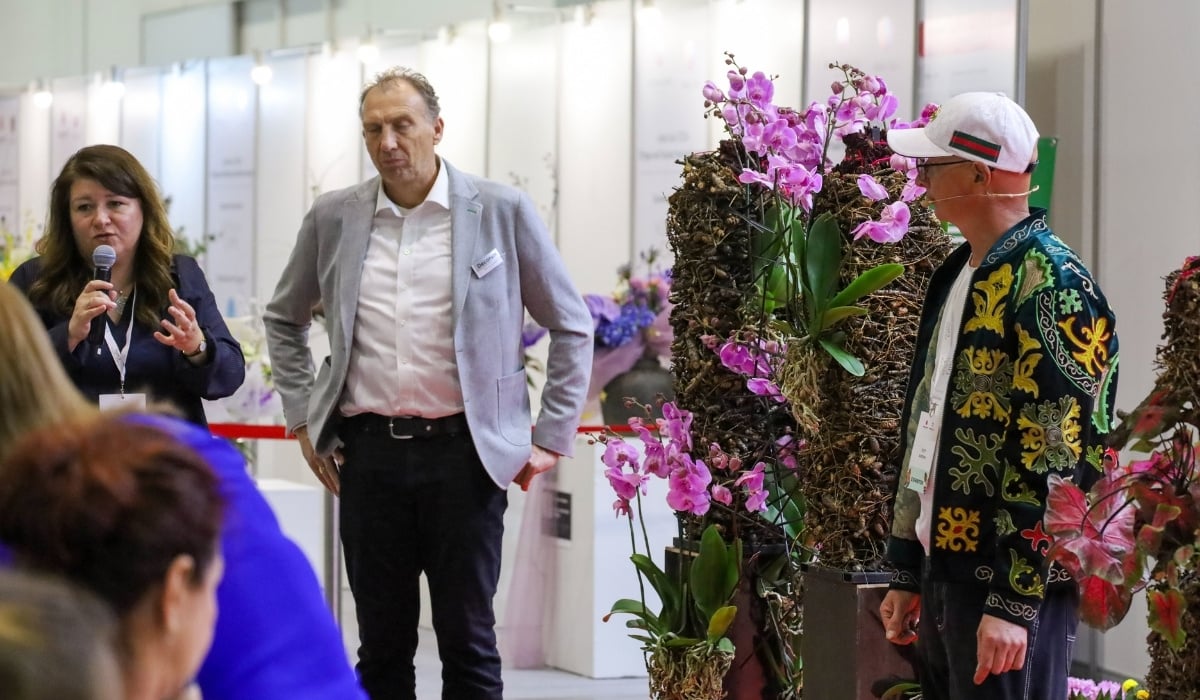
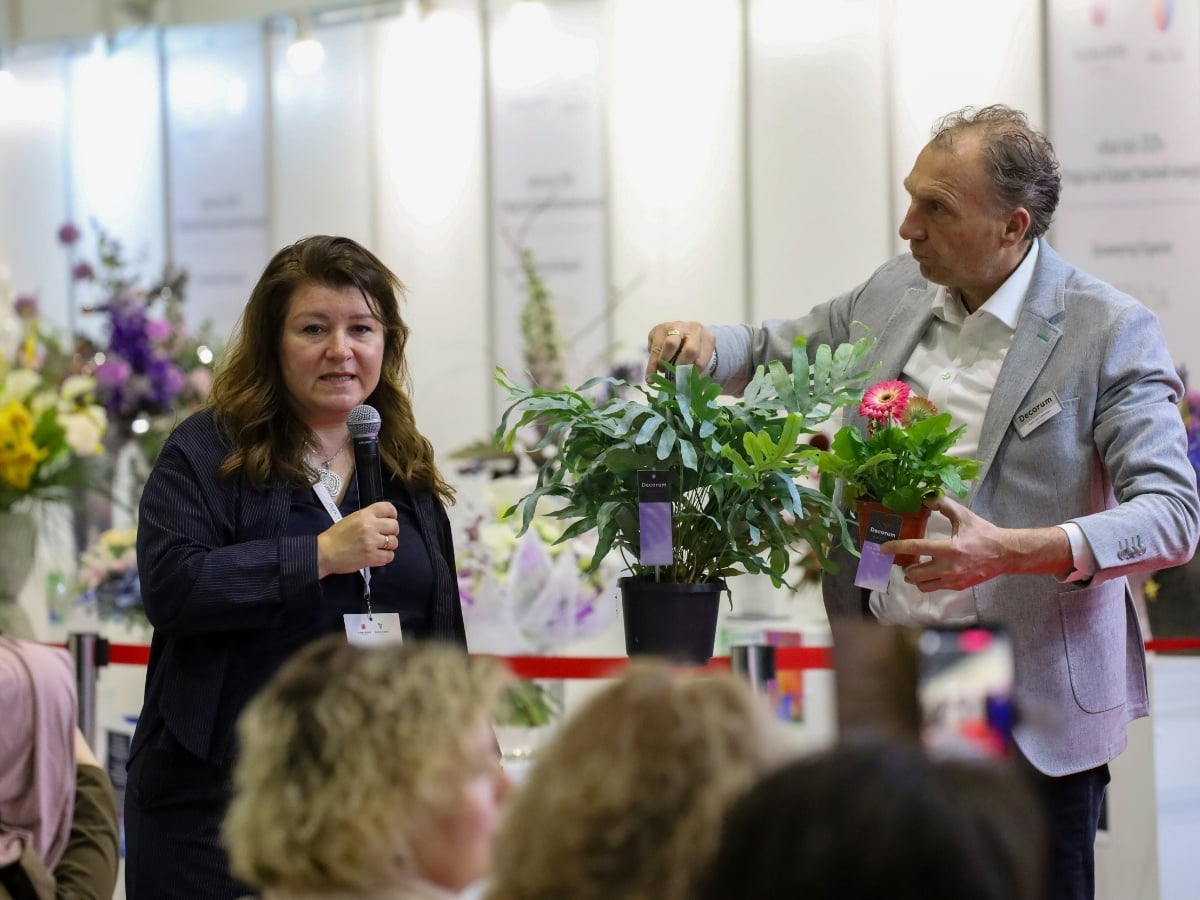
For the second day, I suggested to Warja that we invite flower growers and representatives of companies within Decorum onto the stage. While I worked, I talked with them, and these conversations turned out to be very interesting for me.
A florist receives a flower as a finished product but does not always know the story behind it. We see a new variety, its shape, color, and quality, and we work with it. But often we do not know how much work went into creating it or what journey it took before reaching our hands. That is why I particularly enjoyed asking the growers questions and hearing these stories directly from them.
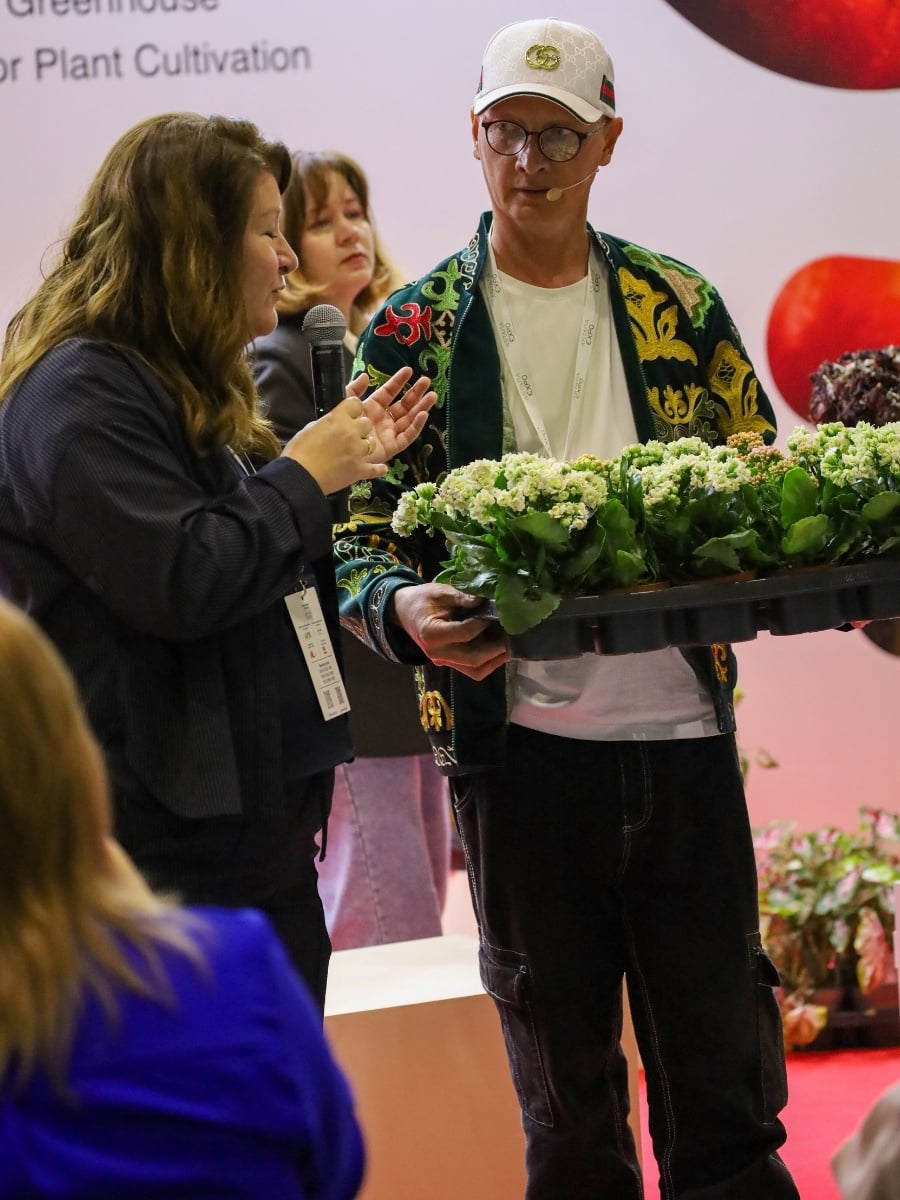
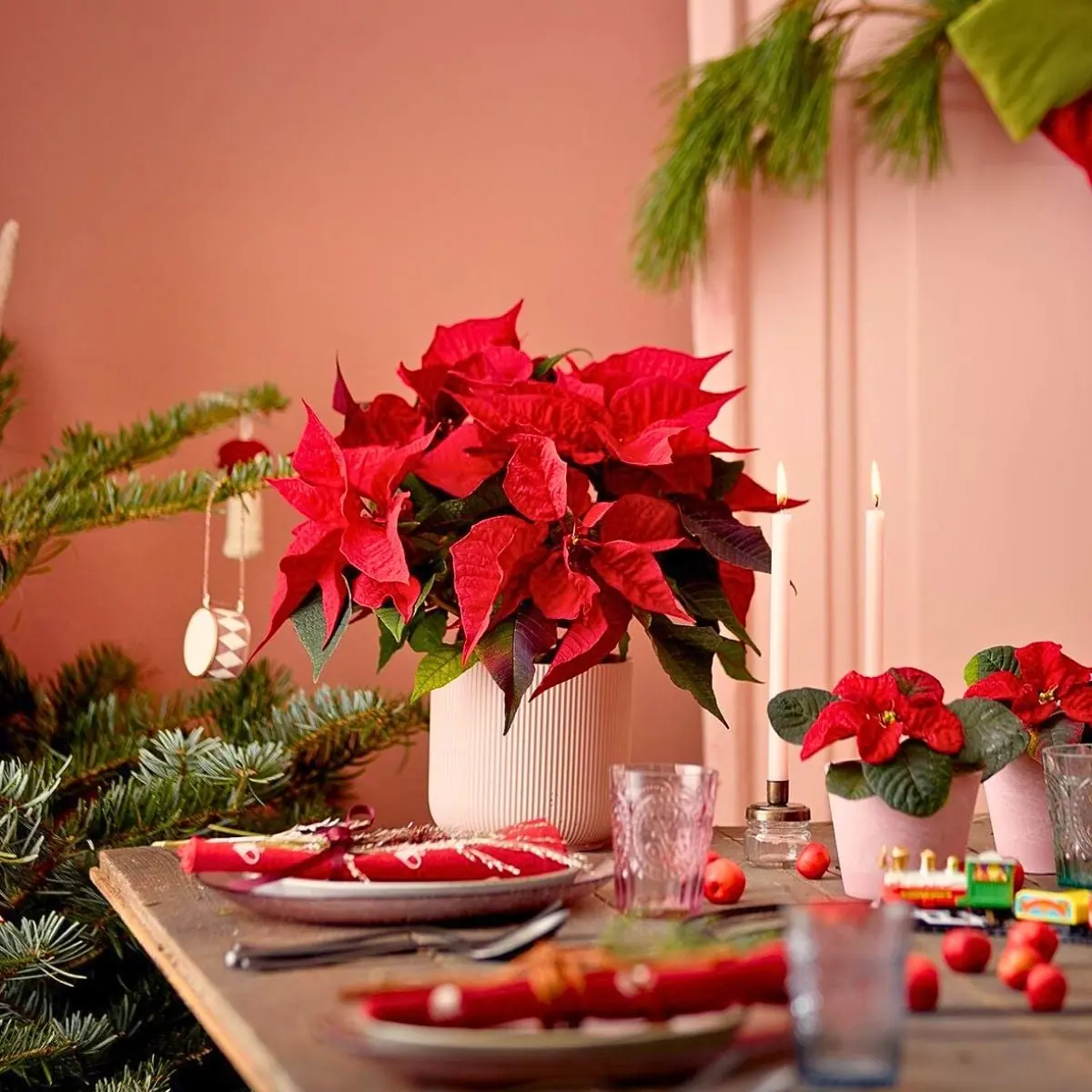
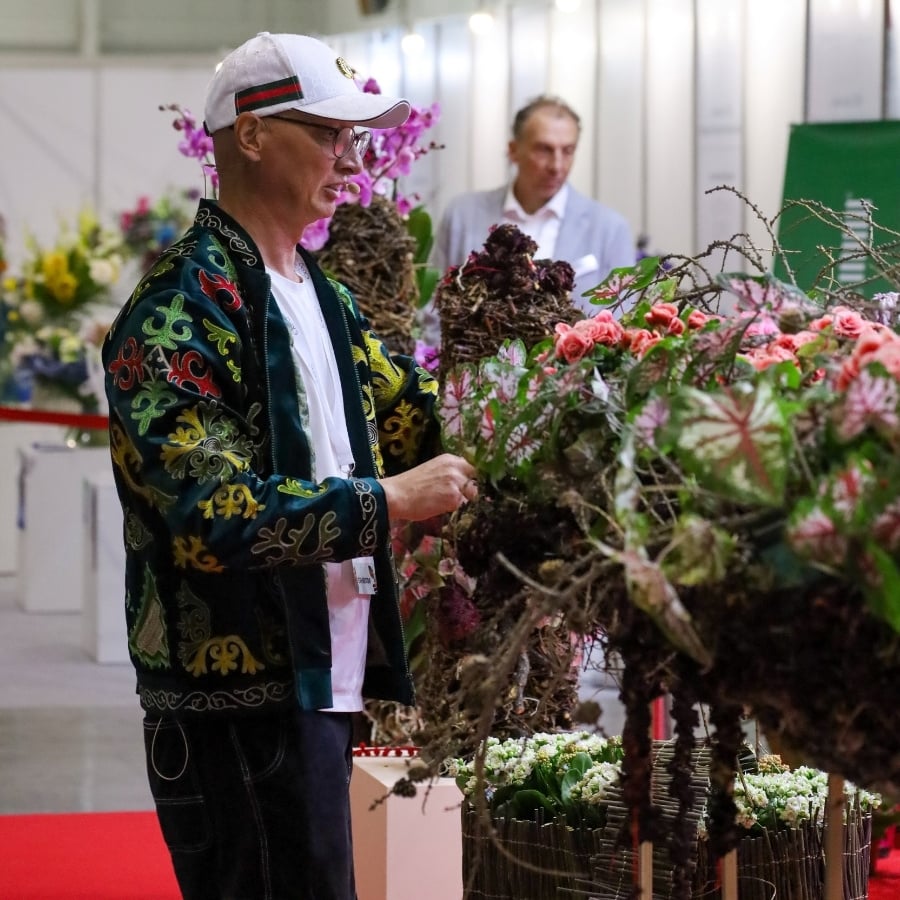
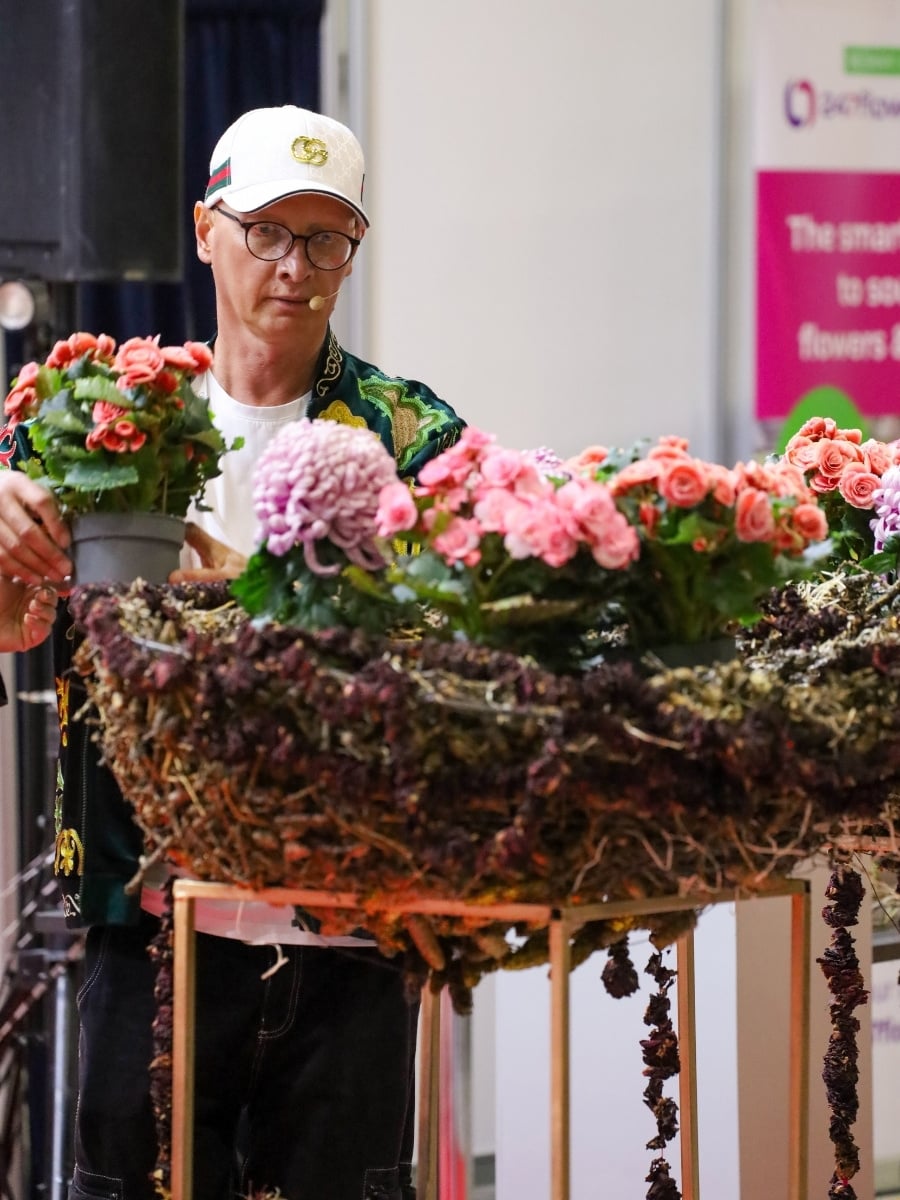
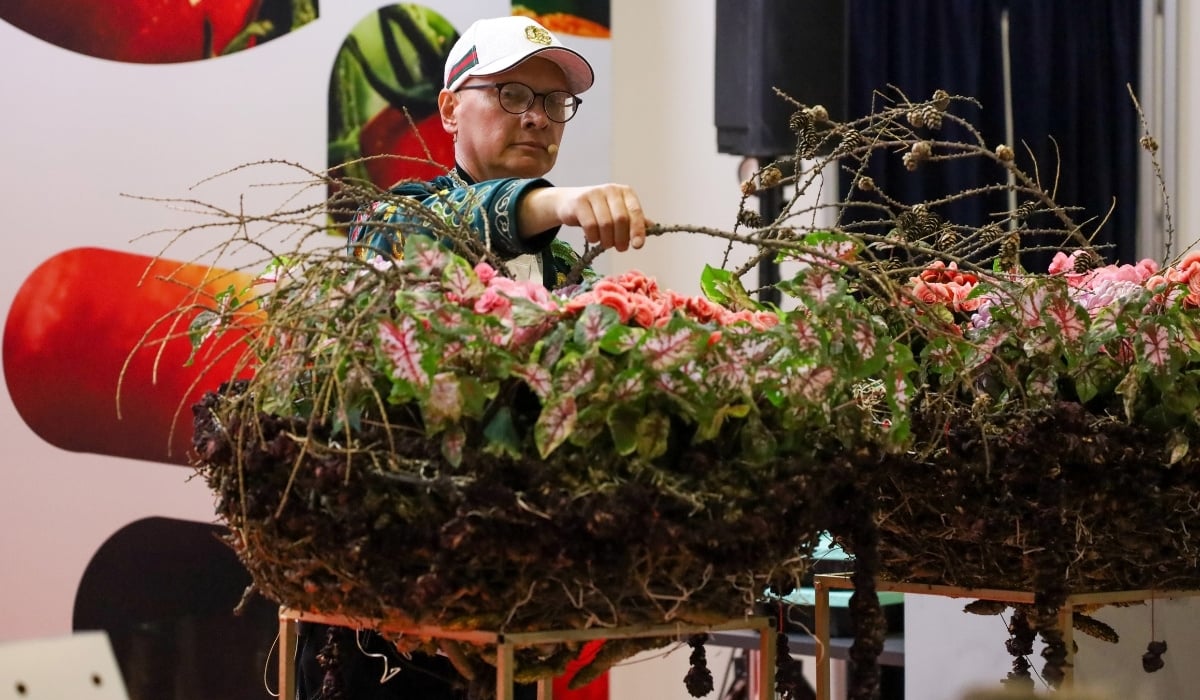
During these conversations, I created compositions using potted plants. This was an interesting challenge in itself. Working with potted plants on stage and turning them into compositions for an exhibition space is more difficult than it might appear.
The Second Day Had a Completely Different Character
The second day had a completely different character. It combined floral work, live conversation, and an opportunity to introduce the audience not only to Decorum plants but also to the people behind them. I think the second day of my presentation was particularly useful for florists and decorators who create large installations or shop-window displays.
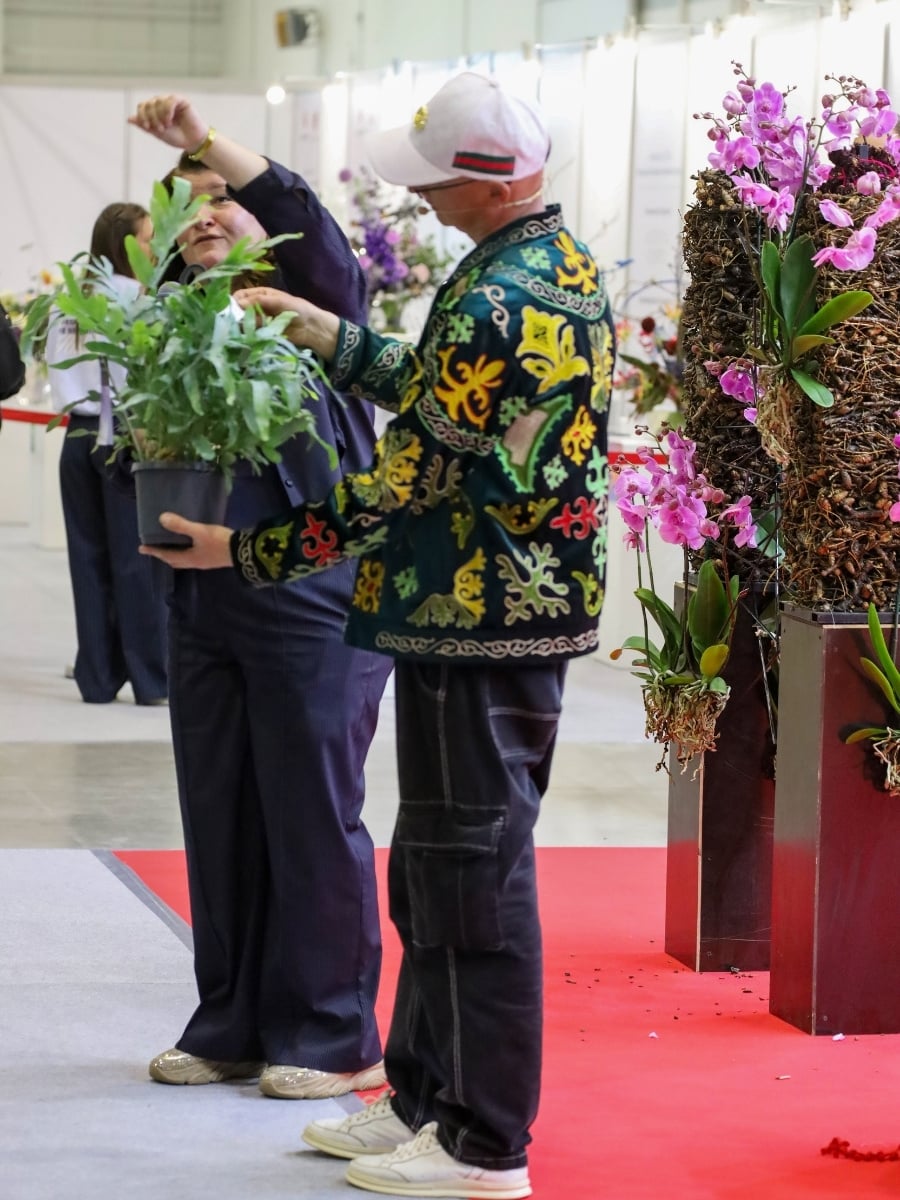
My work demonstrated how potted plants can become part of large-scale compositions and can be used not simply as individual products but as complete design materials for a space. After the exhibition, I gave all the structures I had used during my presentations to florists working in Astana.
Some time later, I saw their post showing a shop window they had designed using my structures. They did not simply reproduce what I had done at the exhibition. They reworked the structures and adapted them to their own space and style.
I was very happy to see this. My work did not disappear when the exhibition stands were dismantled. It continued in the hands of other florists and became the basis for something completely new. I think this is one of the real values of professional exchange. An idea, a material, or a structure created by one florist can find a new life and a completely different interpretation in the hands of another.
The Exhibition From the Inside
This was my first visit to Flora Expo Astana. Before that, I had followed the exhibition for many years through photographs and videos, so I was especially interested in finally seeing it for myself. I spoke with many participants who had been coming to the exhibition for several years. Almost all of them said that it had grown considerably. There were many more participants, and the geographical range of the companies represented had expanded.
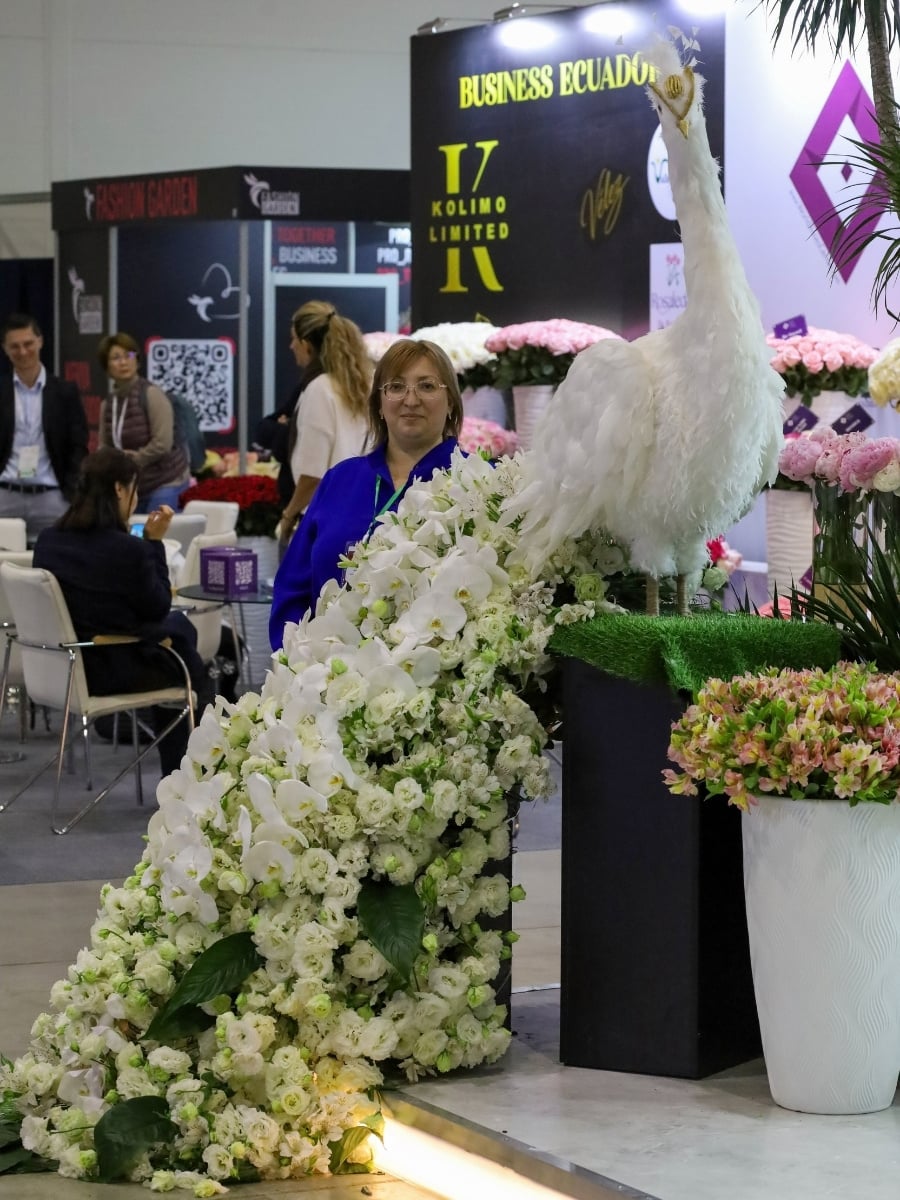
Of course, the exhibition was not only about work and stage presentations for me. It was also an opportunity to meet old friends and partners from companies I already knew and to make new connections. The geography of the exhibitors was quite broad. Companies from Ecuador, Colombia, Kenya, the Netherlands, China, and, of course, Kazakhstan were represented.
The exhibition space itself was roughly divided into two main areas. One part featured companies working with cut flowers and potted plants. The other part focused on flower production. There were greenhouse technologies, equipment, materials, and various solutions for growers.
One of the most unusual stands for visitors was one where people could see live bumblebees inside a hive. Bumblebees like these are used to pollinate plants in greenhouses. It may seem like a small detail in a large exhibition, but this stand constantly attracted people. Visitors were curious to see the bumblebees up close and learn about the work they do in modern greenhouses.
Many people stopped simply out of curiosity, looked at the hive, and took photographs. In my opinion, details like this also make a professional exhibition interesting. They allow us to see not only the final product, the flower itself, but also to understand how many different technologies and processes stand behind its production.
Floristry in Our Region
I think what is happening at Flora Expo Astana reflects a much broader process taking place in the flower market today. Central Asia is becoming increasingly interesting to international companies. Our region lies between East and West and can serve in many ways as a link between different markets.
I particularly felt this interest during the exhibition. Many companies now see the countries of our region as a promising direction. They want to understand the local market, find partners, and introduce their products here.
Over the past five years, floristry in Kazakhstan and Kyrgyzstan has changed significantly. Today, change happens so quickly that it can sometimes be difficult even to talk about trends lasting several years. Something that was popular only six months ago may give way to something completely new six months later.
Social media plays a major role in this. Today, a florist can see almost instantly what is happening in different countries, which new forms, color combinations, techniques, and materials are appearing. Information spreads at incredible speed, and floristry changes just as quickly.
I am particularly pleased that florists in Kazakhstan and Kyrgyzstan are not standing apart from these processes. They follow global trends, respond quickly to new ideas, and know how to navigate an increasingly fast-changing professional environment.
In my opinion, we can no longer say that our region is a place where international floral trends arrive with a long delay. Thanks to the openness and speed of information, that distance is becoming smaller and smaller. At the same time, there is one area that we need to develop much more actively. That is professional floral education.
Education as One of the Most Important Directions for the Future Development of Floristry
There are many talented people in both Kazakhstan and Kyrgyzstan who follow trends and want to develop professionally. But we still lack systematic professional education and strong floristry schools.
This became particularly clear to me during the competition. Watching participants from Russia, Kazakhstan, and Kyrgyzstan, I could see a certain difference. In Russia, professional floral education has been developing for many years. There is an established system of training, floristry schools, and considerable experience in preparing professionals, including for competitions.
In Kazakhstan and Kyrgyzstan, this system is still at a different stage of development, and this was visible during the competition. I am not talking about the talent of individual participants. We certainly have talent. I am talking about the professional foundation, knowledge of composition and technique, understanding of materials, and the ability to translate an idea into a professionally executed work.
That is why I believe education should be one of the most important directions for the future development of floristry in our region. We need strong schools, teachers, masterclasses, professional competitions, and opportunities for young florists to learn from experienced professionals. The more opportunities we create for high-quality professional education in our region, the faster our floristry will develop.
Meeting the Dutch Ambassador
I would also like to mention another meeting that took place during the exhibition. Flora Expo Astana was visited by Nico Schermers, Ambassador of the Kingdom of the Netherlands to Kazakhstan and Central Asia. I was introduced to him and to his wife, Ellada Alaverdyan.
After the exhibition, something happened that I remember particularly warmly. Ellada contacted me with an idea for a charitable initiative. They wanted to use my bouquets, as well as the works created by participants in the competition. By that time, I had already left the exhibition, and the Embassy representatives did not know who among the organizers they should contact about the idea.
I helped the Embassy staff connect with the organizers of Flora Expo Astana, and the idea became a reality.
It was especially important to me that after the exhibition, the flowers and bouquets were not simply dismantled or thrown away. The works that had been created for the stage and the competition were given another life. They became part of a charitable initiative and were able to bring joy to other people.
For me, this was a beautiful way for the exhibition to end. The flowers that had been part of a professional event for several days were able to fulfill perhaps their most natural purpose afterwards. They brought positive emotions to people.
What Remained After the Exhibition
One of the most important results of the exhibition for me was the number of new connections, conversations, and proposals for possible future cooperation. One proposal particularly stayed in my mind. Representatives of one company suggested the idea of organizing my floral show in China or Kenya. At this stage, it is still only an idea, and the project has not yet happened, but I was very pleased by the proposal itself.
I would genuinely be interested in working in these countries. For me, it would not be enough simply to arrive and show something I had already done before. I would first want to understand the culture of the country, experience its traditions, see its nature, architecture and art, and understand how people there relate to flowers.
Then I would want to process those impressions through my own perspective and combine them with my own design language. I think this approach could lead to completely new work in which my own style interacts with the culture of the country for which it is created.
I still feel the results of Flora Expo Astana today. Companies continue to contact me because they are interested in entering the Kyrgyz market and introducing their products to local florists and customers. I am currently working with several Dutch companies, and we already have plans for their further promotion in Kyrgyzstan.
Judging by the inquiries I continue to receive, the interest of international companies in our market did not end when the exhibition doors closed.
How I Would Like to See Flora Expo Astana in the Future
I have had the opportunity to visit a major international flower exhibition in Beijing. Its scale was enormous and made a strong impression on me. I would therefore like to see Flora Expo Astana continue to grow and develop and, over time, come closer in scale and international significance to exhibitions of that level. I believe Astana has every opportunity to achieve this.
Kazakhstan and our region as a whole occupy a very interesting geographical position between East and West. Flora Expo Astana therefore has the potential to become a platform that is equally interesting to European companies and to growers and representatives of the flower industry from China and other Asian countries.
I would like to return in several years and see even more countries, more growers, more florists and more professional projects. I sincerely hope Flora Expo Astana continues to develop in this direction and becomes one of those international exhibitions that professionals from different parts of the global flower industry plan to visit well in advance. Instead of a conclusion.
Events Like This Have a Completely Different Value
If you ask me whether this exhibition changed my life, the answer is of course no. Over the years of my professional career, I have taken part in many major international events. One exhibition can no longer completely change my life or my relationship with my profession.
But events like this have a completely different value for me. They give me emotional energy. I sometimes call these trips and meetings my professional antidepressant. Conversations with colleagues, new connections, the stage, the audience, new ideas and new impressions give me an enormous amount of energy. Sometimes that energy really does last for many months.
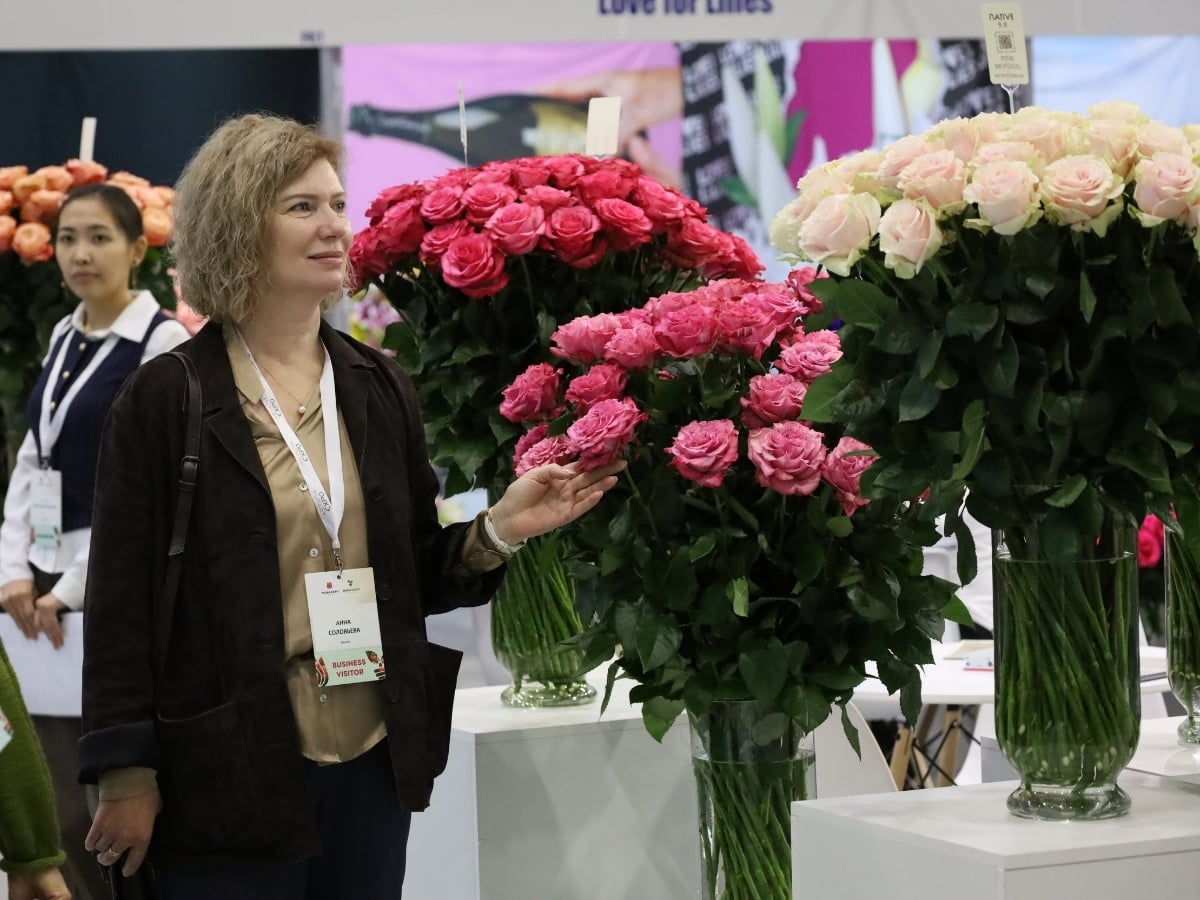
Now that several months have passed since the exhibition, I can feel this particularly clearly. The spring and summer of this year were very productive for me, and I entered the autumn season with good results, new contacts, new projects and a strong desire to continue working.
Returned Home With Far More Ideas, Contacts and Plans
Perhaps this is why I continue to love exhibitions like this. After so many years in floristry, simply taking part in a major professional event is no longer enough to surprise me. But the people I meet, the conversations, the new ideas, and the energy I bring home with me are still extremely important.
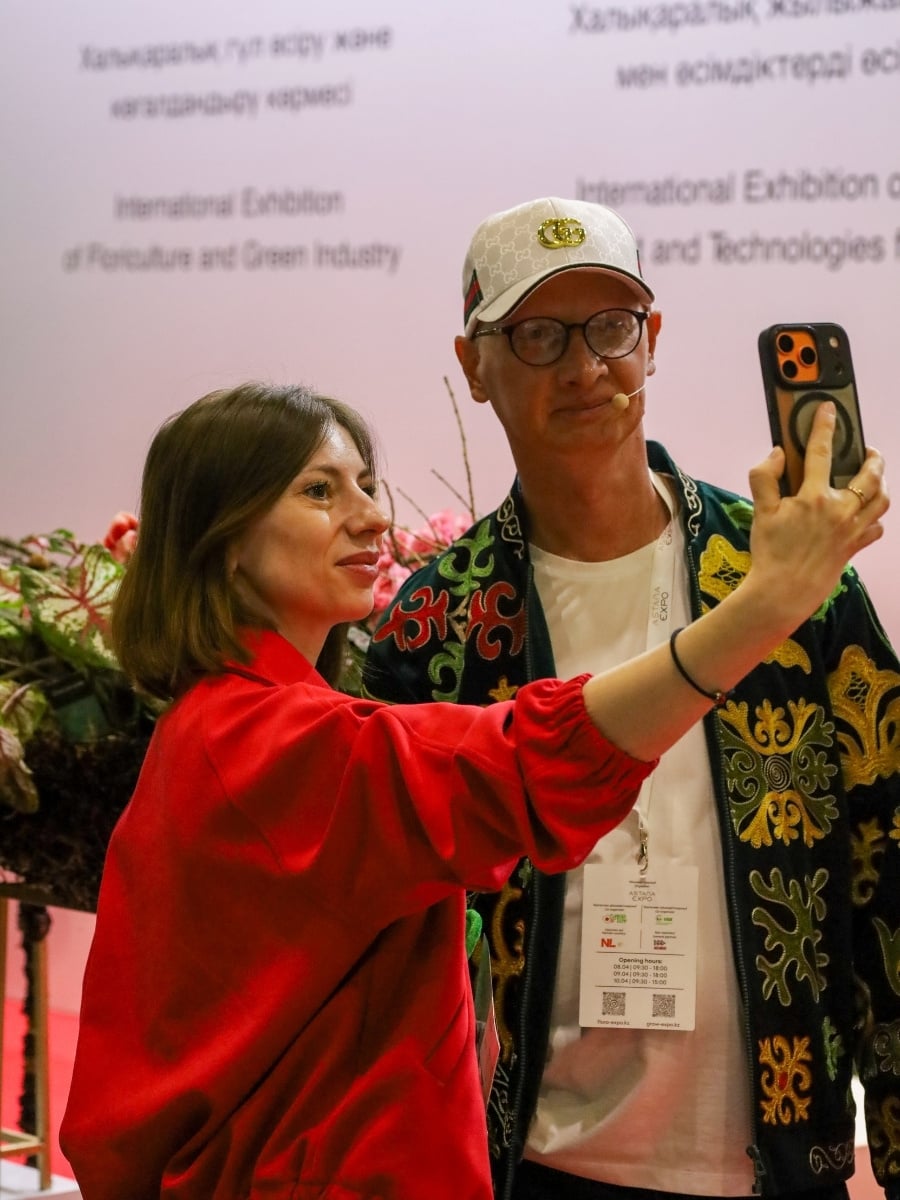
Flora Expo Astana gave me exactly that. It brought new connections and projects, some of which continue today. It allowed me to step onto the stage, share my experience, and at the same time see and learn something new myself. I came to Astana as a florist from Kyrgyzstan to represent Decorum, but I returned home with far more ideas, contacts, and plans than I had brought with me.
For me, this is probably the main result of a good professional exhibition. The exhibition ends, the halls close, the structures are dismantled, and the flowers are taken away. But what you receive from those few days continues to work inside you for a very long time.
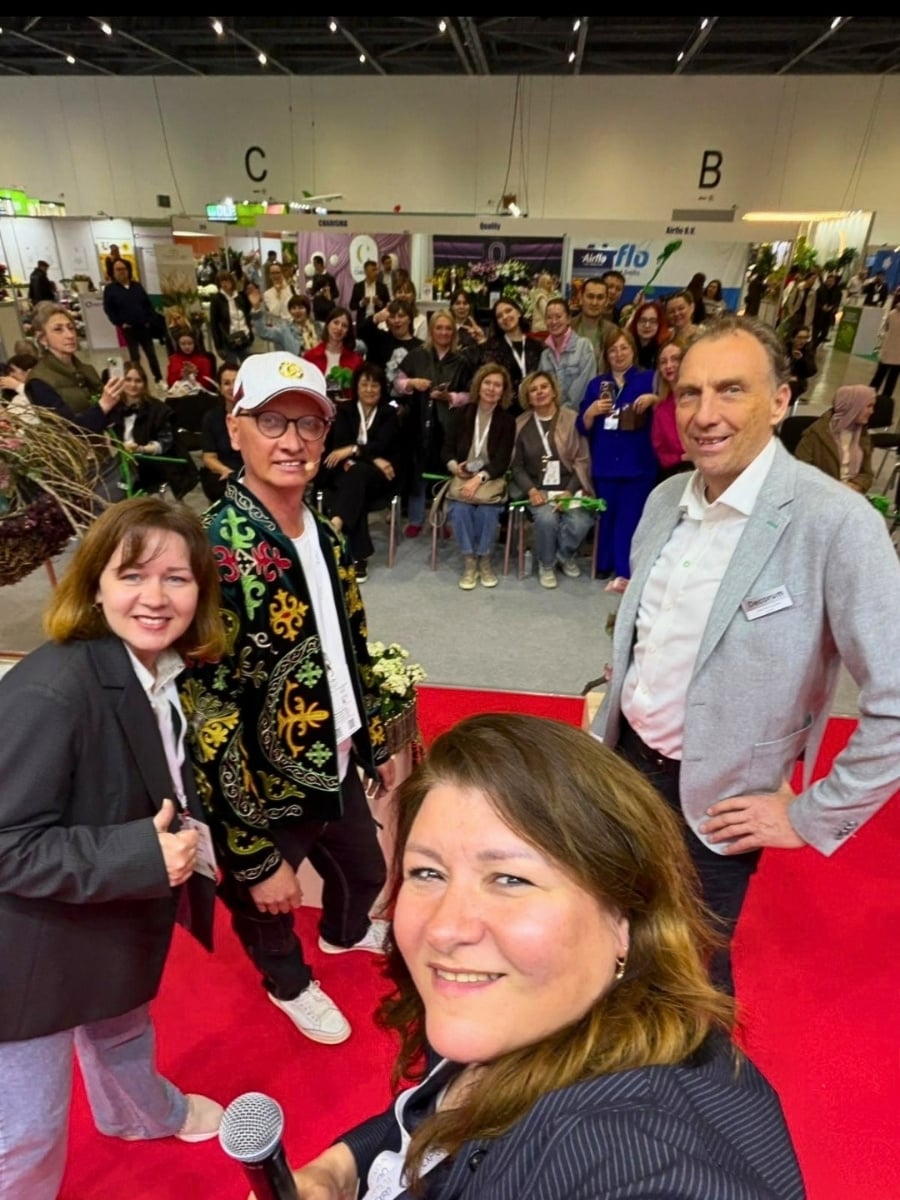
If, in a few years, Flora Expo Astana really becomes one of the major international platforms connecting East and West, I will be especially happy to know that I was also part of that journey.