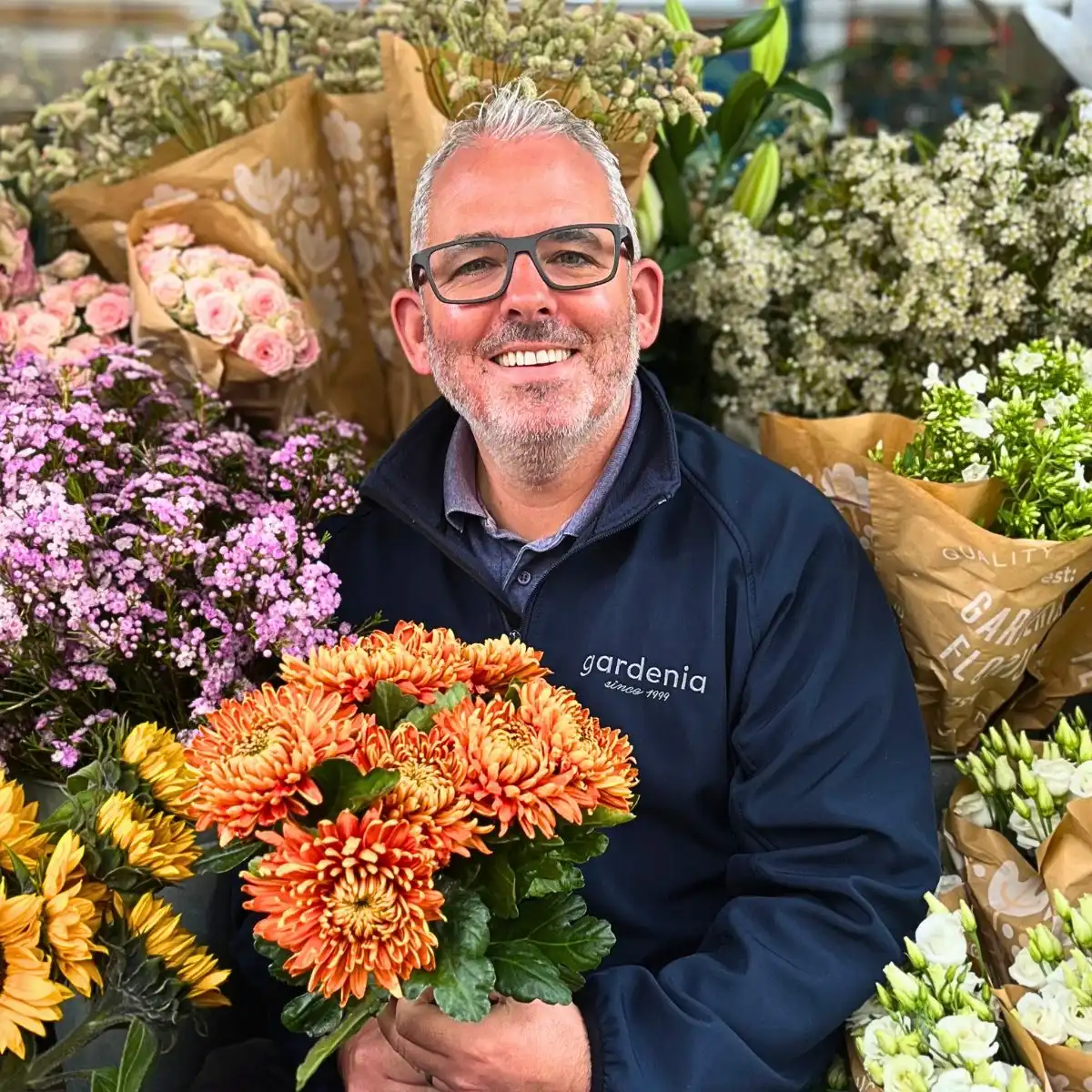
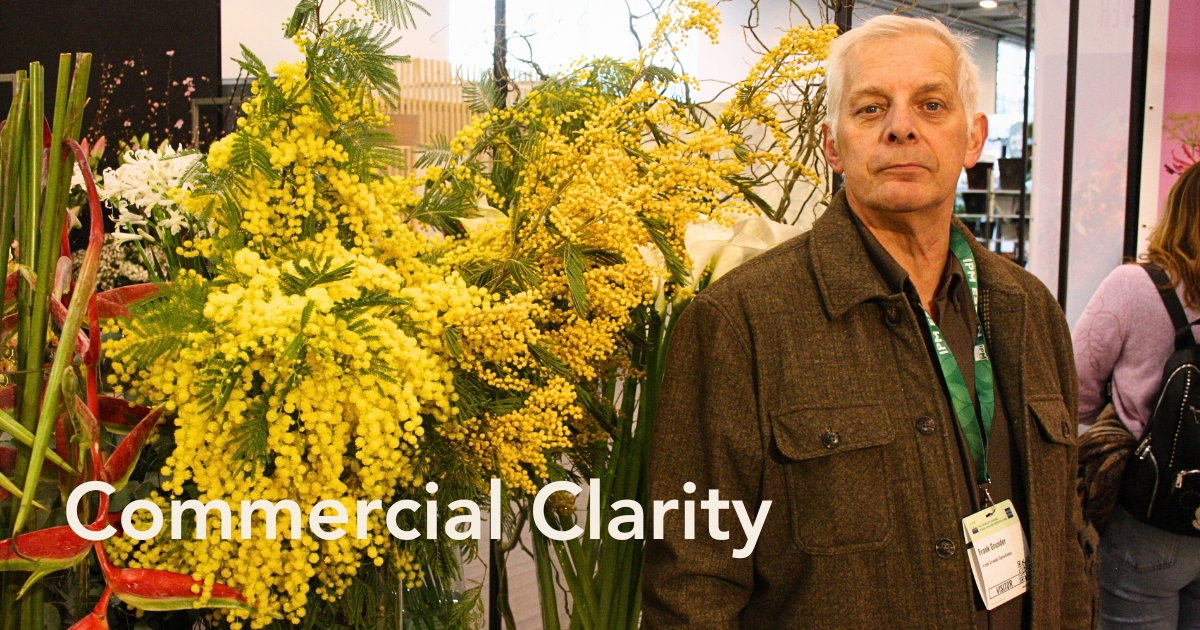
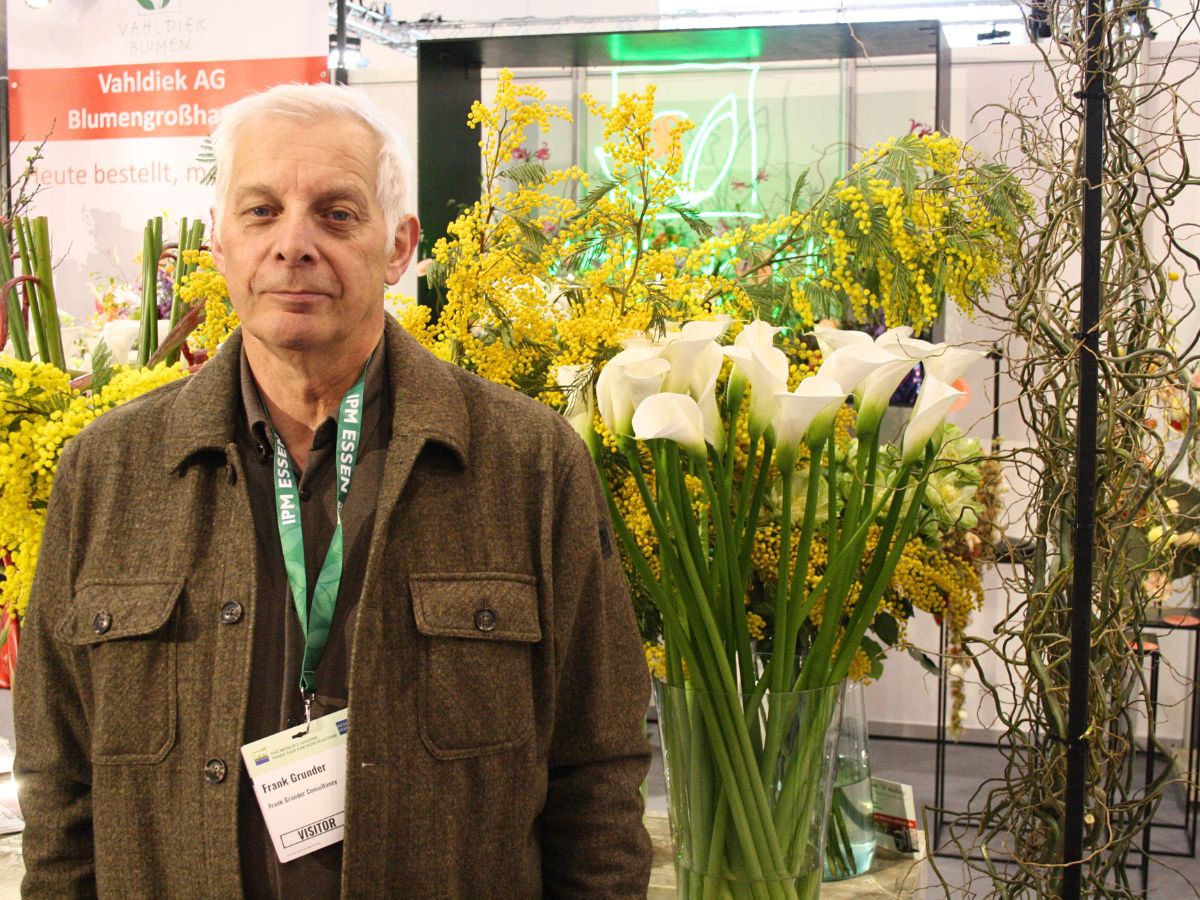
This week's 10 Questions features Frank Grunder, a Rotterdam-born consultant who transitioned from heavy industry into European horticulture and built a career at the intersection of sales, finance, and grower strategy. With fifteen years of hands-on experience across Europe, Africa, and South America, Frank offers a rare, structured view of how offer, sales, logistics, and finance must align to create profitable cooperation.
His reflections on COVID-19, the energy crisis, digitalisation, climate pressures, and the rise of artificial flowers reveal both the resilience and vulnerabilities of the floral sector. You will find his story intriguing because it blends commercial clarity with personal conviction, offering insight into where the industry stands today and where it must step up tomorrow.
Question 1
For those who don't know you, who are you and what do you do?
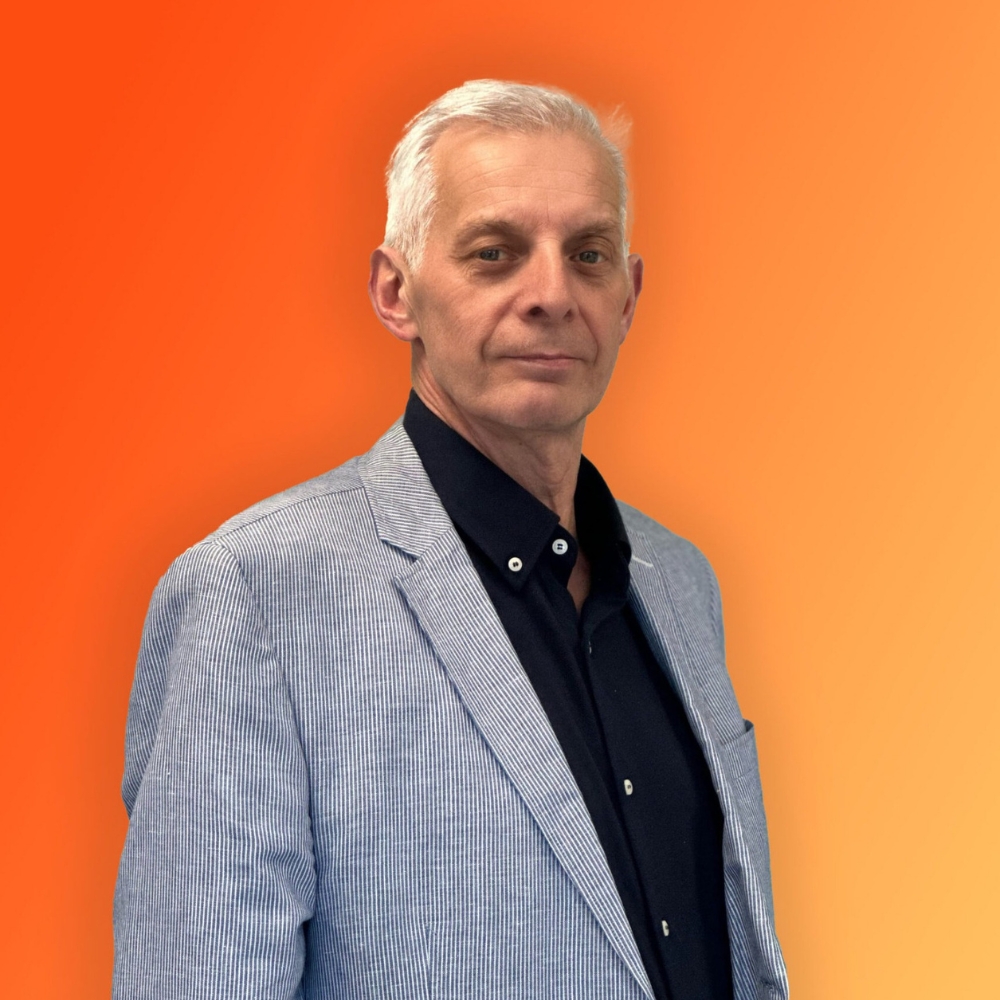
"I am Frank Grunder, born in Rotterdam, Holland, family man, married to Liesbeth, father of 2, and blessed with 3 lovely grandchildren. Coming from the heavy industry, I entered the European Horticulture world 15 years ago as a consultant, and almost immediately, I was captured by the professionalism and passion of this industry. By working first on a financial platform, Ai2, I visited growers and exporters daily and got a good insight into their workflow and passion for working with flowers and plants.
From this position, I also started to work as a consultant in advising and guiding growers on the commercial side of the horti-business, which is creating an interesting combination of sales and finance. It's my daily job and expertise to advise growers on the commercial side and to connect them with the right companies in order to create a profitable co-operation."
Question 2
What is so special about your job?
"In my job as a consultant, it is very important to understand the growers and to have the right overview of the four different pillars of this industry: Offer, Sales, Logistics, and Finance. No matter if it's Europe, Africa, or South America, all depend on these four pillars, which need to be organised in all companies. To deal with and to work within these four different disciplines and combine them where possible makes my job highly interesting."
Question 3
Are there any specific challenges or obstacles you've faced in your job, and how did you overcome them?
"Same as many other collegues COVID-19 was a strange, difficult, and threatening period in everybody’s life, business-wise and privately. Nobody had an idea how it should end and what would happen to the Horti-Industry, but when COVID slowly disappeared, we saw the incredible flexibility of our industry. Unfortunately, one year later, the energy crisis, another disaster hits the horti-world again, which leads to bankruptcy and growers closing down their businesses.
Also during this period, it was very challenging for growers, buyers, and consultants to stick to their strategies, not making emotional decisions and keep focusing on their own organisations. The advantage, though, was that we were forced to look into the technical side of the growers' operations, and that led to a situation that was giving a huge increase in time-saving and cost-reduction solutions."
Question 4
What are the threats in the industry, and if so, do you have any solutions for them?
"For me, there are two big threats that are affecting our industry. First, the global climate change. It's very visible that this is disrupting the growing process of all different crops worldwide. All over the world, many organisations are working on this to let it stop as much as possible, and we all should 100% support these organisations to protect the entire horticulture industry.
Another threat is that over the last two years, there has been an ongoing negative publicity in the international media towards the flower industry, the narrative being about the environment, using wrong pesticides, wrong growing techniques, etc., our growers are trying to do whatever they can to do it better and in the best possible way. The result of this negative publicity is that the sales of artificial flowers are increasing very fast. In my opinion, big organisations like Royal Flora Holland or the Plants & Flower Foundation should fight and lobby all over the world to tell the right stories and to protect the industry. In my opinion, this is happening too late or on a low level."
Question 5
How has technology like e-commerce platforms or digital marketing affected your industry? Which strategies have you employed to stay competitive?
"In my opinion its simply impossible to stop the development of digitalization, e-commerce, or whatever platform. Only when you look world-wide its clear that there is a kind of digital jungle and everyone wants the same, and all are approaching the same target groups. For the growers and buyers its not easy to make the right choices when choosing the right software packages. For me, it is important that the software package you choose can connect to all possible e-commerce platforms. Royal Flora Holland's Floriday is working well, but there are so many companies that are not members of the auction, and we simply want to do business with them as well.
We all noticed over the past 2 years that the sales of flowers and plants are moving from the traditional consumer channels like flower shops to the bigger retailers, and as a grower, you need to be digital-ready for these organisations. Regarding marketing, we all have our own websites, Facebook, and Instagram promos, but if you look over Europe or even worldwide marketing channels like Thursd are so important to promote your products over the world. Thursd is a good example of a guy building a marketing/promotion platform from close within the surroundings of the world's most important auction, to several offices and managers around the world. This is what the industry needs to get the attention it deserves."
Question 6
Who (in or outside the floral industry) is an inspiring example to you? And Why?
"Everyone has role models or people they look up to. Preferably someone within the industry, but if you don't know of anyone, an outsider can be exciting to hear about as well.
For me, 2 examples inspired me in the last 2 decades. First is Barack Obama, who, as president, managed to overcome several prejudices and was a symbol of hope for millions of people worldwide. He managed to change the lives of people and to show that nothing is impossible. The second inspiration is the input I get daily from young growers who are managing their farms in a ’26 way, using the opportunity of modern techniques, taking care of their environment and their people. It's a great pleasure to work with them."
Question 7
How do you handle stress or difficult moments in your life?
"Stress or difficult moments are a part of our lives, but by the end of the day, we need to go on. For me on this moment its always important to talk, discuss, or ask advice to the right people, step out of your own bubble, and listen first before taking action."
Question 8
What has been the best (floral or non-floral) news for you lately, or of the last year?
"In our lives, the best news is to be healthy. Looking at business, I think the best news was that the flowers and plants industry survived the COVID-19 and energy crisis in good shape.
I visited Kenya several times over the last 3 years, and it's also important for me to see how the Kenyan farms are increasing their quality and production in a fast and solid way. Of course, there is still a lot of work to do, but I am very curious how this development will continue."
Question 9
Which is your favorite flower and why?
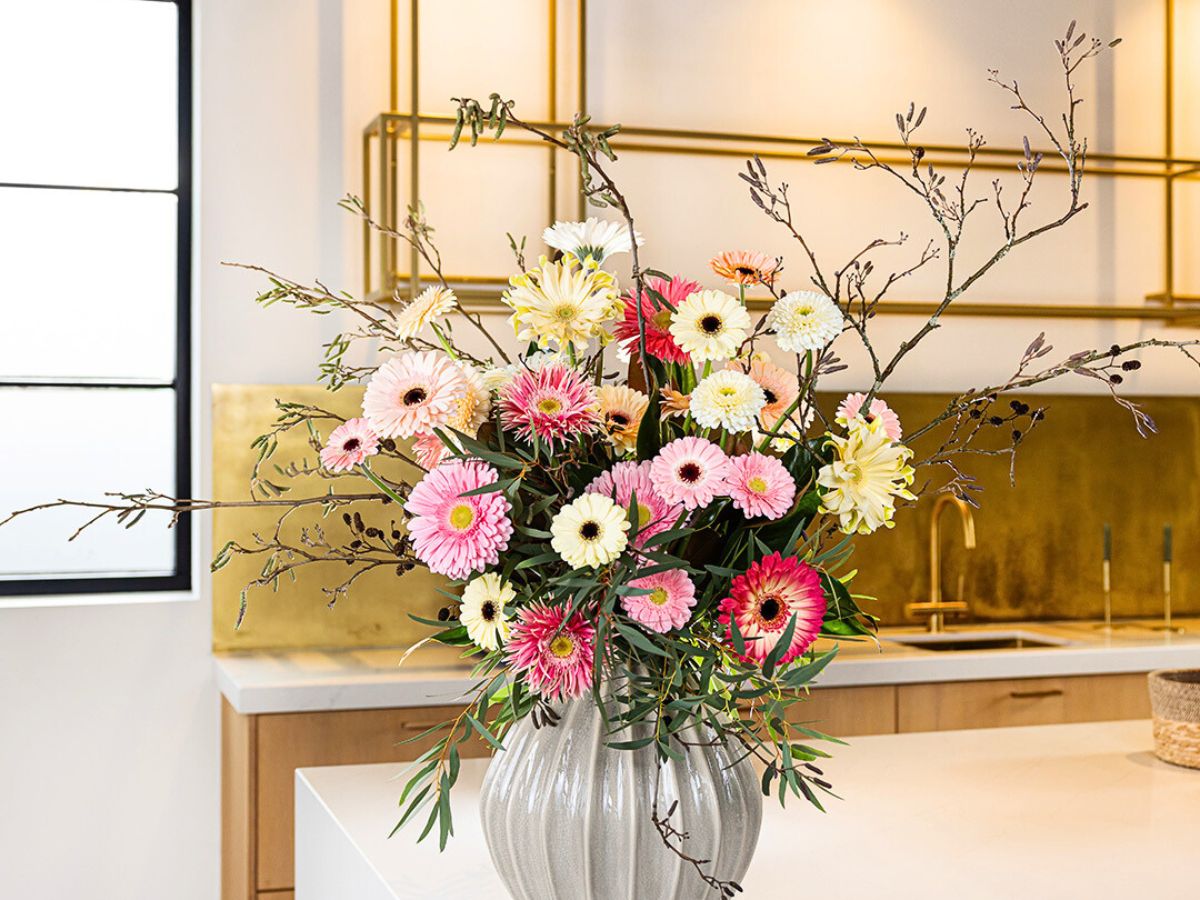
"One of the first growers I visited 16 years ago was a Gerbera grower, "Zuidplas". I remember that the owner, Mr. Juriaan Weerheim, showed me the greenhouses, and the only thing I could say was … WoW. The ocean of colors smiling at you is something I will never forget."
Question 10
What are you doing this weekend??
"After 2 weeks of several exhibitions and business going on, this weekend I will celebrate my grandchild's birthday, start watching the winter-olympics and relax a bit. For the industry, Valentine's Day is coming, so it will be busy from Monday onwards.
Frank Grunder's journey reminds us that behind every strong horticultural business stands clarity, resilience, and the courage to adapt. From navigating global crises to advocating for better storytelling in the floral sector, his perspective reflects both experience and forward thinking.
Do you know someone in the floral industry whose story deserves the spotlight? Send your recommendations to edwin@thursd.com and let us continue sharing the voices shaping our industry.
All pictures courtesy of Frank Grunder.