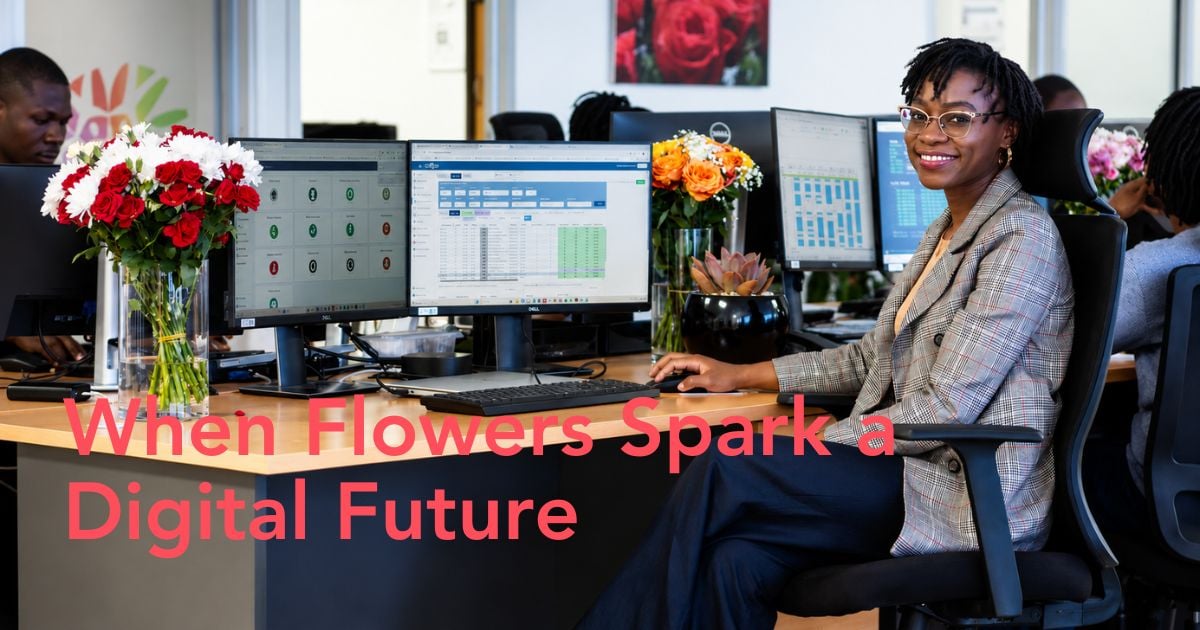
Pose a question: what does a flower farm give back to its community? And the answer usually stops at the obvious: school fees, a clinic, clean water, maybe a scholarship fund for girls. Those stories are often told, and rightly so; they're real, and they matter. But at Tambuzi, the scented garden rose farm outside Nanyuki, the community investment took a different shape more than a decade ago, and it's still shaping young lives today: computers, connectivity, and digital literacy.
Two Rose Farmers and a Radio
In the early 2010s, Tambuzi founders Tim and Maggie Hobbs faced a problem familiar to any rural exporter: running a business that sells globally from a region with almost no reliable internet access. Maggie Hobbs has described having once had to drive 8 miles to retrieve a single email.
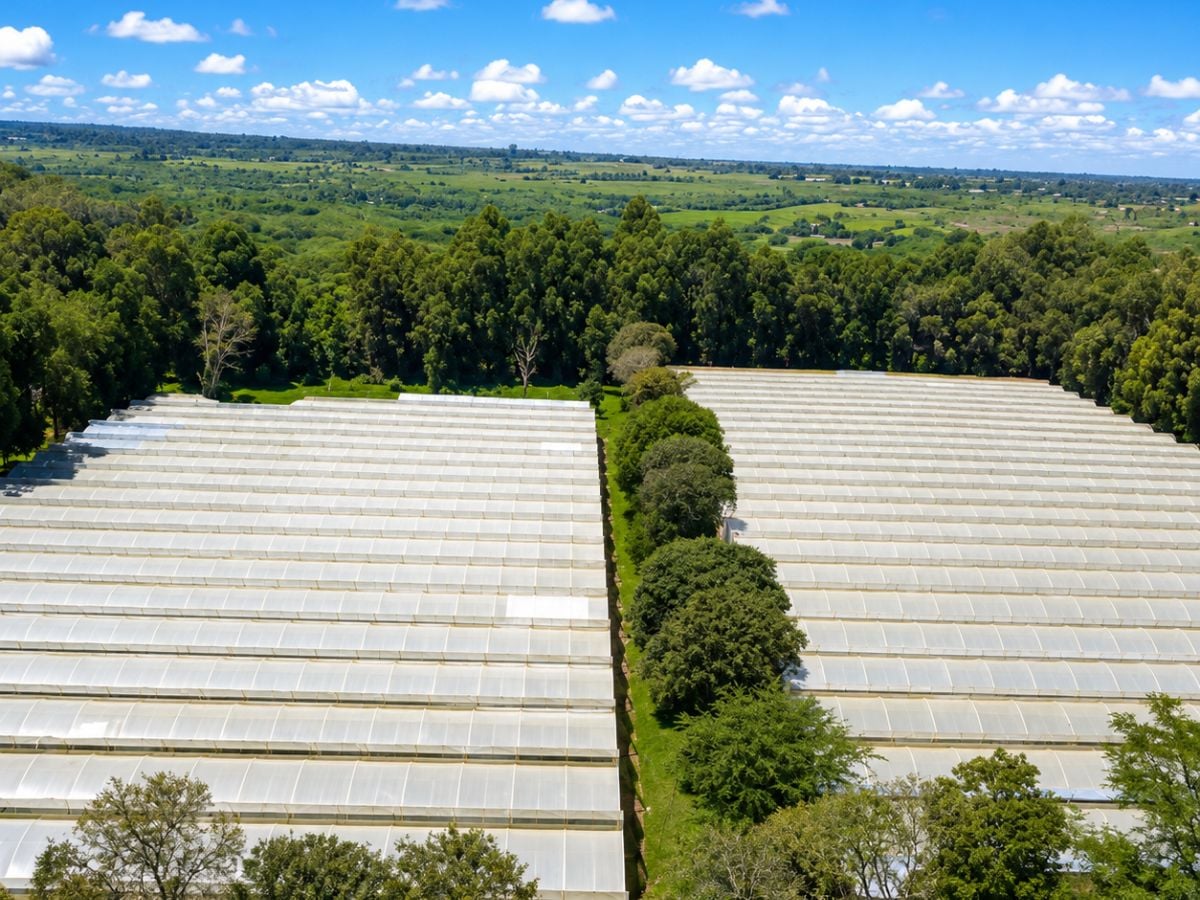
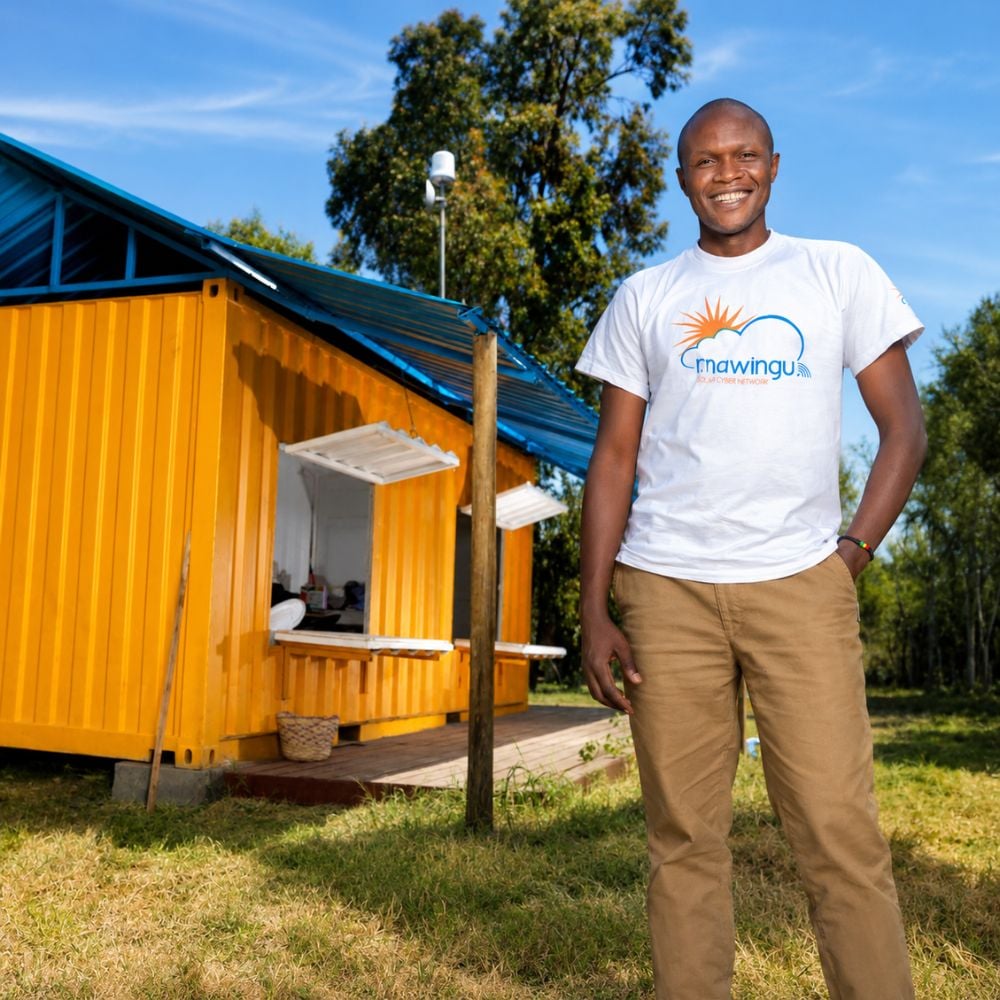
Around 2012, a chance reconnection with an old friend, Malcom Brew, changed that. Brew had been experimenting with "TV white space" technology, using unused broadcast spectrum to deliver wireless internet across long distances without needing traditional infrastructure. Maggie Hobbs, who had already spent 15 years working with schools in the Nanyuki area, saw the opportunity immediately. The result was Mawingu Networks, co-founded by the Hobbses with Brew, and piloted with support from Microsoft's Affordable Access Initiatives team.
Tambuzi became the incubator site for the project, largely because the farm already had the basic infrastructure a pilot needed. From there, the network grew to connect schools, a public library, the Red Cross office, the local county government, and the Burguret Dispensary health clinic.
The Numbers Behind the Signal
This wasn't just symbolic connectivity. Gakawa Secondary School, one of the schools brought online through the project, saw its students improve their scores in every subject on Kenya's national exam within two and a half years of getting connected, according to the school's principal at the time. A solar-powered internet cafe on the edge of Nanyuki, run by local entrepreneur Benson Maina, became a daily hub for students doing schoolwork, farmers seeking information, and young freelancers earning online income without relocating to Nairobi.
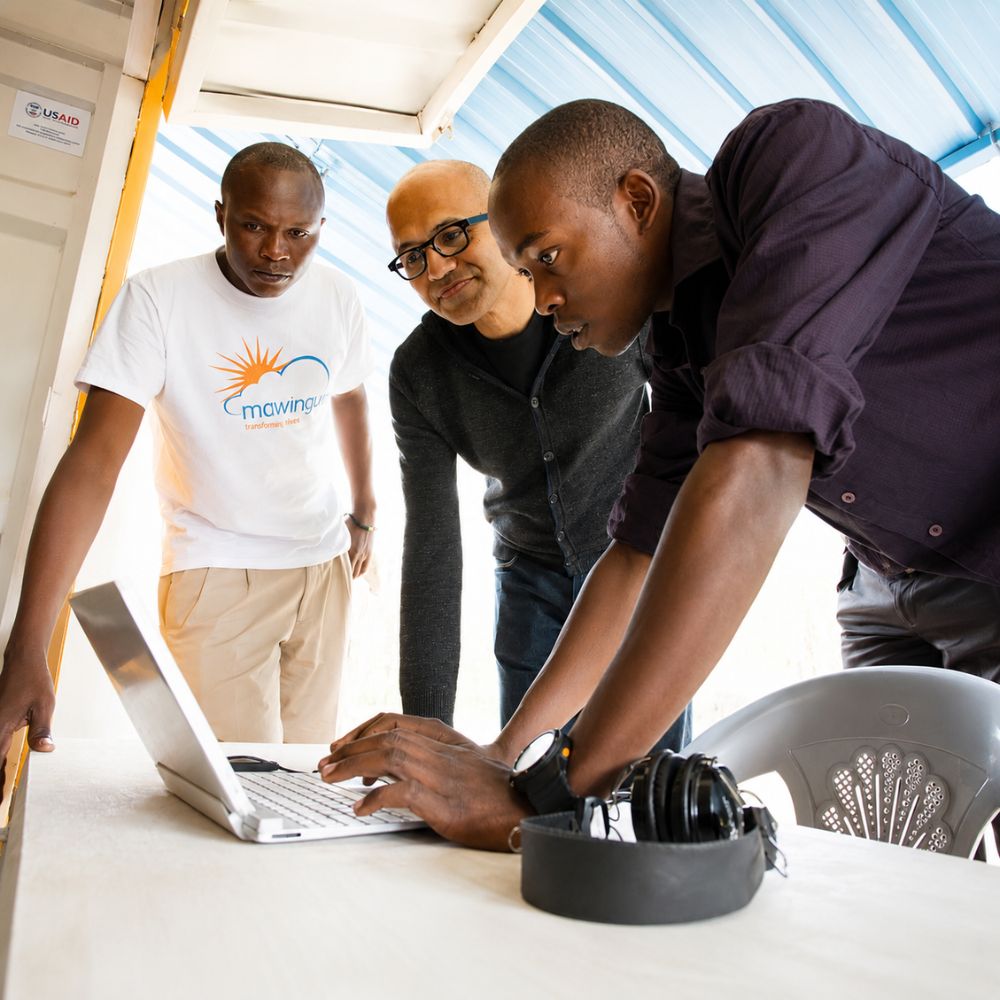
Microsoft's own research at the time found that over 95 percent of surveyed residents believed the connectivity would improve their community, and more than 90 percent believed it would improve their personal circumstances. When Microsoft CEO Satya Nadella visited Kenya in 2015 to mark the launch of Windows 10, Nanyuki and Tambuzi were among the stops.
What's Still Running Today
The pilot project is now over a decade old, but its legacy at Tambuzi hasn't faded into a one-time press story. According to a former Tambuzi employee, the farm still runs an on-site computer lab, complete with a dedicated teacher, providing ongoing computer literacy instruction to children and young adults from the surrounding community to this day.
That detail matters more than it might first appear. A lot of corporate community investment is built to generate a single good headline: a donation, a ribbon-cutting, a photo with a visiting executive. What's harder to find, and far more valuable, is a program still quietly running a decade later, teaching a new group of students every year, long after the cameras and the CEO visit are a distant memory.
Why This Deserves More Attention
Kenya's flower sector supports well over 100,000 jobs. As farms modernize with sensors, data systems, and automation, the demand for digitally literate workers in these rural communities will only grow. Tambuzi's story shows what it looks like when that need is anticipated rather than reacted to: a farm that decided, over ten years ago, that connectivity and computer literacy were as core to community wellbeing as clean water or a school fund, and then kept funding the teacher and the lab long after the story stopped being newsworthy. The same argument runs through the case for flowers flown across the world.
Most of the flower industry's community-investment coverage focuses on health, education, and welfare, and for good reason. But Tambuzi's decade-long digital literacy program is a reminder that some of the most consequential community investments an industry can make don't look like a farm at all. It looks like a classroom full of laptops, and a teacher who shows up every day to make sure a new generation of Nanyuki's young people isn't left on the wrong side of the digital divide.