A goddess knelt over a dying hunter, and where his blood met her tears, a red flower came up. That's the story the Greeks told about the anemone, and it never quite left the flower. So what's the anemone flower meaning? Love, and the fear of losing it. Anticipation, protection, and the fragile kind of beauty that doesn't last forever. The color you pick then says which part you mean, from the deep red of the myth to the white petals and black heart of an Anemone Mistral Panda. And if the bunch on your table came from a florist this winter, chances are it was grown in the cool highlands of the Andes or on the Italian Riviera.
What Does an Anemone Symbolize? Love, Loss, and Anticipation
Ask a florist, and you'll usually get the same short answer: the anemone flower stands for love that comes with a little ache. Few flowers carry dual meanings this openly. That mix runs through every tradition the flower touches. In the Victorian language of flowers, the anemone meant forsaken love, a message you'd rather not get in a bouquet. Modern florists read it kinder. To them, anemone symbolism is about anticipation and protective love, a flower that closes its petals at night and opens again in the morning light, as if it's waiting for something good to happen.
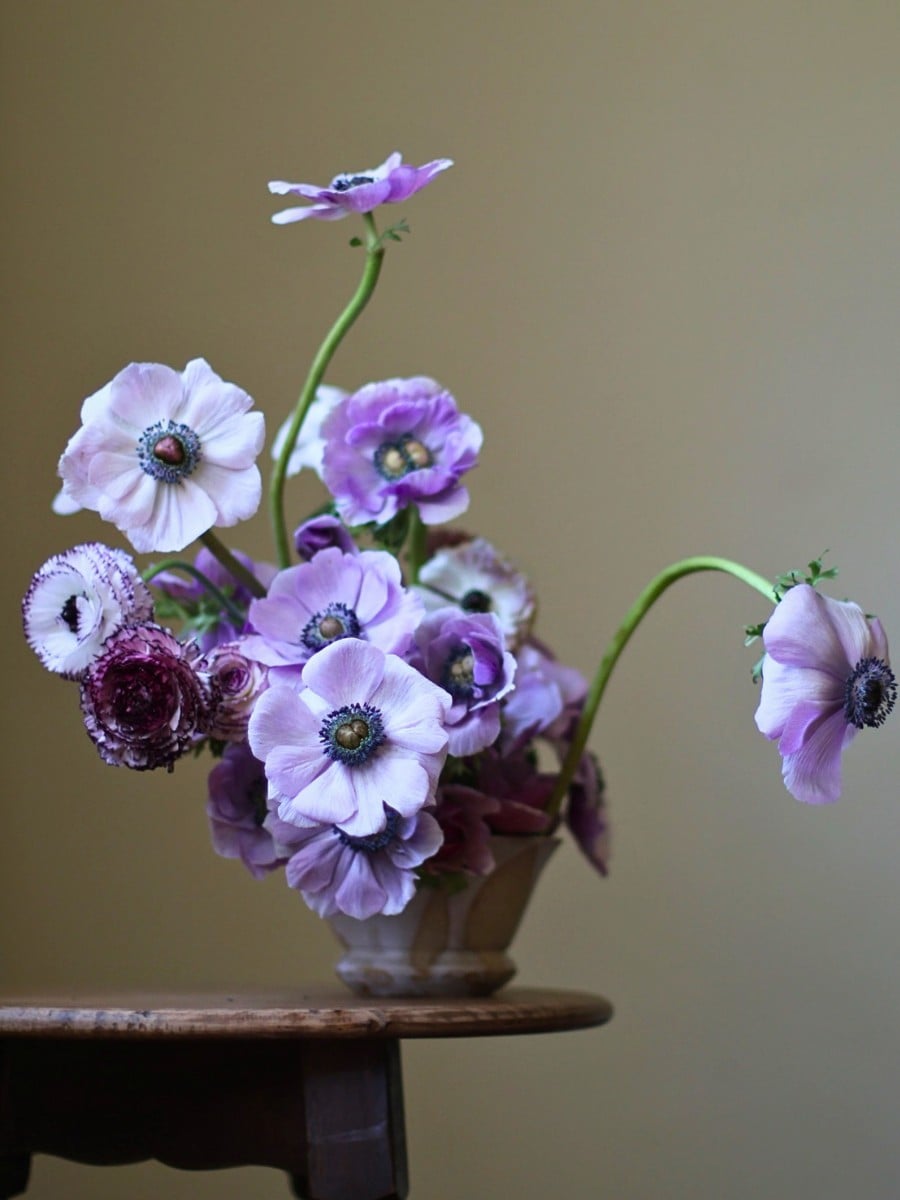
Both readings come from the same place. Anemone flower symbolism has always been about someone you love and what you'd give to keep them. Which is why it works for a wedding and a funeral, and why it's worth knowing the story before you hand one over.
The Myth of Adonis and the Windflower
Greek mythology gives the anemone flower its saddest and best-known story. Here it is. Adonis was a young hunter so beautiful that Aphrodite, the goddess of love, fell for him. She warned him to stay away from wild animals. He didn't listen. A wild boar wounded him, and he died in her arms. In the Roman poet Ovid's version, the Metamorphoses, the goddess sprinkled nectar on his blood and a flower the color of blood rose from it. Its life was short, Ovid wrote, because the same winds that gave it its name shook its petals loose.
That name is the second half of the story. Anemone comes from the Greek word for wind, anemos, which is why anemones are still commonly called windflowers. Some tellings say the anemone grew from Aphrodite's tears instead of from Adonis's blood. Either way, the Greek myth made the red anemone the flower of a love that ends too soon. More of these stories are collected in flowers in Greek mythology, and the anemone is one of the best.
The story kept traveling. In the Holy Land, where the red Anemone coronaria covers hillsides every spring, early Christians linked its color to the blood of Christ, and some botanists think the "lilies of the field" in the Gospel of Matthew were actually these anemones. In 2013, Israelis voted it their national flower in a public poll. The Hebrew name, kalanit, comes from kala, the word for bride.
Anemone Symbolism in Other Cultures
Not everybody hears the same message. The symbolic meaning of the anemone shifts with the culture, and some of that anemone symbolism is a lot darker than a wedding bouquet.
In Victorian England, the language of flowers gave the anemone the meaning of forsaken or forgotten love. Folklore elsewhere in Europe went the other way and treated the flower as a charm against evil and ill luck: European peasants are said to have carried anemones to keep illness away. In several Eastern cultures the flower is often described as a sign of bad luck or illness, and some flower-meaning guides say ancient Egyptian culture saw it the same way. Those claims get repeated a lot and are hard to trace to a first source, so treat them as stories, not rules. Still, if you're sending anemones to someone with roots in those traditions, a quick check doesn't hurt.
And the wind? The ancient Greeks named it, and the Roman writer Pliny the Elder claimed the flower only opens when the wind blows. Whether the name came from the myth or from that habit, the anemone flower has been tied to spring breezes ever since. For some people that's a lovely thought. For others, a flower that arrives with the first spring winds is bad luck.
Anemone Meaning by Color
Color is where the meaning gets personal. These readings come from florist tradition, not from any rulebook, but they're the ones the person you give them to will probably know.
Red Anemones: Love and Sacrifice

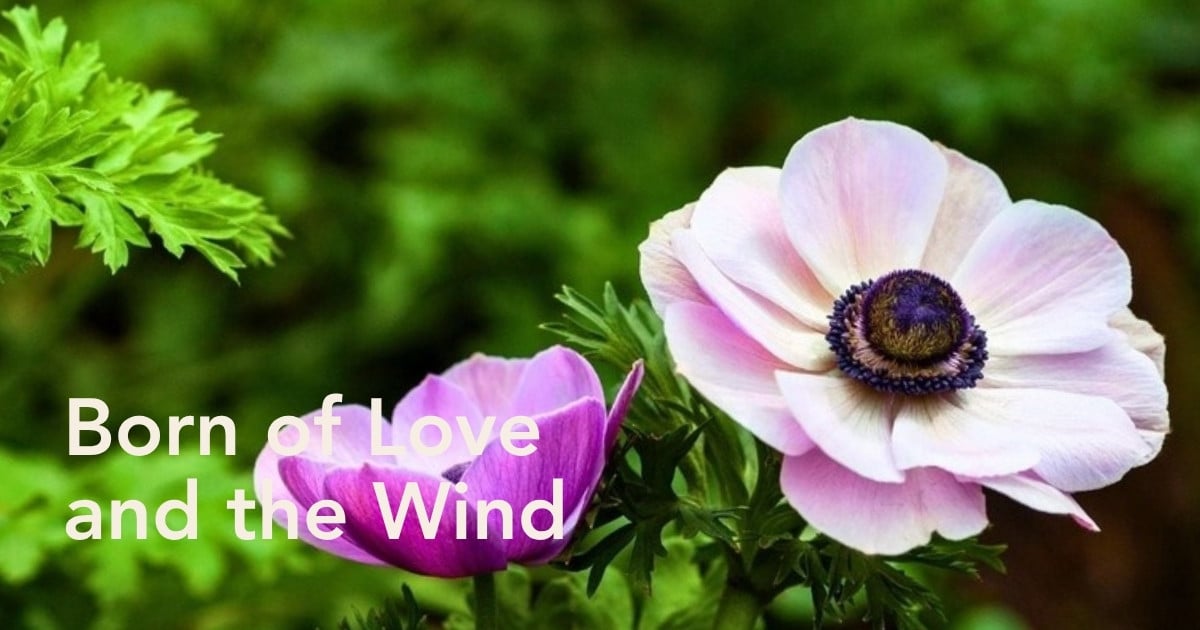
Red is the color of the myth, so red anemones carry its full weight: deep love, passion, and the sacrifice that sometimes comes with it. The Victorians read the red anemone as forsaken love, so pair it with a note if you mean the happy version. They're a striking alternative to red roses on Valentine's Day, and a little more honest about how love actually feels.
White Anemones: Sincerity and Remembrance
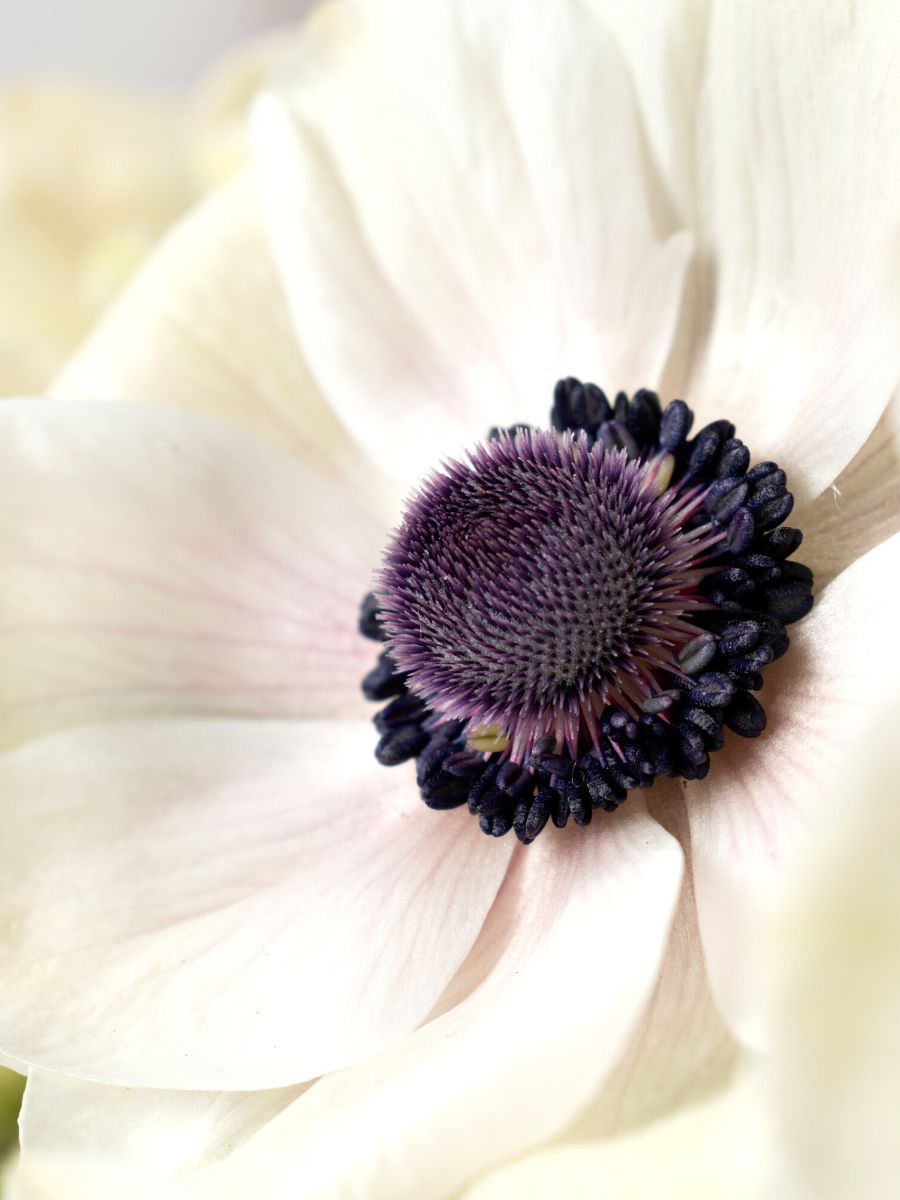
White anemones stand for sincerity, purity, and innocence. Brides love them for exactly that. But white is also the color of remembrance in much of the West, so a white anemone fits a sympathy arrangement just as well. The list of popular sympathy flowers shows what pairs well with it.
Purple Anemones: Protection and Admiration
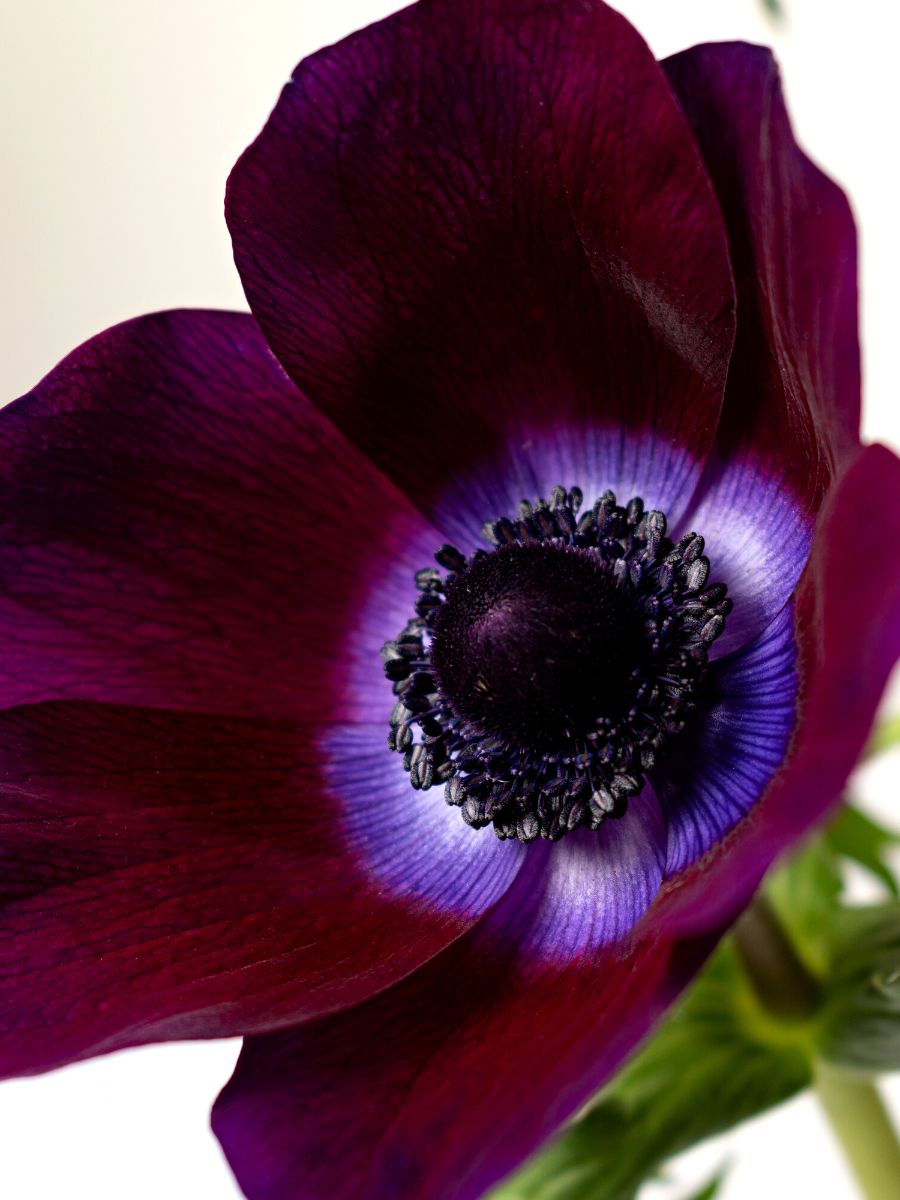
Old folk tradition credited the anemone with keeping evil away, and purple is where that idea lives on. A purple anemone means protection, respect, and admiration. Give it to someone starting something scary, or to someone you look up to.
Pink Anemones: Anticipation and Affection

Pink is the hopeful one. It says affection, gratitude, and anticipation, the feeling of waiting for good news. Pale pink leans softer and more romantic. A bunch of pink anemones works for a birthday, a new baby, or Mother's Day without saying too much.
Blue Anemones: Calm and Trust

Blue anemones are one of the few naturally blue-violet cut flowers you can buy, no dye needed. They stand for calm, loyalty, and trust. Florists like them for blue bouquets because they bring real color where blue is usually faked. For the wider story of the color, see blue flower meaning.
Black-Eyed White Anemones: Contrast and Confidence

Then there's the one everybody photographs. White petals around a black center are the anemone's signature look, and they read as confident, graphic, and a bit cheeky. Anemone Mistral Panda is the best known, with Anemone Mistral Panda Blush adding a soft pink glow around the eye. The Panda even introduced itself to Thursd readers once, in its own words, as a dainty party disruptor. Dark centers are also why anemones turn up in lists of the best black flowers for weddings.
Anemones as Winter and Spring Cut Flowers
Here's what surprises most people. The anemone you buy isn't a summer flower at all. The genus Anemone has around 200 species, but the cut anemone, Anemone coronaria, is the one florists work with, and it's a cool-season crop. It grows from small corms and flowers in the cold months, which is why florists think of it as a winter and early spring flower. In the garden, it blooms from late winter into early spring, among the first flowers of the year. It's at its best from late fall to spring, right when weddings, Valentine's Day, and Mother's Day need it most. Italian growers have filled that window for generations, and anemones still appear among Italian spring flowers every March.
In a vase, an anemone does something few cut flowers do. It keeps growing, and its flowers keep opening in the light and closing in the dark, the petals closing at night like they're done for the day. Cut the stems at an angle, give them cool, fresh water and a shallow vase, and keep them out of direct sunlight. You'll get about a week of that daily show, sometimes a little more. Don't put them next to a heater, they hate the warmth.
Don't confuse it with the Japanese anemone, by the way. The Japanese anemone is a tall garden perennial that blooms in late summer and fall, in soft pink and white, and you'll rarely see it in a florist's bucket. Same genus, different season.
Who Grows Your Anemones, From Breeder to Grower

Most of the big cut anemone series start on the Italian Riviera. The Mistral anemones, Panda included, come from the Italian breeder Biancheri Creazioni, a family company in the flower region around Sanremo that also bred well-known Ranunculus lines. Breeders there select for longer stems, bigger flowers, and better vase life, so a flower that used to be a short-stemmed field crop now holds its own in a wedding bouquet.
The growing has moved too. Because anemones want cool nights and bright days, the high Andes give them something close to an endless spring. Floraprima, the specialty flower brand of Rosaprima, grows Mistral and Levante anemones on high-elevation farms in Cayambe, Ecuador, and launched them together with Elegance Ranunculus. In Colombia, Geoflora grows anemones next to carnations and Ranunculus on the Bogotá savanna, and Rio Roses lists anemones among the flowers it grows on its South American farms. That's how a winter flower from the Mediterranean ends up in a florist's cooler almost year-round. Want to see the colors side by side? Floraprima's Levante anemones show the whole range.
When to Give Anemones, and What They Say
Now the practical part. Anemones suit more moments than you'd think, as long as the color fits.
- Love and anniversaries: red anemones, or a mix of red and Panda for a bit of drama.
- Weddings: white or black-eyed white anemones. They look great next to Ranunculus.
- Sympathy: white anemones say sincerity and remembrance.
- A new start: purple, for protection on the way.
- Birthdays and thank-yous: pink or blue, for affection without the weight.
Looking for the flowers that say the same thing? The flower meanings from A to Z helps you match an anemone with others.
An Anemone Says Love, Fragile and Worth It
The anemone was born from a love story that ended badly, and it never pretended otherwise. That's what makes it such an honest flower to give. It opens in the light, closes in the dark, and it doesn't last forever, just like the moments you give it for. So pick the color that says what you mean, and enjoy the week it's on the table. Believe it, you'll notice it every morning.
Featured image: a bright red anemone grown by Floraprima in Ecuador. Photo courtesy of Floraprima. Header image: white and purple anemones grown by Floraprima. Photo courtesy of Floraprima.