Floral art exists in many forms. There are countless ways to express one's love for flowers, plants, nature, and our planet. But beyond that love, they all share one thing: an acknowledgment of the beauty of flowers.
Sometimes that happens in a vase. Sometimes in a floral installation, a garden, a photograph, or a painting. Sometimes it happens across an entire side of a building.
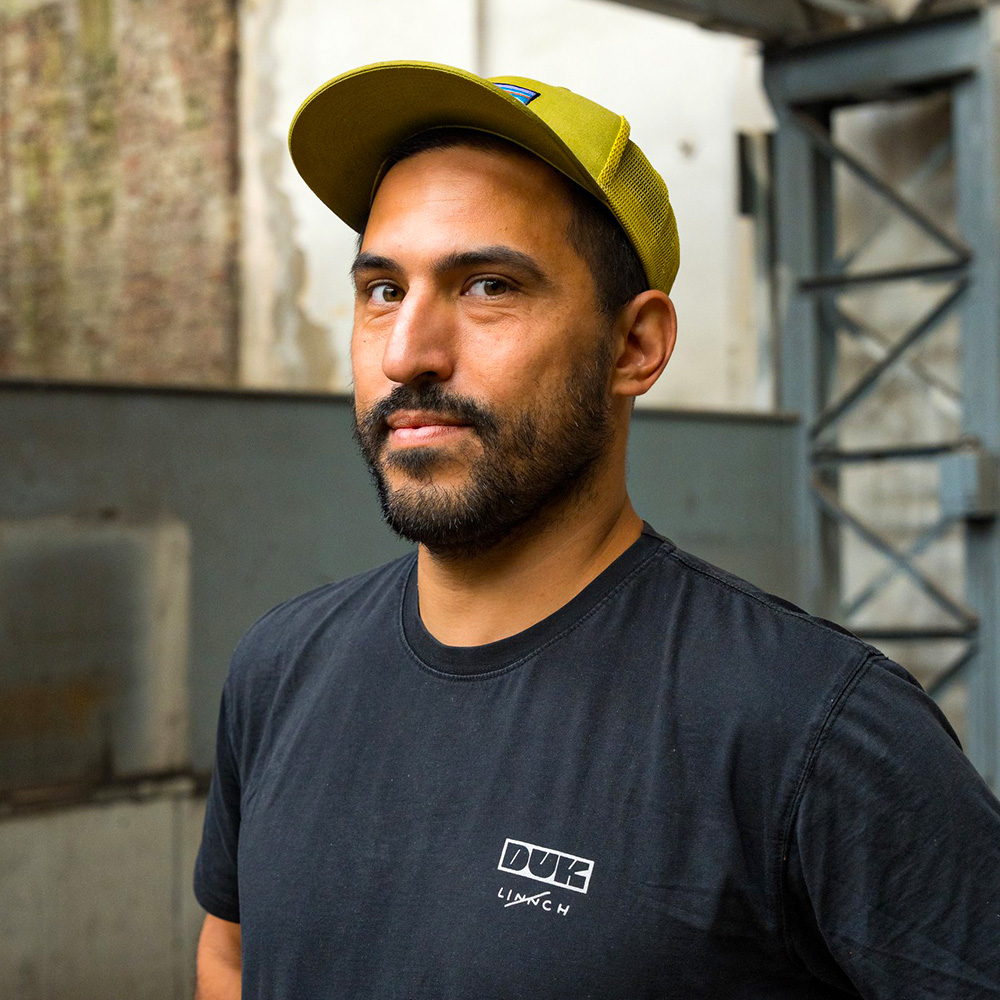
That is where Serbian muralist Andrej Zikic, better known as Artez, enters the picture. His canvases can be several stories high, his studio can be a street thousands of kilometers from home, and flowers regularly play a leading role in the scenes he creates.
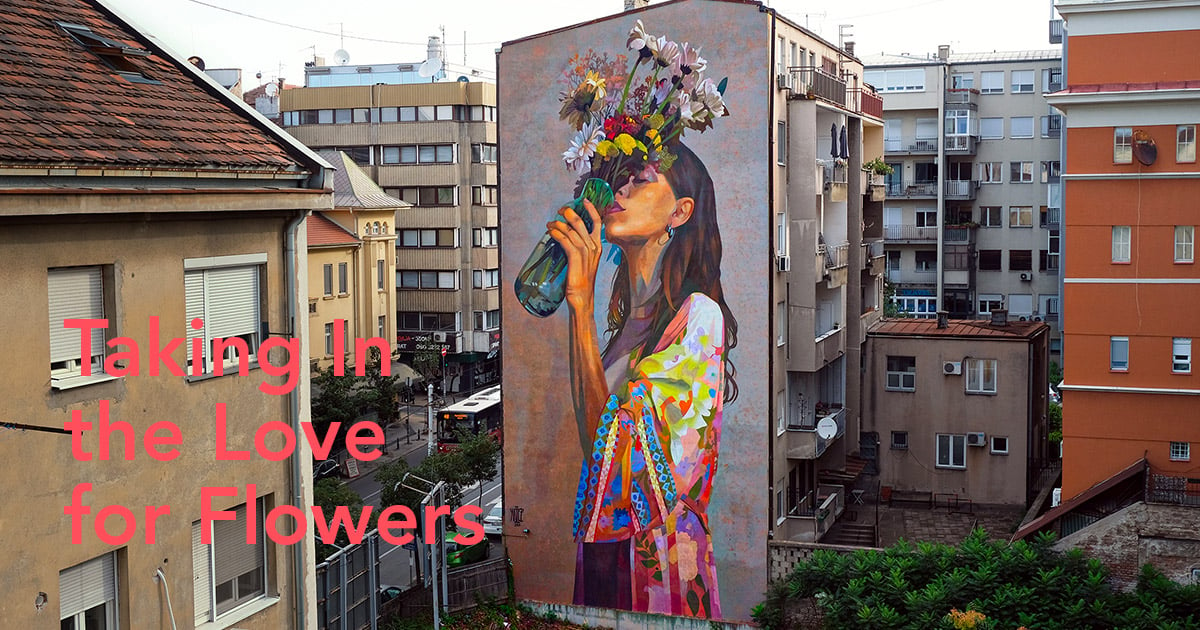
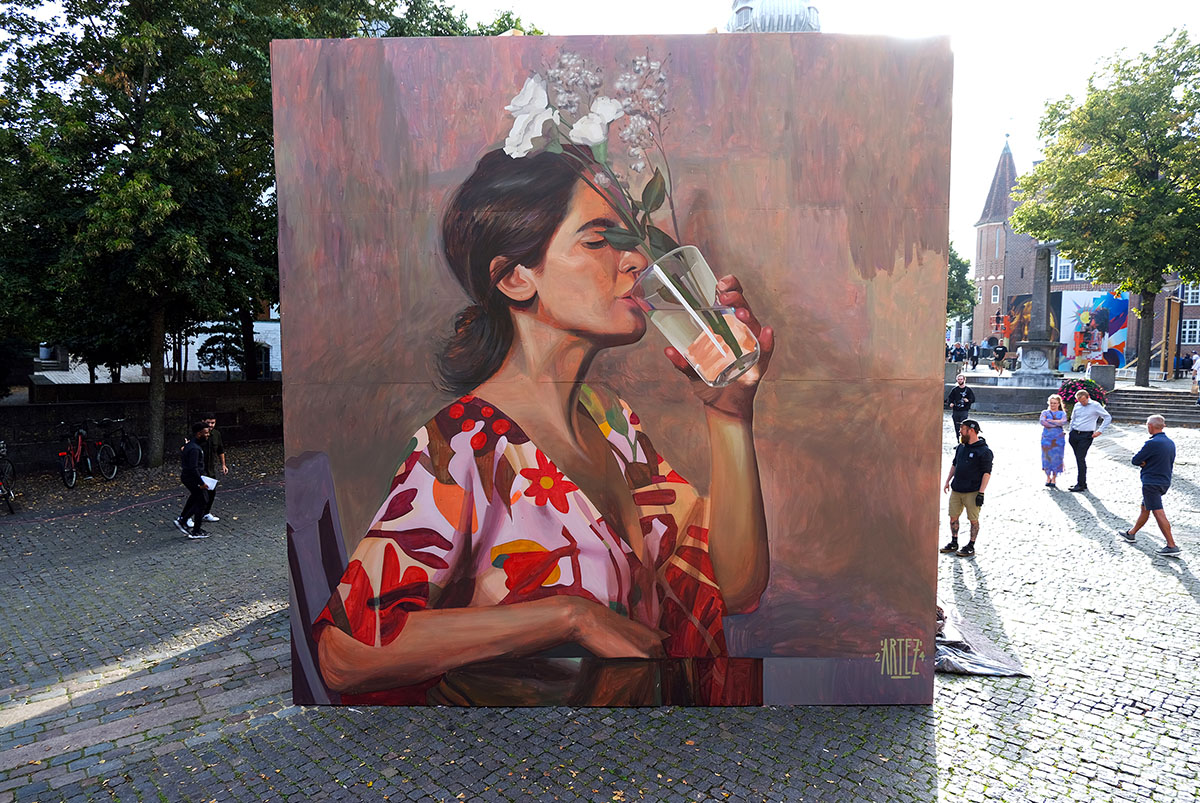
One of his most recognizable current projects is 'Thirst', an ongoing series of murals in which human figures appear to drink from vases filled with flowers. At first glance, it's a slightly surreal image. Spend a little longer with it, however, and the idea begins to unfold.
From Architecture to Painting on a Monumental Scale
Artez brings an unusual foundation to mural painting. He studied architecture at the University of Belgrade, completing a master's degree before developing his career as an artist. His early years were closely tied to graffiti culture, gradually moving from lettering to figurative painting. That architectural background never really left him.
Instead, it helped determine the scale at which he wanted to work and, perhaps more importantly, how he views the relationship between an artwork and the space surrounding it.
"I suppose the desire to create a dialogue with the viewer, combined with my education in the urban environment, naturally led me toward large-scale figurative painting. It is much easier for people to connect with an image when they recognize something familiar, and the human figure is one of the most powerful elements for that."
His visual style has changed over time. Artez describes it as having moved from an illustrative approach toward something closer to painting in the classical sense, although the work remains immediately recognizable as his own.
The human figure is often central. But look around that figure, and another recurring element quickly appears: plants, foliage, and especially flowers.
Why Flowers Keep Appearing in Artez's Murals
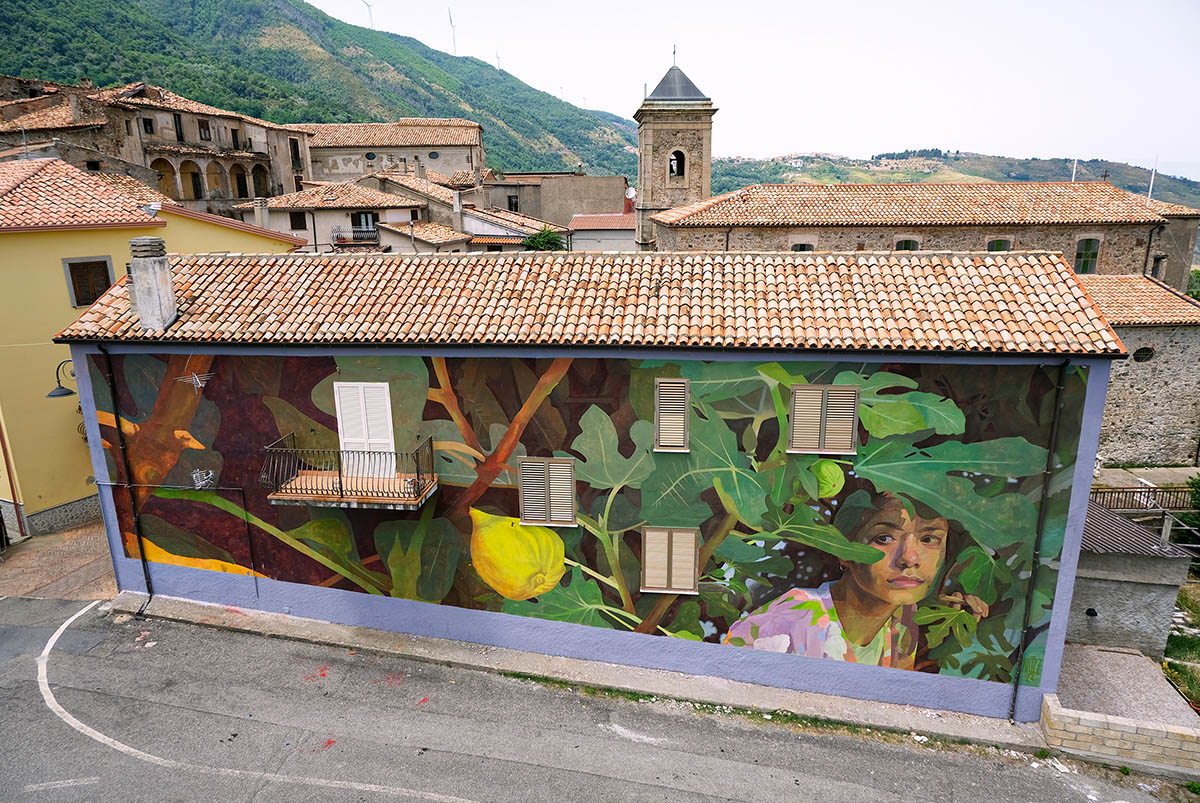
Flowers in Artez's work are not simply there to make a large wall prettier. Within the Thirst series in particular, they have become part of the language he uses to connect each artwork with its geographical setting.
"As part of the 'Thirst' series I am currently working on, I paint a great many flowers. Besides using them to highlight the importance of the connection between humans and nature, I also see them as a tool to make the artwork more site-specific. Picking local flowers for my reference photo shoots gives me a wonderful opportunity to deeply explore and understand the specific place I am in."
That last detail matters. Rather than arriving with a fixed bouquet that can simply be transplanted from one mural to the next, Artez looks at what grows locally. Flowers therefore become a way of learning about a destination before they become part of the painting.
For anyone working professionally with flowers, this reversal is interesting. Florists often bring botanical material indoors to create atmosphere and tell a story. Artez takes those same botanical references outside and makes them part of a building's identity, a street's, or even an entire landscape's.
What Is Artez Trying to Say With 'Thirst'?
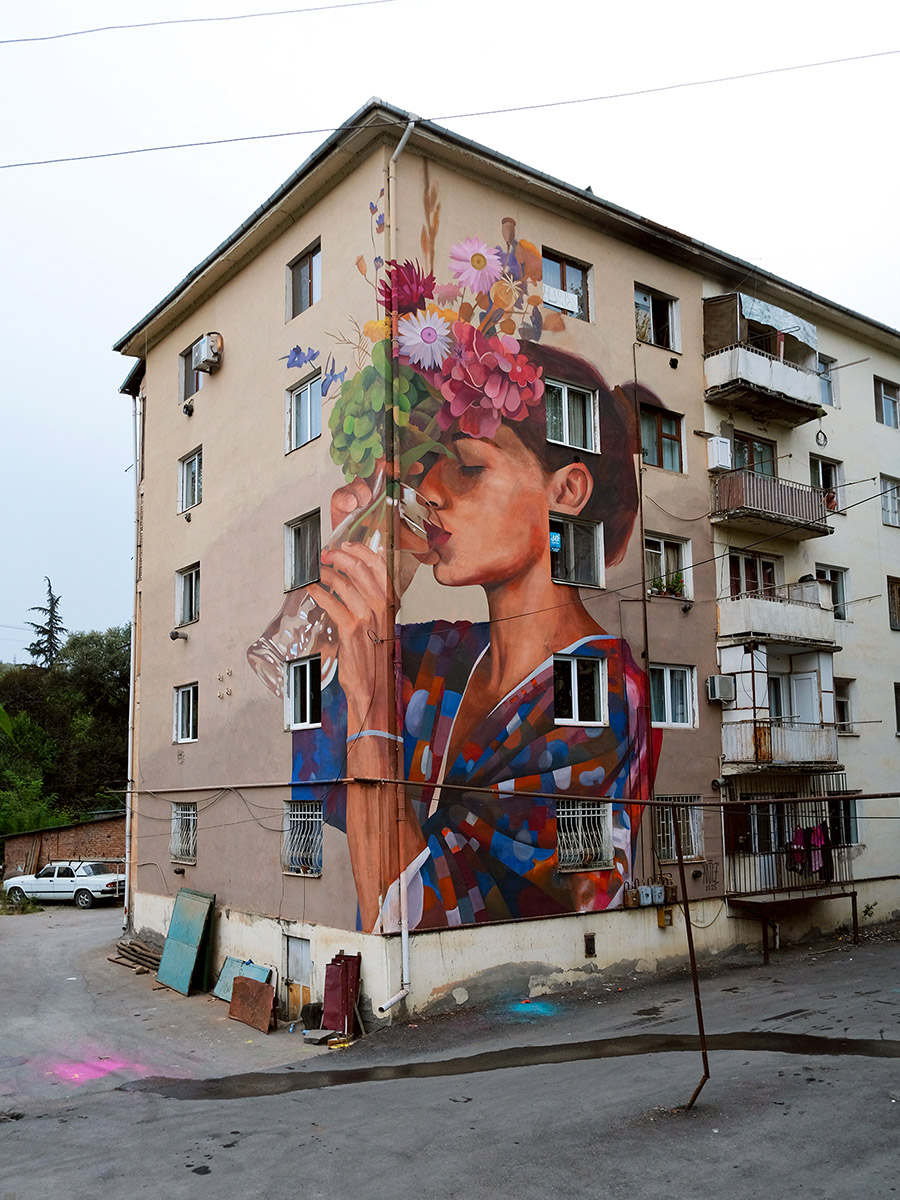
The recurring image in Thirst is unusual enough to stop people in their tracks: a person raising a vase of flowers toward their mouth as if taking a drink.
The gesture itself could hardly be more ordinary. Drinking is something everyone understands. By combining that everyday action with flowers, nature, and an enormous human figure in public space, Artez turns it into something that demands a second look.
"The core idea behind this theme is to create a site-specific series of murals that celebrate the importance of local tradition, nature, and culture through the simple, universal act of drinking."
The mural freezes that action. Instead of quickly consuming the image as we might on a phone screen, pedestrians encounter it every day. It becomes part of their environment.
Artez says this static presence is meant to direct attention to the significance of the world people live in and to ordinary things that can easily go unnoticed.
Flowers work particularly well within that idea. They are familiar and temporary at the same time. They connect us to seasons, landscapes, celebrations, memories, and places. In Thirst, that relationship is enlarged until it covers a wall.
A Mural Should Belong to Its Location
One of the most striking examples sits in Saksun on the Faroe Islands. The dramatic Faroese landscape could easily overpower almost any artwork added to it. Artez approaches locations like this not as blank surfaces waiting for one of his images, but as environments the artwork must respond to.
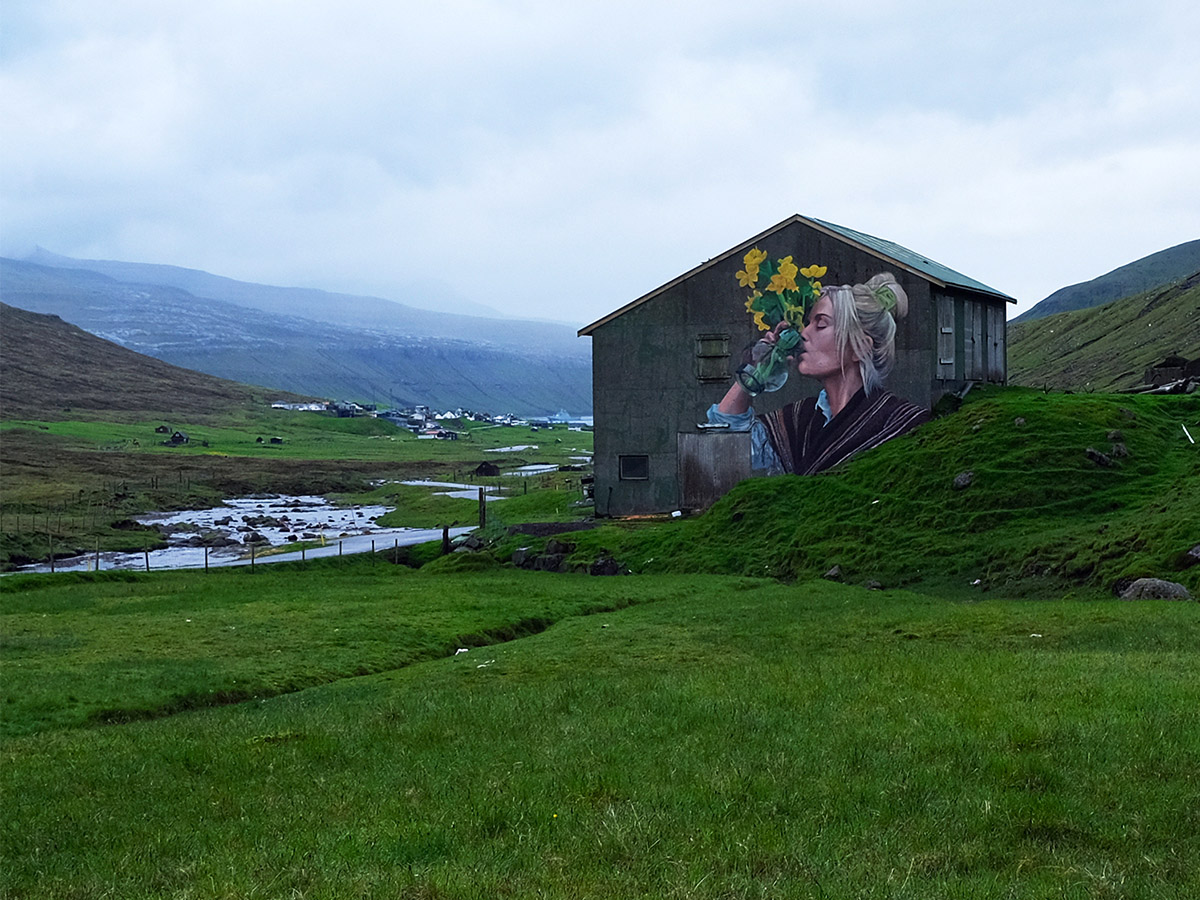
Color, scale, composition, flowers, architecture, and surroundings all factor in.
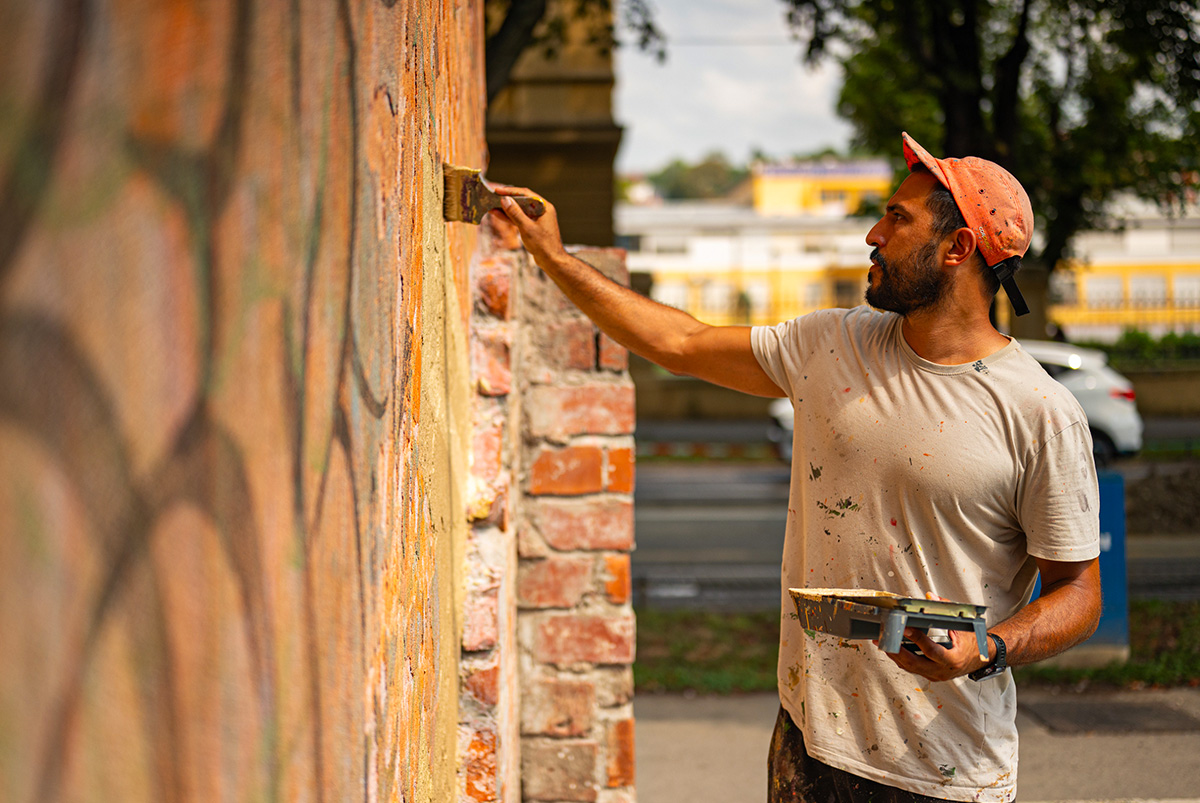
"Adapting my color palette and composition to each location is typical for my process, as I always strive to integrate the painting so that it feels like it truly belongs there."
Here his architectural education becomes particularly visible. Artez does not consider the wall an isolated canvas.
"I always view any intervention in public space as a single pixel within a much larger picture."
It is a useful way to understand his work. A mural can be huge when you stand in front of it, but within a village, street, mountain landscape, or city, it remains just one element. The challenge is to create something noticeable without disconnecting it from its surroundings.
Five 'Thirst' Murals, Five Different Places
The Thirst story has already traveled far. Artez has created five murals in the series so far: in Belgrade, Serbia; Aalborg, Denmark; Gurjaani, Georgia; Saksun, Faroe Islands; and Mostar, Bosnia and Herzegovina.
They share a visual idea but are not copies of one another. Each mural responds to its host location, allowing the flowers, setting, palette, and architecture to become part of the story.
"Each mural connects uniquely to its host location, and together they weave a larger narrative about the importance of living in balance with nature and the world around us. Hopefully, many more murals from this series will be brought to life in the coming years."
That makes Thirst less like a repeated motif and more like a collection of chapters. The central idea travels, but the place determines how it is told.
Artez in action. Creating the art piece 'Thirst for Nature' in 2024 on a desolate wall in Belgrade, Serbia. Reel by @artez_online.
Back From the Wall to the Studio
Mural painting in Europe inevitably follows the seasons. As colder and wetter months arrive, working outdoors on enormous façades becomes considerably more difficult. For Artez, this means a temporary change of scale rather than a pause in making art.
"The outdoor painting season in Europe is slowly coming to an end, so my focus is shifting from large-scale walls to smaller-scale works in my studio."
He is currently working on a canvas for another ongoing series, Simple Acrobatics, and plans to continue his Fine Arts studies.
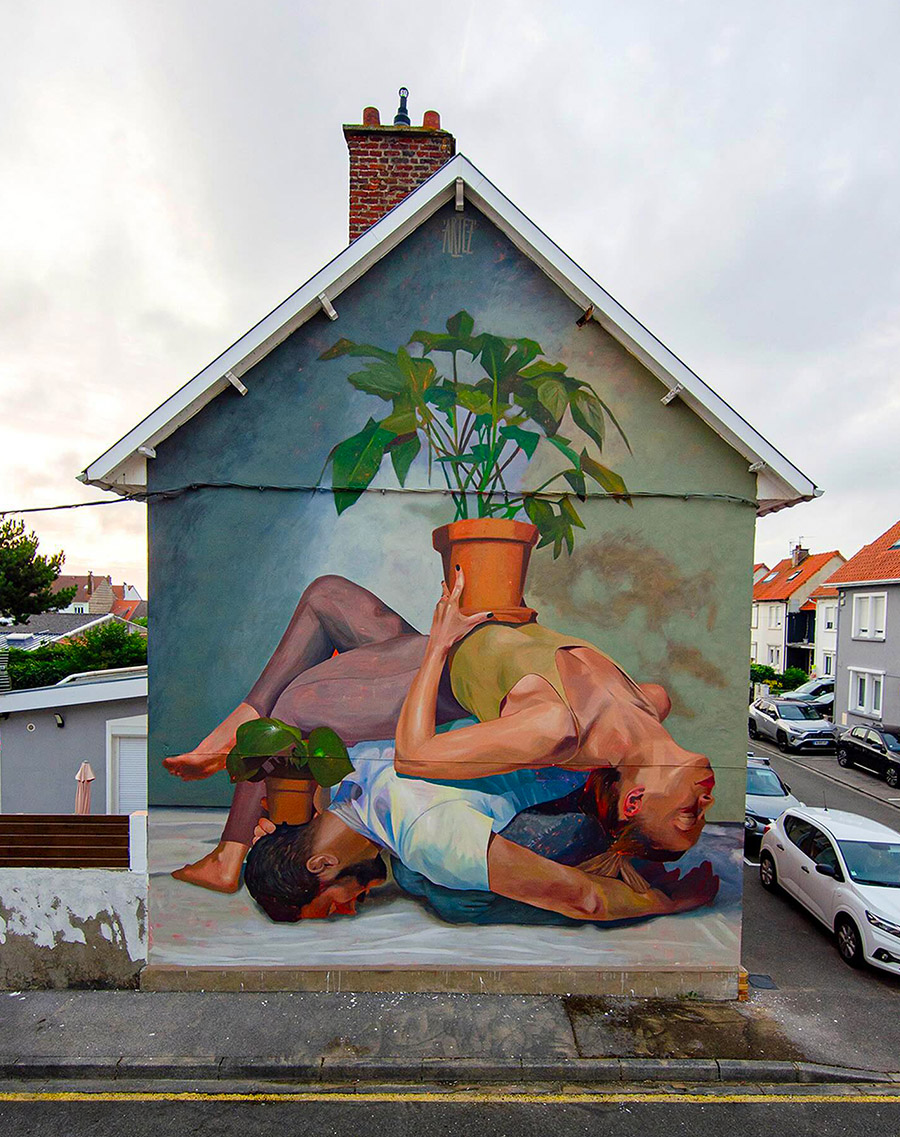
And Thirst is not finished. More walls can follow, more places can contribute their own flowers, and more local landscapes can join the series.
For a floral audience, that may be what makes Artez's work especially interesting. He does not paint generic flowers simply because flowers are beautiful. He uses them to investigate where he is, what belongs there, and how humans relate to the natural world around them.
A florist may work within a few square meters. Artez sometimes works across several hundred. But the underlying idea is surprisingly familiar: look at the material, understand its surroundings, and make sure every element feels as though it belongs exactly where it has been placed.
All images by @artez_online, unless otherwise noted.