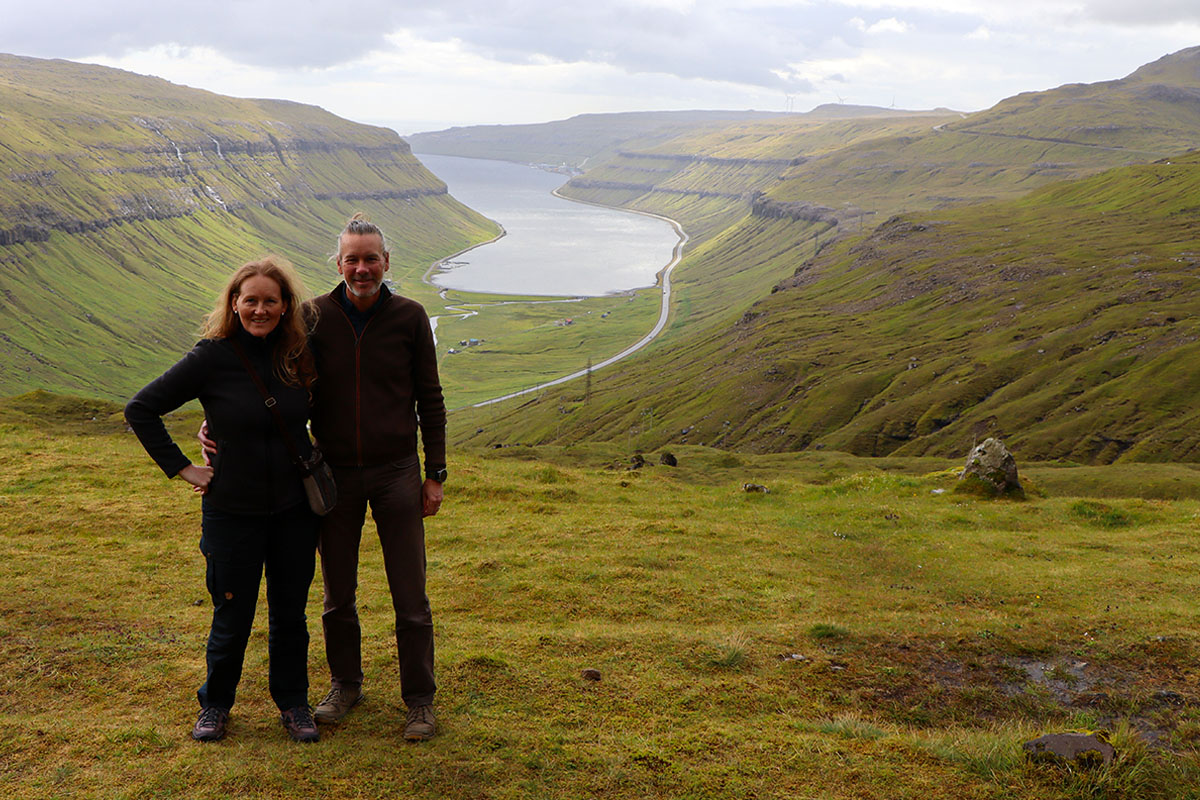
While much of Southern and Central Europe was dealing with the scorching heat of summer, we did the opposite. My wife Anne and I went north. Quite a bit north.
Our summer holiday in 2026 took us to the Faroe Islands, where temperatures of around 10 to 12 degrees Celsius, a cool wind, the occasional shower, and rapidly changing skies felt pretty good to me. No searching for shade. No air conditioning. Just put on a jacket and go outside. And going outside is basically what you do on the Faroes.
We came for the mountains, cliffs, waterfalls, villages, birds (puffins!), and that enormous North Atlantic landscape. But being involved with flowers every day, I apparently cannot walk through a meadow without eventually looking down.
And there was plenty to look at.
Faroe – The Islands of Sheep
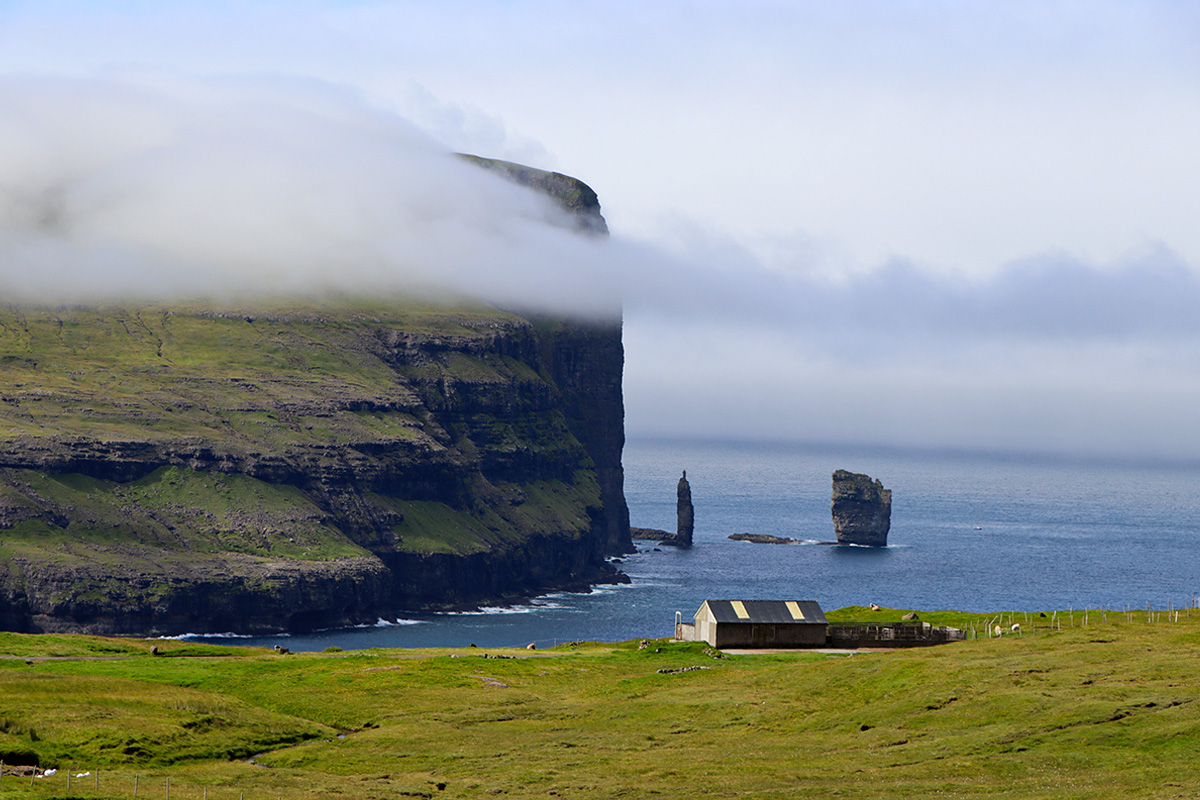
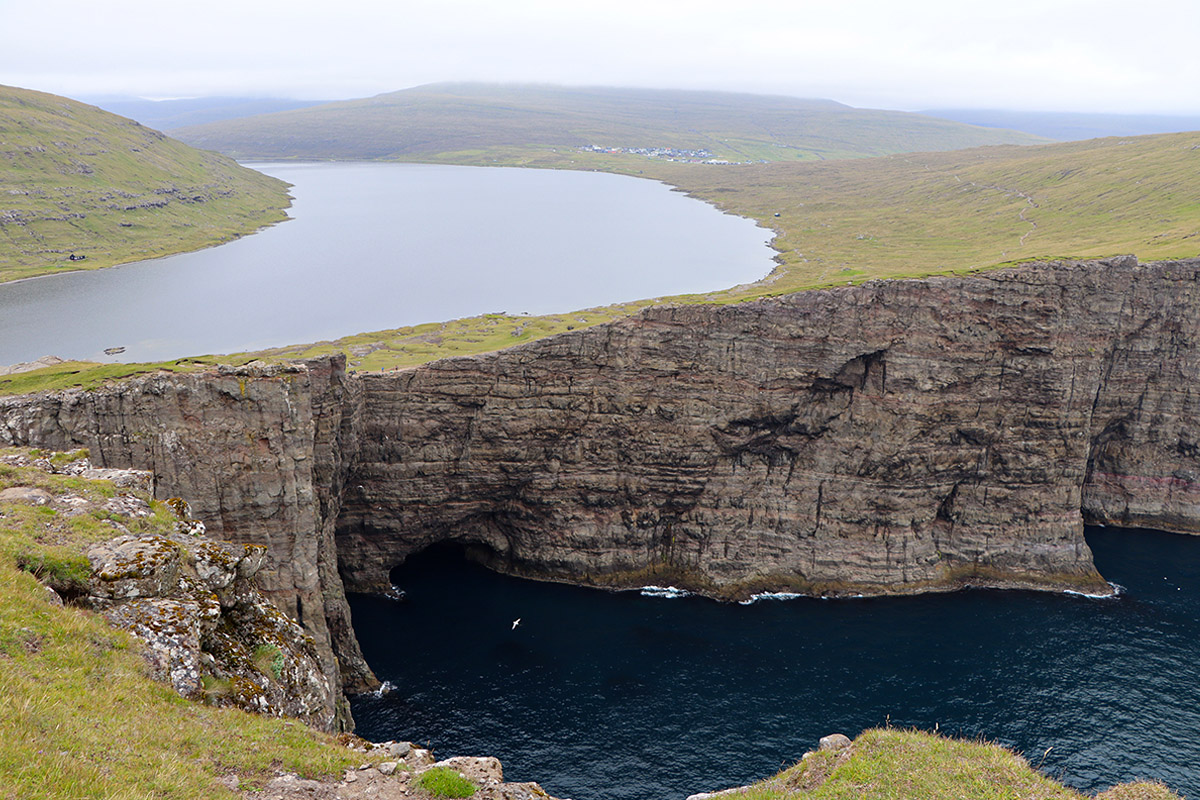
The Faroe Islands are an archipelago of 18 rugged volcanic islands in the North Atlantic, roughly halfway between Scotland and Iceland. There are mountains, narrow fjords, green valleys, and cliffs that drop almost vertically into the ocean.
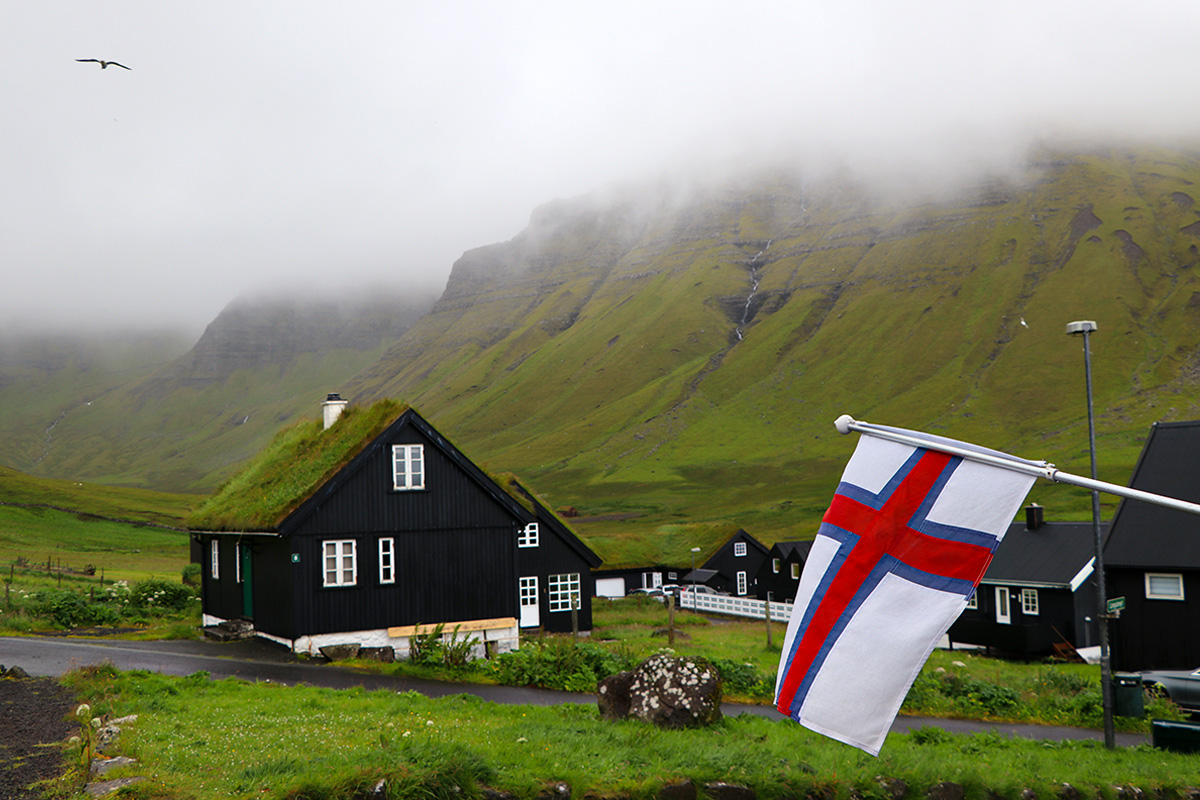
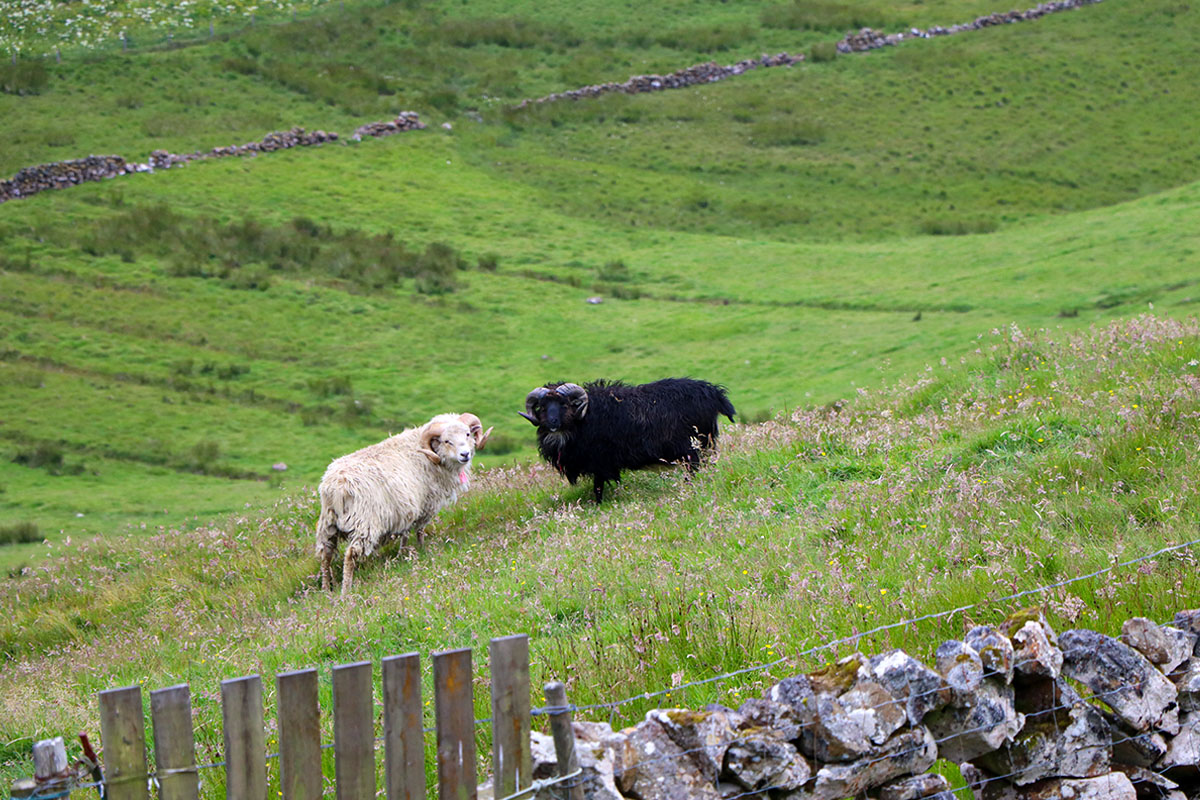
Even the name of the islands tells you something about the landscape. The Faroese name Føroyar comes from the Old Norse Faereyjar, meaning 'Sheep Islands'. The name was given by the Norse settlers who arrived here during the Viking Age. And after spending a few days on the islands, that name makes perfect sense. Sheep are everywhere, 80,000 of them, where there are only 50,000 people living on the Faroes. There are sheep beside the roads, around the villages, high up on the mountains, and, of course, right in the middle of the wildflowers I was trying to photograph. The sheep have become such a part of Faroese identity that a ram is even the national symbol.
Although the landscape itself is anything but flat, the vegetation often is. You don't find forests covering the hillsides, perhaps some planted trees in the towns and villages. From a distance, much of the Faroes seems to consist of different shades of green: grasses, mosses, low vegetation, and the occasional patch of flowers. So, trees are rare, and plants have to deal with wind, rain, cool temperatures, and very little shelter.
Get out of the car and start walking, however, and that green carpet suddenly becomes much more interesting. Here, flowers don't need to be one meter high to get your attention. Sometimes ten centimeters will do.
Sheep, Puffins and Grasslands
We spent hours walking between sheep, on stony paths, through wet grassland and along slopes leading towards cliffs where puffins, gulls, terns, gannets, and all kinds of smaller birds were constantly coming and going. And between our walking shoes were plants that I hardly ever encounter during my working life in floriculture. No long, straight stems. No forty-centimeter specification. No bunch of ten. No sleeve, barcode, auction trolley, or vase-life test. Just a plant growing exactly where it wants to grow.
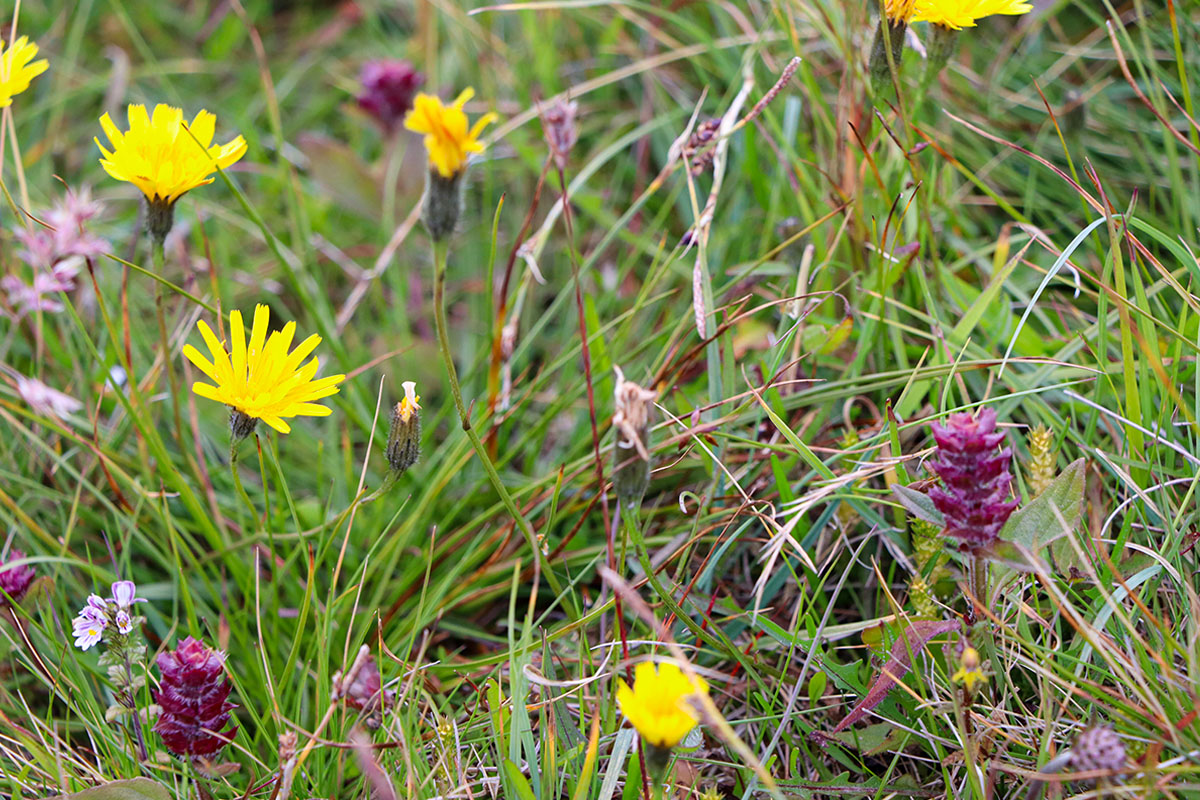
One of the plants I photographed was self-heal (Prunella vulgaris). It produces compact purple flower heads just above the surrounding vegetation. You could easily walk straight past it. But kneel down and suddenly there is this surprisingly detailed little flower sitting between the grasses. That became a recurring theme during our walks. From a distance, green. Get closer, and there are flowers everywhere.
Another flower that kept appearing was a small yellow one that looks a little like a miniature dandelion, but in fact, is called hawkbit (Leontodon saxatilis). Its flower heads sit on relatively thin stems above the grass. Nothing spectacular in size, but against all those greens, the yellow immediately catches your eye.
It isn't exactly the type of flower that causes a traffic jam at a floral trade show. Here, growing between grasses and sheep paths, it fits perfectly.
Bog Asphodel – One You Don't Forget
Then there was bog asphodel (Narthecium ossifragum). This one was easier to spot. Bog asphodel produces upright spikes with small yellow, star-shaped flowers. Older flower heads turn orange-brown, which means you often see several different colors on the same patch of vegetation. The plant likes wet and peaty conditions. Well, there is no shortage of those on the Faroe Islands.
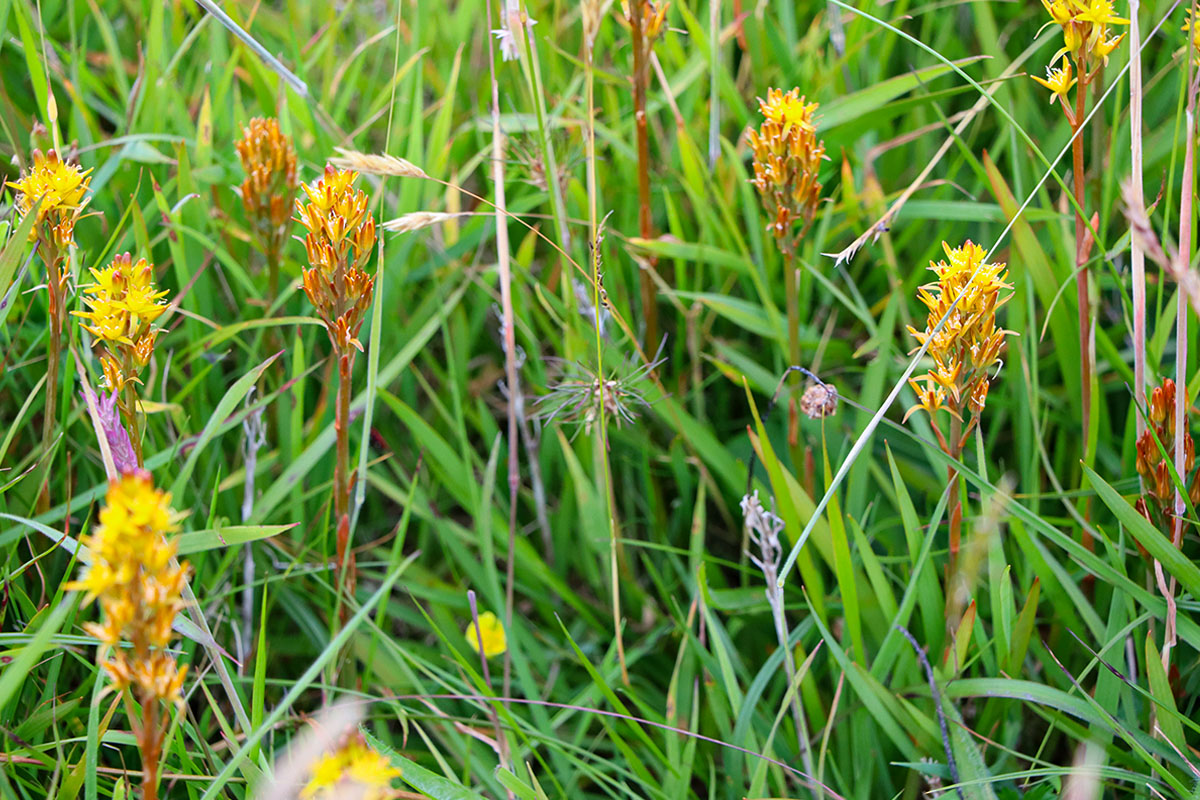
The landscape can look dry from a distance, but start walking and you soon discover how much water is hidden between the grasses. Small streams are everywhere, the soil can be saturated, and rain is never exactly an unusual event. For plants adapted to those circumstances, this is home.
Eyebright – Tiny but Clever
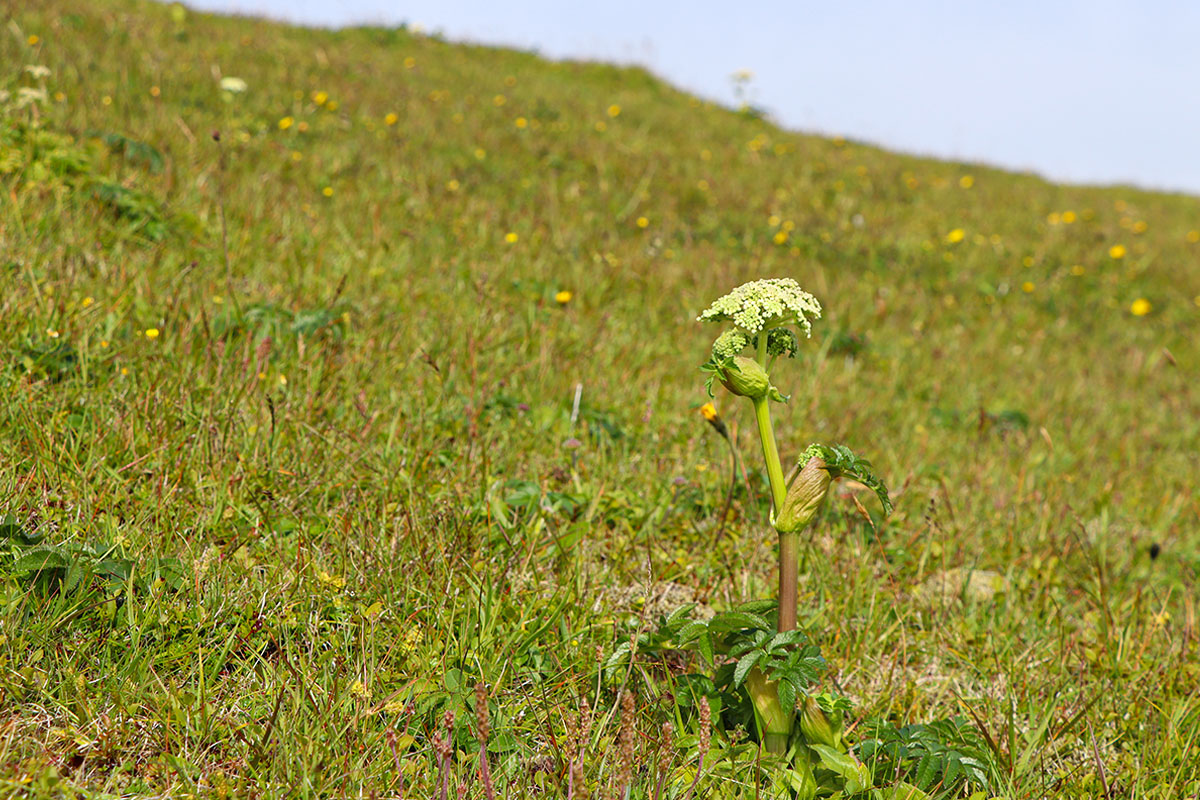
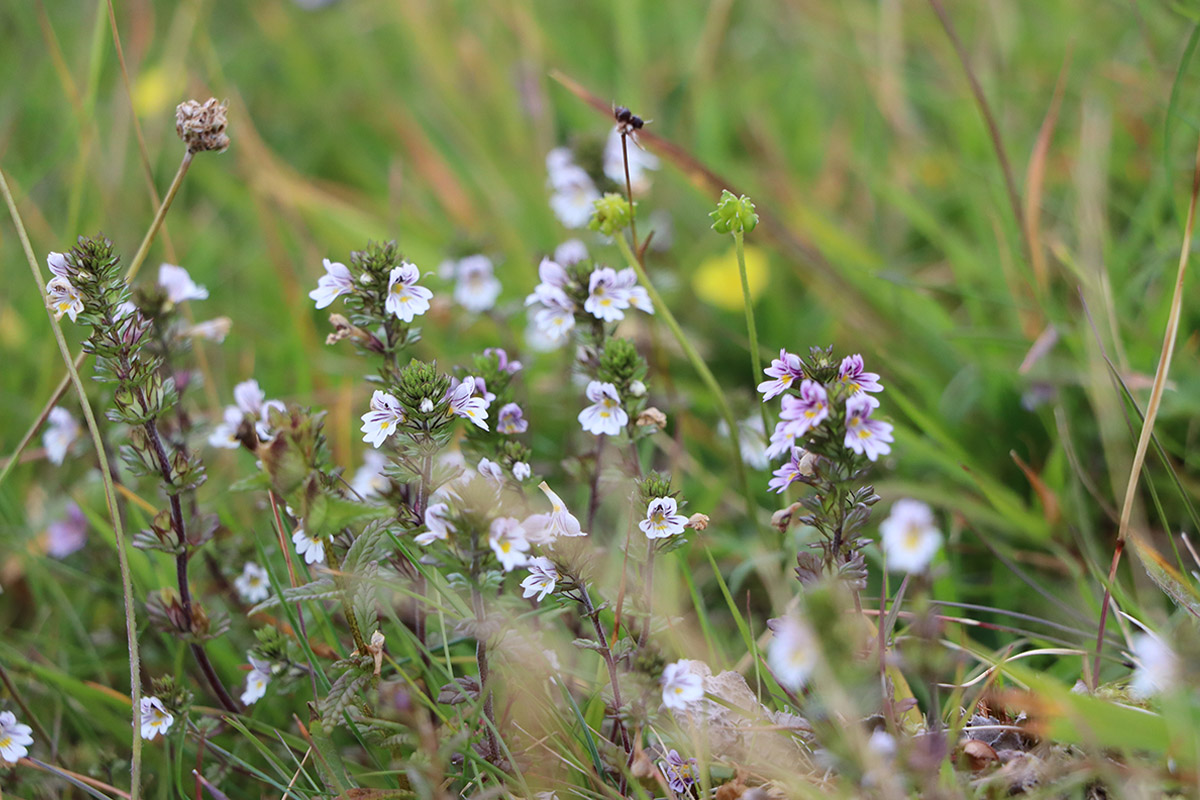
My favorite discovery was probably eyebright (Euphrasia). Once I had noticed it, I started seeing it everywhere. The flowers are tiny: white to pale lilac, marked with fine purple lines and a little yellow spot. You almost have to get down to their level to appreciate them properly.
Identifying an Euphrasia to exact species level from a photograph is another matter. There are several closely related eyebrights, and they can be notoriously difficult to tell apart. That doesn't really matter when you're lying somewhere in Faroese grass trying to photograph one.
Eyebrights are also rather clever plants. They are hemiparasitic, which means that although they can photosynthesize themselves, they can attach their roots to neighboring plants and take some of their water and nutrients. Small flower. Smart survival strategy. And precisely the kind of plant you would probably never notice from a tour bus.
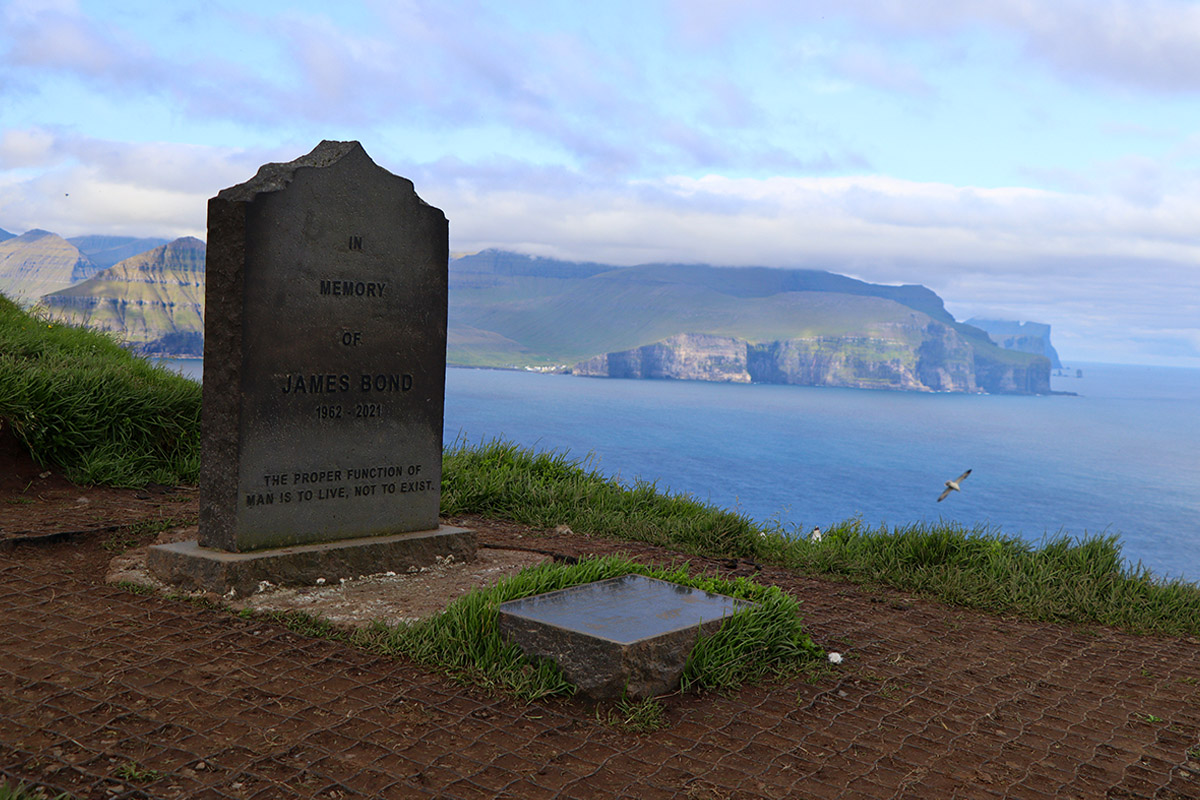
(Fun fact about tour buses on the Faroes: they are driving around for fast-paced tourism. Some carry the logo of James Bond 007, because in his last film 'No Time to Die', Bond died on the cliffs of the island Kalsoy. For tourists, they even put up a gravestone for him that you can actually visit!)
And What About Scabiosa?
Then there was something that immediately looked familiar: Scabiosa. Well-known as a cut flower from Africa, grown by breeder Danziger and grower Marginpar. Coming from the international flower industry, that name immediately makes me think of the Scabiosa we see commercially, including the long-stemmed varieties grown for the international cut flower market.
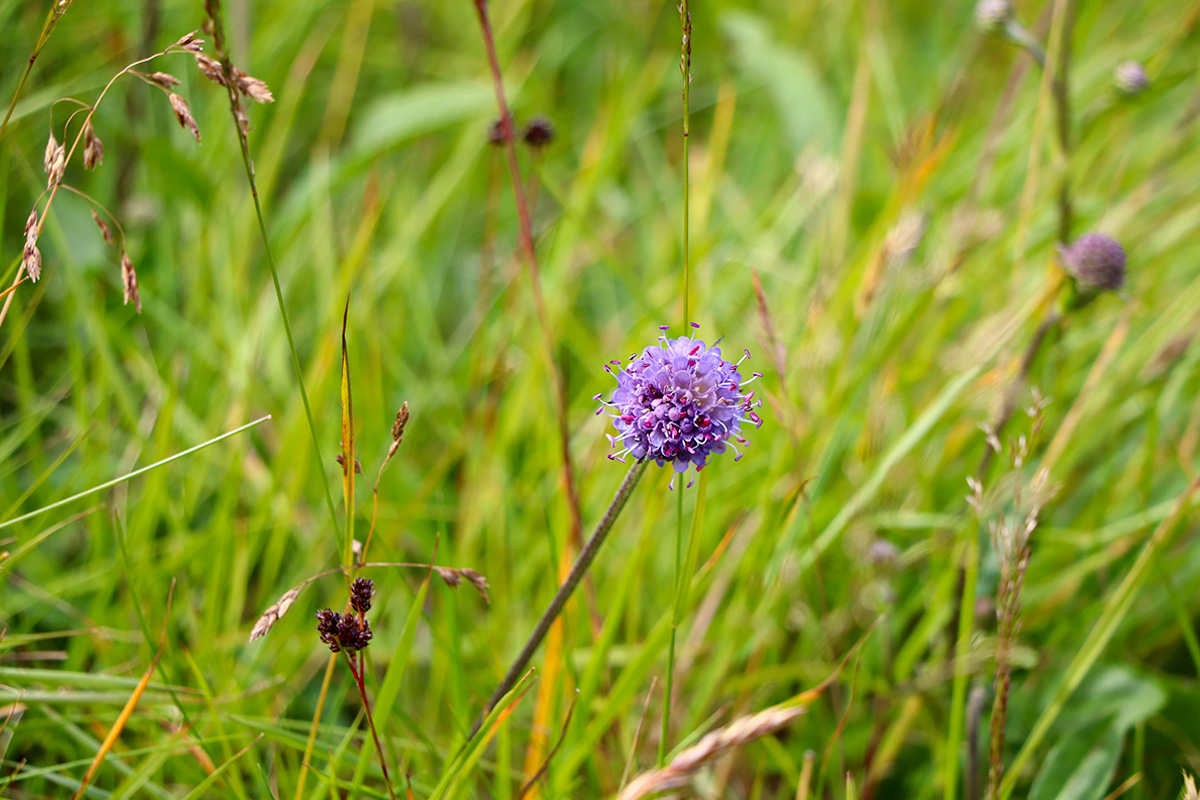
The Faroese version is quite different. Devil's-bit scabious (Succisa pratensis) produces small blue-purple pincushion-like flower heads on slender stems. Interestingly, despite its English name, it isn't actually a member of the botanical genus Scabiosa. It belongs to Succisa. It still has that recognizable scabious look, but this isn't a flower bred for stem length, transport, or productivity. Nature decides the specifications here.
Grass Is a Flower Too
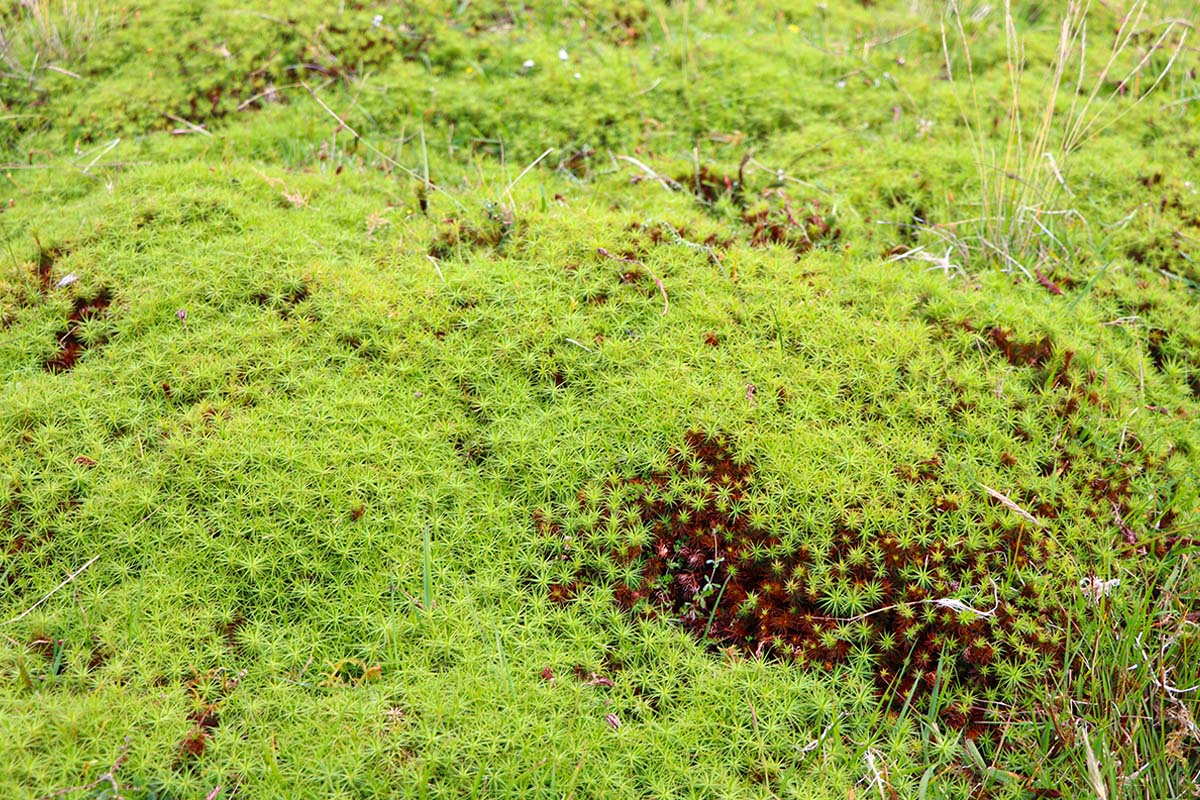
Of course, most of what surrounds all these flowers is grass, perhaps the most important part of the visual experience of the Faroes. They form the continuous green layer that seems to cover hillsides all the way to the tops of mountains and right to the edge of the sea cliffs. Add mosses, rushes, low-growing herbs, and wetland plants, and you get that very recognizable Faroese landscape.
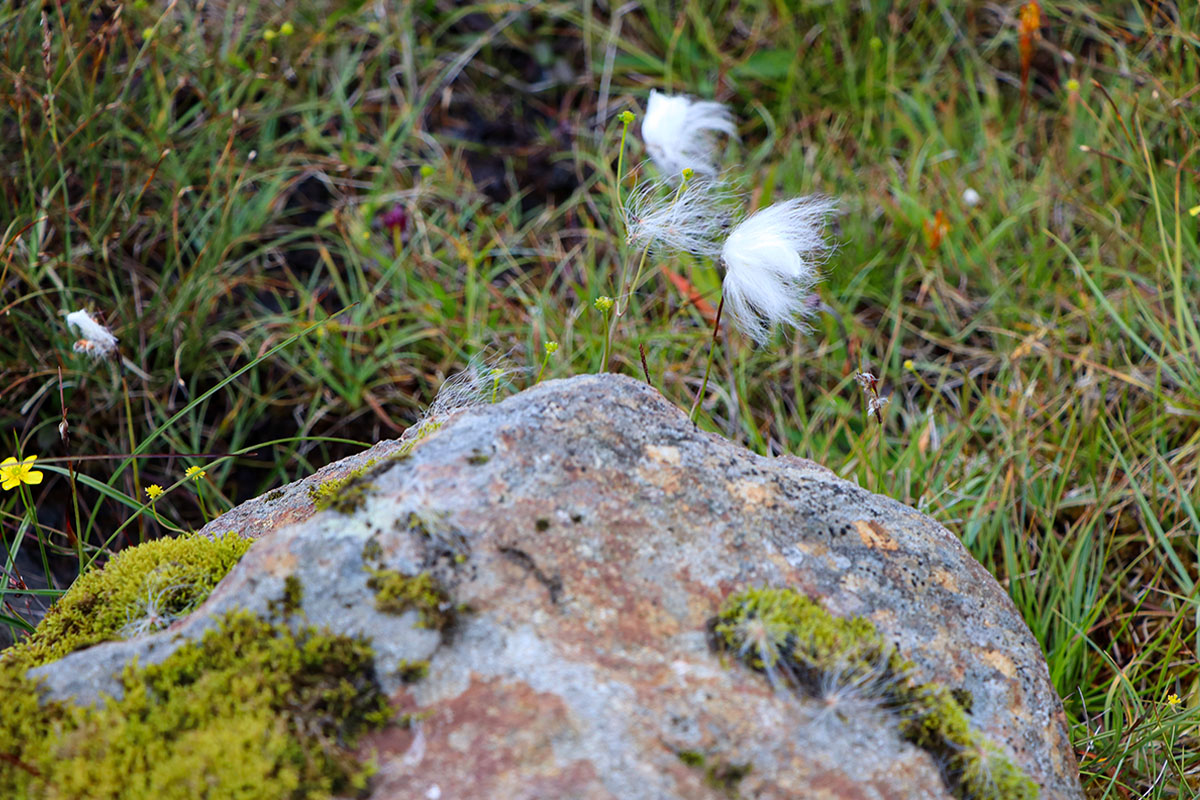
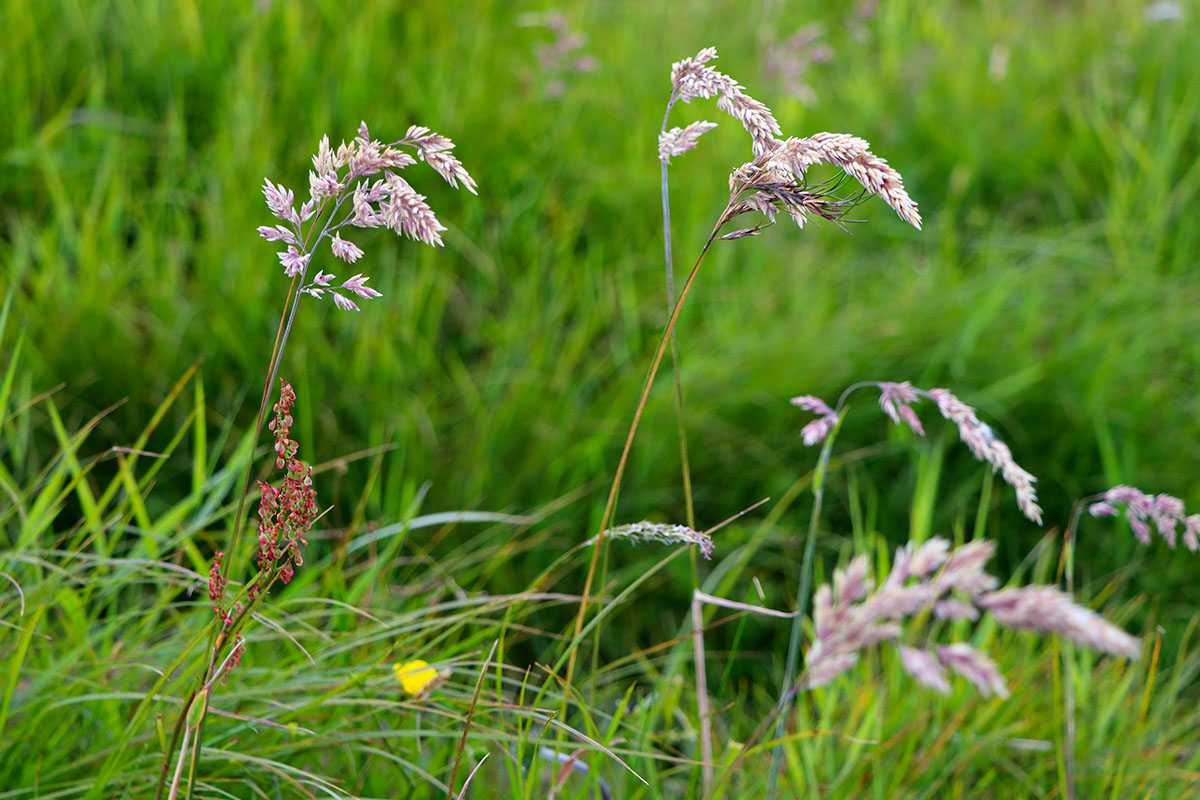
One of my photographs shows what is most likely a meadow soft grass (Holcus lanatus) species, its fine seed heads bending in the wind.
And then add sheep. Lots of sheep. They are almost everywhere, including places where I would think twice before putting one foot in front of the other.
Flowers and Puffins
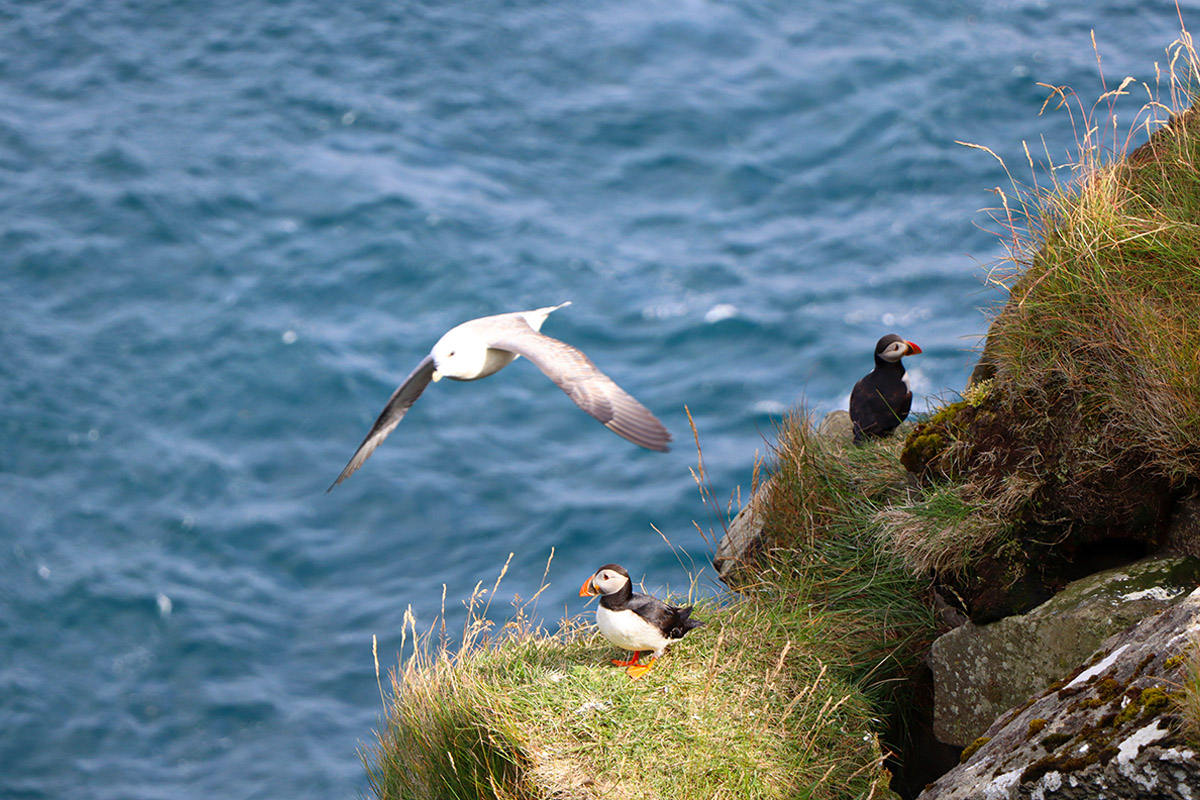
The plants are only one part of these walks. Look down, and you find Euphrasia, Prunella, grasses, hawkbits, and bog asphodel. Look up, and there might be a cute puffin flying past. That combination makes the Faroes rather special.
Especially during summer, seabirds become part of the landscape. On some cliffs, you can watch puffins disappearing into grassy nesting areas while gulls, fulmars, terns, guillemots, and, if you're lucky, a huge northern gannet circle around you. And when hiking did not get us close (not too close to disturb them!), then surely the boat trip along the cliffs did, as this is also one of the main ways to experience the islands.
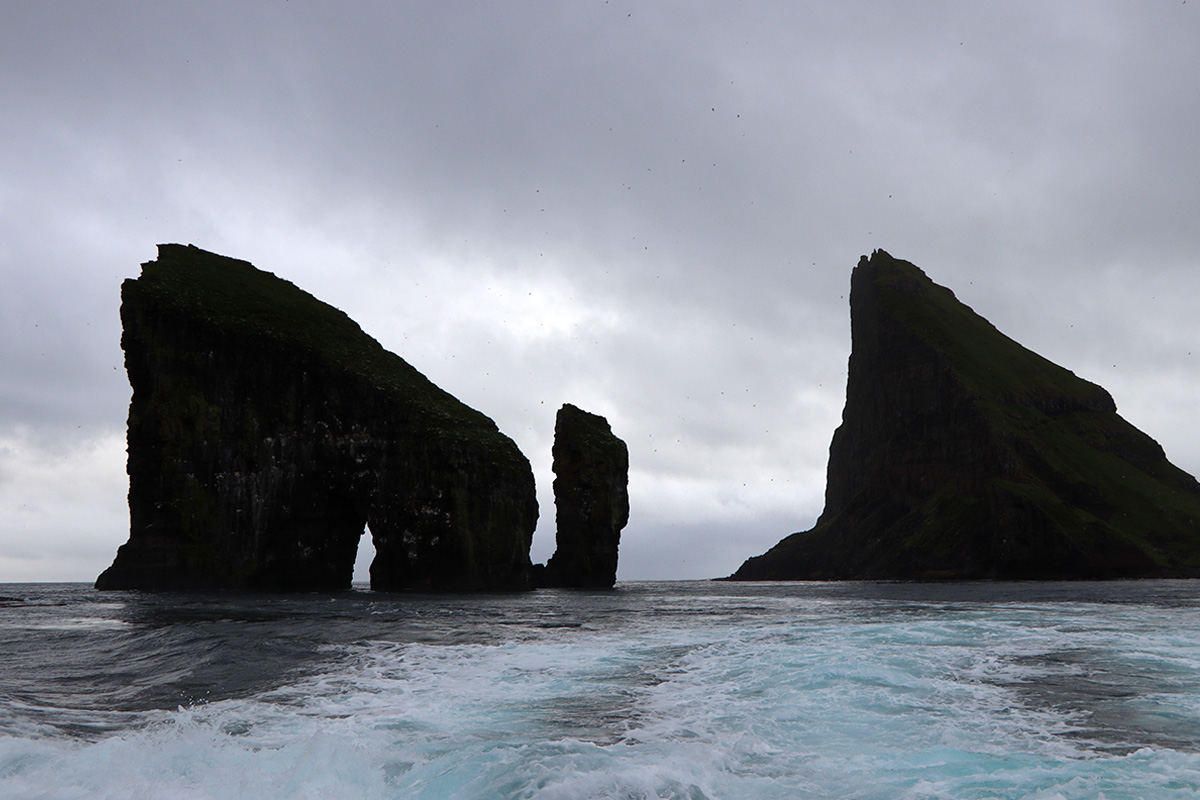
For me, however, some of the nicest discoveries were directly underneath the puffins, getting dizzy looking upwards while they comically fluttered from their safe high positions and plunged clumsily into the Atlantic Ocean. Of course, we took a few stuffed ones home (the label said 'made in China', unfortunately).
Flowers Without a Commercial Reason to Exist
Perhaps that is what I enjoyed most about the flora of the Faroe Islands. In our flower industry, we spend a lot of time talking about stem length, vase life, transportability, productivity, uniformity, colors, and market demand. All perfectly logical. Someone eventually needs to buy the product. None of that matters to an eyebright growing beside a path somewhere on Streymoy, Mykines, or Sandoy.
These plants aren't trying to become products. They are short because being short works here. They grow between grasses because that is where they belong. They flower when the conditions allow them to. The wind blows across them, another shower arrives, a sheep may walk over them, and somehow they continue. You will probably never see most of them on a flower auction clock. And that is completely fine.
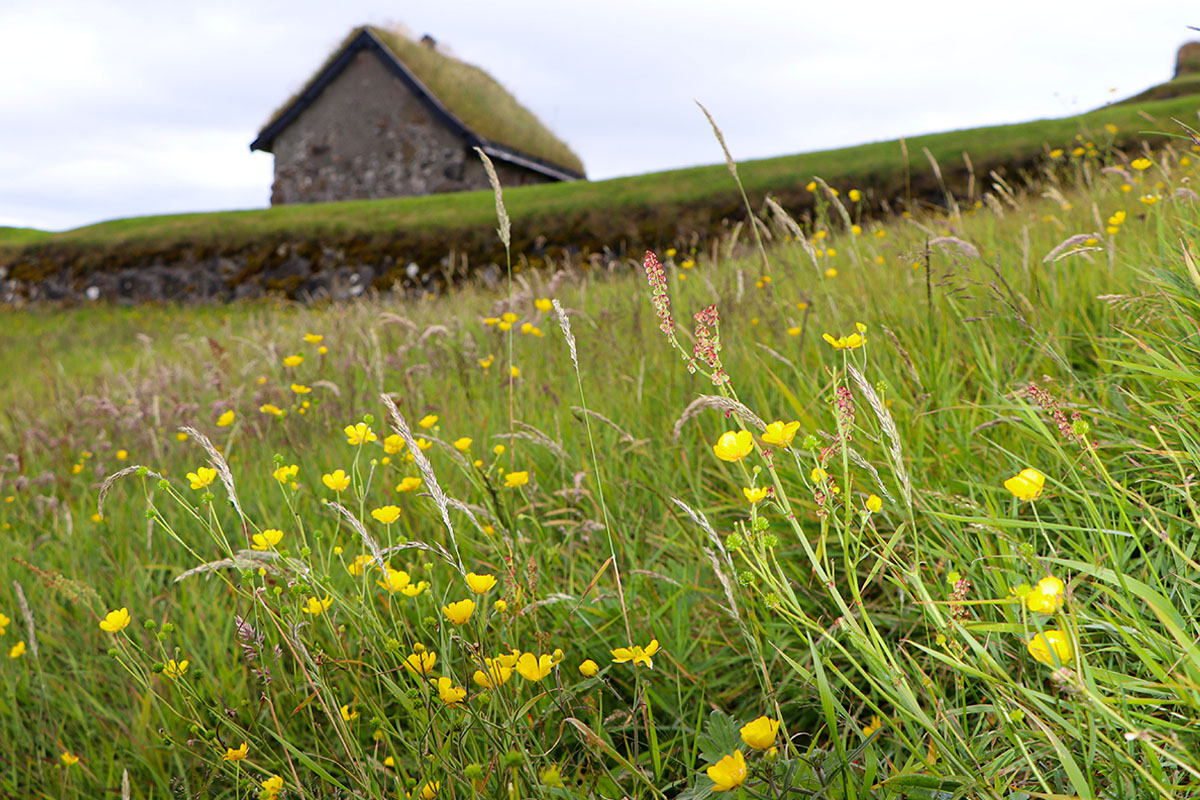
Sometimes flowers are worth looking at precisely because nobody selected, graded, sleeved, shipped, marketed, or sold them. You simply find them. On a wet hillside somewhere in the middle of the North Atlantic.
And for someone who normally looks at flowers professionally, to discover that other added value was actually quite refreshing.
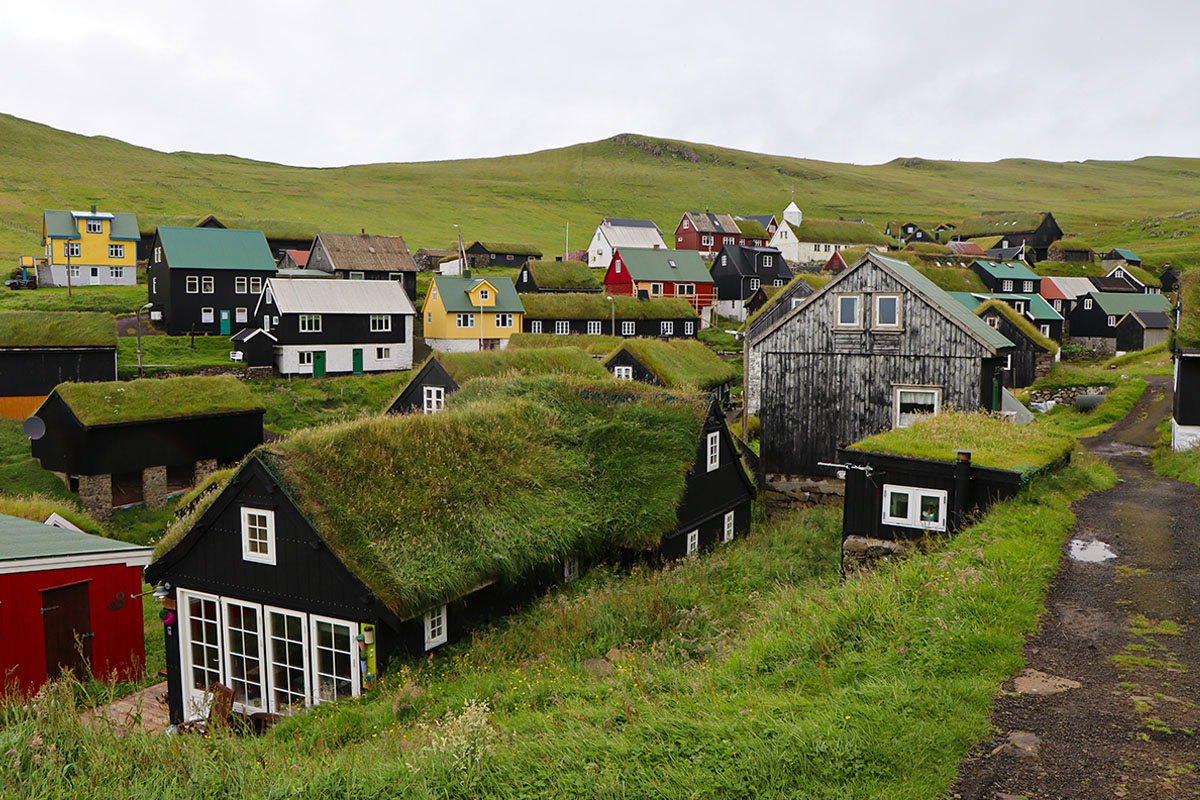
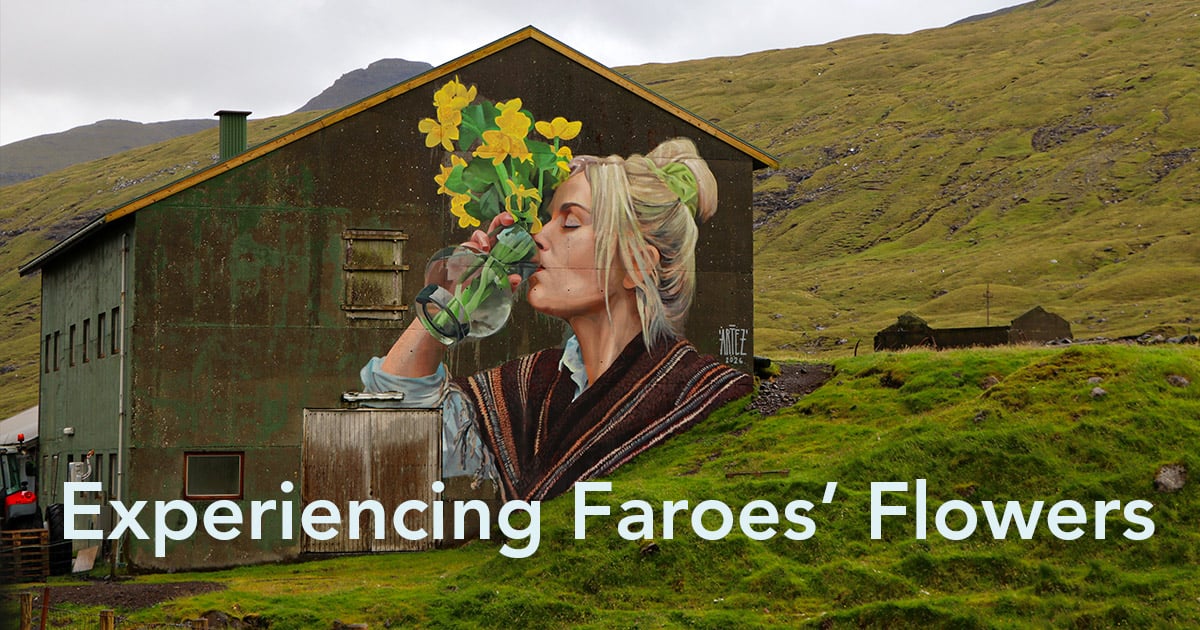
All photos © by Marcel de Romph. Mural design in the header and feature image by @artez_online.