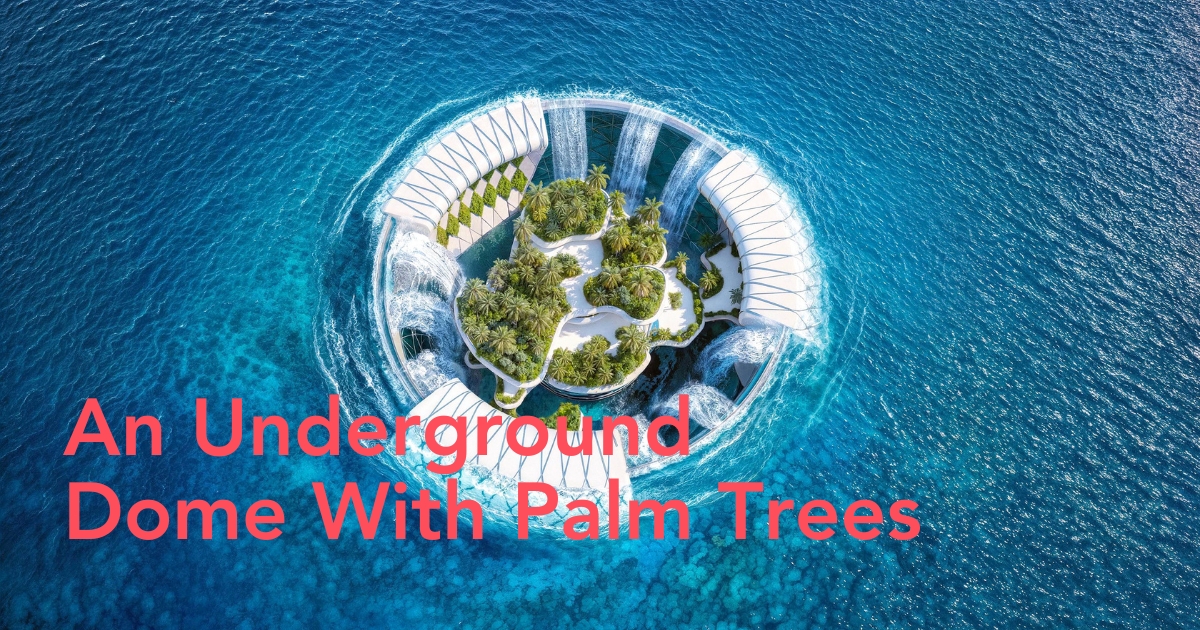
Designed as an entry for the prestigious Jacques Rougerie Foundation competition, the 'Baobab Waterfall' project by Ahmad Eghtesad is a conceptual mixed-use infrastructure proposed for the coastline of Madagascar. The island is rich in natural resources and unique biodiversity, yet severe energy shortages leave a vast majority of the population without electricity. This energy crisis contributes directly to economic hardship and rising crime rates, leading to severely overcrowded correctional facilities. This project seeks to address these interconnected crises through a radical architectural intervention that turns a societal challenge into a profound economic opportunity.
Circular Ocean-Powered Complex Inspired by the Baobab Tree Changes Energy Production
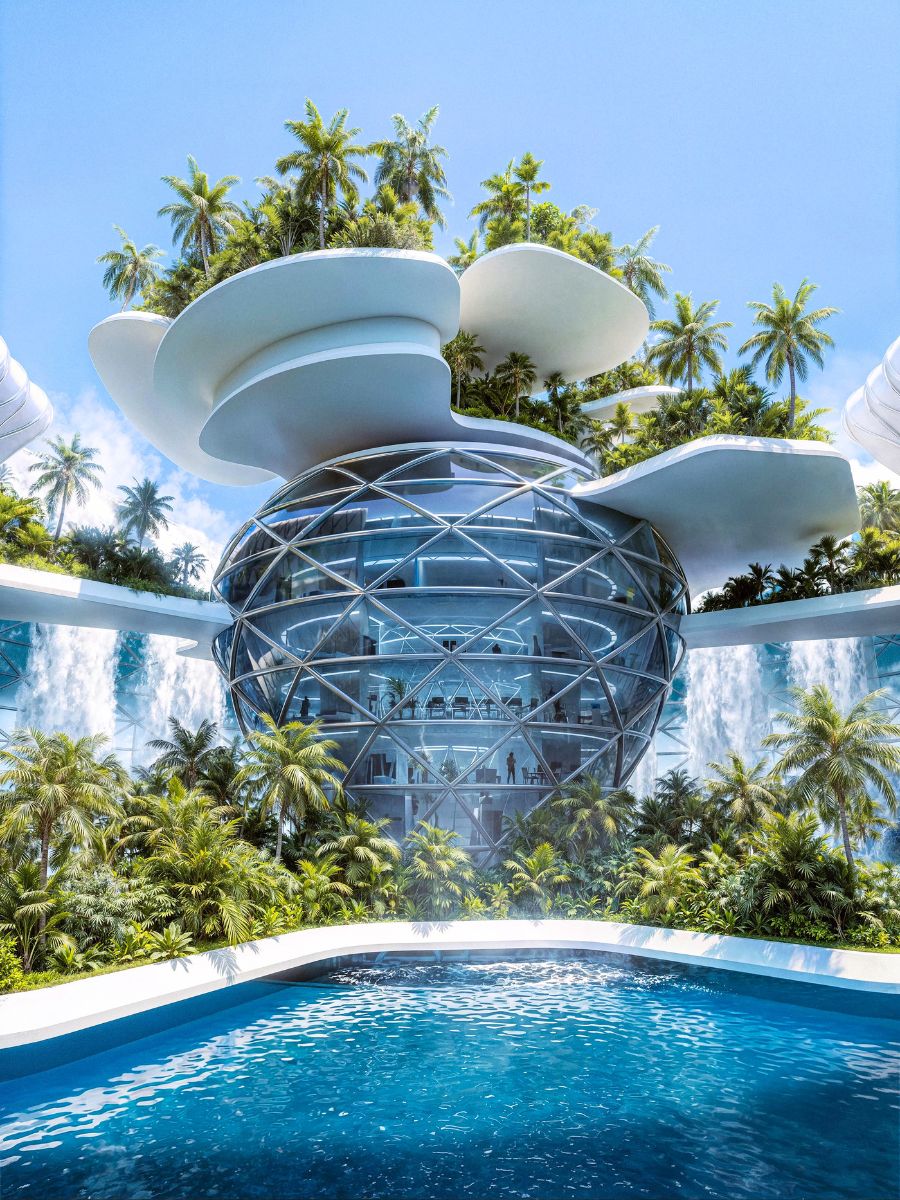
The core structural form of the complex is heavily inspired by the native Baobab tree, a national symbol of Madagascar known for its ability to store water and sustain life in the harshest environments. Mimicking the tree’s thick trunk and sprawling, protective canopy, the central building functions as a multi-story administrative and living hub rising high above the tropical landscape.
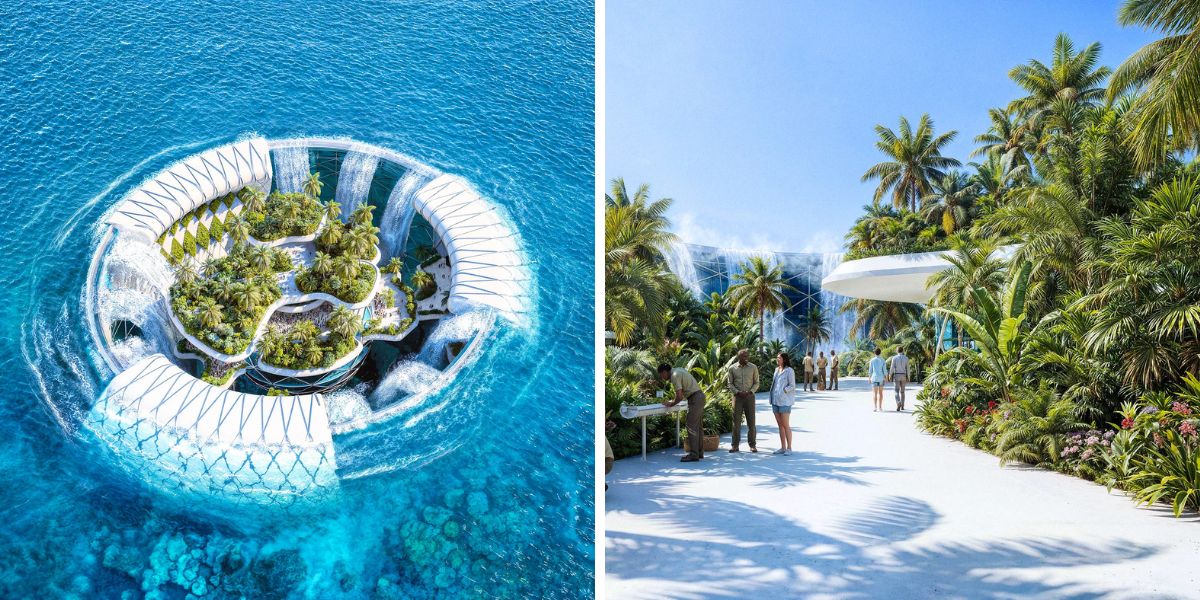
The floating design proposes a massive and continuous system of deep-ocean waterfalls, generating renewable electricity on a scale akin to natural wonders. By engineering a colossal, circular marine infrastructure, ocean water is funneled directly into subterranean turbines deep below the surface. This dual-function structure acts simultaneously as a highly efficient green power plant and a monument. The sweeping cascades protect a palm-fringed central sanctuary from the open sea, creating a spectacular landmark designed to draw global eco-tourism.
Greenhouses Integrate Cultivation, Learning, and Community Life
Initially envisioned by designer Ahmad Eghtesad as a rehabilitative facility, the architecture encourages constructive interaction between residents and the surrounding environment. The central 'trunk' features multi-level, transparent greenhouses where inmates participate in modern agricultural training programs. By cultivating crops and trading goods along sunlit pedestrian pathways, they foster vital skills for a healthy economic life upon release.

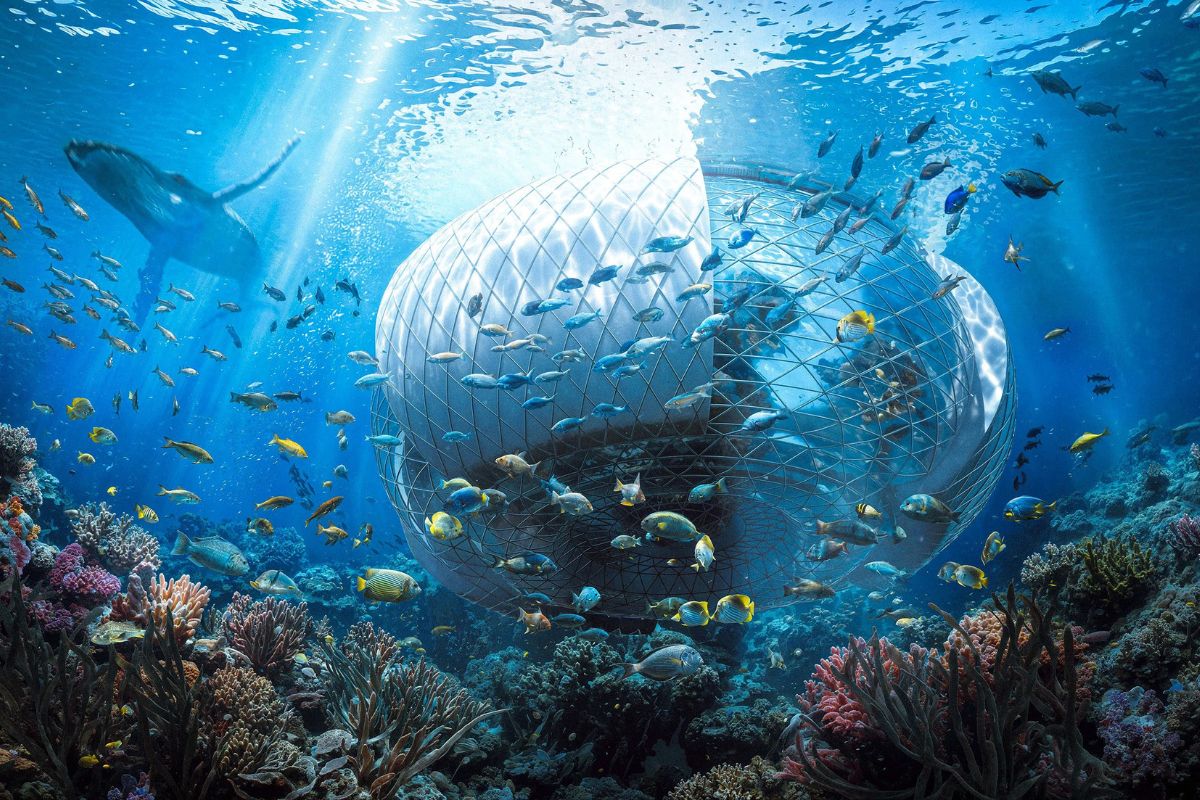
Beneath the ocean surface, a massive, pressure-resistant glass dome bridges the gap between human innovation and marine biology, giving residents a direct view into a thriving coral reef ecosystem while leaving migrating marine life undisturbed. As crime rates decrease and society heals, the modular complex is designed to seamlessly transition into a public eco-resort and green energy hub, securing a prosperous, self-sustaining future for the island.
The Importance of the Baobab Tree
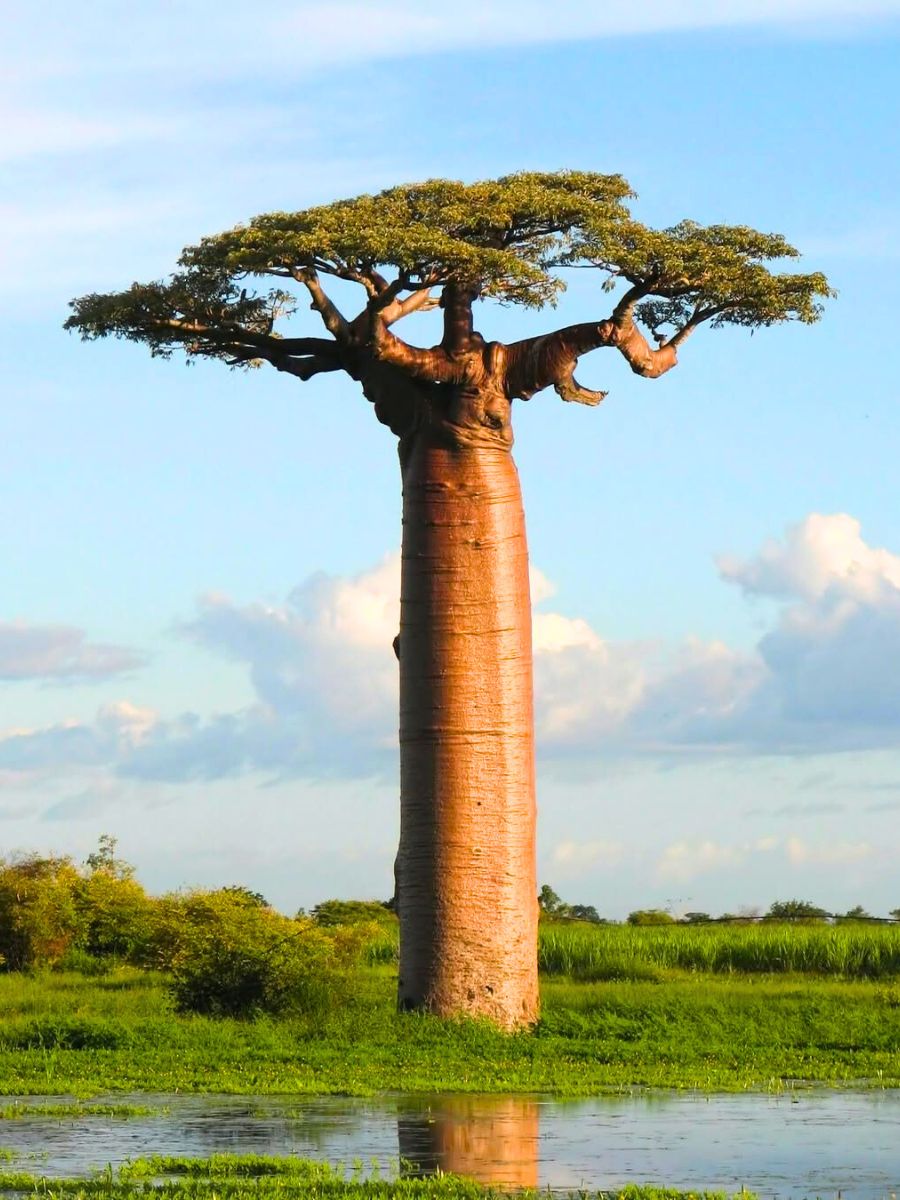
The sumptuous baobab tree (Adansonia digitata) represents the African continent. With bark and fruit providing over 300 life-sustaining uses, it is the foundation of many Indigenous cures, customs, and folklore. Hence, its nickname is the 'Tree of Life'. Keep reading to learn how this tree creates an entire habitat for animals and other plants.
The baobab tree, a primordial species, existed before people and the continents separated approximately 200 million years ago. It is native to the African Savannah, where the climate is exceedingly dry. It serves as a sign of life and positivity in an environment where nothing else grows. Did you know baobab trees thrive in 32 African countries? They can live for almost 5,000 years, reach 30 meters (100 feet) in height, and measure 48 meters (160 feet) in circumference.
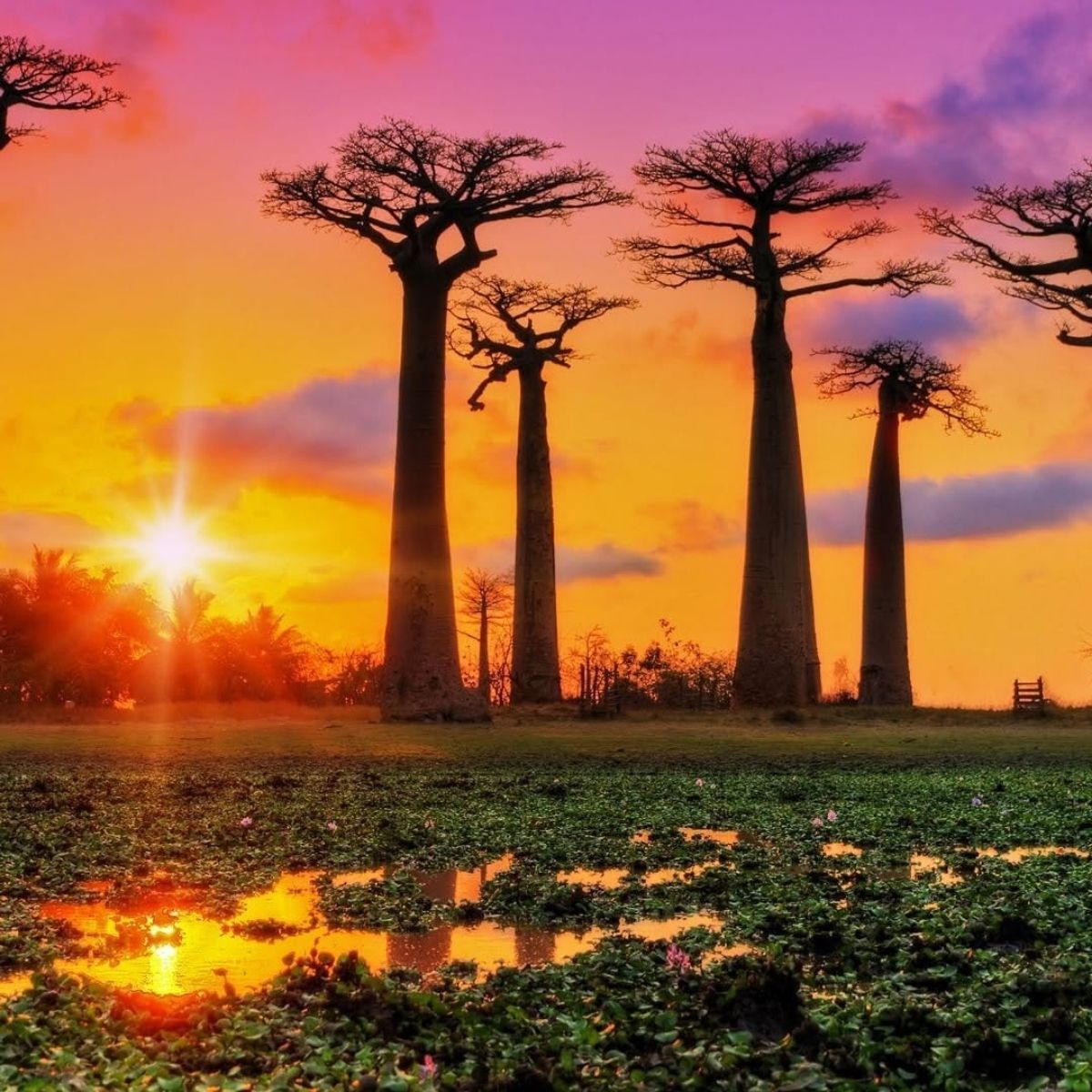
Baobab trees give various products, shelter, food, and water to humans and animals. Its root system is massive, and the baobab may survive for years on end thanks to the moisture it stores. They have been known to withstand droughts and fires. Many savannah communities have made their homes near Baobab trees. This is how it became known as the 'Tree of Life'.
Marabou storks and red-billed buffalo weavers nest in their branches, and fruit bats and bush babies – as well as lemurs in Madagascar – sip up the nectar from their blossoms, pollinating one flower to the next as it goes. These large white buds spread their petals at night and flower for no more than 24 hours. They typically spring to life during or after the rainy season.
You can read all about this tree in the article 'The African Baobab Tree – How One Plant Produces a Complete Environment'.
Photos by Ahmad Eghtesad.