Three days, 130 exhibitors, and more than 2,500 visitors from 73 countries. At Expo Flor 2026 in Quito this October, the mood was a lot more positive than the market had looked five months earlier, De Ruiter's team says. The challenges in the Ecuador rose market haven't gone away, and nobody on a farm needs them explained. What they call for is a fresh perspective, and on Ecuadorian rose farms that starts with the variety.
A Sector That Has Come Back Before
The position Ecuador built is still there. High-altitude farms, large heads, long stems, strong color, and a premium name in export markets that carried flower exports past one billion dollars again in 2025. Notice the word "again." This sector has had hard years before, and it came back from them.
Its growers have been inventive along the way, too. Better irrigation, tighter disease control, and stronger production technology let many farms take more stems out of the same square meter. That's a real achievement. It's also where the first new challenge comes from.
The New Challenges in the Ecuador Rose Market
According to De Ruiter's own market reading, Ecuadorian rose acreage has grown sharply since 2020, and plant density rose alongside it. Growing more isn't the problem. Production costs in Ecuador are high enough that a farm needs those stems per square meter. But more hectares, denser planting, and more productive varieties all reach the market in the same week, and buyers are watching what they spend.
The cost base is the second challenge. Oil-linked inputs have stayed expensive since the energy market turned, and on a rose farm, that lands in greenhouse plastic, fertilizer, packaging, and freight. When the market price drops below what a flower cost to grow, every option hurts.
"What has changed is that more flowers are being thrown away than before, and prices are more competitive."
-Juan Martín Gómez, COO, Rosaprima

The third is competition. Colombia is still the close competitor, particularly in the United States. Newer is Chinese production in Russia and the markets around it, at a quality that keeps improving. Those markets have historically taken the large-headed premium roses Ecuador built its name on.
Sound familiar? It should. Anyone selling out of Quito knows this list by heart, so we won't dwell on it. The more useful question is what it asks of you next.
A Fresh Perspective Starts With the Variety
Here's where the variety conversation changes. A variety stops being a color and becomes a line on the cost sheet. It has to carry productivity, quality, vase life, and stem strength, and it has to give a buyer a reason to choose it over the one next to it.
Premium roses haven't lost their place. But every premium stem now has to earn its price on quality, on reliability, and on a product story the buyer can repeat to their own customer. Henk de Groot, director at De Ruiter Innovations, sees that as a starting point rather than a setback.
"The Ecuadorian rose industry is facing new challenges, and those challenges require a fresh perspective. The industry has proven to be both inventive and resilient in the past. These new hurdles offer fresh insights and opportunities to evolve and remain a mature, robust sector. Improvements to a closed-loop supply chain, the development of rose varieties that are more resilient to a changing climate, and the introduction of more productive plants will all be part of the solution. De Ruiter is well positioned to help address these challenges, thanks to years of dedicated research and testing."
-Henk de Groot, Director, De Ruiter Innovations
Where a Breeder Fits In
No breeding program changes the supply balance on its own. What a breeder can change is which stems you're holding when the market turns.
De Ruiter Innovations Latin America works at that end. A wide portfolio counts for more now than in an easy year, because buyers have stopped wanting the same rose. Some need proven varieties for standing programs. Others want a garden-style shape, a specific color, or something with enough identity to build a promotion around. The X-Pression line and the Enigma line sit on different sides of that split.
Productive varieties alone don't answer the new challenges, though. Neither does novelty on its own. Ecuador has become very good at growing more of what already exists, and the next step is growing something different.
De Ruiter's answer is novelty plus. A new variety has to clear more than one test before it earns space in your greenhouse. It has to be genuinely different from what's already in the ground, measured against the assortment a farm and its market already carry rather than against last season's catalog. It has to hold up in production, on yield, stem strength, consistency, and vase performance. And it has to be distinct enough that a buyer asks for it by name instead of ordering it by color and grade.
A variety that clears only one of those tests still adds volume. One that clears all of them renews an assortment. Andrés Dávalos of Rosadex describes what that choice looks like from the farm.
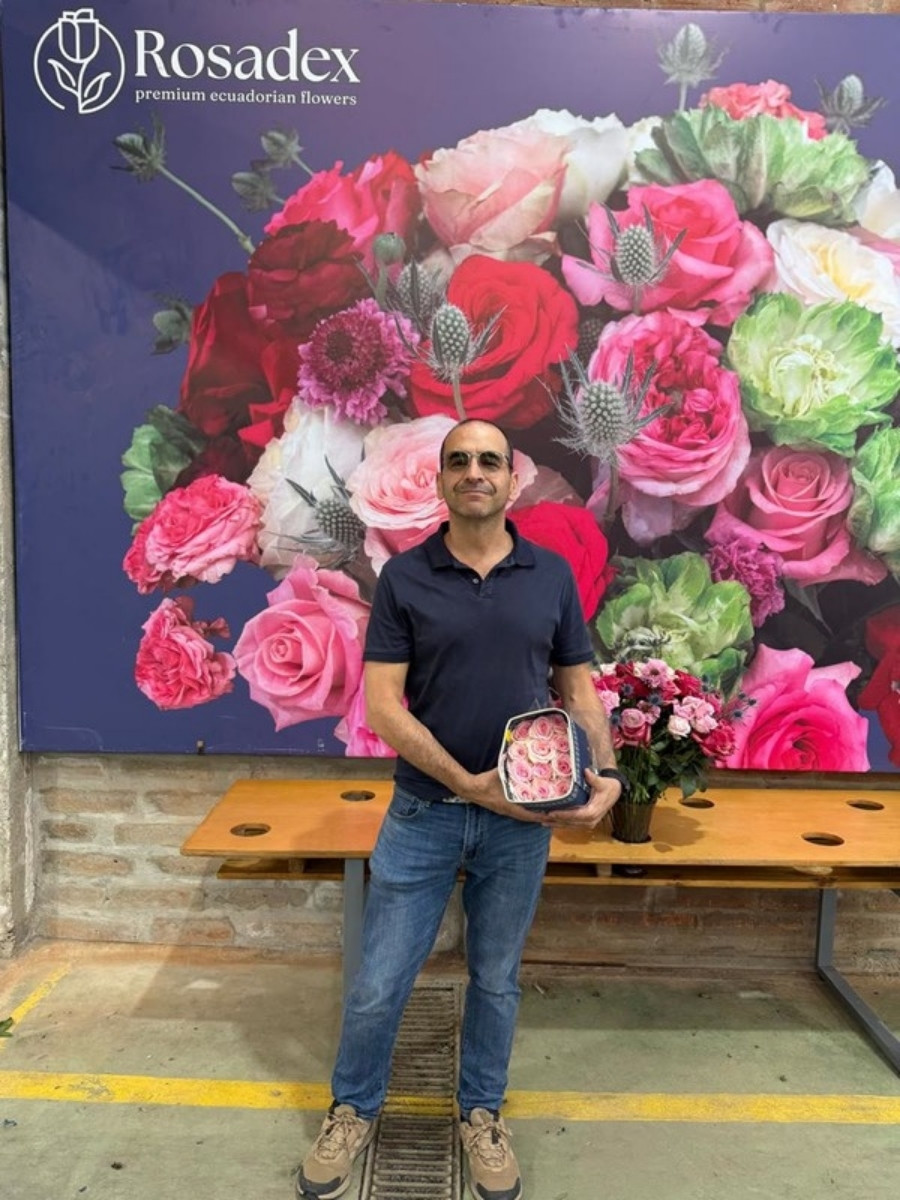
"I think the biggest change has been the pressure on margins. Buyers are much more careful with price and quantities, while our production, labor, and logistics costs keep going up. So today you really have to be much more precise about what you grow and who you grow it for. You need to take some risks so you can be different from your competitors, but you have to choose really carefully. De Ruiter has a good assortment of productive varieties that makes that decision a bit easier, but you still have to think a lot."
-Andrés Dávalos, General Manager, Rosadex
Which leaves a question for every grower planning next season. Is a special variety an investment or a distraction? We take that one on in the second part.
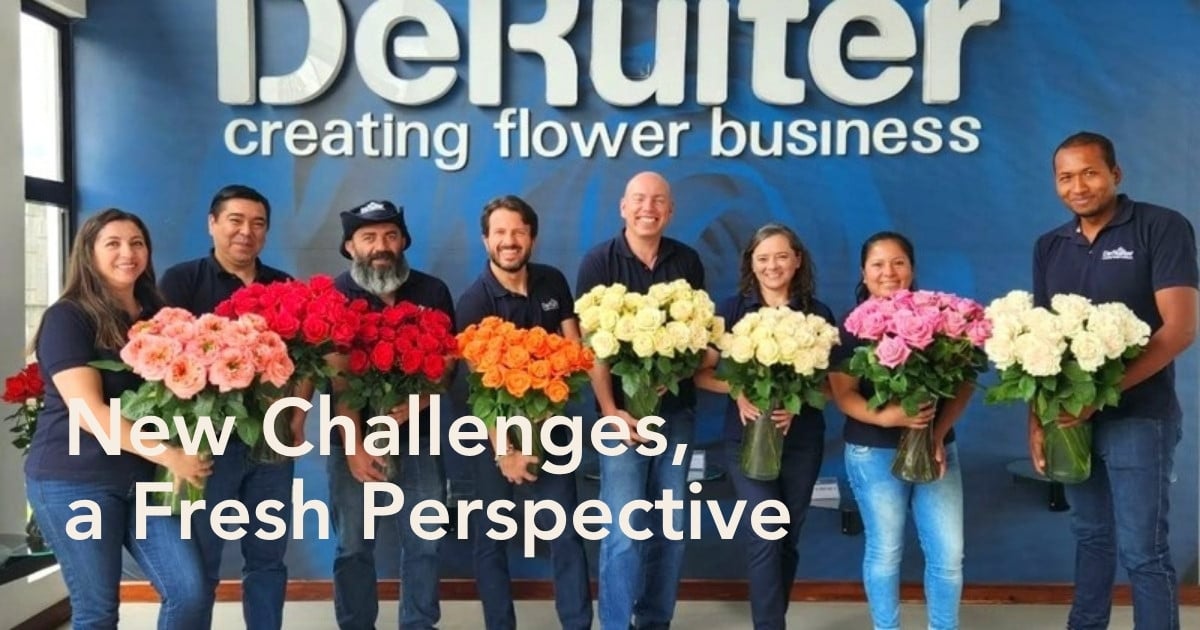
Header image: the De Ruiter Ecuador team, photo by De Ruiter. Featured image: Juan Martín Gómez of Rosaprima, photo by Sonia Palacios, courtesy of Rosaprima.