Ecuadorian rose growers need reliability to protect their day-to-day business, and they need innovation to stay relevant in a market that keeps changing. In a previous article about De Ruiter Innovations in Latin America, the focus was on the balance between proven winners and new varieties. That story remains important.
This follow-up looks at the same topic from another angle: the current pressure on Ecuador's rose market. Prices are under pressure, production costs remain high, and growers are dealing with a market that is bigger, more competitive, and less predictable than it was a few years ago. And, quite a topical issue these days, there is special attention to the legalization of informal producers, who are often wrongly regarded as "pirates".
For De Ruiter Innovations in Ecuador, this is exactly where breeding, technical support, and responsible market guidance come together. The answer is not simply to introduce more varieties. The answer is to help growers choose varieties that are productive, distinctive, and commercially useful. But also choose varieties which are well protected through registered breeder's rights and through a breeder's policy that combats unfair competition of unlicensed products.
Ecuador’s Rose Market Is Under Pressure
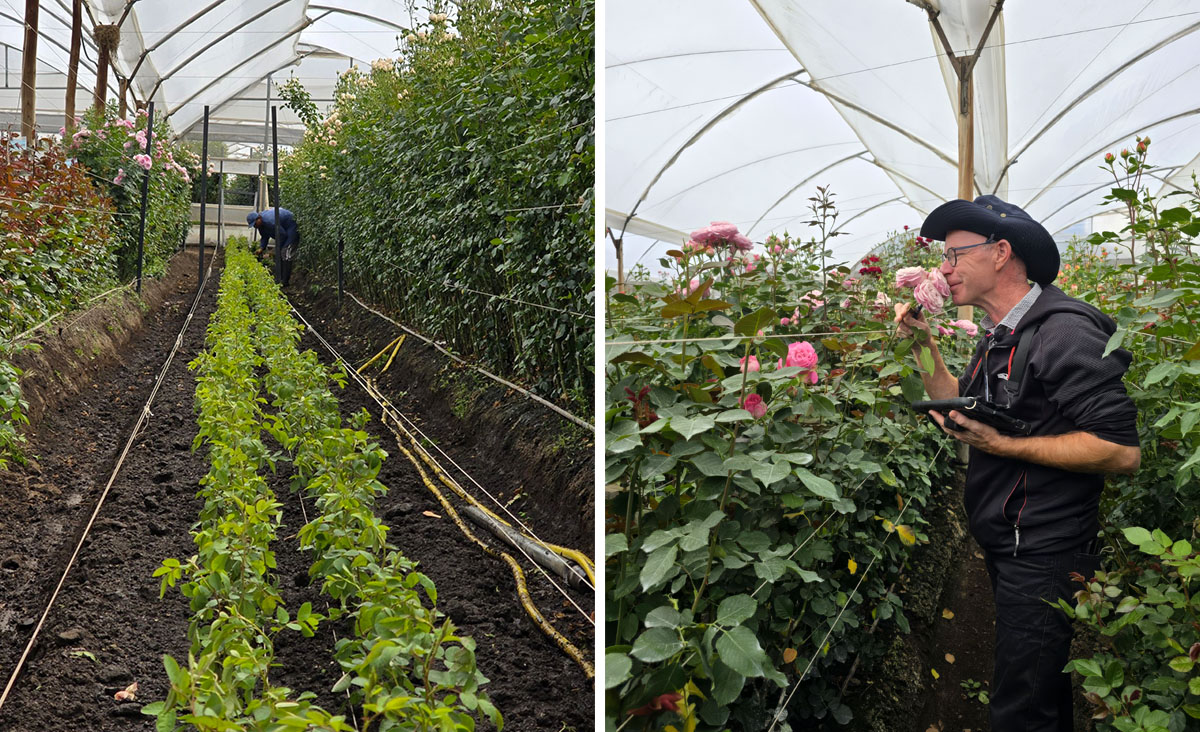
Ecuador has built a strong global name in roses. Its high-altitude production areas are known for large heads, long stems, strong color expression, and a premium image in export markets. Still, even strong markets can become difficult when supply grows faster than demand.
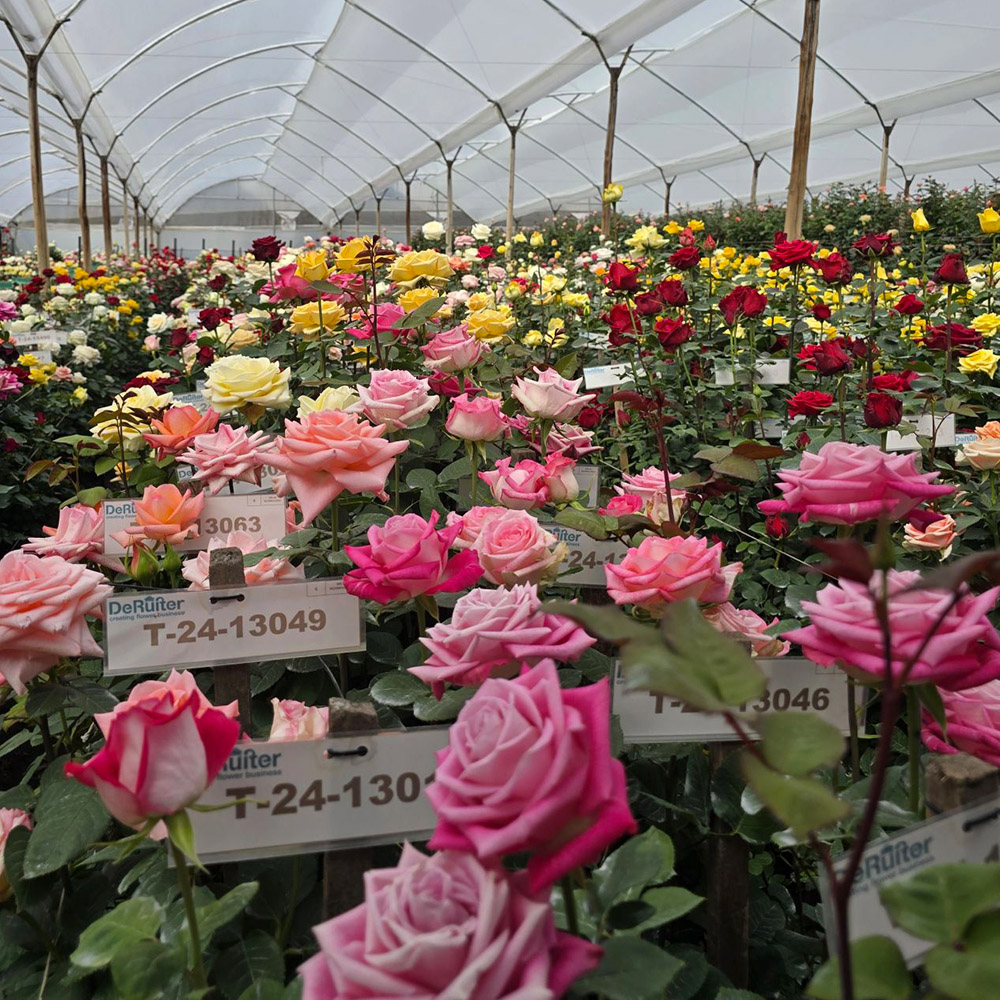
A sea of colors in the Ecuador greenhouse
According to De Ruiter's market reading, Ecuador's rose acreage has grown sharply since 2020, both among formal and informal producers. At the same time, plant density has increased. Improved irrigation, better disease control, and stronger production technology have enabled many farms to grow more stems per hectare.
That extra production is not automatically a problem. Productive varieties are essential in Ecuador because production costs are high. Growers need enough stems per square meter to keep their business healthy. The difficulty appears when more hectares, higher plant density, and more productive varieties all reach the market at the same time.
The result is familiar to many growers: more stems chasing buyers who are already watching their budgets. Prices come under pressure, especially in markets where customers can quickly compare origins, colors, grades, and freight costs.
High Costs Make Low Prices Hurt More
Low prices are always difficult, but they become more painful when costs are high. In recent years, global conflicts and energy market instability have driven up prices for oil-based products. For rose growers, that can be felt in materials such as greenhouse plastic, fertilizers, packaging, and transport.
Labor, energy, crop protection, logistics, and post-harvest handling also remain major cost factors. Ecuadorian growers cannot simply absorb every increase without consequences. When market prices fall below production cost, farms face hard decisions: sell at a loss to recover part of the investment, or discard flowers that still require labor, water, fertilizer, and space to produce.
This is the kind of pressure that changes how growers look at varieties. A rose variety must contribute to the business. It needs productivity, quality, vase life, stem strength, market identity, and a clear reason for buyers to choose it.
Competition Is Becoming More International
Ecuador's rose growers also face stronger international competition. Colombia remains a close and important competitor, especially in the United States. Meanwhile, high-quality roses from China are becoming more visible in Russia and surrounding markets. These Chinese roses are still relatively new in that space, but their quality and market position are improving.
That matters because Russia and neighboring markets have traditionally been important for large-headed premium roses. When buyers in those regions see more alternatives, Ecuadorian growers need to protect their position with stronger product choices and clearer differentiation.
Global inflation adds another layer. Buyers in several markets are looking for cheaper options or buying more selectively. That does not mean premium roses lose their place. It does mean that every premium stem has to defend its value with quality, reliability, and a product story that makes sense.
Responsible Innovation as a Grower's Tool
De Ruiter Innovations Latin America responds to this market reality through responsible research. The focus is on varieties that offer more than just a new name or a brief moment of excitement. Growers need roses that can perform in production and still create interest in the market.
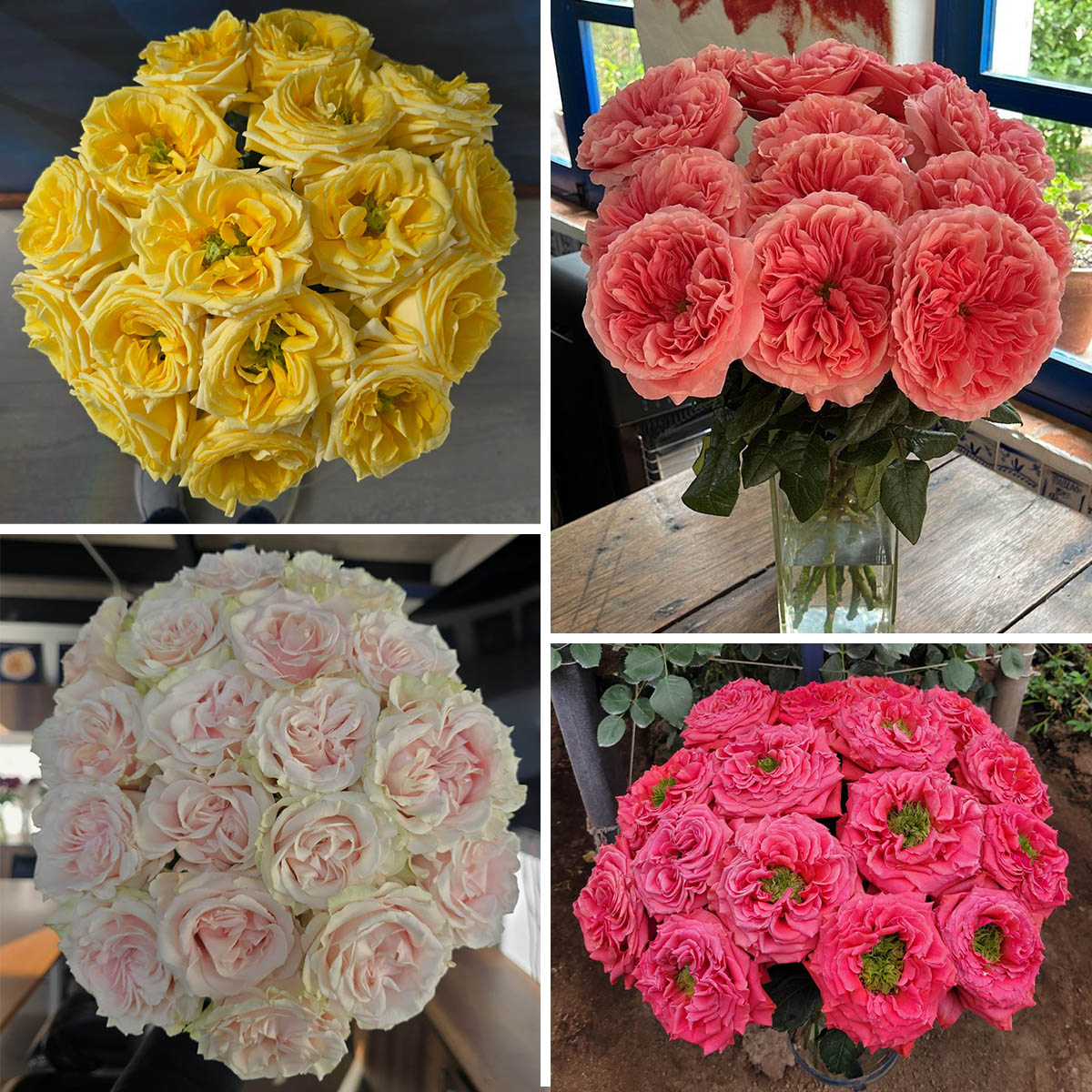
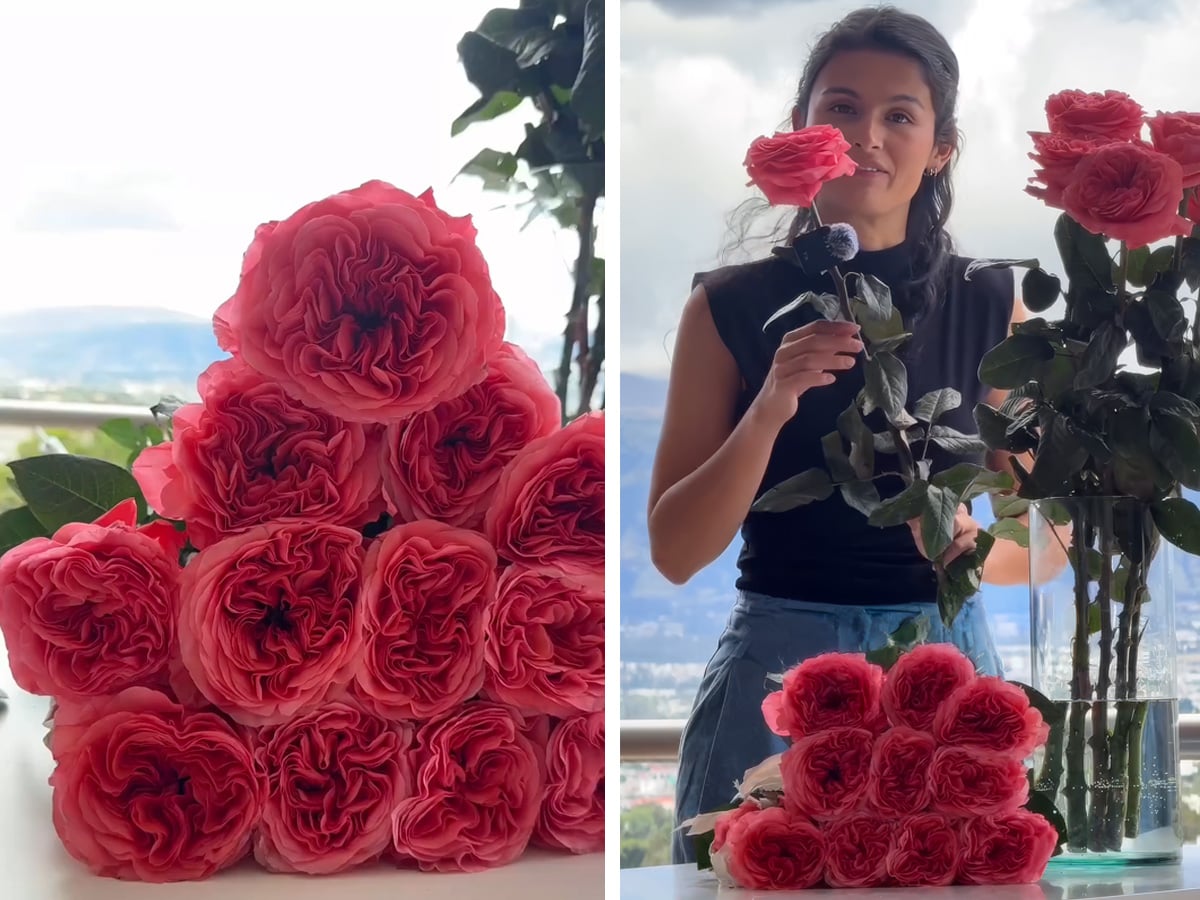
The X-Pression line is a good example. These garden-style roses bring a distinctive look for florists, event designers, and premium buyers. At the same time, the line has been developed with practical traits in mind, including productivity, stem strength, consistency, and vase performance.
This combination matters. In a pressured market, growers cannot afford novelty that only works in photos. They need innovation that can carry commercial weight. A special variety should help a farm stand out, but it should also make sense in labor planning, harvest cycles, post-harvest handling, and sales.
De Ruiter also supports growers through a broad product portfolio. Diversification is becoming more important because not every market wants the same rose. Some customers need proven varieties for stable programs. Others are looking for niche or garden-style roses, special colors, or more expressive shapes. A wider portfolio gives farms more room to build a balanced assortment.

Why Special Varieties Matter Now
When market conditions are difficult, it may feel safer to wait. But waiting can also mean missing the next opportunity. Growers who invest carefully in special varieties during a slower period may be better prepared when demand improves.
This is especially relevant for Ecuador. If tariff pressure eases, if geopolitical tensions improve, or if key markets regain confidence, farms with a stronger, more diverse assortment will be ready to move faster. They will have more than the standard volume to offer. They will have varieties that help buyers create new programs and give florists something with identity.
That does not mean every grower should plant every novelty. It means that the right special varieties, chosen with technical support and market understanding, can become part of a farm’s future position.
A Supportive Approach to Informal Producers
Another important topic in Ecuador is the so-called "informal sector." Informal producers are often grouped together and sometimes described in harsh terms, as if they were "pirates." That view is too simple. Many small growers are serious entrepreneurs dealing with socio-economic challenges that have forced them to go into the 'informal' rose production sector. Some already run successful businesses and are highly focused on innovation. Others are newer to the sector and need help understanding how royalties, legalization, and breeder support work.
De Ruiter's approach is based on support and dialogue rather than an aggressive legal route. The company considers each grower's individual situation and works toward a practical model that benefits both parties.
For growers, legalization creates a path toward more secure production. It gives them access to official varieties, technical support, and a clearer relationship with the breeder. For De Ruiter, it creates a fairer royalty structure and greater market visibility. For the wider Ecuadorian rose sector, it helps professionalize production and reduce tension between formal and informal players.
This approach fits the current moment. Ecuador does not need more division in a difficult market. It needs stronger cooperation, better information, and more growers who can operate inside a sustainable and legal framework.

The Tariff Question Remains Important
The United States remains a key market for Ecuadorian roses, so tariff policy continues to matter. Ecuador has been working to improve its position with the U.S. government, especially around temporary additional import duties that weaken competitiveness.
The issue is especially sensitive because Ecuador competes directly with Colombia, which has had a more favorable tariff position in the U.S. market. Even a few percentage points can make a difference when buyers are already under pressure and when growers are dealing with higher production costs.
For Ecuador, continued dialogue with the U.S. government is essential. The permanent removal of temporary surcharges would strengthen the sector’s position and boost confidence among exporters, growers, importers, and buyers.
Helping Growers Stay Ready
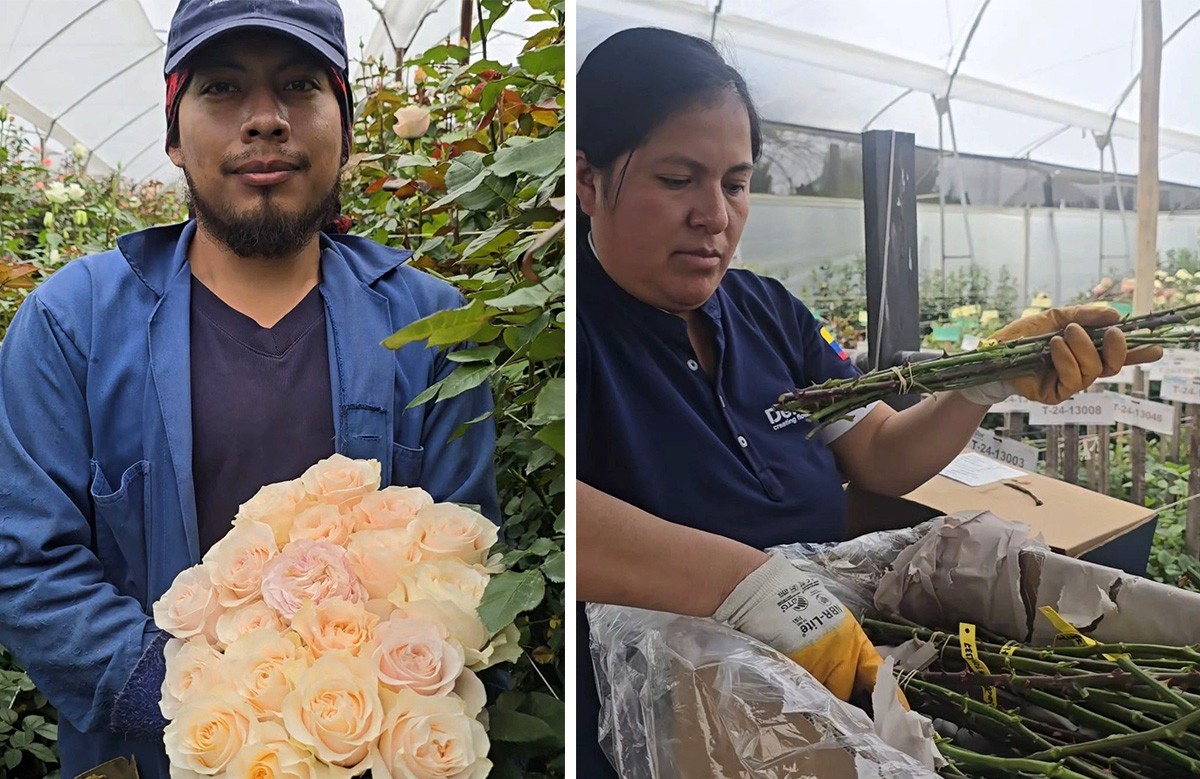
The outlook for Ecuadorian roses is not without concern. Supply has grown, costs remain high, competition is stronger, and buyers are more selective. Still, Ecuador has a strong foundation: experienced growers, recognized quality, a powerful export culture, and a clear place in the global rose business.
De Ruiter Innovations Latin America plays its role by helping growers make better variety decisions in this environment. That means productive genetics, distinctive novelties, a broad portfolio, technical support, and a more constructive approach to legalization.
The market will recover in steps, not all at once. The growers who are prepared will have the strongest position when it does. For Ecuador, that preparation starts with the right varieties, the right support, and a realistic view of where the market is going, all of which are offered by De Ruiter.
Header and feature image by @de-ruiter-innovations.