Carnations do not care which side of the border they are grown on. But the people buying them do, and that is the exact problem EMF has spent the last year solving.
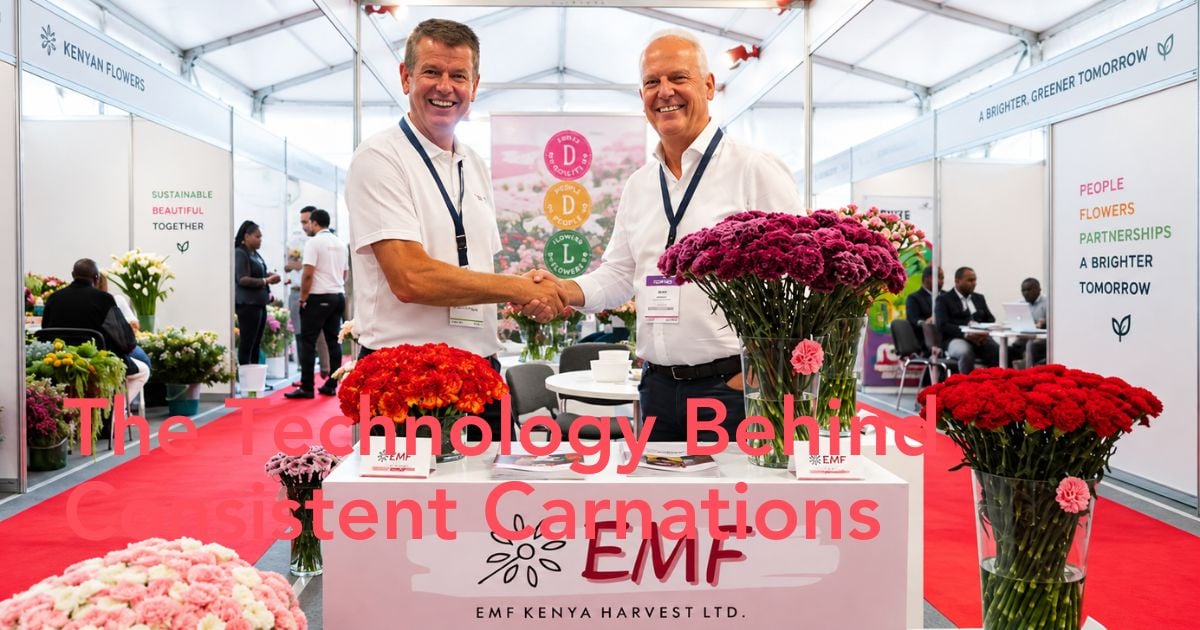
EMF is a high-altitude carnation specialist running four farms, two in Kenya and two in Ethiopia. Different soil, different weather, different teams, same brand name on the box.
"Although we operate from different locations, we work as one brand," says Floris Hogervorst, who works in business development at EMF. "It is therefore very important that we maintain the same quality standards across all our farms."
That single sentence is really the whole story here. Growing a good carnation is hard enough once. Growing the same good carnation four times over, across two countries, and having every customer experience it identically, is a different challenge altogether. About a year ago, EMF started working with PlantScout to help close that gap, beginning with something every grower wrestles with constantly: how to test new varieties without losing track of the results.
From Scattered Notes to One Shared Picture
Before PlantScout, tracking a new carnation variety meant chasing information across emails, messages, and separate files fragmented record-keeping that eats time and lets details slip.
"We are always working to improve our assortment and test new carnation varieties," Hogervorst explains. "We wanted an easier way to follow these trials and keep everyone informed about their progress." With PlantScout, EMF's teams now fill out short surveys to log how a new variety is developing, track it as it grows on the farm, review its vase life, and fold in feedback from the market, all inside one shared overview instead of a dozen scattered ones. "This helps us make better-informed decisions about which varieties should become part of our commercial assortment," he says.
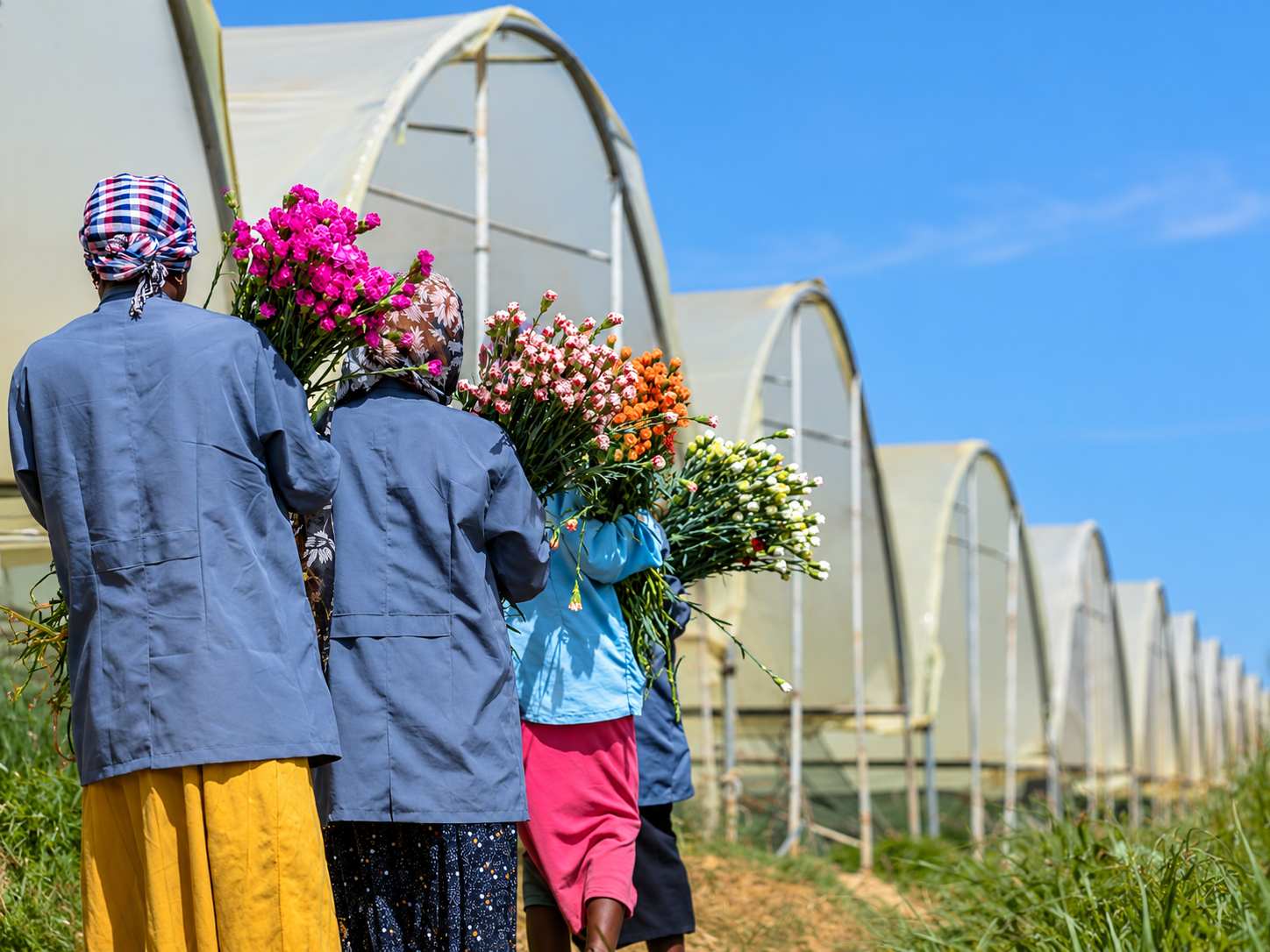
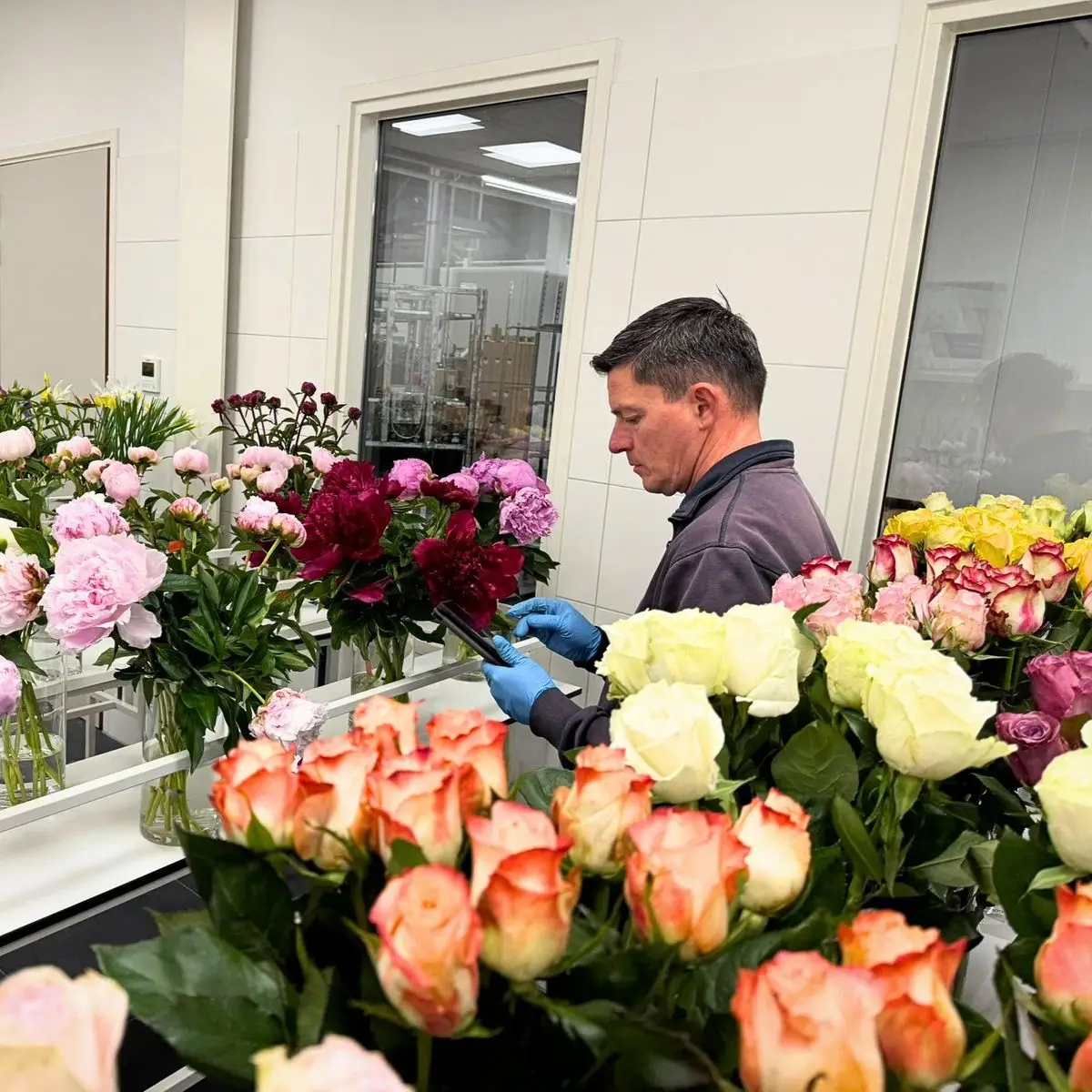
Vase life testing is where that shared overview really earns its keep. EMF runs these tests at all four farms and at its handler, Alkemade, at Royal FloraHolland, and PlantScout lets every location log results the same way and share them immediately. That gives EMF a clean, side-by-side view of how a carnation performs fresh off the farm in Kenya or Ethiopia versus after transport and handling in the Netherlands.
"If one location records a different result, we can see it quickly and investigate further," Hogervorst says. The system will not hand EMF the cause on its own. Still, as he puts it, "it makes differences visible and shows us where we need to look," whether that means examining harvesting, treatment, handling, transport, or the testing conditions themselves.
What Comes Next: Turning the Whole Farm Into Searchable Data
That same instinct to catch the differences early is now driving EMF's next move. Together with PlantScout, the company is in the final stage of building a new quality control and scouting module, and its ambition goes beyond trial tracking. The team is mapping its greenhouses so that every future observation can be pinned to an exact location, to record pests, diseases, crop damage, and anything else worth flagging, all inside a single system.
"Once the module is introduced, we will be able to build up a history for each part of the farm," Hogervorst says. Over time, that history should help EMF "recognize patterns, follow recurring issues and share information more quickly between scouts and production managers."
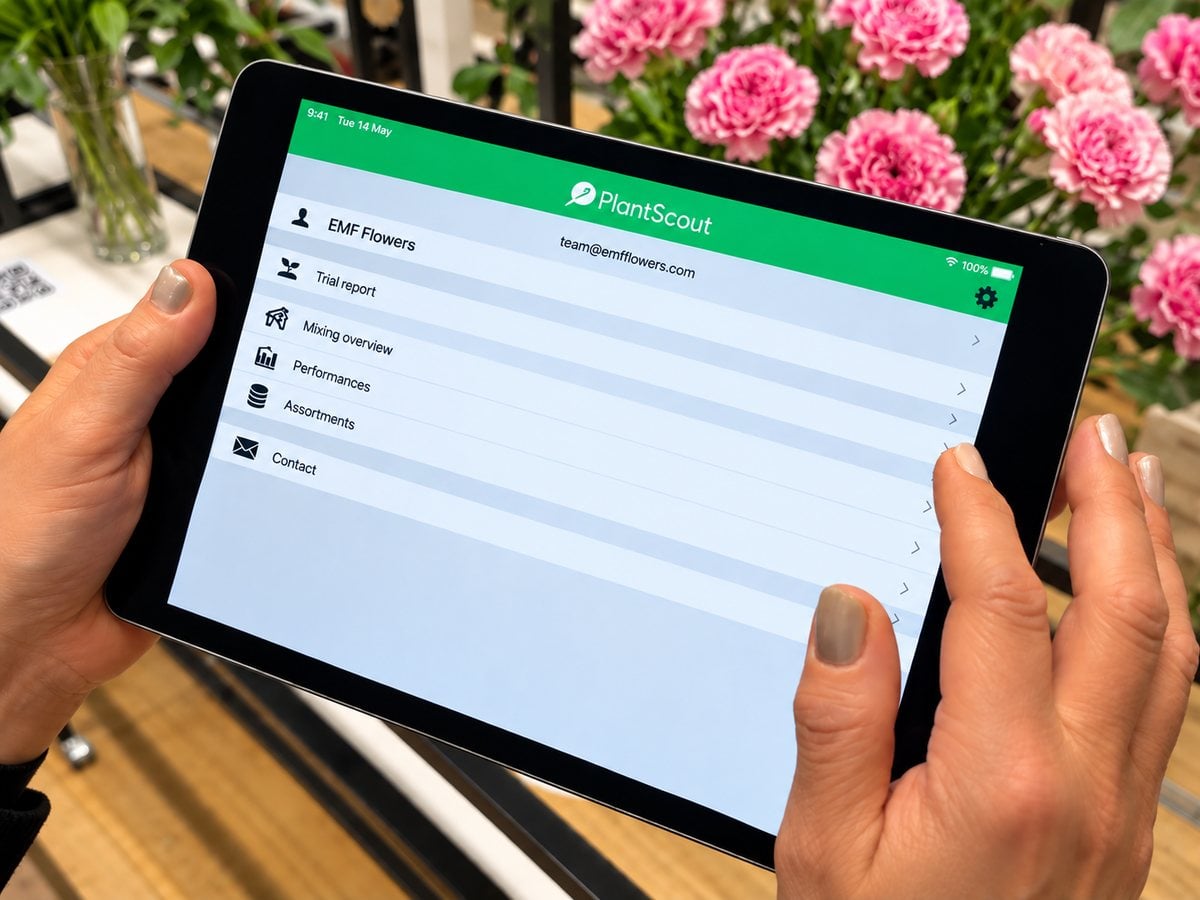
Picture what that changes on an ordinary morning. A scout opens the mapped greenhouse on the app, walks the rows, and when something catches their eye, logs it right there: notes, photos, exact location no walking back to a desk to write it up later. The production team then sees the full picture of what was found and where, and can decide on the spot whether an area needs closer inspection or a different kind of action.
"The main advantage is that the information will immediately be available in one place," Hogervorst notes, "instead of being shared through separate messages or paper reports."
Speed Is the Real Prize
The payoff Hogervorst keeps circling back to is speed, specifically, the gap between spotting a problem and actually doing something about it. With vase life testing, that gap has already shrunk. An unexpected result no longer waits for someone to draft and send a report; it gets logged, shared, and compared across locations right away. He expects the scouting module to bring that same responsiveness into the greenhouse itself, and for EMF, that matters more than it might for a single-site operation.
"This is especially important for EMF because we operate four farms under one brand," he says. "Our customers should receive the same quality regardless of which location produced the flowers."
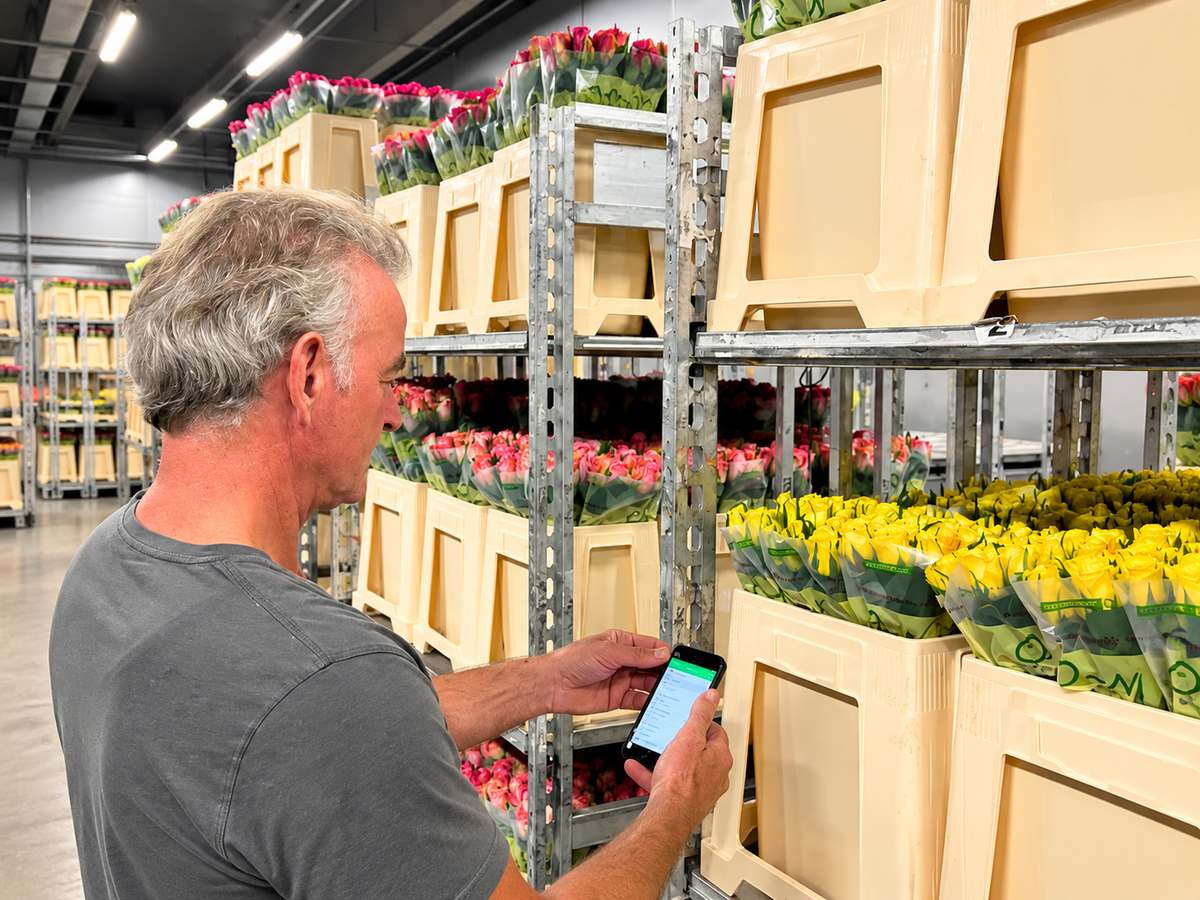
EMF is not the only grower leaning on PlantScout to solve a multi-farm consistency problem. Marginpar, which runs sixteen farms across four African countries, has used the same platform to standardize quality management and speed up feedback to its teams on the ground. The specifics differ; Marginpar's challenge spans a wider footprint and a broader product range. At the same time, EMF's is narrower and carnation-specific, but the underlying logic is the same. When your farms span borders and climates, a shared, real-time system keeps "one brand" from becoming a marketing line the product itself cannot back up.

What stands out most in how Hogervorst talks about the partnership is not the software itself, but the working relationship behind it. "What we value most about working with PlantScout is their willingness to listen and develop solutions together with us," he says. "They do not simply provide a standard system and leave us to adapt to it. They take the time to understand how EMF works and what our teams need." For a brand trying to make four farms feel like one, that kind of partner might be just as important as the data itself.