Nothing quite screams "summer" like the sunflower. Radiant golden flowers and a cheerful disposition: this flower, also called Helianthus annuus, has evolved from its wild origins. Once an agricultural field crop, grown mainly for seeds and oil, sunflower is now one of the most loved floral design items. It is bold, easily recognizable, and really versatile. Yet the cut flower varieties grown today – pollenless, uniformly sized, long-stemmed, and predictably productive – have little resemblance to the agricultural sunflower that dominated the 20th century.
They are also far removed from their wild ancestors, which had traits like coarse branching habits, massive drooping flower heads, heavy dustings of staining yellow pollen, and extreme sensitivity to day length, making them unsuitable for vase arrangements. Getting the ideal qualities in this flower's varieties requires years of breeding, and here’s how it all works.
The Sunflower’s Botanical Starting Point
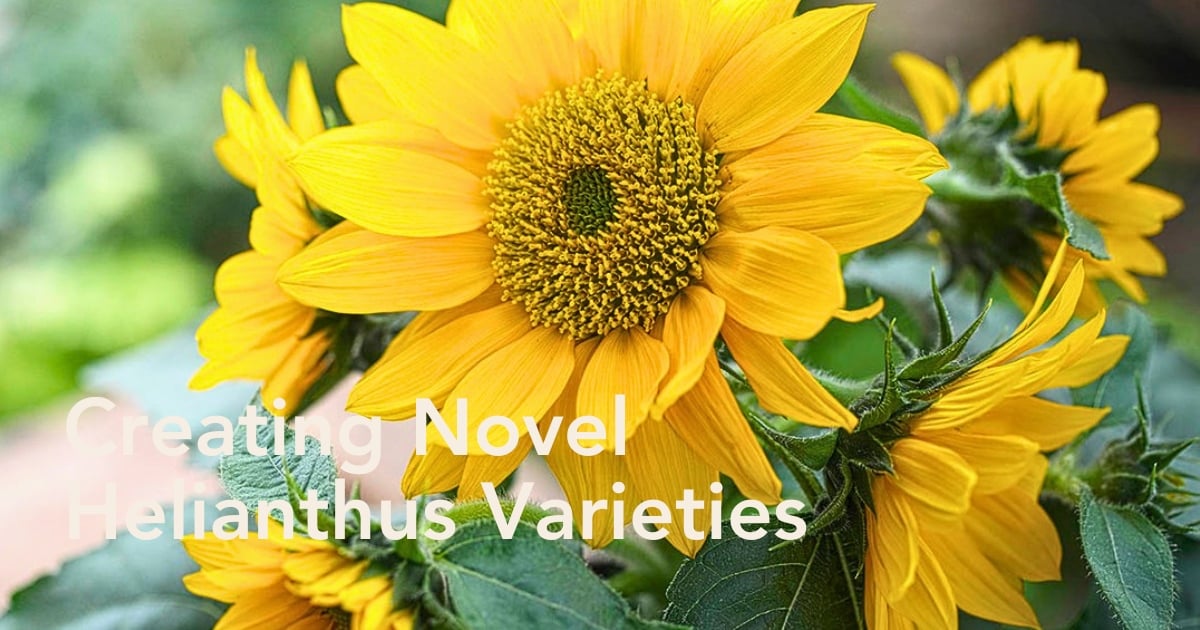
Helianthus annuus, the common sunflower, is a North American annual once cultivated by Indigenous peoples for food, oil, and dye. Its flower head is not one flower but a composite of hundreds to thousands of florets. The showy ray florets around the rim are sterile; the disc florets at the center are hermaphroditic, producing both pollen and seed.

These disc florets are protandrous, meaning pollen sheds before the stigma is ready to receive it, which blocks self-pollination within the floret but not cross-pollination across a head, since bees, wind, and gravity freely move pollen.
Genetic and Morphological Objectives of Sunflower Breeding
When breeding a wild sunflower into a high-performance cut flower, breeders mainly target five physiological features:
- Cytoplasmic male sterility (CMS) and pollenless heads: Pollen is a major defect in cut flowers. It drops onto tablecloths, stains bridal gowns, and reduces vase life because pollinated disc florets age fast and drop their petals. Breeders use Cytoplasmic Male Sterility (CMS) to create 100% pollenless F1 hybrids that remain pristine in arrangements.

- Non-nodding (upward-facing) neck angle: Wild sunflowers feature a curved neck (geotropism) causing the heavy flower head to face downward toward the soil. Modern cut-flower breeding selects for stiff, straight necks that hold the flower at an upright 45-degree angle or face directly upward toward the viewer.
- Single-stem (uniflorum) habit: Unlike multi-branched garden varieties, commercial cut sunflowers are bred as non-branching single stems. This focuses all photosynthetic energy into producing one straight stem of uniform length with a perfectly proportioned head diameter.
- Photoperiod neutrality (day-length insensitivity): Traditional sunflowers are short-day plants that bloom prematurely on stunted stems when grown during short winter days. Day-neutral breeding allows year-round greenhouse and field production without loss of stem length.
- Petal density and color diversity: Breeders have expanded the classic yellow-and-black palette into cream-white, plum red, mahogany bi-colors, and lime-green centers, alongside extra layers of ray florets for a fuller appearance.

What the Cut Flower Trade Demands
Before crossing, the sunflower breeding programs start with a commercial brief. A sunflower stem needs to be strong and straight, at least 60 to 80 centimeters, to survive in a bouquet or a floral design. The flower head has to be proportional. It should be big enough to anchor an arrangement and small enough to manage in a vase.
Also, uniform flowering across a sown crop allows growers to harvest on schedule and deliver a consistent product. Resistance to downy mildew and Sclerotinia stem rot is also a constant target. But no one trait matters more than pollen behavior.
The most popular commercial sunflowers are bred to be pollenless, and for good reason: pollen-free flowers stay nectar-rich for pollinators without staining or triggering a customer's allergies, and once a flower starts shedding pollen, its vase life drops quickly.
Science Behind Pollenless Sunflowers
The mechanism behind pollenless sunflowers is cytoplasmic male sterility, or CMS: a natural trait, first found in a wild sunflower population, caused by a mismatch between the mitochondrial and nuclear genomes that shuts down pollen production. It is not genetic modification; breeders moved the trait into cultivated lines through ordinary backcrossing.
The most studied version, PET1, was identified in 1969 from a cross between Helianthus petiolaris and Helianthus annuus. A gene called orfH522 triggers early cell death in the tapetum, the tissue that would otherwise produce pollen, so the anthers form but stay empty. This mechanism underpins the A-line, B-line, R-line system behind commercial hybrid seed.
The A-line is the male-sterile female parent; the B-line is its fertile counterpart, used to multiply A-line stock without restoring fertility; the R-line is the male parent that restores fertility in the hybrid, except in pollenless cut flower varieties, where it deliberately withholds a full restorer so the hybrid stays male-sterile.

From Inbred Lines to F1 Hybrid Seed
Every commercial sunflower variety on the market is an F1 hybrid, and developing the inbred parent lines behind it is the slowest part of the process. Breeders self-pollinate selected plants across six or more generations to lock in stable, homozygous genetics, evaluating each generation for stem strength, head diameter, flowering date, plant height, disease resistance, and pollen status before selecting the best individuals to carry forward.
From first cross to market release, the full cycle typically runs roughly eight to twelve years. Once two inbred lines prove stable and complementary, they are crossed in isolated seed production fields. Hand pollination is too costly at commercial scale, so bees do the work instead, carrying pollen from R-line plants to neighboring A-line plants. The resulting hybrid seed is genetically uniform and outperforms either parent on the traits breeders selected for.

Breeding for Form, Color, and Timing
Within cut flower breeding, two plant architectures dominate. Single-stem, or uniflora, types put out one large terminal head and finish, suiting large-scale field production, where succession-sown crops flower in a narrow window, get harvested, and the field is replanted. Branching types produce several heads per plant over an extended period, favoring smaller and specialty growers who want a longer harvest from fewer plants.
Breeders also select hard for an upright, non-nodding presentation. Wild sunflowers droop under the weight of the head; cut flower lines are bred for stiff necks that hold the flower outward or upward, a trait Sakata's Vincent series pushes to a consistent 45-degree angle.

Photoperiod control is its own battleground. Sunfinity and Vincent varieties breed toward day-length neutrality so growers can produce year-round. Sunbright leans into short-day sensitivity on purpose, filling an autumn-and-winter window that day-neutral varieties do not naturally serve. Color has grown just as fast: once a single gold-and-brown palette, it now spans cream white, deep red, bicolors, and fully double forms like Solano.
Breeders Behind the Sunflowers
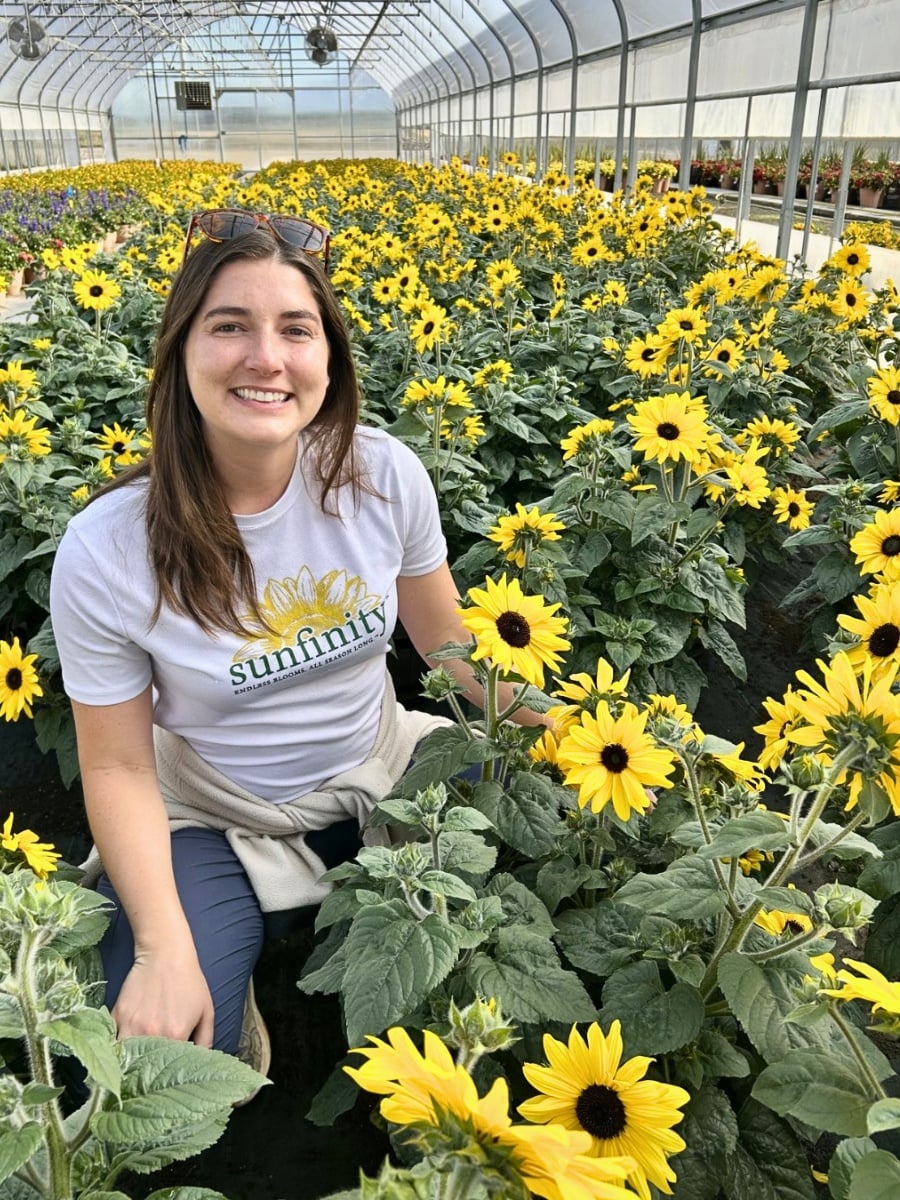
Syngenta Flowers introduced Sunfinity in 2017, a branching, pollen-free line that is facultative long-day rather than short-day, giving it continuous bloom from spring through fall instead of a single flush. Syngenta added a Yellow-Red Bicolor to the platform in 2025.
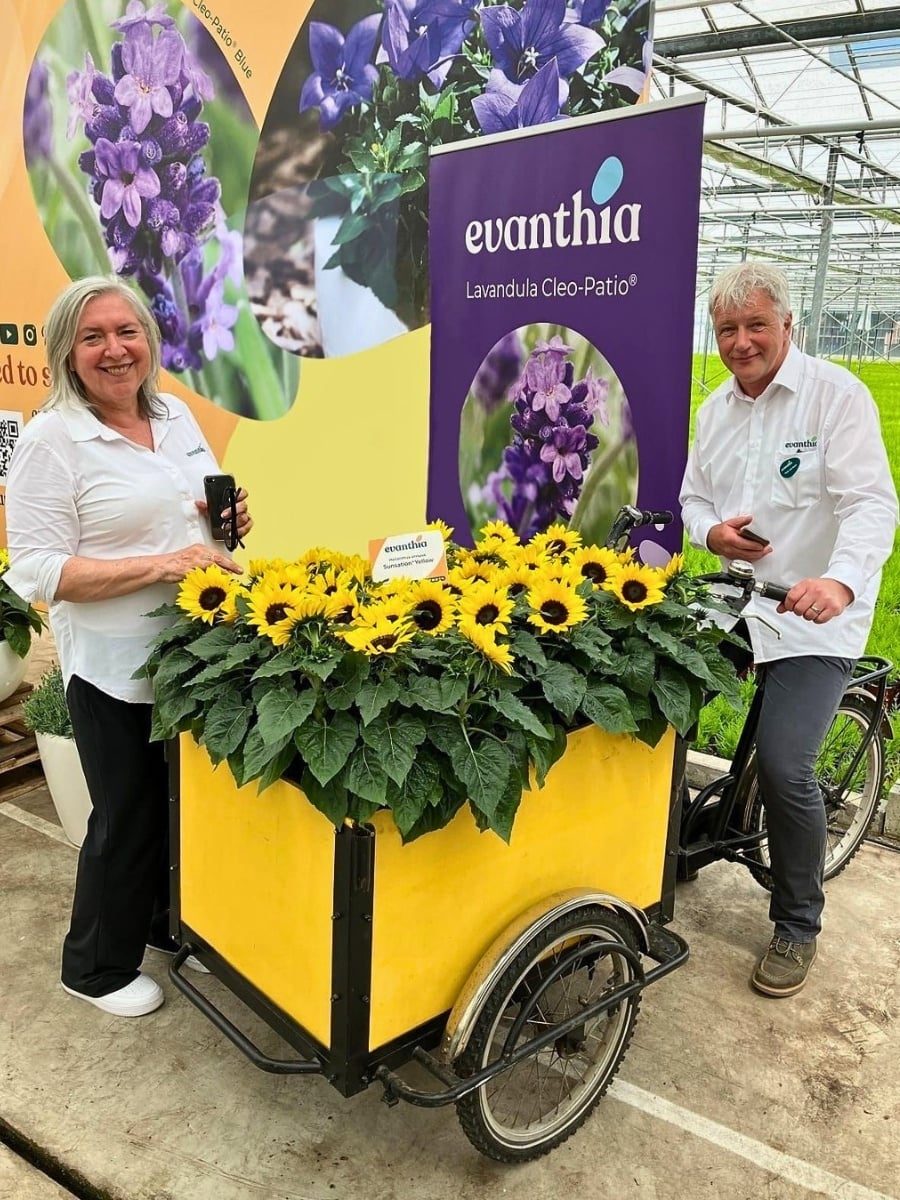
Evanthia, the family-owned Dutch breeder based in the town of Monster in the Westland region, runs a compact, pollen-free Sunsation series for the pot plant and bedding market and separately distributes the double-flowered Solano series under an exclusive European arrangement.
Sakata Ornamentals holds two major programs. Sunbright is bred for early flowering under short days and low temperatures, blooming in around 50 days under short-day conditions and 70 to 80 under long summer days, filling an autumn-to-spring window most sunflowers cannot. Vincent is, on the other hand, day-length neutral, pollen-free, and its flowers are held at a 45-degree angle with an extra ring of petals for a fuller head.

Danziger also breeds and develops several commercial sunflower series for both cut flowers and garden use. Their breeding focuses on multi-branching habits, pollen-free traits, and continuous blooming, and the varieties include Sunbelievable™, Sunova™, Sol Seeker™, and their Classic Cut Collection, which features Flame™, Galil™, Maximo™, and Lumiera™ Double, as well as Maya Gold Supreme™ and Omri Supreme™ among others from Agridera.
Elsewhere, Takii Seed's Sunrich series is a long-standing benchmark in single-stem summer production, prized for non-nodding heads and strong dark-disc contrast. In the United States, sunflower geneticist Dr. Tom Heaton, working through his company NuFlowers (Sunflower Selections), bred the ProCut series, the line that first pushed cut sunflowers past yellow and orange into white, red, and bicolor territory, now sold to commercial growers through outlets like Johnny's Selected Seeds.

Commercial Production From Seed to Flower Stems
Once growers buy licensed hybrid seed through a breeder's authorized distributor, production itself is quite easy. Sunflowers are direct-sown, warm-season annuals that want full sun and well-drained soil. Field growers sow in succession every one to two weeks to keep flowers coming, with each sowing maturing in 55 to 75 days depending on variety.
Greenhouse growers use photoperiod as a tool: day-neutral lines like Sunfinity get programmed for spring, summer, or fall bloom with supplemental lighting, while short-day varieties like Sunbright are timed to exploit naturally shorter autumn and winter days. Colombia and Ecuador are the leading export producers, shipping dark-centered, yellow-petaled flowers in 70- and 80-centimeter lengths across the Americas and Europe. Kenya is a significant grower too.

Post-Harvest and Protecting the Investment
Harvest timing is one of the most important decisions in the chain. The ideal cut point is when the flower is almost fully open, or at minimum when half to three-quarters of the ray florets have separated, and the topmost buds are showing color. Cutting them too early could mean that the head may never fully develop, and doing so too late, once pollen-bearing types start shedding, means their vase life is already compromised.
Research backs a specific protocol where flowers are held for three days at 5°C, then evaluated at 20, with an average of 13.2 days of vase life, the longest recorded. The flowers tolerate up to 48 hours of dry storage before rehydration with only a minor penalty, so proper care is recommended.

Sunflowers are also ethylene-sensitive, so exposure to ripening fruit or senescing flowers in transit shortens vase life and should be avoided. And across several cultivars tested with floral preservatives, most reach 8 to 11 days, with top performers like Sunbright reaching 14. Chrysal also works with different players across the supply chain to enhance post-harvest protocols that keep the flower long-lasting.
Where Sunflower Breeding Is Headed Next
Three areas are drawing the most research attention now. Breeders are using molecular markers to chase true alabaster white petals, since current ‘white’ varieties still lean towards cream or pale ice-yellow. Downy mildew resistance is also a priority, with wild Pl resistance genes being bred into commercial lines to cut reliance on chemical seed treatments.

And as air freight costs and carbon footprints gain more attention, some programs are working on shorter, more rigid flowers that pack more densely without affecting the flower-to-stem ratio that buyers expect. As research continues to open up more of the genetic complexities of Helianthus annuus, and as new techniques like marker-assisted selection and mechanization-ready breeding are more refined, the future of sunflower breeding gets even brighter.
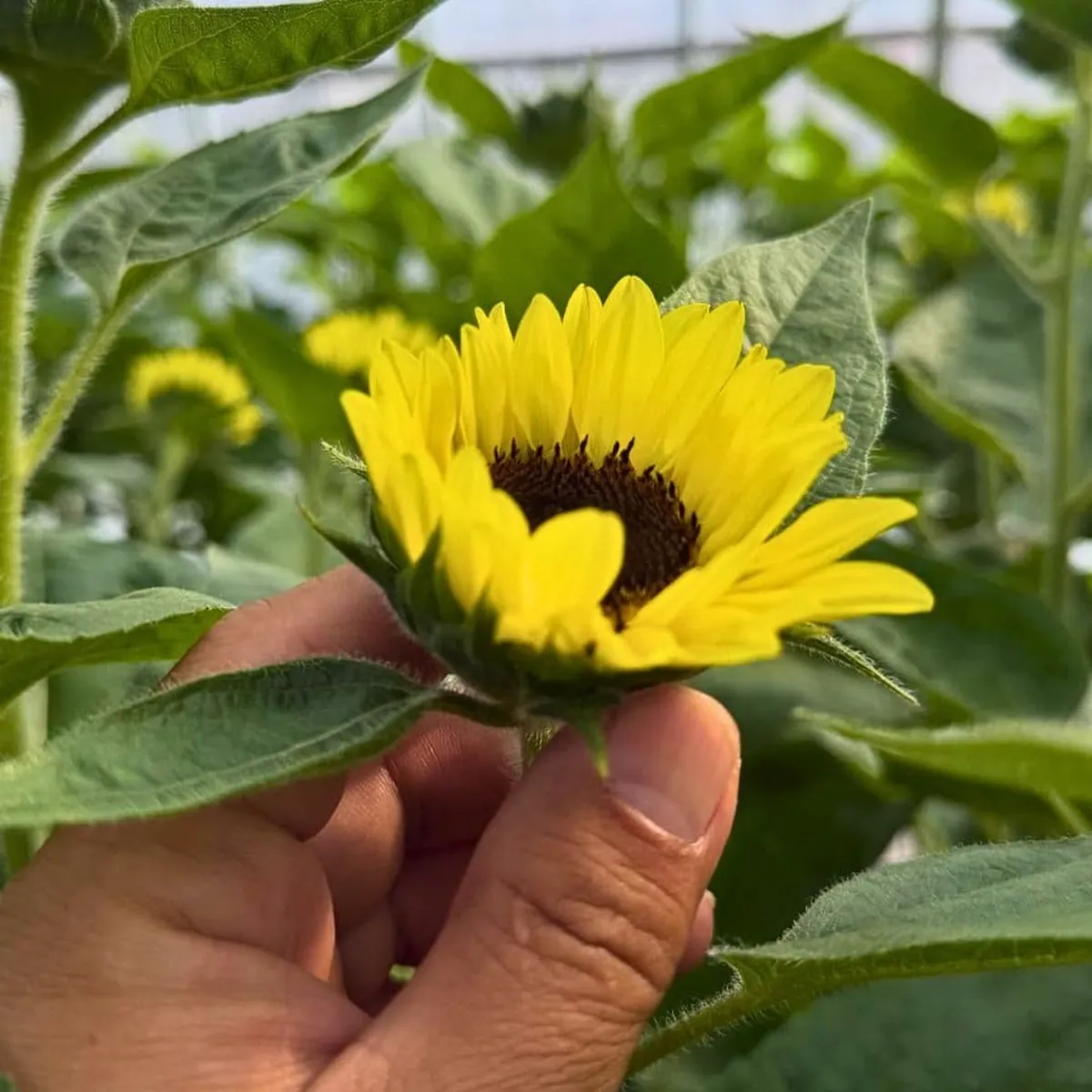
Featured image by @takii_flower_international. Header image by @takii_seed_flow_emea.