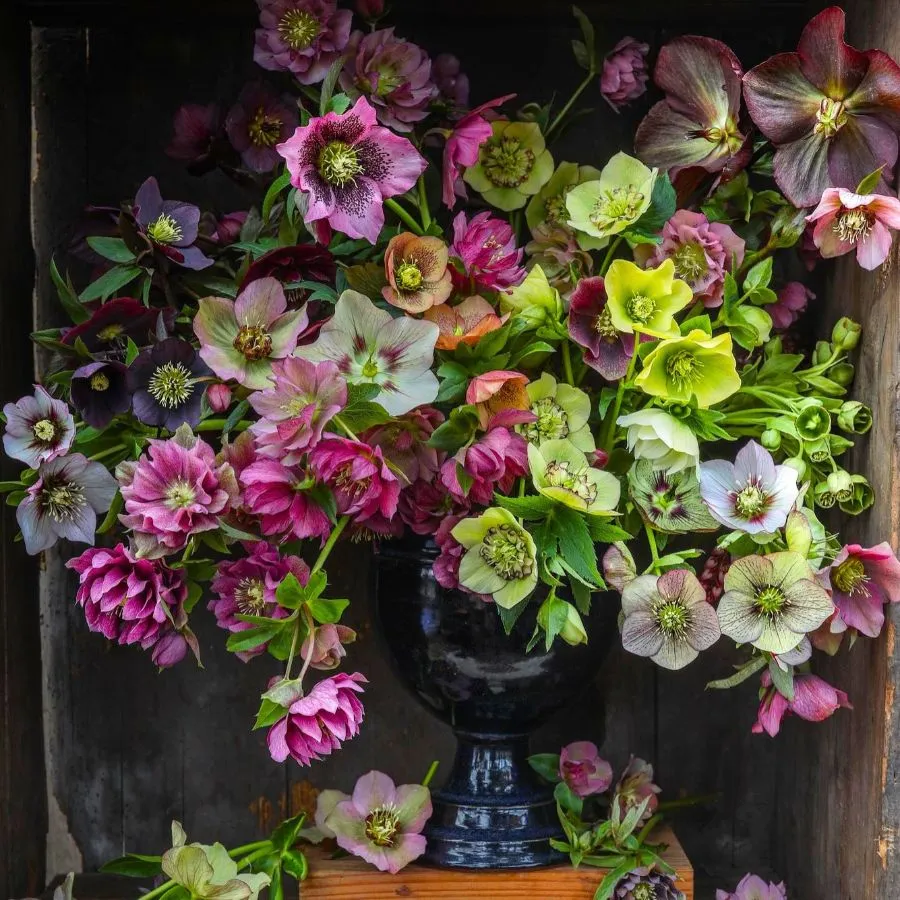
Hellebores bloom when almost all other flowers are dormant. They thrive where most other ornamentals fail and have a subtlety of color that you can only appreciate up close. But the cream-edged double, the near-black single, the spotted picotee, and other hellebore flowers in nurseries and winter designs do not come easily.
The different varieties available today trace back to hand-held pollen, pollination, cold seed beds, and many years of waiting for a first flower. That is, essentially, how hellebore breeding works: demanding all the effort to get the ideal variety that floral designers and gardeners seek.
Helleborus Origins and Pioneers Behind Modern Varieties
Hellebores are native to Eurasia. Their primary range stretches across Southern and Eastern Europe, the Mediterranean Basin, the Balkans, and the Caucasus Mountains, extending as far as Northwestern Africa and even one species native to China. In the wild, they typically grow in rocky woodlands, shaded mountain slopes, and limestone soils.
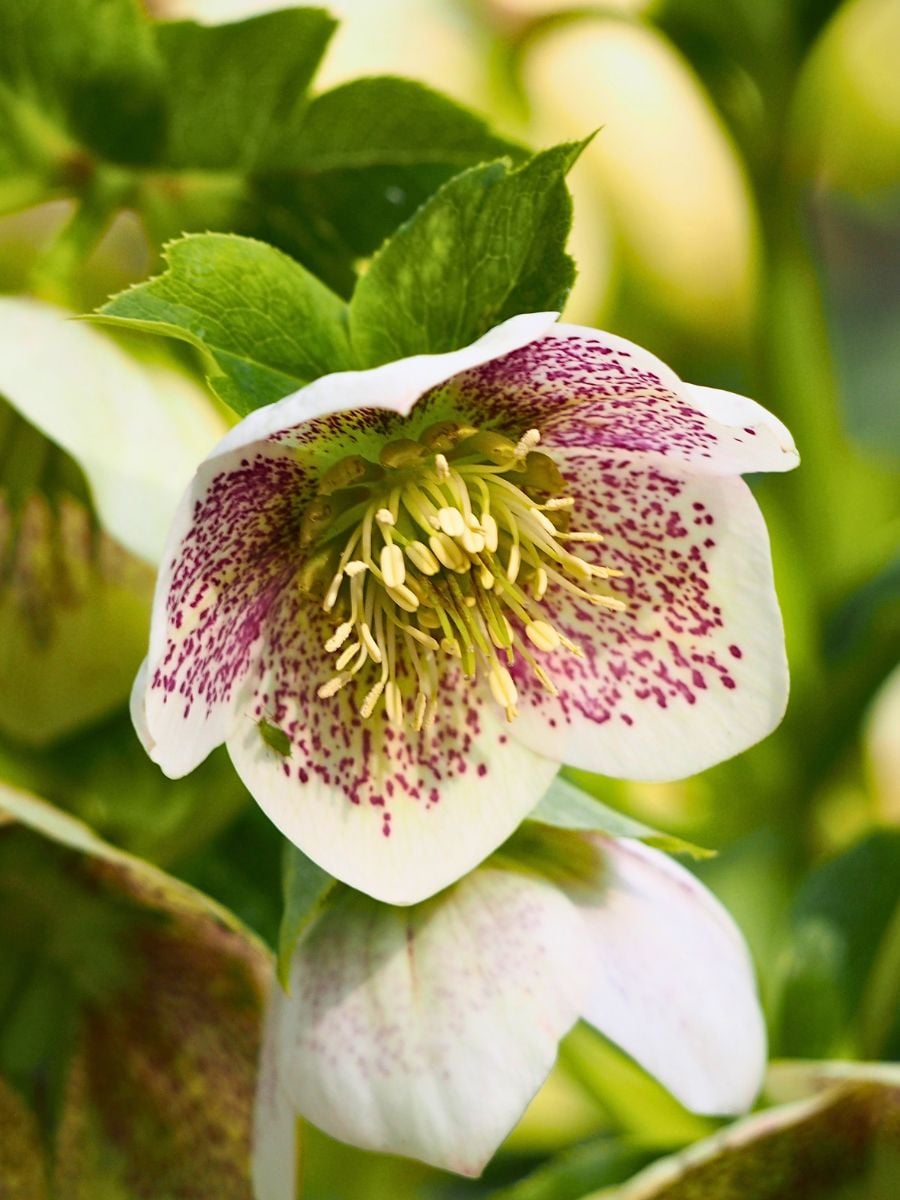
Most garden and cut hellebores available today belong to Helleborus x hybridus, the Lenten rose. Tony Avent of Plant Delights explains that this variety grew from crosses among Balkan species, including H. purpurascens, H. torquatus, H. atrorubens, and H. viridis. Crosses between the Christmas rose H. niger and H. argutifolius or H. x sternii produce what the floral trade calls Nigristern hybrids.
Two British growers shaped the modern Lenten rose. Helen Ballard, who worked near Malvern, in Worcestershire, England, earned the title Queen of the Breeders. Elizabeth Strangman of Washfield Nursery in Kent found two naturally double hellebores in the wild and bred double forms from them.
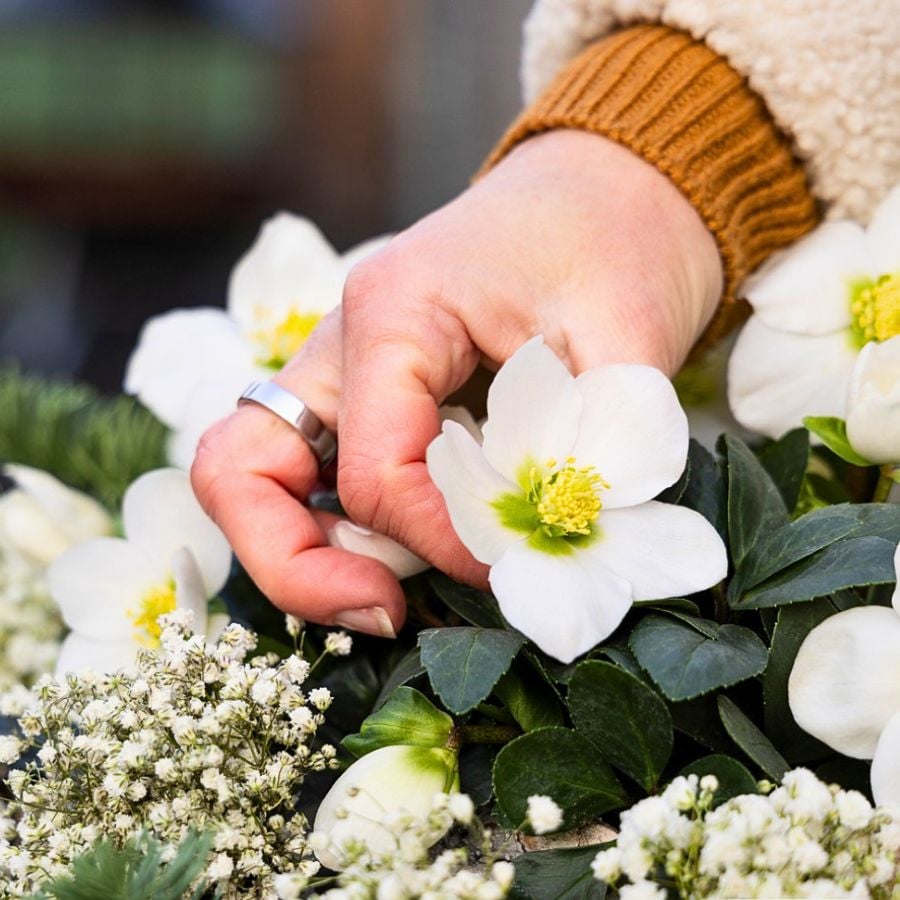
She later sold a job lot of unflowered hellebores to Rodney Davey and Lynda Windsor, whose Devon nursery, RD Plants, became known for colorful selections. These pioneers’ work shows a pattern that still defines this field where a small group of specialists collects wild material, crosses it, and selects for years.
What Most Hellebore Breeders Work With
The genus Helleborus contains approximately 22 recognized species across Europe and western Asia. For commercial breeding, as noted, three groups dominate: Helleborus niger (Christmas Rose, native to the Alps, flowering late autumn through winter), Helleborus orientalis (Lenten Rose, native to Greece and Turkey, flowering late winter into spring), and Helleborus x hybridus, a multi-species hybrid involving H. orientalis, H. torquatus, H. purpurascens, H. odorus, and H. cyclophyllus, which underpins most of the breeding work and commercial variety development of the past 60 years.
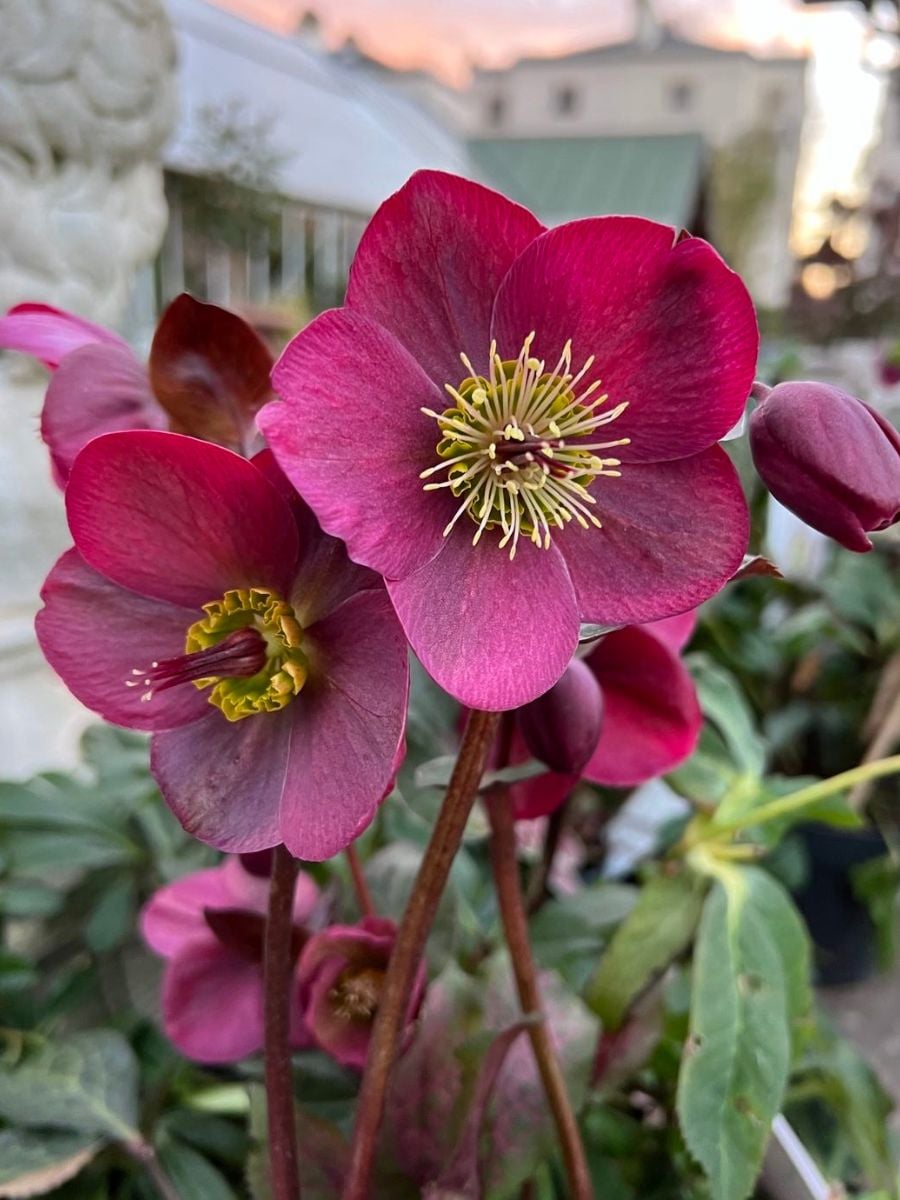
Still, interspecific hybridization across the genus has produced crosses with significant commercial value, including H. x nigercors, H. x sternii, and H. x ericsmithii. Many interspecific hybrids are sterile but highly vigorous, combining the ornamental traits of both parents. The flower’s sepal, which performs the visual function of the petal in hellebores, persists after the true petals have dropped, giving them an unusually long display life and making them commercially attractive as cut flowers or garden and pot plants.
Defining Target Traits for Breeders
The most historically significant trait target in hellebore breeding has been flower orientation and presentation. Its wild plants hang their flowers downward on pedicels, requiring one to crouch or lift the flower to see its face, which is a major problem in cut flower use.
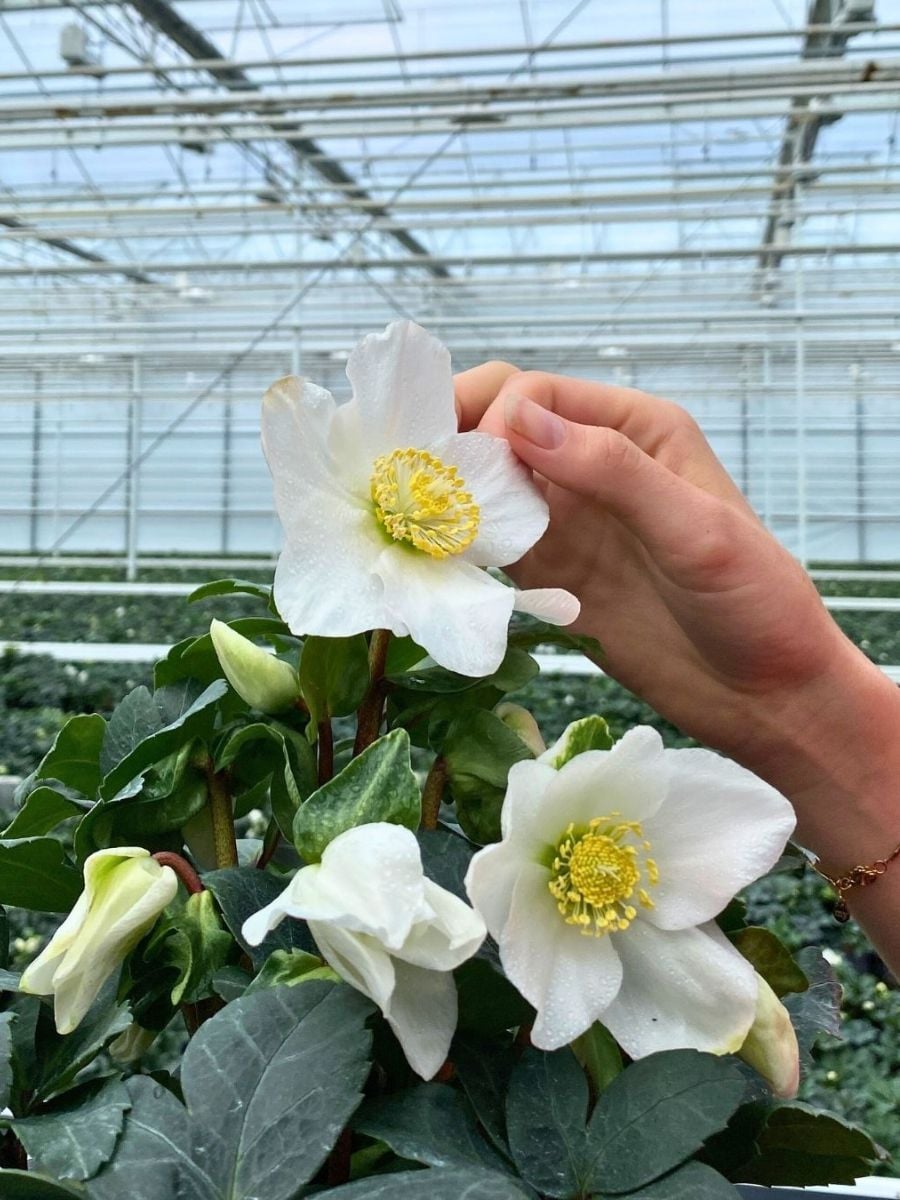
Breeding programs at Ashwood Nurseries have, therefore, made outward-facing flowers a key selection benchmark, along with large flowers, good color on the backs of the petals, and long-lasting color. Back-of-sepal coloring is important because, in an arrangement or a garden, it is presentable to viewers.
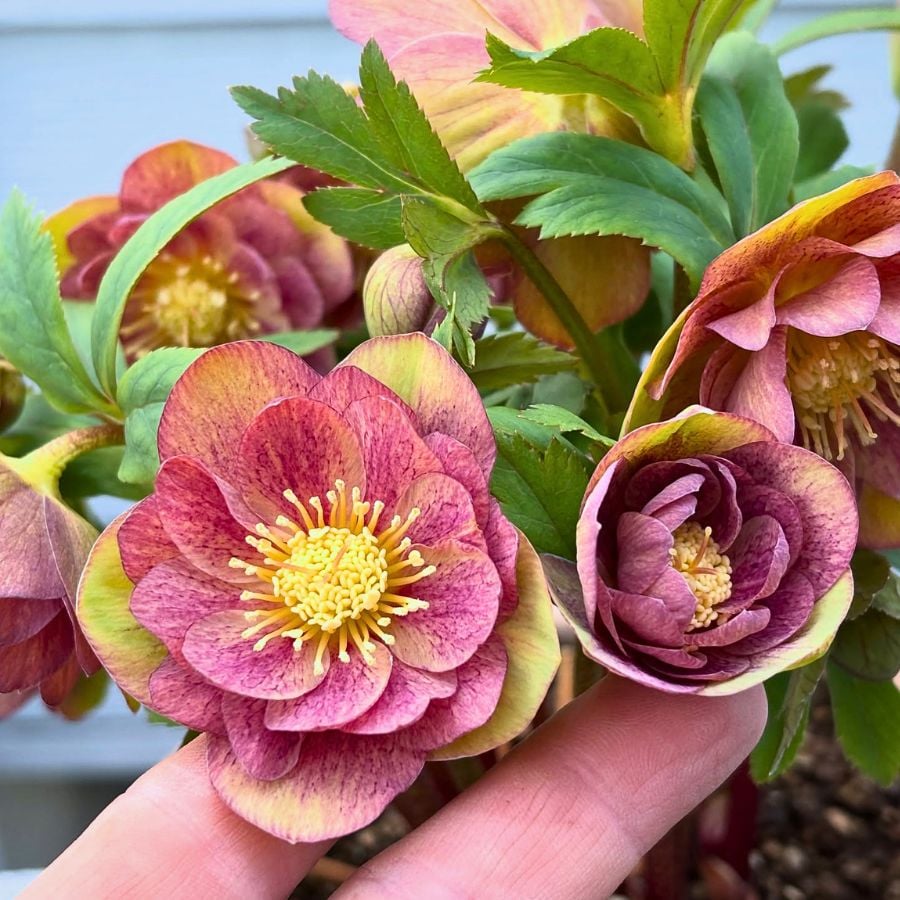
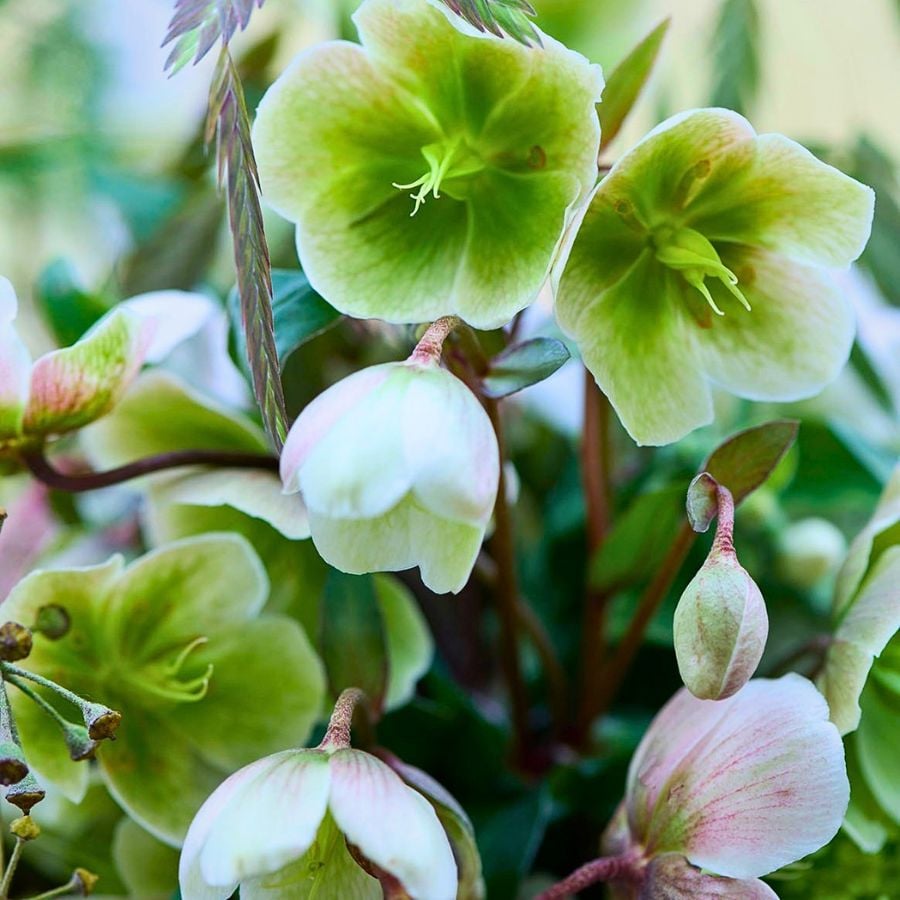
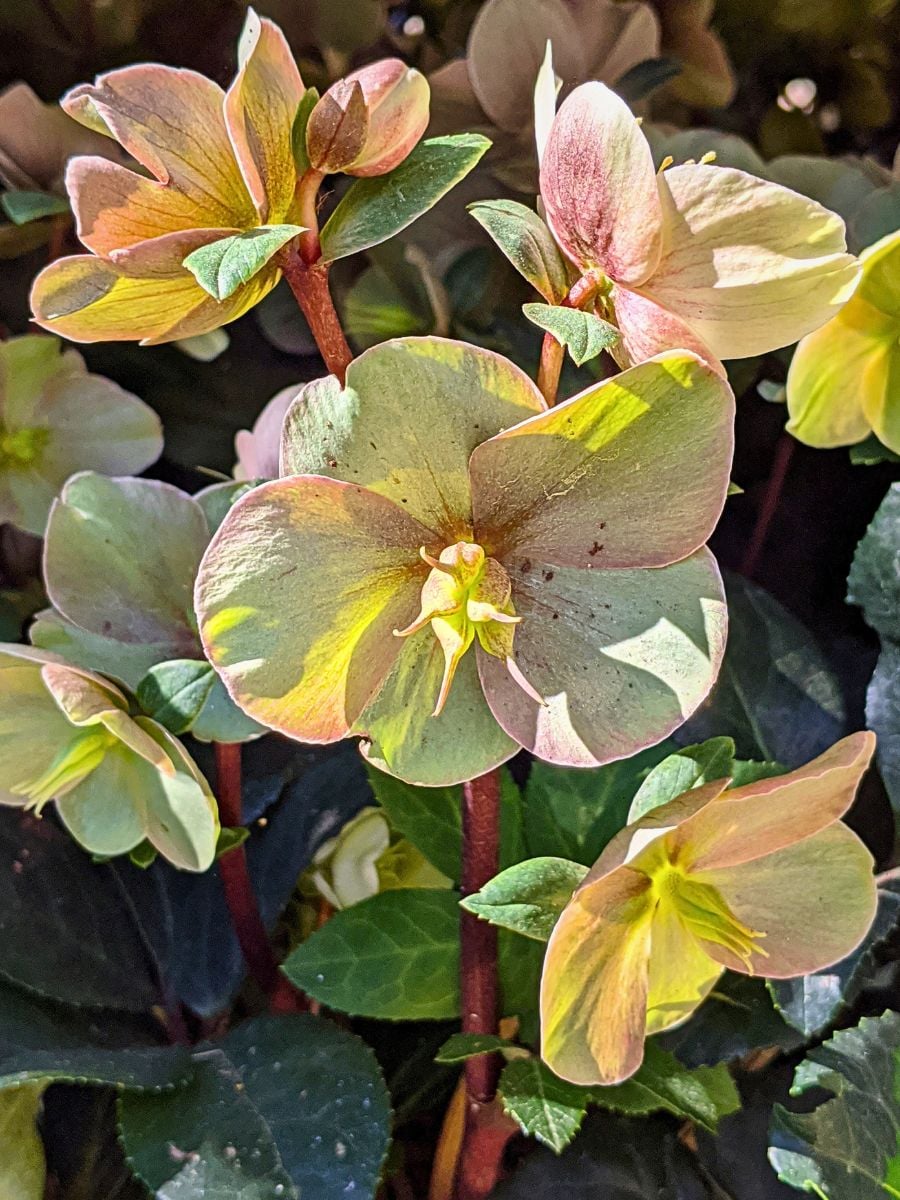
Color range and pattern are another dominant target. Wild species are largely confined to white, greenish white, and limited purple. Breeders have introduced yellows from H. odorus and H. cyclophyllus, near-black and slate tones from H. torquatus, reds which likely trace to H. atrorubens, and spotting from H. orientalis subsp. Guttatus. Nowadays, you can be sure of pure whites, deep blacks/slates, picotee edges, spotted nectaries, vibrant pinks, yellows, and double or anemone-flowered forms.
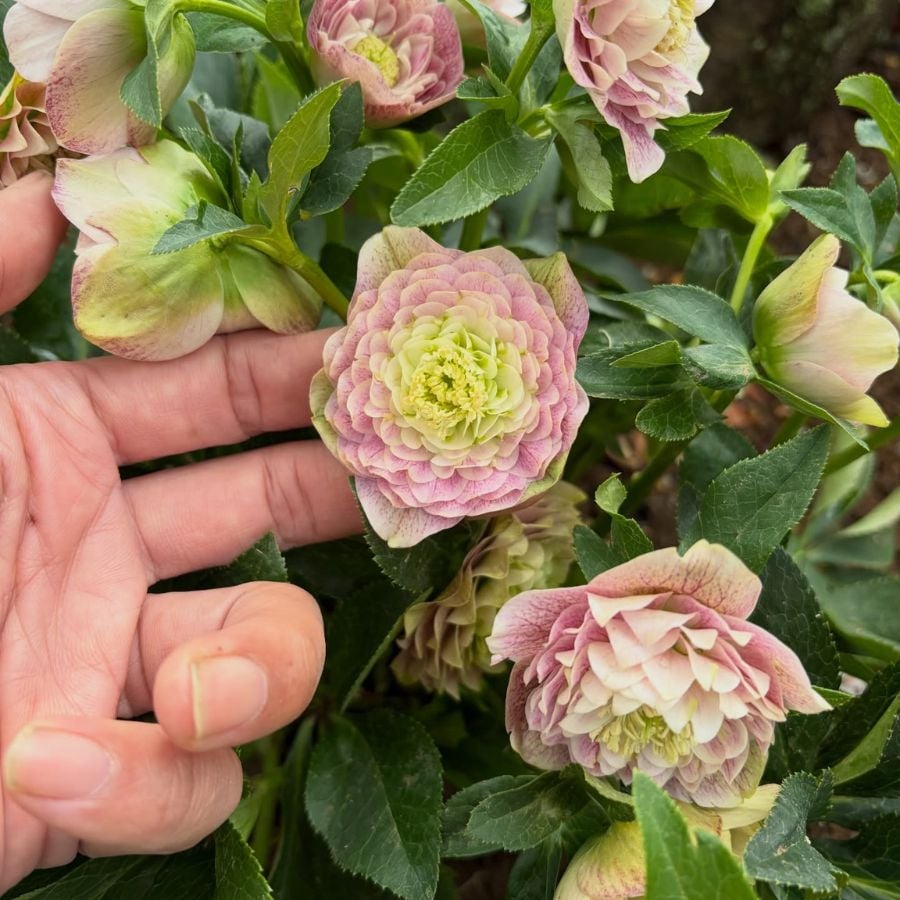
Contemporary programs also target compact pot plant habit, just as well as well as stem strength and length, and cold-chain durability for cut flower varieties, because the garden plant market does not emphasize these qualities the same way.
Floriferousness is also a criterion, with the focus being on robust, thick scapes, elevating flowers clearly above the foliage and resisting drooping. Another key trait is evergreen, disease-resistant foliage capable of tolerating hellebore black spot (Septoria hellebori) and winter desiccation.

Hand Cross-Pollination Process in Practice
Because hellebores are readily visited by early-season pollinators, breeders perform controlled hand-pollination to create specific F1 or multi-generational crosses. Each helleborus flower, therefore, moves through a female phase before a male phase, eliminating self-fertilization and making controlled crossing manageable. In the female phase, the stigmas are receptive, and in the subsequent male phase, pollen is released.
So, a breeder collects pollen from the chosen male parent and applies it to the receptive stigma of the emasculated female parent. Judith Tyler of Pine Knot Farms cross-pollinates by hand using a paintbrush, a method used by virtually every specialist breeder. The breeder chooses a seed parent and a pollen parent, removes the anthers from the seed parent, and dabs pollen onto the stigma of a fat, unopened bud, repeating the process over several days.
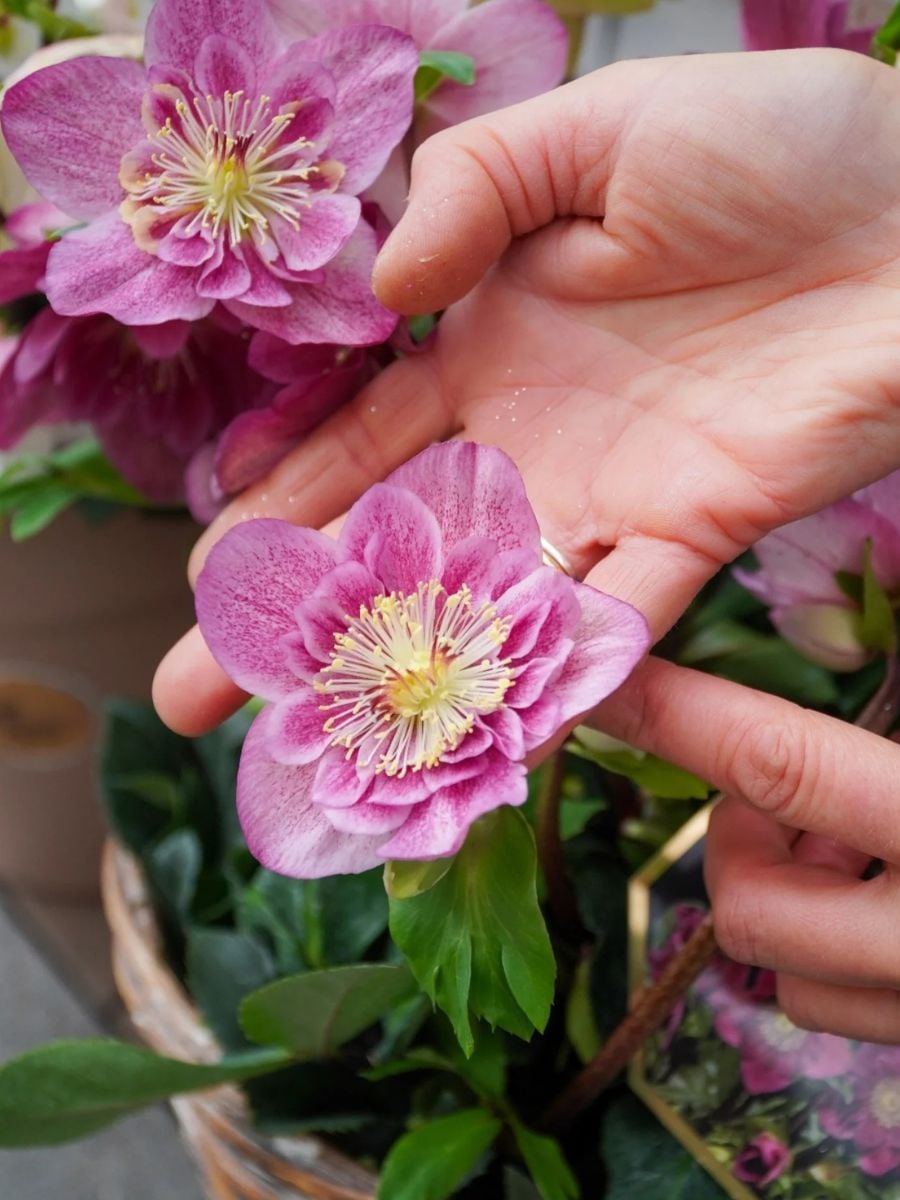
A strand of colored wool tied behind the flower identifies the cross, and a paper bag keeps bees from adding stray pollen. The pollen parents are chosen for the traits the seed parent lacks, such as clean color, strong stems, or flowers that face outward.
Barnhaven, the Brittany nursery better known for primroses, has hand-pollinated hellebores since 2004, starting with seed from English enthusiast Jan Kay. The nursery reports that most of its general color series come largely true from seed, though it doesn’t guarantee exact shades or forms. This caution applies to every seed strain, because seedlings from the same cross differ from one another.
After pollination, seeds develop in capsules over approximately two months and must be collected before natural dehiscence. Hellebore seed has a double dormancy requiring a warm period followed by cold before germination.
Seedlings, then, emerge in the second spring after sowing and grow on for one to two further years before first flowering. The vast majority of seedlings from the crosses are discarded, and those that advance are grown and observed across several seasons before being selected as candidates.
Breeding for Double, Anemone, and Spotting Traits
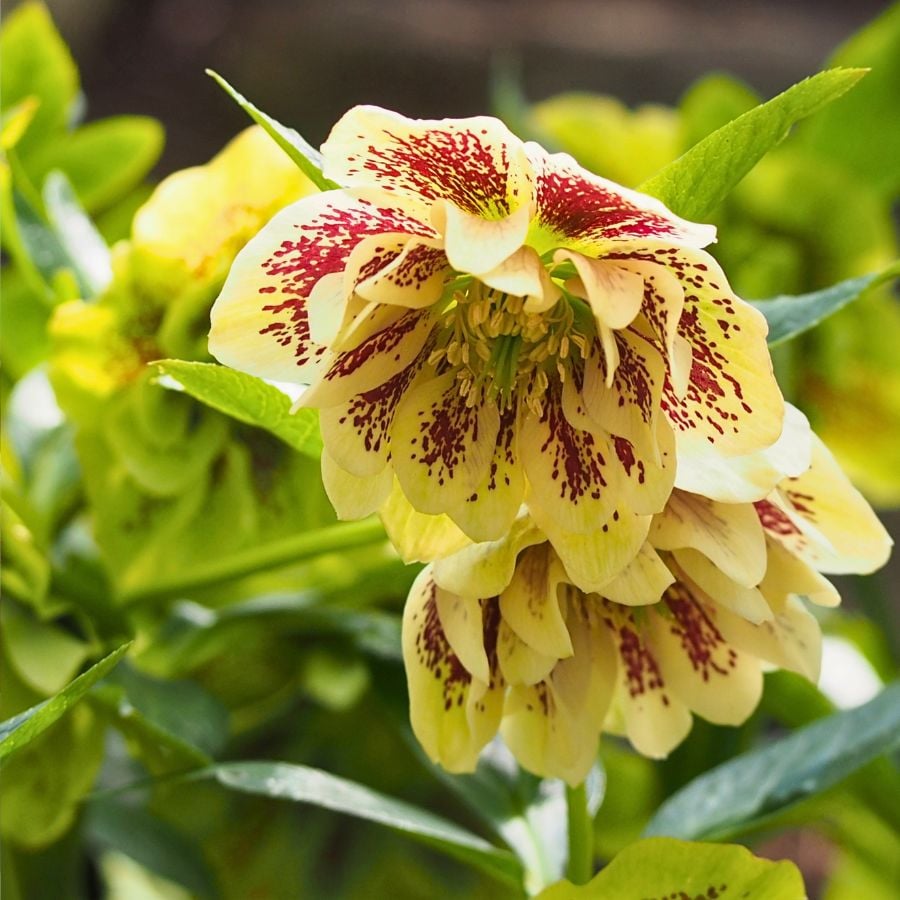
The genetics of ornamental traits in H. x hybridus remain incompletely mapped but have been worked out empirically over years. Double flowers appear to be controlled by genes with dosage effects. Individuals with fewer copies produce semi-doubles with extra petaloid tissue; those with more copies produce fully double flowers where nectaries and stamens are largely replaced. Because doubles are often male-sterile or have reduced pollen, breeders often use semi-double relatives as pollen donors.
Spotting traces to H. orientalis subsp. guttatus can be inherited and intensified through selection. Anemone-centered forms, where the nectaries are enlarged and petaloid but stamens remain functional, isolate similarly to doubles. Yellow color requires genetic material from H. odorus and H. cyclophyllus, and even today stable yellows that do not fade to cream require more generations of backcrossing, which was previously largely absent from commercial hybrids.
Germination to First Flowering
Hellebore seed ripens around June, and freshness is important. Specialists recommend sowing between June and August so that germination begins in November or December as temperatures drop. Its fresh seed is sold only from June to September, because it would go dormant if refrigerated. Strong seedlings may flower just over a year after germination, though two or even three seasons is more likely.
A random plant may, occasionally, flower in its first year, but one generally cannot judge the flower color until the second year. This wait is the defining cost of hellebore breeding. A breeder who crosses two plants this February sees the seedlings flower two or three years later, then needs more seasons to confirm that the selection is vigorous, healthy, and consistent. Older varieties can, sometimes, take up to four years to yield flowers suitable for cutting.
Propagation From Seed, Division, and Tissue Culture
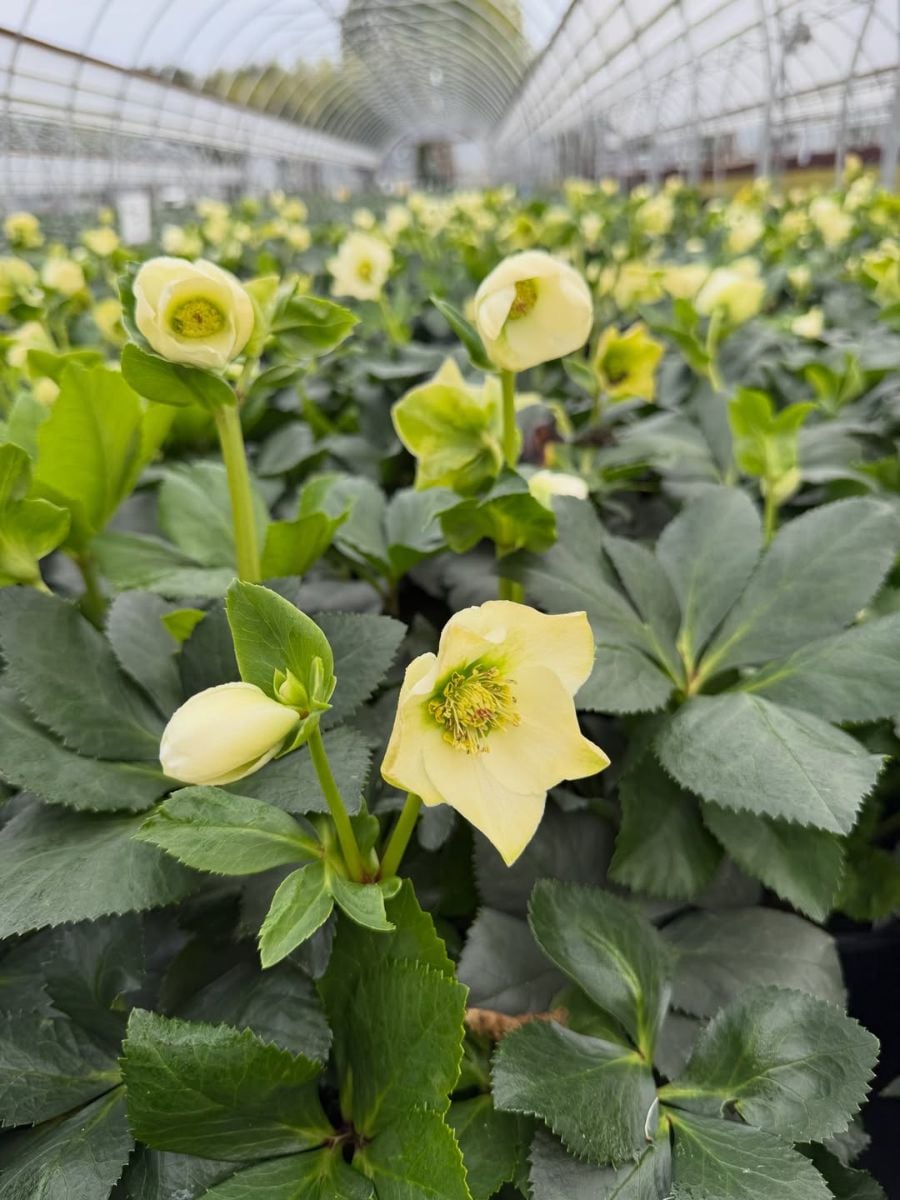
Helleborus x hybridus does not come true from seed, and division is the primary conventional vegetative method. Mature clumps split in late summer yield only two to three divisions per year, each taking several further seasons to reach marketable size. This hurdle has historically made named hellebore selections expensive and limited in supply.
Tissue culture has, as a result, become the preferred solution for commercial multiplication of interspecific hybrids. H. x ericsmithii Ashwood was an early example, and tissue culture has since made several H. x nigercors cultivars widely available. A meristem tip culture protocol achieved rooting rates exceeding 96%, producing over 20,000 plants from successive subcultures that flowered true-to-type, with all explants checked for cucumber mosaic virus.
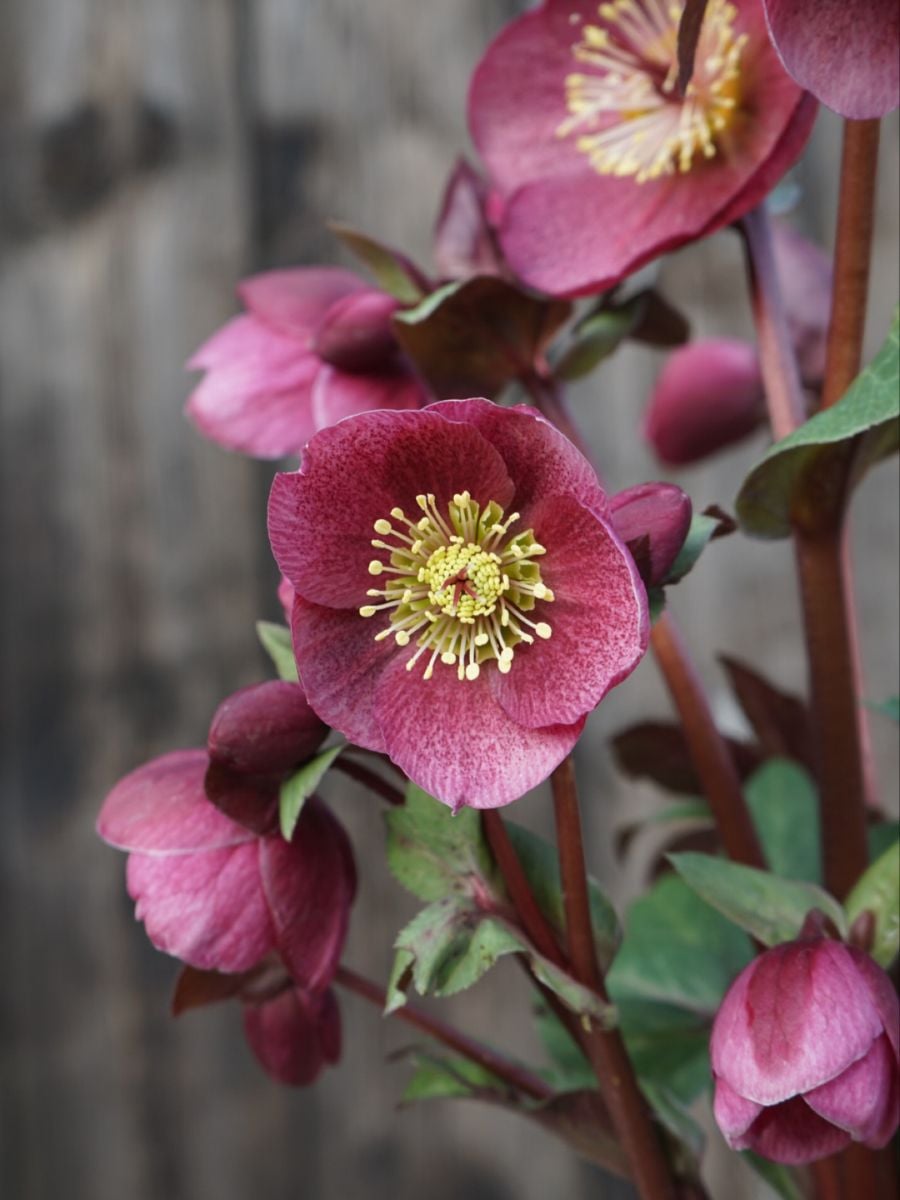
For H. niger specifically, tissue culture is commercially essential. The species is a major Christmas cut flower across Europe, and susceptibility to soft rot and cucumber mosaic virus makes clean tissue-cultured stock essential. For garden-type H. x hybridus, the trade standard remains open-pollinated seed strains of carefully selected parents. Nurseries such as Ashwood, Harvington, and Homelea rigorously rogue inferior seedlings and do not allow off-type plants to carry their strain names.
Cloning Sterile Hybrids Through the Heuger Approach
In hellebores, seed strains vary, so some breeders prefer sterile hybrids that can only be cloned. Josef Heuger of Germany created the Helleborus Gold Collection around this idea after more than three decades of breeding. His Pink Frost dates to 2009 and comes from H. niger and H. lividus. Being sterile, it is produced through tissue culture, which keeps every plant identical.
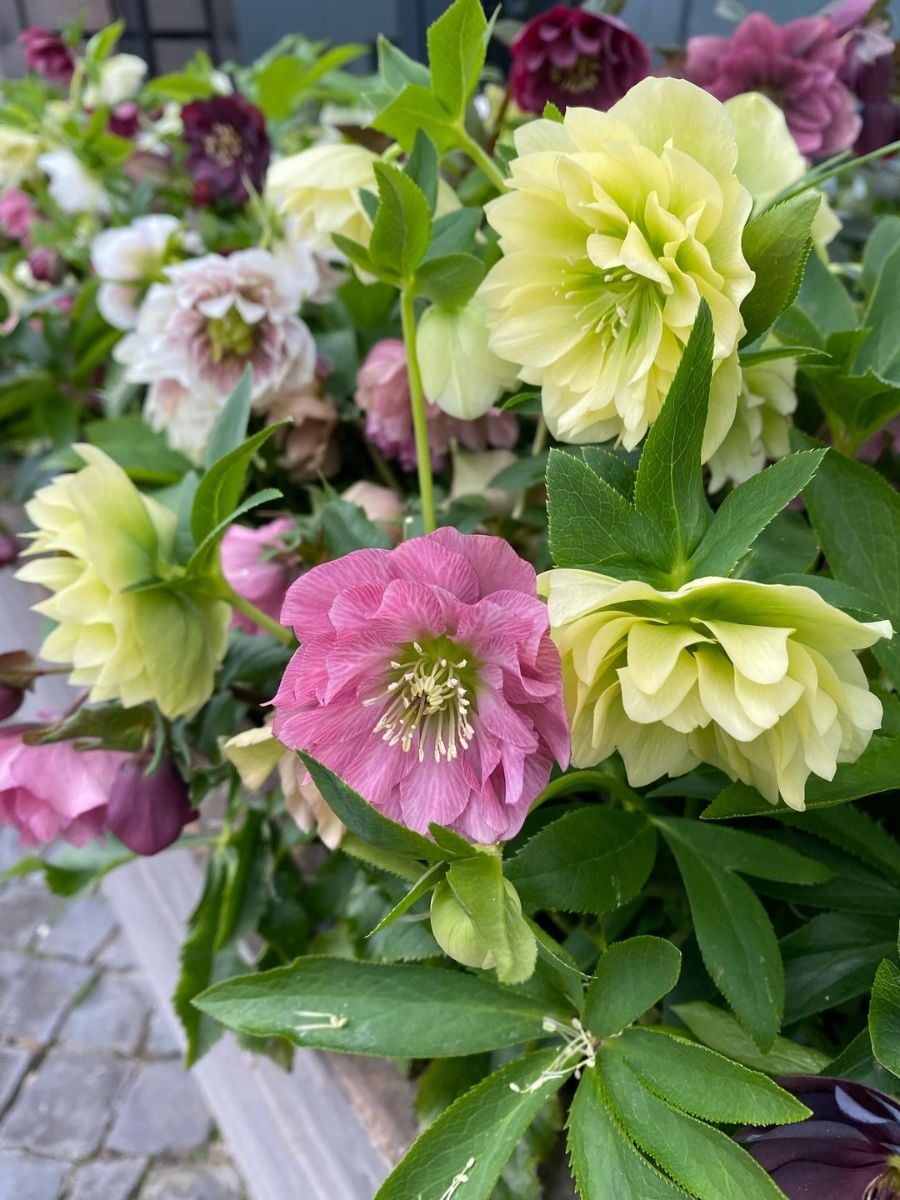
The Ice N’ Roses series follows the same idea: sterile hybrids that are uniform, true-to-color, and flower reliably in the first year. Licensed propagators multiply these clones, with the cloning giving commercial growers uniform plants in predictable numbers, which seed strains cannot promise.
Seed Strains, Doubles, and Clean Colors
Selection determines which seedlings matter. In Michigan, Hans Hansen of Walters Gardens selects for vigor, rich color, and heavy flowering. His double-flowered Wedding Party series, which debuted around 2015, shows that breeders now pursue form as well as color.
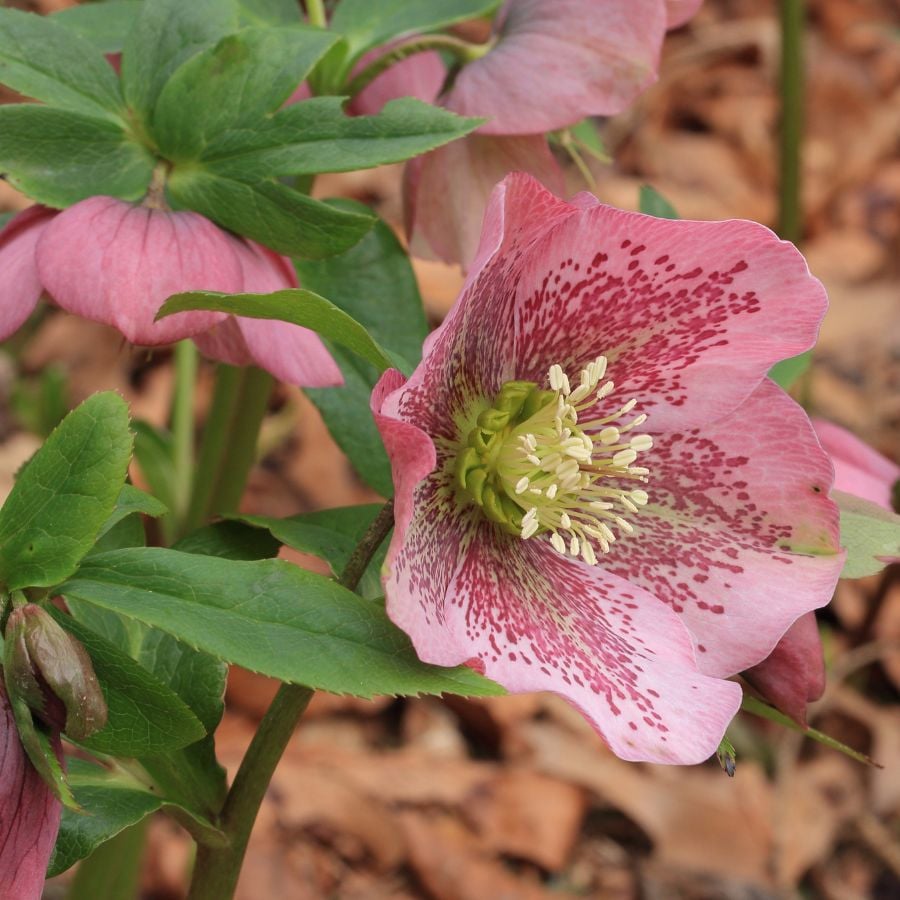
Elsewhere, Ernie and Marietta O’Byrne’s Northwest Garden Nursery in Eugene, Oregon, hybridizes hellebores, and their Winter Jewels line is seed-grown, so its plants are, in Marietta’s words, “more like brothers and sisters than identical clones.” At Ashwood Nurseries in England, John Massey began collecting hellebores in the late 1980s, learning from several specialists. Their strict selection of the progeny over many years produced the Ashwood Garden Hybrids.
Hellebores for the Cut Flower Market
Hellebores began as garden plants, but cut flower breeding has a long history. Before moving toward H. orientalis for gardeners, the van der Meijs company in Geldern, Germany, set out in the 1960s to develop a bigger, taller hellebore for the cut flower trade. And today, hellebores' cut flower demand is really big.
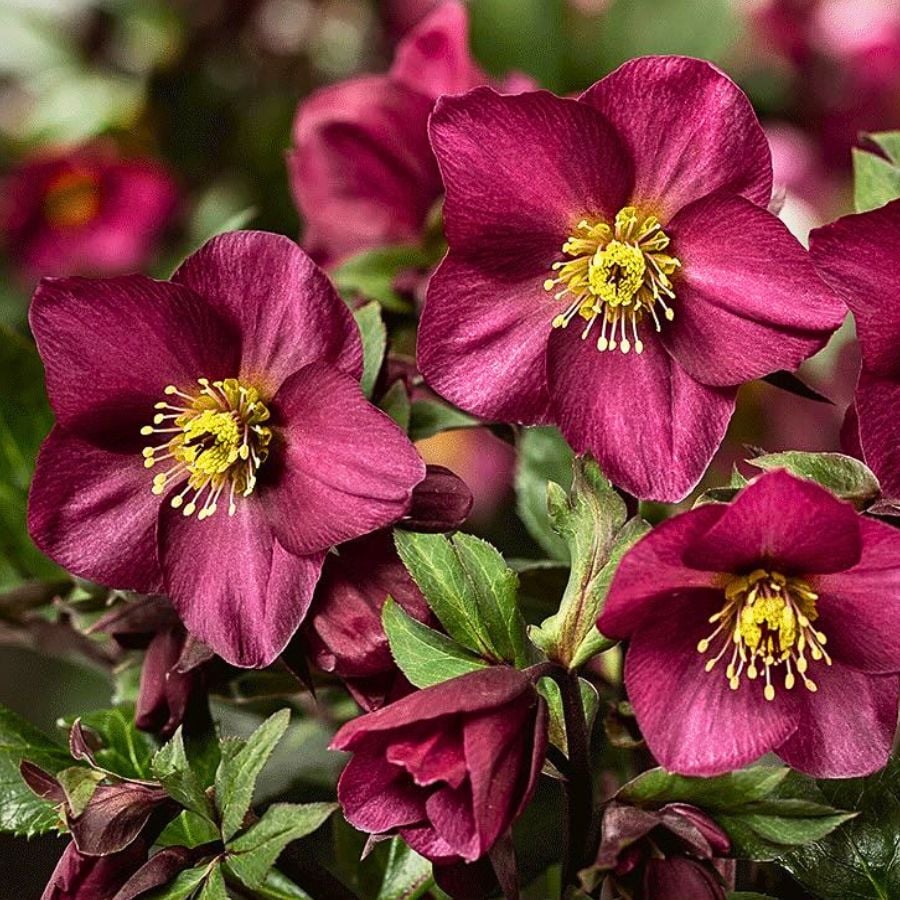
Dutch growers supply the widest cut flower selection, with the broadest hybrid range available from wholesalers between September and March. Hellebore cut flowers from southern France are also significant in winter markets, with roughly 95% exported to Germany and neighboring countries. In the U.S., there are fewer large-scale hellebore cut flower growers because it requires cool-climate conditions and the production cycle is slow there.
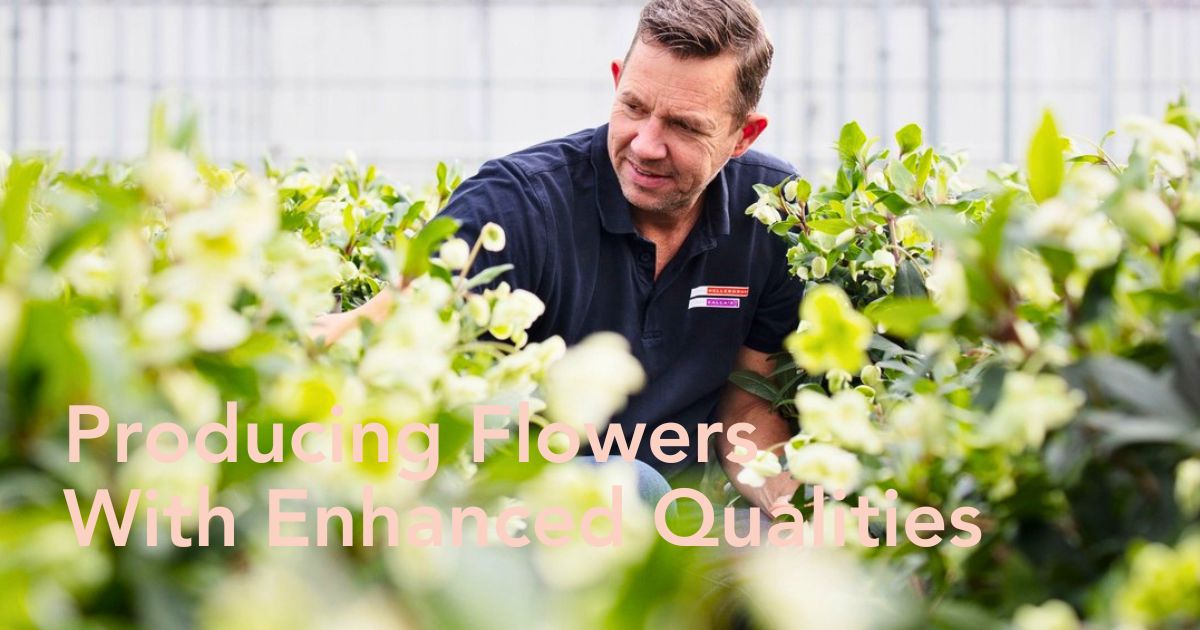
But in the Netherlands, grower Nachtvlinder has young plants relying on continuous selection and hand pollination, while Marginpar grows helleborus varieties in Kenya and Ethiopia, including the Helleborus Mammoth Red variety. Elsewhere, Haas Calla & Helleborus, a greenhouse grower in De Lier, also represents Dutch production just as well.

In Belgium, Het Wilgenbroek, a leading helleborus nursery, runs trials with growers and has even released colored selections, most of which are ideal as cut flowers. Their crosses between different types, such as Candy Love, Snow Love, and Emma, have been noted for longer shelf life.
Featured image by @die_sonnenblume_. Header image by @haas_calla_helleborus