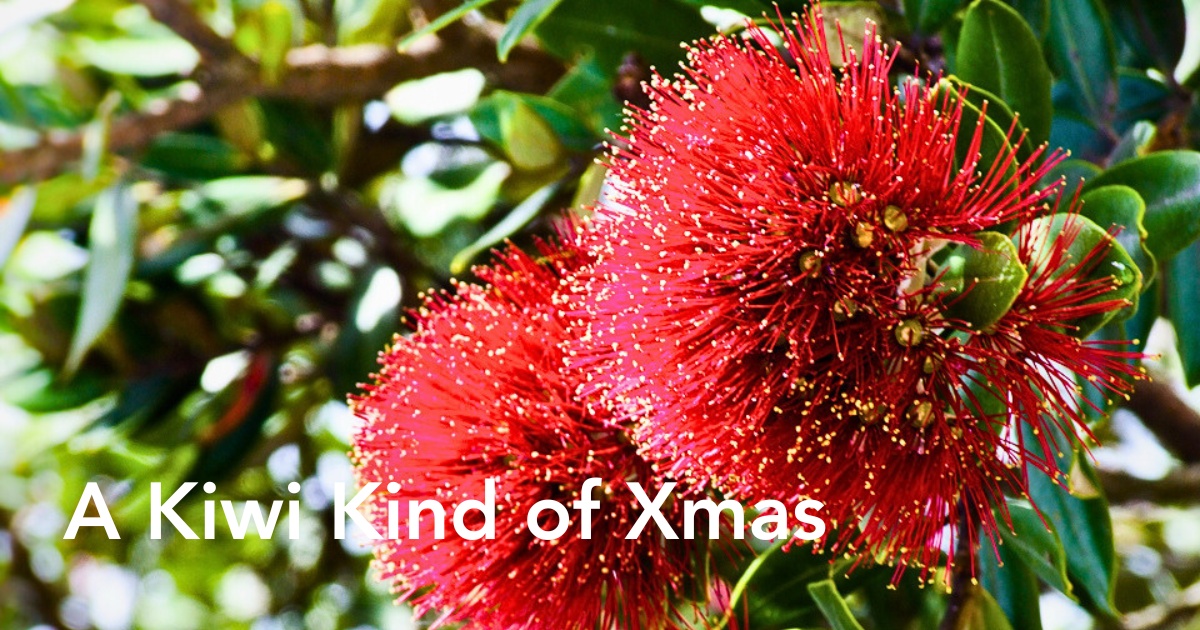
While the Northern Hemisphere wraps itself in winter, snow, and evergreens, New Zealand, in the Southern Hemisphere, hardly looks to snowy pines or frosty evergreens. With something different altogether, they celebrate summer's arrival as the Pōhutukawa (Metrosideros excelsa) brings forth flame-red flowers just as families gather for barbecues on the beach.
Stretching its gnarled limbs heavy with crimson flowers, this stunning coastal tree has intertwined itself into the Kiwi identity, making their summer season a celebration defined by a unique natural holiday decoration. For them, the Pōhutukawa has claimed the holiday season as its own.
A Special Crimson Spectacle Coming Every December
The Pōhutukawa belongs to the myrtle family (Myrtaceae) and is one of twelve Metrosideros species found only in New Zealand. It is mainly endemic to the country's North Island (Te Ika-a-Māui) coast, where it clings to cliffsides and coastal headlands, its twisted, weathered trunk and sprawling canopy bearing witness to the salt sprays and southerly gales of the surrounding sea and ocean.
Its bark peels away in strips, revealing smooth grey wood below, while its matted, fibrous aerial roots that seem more like wayward branches than delicate tendrils seeking water, dangle, eventually finding purchase in rock crevices or sandy soil.
Surprisingly, the tree also occurs naturally in some inland locations. Along the shores of Lakes Rotorua, Rotoiti, and Taupo on the volcanic plateau, Pōhutukawa grows, though experts debate whether these populations represent the tree's natural range or are evidence of Māori cultivation centuries ago. In the South Island, the trees (called Rātā) are more limited; marginally established in places like Abel Tasman National Park, around the Marlborough Sounds, and along the Kaikoura Coast.
Side note: if you travel a bit more south to Lake Tekapo, you will see the most beautiful fields of Lupines from November to January.
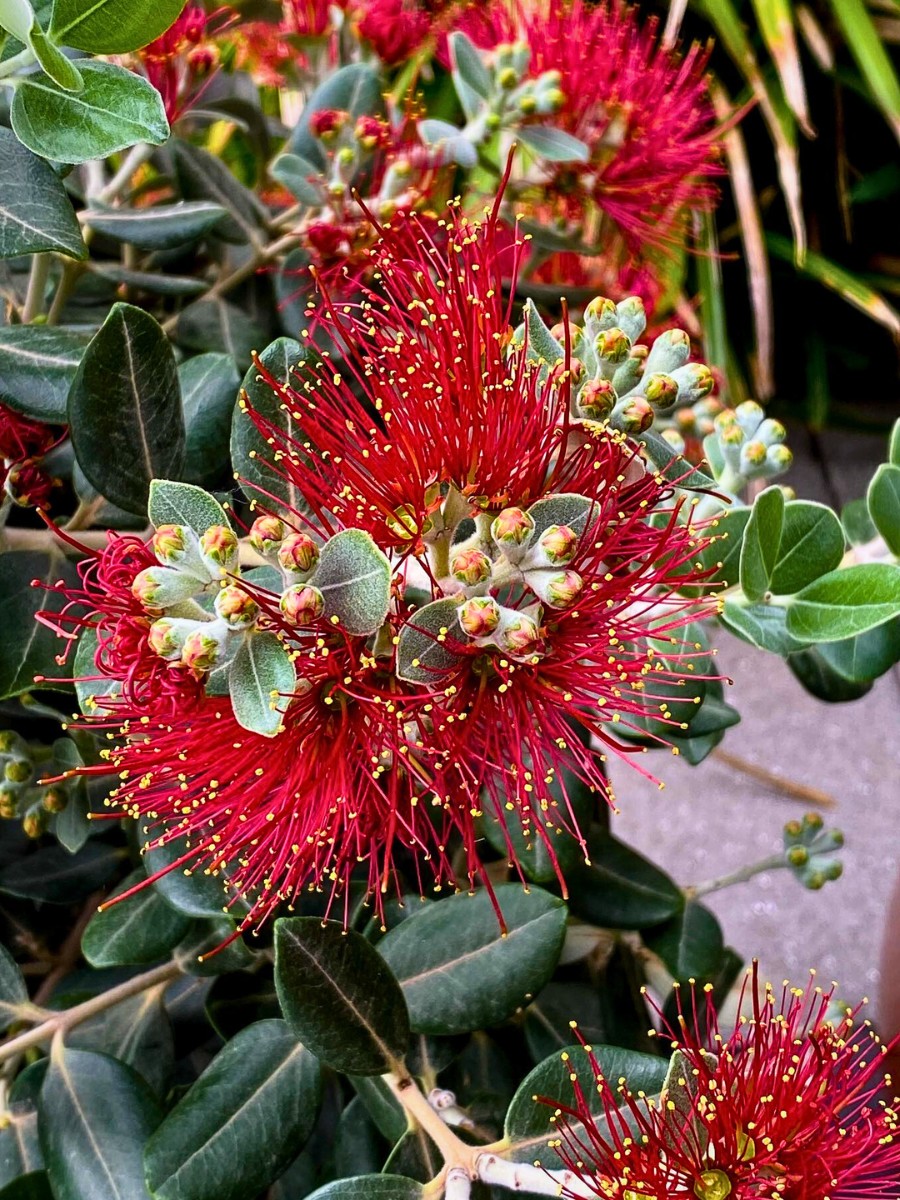
Pōhutukawa can live for hundreds of years, growing slowly into massive forms in their seaside habitats. Some specimens spread more than 30 meters wide, with branches and dome-like crowns often stretching wider than the tree stands tall and dipping so low that they create sheltered caves beneath. The leaves, dark green and leathery on top, with a soft, silvery fuzz underneath, have evolved to withstand harsh coastal conditions. They are small and oval, designed to minimize water loss when salty sea winds blow fiercely.
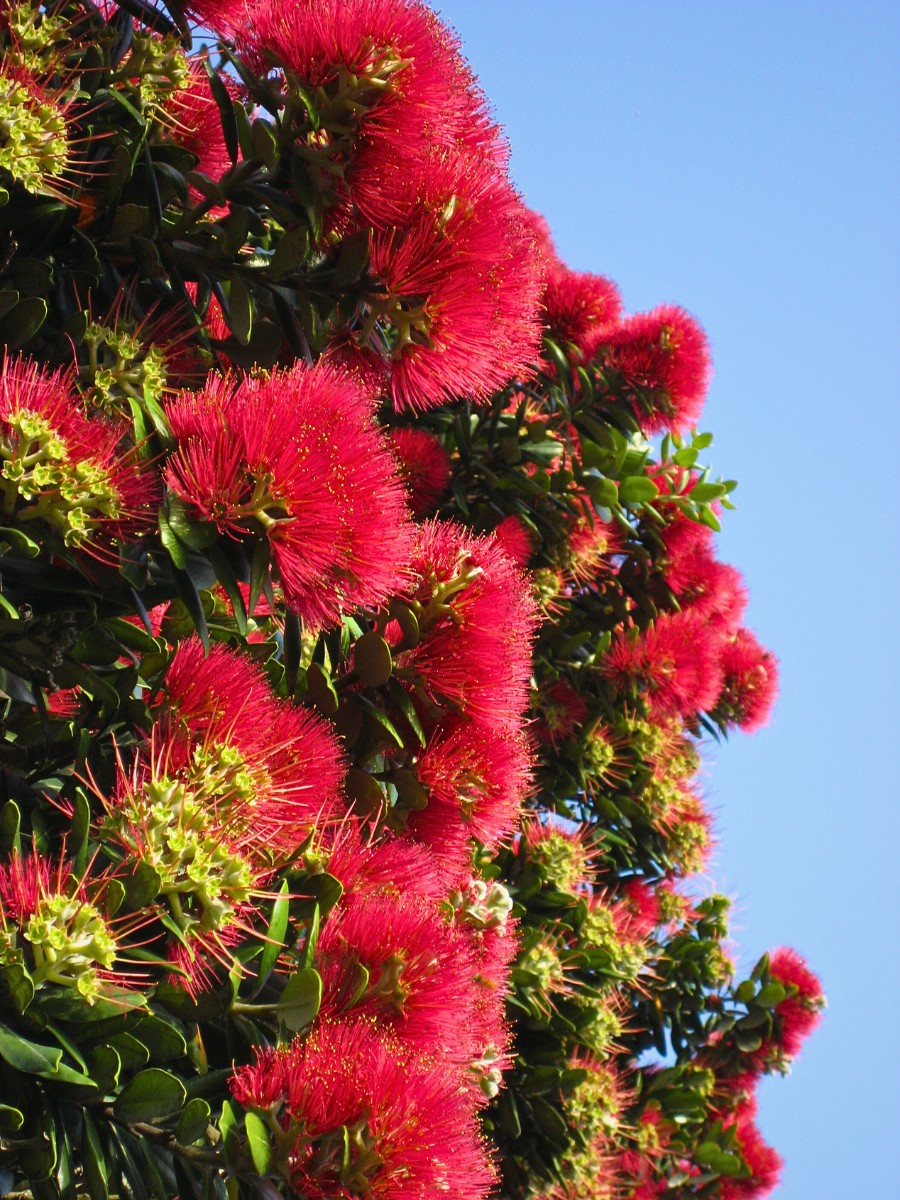
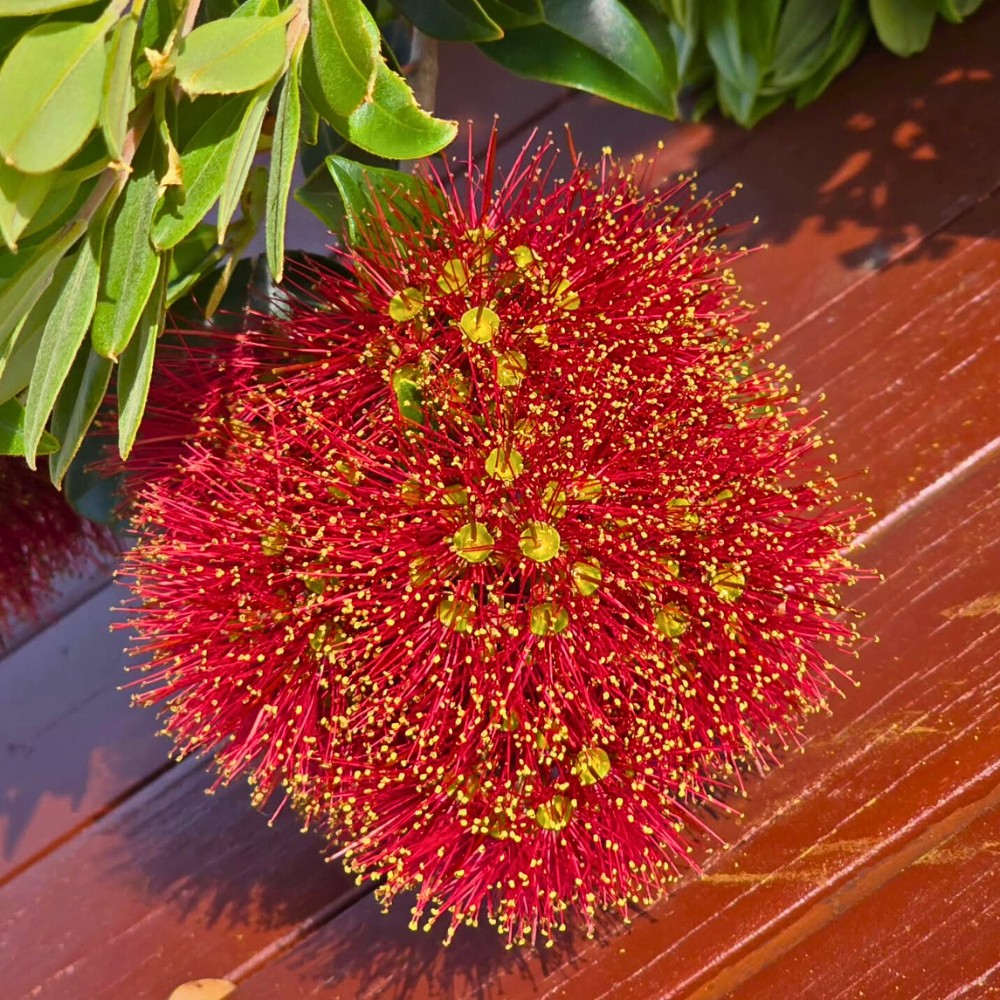
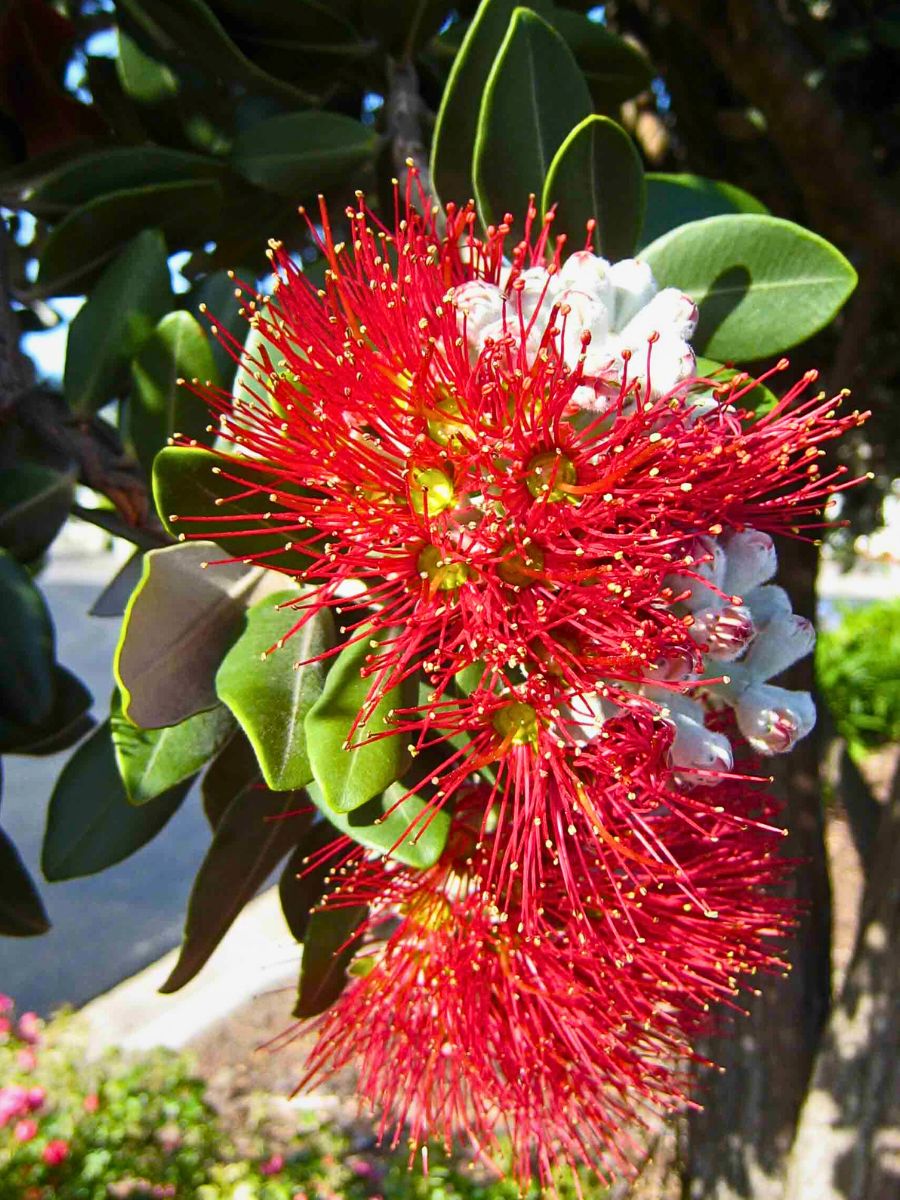
The Pōhutukawa is special in that it arrives in December, with crimson stamens exploding from its branch tips in dense clusters. The flowers resemble tiny fireworks, with dozens of thread-like stamens radiating outward from a central point, attracting bees and native birds, like the tūī and bellbird, to the trees’ summer feast.
Deep Rooted Māori Traditions Meet Crimson Flowers
The Pōhutukawa name in Māori breaks down beautifully. It likely derives from ‘Pō’ (night, darkness, ocean), ‘hutukawa’ (a red feathered headdress). Some translate it poetically to ‘sprinkled with spray,’ referencing how coastal mists often spray the trees.
But it holds a special place in modern New Zealand's national imagination, reserved for very few plants. It appears on greeting cards, in schoolyard songs, and through poems that capture the essence of Kiwi summer. Schoolchildren often sing about how ‘the native Christmas tree of Aotearoa’ fills their hearts with aroha (love). Yet this modern affection stretches back further, to 1857, when the first documented reference to the Pōhutukawa as a Christmas tree appeared. Back then, Eruera Patuone, a Ngāpuhi leader, decorated his feast table with its crimson branches.
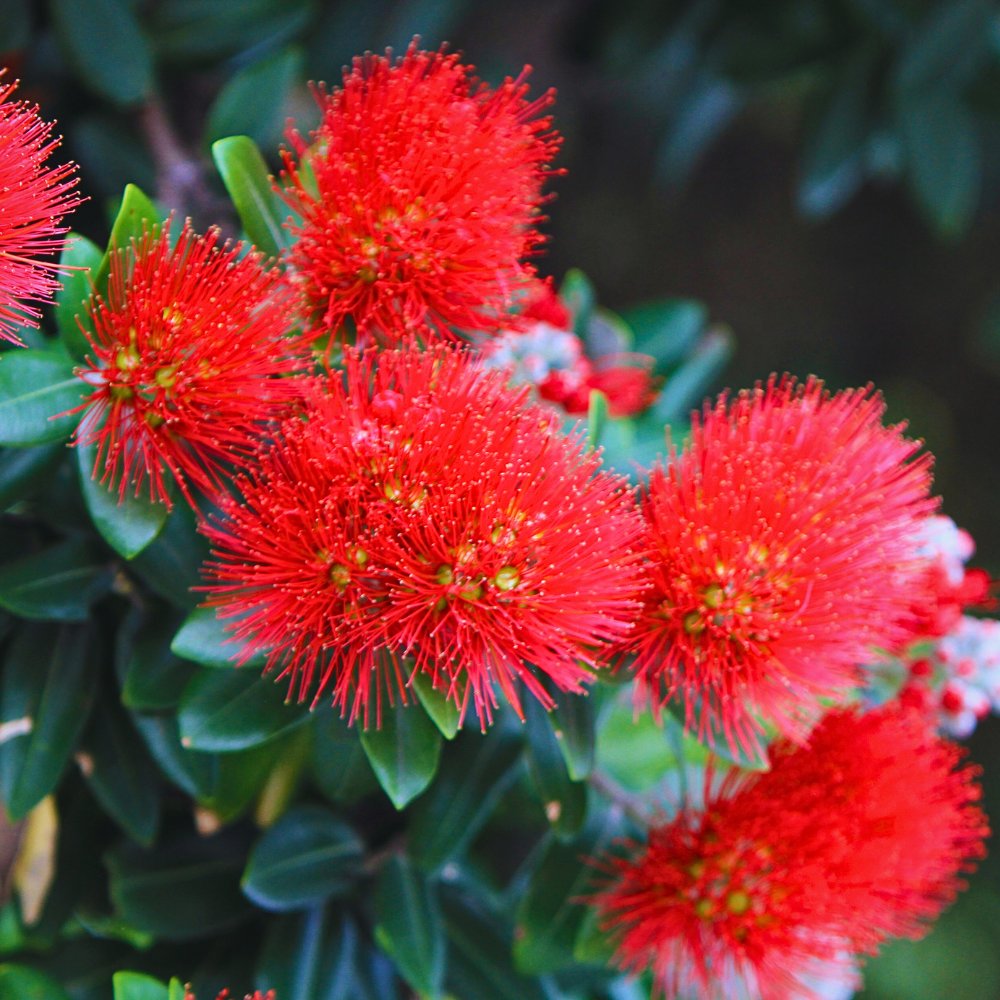
By the late 1800s, European settlers had adopted the tree heartily, some calling it the ‘Settlers' Christmas tree and others the ‘Antipodean holly,’ a name that defines something of its role as an exotic Christmas marker in a land distant from Northern Hemisphere winters.
But the Pōhutukawa’s symbolism is much more than a festive decoration, particularly for the Māori. It holds a place as rākau rangatira, a chiefly tree that they highly regard. Its divine significance intertwines with important Māori pūrākau (legends). One tells of Tāwhaki, a young warrior who attempted a risky journey to the heavens, and when he fell back to earth, his blood spilled onto the Pōhutukawa. It is believed that the intense crimson of the flowers signifies that sacrifice.
The tree is even more spiritually significant. At Cape Reinga (at the northernmost tip of Aotearoa), an ancient Pōhutukawa clings to a cliff face overlooking the sea. Estimated to be 800 years old, this tree holds great significance in Māori beliefs. At Te Rerenga Wairua (the place of leaping), souls of the deceased begin their journey back to Hawaiki, the ancestral homeland. The spirits are said to descend through this tree's roots, which disappear under the sea waves, into Rēinga, the underworld; quite like a portal between worlds.
Traditional medicine has also used different parts of the tree for various purposes. The inner bark, when boiled, produced treatments for sore throats and diarrhea. The flowers were used to make a paste for wounds. The hard, durable wood had special purposes too, though the tree's sacred status and slow growth meant judicious harvesting, mainly for tools that required strength.
The Christmas Connection
European settlers arriving in Aotearoa needed time to adjust to Christmas in summer. The cognitive dissonance of carols about winter wonderlands while sweat dripped down their backs must have been quite bemusing. But the Pōhutukawa, flowering precisely when December celebrations arrived, seemed like a ready-made solution; nature providing its own Christmas decoration, needing no new mores’ introduction.
The timing couldn't be more perfect. As families finish school terms and head to beaches and their baches, the coastal roads light up red. The tree just became so associated with the season that New Zealanders started calling it the New Zealand Christmas Tree, a nickname that stuck. Children grew up associating its scarlet flowers with Christmas holidays on the beach and the long, lazy days of summer holidays.
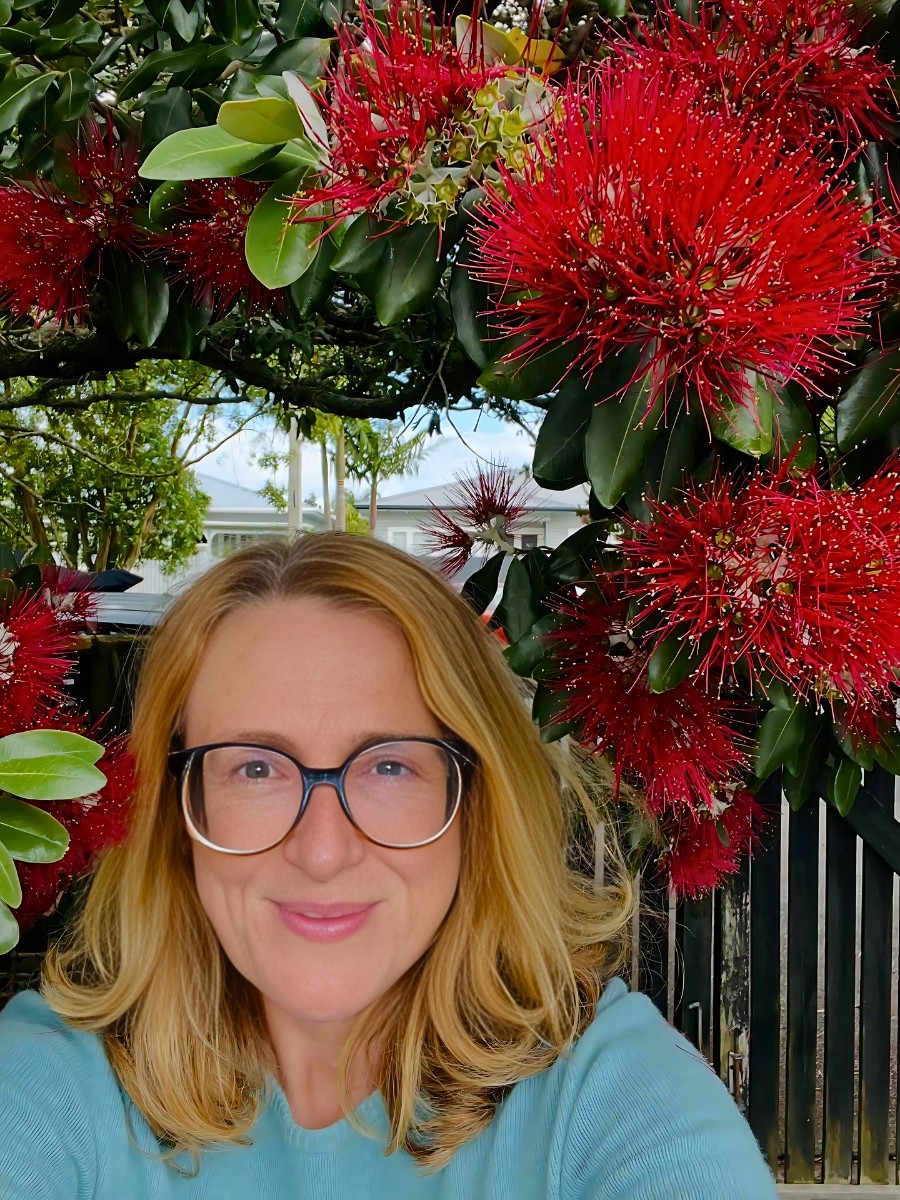
Many more seized on this opportune symbolism. Paintings, poems, and stories now feature the Pōhutukawa, always carrying its meaning of celebration and home. The tree offered New Zealanders an opportunity to create their own Christmas traditions.
Defining Design, Place, and Traditions
The Pōhutukawa offers delightful design prospects in its native range. Designers and gardeners use it to create natural wind breaks, frame ocean views, and establish that distinctly Kiwi coastal aesthetic. The tree's sculptural form, even without flowers, provides year-round interest. Its twisting branches and light playing through its canopy have quite an effect.
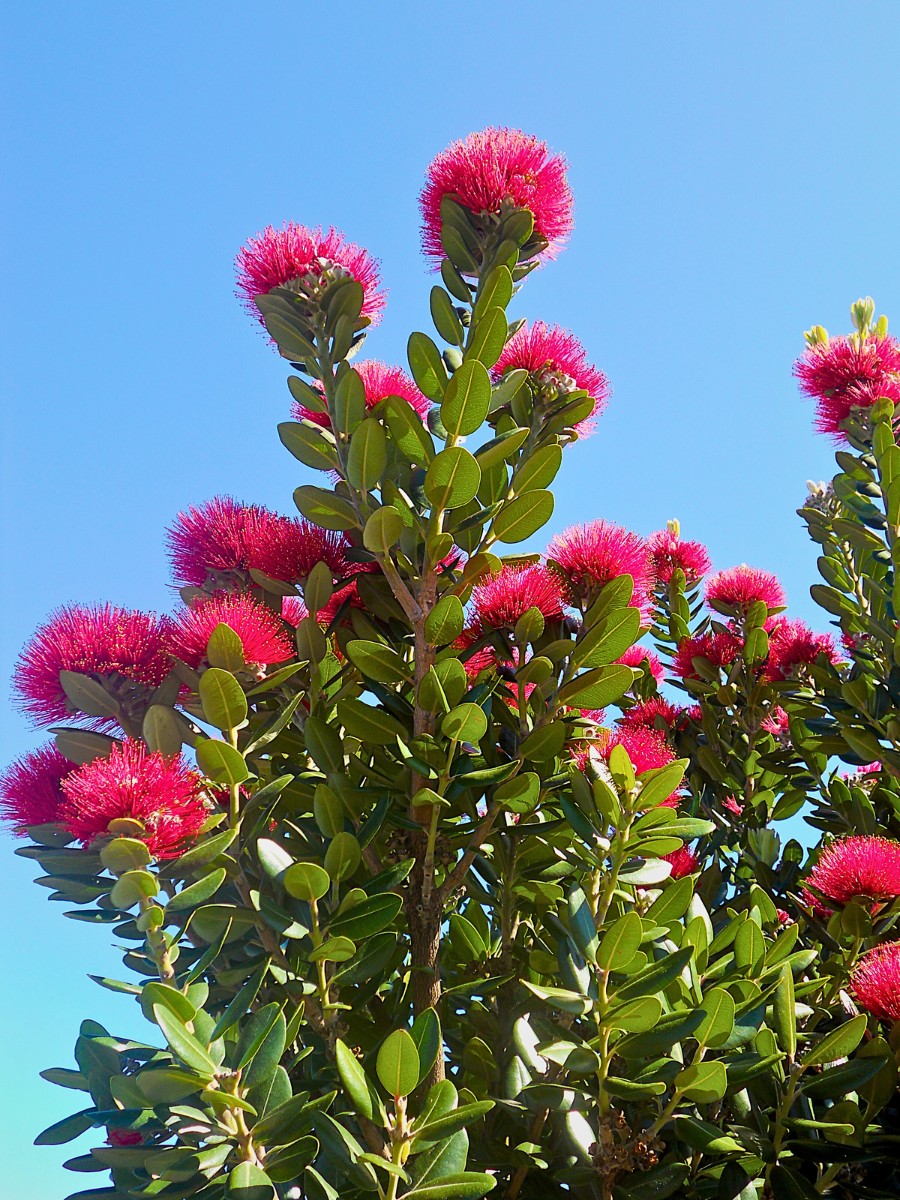
In public spaces, mature Pōhutukawa provide gathering points. They are planted with the knowledge that in 20-30 years, they will provide shade for picnics and natural arenas for community events. Some families even have their favorite trees, particular specimens they visit each year to check the progress of the flowers. Such personal traditions, across the country, further entrench the tree’s symbolism and meaning.
The tree also marks cycles. That sapling planted when a child was born might flower when they graduate. The old Pōhutukawa at the family bach has seen many generations grow, marry, and bring their own children there. In such cases, the Pōhutukawa becomes a custodian of family histories and memories.
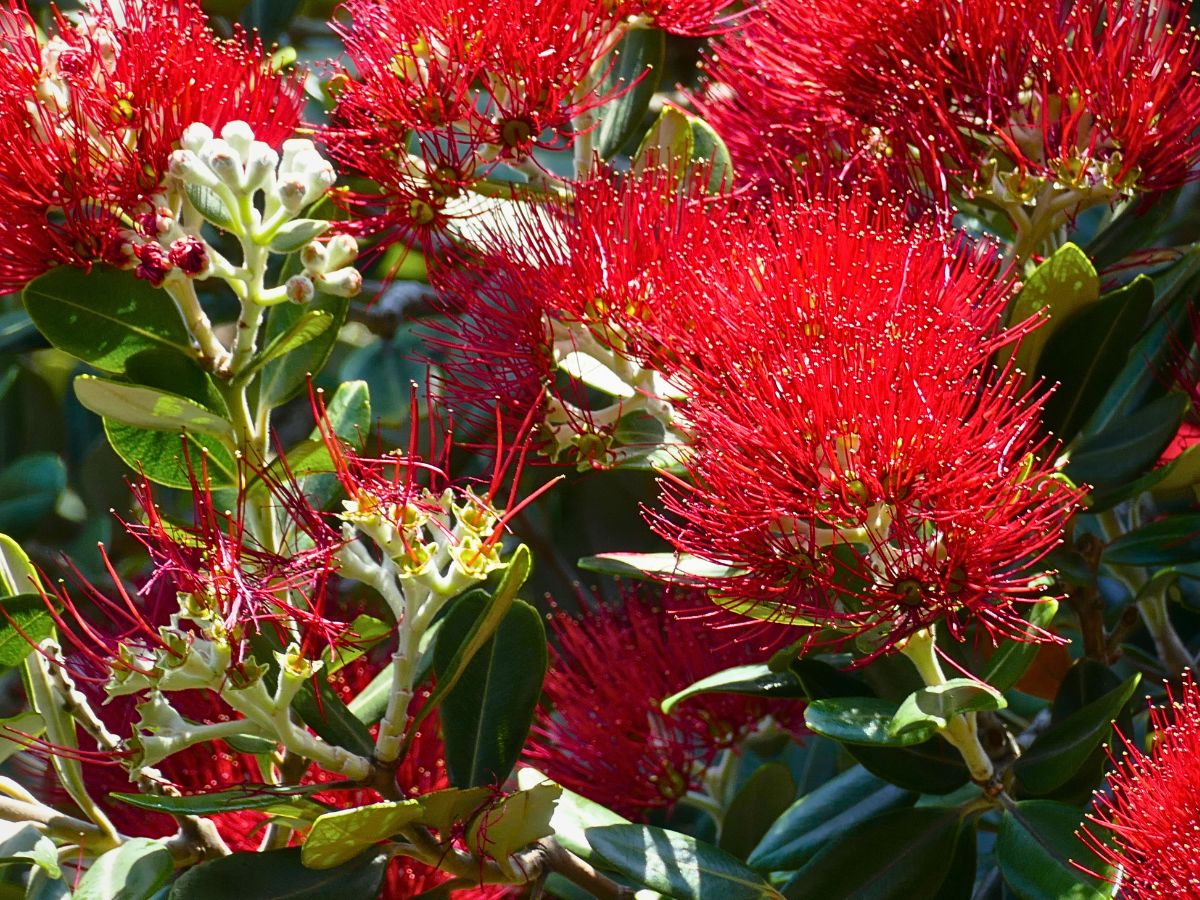
Also, their December flowering comes with the festive atmosphere, making other decorations unnecessary, as the trees do the work right on schedule. When its first red stamens appear in the festive months, summer has officially arrived, sometimes, regardless of what the calendar says. Moreover, coastal towns’ planners are increasingly recognizing the Pōhutukawa's value in creating a sense of place. A road lined with these trees more effectively announces that one is in New Zealand.
International Appreciation Outside of Aotearoa
While the Pōhutukawa remains most important in its homeland, gardeners in similar climates elsewhere also love it. Parts of coastal California, southern Australia, and Mediterranean regions grow them successfully, purely appreciating their ornamental value, divorced from the cultural symbolism they carry in their homeland.
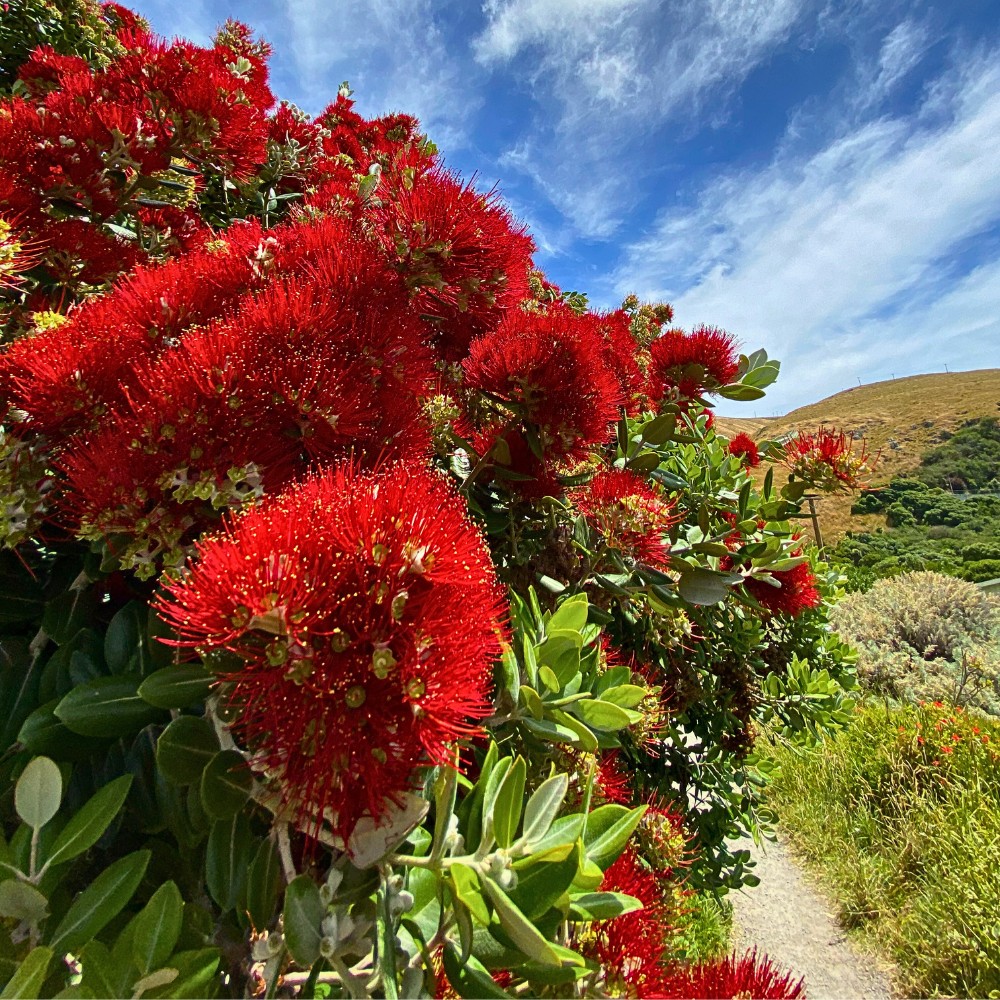
Such international appreciation, while flattering, highlights why the tree is special at home. A Pōhutukawa in, say, San Diego might be beautiful, but it is just another flowering tree. In New Zealand, it has so many meanings. It offers beauty right when people gather to celebrate, what summer means in the Southern Hemisphere, and more, symbolically and spiritually. Context changes everything.
Feature image by Kevin Prince. Header image by Abaconda Management Group. Reel: @lyzadie.