A beautifully styled wedding is never the result of a single element standing alone. Instead, it is the harmony between details from the dress, the flowers, to the venue, and the atmosphere in order to create a truly memorable celebration. Among these elements, wedding flowers play a crucial role in enhancing the visual language of the bridal look, especially when thoughtfully coordinated with the wedding dress.
Rather than treating florals as a separate design choice, couples are increasingly viewing flowers and attire as interconnected elements. When chosen with intention, wedding flowers can complement the dress seamlessly, elevating the overall aesthetic without overpowering it.
You can find more floral inspiration here: Wedding Flowers - 10 Most Popular Flowers for a Bridal Bouquet
Start With the Wedding Dress as Your Visual Anchor
The beautiful wedding dress is often the centerpiece of the bridal look and should serve as the starting point for floral decisions. Its silhouette, fabric, color tone, and overall style provide essential clues for selecting flowers that feel cohesive rather than contrasting.
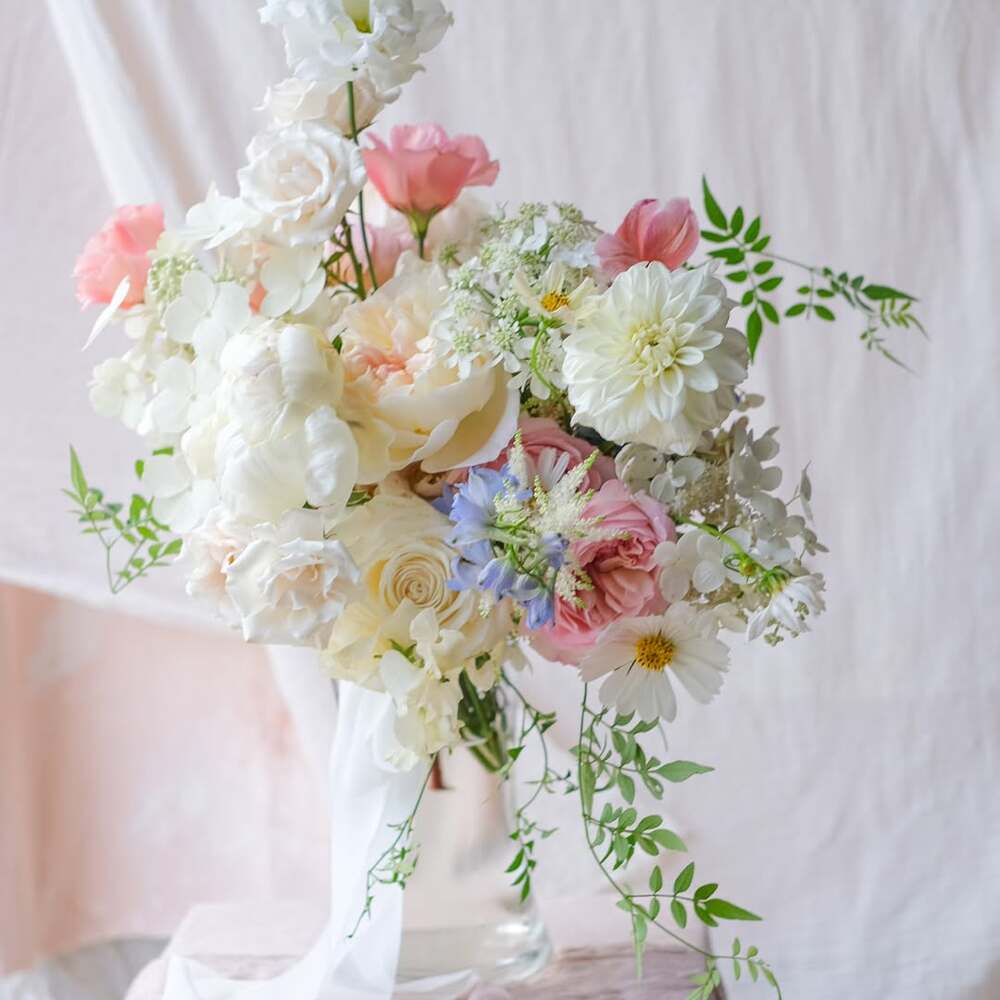
A minimalist gown with clean lines pairs beautifully with structured floral arrangements, while a romantic or vintage-inspired dress often calls for softer, more organic blooms. Taking cues from the dress ensures that flowers feel like an extension of the bridal style rather than a competing focal point.
Match Flower Textures With Dress Fabrics
Texture is one of the most overlooked yet impactful aspects of coordination. Dresses made with flowing chiffon, satin, tulle, or lace naturally suggest different floral companions.
For instance, a bride wearing a lace wedding dress may find that delicate blooms such as ranunculus, garden roses, or sweet peas echo the intricate detailing of the fabric. These softer florals reinforce the romantic quality of lace without overwhelming its craftsmanship.
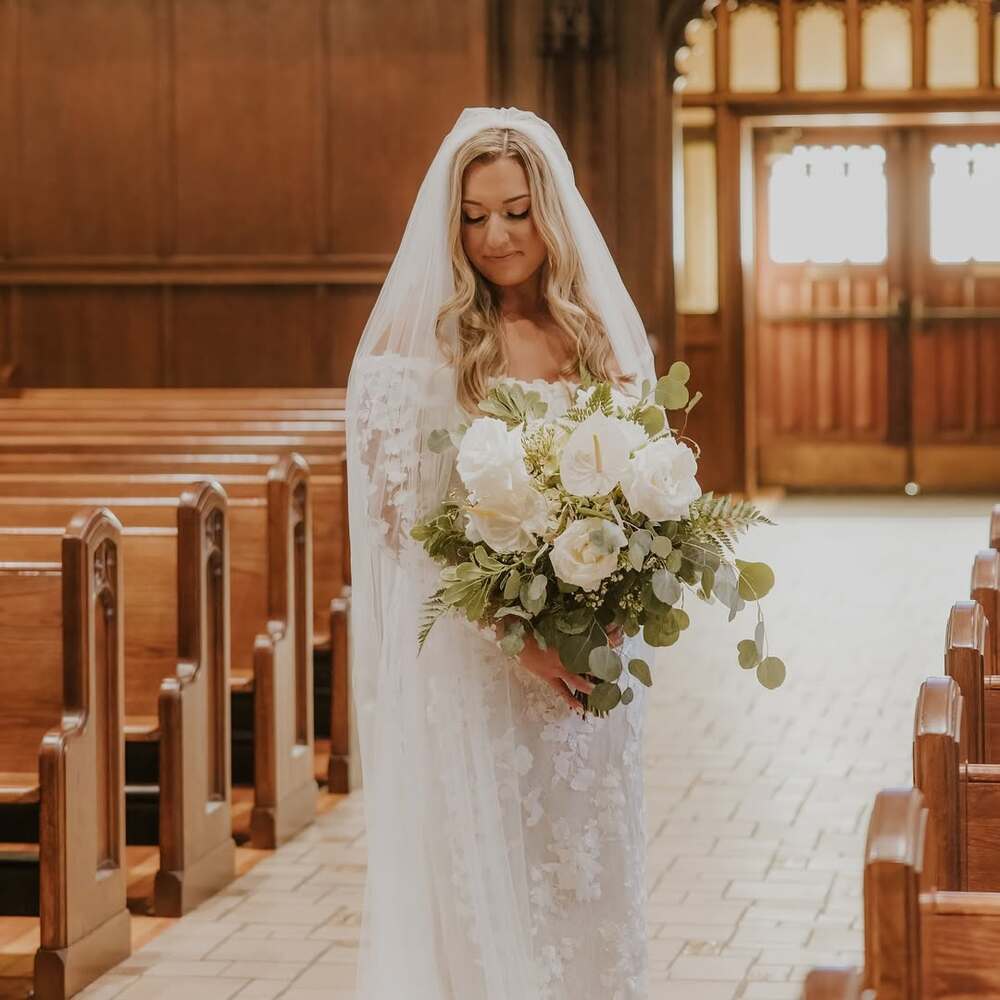
Conversely, highly structured gowns benefit from bolder floral choices like calla lilies or orchids, which mirror their refined elegance.
Coordinate Colors for a Balanced Palette
Color harmony between flowers and dress is essential for a polished look, particularly in wedding photography. While most wedding dresses fall within white, ivory, or champagne tones, subtle undertones matter.
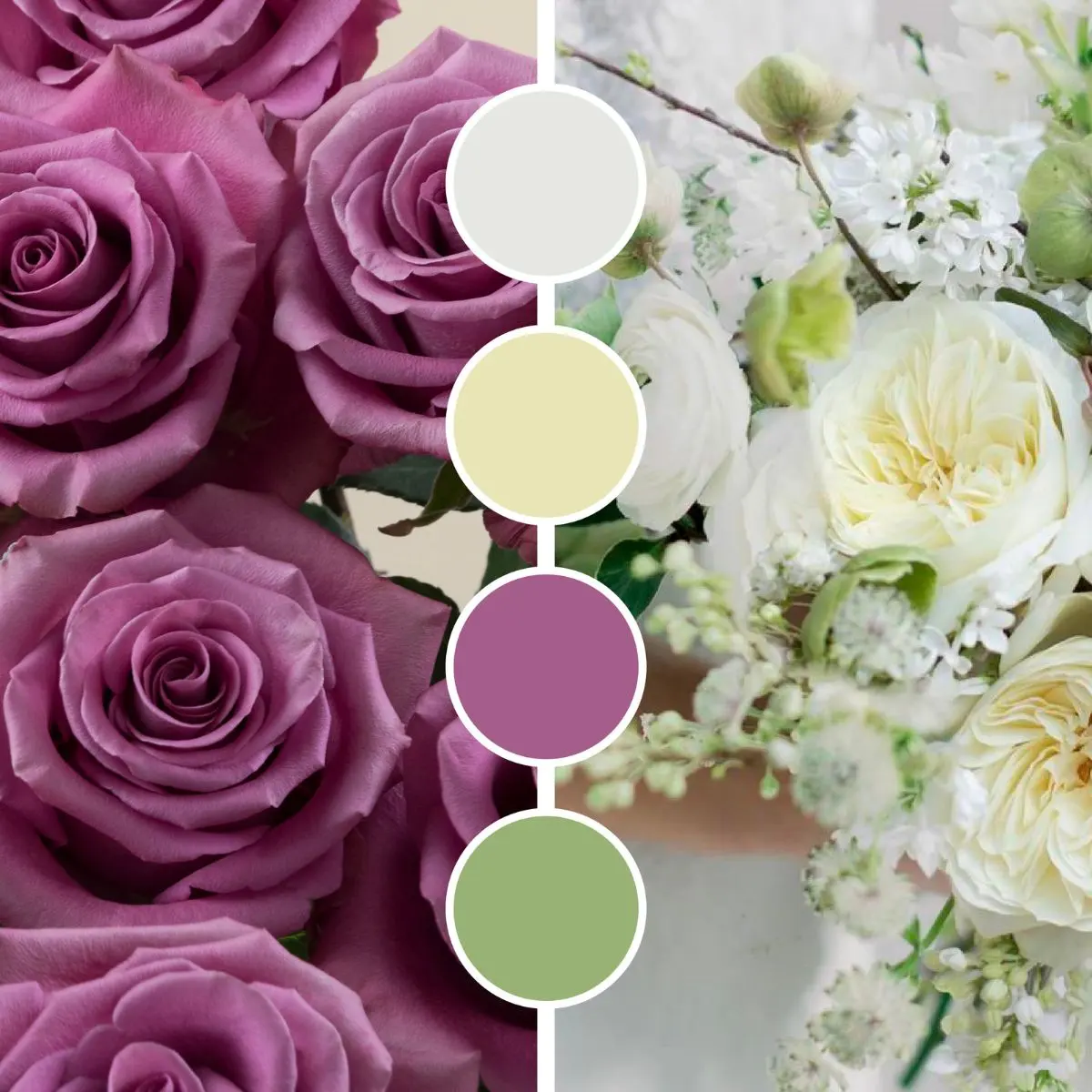
Warm ivory gowns pair beautifully with blush, peach, soft apricot, and muted earth tones, while cooler whites complement crisp greenery, pale blues, and soft lavenders. Avoid overly saturated colors that may visually overpower the dress; instead, opt for nuanced shades that add depth while maintaining balance.
Choose Seasonal Flowers for Natural Elegance
Seasonal flowers not only ensure freshness but also lend authenticity to the overall design. When florals reflect the natural rhythm of the season, they blend effortlessly with both attire and environment.
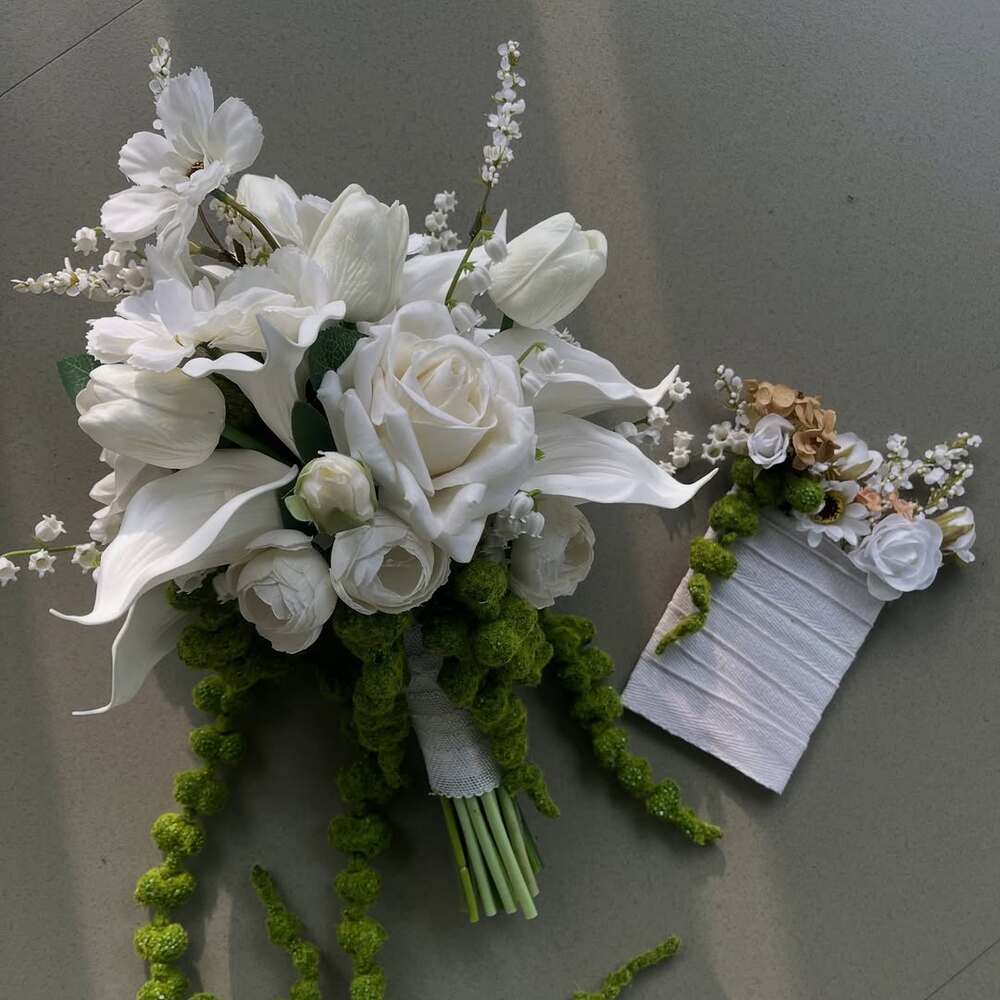
Spring weddings often feature airy blossoms such as tulips, anemones, and lilacs, while summer ceremonies favor lush roses, peonies, and hydrangeas. Autumn calls for textured florals like dahlias and foliage-rich arrangements, and winter weddings benefit from restrained palettes with hellebore, ranunculus, and evergreen accents.
Seasonality helps florals feel organic rather than forced.
Align Flowers With the Wedding Theme and Venue
The venue and overall wedding theme should further guide floral choices. A garden ceremony naturally supports loose, organic arrangements, while a modern indoor venue may call for cleaner lines and intentional structure.
When flowers, dress, and setting share a common visual language, the result feels cohesive and thoughtfully curated. This alignment ensures that no single element feels out of place, allowing the bride’s attire to remain the focal point while flowers enhance the atmosphere.
Keep Scale and Proportion in Mind
Balance is key when selecting floral arrangements. Oversized bouquets can overwhelm delicate gowns, while overly minimal flowers may feel underwhelming next to dramatic silhouettes.
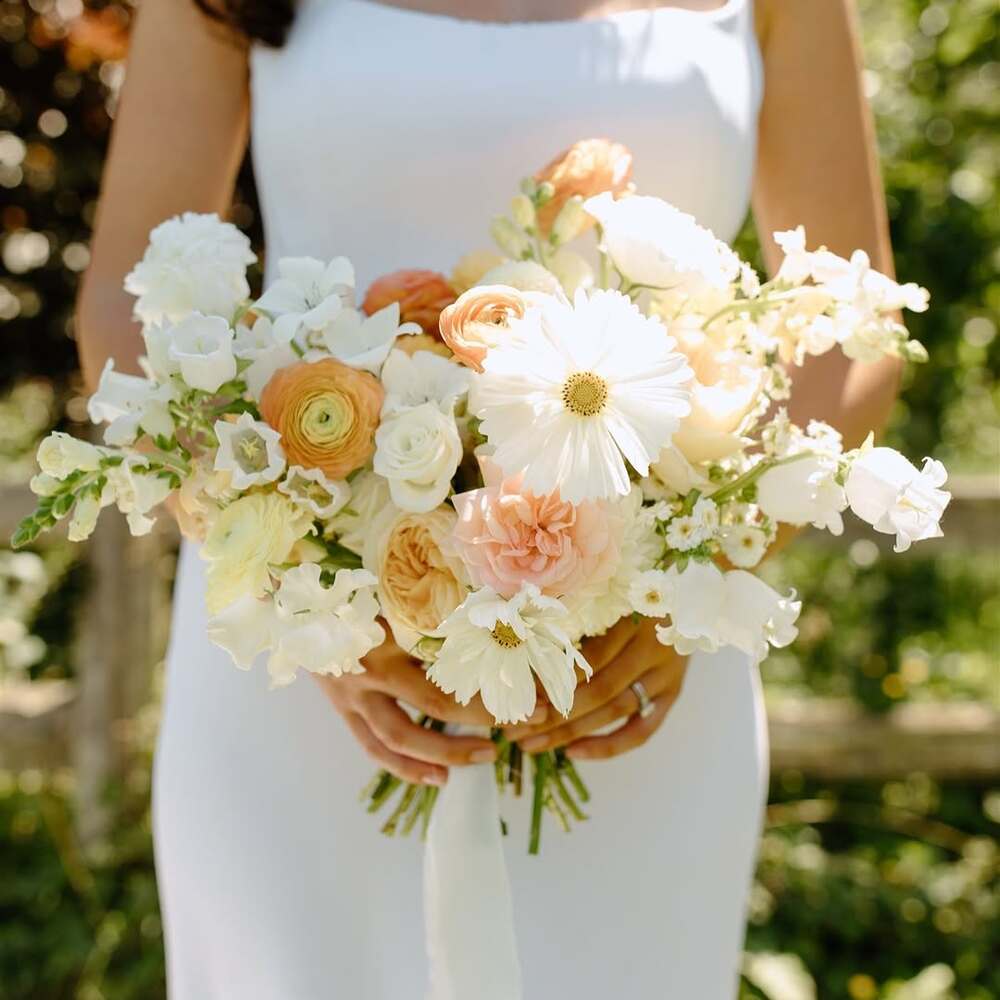
Consider the scale of the dress when choosing bouquet size and floral installations. Proportion ensures that flowers complement rather than compete, creating a visually pleasing harmony throughout the ceremony and reception.
Communicate Clearly With Your Florist
Clear communication with your florist is essential. Sharing images of your dress, discussing fabric details, and explaining the desired mood allows florists to tailor arrangements that enhance the bridal look.
Professional florists appreciate understanding how flowers will interact with the dress, accessories, and venue lighting. This collaboration often results in more intentional designs that elevate the overall aesthetic.
Let Flowers Enhance, Not Compete
At their best, wedding flowers act as a supporting character that frames the bride, accentuating her style and adding emotional depth without drawing attention away from her.
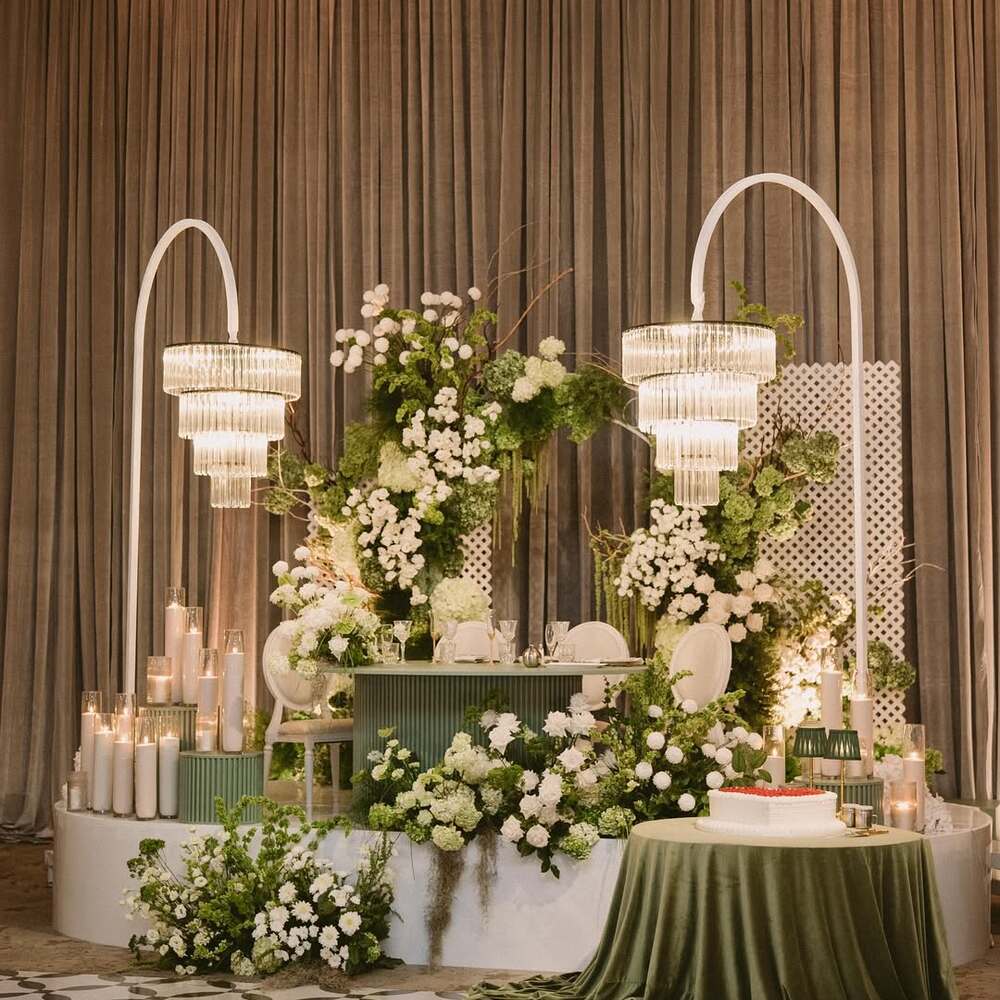
When chosen thoughtfully, flowers and dress work together to create a unified visual story. The result is a wedding aesthetic that feels refined, harmonious, and effortlessly elegant, one where every detail contributes to a cohesive and unforgettable experience.
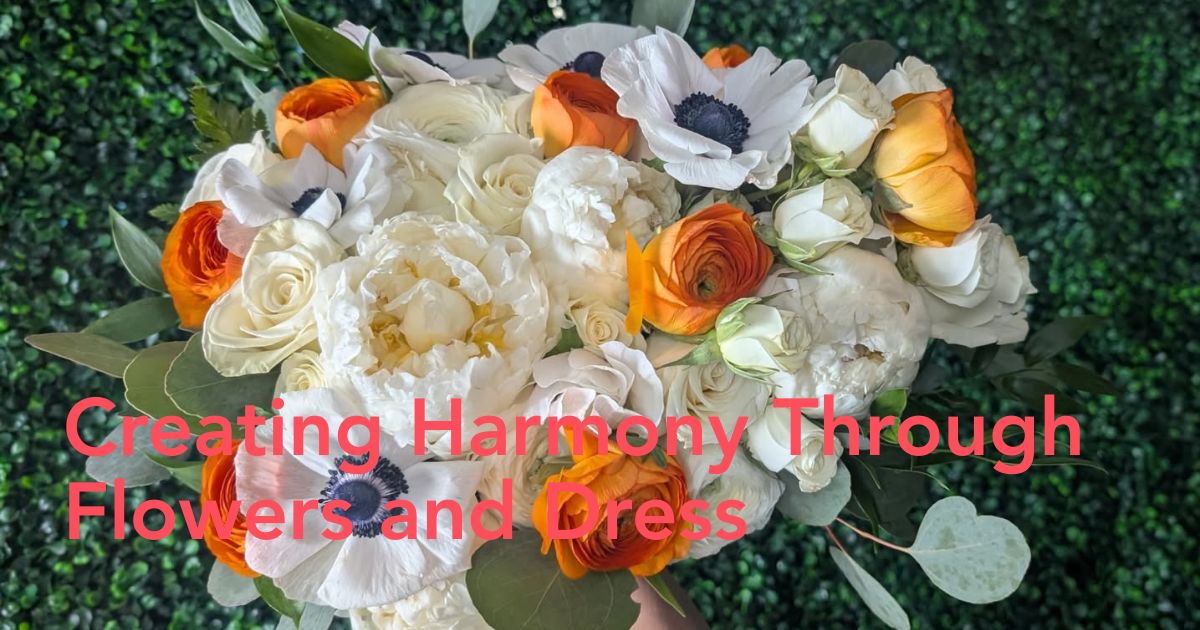
Header Image by @stems_in_bloom