Designing a beautiful floral arrangement often inspires a desire to gather various shapes, sizes, and colors together in one container. While building this kind of mixed-variety display seems as easy as ABC, successfully creating it requires balancing artistic ideas with the underlying biology of each flower. So, can you mix different flowers in one vase? Yes, you can mix different flowers in one vase, and most professional florists do it every day.
In these arrangements, one might have garden roses, Ranunculus, spray carnations, and a few stems of Eucalyptus, all pulled together in a design. The trick is not about which flowers are allowed near each other, but understanding shape, scale, color, and how long each one tends to last in water, or works with the other. Once those are in place, almost any combination can work in the same container.
The Concept of Floral Compatibility
The notion of floral compatibility involves combining different flowers into a unified ecosystem within a vase. When you place different flowers together, you do not just manage their colors but also introduce different chemical properties into a shared environment. Some work as cooperative companions, others act as dominant competitors that negatively impact their neighbors, while others can be toxic to their counterparts when mixed, so be aware of potential hazards.
Professional designers evaluate how different stalks absorb moisture, how quickly they mature, and whether their stems ooze substances that affect neighboring plants. For instance, pairing soft field flowers with sturdy woody branches requires an understanding of how each draws water from the container.
Knowing the specific characteristics of individual flowers means you avoid unexpected wilting and ensure that every element in your vase has an equal opportunity to thrive. Successful mixed arrangements depend heavily on selecting varieties that share similar environmental preferences and can coexist well in the same liquid reservoir over a long timeframe.
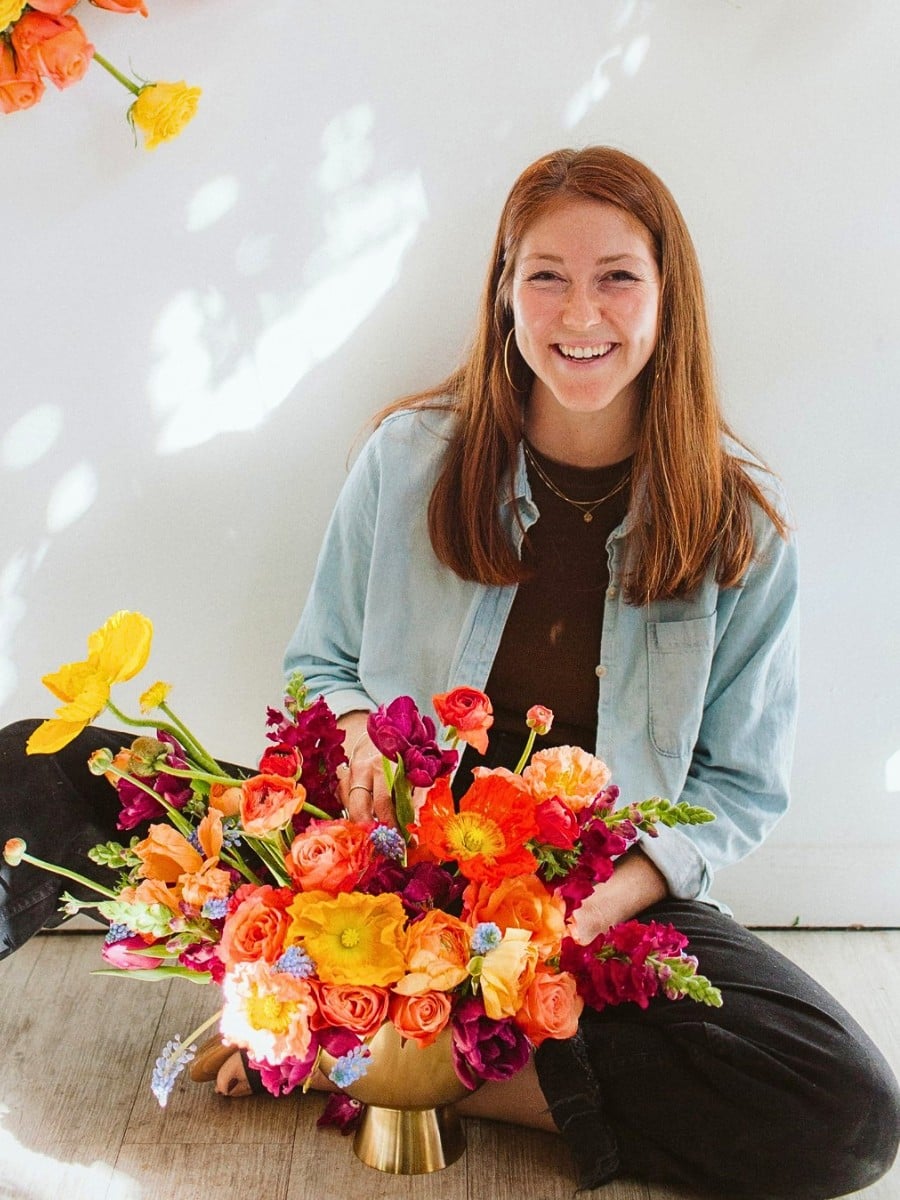
Why Mixing Flowers Works
A vase full of one flower type may look tidy and formal. A mixed vase looks gathered, more like an arrangement pulled from a garden bed than picked up at a counter. Whichever look you fancy defines how you work with the flowers. The effect of the latter look, nonetheless, comes from variation in form.
Round flowers like roses or peonies give an arrangement its base and its main color blocks. Spiky or spike-shaped flowers like snapdragons, Delphinium, or Veronica give height and movement. Filler flowers fill the gaps and soften hard edges between the larger flowers. Foliage, like Eucalyptus, Pittosporum, or Ruscus, gives the arrangement a frame and prevents it from looking like a fistful of stems.
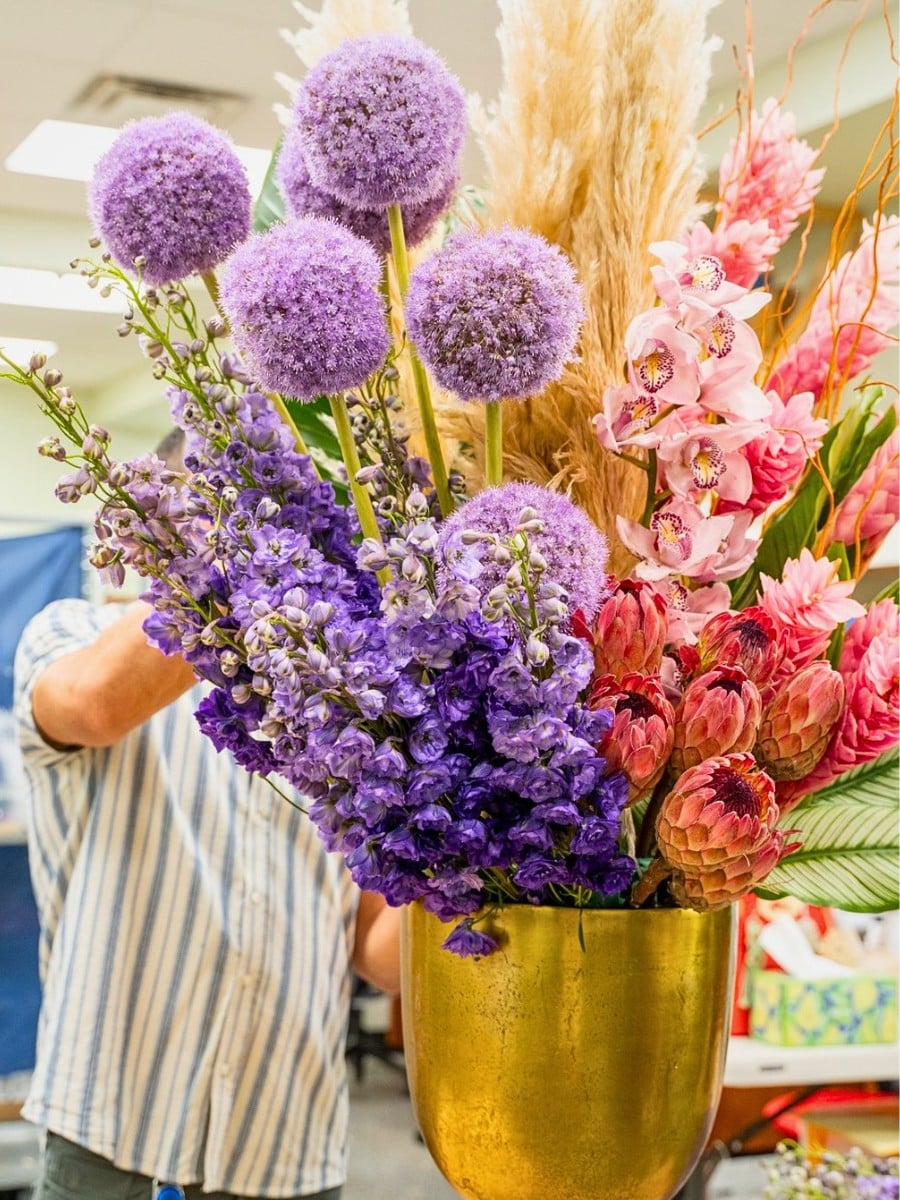
Another useful reason why florists mix varieties is that it extends the life of an arrangement. Tulips, for example, keep growing and bending toward light after they are cut, while zinnias hold their shape and stay upright. Combining a fast-changing flower with a stable one means the arrangement still looks good, even as individual flowers change.
Chemical and Structural Challenges
Several biological factors explain why certain flowers fail when forced to share a vase. The primary challenge is sap toxicity, which occurs when bulbous plants like spring daffodils or early hyacinths release a thick slime after being cut. This fluid fills the water, coating the vascular tubes of sensitive companions like garden tulips or delicate irises, which stops their water intake and causes premature death.
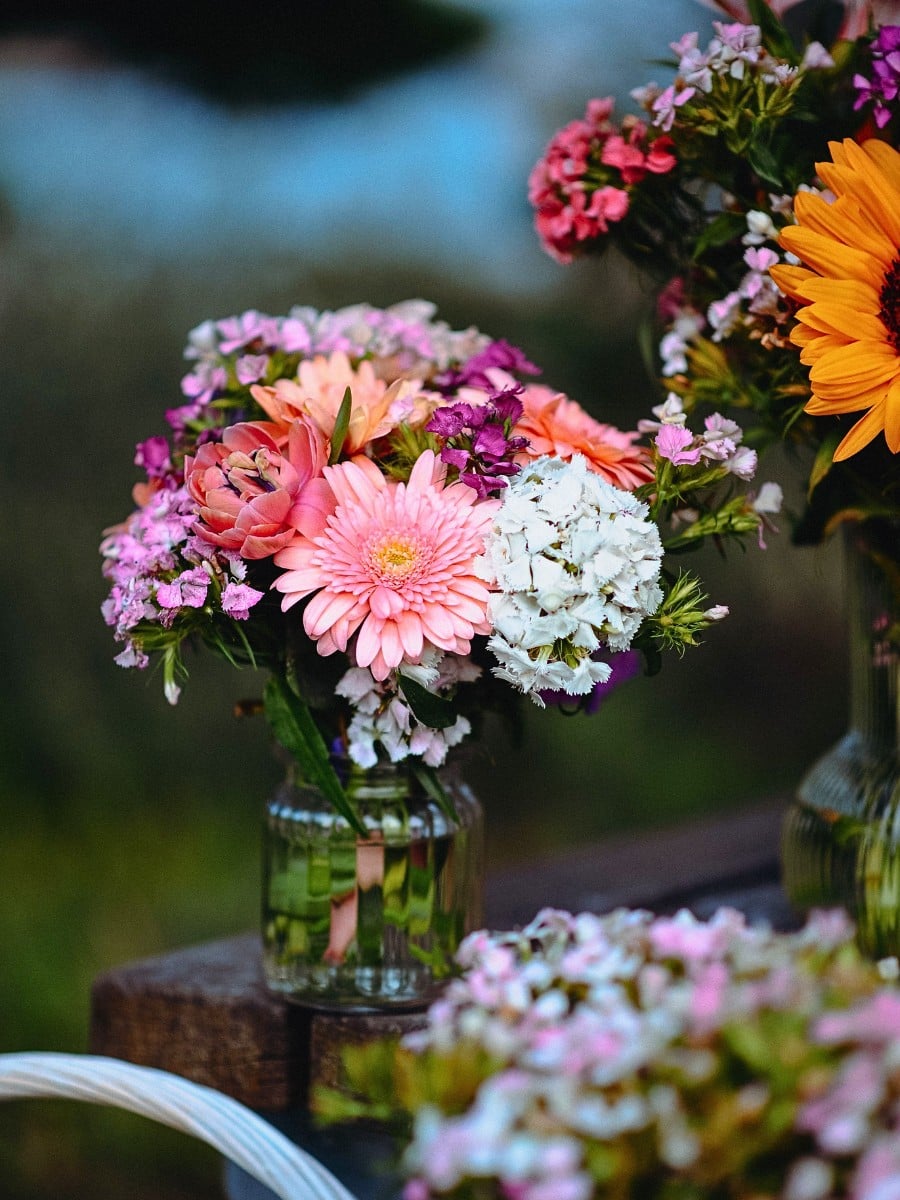
Another significant factor is ethylene gas production. Certain flowers, particularly mature carnations and large lilies, naturally produce high amounts of this ripening hormone as they age. When placed next to ethylene-sensitive flowers like snapdragons or Gerbera daisies, the gas forces the sensitive petals to drop prematurely and discolor.
Finally, unequal water requirements create conflicts. Thirsty Hydrangeas require deep water levels to maintain cell turgor, whereas Gerbera daisies prefer shallow water to prevent their soft stems from rotting, meaning one uniform water depth cannot satisfy both at the same time.
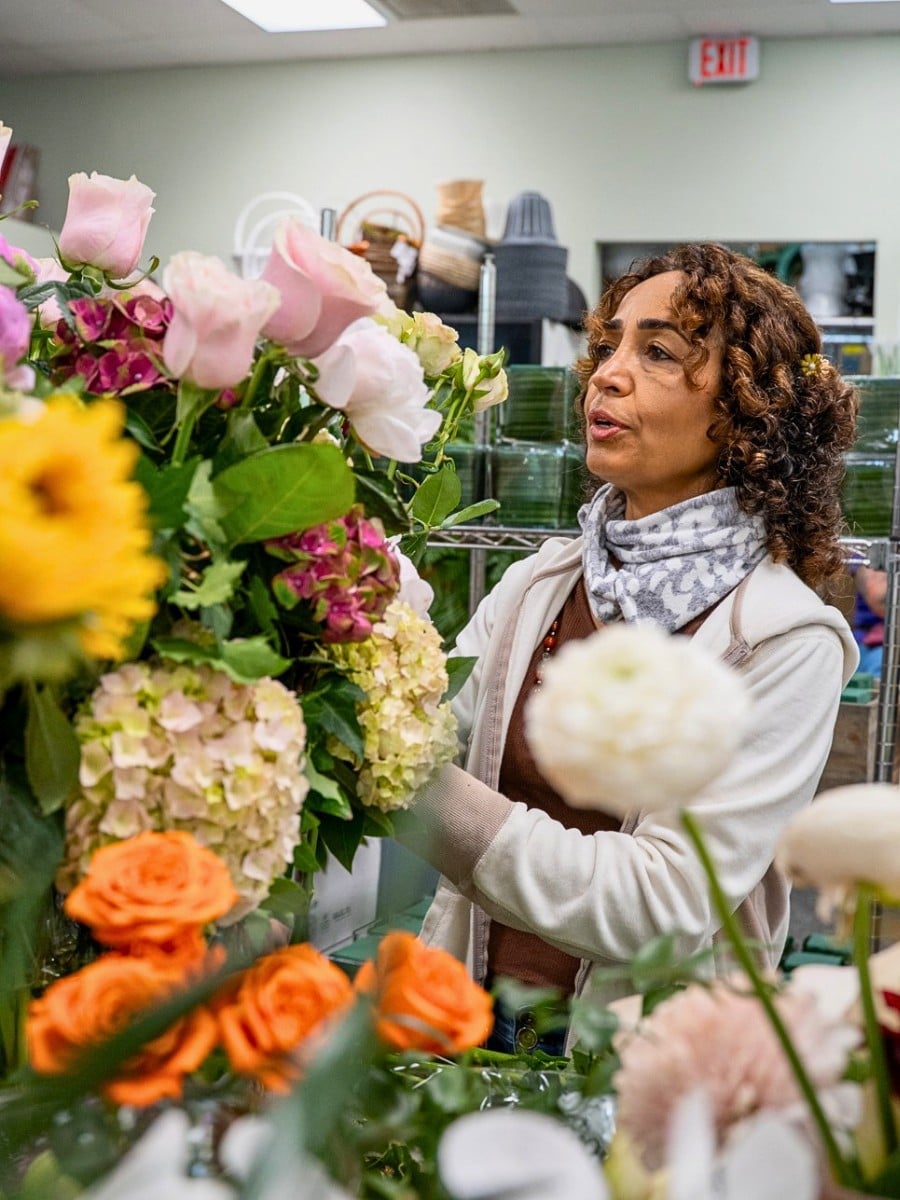
Some Flowers That Pair Well Together in a Vase
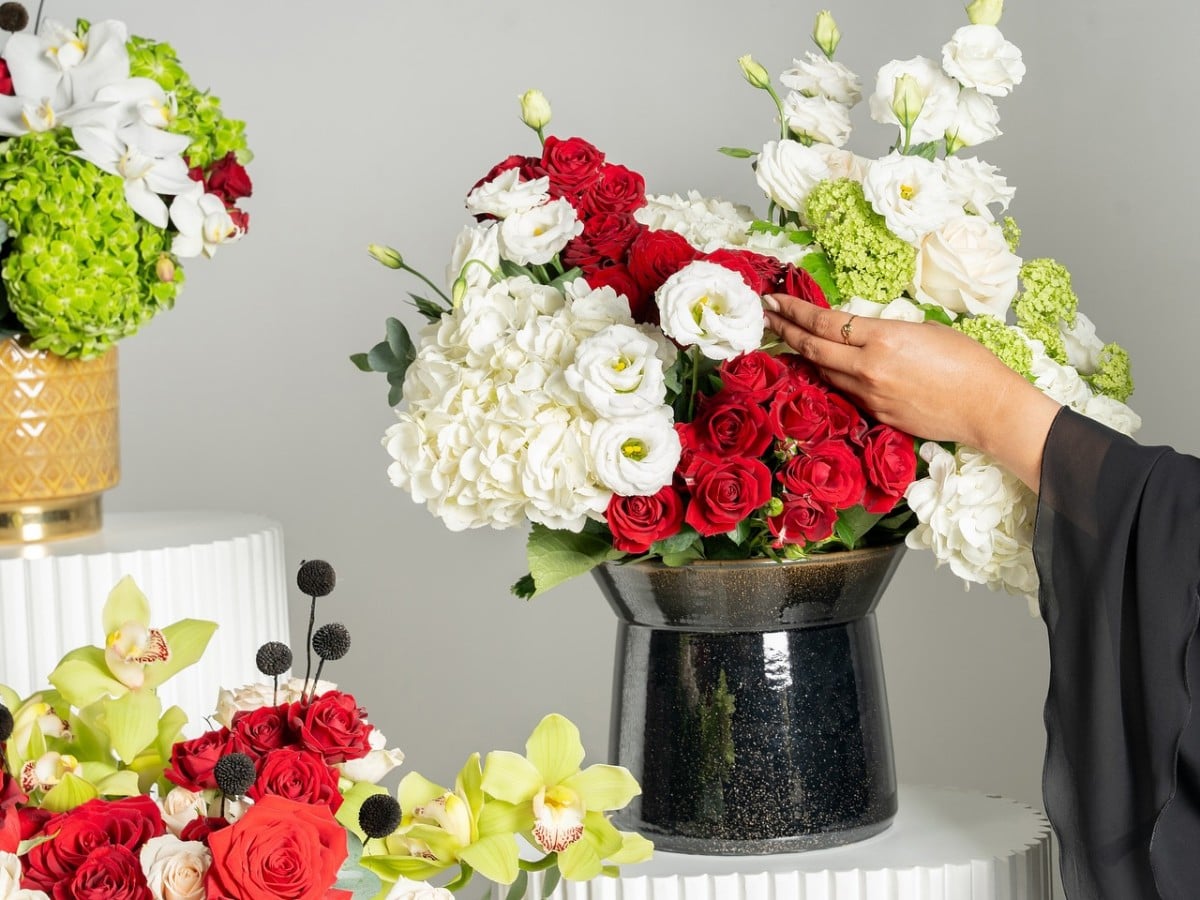
While many combinations present challenges, several ideal flower pairings naturally thrive together in one vase; hence, they show up again and again. A classic combo features classic roses, hardy carnations, and Silver Dollar Eucalyptus greenery. Because these varieties share similar moderate water requirements and resilient stem structures, they maintain their fresh appearance uniformly over many days without competing aggressively.
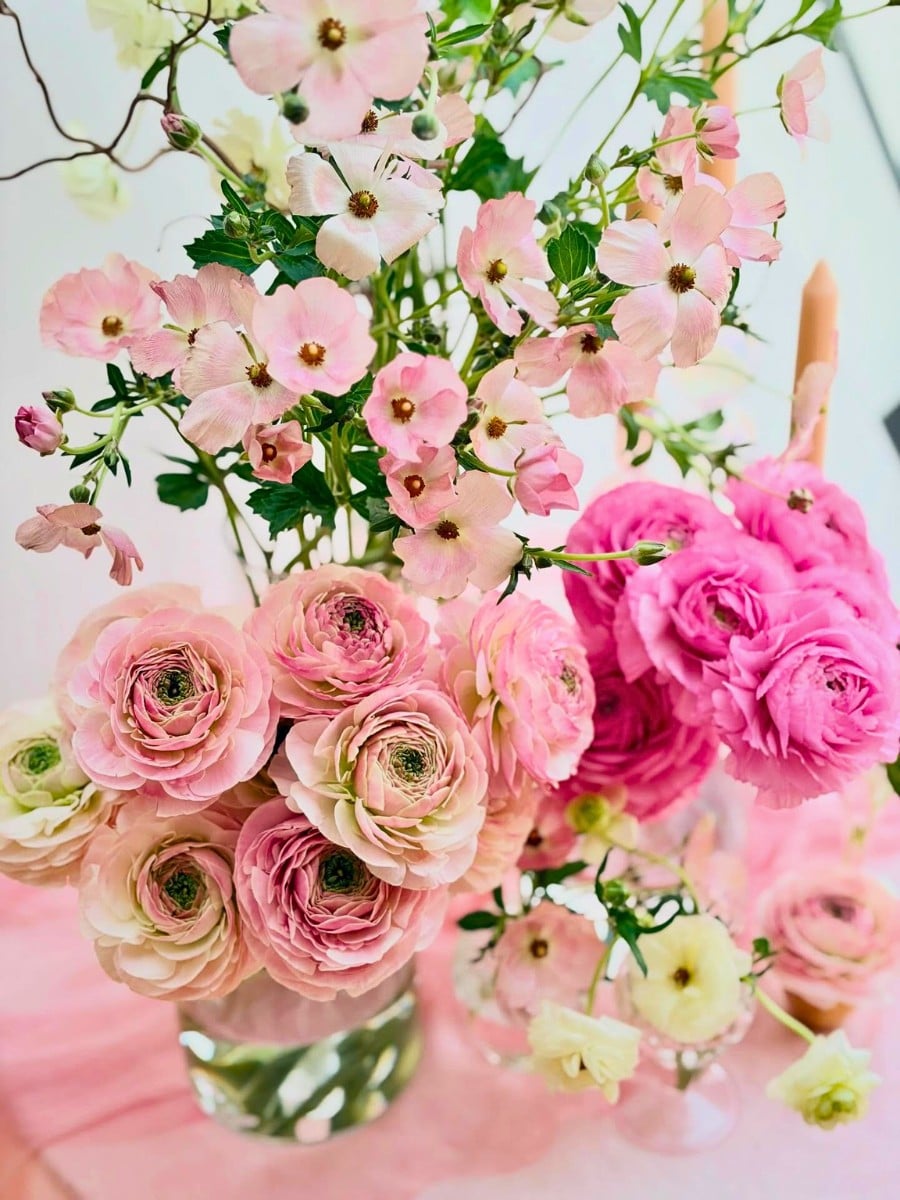
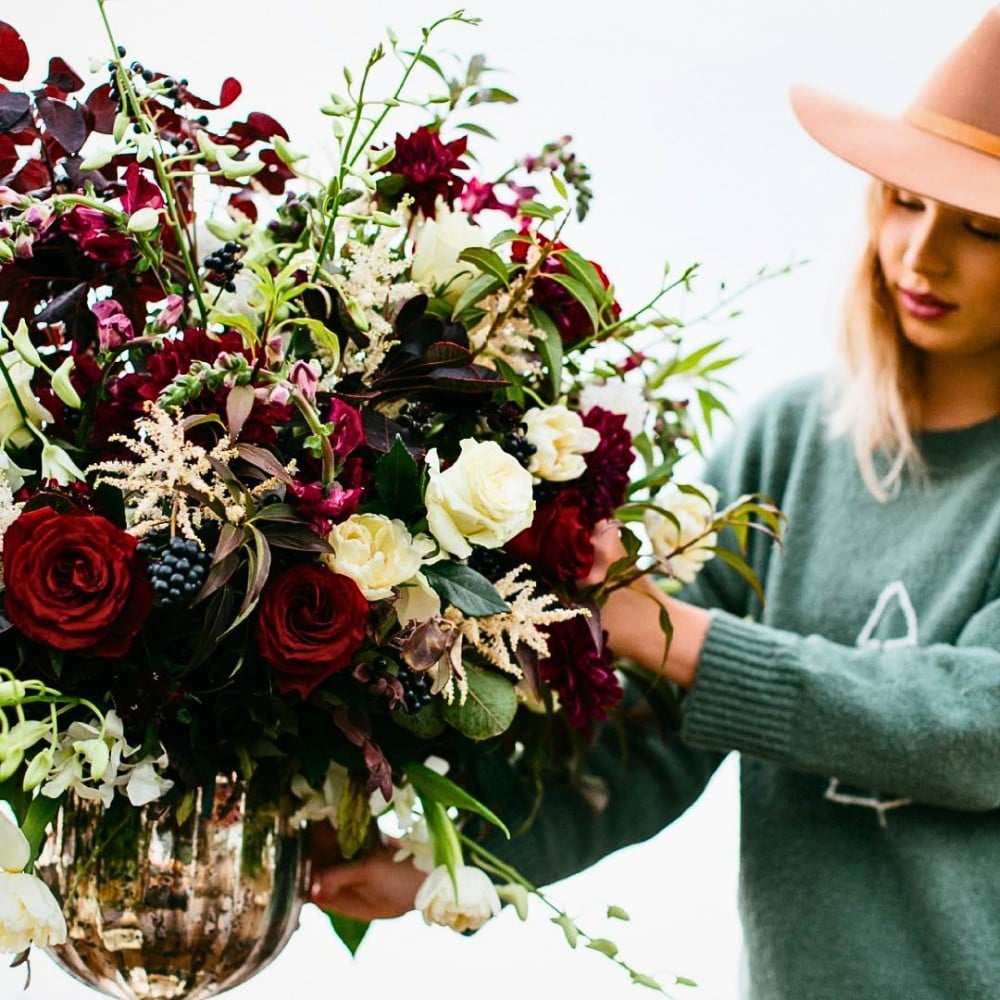
Garden roses and Ranunculus also pair naturally in a bouquet since both have layered cupped petals and a similar scale, so neither one overwhelms the other. Add a few stems of Scabiosa or Astrantia for texture, and the arrangement attains depth without extra bulk. Another successful pairing combines sturdy sunflowers with Solidago and solid green foliage, creating a display that handles warm summer conditions exceptionally well.
For a soft spring design, you can mix field tulips with delicate irises, provided no sap-producing bulbs are included in the water. Spray Chrysanthemums also work as excellent companions for a wide variety of flowers because their tough stems do not release harmful toxins, and they tolerate a broad range of water depths, making them a perfect stabilizing element for varied mixed bouquets of any size.
Likewise, Dahlias and zinnias work well in late summer arrangements because both hold color intensely and last well once cut, giving a bouquet staying power through a hot week. Lisianthus, often treated as a rose substitute, blends well with anything ruffled or soft, including peonies in season and carnations out of season. Its long vase life also means it can carry an arrangement after shorter-lived flowers like sweet peas have faded.
Similarly, Anemones bring a graphic black center that looks good against pale or pastel flowers like Icelandic poppies or spray roses, hardly needing a bold color to give contrast. Elsewhere, tropical flowers like Anthurium or Heliconia are usually kept apart from delicate garden flowers, since their scale and texture belong to a different visual aesthetic. When mixed, they work best with bold foliage like Monstera instead of soft florals.
Steps to Creatively Arranging in a Vase
A successful mixed arrangement requires adhering to specific structural and aesthetic design principles that ensure visual balance. Designers often rely on the traditional rule of thirds, ensuring the container represents one third of the total height of the completed display.
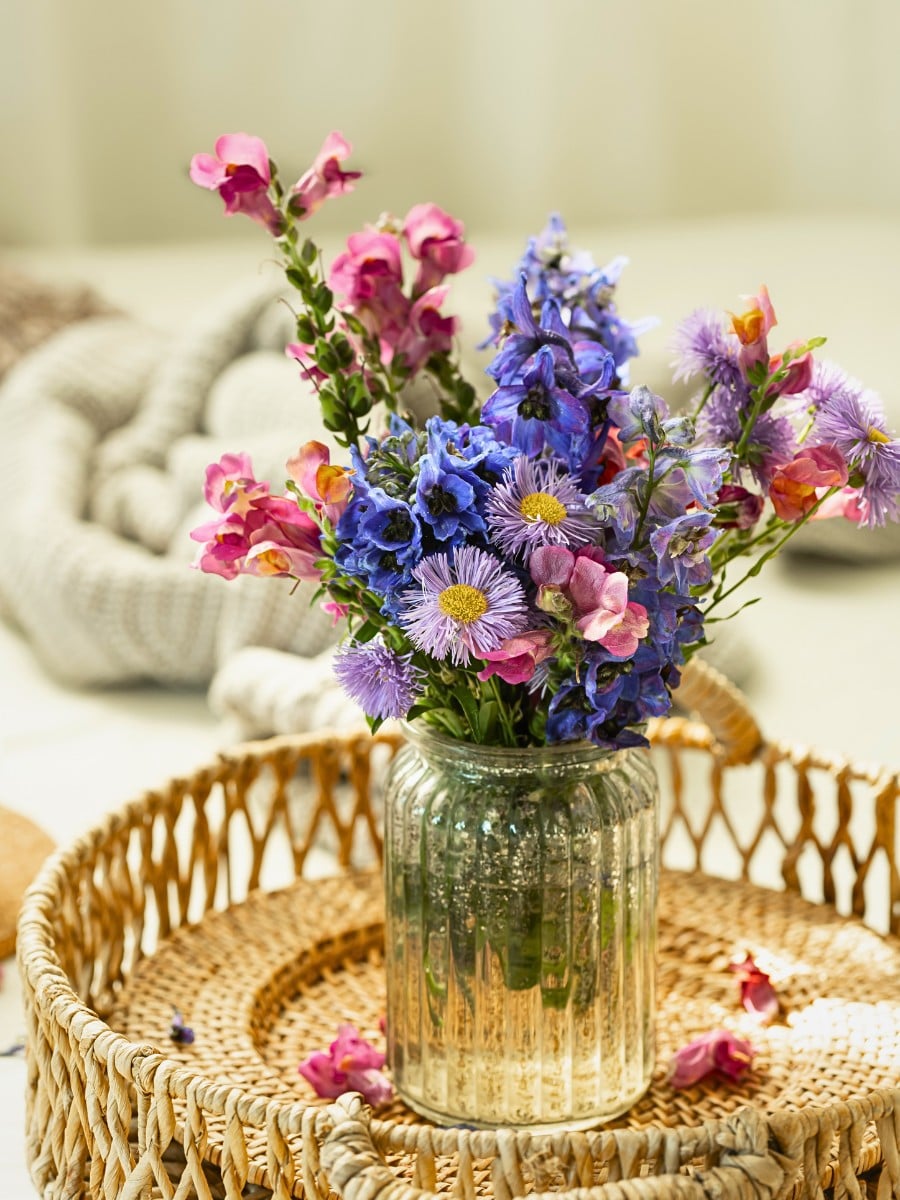
To build structure, layer your selections by function, starting with focal flowers like large garden roses or dramatic lilies to establish a clear visual center that draws the eye. Next, introduce linear elements like tall snapdragons or Delphiniums to define the height and overall silhouette of the display.
Finally, fill the gaps with secondary flowers like miniature spray roses, sweet peas, or seasonal greenery to soften the edges. Color harmony is equally important, using either neighboring colors on the wheel for a soothing appearance or opposite colors for high-energy contrast.
Best Practices for Maintaining Mixed Flower Arrangements
Maximizing the lifespan of a mixed arrangement requires care and strict sanitation practices throughout the life of the vase display. Before starting, wash the vase thoroughly to eliminate lingering bacteria, which remains the leading cause of early decay in mixed containers.
Cut every stem at a forty-five-degree angle using sharp shears to increase the surface area for moisture absorption and prevent the flowers from sitting flat against the bottom of the container. If you wish to include sap-producing flowers, isolate them in a separate bucket of cool water for several hours to let the harmful fluids drain before adding them to the main group.
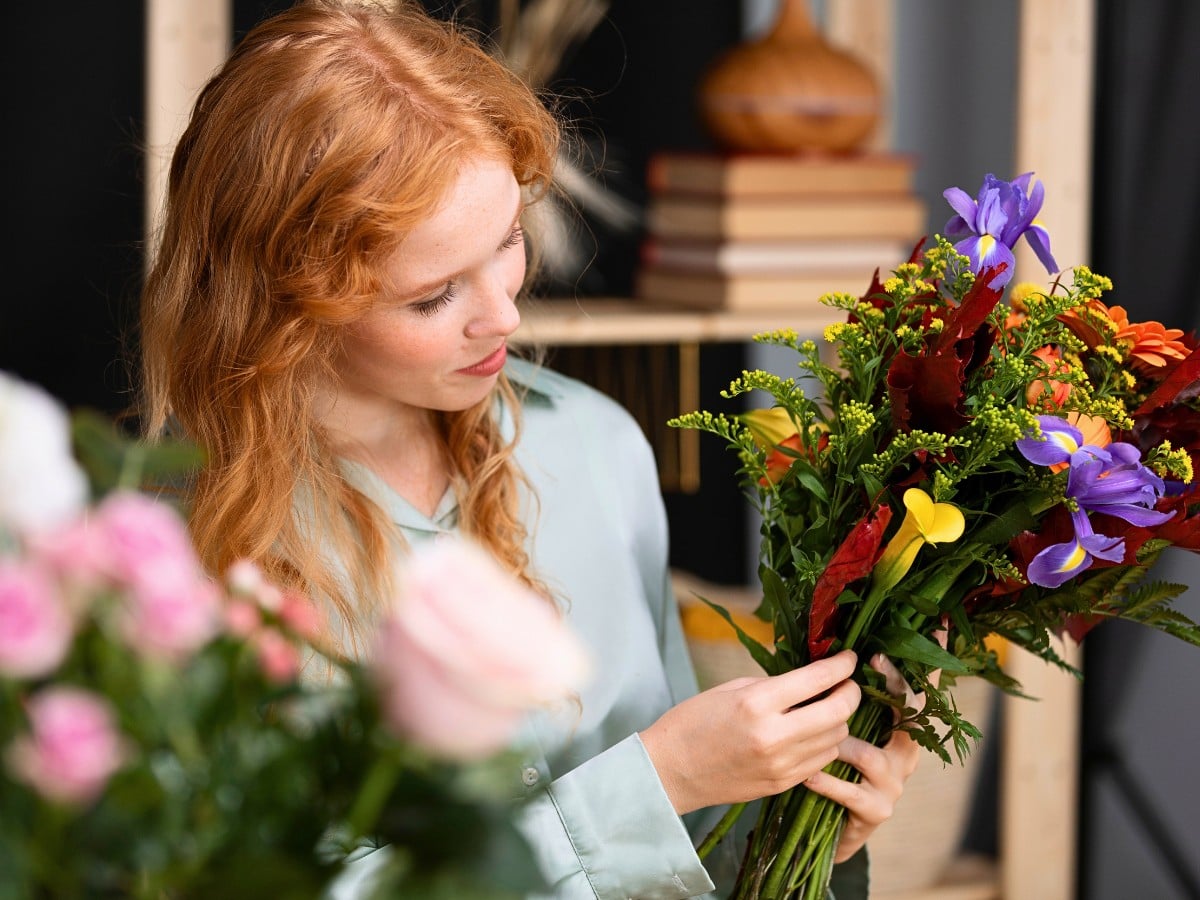
Then, always mix high-quality floral food into the vase water, as it contains clear bactericides that inhibit microbial growth while providing essential nutrients that help younger buds open fully over time.
A Viable Balanced Approach
So, yes, mixing different flowers in one vase is an excellent way to express creativity and natural beauty. Balancing the visual principles of height and color harmony with the biological realities of sap compatibility and water needs means you can create artistically satisfying and long-lasting floral displays.
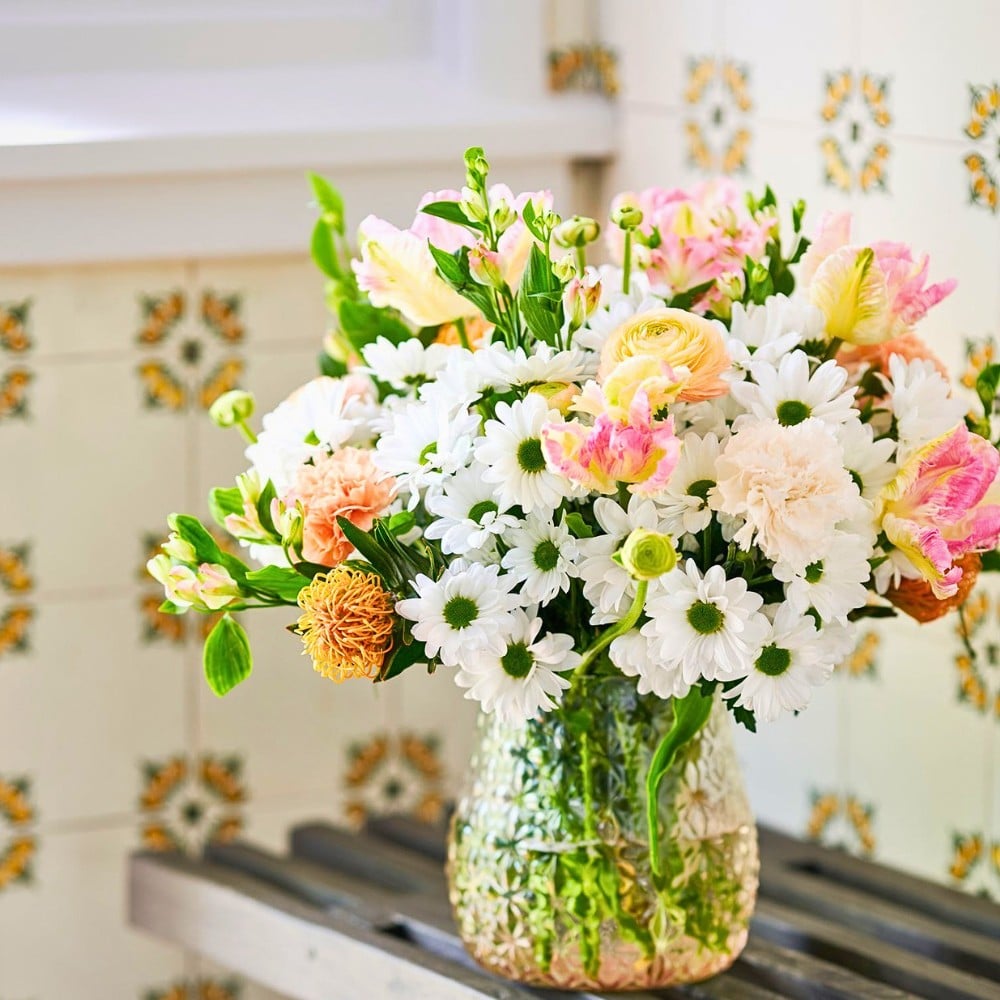
Paying attention to details like preconditioning sap-producing stems and using clean tools ensures that no flower sabotages the rest of the arrangement. And with a few practical strategies, you can confidently combine your favorite seasonal varieties to create healthy, balanced, and elegant floral displays that remain fresh-looking for days.
Featured image by magnific. Header image by @katyahutterfloraldesign