The word "pesticides" does something strange to a conversation. It flattens a complex reality almost instantly. As if an entire greenhouse, with everything that lives, grows, fails, and recovers inside it, can be reduced to one simple question: "Is it pesticide-free?"
A Grower Has to Decide
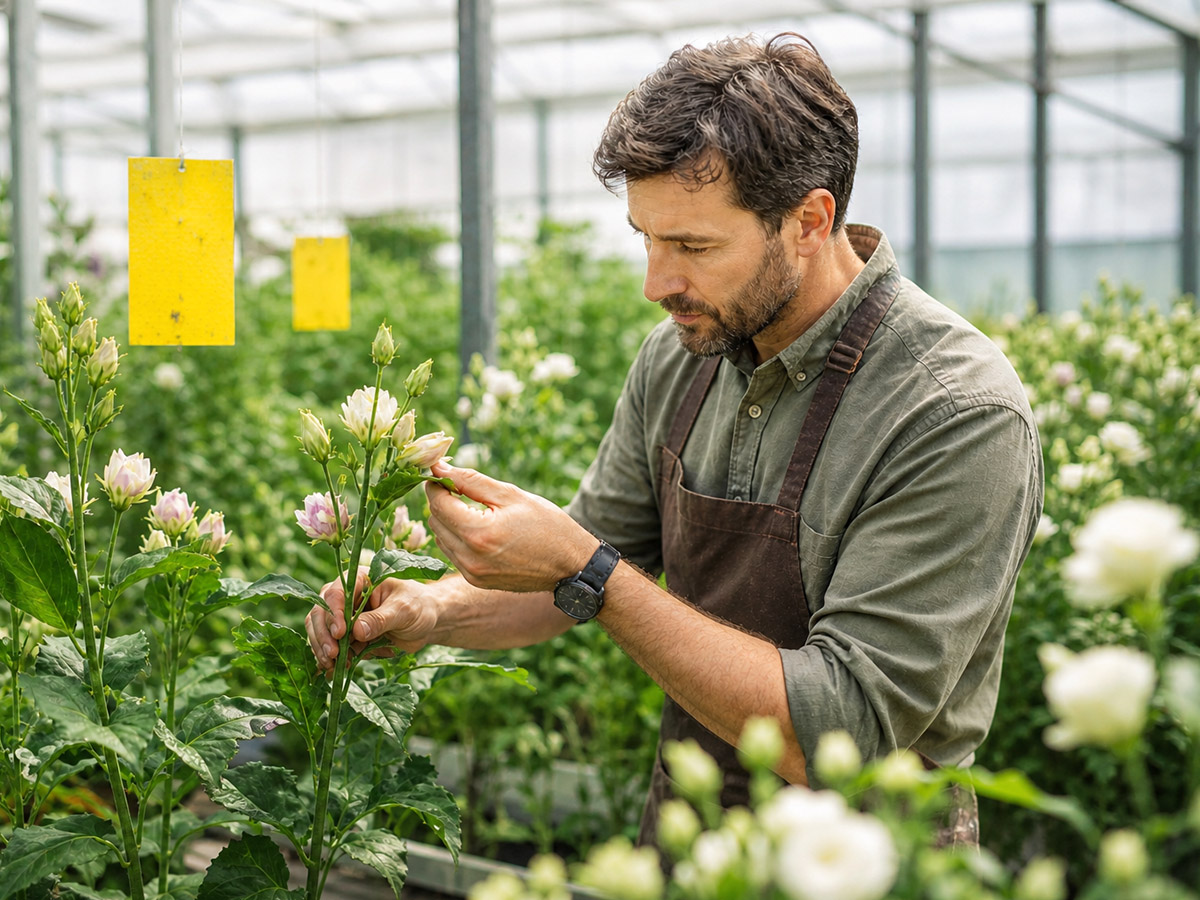
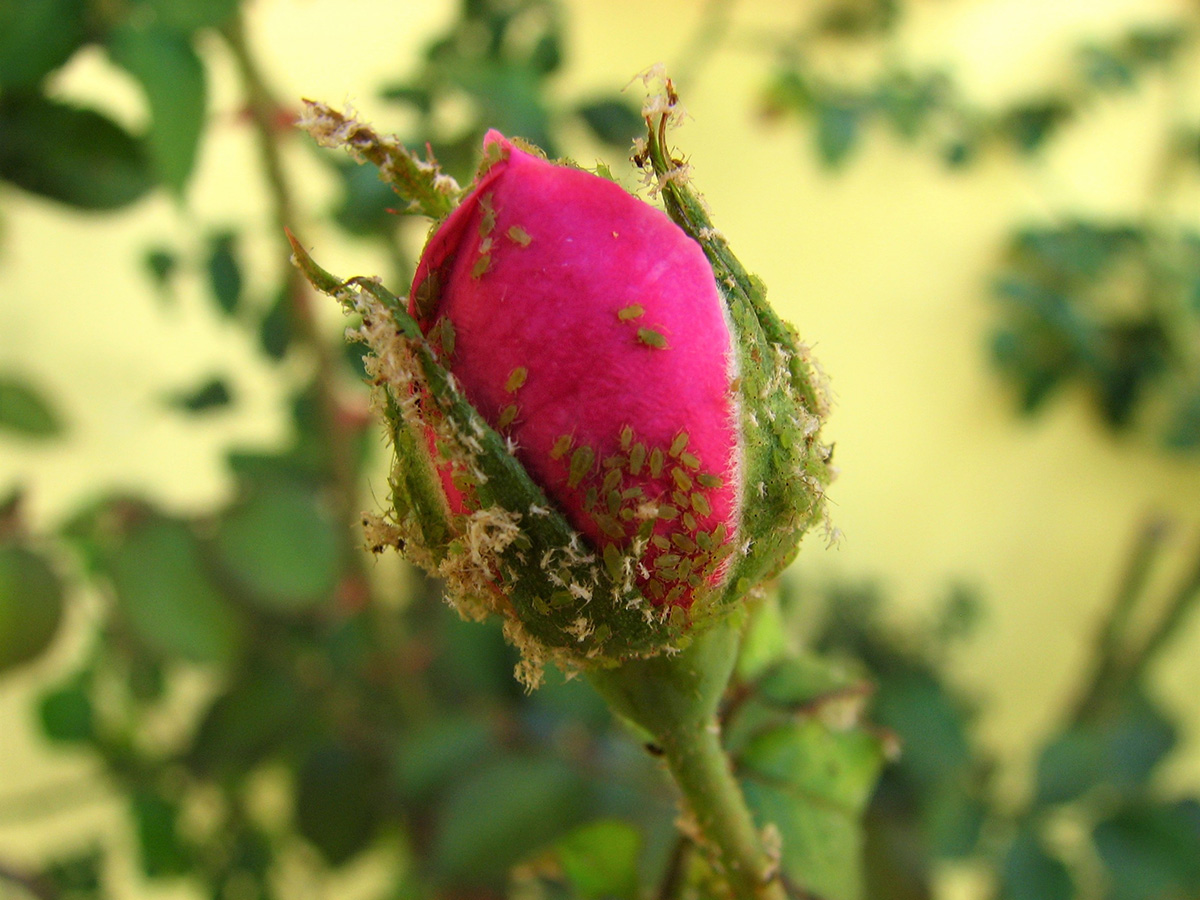
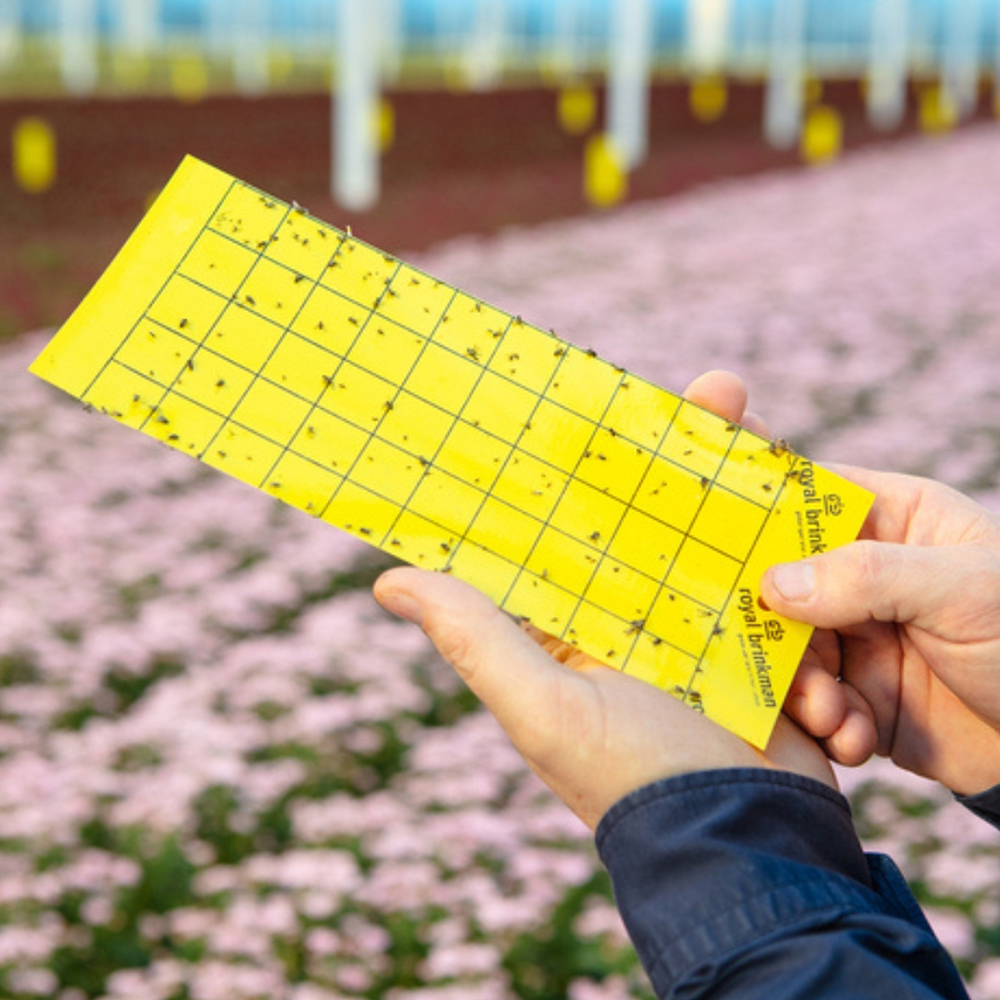
Anyone who works in a greenhouse every day sees something very different. A leaf that looks just slightly off. Thrips hiding inside a flower bud. A sticky trap catching more than it did the week before. A whitefly hotspot spreading faster than the beneficial insects can keep up with. Then comes the moment when a grower has to decide: wait a little longer, monitor more closely, introduce more beneficial insects, or intervene in a targeted way?
That kind of judgment has almost disappeared from public debate. All that nuance collapses into a single catch-all term: pesticides. It no longer matters whether a product is used as a targeted correction after months of preventive work, or whether a grower relies mainly on chemistry. It no longer matters whether a grower has spent years scouting, using biological control agents, managing climate conditions, and building crop resilience. Once that single word enters the conversation, everything becomes tinged with the same suspicion.
Can a Grower Deliver Pesticide-Free Flowers?
Working at Royal Brinkman, I see it immediately in conversations with retailers. Growers who have changed their systems step by step and are now showing residue levels that would have been unthinkable ten years ago still face the same question: "Can you deliver pesticide-free flowers?" Not how the system works. Not what the actual risks are. Not how many interventions they have managed to avoid. Only whether the final product fits a label.
For decades, crop protection in floriculture relied heavily on chemical corrections. That history left its mark. The public mistrust that followed was not without reason. But when mistrust dominates the entire conversation, it obscures how much has already changed. Many growers have made real progress. Others are still catching up, and some are leaning more on narrative than on genuine system change.
The Wider Story as a Single Claim
That pressure reshapes how even the most progressive growers think. Someone who has spent years building a genuinely integrated system starts measuring that system against a different question: not whether it works, but whether it can prove the absence of pesticides. The wider story – the monitoring, the combinations, the trade-offs, the targeted corrections that still have a role – gets compressed into a single claim. A system that includes a well-chosen product with a better risk profile quietly becomes harder to defend, because it no longer fits the label.
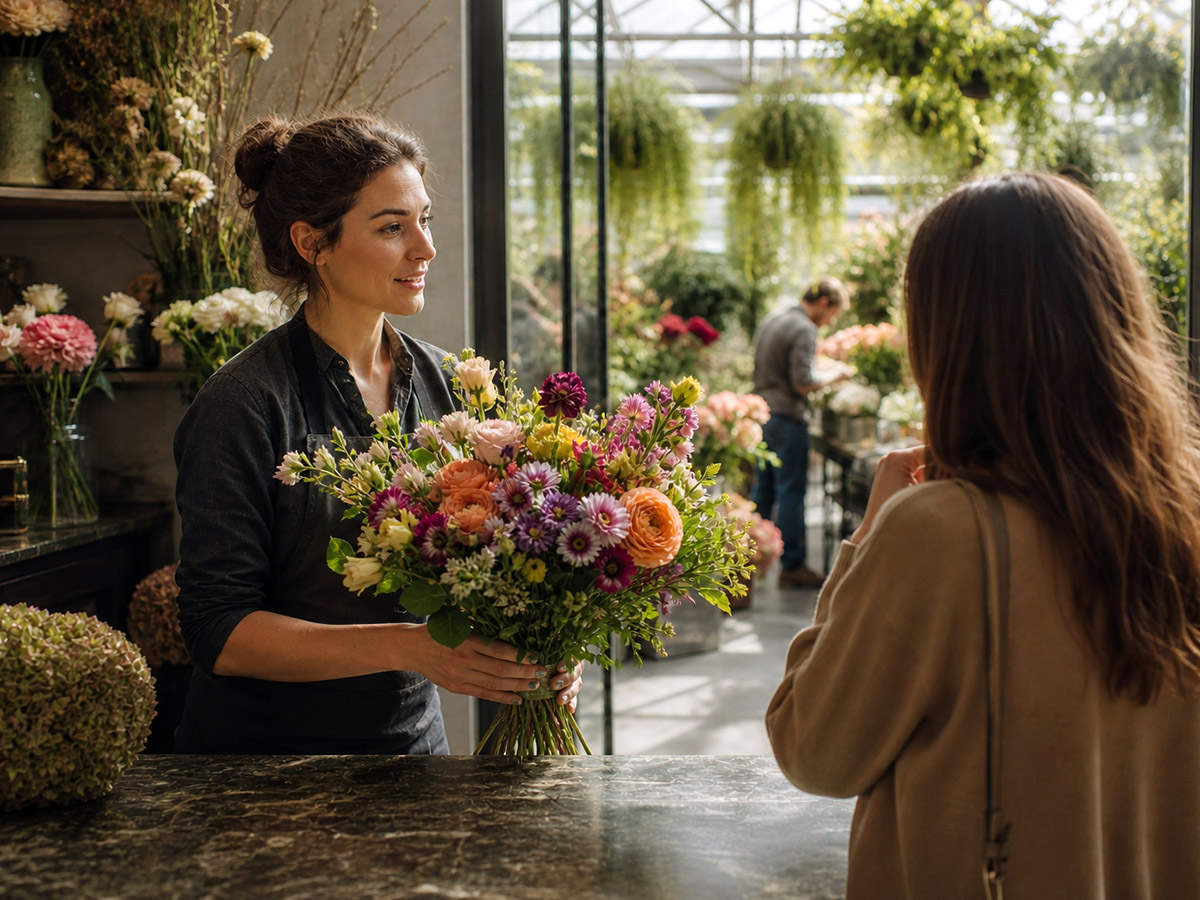
That logic travels through the entire chain. Retailers ask for words that consumers trust. Exporters look for proof that will hold up in a sales conversation. At the very end, the florist is holding a bouquet while a customer asks whether the flowers are chemical-free. By then, the story of monitoring, timing, beneficial insects, targeted corrections, and risk assessment has been compressed so many times that almost nothing survives.
About the Word "Pesticides"
I regularly hear the word "pesticides" used in political debate as if it describes one single category. Yet the word itself is broader than many people realize. Biological products, pheromones, and microorganisms are also legally classified as plant protection products – yet most people don't know that. When the word “pesticides” becomes the shorthand for everything the public fears, political pressure can easily reach products and tools that help growers reduce their dependence on synthetic chemistry. Growers need exactly that distinction if they are to move away from products with a higher environmental impact, including persistent substances and products that carry greater risks to people and the environment.
Anyone working in this field knows the feeling: as crop protection moves further into the public spotlight – television debates, parliamentary hearings, consumer campaigns – the space for an honest conversation shrinks. What's left is mostly defensive: justifying decisions, softening the message, or saying nothing at all. The real work gets no airtime. Spotting pest pressure before it builds. Deciding when not to intervene. Finding the right combination of biological control and low-impact pesticides. Understanding the crop as a system, not a tick-box exercise.
A greenhouse runs on timing, balance, and conditions that shift by the day. That kind of work does not fit into one word. A grower starts with a system of careful decisions. The supply chain reduces it to a simple claim. By the time it reaches the florist's counter, only one question remains: is it pesticide-free, yes or no?
Make Room for the Full Story
The honest answer does not fit on a card attached to a bouquet. Telling a better story will not be enough. Growers who still rely more on narrative than on real change need to stop talking and start making progress. And the entire chain – from grower to exporter to florist – needs to stop rewarding the claim over the craft, and start making room for the full story. When everything is simply called pesticides, the difference between genuine craftsmanship and convenient storytelling disappears. Floriculture has worked too hard to let that distinction fade.
Header and feature image courtesy of and licensed to Royal Brinkman.