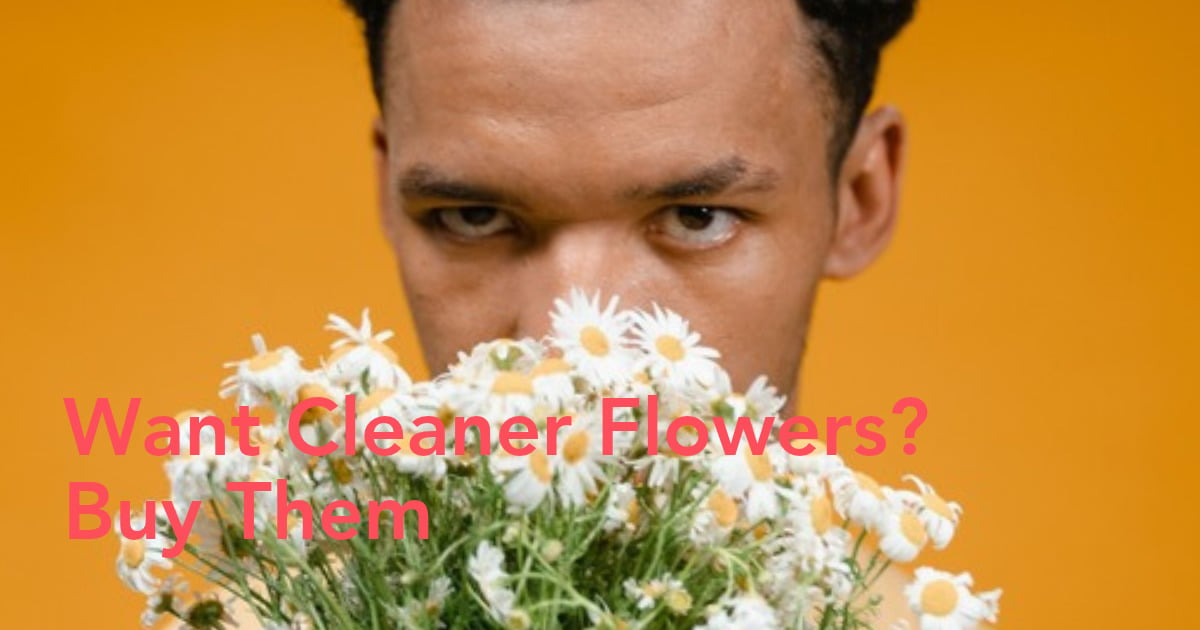
On Tuesday night a professor refused a bouquet on Dutch television. As a statement.
Derk Loorbach teaches transition studies. In the HUMAN program Wat houdt ons tegen? he said he started turning down the flowers he got after a talk, because of the fossil energy in the greenhouses and the crop protection on the crops. If we keep going like this, he said, it's the end of the bouquet.
I watched the same program and saw something else.
A Grower Who Halved Her Footprint
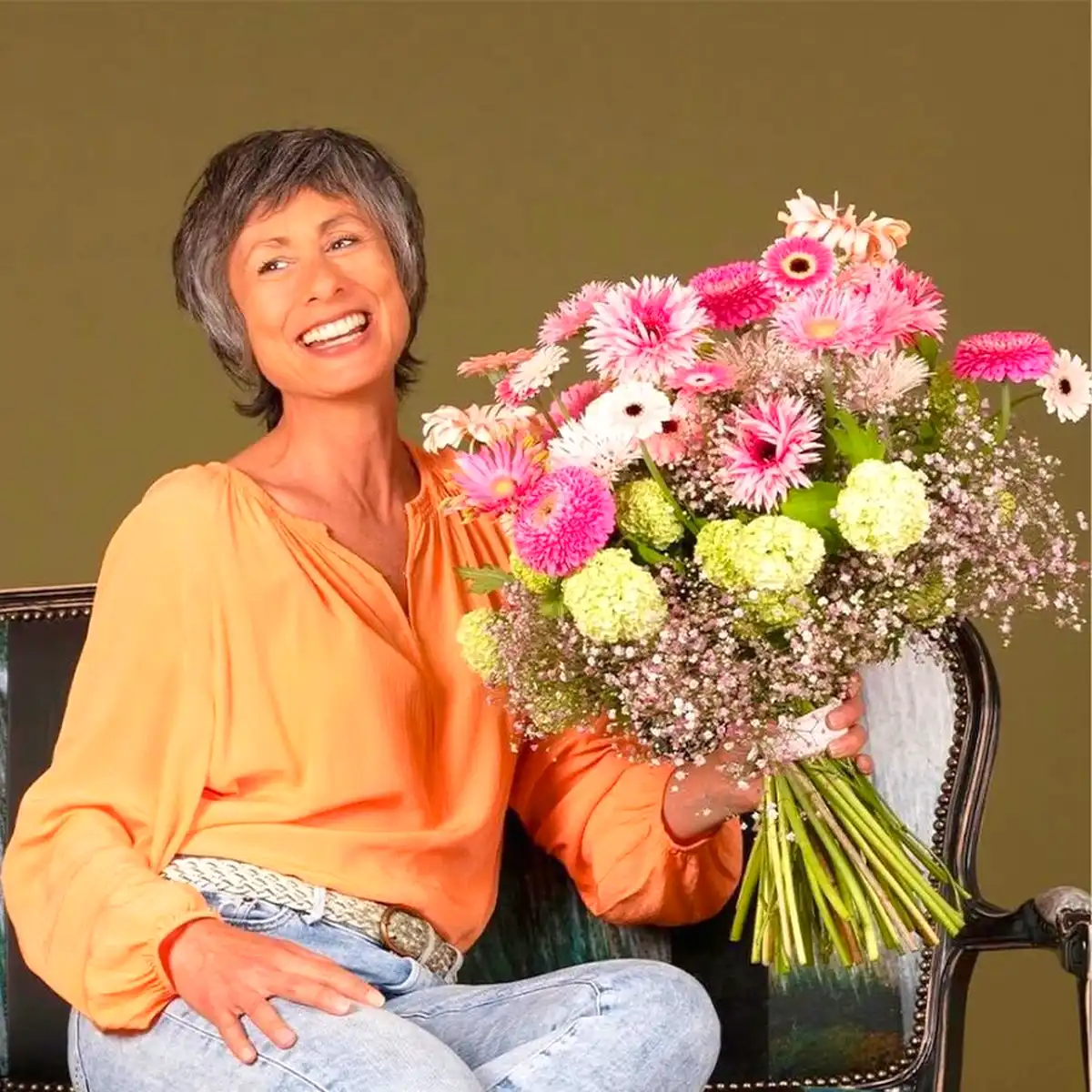
Joyce Lansbergen grows Gerbera with LG Flowers on seventeen football fields of glass. In a good year that's 95 million stems. Since 2020 she went from 300 grams of CO2 per stem to around 130 to 140 grams in 2024, by her own numbers. More than half. She did it with a battery on the e-boiler, with LED, with screens that keep the cold out in winter.
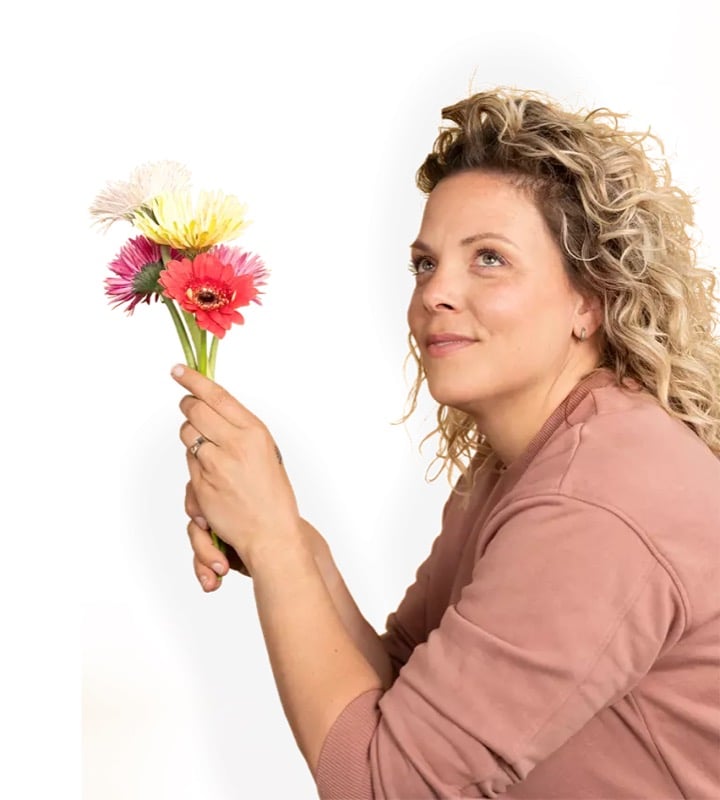
In one of her greenhouses she's close to zero pesticides now. She grows banker plants that attract the good insects, and those eat the wrong ones. It took her years.

Those are numbers you'd want on every bouquet. And in the shop you see none of it.
The Grower Is Ahead of the Label
Joyce can't carry an organic label. The Dutch organic certificate, SKAL, requires growing in the open soil, and her Gerbera aren't in the soil. Next to organic there's nothing a shopper recognizes. So her almost pesticide-free greenhouse ends up in the same bucket as everything else.
That's the real problem, I think. Not that growers aren't changing. That the people who change can't show it.
We've written before that sustainability per hectare and per stem can tell two different stories, and that carbon footprinting in floriculture is only as good as the method behind it. Joyce's case is the human version of that. She measured. She improved. Nobody can tell.
"The grower is ahead of the label. That's the real problem."
Why Organic Stays at 1 Percent
The program also visited Julian Langelaan of Op Beemster Klei, who grows organic flowers under the SKAL rules. No heating. Weeds out with the tractor and by hand. He explained why organic flowers have been stuck at around 1 percent of the Dutch market.
A grower only scales up when he can sell it. A shopper who looks for organic and can't find it stops looking. Chicken and egg. You need stable demand for stable supply, and the other way around.
Some of that is moving. Several Dutch supermarkets already sell organic flowers. But 1 percent is 1 percent, and a label that only fits the soil-grown part of the sector can't carry the other 99. And under the EU EmpCo rules, as Wesley van den Berg explains, an organic bouquet may not simply be called sustainable either.
A Label for Growers Like Joyce
At the end of the program Pieter Bootsma of Royal FloraHolland said a label "chemievrij geteeld", grown without chemicals, could come in 2030, if the sector is ready for it. Whatever shape it takes, that label is for growers like Joyce. The ones who are already there in one greenhouse and want a shopper to know.
Never This Clean, and Not Clean Enough Yet
It has never been this clean in our greenhouses. And sometimes it isn't clean enough yet. Both are true, and the sector loses every debate where it only says the first half.

The program itself split two questions that usually get mixed up. Standing next to the tested bouquets, the presenter asked whether you'd die from one. No, was the answer: it's mostly about the people who work with it. That's a fair concern, and it's the one growers like Joyce are working on. It's also a different question from whether you should put flowers on your table.
Refusing a Bouquet Doesn't Help Anyone
Not Joyce, either. The greenhouse without poison, the LED, the battery on the e-boiler: a grower pays for that from flowers that get sold. Whoever stops buying takes the money away from exactly the people who are changing.
If you want cleaner flowers, buy them. Ask your florist where they come from. Ask who grew them and how. That question does more for the transition than a refused bouquet on television.
What the Sector Should Do Next
- Growers: publish your own numbers, the way Joyce did on camera. Per stem, per year, with the method.
- Florists: know which of your growers are ahead, and say it at the counter.
No flowers, no future.
Sources: NPO/HUMAN, Wat houdt ons tegen?, season 8 episode 1, "Een bewust boeket", broadcast 24 November 2026 (Derk Loorbach, Joyce Lansbergen of LG Flowers, Julian Langelaan of Op Beemster Klei, Pieter Bootsma of Royal FloraHolland). Thursd, "Organic Flowers and Sustainability per Hectare vs per Stem", October 2026.
Header and featured image by MART PRODUCTION on Pexels.