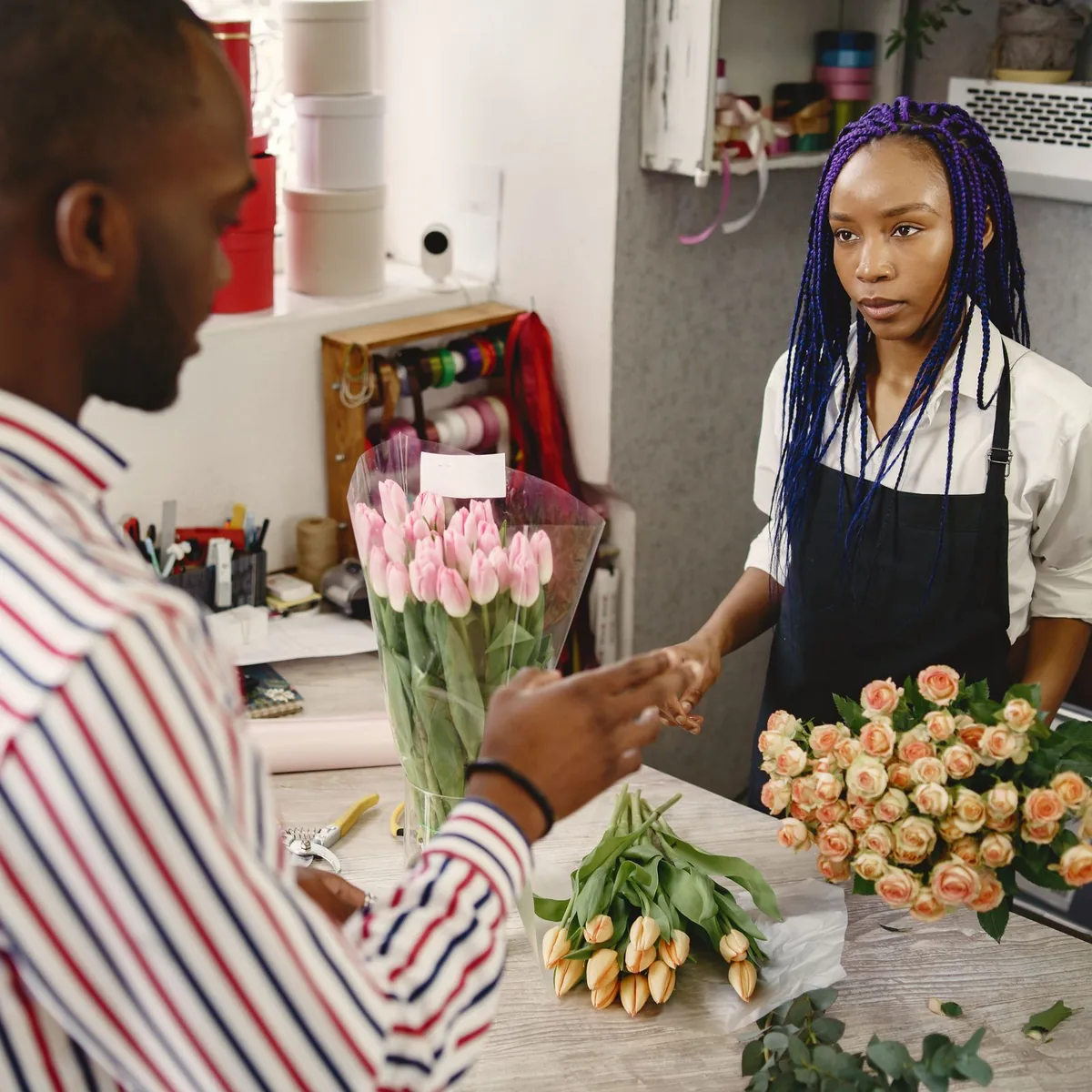
A customer picks up a bunch of Centaurea, turns it around, and asks the question more florists hear every season. Are these organic? And if they are, are they better?
The honest answer takes a little longer than yes. Organic flowers are grown without synthetic pesticides or artificial fertilizer, and that matters to a lot of people. Whether they're also the more sustainable choice depends on something most labels never mention: what you divide by.
It's not an academic question anymore. Organic is still a small slice of Dutch ornamental horticulture, less than 1 percent by the estimate of Wilderful co-founder Silke Tijkotte. But the Dutch government wants to raise VAT on flowers and plants from 9 to 21 percent in 2028. Wilderful has asked for organic flowers to keep the low rate. So you can expect your customers to ask.
What Makes a Flower Organic?
An organic flower is grown under the same EU organic rules as organic food. No synthetic pesticides, no artificial fertilizer, and in practice it's often grown in open soil. In the Netherlands, the grower is certified by Skal, and the trader and the florist have to be certified or registered too. Getting there takes patience: conversion can take up to three years, and during that time, the flowers can't be sold as organic yet.
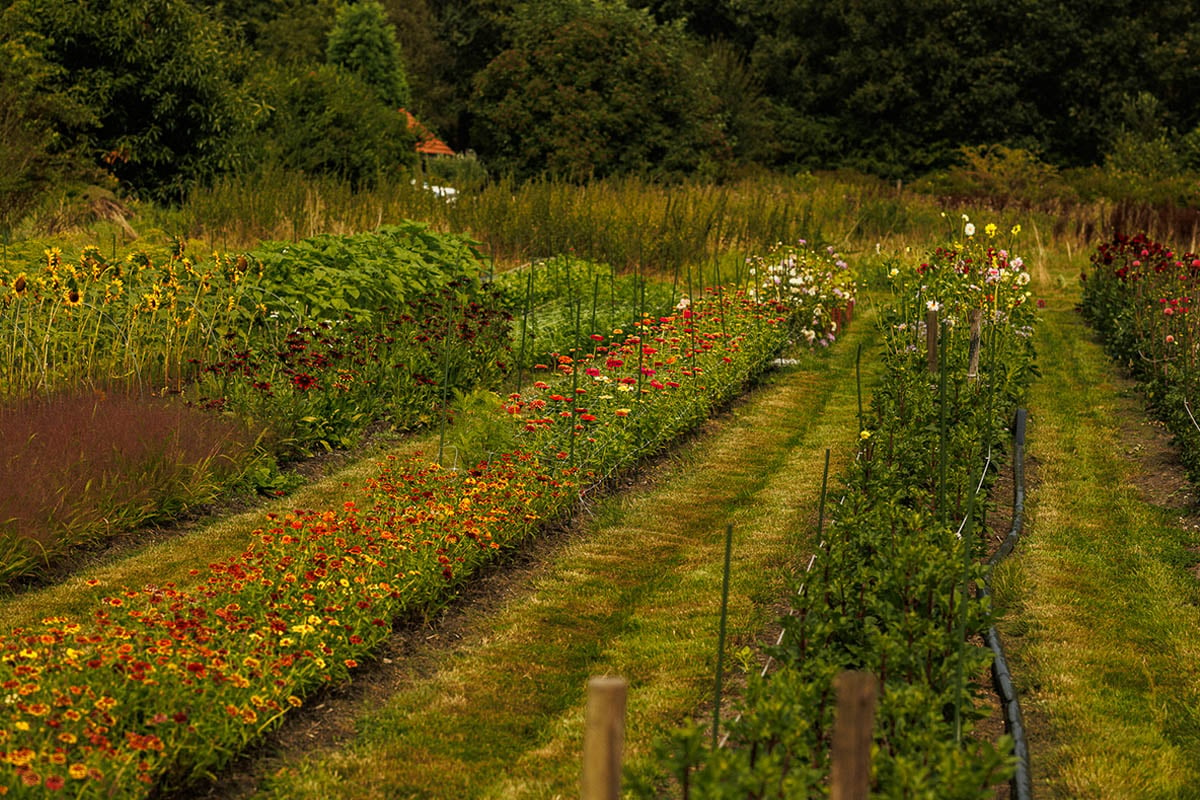
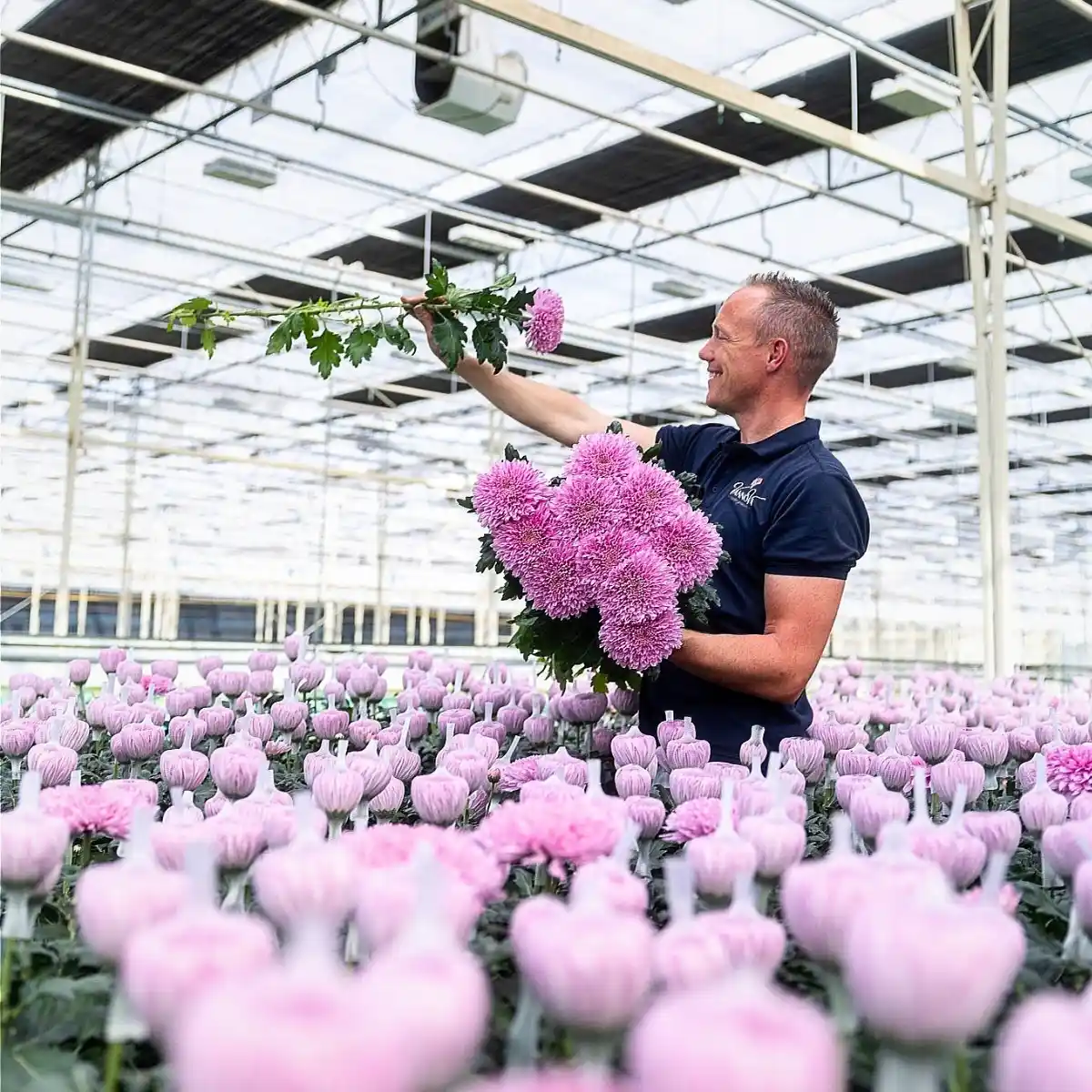
Growers like Maurits Keppel, who grows organic cut flowers near Utrecht and blogs for Thursd, have spent years making the commercial case. His latest signal? Organic flowers are finding their way into the supermarket. Meanwhile, Wilderful is building a chain from organic growers to local florists from scratch.
Per Hectare or per Stem? Why the Answer Flips
Here's the part that rarely makes it onto a label. The Voedingscentrum, the Dutch government-funded nutrition information center, sums it up in two lines: per hectare, organic production has a lower environmental impact, but per kilo of product, the impact is often higher. Organic yields less per hectare, so it needs more land for the same harvest.
How much less? A meta-analysis of 115 studies put organic yields about 19 percent below conventional yields on average, and closer to 8 or 9 percent where organic growers rotate or mix their crops. A comparison of hundreds of farming systems by Michael Clark and David Tilman looked at it per unit of food. Organic systems needed more land and caused more nutrient runoff. They used less energy and emitted about the same greenhouse gases.
One catch, and it's a big one for our trade: almost all of this research is about food. A 2022 review of cut flower life cycle studies found that differences in method, species, and cultivation make flower footprints hard to compare. We couldn't find a single study that compares organic and conventional flowers per stem. So nobody can tell you yet, with data, what an organic stem costs the planet next to a conventional one.
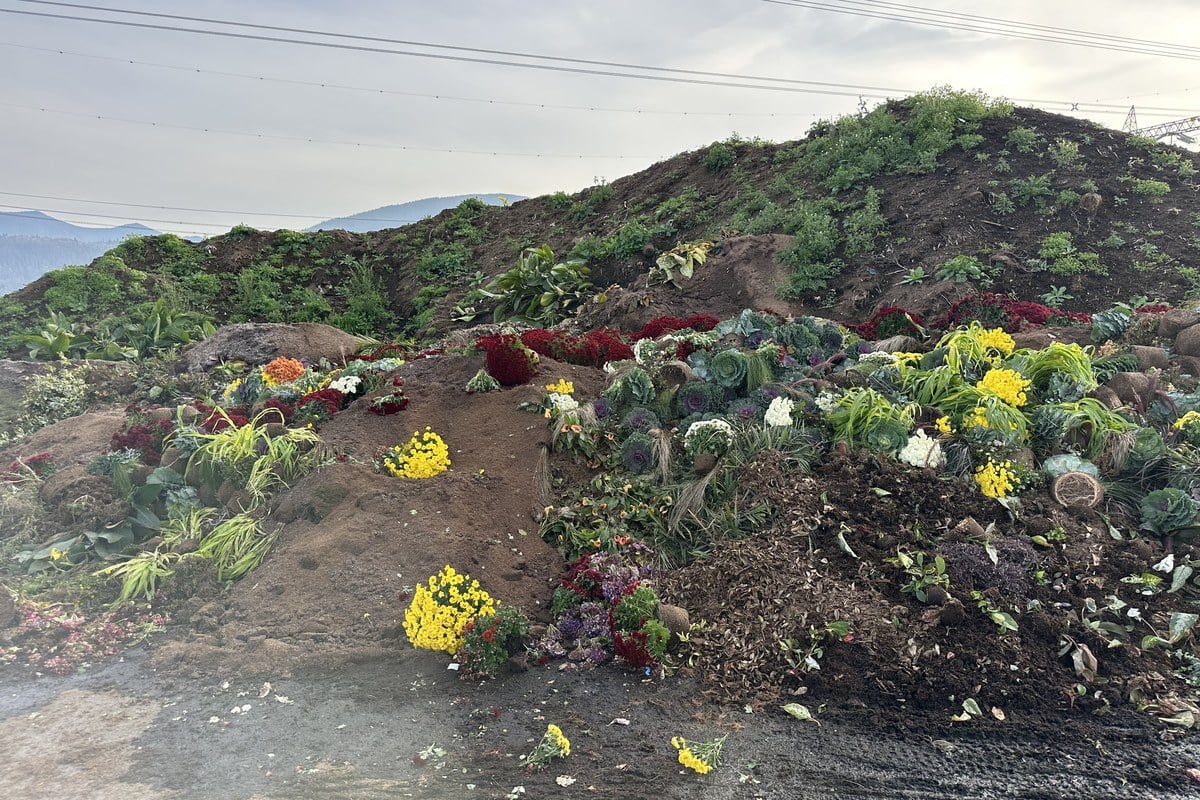
Any per-stem answer will also have to count something most footprints leave out: the stems that never sell. A crop lost to disease, or a batch that misses the market, still used its share of land, water, and energy. That footprint doesn't vanish when the plants hit the compost pile. It gets carried by the stems that do reach a buyer. Canadian grower Stan Vander Waal recently put a number on that kind of loss. At Rainbow Greenhouses, he estimates, 0.6 to 0.8 hectares (1.5 to 2 acres) of plants end up on the compost pile for every 4 hectares (10 acres) of glass. That's a conventional grower, by the way. Losses aren't an organic problem. They just weigh heavier where the toolbox against disease is smaller.
The Case for Organic Flowers
Flowers aren't eaten, and that changes the residue question. For a bouquet on the kitchen table, the exposure is small. The people who handle flowers all day are a different story: growers and their staff, and florists who process thousands of stems a week. Organic takes synthetic pesticides out of that picture. For a florist with a young team, or a customer who simply wants that certainty, that's a real reason to choose organic. Our own bloggers haven't shied away from this, from grower health to how residue rules steer what growers do.
Then there's the land around the farm. Fewer synthetic inputs in open-field growing means less pesticide that can drift or run off into the ditch next door. That's the per-hectare advantage the Voedingscentrum describes, and it's the one a grower's neighbors actually notice. Add the lower energy use Clark and Tilman found, and organic has a fair story to tell.
Why Organic Isn't Automatically Greener
The other side of the ledger starts with that yield gap. Fewer stems per hectare means more hectares per stem, and every one of those hectares needs labor, energy, and inputs. Where diseases hit harder because fewer products are allowed, losses go up too, and the stems that do sell pay for them. It's one reason organic costs more. Between 2021 and 2024, Dutch organic farmers received more than double the conventional farm-gate price for potatoes, according to Staat van Biologisch.
Fertilizer isn't as simple as it sounds either. Organic farms feed their soil with animal manure, and the EU organic rules allow manure from conventional livestock farms, under conditions. So part of the 'organic' nutrient supply starts on a conventional farm.
And conventional greenhouse growing has come a long way. Many growers now build their crop protection on biological control and integrated pest management, with a chemical product as the last step rather than the first. As one of our own blogs put it, biological production is not automatically more sustainable. Context decides.
What to Tell Your Customers About Organic Flowers
So what do you say when someone asks whether your flowers are organic? Try this: organic tells you how a flower was grown. No synthetic pesticides, no artificial fertilizer. It doesn't tell you the footprint per stem. That depends on yield, losses, energy, transport, and origin, and those differ per grower. Under the EU EmpCo rules, organic is not the same as sustainable on a consumer label.
- Offer organic as a choice for customers who want flowers grown without synthetic pesticides, and say exactly that.
- Don't sell it as lower carbon by default. Nobody has the per-stem data to back that up yet.
- Ask your grower or wholesaler what they lose and why. A grower who knows their waste numbers is usually a grower who's working on them.
- Keep an eye on the Dutch VAT plan. If it passes without exceptions, organic and conventional bouquets alike get about 11 percent more expensive for Dutch customers from 2028.
Organic flowers are a good choice for a clear reason. They're just not a shortcut past the math. Ask 'per what?' and you'll have the better conversation at the counter.
Header and featured images courtesy of Maurits Keppel.