On Tuesday evening, Dutch broadcaster Omroep HUMAN rightly put its finger on misleading sustainability claims in the flower sector, in an article and in the TV program Wat houdt ons tegen? But in the discussion that followed, a stubborn mistake slipped in, one we see throughout the sustainability debate: organic was treated as if it simply meant sustainable.
A Stubborn Mistake on Television
Research by the Dutch pesticide watchdog PAN-NL found pesticide residues in ten of the eleven online bouquets it tested, including bouquets marketed to consumers as "sustainable". That hurts, and it should. Anyone who sells a bouquet with a green claim while dozens of substances are on it has some explaining to do.
Yet something else struck me in the same program. From both politics and the NGO side, "organic" was presented as a synonym for "sustainable". Member of Parliament Anne-Marijke Podt (D66) spoke of "more and more organic, more and more sustainable cultivation that consumers can trust". Mattheus Bleijenberg of PAN-NL pointed at an organic bouquet and said: "This is the real sustainable one, this is organic!"
Understandable in the heat of a public debate. But factually wrong as consumer communication, under the EmpCo directive's rules on the claim "sustainable".
Production Method Versus Chain and Life Cycle
Organic is a clearly defined production method: growing without chemical-synthetic crop protection and without artificial fertilizer. It has proven benefits for soil life and biodiversity, and the EU organic label gives consumers clarity on exactly that point. Thursd has written about why organic growers champion that method and about organic flowers finding their way into supermarkets.
"Sustainable", however, calls for a much broader assessment across the whole chain and life cycle. As the Dutch information center Milieu Centraal also stresses, the environmental impact of a flower or plant is determined not only by crop protection, but also by greenhouse heating, lighting, water use, land use, packaging, and transport, such as air freight or sea freight. Good agricultural practice (GAP) and social conditions, such as a living wage and safe working conditions, weigh heavily in the chain as well. That is why independent certification on GAP, environment, and social standards, such as GLOBALG.A.P., is needed.
Measuring Across the Full Breadth: FloriPEFCR and MIG
For exactly that reason, the European ornamental horticulture sector works with FloriPEFCR: a scientific standard, based on the European Product Environmental Footprint method, that calculates sixteen different environmental impact categories. On top of that, the new Milieu-Indicator Gewasbescherming (MIG), an environmental indicator for crop protection, is being developed as a scientific measure of the actual burden that crop protection places on the environment and biodiversity, instead of simply counting the number of substances found. One indicator does not make a product sustainable as a whole, the same lesson that applies to carbon footprinting in floriculture and to sustainability measured per stem.
The Legal Mirror: EmpCo
Interestingly, the legislator has now put a stop to this shortcut as well. Since 27 September 2026, the European EmpCo directive (Empowering Consumers for the Green Transition) applies. Under these rules, you can of course show a recognized label such as EU organic to indicate that a product was grown organically. But sellers to consumers may not use generic terms such as "sustainable", "environmentally friendly", or "conscious" without recognized excellent environmental performance across the full life cycle, as shown for example by the EU Ecolabel. In the Netherlands, the Authority for Consumers and Markets (ACM) is watching this closely.
In short, a flower seller may not put a bouquet in the window as "sustainable" or "conscious" on the strength of an organic label alone.
The Same Standards for Everyone in the Debate
My plea is not an attack on the organic sector, quite the opposite. The organic label is clear and valuable for anyone who deliberately chooses cultivation without synthetic inputs. It is, however, a call for precise language.
"Call organic simply organic. And keep the word sustainable for products whose wider environmental and social impact has demonstrably been weighed."
And that goes beyond ornamental horticulture. Whether it is food, textiles, or packaging, we do not solve greenwashing by raising one green property to an all-round claim. When companies' consumer communication is rightly tested against strict factual standards, the same care can be expected from journalists, politicians, and NGOs.
Call organic simply "organic". And keep the word "sustainable" for products whose wider environmental and social impact has demonstrably been taken into account.
This article is an English adaptation of a column originally published in Dutch on Duurzaam Ondernemen. Wesley van den Berg writes in a personal capacity.
Read also: Arnold Wittkamp on a Gerbera grower who is cleaner than her label says, in Refusing a Bouquet Helps No Grower.
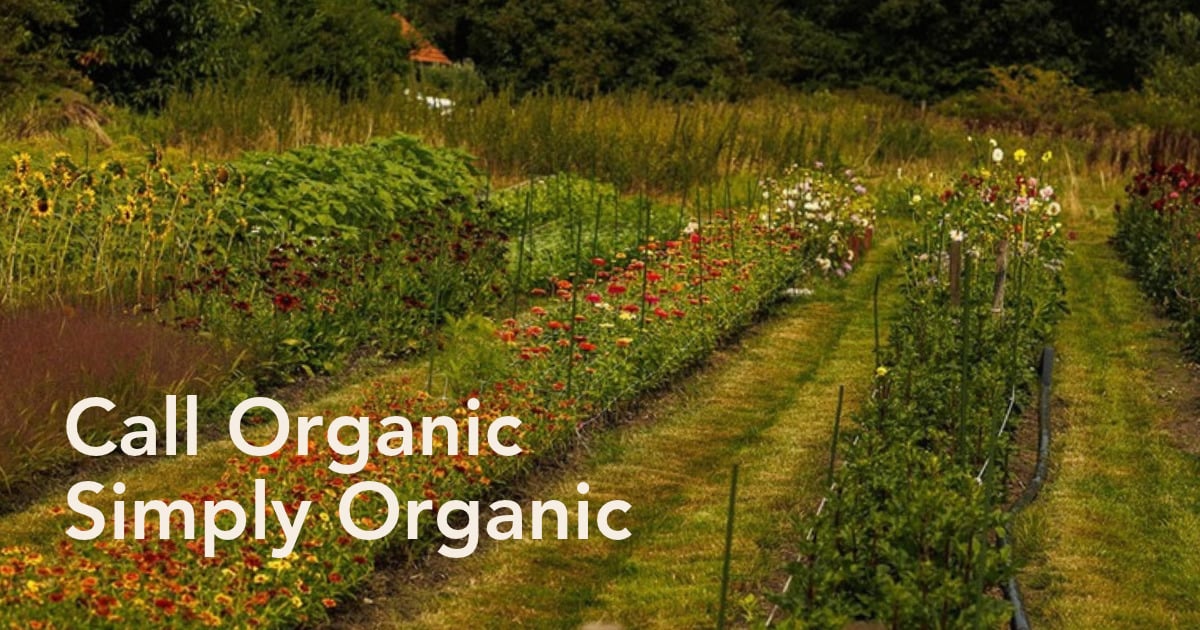
Header image: an outdoor organic cut flower nursery in the Netherlands, photo courtesy of Wilderful. Featured image: photo by Arnold Wittkamp.