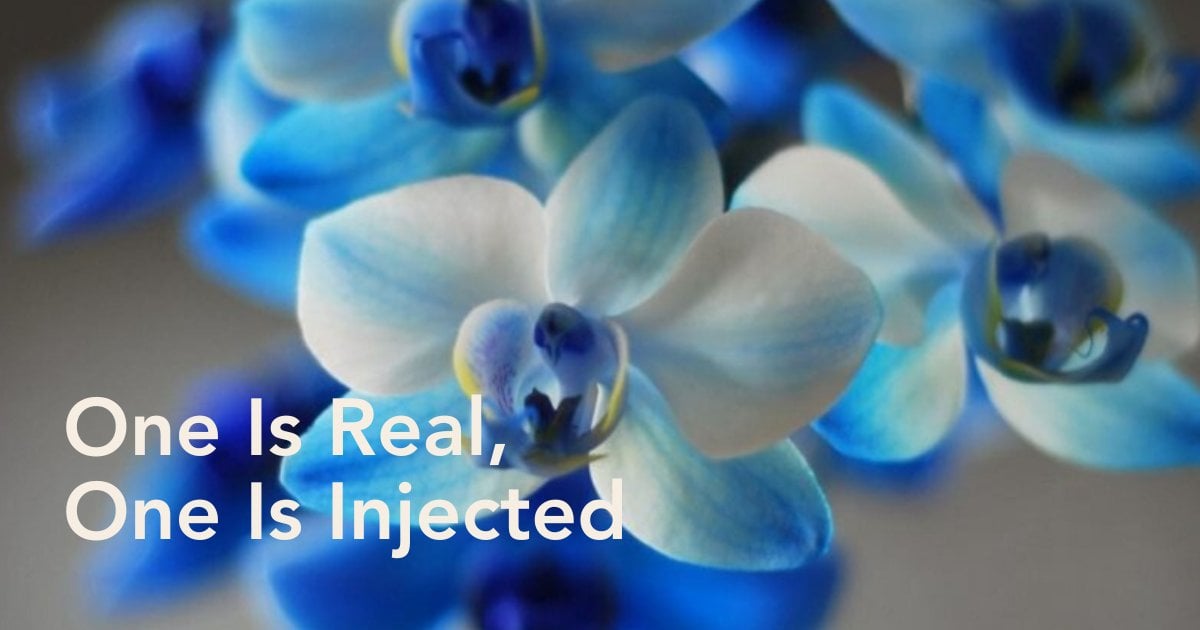
Ask whether blue orchids are real, and you get a firmer answer than you do for blue roses. Roses cannot make blue at all. Orchids can, and one species does it naturally. The complication is that the blue orchid sitting on a supermarket shelf is almost certainly not that species.
So there are two honest answers running side by side, and it is worth knowing which one you are holding.
The Blue Orchid You Buy Is Usually Dyed
How the Color Gets There
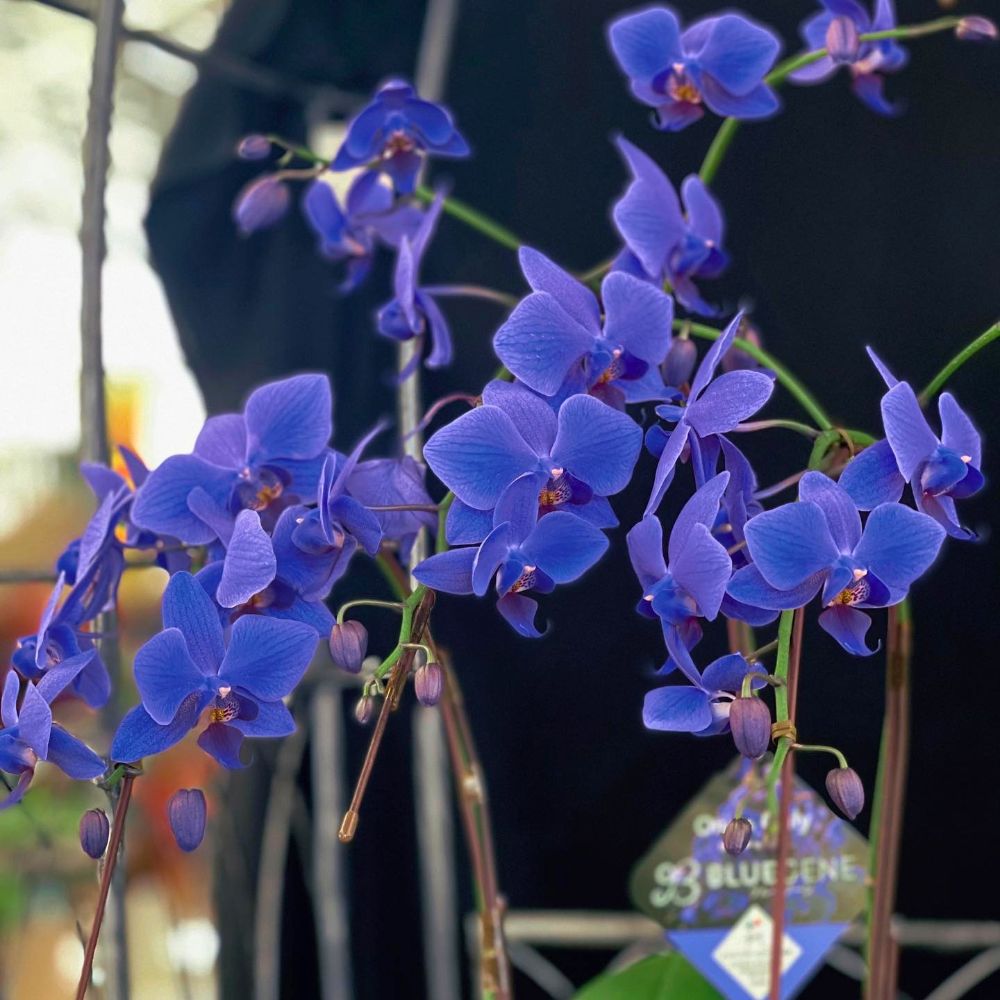
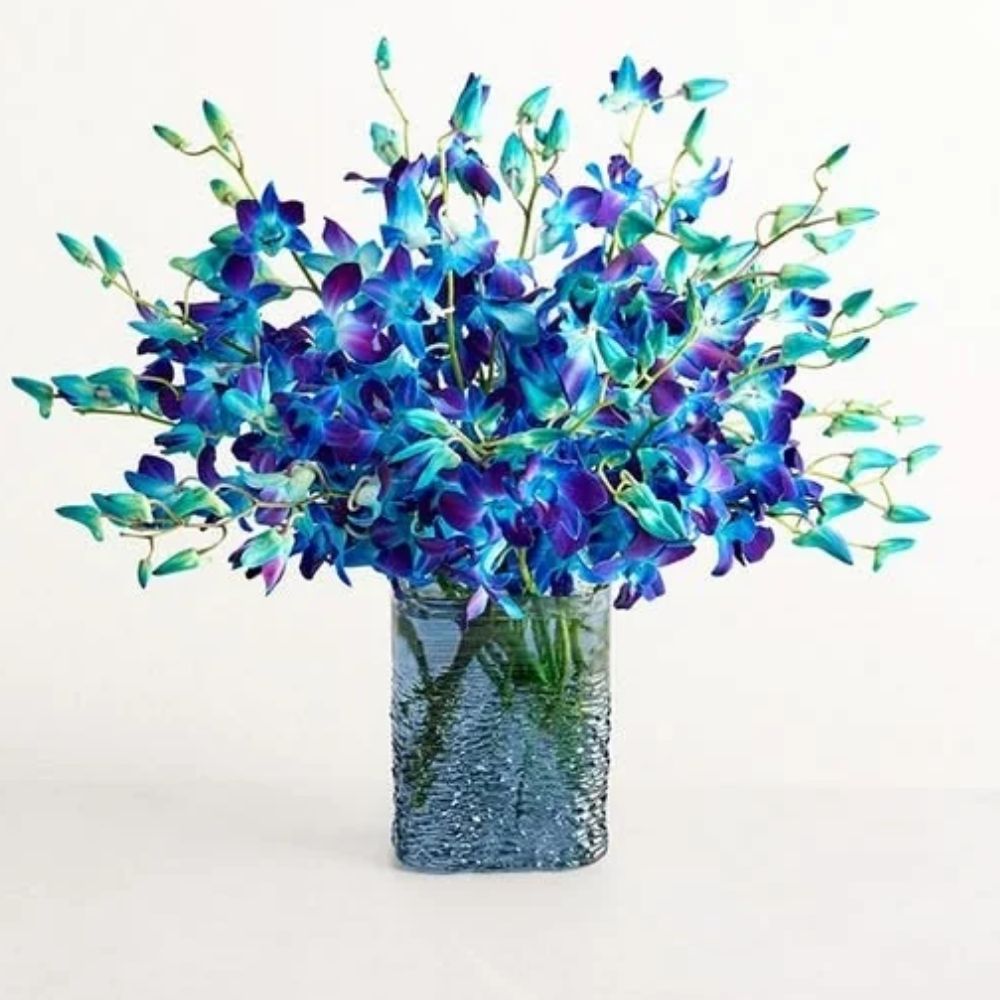
The bright, saturated, almost electric blue Phalaenopsis sold in garden centers and supermarkets is a white orchid that has been dyed. That is not a rumor or an accusation. It is how the product is made, and the better sellers describe it openly.
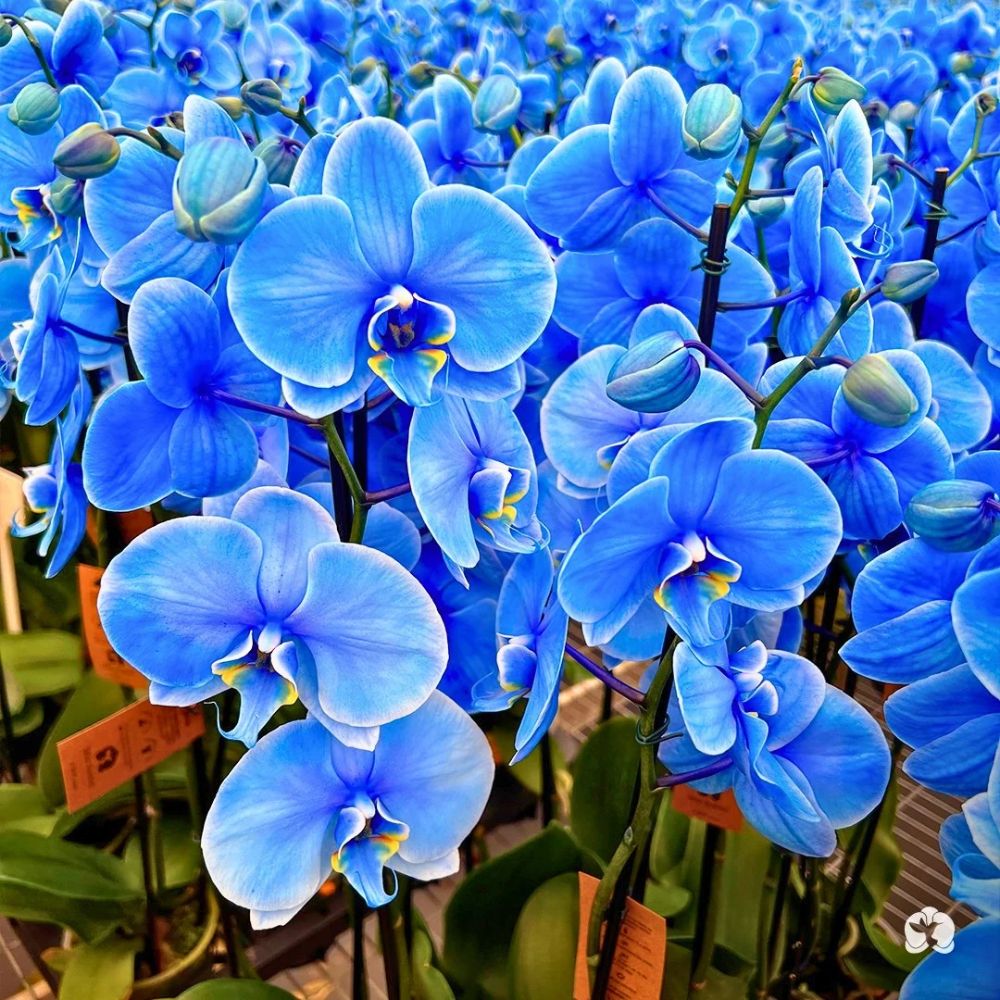
Thursd's own listing for Phalaenopsis Royal Blue sets out the method: during the growing process, the stalk of a white Phalaenopsis is injected with a blue dye solution, in conditions designed to keep infection risk to the plant as low as possible, and the plant takes the color up so the flowers open blue.
Why a Blue Orchid Flowers White the Second Time
The practical consequence is the part nobody tells buyers at the till. The dye is in that flush of flowers, not in the plant. When your blue orchid finishes flowering and pushes a new spike a year later, the new flowers come out white. The plant has not reverted or been mislabeled. It was always a white orchid.
How to Spot a Dyed Blue Orchid in the Shop
Two ways to spot a dyed orchid before you buy. Look for a small mark or scar on the stem where the injection went in. And look at the color itself: dyed blue is unusually uniform and often pools more strongly in the veins and the lip, while a naturally pigmented flower varies across the petal.
What Florists Reach for Instead of a Dyed Blue Orchid
Not every florist will sell you the dyed version. Michal Kowalski, Creative Director and co-founder of Blooming Haus, a B Corp and Planet Mark certified floristry studio in London, has a different answer ready:
"I avoid dyed flowers in our work. Blue is one of the most requested colors I'm asked for though, particularly by corporate clients, so the question comes up often. When a client asks for a true blue Phalaenopsis, my first answer is Vanda, which carries that depth of color naturally. From there I would look to other natural blues such as Delphinium, Hydrangea, forget-me-not (botanical: Myosotis), cornflower (botanical: Centaurea), Agapanthus, and Iris."
Vanda Coerulea, the Blue Orchid That Is Genuinely Blue
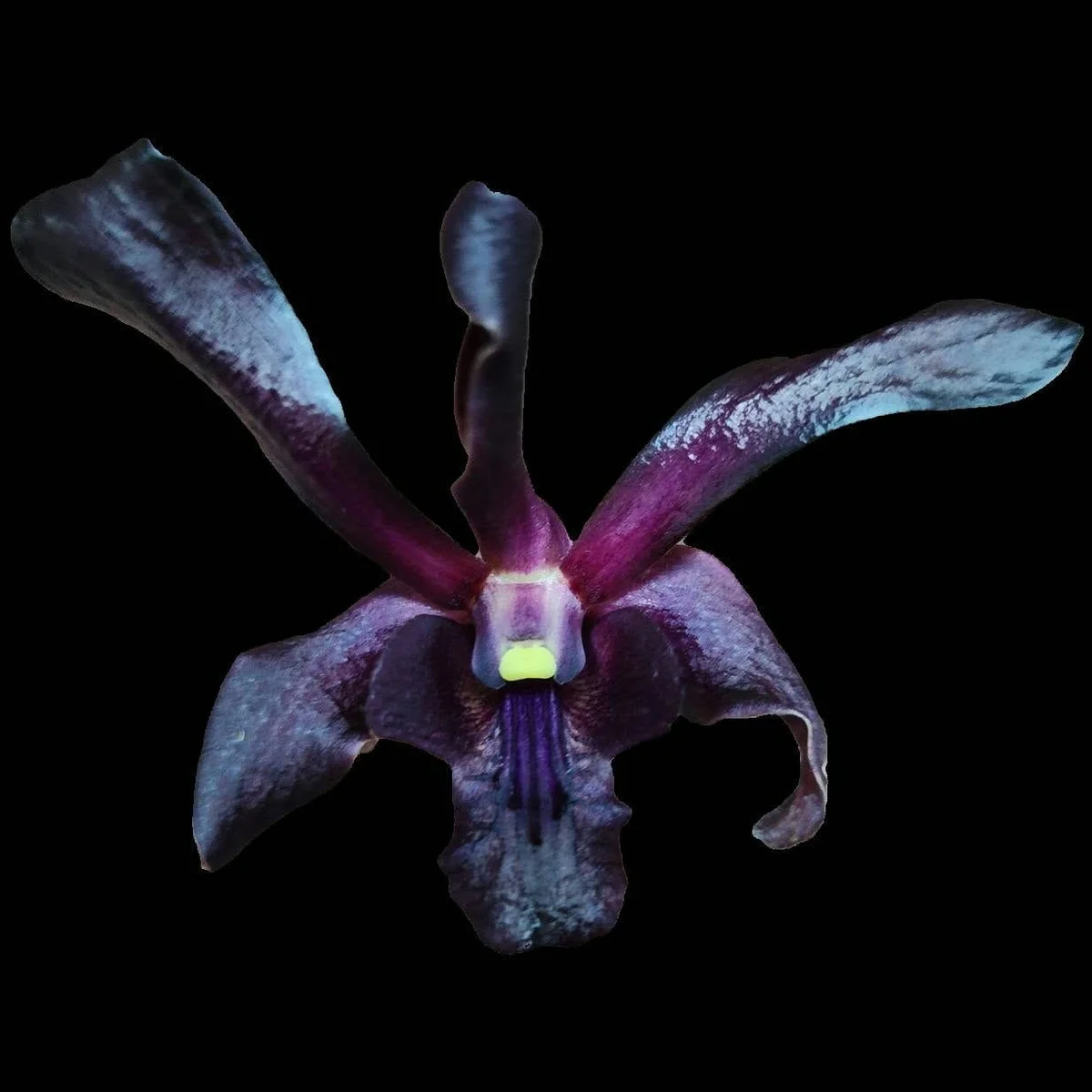
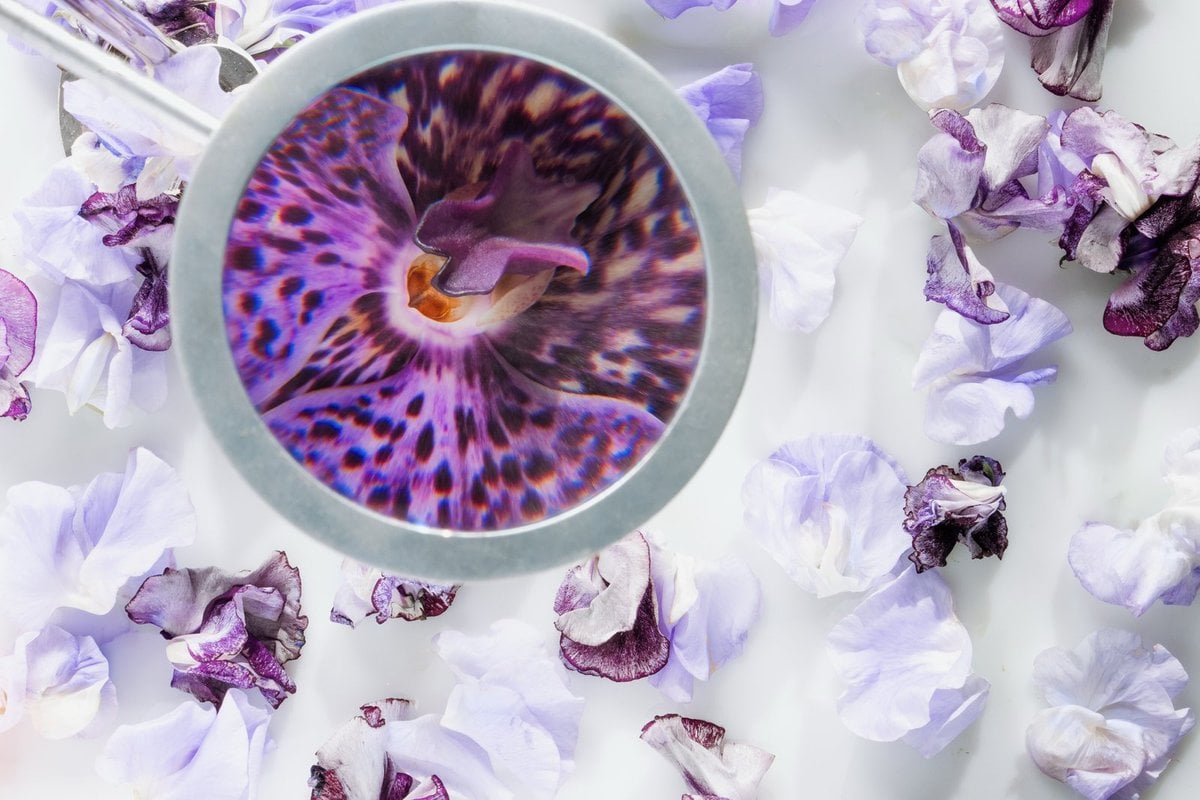
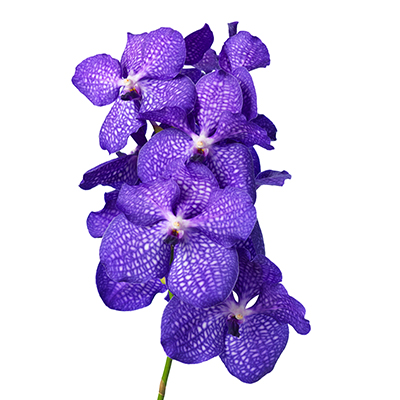
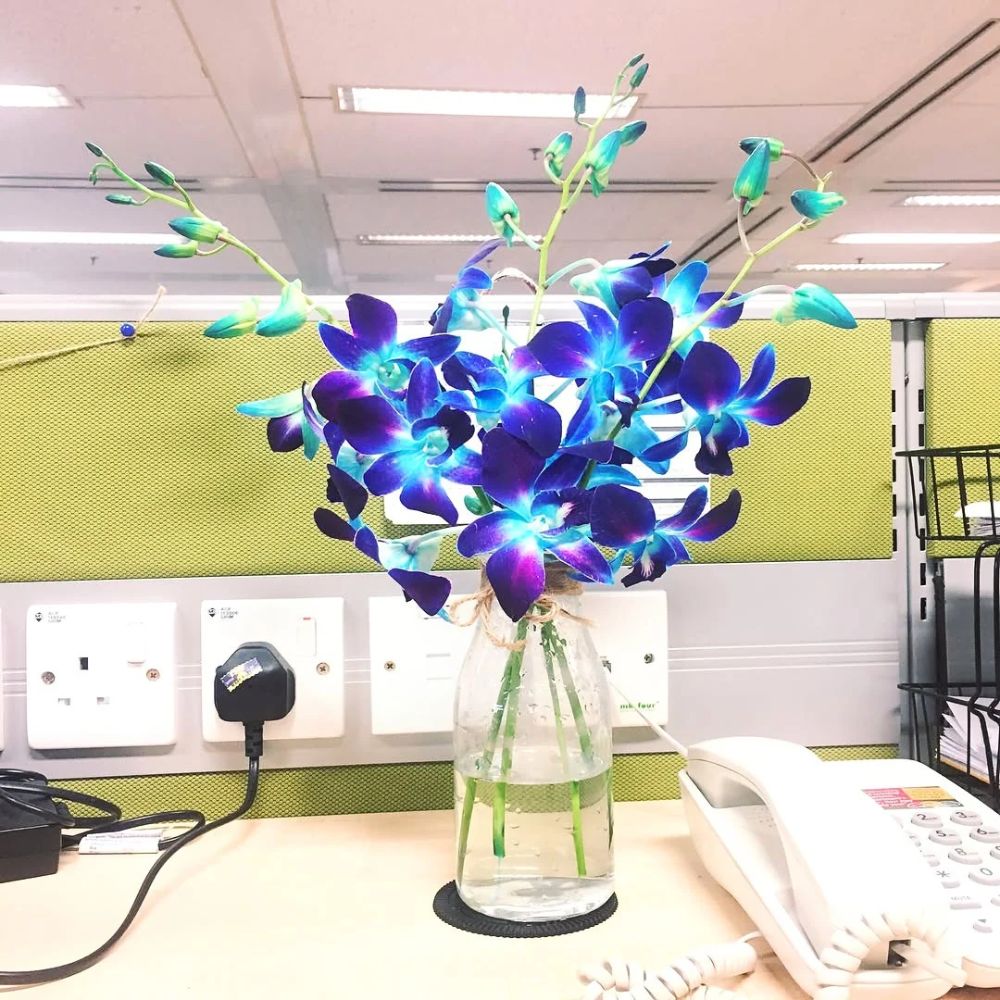
Vanda coerulea, the blue Vanda, is the real thing. Native to northeast India, Myanmar, Thailand, and southern China, it produces large flat flowers in a checkered lavender-blue that no other orchid quite matches. It is one of the very few genuinely blue-flowered orchids in existence, and it is the parent behind most blue-toned Vanda hybrids in the trade.
How Blue Is It Really
Honesty about the color is important here too. Vanda coerulea is blue in the way a cornflower is not: it sits between violet and sky blue depending on the clone and the light, and it is nowhere near the saturation of a dyed Phalaenopsis. That is what an actual blue pigment in an orchid looks like. The American Orchid Society carries the genus background.
A bred blue is also a steady one. Steef van Adrichem of Ansu Vanda, which grows with a partner in Thailand, said: "Throughout the year, we see that the color stays about the same, and so does the color in Thailand." A dyed Phalaenopsis is blue for one flush. A good Vanda is blue every time it flowers.

Blue Orchid Varieties in the Trade
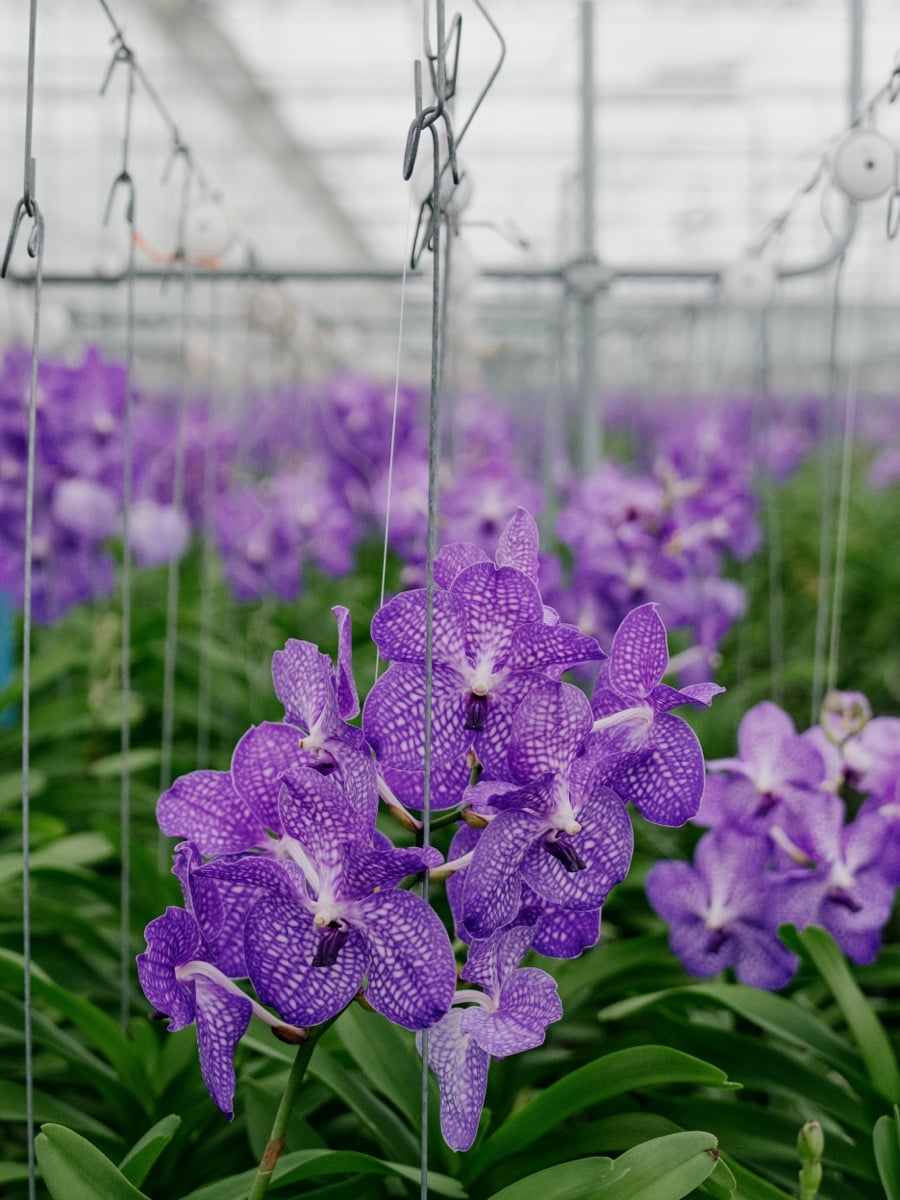
Vanda is a cut flower as well as a plant. Ansu Vanda in the Netherlands is Europe's specialist cut Vanda grower, and Thursd's interview with Steef van Adrichem covers what growing them at that scale involves. The Vanda Kanchana Magic Blue listing shows where the blue end of the cut range sits, and Thursd's Vanda orchid guide covers types and care.
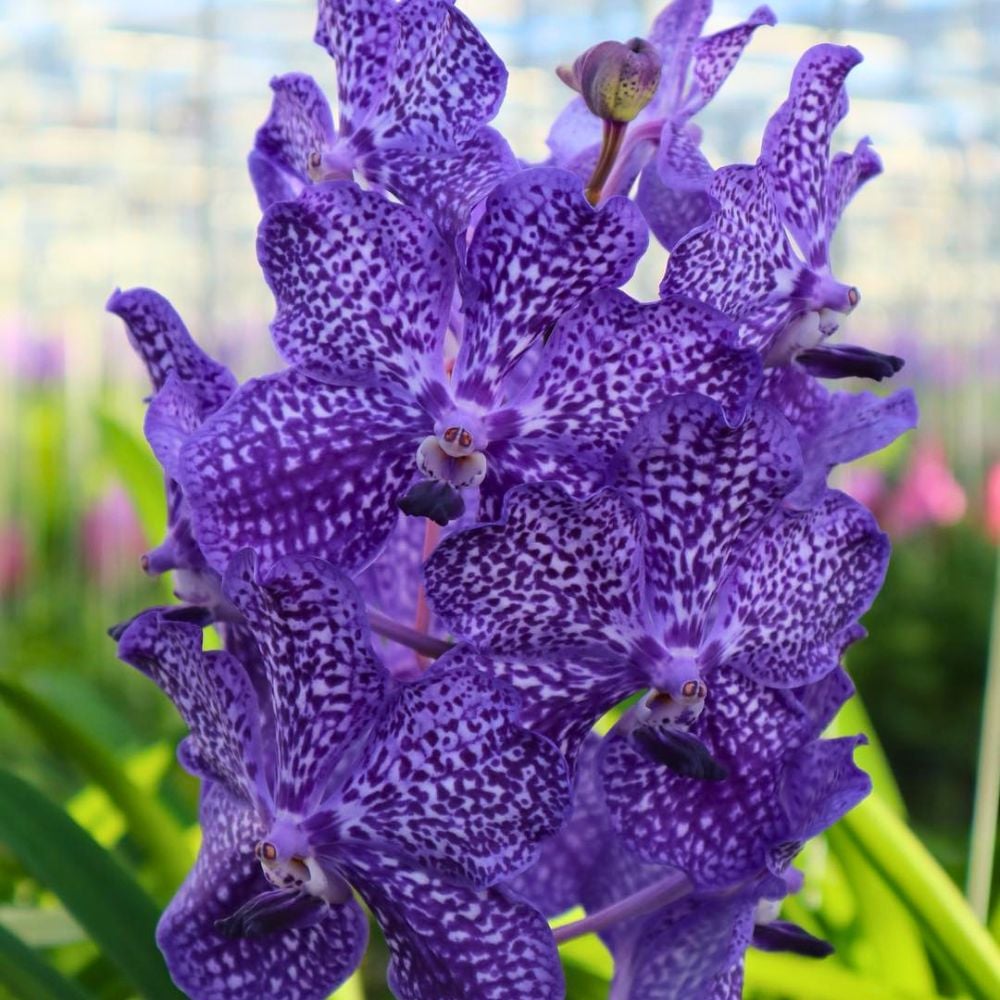
Three named varieties cover most of what a buyer will actually meet. Vanda coerulea itself is the rare one, and wild collection has made good clones scarce. Vanda Kanchana Magic Blue is the cut-flower selection, closer to violet than to sky. Phalaenopsis Royal Blue is the dyed pot plant, and underneath the color, it is a white orchid. Set the three side by side and the difference between a bred blue orchid and a treated one is obvious, which is the whole point.
How Long a Cut Blue Vanda Lasts
As a cut flower, Vanda is not a fragile luxury but a stayer. "Vanda stems last for weeks. Loose flowers also keep for a very long time," says Steef van Adrichem. His tip for flowers that start to flag: "If the flowers feel limp, lay them completely in water at room temperature for a few hours. Afterwards they are as good as new."
Event florists build on that staying power. At Blooming Haus, blue Vanda from Ansu "has a place in our event and residency work wherever it fits the brief," says Michal Kowalski. "We usually tube each stem and place it as the final flower in the arrangement. That keeps every tube within reach, and the team can check and top up the water throughout a two- or three-day event without disturbing the design around it."
The Blue Orchid Breeders Are Still Chasing
The interesting question is not whether the supermarket orchid is dyed. It is how close breeding is getting to a blue Phalaenopsis without dye.
For the one orchid that is genuinely blue, breeding starts from the species itself. Steef van Adrichem explains: "Coerulea is the basis of all blue Vandas. A good selection gives beautiful big full flowers with a strong color, which last a long time and produce a lot. After 35 years of breeding, we still have no better blue Vanda than the Magic Blue."
For Phalaenopsis, the honest state of play is different. Not a true blue pigment engineered into the plant, but violet bred deeper and deeper until it reads as blue to the eye. Anyone who has followed the same argument in roses will recognize the pattern from do blue roses exist.
Blue Orchid Meaning and Symbolism
Blue orchids carry rarity and the extraordinary, which is unusually well earned given how few plants make blue at all. Beyond that, they take the general orchid symbolism of luxury, refinement, and strength, with blue adding calm, contemplation, and a certain distance.
Because the saturated blue version is so obviously artificial, it has also picked up a second, more modern reading as a statement piece rather than a romantic gift. A blue orchid is chosen to be noticed.
Blue Orchid Care
Care for a blue orchid depends entirely on which plant you have, and for once that is simple, because a dyed blue Phalaenopsis is just a Phalaenopsis.
For a dyed Phalaenopsis: bright indirect light, no direct sun, water roughly weekly by soaking the roots and then draining completely, never leave it standing in water, and feed weakly during growth. When it finishes flowering, cut the spike back and expect white flowers next time. Some growers report the plant is slightly weakened by the dye treatment. Thursd author Elisa Macomber, who bought orchids for home styling and staging for years, goes further: "it does make the orchid weaker and not able to grow healthy over time from the dye chemicals." She never bought one, and never used one in a staging. "It didn't feel right to support growers who do that." Give a dyed plant patience in its first months, and don't expect it to be as strong as an undyed one.
For Macomber, it goes beyond plant health: "I just believe the dyes take the flower's essence away. Why tamper with something so beautifully created in its own natural way?"
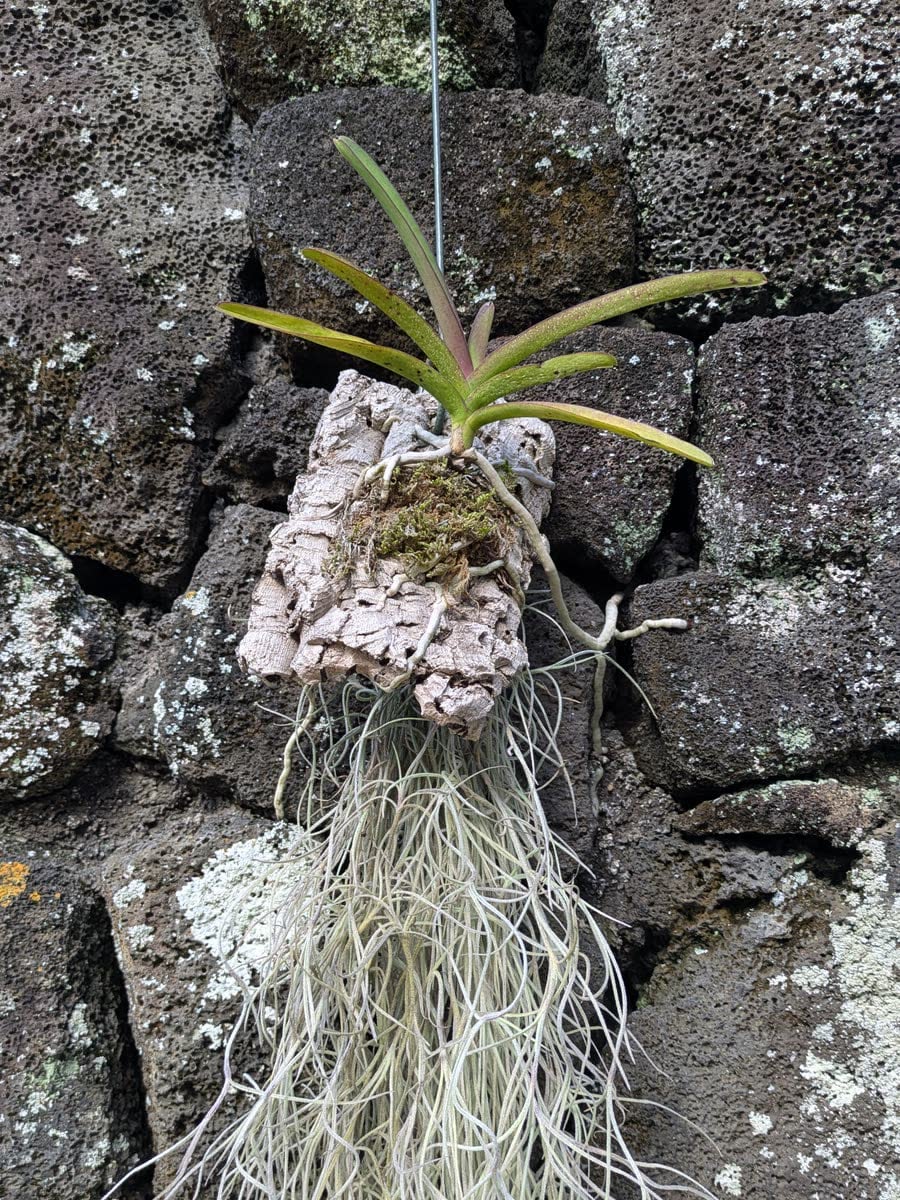
For a Vanda: a different plant with different needs. Vandas are usually grown bare-rooted in slatted baskets with no medium at all; they want very high light for an orchid, high humidity and regular drenching of the aerial roots. They are not a beginner's windowsill plant, and treating one like a Phalaenopsis in a pot of bark will kill it.
At home, Steef van Adrichem keeps the routine simple. A Vanda is tropical and wants lots of filtered light, but no direct full sun. Kept in a vase, its roots go into water for 10 minutes once a week in winter, then dry off again; in spring and summer, that becomes twice a week. Light is where most go wrong. "Most plants in the house die from too little light," he says. The plant weakens, and a fungus finishes it off.
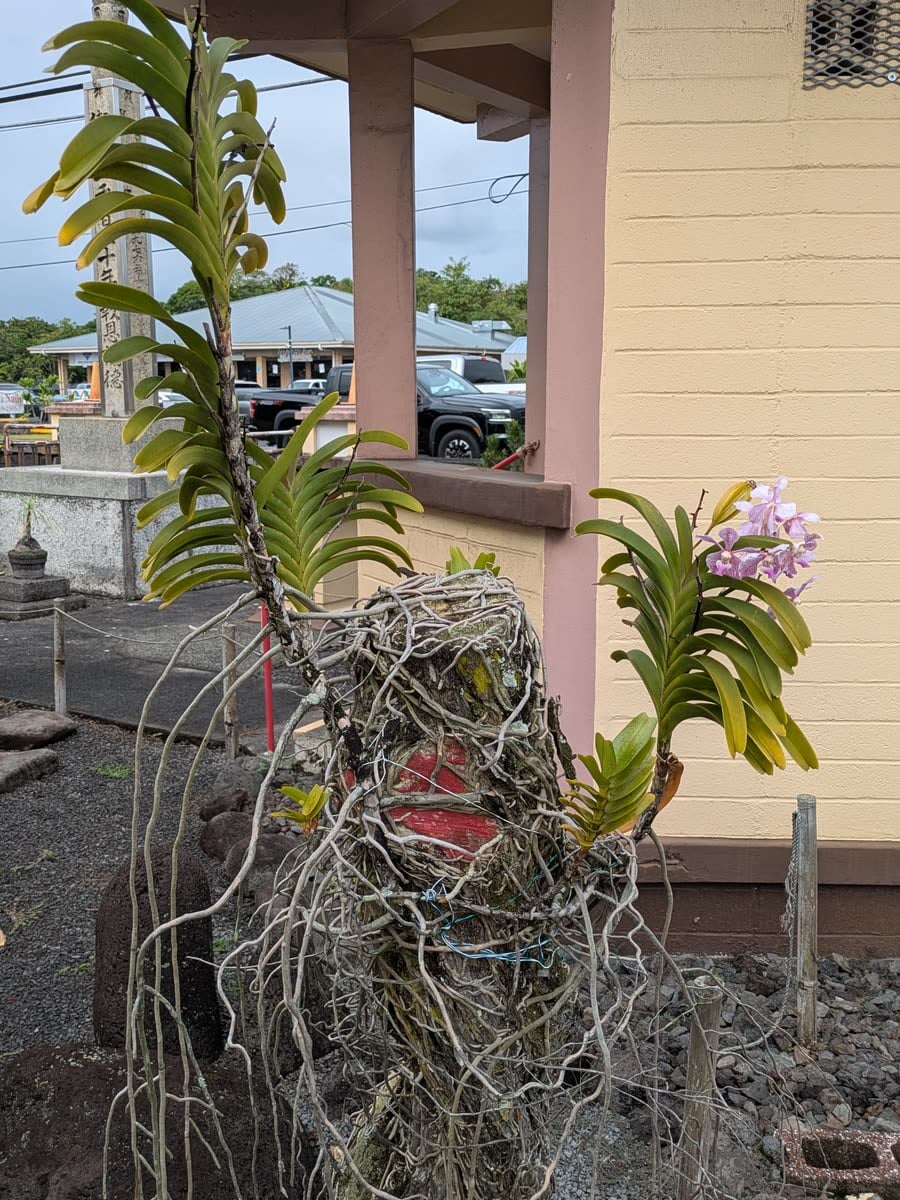
In Hawaii, Vandas grow outdoors because the humid air supports them, and Macomber once saw a huge one growing on a tree stump in Hilo. On most of the mainland, that is not recommended. A basket without bark works better there, with the roots dangling below to catch nutrients from the air, though even indoors getting the humidity right is tricky. Expect to wait, too: a Vanda takes far longer than a Phalaenopsis to reach flowering size. Macomber's own piece on growing orchids on trees covers the outdoor route.
Even in a cooler climate, there is a summer window. "Once the outside temperature no longer drops below 6 degrees, you can also hang the plant outside in a tree with its bare roots," says Steef van Adrichem, meaning 6 °C (43 °F). Morning dew and rain then do most of the watering, and only a long spell of heat calls for help with spraying or dipping.
Header image and featured image: Phalaenopsis Royal Blue, photo courtesy of VG Colours.
About the author: Edwin Kirwa is a Customer Success Manager and writer at Thursd. He works daily with breeders and growers worldwide and covers East African floriculture up close. Connect with Edwin on LinkedIn.