It is the plant in the corner of half the offices you have ever worked in: a few thick canes, each topped with a fountain of broad, striped leaves. The corn plant, Dracaena fragrans, often sold as mass cane, owes that popularity to how much neglect it takes. It puts up with low light and a forgotten watering now and then for years, until the leaf tips start to turn brown.
Good corn plant care is mostly about water and what is in it. Below is what the plant needs, why the tips brown, how to grow a new plant from a piece of cane, what happens on the rare night it flowers, and how the plant in your living room most likely started life as a sawn-off piece of stem in Central America.
What Is a Corn Plant?
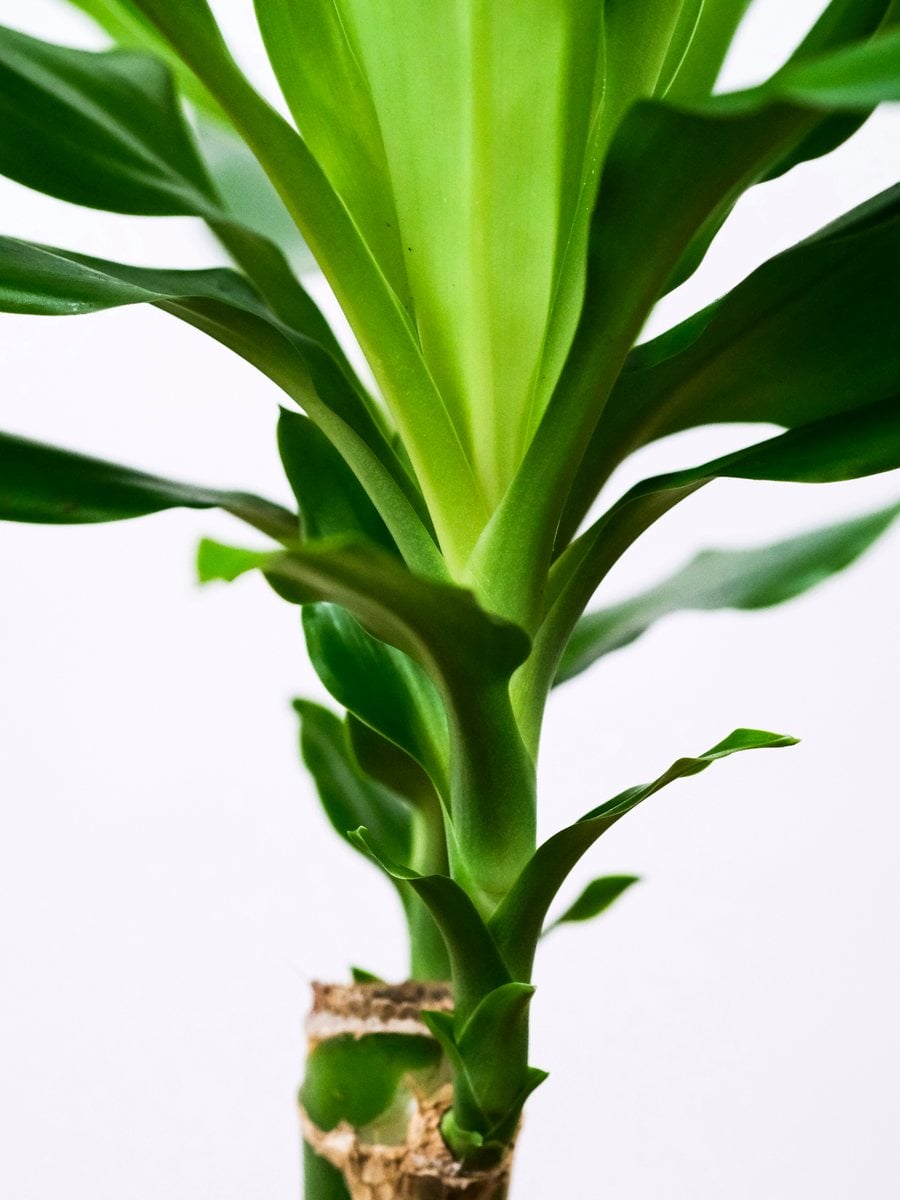
The corn plant is Dracaena fragrans, a shrub or small tree in the asparagus family, Asparagaceae. It grows wild across tropical Africa, from Gambia and Sierra Leone in the west to Ethiopia and Kenya in the east and south to Zimbabwe and Mozambique, according to Kew's Plants of the World Online. The common name comes from the leaves: long, broad, and arching, they look like the leaves on a stalk of sweet corn, Clemson Extension notes. The botanical name tells a different story. Dracaena comes from the Greek drakaina, a female dragon, and fragrans refers to the scented flowers, the Missouri Botanical Garden explains.
In the wild, it can grow taller than 6 meters (20 feet). In a pot, it usually stays between 1.2 and 1.8 meters (4 and 6 feet), with leaves up to about 60 centimeters (2 feet) long, and over the years it sheds its lower leaves, which is how the bare, cane-like stems appear, the Missouri Botanical Garden adds. Labels sell it as corn plant, cornstalk plant, or cornstalk Dracaena. Plants once sold as Dracaena deremensis or Dracaena massangeana are now filed under the same species, as both NC State Extension and Kew list.
Massangeana, the Mass Cane
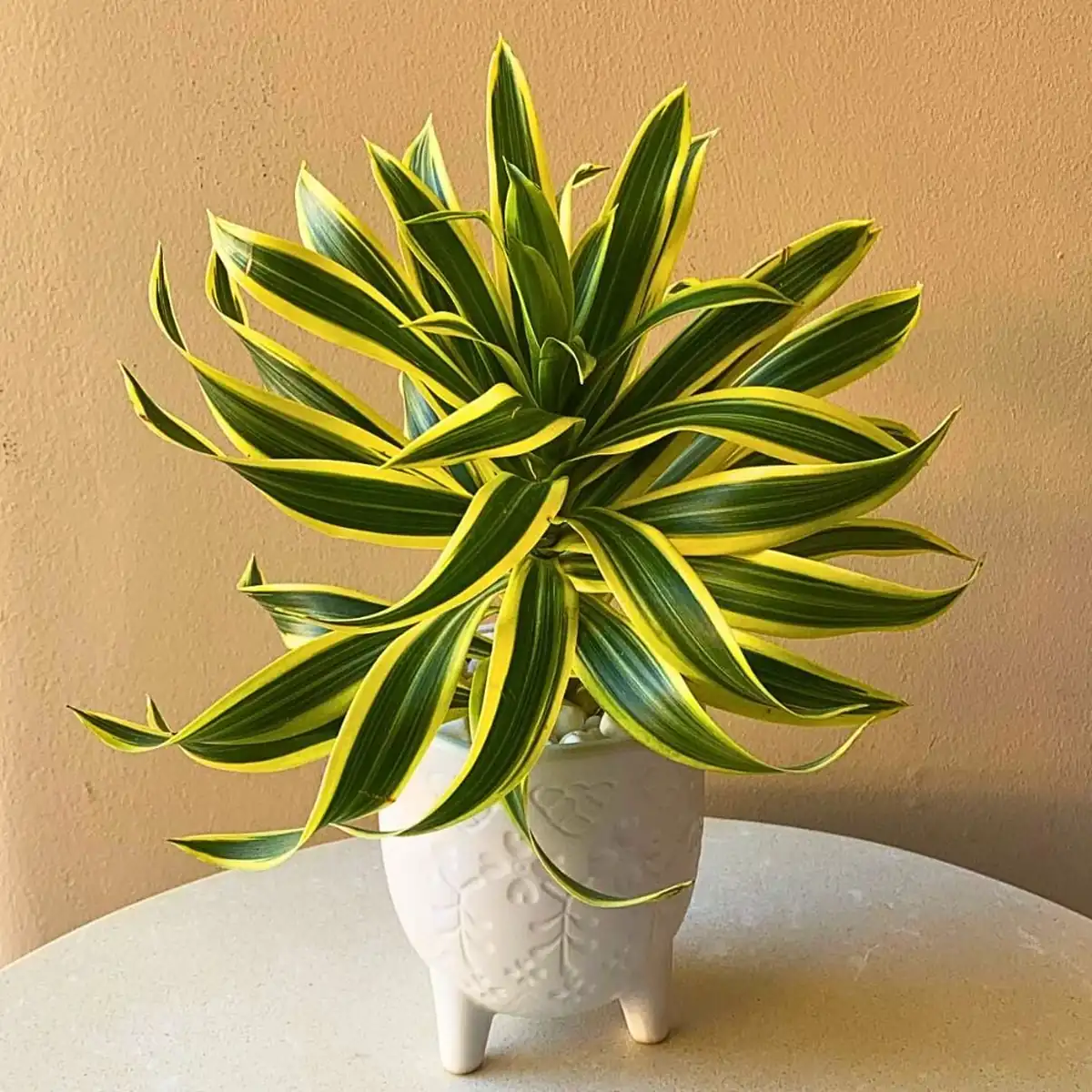
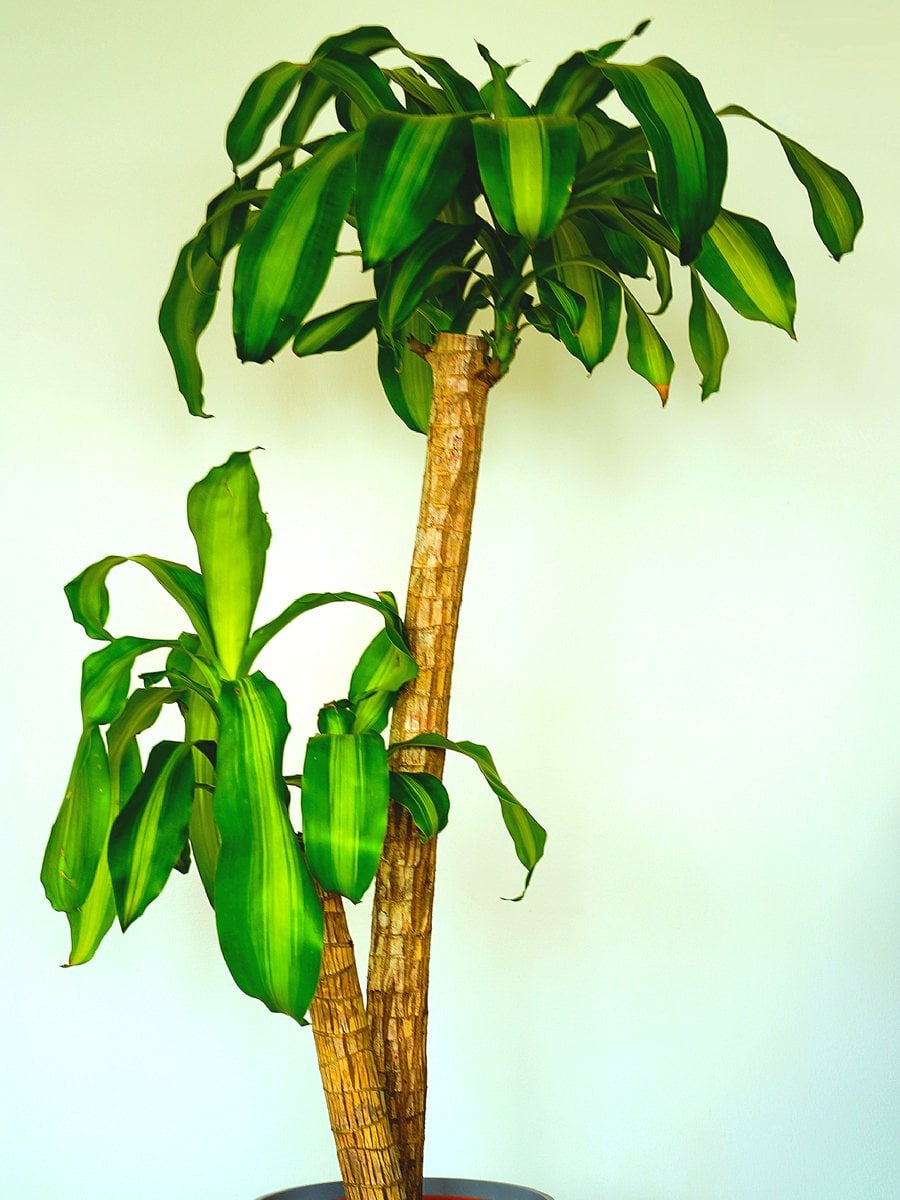
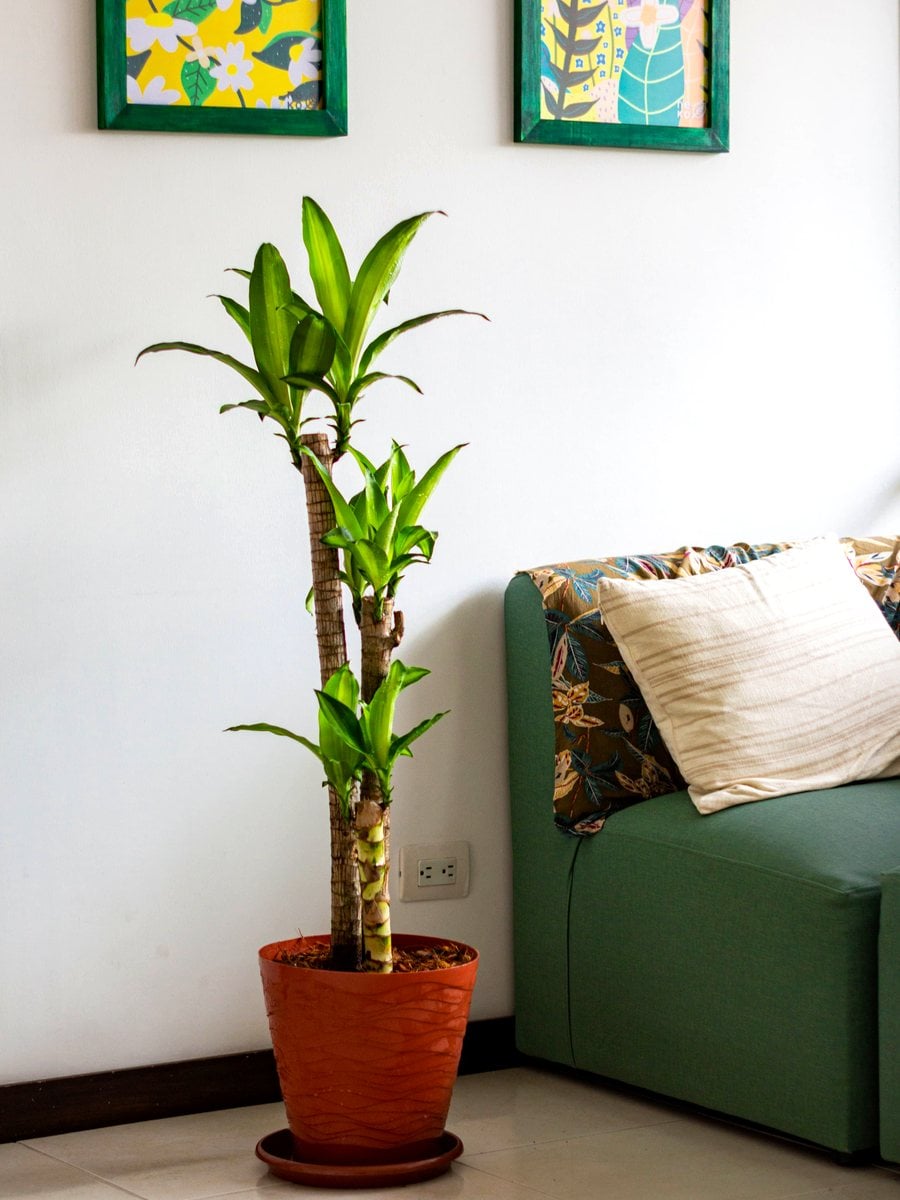
The corn plant most people own is Massangeana, the most commonly grown cultivar according to Clemson Extension, and the one sold as mass cane. Its glossy green leaves carry a broad yellow stripe down the middle. It is usually grown as several woody canes of different lengths in one pot, each cane topped with its own tuft of leaves, UF/IFAS Extension describes. The plain green form, the wild type, turns up far less often in shops, NC State Extension notes.
Corn Plant Versus Janet Craig
Janet Craig is not a different plant. It is a cultivar of the same species, long sold as Dracaena deremensis Janet Craig, a name that NC State Extension and Kew now place under Dracaena fragrans. The difference is in the leaves. Janet Craig's are solid dark green and glossy, with no stripe, held in arches along thick stems, and the plant can reach about 3 meters (10 feet), according to Clemson Extension. Its dwarf form, Compacta, packs short leaves tightly along slow-growing stems. So a mass cane is the yellow stripe on bare canes, and a Janet Craig is a full, dark green plant. They need the same care. Thursd's Dracaena Janet Craig care guide covers that cultivar in detail.
Lemon Lime, Warneckii, and the Rest of the Family
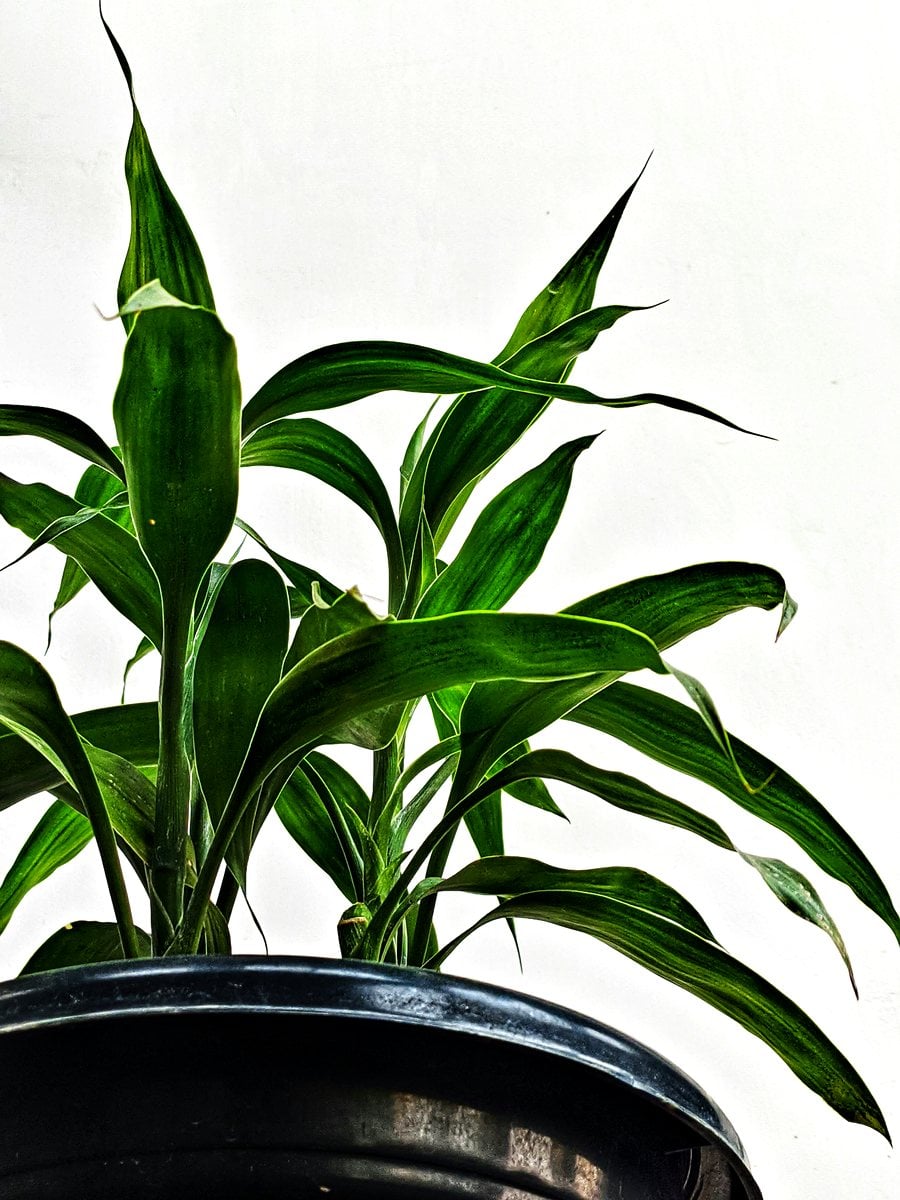
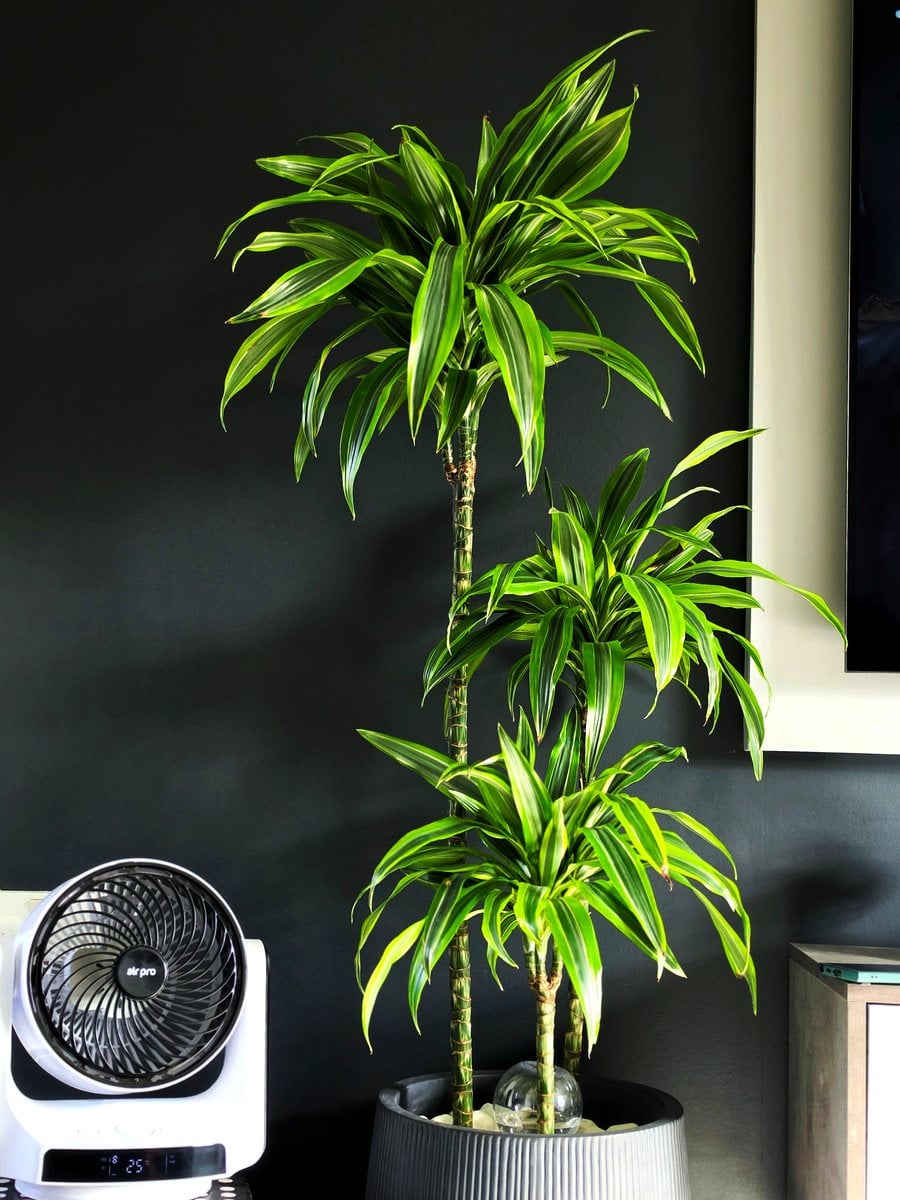
Other cultivars of the species play with the stripes. Lemon Lime has cream, greenish-yellow, and lime stripes, and Warneckii has grayish-green leaves with white stripes, NC State Extension notes. Lindenii carries creamy white stripes along its edges, according to Clemson Extension, which calls Warneckii one of the best variegated plants for low light.
Further out in the genus are the Madagascar dragon tree, Dracaena marginata, with thin red-edged leaves; Dracaena reflexa, the Song of India; and lucky bamboo, Dracaena sanderiana, which the Dutch nursery Duynplant grows in unusual shapes, according to its grower page on Thursd. The snake plant has joined the genus too and is now Dracaena trifasciata, as Penn State Extension lists it.
Does a Corn Plant Flower?
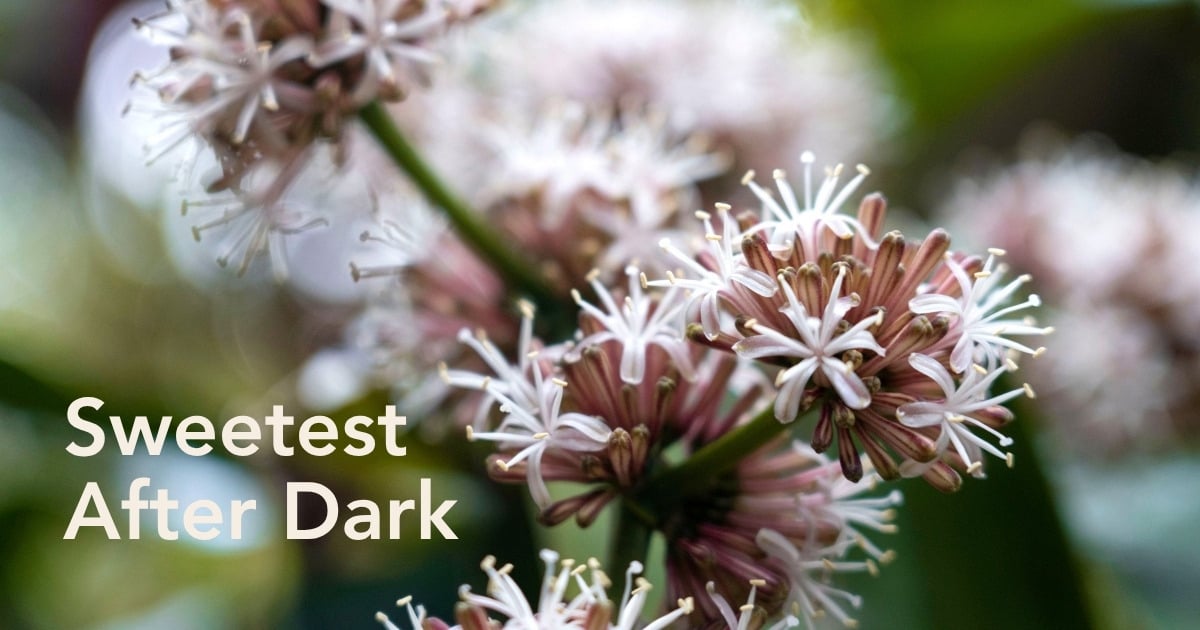
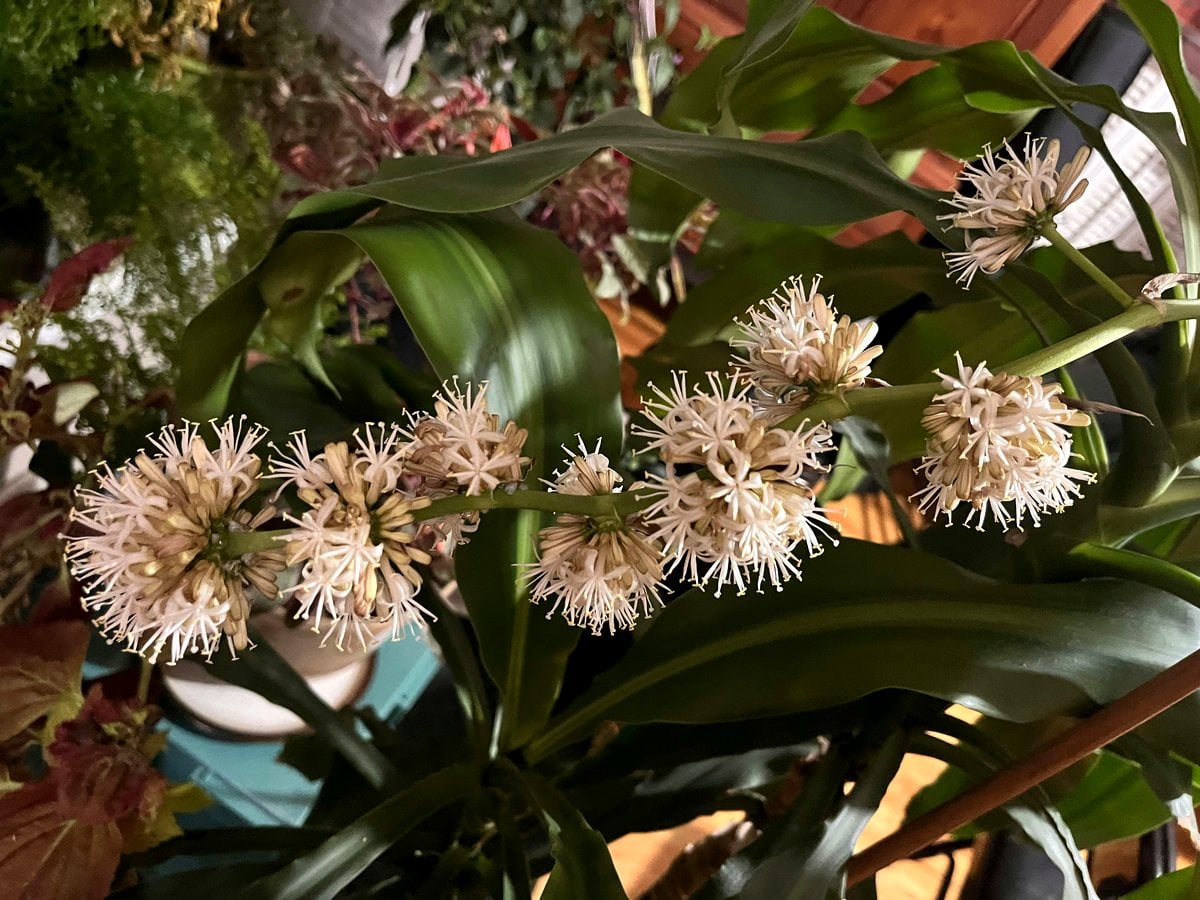
It does, though rarely indoors. The flowers come in clusters on stalks of 15 to 150 centimeters (6 to 60 inches), and each flower is about 2.5 centimeters (1 inch) across, pink in bud and opening white with a fine red or purple line down each lobe, NC State Extension describes. They open during the night, UF/IFAS Extension notes, and their scent is very strong after dark, which is where the name fragrans comes from. Small red berries can follow, the Missouri Botanical Garden adds, although that rarely happens on a houseplant. In nurseries, UF/IFAS lists unwanted flowering as a problem that cooler, wet weather usually brings on. At home, a flowering corn plant is simply a lucky one.
From a Costa Rican Field to a Dutch Pot
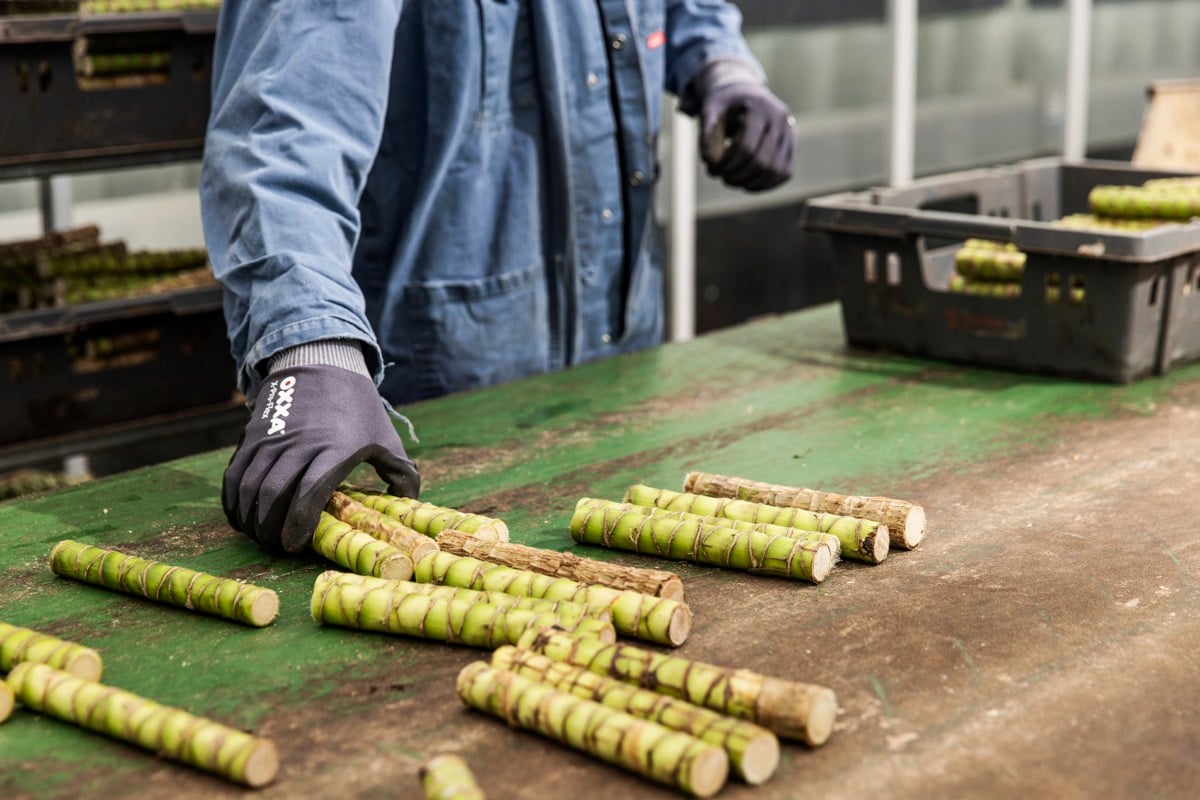
A mass cane starts as a piece of stem. Much of the cane rooted in the United States and Europe is imported from the Caribbean Basin, where the stock plants usually grow in fields, according to a 1992 research report by C.A. Conover and R.T. Poole at the University of Florida's research center in Apopka. The cane for their trials came from a field nursery near Siquirres in Costa Rica. There, harvested stems were stacked on pallets, cut into lengths of 30 or 90 centimeters (1 or 3 feet) with a circular table saw, sealed at the top with a mix of cement and wax so they would not dry out or split, and dipped at the base in rooting hormone. Packed upright in crates with moss on the bottom, they went by ship from Puerto Limón to Miami.
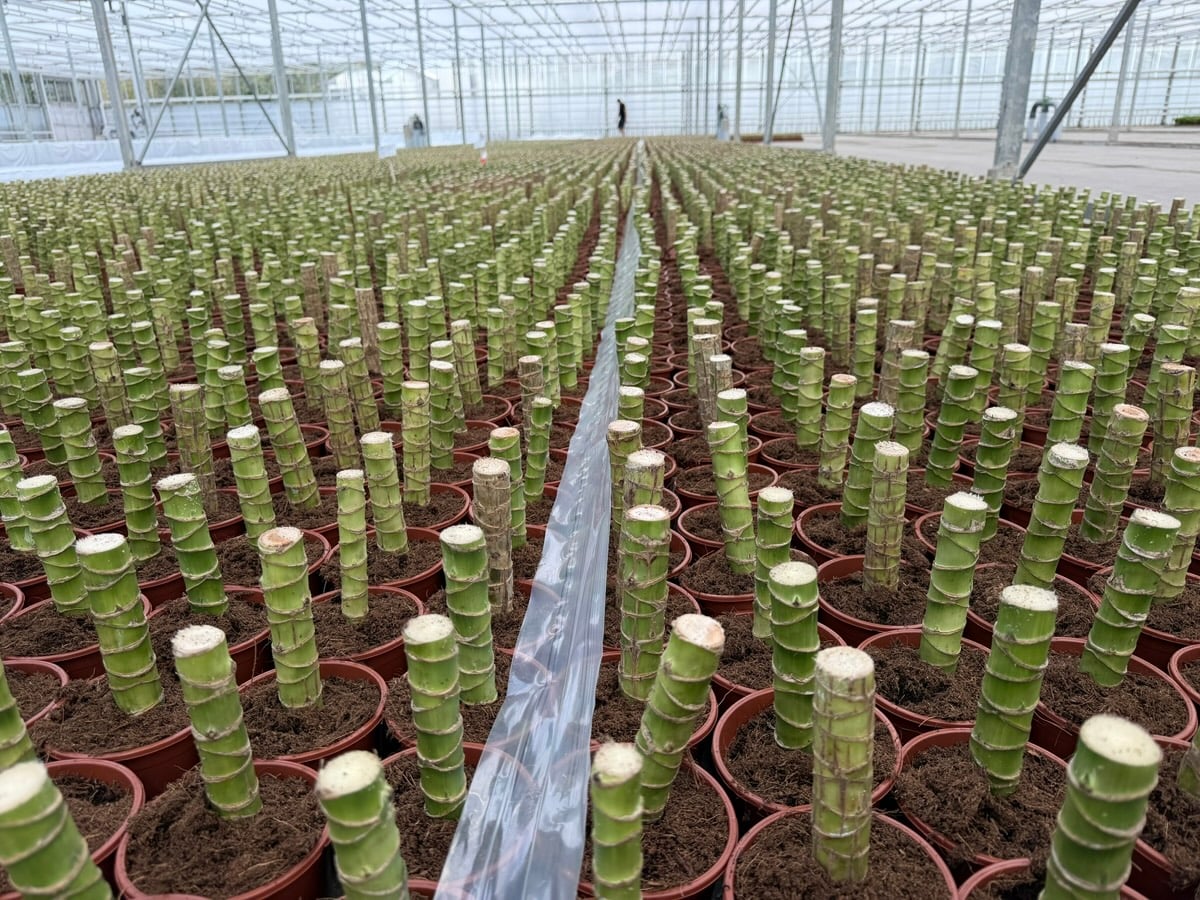
In the nursery, the cane goes straight into a pot and is watered until it roots. Under good conditions, that gives a plant ready to sell in five to six months, the same report notes. Two or more shoots grow from the top of each cane, which is where the tufts of leaves come from, UF/IFAS Extension explains, and growers set canes of different lengths together in one pot for the staggered look. If the flat top of a cane on your plant looks waxy, you are probably looking at that seal. The route has lasted. In 2011, at Costa Rica's request, the US Department of Agriculture proposed letting larger Dracaena plants, the corn plant among them, into the country from there.
Dutch growers raise Dracaena fragrans as well. Piet Vijverberg in Monster, in the Westland greenhouse area, has greenhouses equipped for about five million plants a year. About two thirds of them are Phalaenopsis and a third Dracaena, says Brian Krabben, who works in sales at the nursery; by area, that is roughly 7 hectares (17 acres) of Phalaenopsis against 1 hectare (2.5 acres) of Dracaena. Its own website lists six Dracaenas it sells as Dracaena fragrans, among them Mass Coast with pale yellow veining and Golden Coast with a yellow edge. Today the nursery grows them only in 11 and 17 centimeter pots (4 and 7 inches), 40 to 80 centimeters (16 to 31 inches) tall, with a single or double stem. The nursery waters with rainwater it collects itself, its Thursd page adds. You don't have to copy that at home. "At home, a Dracaena can simply be watered with tap water," Krabben says.
Its canes still come from Costa Rica. The starting material, the wooden stems, is supplied by a farm there, Krabben says. "After arrival, the stems are sawn to size and potted. Then they are given time to root and are grown on into a plant ready for delivery." All that time, the greenhouse keeps the climate and the care as good as they can be, he adds.

How to Care for a Corn Plant
Corn plant care asks for little, which is how the plant ended up in so many lobbies and offices. Get the basics below right, and a single leaf can last several years, UF/IFAS Extension notes.
How Much Light Does a Corn Plant Need?
Light comes first in corn plant care. Bright to moderate, filtered light suits it best, NC State Extension advises. Direct sun can burn the leaves, and when the light is too low, the new leaves come out narrower. Move a plant from a dim spot to a brighter one, and its new leaves come out thicker and stronger while it grows faster, Clemson Extension adds. Light also feeds the stripe: the yellow of Massangeana gets stronger with more light, UF/IFAS research on Dracaena production found. Thursd's houseplant light guide counts a spot 1 to 1.5 meters (3 to 5 feet) from a south- or west-facing window as medium light and lists Dracaena among the plants that do well there. For darker rooms, see the best houseplants for shade and dark spaces.
So which corn plant for a dark living room or an office? "In general, the greener the leaf, the better the plant copes with less light," says Brian Krabben of Kwekerij Piet Vijverberg. Variegated varieties hold less chlorophyll, so they need a bit more light. In the nursery's own range, Steudneri Green and Golden Coast do best in a darker spot. Yellow Coast has the least chlorophyll and needs the most light; the other varieties sit in between.
How Often to Water a Corn Plant
Watering is where most corn plant care goes wrong. Water thoroughly once the surface of the soil feels dry, then let it dry slightly before the next round, Clemson Extension advises, and avoid very cold water. Keep the soil lightly moist in the growing season, but water less in winter, NC State Extension adds. The Missouri Botanical Garden warns against the other extreme: never let the pot dry out completely. Too much water is the bigger risk, though. Overwatering leads to root rot, which can kill the plant, UF/IFAS Extension warns, so use a pot with drainage holes and empty the saucer. Check the soil with a finger before every watering instead of following a calendar.
Temperature and Humidity
Normal room temperatures suit it. NC State Extension says corn plants thrive at 21 to 27°C (70 to 80°F) and should stay above 10°C (50°F) if possible, while Clemson Extension's ideal is 16 to 21°C (60 to 70°F) by day and a little cooler at night. Cold is what hurts. In UF/IFAS research, chilling injury showed up as slimy, dead spots on the leaves and mass leaf drop, and the advice there is to keep Dracaenas above 16°C (60°F) at all times, so keep the plant away from drafts and cold windows. Dry air dries the leaf tips. In a heated room, a humidifier, a tray of wet pebbles, or an occasional misting helps, as NC State Extension, the Missouri Botanical Garden, and Clemson Extension suggest.
Soil, Feeding, and Repotting
Use a commercial potting soil in a pot with drainage holes, NC State Extension advises. Clemson Extension adds two details that matter for this genus: avoid potting mixes with a lot of perlite, and keep the soil pH between 6.0 and 6.5, both to keep fluoride from damaging the leaves. Feed once a month in spring and summer with a liquid houseplant fertilizer, and skip fertilizers with superphosphate, which often carries fluorine, Clemson Extension notes. Repot when the plant starts to lift out of its pot or sends roots out of the drainage hole, according to NC State Extension. A plant that has just come home needs time to settle: UF/IFAS research advises waiting about four weeks before repotting or feeding it.
Can a Corn Plant Live Outside?
Only in a frost-free climate, or for the summer. UF/IFAS Extension rates it hardy in USDA zones 10b to 11, where it grows outdoors in the shade. Elsewhere, put the pot outside in summer in a shady spot and bring it back indoors in early fall, before the temperature dips below 10°C (50°F), the Missouri Botanical Garden advises. Keep it out of direct sun, which burns the leaves.
Is a Corn Plant Toxic to Cats and Dogs?
Yes. The ASPCA lists the corn plant as toxic to dogs, cats, and horses because of the saponins it contains. The signs are vomiting (sometimes with blood), depression, loss of appetite, and drooling, plus dilated pupils in cats. NC State Extension rates the poison severity as low and names every part of the plant, with irritation of the mouth and stomach as the usual result in people too. Place it where pets and small children cannot chew the leaves. If you think your pet has eaten some, call your vet or the ASPCA Animal Poison Control Center at (888) 426-4435, where a consultation fee may apply. For plants that are safe to keep within reach, see Thursd's pet-friendly houseplants for cats and dogs, and for dog owners, the houseplants that are poisonous for dogs.
Does a Corn Plant Clean the Air?
Mass cane was one of the plants in NASA's 1989 study by B.C. Wolverton, which tested houseplants in small, sealed chambers. In a real home, the effect is too small to notice. A 2020 review of 12 chamber studies by Bryan Cummings and Michael Waring of Drexel University found that you would need between 10 and 1,000 potted plants per square meter of floor to match the air exchange a building already gets from outside. Grow it for the leaves. Thursd's list of the 35 best indoor plants that clean the air explains what the research really shows.
Why Are My Corn Plant's Leaf Tips Brown?
Corn plant brown tips top the list of complaints, and they rarely mean the plant is dying. These are the usual causes:
- Fluoride. Dracaena is very sensitive to it, Clemson Extension notes, and the damage shows as yellowing along the tips and edges, or as dead, scorched patches. NC State Extension suggests watering with non-fluoridated water.
- Salts and fertilizer. Too much fertilizer burns the tips and margins, according to Clemson Extension. NC State Extension advises flushing the built-up salts out of the pot once a month.
- Dry air. Low humidity dries the tips and edges, especially in a heated room in winter.
- Soil that is too dry or too wet. Both can brown the leaves, the Missouri Botanical Garden notes. It also points to chlorine in tap water and suggests filtered water or rainwater.
The grower puts dry air first. "Brown leaf tips mainly come from air that is too dry, but with Dracaena fragrans it is usually not too bad," Krabben says.
The brown parts will not turn green again, UF/IFAS research on Dracaena confirms. Trim them with clean scissors, following the shape of the leaf, and fix the cause so the new leaves stay green to the tip.
Why Are the Lower Leaves Turning Yellow?
A corn plant sheds its oldest, lowest leaves as it grows, the Missouri Botanical Garden explains, so one yellowing leaf at the bottom is normal. Many at once is not. A sudden loss of leaves can come from temperature changes, drafts, too much water, poor drainage, or a heavy pest attack, Clemson Extension notes. If Massangeana loses its yellow stripe or grows narrow leaves, it may be short of light or of nitrogen, according to NC State Extension and UF/IFAS research.
Bringing a new plant home is less of a shock than you might fear. "After it has been placed in a home, Dracaena fragrans usually loses hardly any leaves," Krabben says. It does have to get used to its new spot, though. In winter especially, give it a suitable place and avoid big swings in temperature and care.
Pests on a Corn Plant
Indoors, scale insects and mites are the most common pests of Dracaena, Clemson Extension notes, and NC State Extension adds thrips and mealybugs. A look at the undersides of the leaves when you water is the easiest way to catch them early.
How to Prune and Propagate a Corn Plant
A corn plant that has grown too tall or lost its lower leaves can be cut back. Cut the stem at the height you want, and new leaves will soon appear, Clemson Extension advises. The RHS suggests shortening weak stems to about 15 centimeters (6 inches) in spring and using the piece you cut off to grow a new plant. Corn plant propagation works in three ways.
Root the Top as a Cutting
Take the leafy top of the cut stem and root it in moist potting mix or in water. Clemson Extension lists tip cuttings among the easy methods, and UF/IFAS Extension names them for the corn plant. Keep the cutting in a warm, humid spot with bright, indirect light, as Penn State Extension advises for cuttings.
Root Pieces of the Cane
The bare cane below can be cut into pieces of 5 to 8 centimeters (2 to 3 inches), each with at least two nodes. Push them upright into rooting mix with at least one node buried, or lay them flat, half sunk into the mix, Penn State Extension describes. Roots form at the buried nodes and new shoots at the exposed ones, and Penn State names Dracaena as a plant that responds well to this method. It is the nursery's cane trick on a small scale, and the RHS adds that leafless stem sections root best with bottom heat in summer.
Air Layer a Tall Stem
For a tall plant, air layering lets the top grow roots while it is still attached. Cut into the stem, wrap the wound in moist moss, and cover the moss with plastic wrap. Once roots have formed, remove the wrap and moss, cut the stem just below the new roots, and pot up the new plant at once, Penn State Extension explains, naming Dracaena among the plants that respond well. Clemson Extension lists the same method and adds a fourth option: rooting the shoots that sometimes grow from the base in spring or late summer.
Once corn plant care is second nature, there is more of the genus to grow. See Thursd's guides to Dracaena marginata care and the Song of India, and for styling, the Japandi houseplants list, where the cornstalk Dracaena stands in a tall, plain pot. The basics stay at a glance on Thursd's corn plant product page.
Sources opened for this guide, October 2026: Royal Botanic Gardens, Kew, Plants of the World Online, Dracaena fragrans (L.) Ker Gawl. North Carolina Extension Gardener Plant Toolbox, Dracaena fragrans. Clemson Cooperative Extension (Home and Garden Information Center), Dracaena, HGIC 1504 (Karen Russ and Al Pertuit). UF/IFAS Extension, Dracaena fragrans 'Massangeana' Corn Plant, Fragrant Dracaena (Edward F. Gilman, Ryan W. Klein, and Gail Hansen) and Cultural Guidelines for Commercial Production of Interiorscape Dracaena (Dennis B. McConnell, Jianjun Chen, Richard J. Henny, and Kelly C. Everitt). C.A. Conover and R.T. Poole, Dracaena fragrans 'Massangeana' Cuttings Affected by Storage Duration and Air Temperature, CFREC-Apopka Research Report RH-92-15, University of Florida (1992, archived copy). Missouri Botanical Garden Plant Finder, Dracaena fragrans. ASPCA, Corn Plant. Penn State Extension, Propagating Houseplants (Mary Concklin, updated March 9, 2026). Royal Horticultural Society, Dracaena fragrans. B.C. Wolverton, Anne Johnson, and Keith Bounds, Interior Landscape Plants for Indoor Air Pollution Abatement, NASA (1989). Bryan E. Cummings and Michael S. Waring, Potted plants do not improve indoor air quality, Journal of Exposure Science and Environmental Epidemiology 30 (2020). Federal Register, Importation of Dracaena Plants From Costa Rica (November 1, 2011). Piet Vijverberg, Dracaena.
Featured image: corn plant on two canes by Damir K on Pexels. Header image: Dracaena flowers by Jimmy Liao on Pexels.