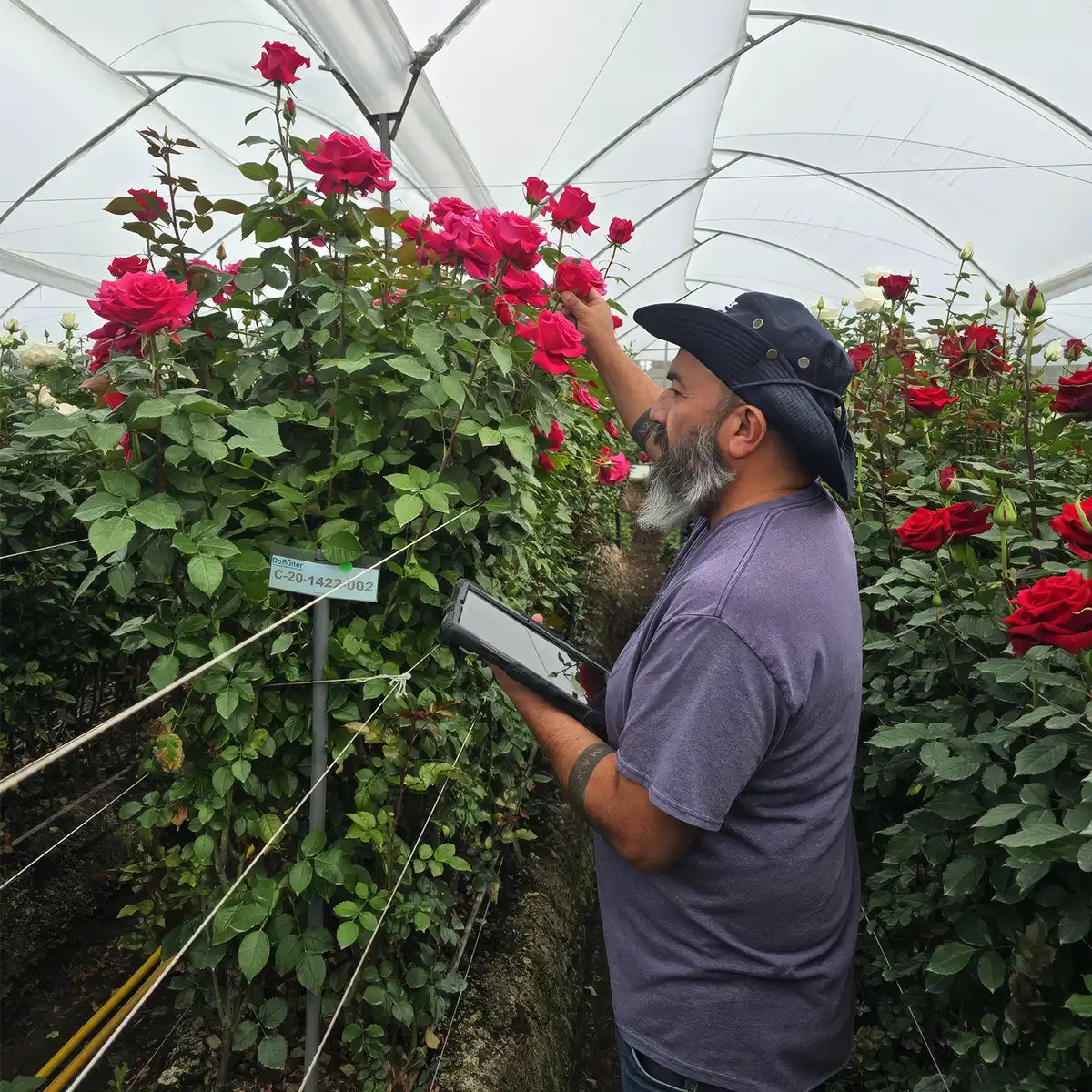
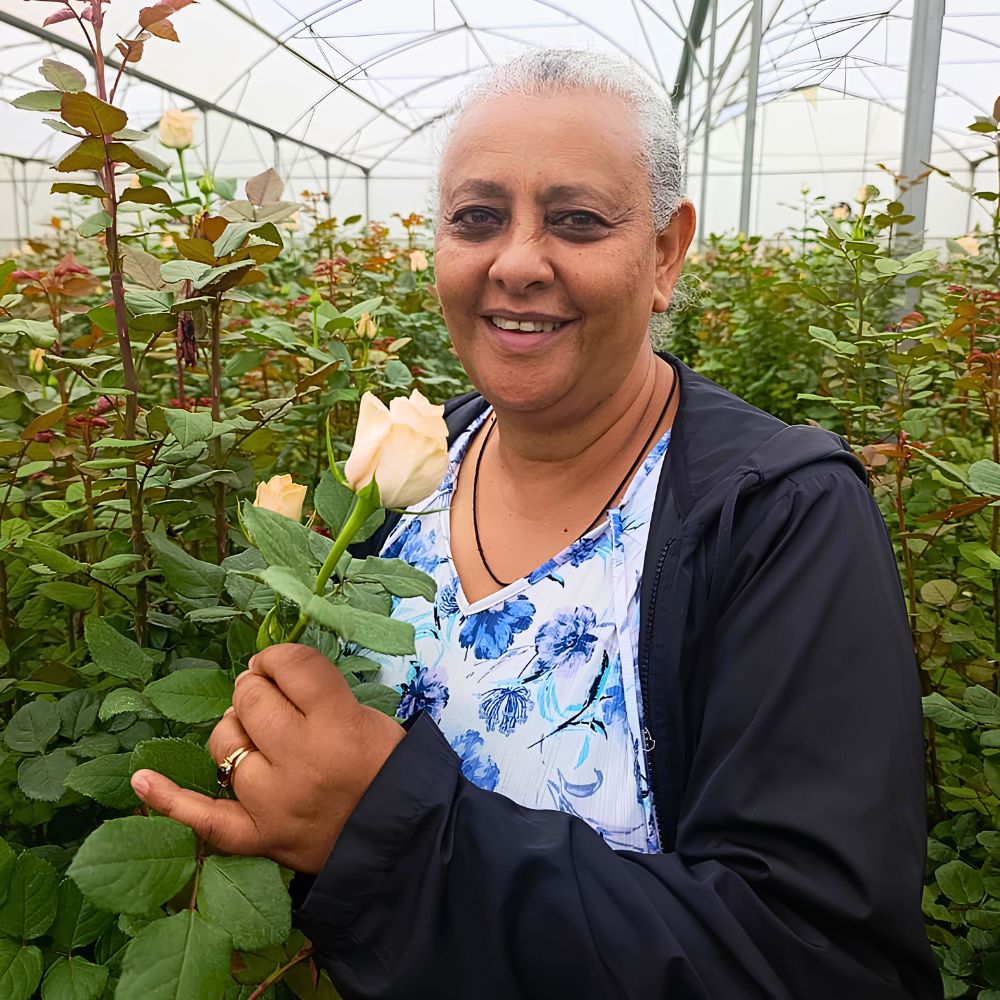
A visit to Lafto Roses Plc, together with the team from De Ruiter East Africa, offered a closer look at how Ethiopian rose production continues to evolve through stronger breeder-grower collaboration, technical adaptation, and customer-driven variety selection.
Accompanied by regional representative Aster Kenea, the visit focused on evaluating commercial varieties from the breeder currently grown at Lafto Roses and understanding how the farm approaches long-term production decisions in a fast-changing market environment.
A Farm Built on Long-Term Vision
Established in 2005, Lafto Roses has grown into a 26-hectare operation producing close to 33 commercial rose varieties across both standard and spray segments. The farm primarily focuses on stem lengths of 50-70 centimeters, targeting export markets across Europe and the Far East.
Production is divided into 23 hectares of standard roses and 3 hectares of spray roses, with spray accounting for roughly 10 to 15 percent of total production. Alongside the commercial area, the farm has also invested in a dedicated 0.8-hectare trial house. This has become an important part of how the business evaluates new genetics before committing to large-scale production.
The farm grows in both soil and substrate systems supported by a well-managed fertigation and irrigation setup. What becomes immediately clear during the visit is that variety selection at Lafto Roses is approached from both a technical and commercial perspective. Performance data, market response, and customer feedback into every decision.
The Relationship Between Lafto Roses and De Ruiter
According to farm manager Emebet, the relationship between the farm and De Ruiter dates back many years through parent company ET Highland, which has had a long-standing presence within the Ethiopian floriculture sector. After acquiring Lafto Roses from a previous owner, ET Highland continued strengthening this breeder relationship and expanding collaboration around trials and commercialization.
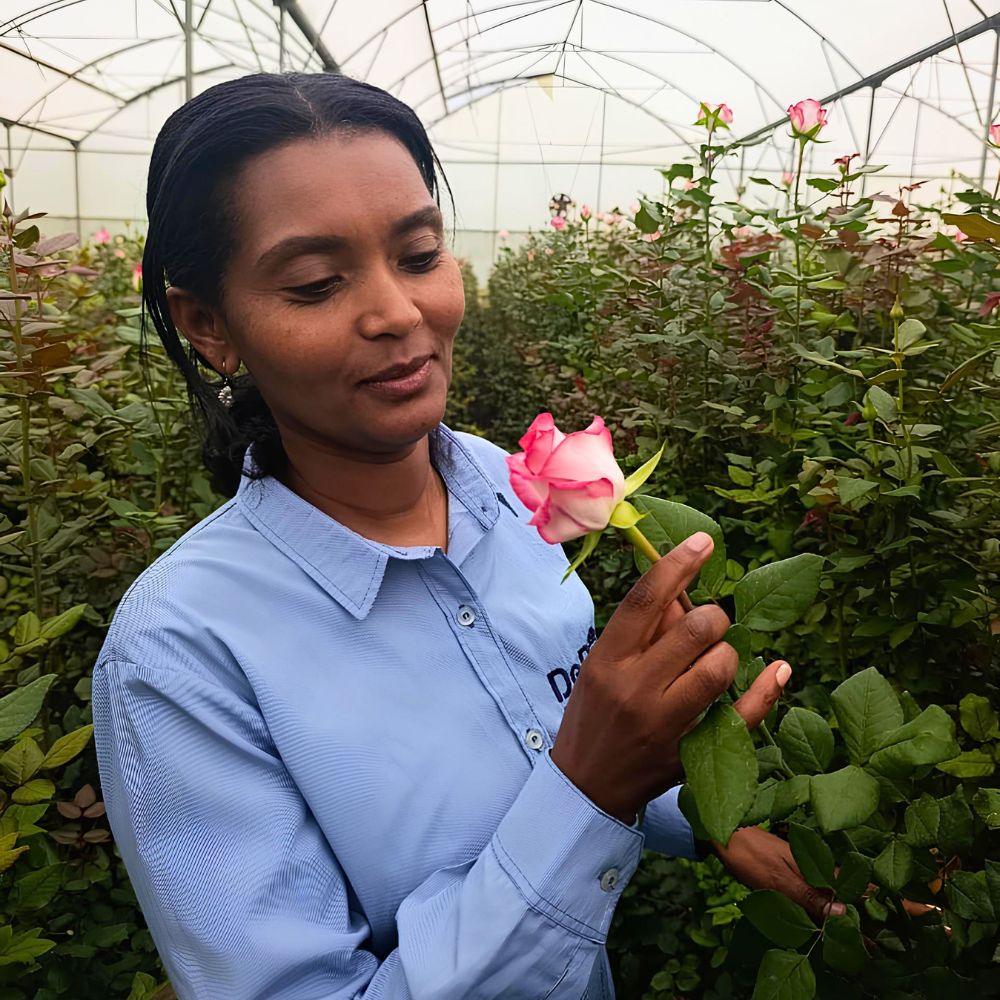
This partnership has enabled the farm to continuously access new genetics and receive technical support from the local Ethiopian De Ruiter team, particularly from Aster and Yonathan. Regular farm visits, technical evaluations, and variety comparisons help the farm assess both agronomic performance and market suitability before making commercialization decisions. At Lafto Roses, the focus is on producing varieties that fit evolving customer demand while still performing consistently under Ethiopian growing conditions.
Commercial Success with Roses Ever Red, Pomarosa, and Fluence
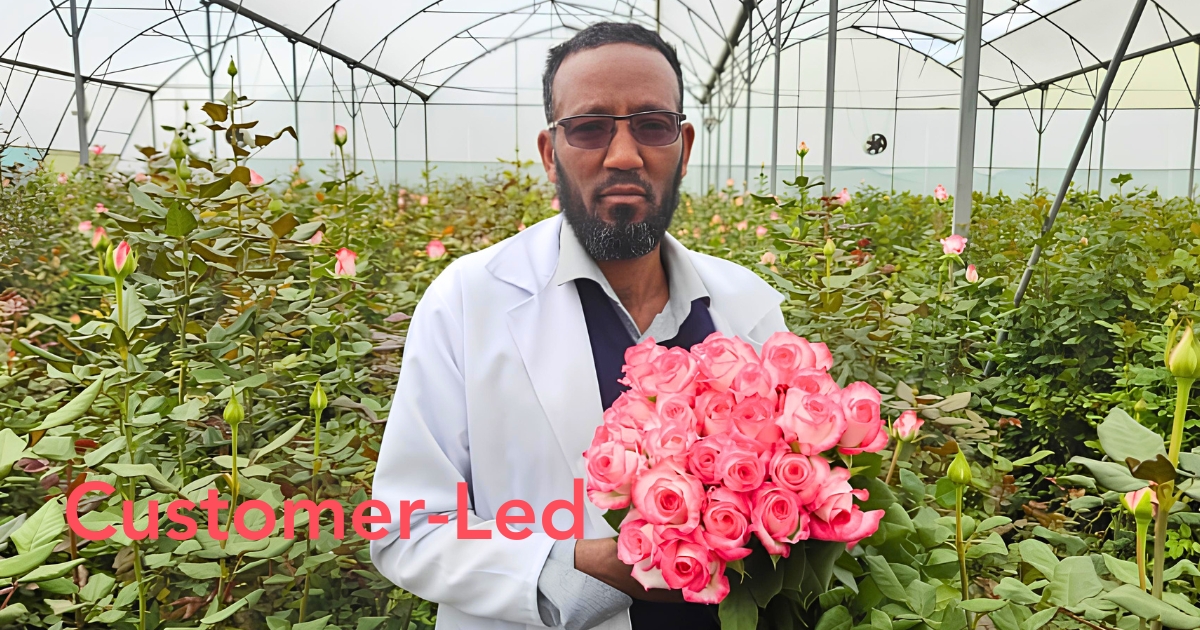
Among the De Ruiter varieties currently performing well at the farm is Rose Ever Red, which today occupies 1.75 hectares in production. According to Emebet, the variety continues gaining strong market traction and expansion plans are already under consideration. The farm also commercially grows 0.5 hectares each of Roses Pomarosa and Fluence after both varieties successfully passed through the farm’s trial process. Samples were evaluated internally before being sent to clients for direct market feedback. Positive responses from buyers ultimately informed the decision to commercialize them.
.jpg?1779205843720 "An employee at Lafto Roses holding a bunch of Rose Ever Red")
For Fluence and Pomarosa specifically, diversification into Middle Eastern markets played an important role in their selection. The color ranges and presentation of these varieties aligned well with buyer preferences within the region, making them commercially strategic additions to the portfolio.
.jpg?1779205953164 "A bunch of Rose Pomarosa grown at Lafto Roses Plc")
Ever Pink, a mutation of Ever Red, is also being considered for future expansion as the farm continues responding to changing customer preferences. This customer-led commercialization model has become central to how the farm operates. Rather than introducing varieties based purely on production capability, Lafto Roses prioritizes genetics that can satisfy both farm performance expectations and shifting market requirements.
Sustainability Beyond Production
Beyond rose production, Lafto Roses has also invested heavily in sustainability and community support initiatives around the farm. Among the most visible projects are schools built within neighboring communities, road construction to improve access to markets and education, and multiple water projects aimed at improving local livelihoods. At the entrance of the farm, public water access points allow nearby residents to collect clean water directly from the farm’s infrastructure.
Inside the farm itself, sustainability practices are integrated into daily operations. Water recycling systems help preserve resources for reuse, while constructed wetlands contribute to environmental management. Organic waste from rejected stems and packhouse material is processed through a grinding system that converts plant waste into compost for reuse within production.
.jpg?1779206165968 "Teferi Production Manager at Lafto Roses holding a bunch of Rose Fluence")
Employee welfare also forms a major part of the farm’s structure. Workers receive medical support, including checkups and treatment access, protective equipment, meal subsidies, and yearly incentives.
Ethiopian Floriculture Continues Adapting to Market Needs
The visit to Lafto Roses also reflected a broader shift taking place within Ethiopian floriculture. Growers are increasingly becoming more data-driven, market-aligned, and strategic in how they approach breeding partnerships and commercial production.
The investment into trialing facilities, customer feedback loops, and targeted market diversification demonstrates how farms are adapting to international demand patterns with greater precision than before. Breeder grower relationships are no longer only about supplying new varieties. They are becoming long-term technical collaborations focused on sustainability, market intelligence, production efficiency, and commercial positioning.
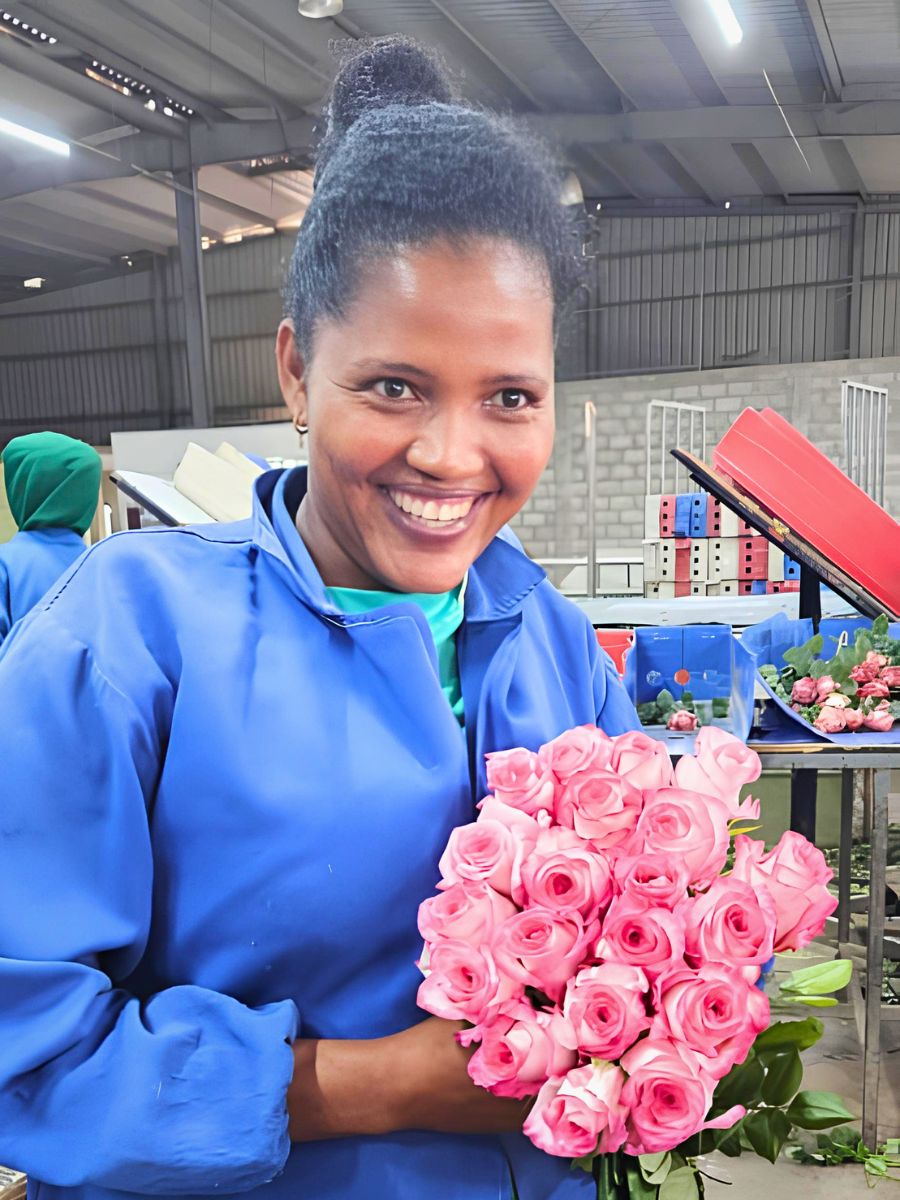
At Lafto Roses, this relationship with De Ruiter continues shaping the next phase of the farm’s development while reinforcing Ethiopia’s growing role within global rose production. As market preferences continue shifting across Europe and the Middle East, farms that combine technical discipline with customer-driven decision making are likely to remain at the forefront of the industry.