Ask ten florists why they fell in love with flowers, and you'll get ten different answers. Across Kenya, a new generation of florists is proving that a bouquet can be so much more than an arrangement; it can be a feeling, a color story, a form of healing, a language all its own. Meet Gerald, who arranges from pure feeling, letting his mood shape every bouquet.
Gerald Muema: The Father of Flowers
Every florist has a starting point. Gerald's story began in the most unexpected place, with curiosity, opportunity, and a neighbor who changed everything.
Gerald:
"I never set out to become a florist. Flowers found me next door to a curio shop.
Back in 2019, as 2020 approached, I was working at a curio shop in Nairobi. Life wasn't great, so I started doing something a little different: flower displays out front, arranged from blooms the owner would bring in. It was pure curiosity at first. I just wanted to pull people in off the street. And it worked; those displays actually started drawing customers into the curio shop itself.
Right next door was a flower shop, run by an incredible woman named Leah. We'd talk for hours, pass the time, and encourage each other in whatever we were building. Whenever she had a delivery or an errand to run, she'd leave me minding her shop. And that meant I had to learn fast how to arrange, care for the stems, and make it all come together. She ended up teaching me everything so that I could hold things down while she was away. That's how I fell in love with flowers."
The Season Before the Blossom
What looked like a promising new career was unfolding against the backdrop of a deeply personal struggle that few people knew about.
Gerald continues his story:
"What most people don't know is what I was carrying underneath all of that.
I come from a really dark background. Growing up, I never quite fit the mold of masculinity everyone expected of me—my dad, my family, relatives, everyone pushing, telling me to 'man up,' when that was never really who I was. My parents divorced when I was a teenager, and suddenly I was the one raising my younger siblings. A sibling of mine fell seriously ill around that same time, and I had to be the strong one, holding everything together while it all happened at once."
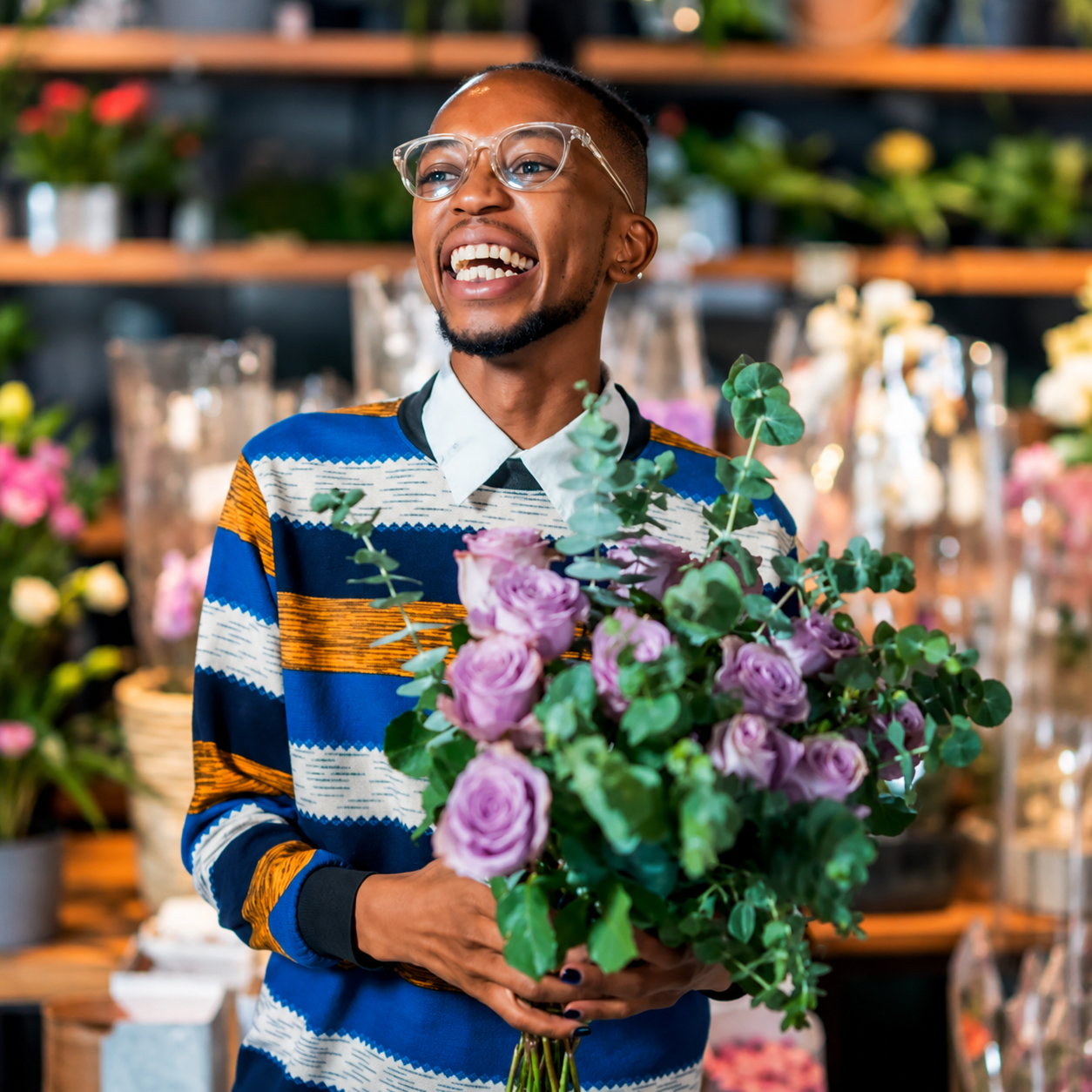
In the middle of that difficult period, flowers became much more than a profession. They became a source of hope.
Gerald:
"The only thing that gave me any joy during that time was flowers. They gave me back my spirit, the will to nurture something, to bring it back to life. I remember discovering that if a flower was dying, you could drop it in ice-cold water for about 45 minutes and it would bloom again. I was heartbroken watching my flowers wilt, and I just kept asking myself: What can I do to give this a few more good days? That question became something bigger than the flowers themselves.
Everyone can find healing in flowers. They speak in a language calmer and more beautiful than anything we say to each other in words."
From Minding a Shop to Building One
One opportunity led to another, and before long, Gerald found himself building something he could truly call his own.
He says:
"When the lease on those flower shop premises came up, Leah had to move on. I saw an opening, and I told my boss at the curio shop that she should start her own flower business, and I'd run it. I already knew flowers, and I knew this was a real retail opportunity. She agreed, and it took off. Word got around. That's when I first crossed paths with Tambuzi.
A woman brought me a bunch of garden roses she'd received as a gift from Tambuzi, and honestly, I was stunned. Every rose I'd known up to that point just stayed closed, or bloomed small and tight. These garden roses actually bloomed fully and generously. I couldn't get over it. That one bouquet sent me straight to Tambuzi, asking them to bring their flowers into the local market. Everything shifted from there. I started exploring arrangement as a craft, not just a trade."
Arranging With Emotion
Ask Gerald how he designs, and he won't start by talking about flowers. He starts with feelings.
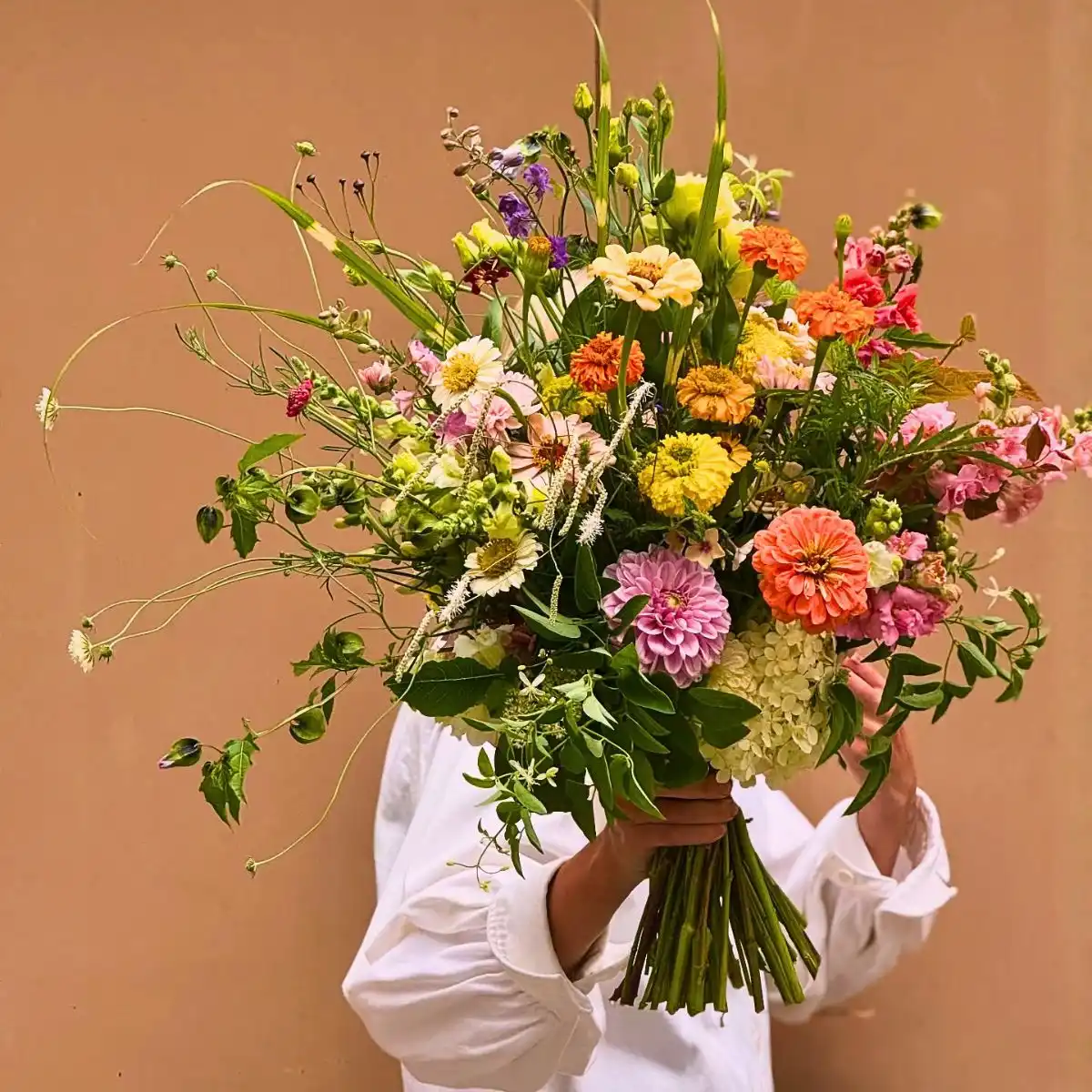
"My process is simple, honestly: I work with inspiration and feeling. However, I feel it is how the bouquet turns out. Calm and collected, and I'll build something meticulous, precise, and restrained. But when there's a little chaos in my happiness, or something close to it, the bouquet gets wild. Untamed. That's just how I create."
Becoming "The Father of Flowers"
As his confidence grew, so did his reputation. It was also when the nickname many now know him by was born.
The Father of Flowers:
"Eventually, the shop grew, and we started sourcing plants from all over Nairobi. Then, around five years ago, in 2021, Art Caffé opened its flower market and reached out to me. I brought my skill and my passion, and that's when I started calling myself the Father of Flowers right there at Nairobi's first Art Caffé flower market."
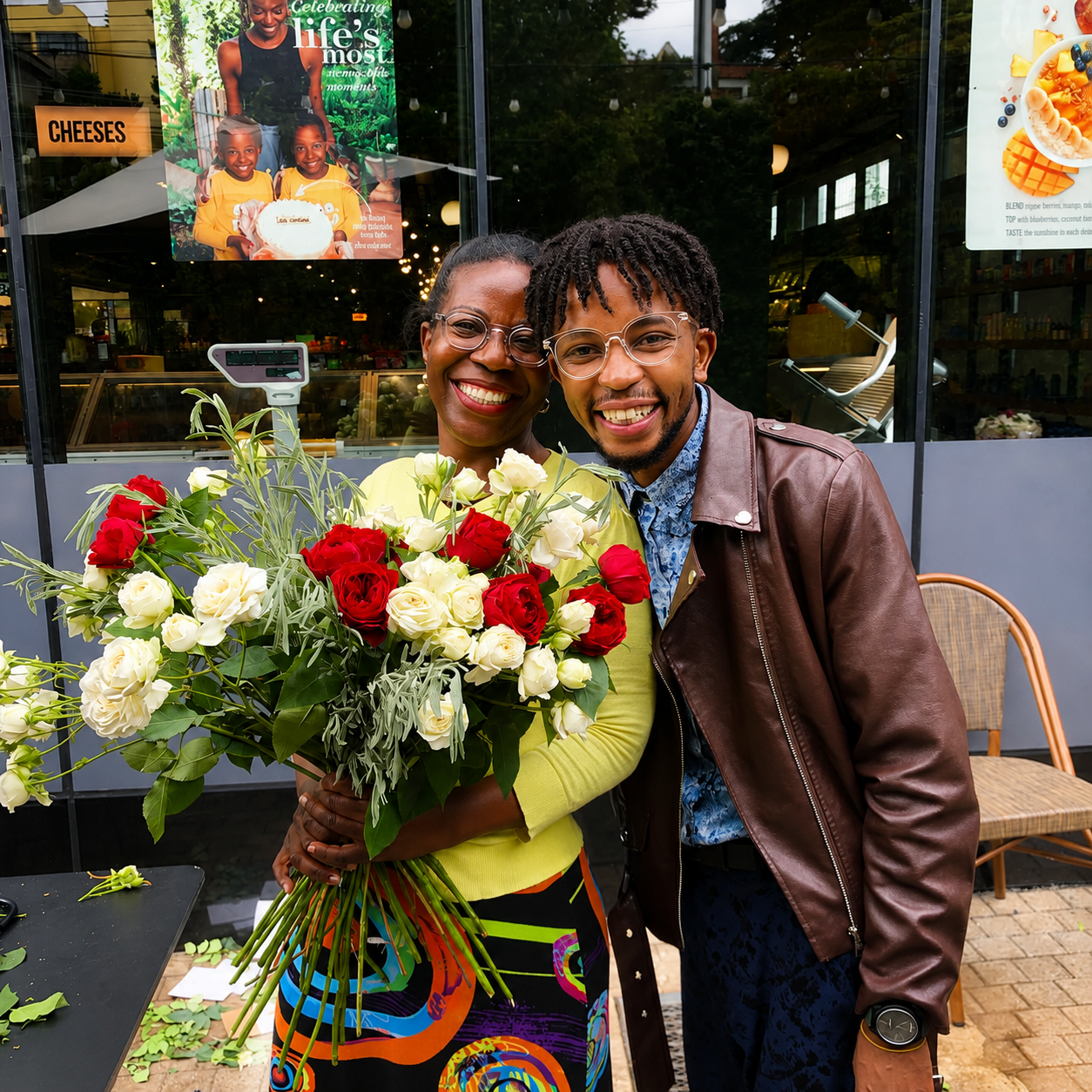
For Gerald, the title has never been about recognition. It reflects what flowers have meant throughout his life.
Gerald:
Because for me, flowers were never just flowers. The way they make you feel, the way they brighten a room, brighten you, that's the whole point."
Teaching People to Actually Experience Flowers
Sharing flowers soon became just as important as arranging them. Gerald realized there was a whole community eager to learn.
Gerald:
"Everywhere you turn in Nairobi, there's a flower vendor on some corner. But almost nobody had actually been taught by flowers what they can do, how wide varieties exist beyond roses, how to keep a bouquet alive longer, and how to use every last stem. That gap is what pushed me to start flower arrangement classes, with me as host: explaining types, care, longevity, and craft.
It resonated more than I expected. Most people, before my classes, thought 'flower' meant 'rose.' They didn't know the difference between a main flower and a filler. They didn't know a broken stem doesn't mean the flower is done; you can cut it down, put it in a smaller vase, and scatter it through your home. I wanted people to see flowers as something you elevate your space with, not something you buy, watch wilt in a single vase, and throw away."
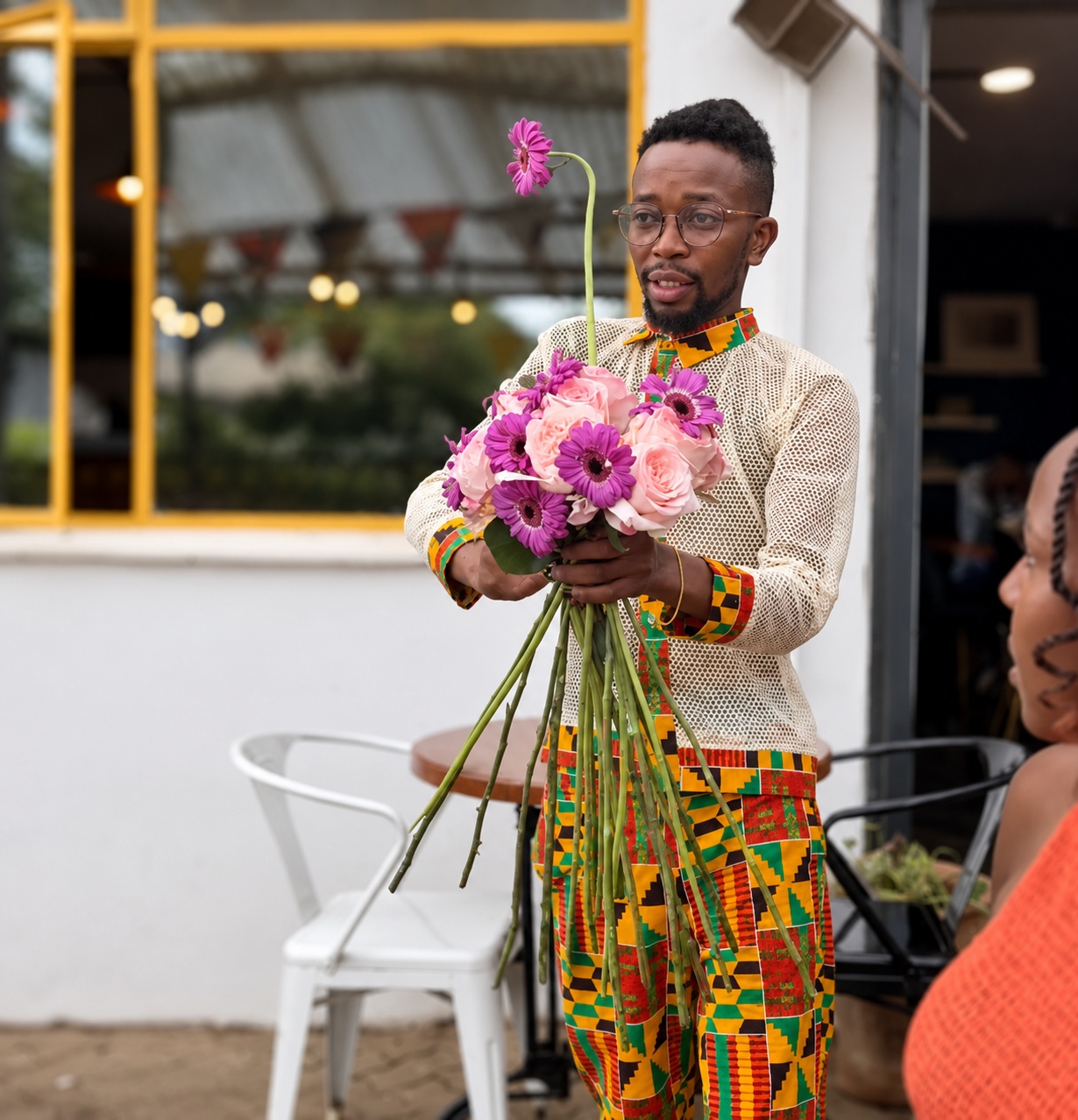
Those workshops quickly grew into something far more personal than traditional floral classes.
Gerald continues:
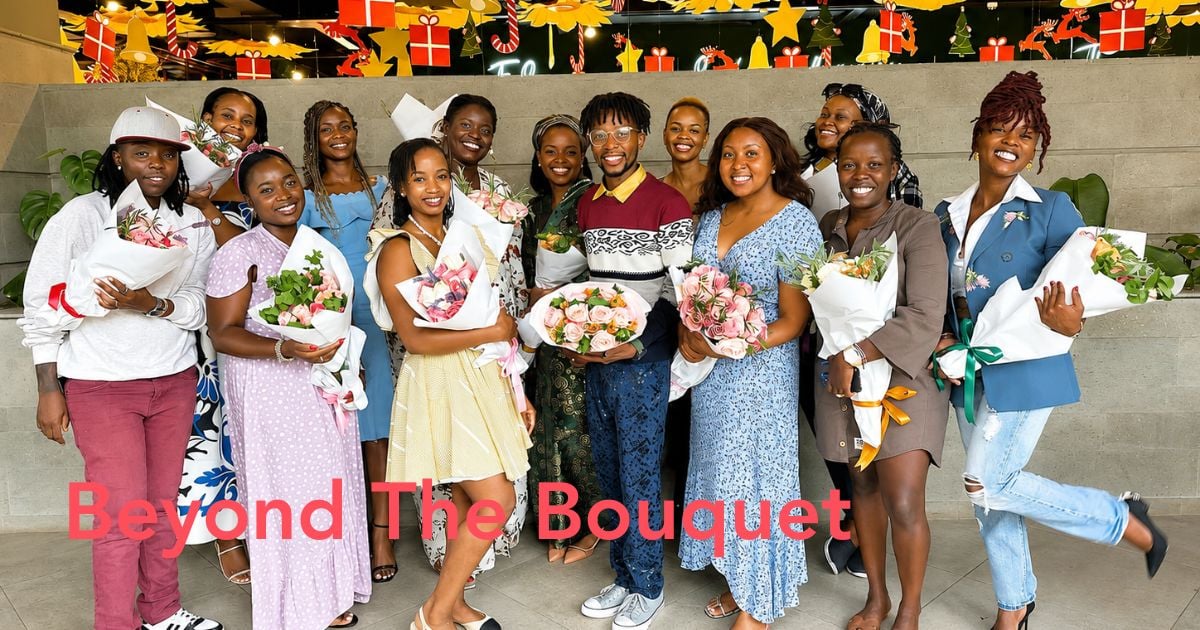
"I've lost count of how many classes I've run at this point; I'd guess more than 50, corporate bookings and private ones, over three-plus years. Every session teaches me something new. And I do it differently than most: my classes aren't about showing up to play with flowers. They're about connection, one person meeting another who loves the same thing, and me getting personal with each guest about how they want to express themselves in their arrangement. It's a full experience, not a transaction. By the end, everyone leaves happy, because I feed off people's energy, and it feeds right back."
The Gender Gap Nobody Talks About
Gerald has also noticed something else over the years of teaching: a perception of flowers that he believes deserves to change.
He says:
"Here's something I always joke about in class: men receive flowers on their deathbeds. It's almost true. A friend of mine once surprised her boyfriend with flowers, and it was such a big deal for him.
The truth is, the vast majority of people who come to me for flowers and who fill my arrangement classes are women. Historically, it's been about 90% women in the room. At my last masterclass, I was surprised to find that around 10% of the attendees were men. I'm so used to walking in and saying 'Good morning, ladies' that I have to catch myself and remember the gentlemen quietly taking the back seats."
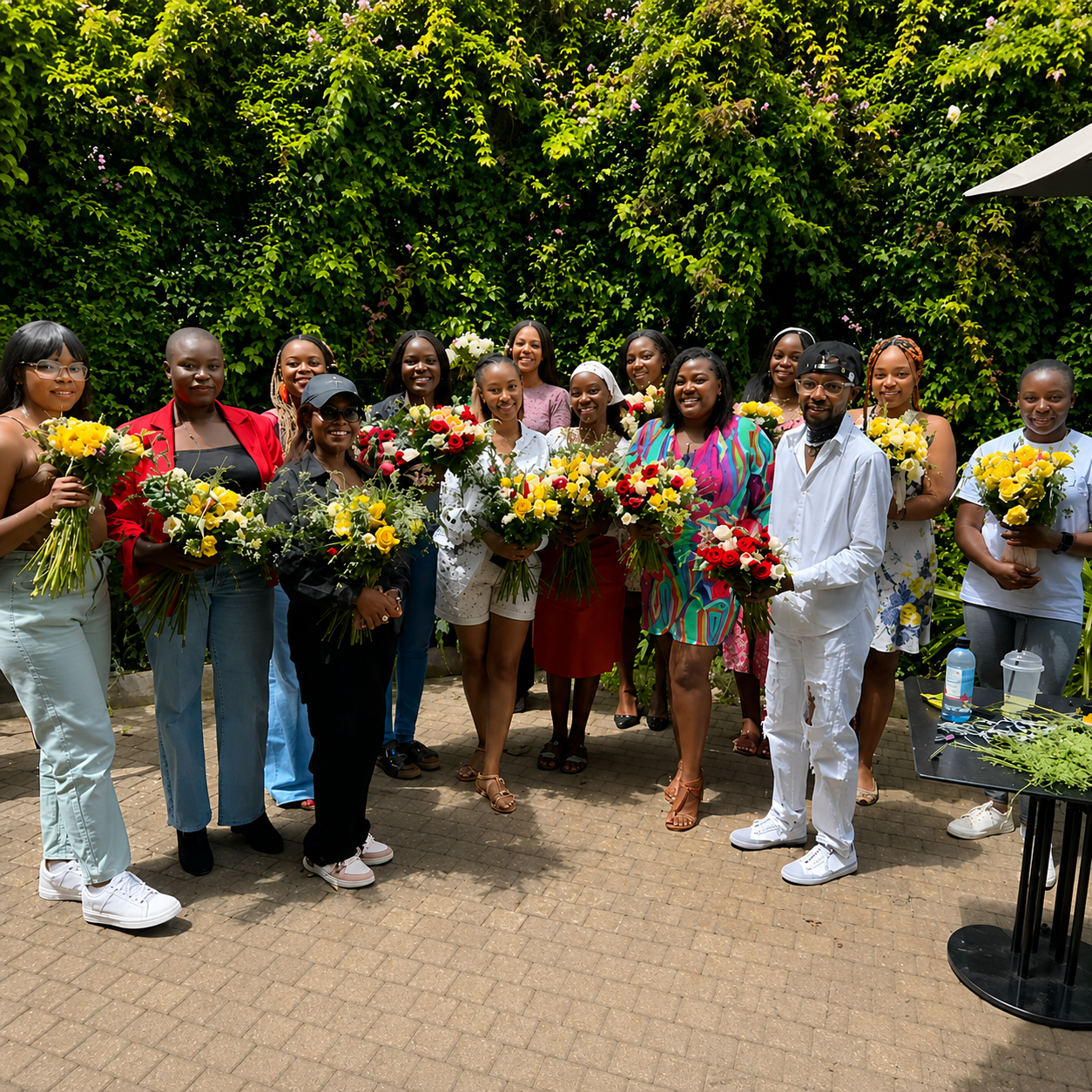
It comes down to how flowers have been branded and pushed as feminine rather than masculine. That's the disconnect. But flowers should be enjoyed on an equal level. A man should be able to receive flowers, too. Honestly, I love it when someone has me arrange a bouquet for myself and deliver it back to me. It catches me by surprise every time, in the best way."
Working Beyond Kenya's Borders
His passion has opened doors well beyond Nairobi, leading to collaborations with designers from around the world.
Gerald:
"I've had the privilege of working with Alina Perfumella, royal florist to the royal family in Romania, and Cindy Cooper, with whom we've partnered on classes and one-on-one arrangement work here in Kenya. I've also worked with florists from the UK, and I'm looking forward to more international collaborations. But I have to be selective. I need people who connect with flowers the way I do, who share the same passion.
Locally, I've worked extensively with Olympia Njiru across various projects. She was one of the first people to really take an interest in what I could offer, and she gave me room to grow my brand."
The Rose That Tells My Story
Every florist has that one flower they keep coming back to. For Gerald, it's a rose that mirrors his own personality.
"If you ask me to name a favorite flower, I'll always land on the same answer: Free Spirit, a garden rose from Uhuru Flowers."
He says:
"It starts small, tiny, almost nothing when it first begins to bloom. But as it opens, it bursts into this fiery, gorgeous orange, ruffled petals spreading wide, as if it's pushed through every weather condition to get there. It's not just beautiful; it's me. I'm a free-spirited person. I like spreading my wings, setting my expectations high, and showing up as fully myself, rough edges and all. If you woke me up and asked which flower I'd want in my hands right now, I'd say Free Spirit. Every time."
What Comes Next
Even after years of designing and teaching, Gerald feels like he's only getting started.
Gerald:
"I love working with mums. I learn so much every time. But my real ambition is to move beyond retail into fully exclusive, personal arrangements: understanding a client's point of view, seeing through their eyes, and translating that into something real rather than someone simply picking an arrangement off a shelf. I want to tell your story through flowers.
And one day, I want to own a flower farm of my own. That would be the most fulfilling joy of my life. Genuinely, I could die happy after that."
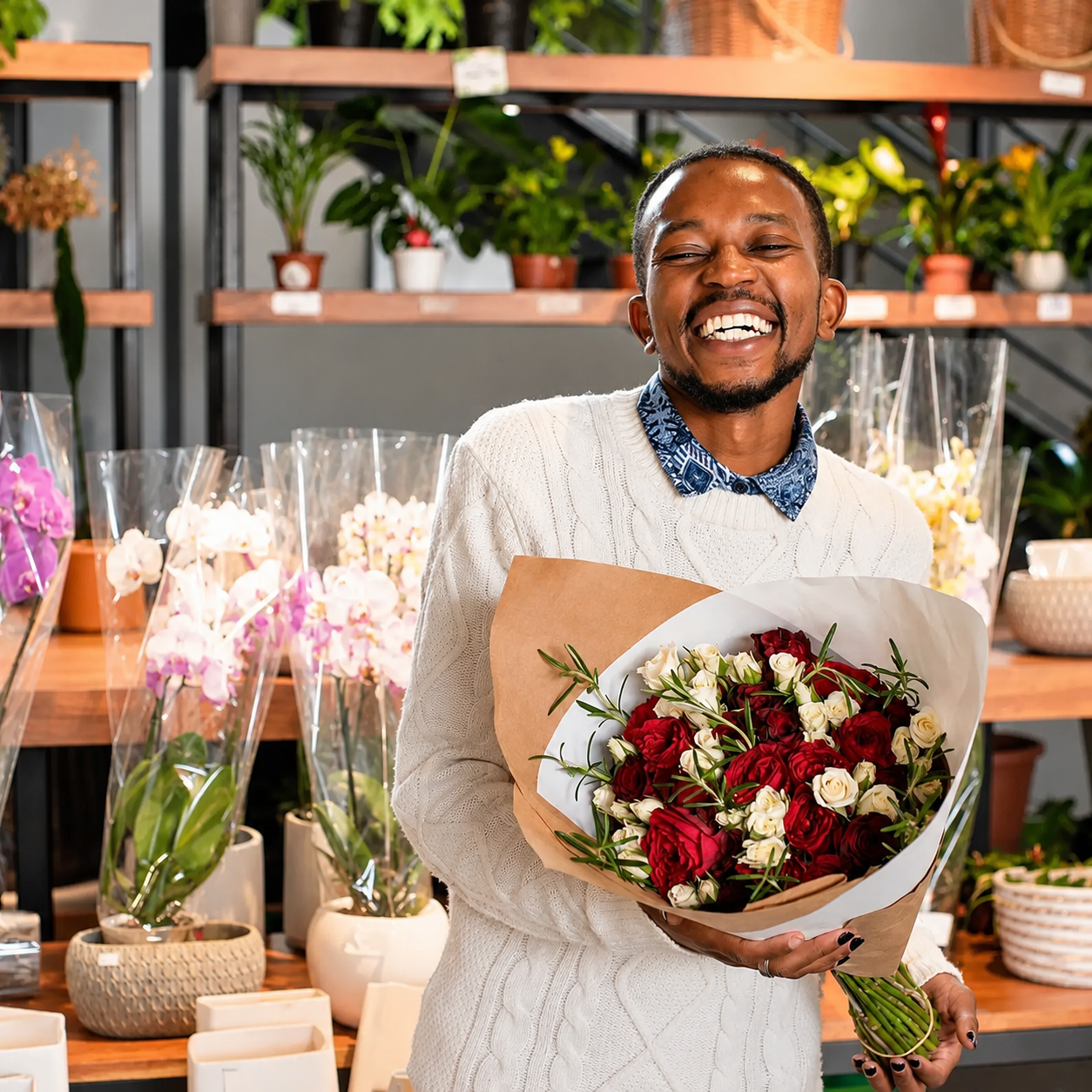
His dream reaches far beyond bouquets. It's about supporting Kenya's floral industry and helping it realize its full potential.
Gerald shares:
"I'm already working toward it. Right now, I collaborate with flower farms across Kenya, including Tambuzi, Mt Kenya Alstroemeria, and Uhuru Flowers, and I have an upcoming installation project with Imani Flowers. Kenya hasn't come close to reaching its potential in flower farming, and I want to be part of closing that gap.
I also make it a point to support the smaller, local flower businesses around the city markets because there's room at the table for all of us. We just each need to find our own unique way of expressing what's brought us to flowers in the first place."
Header Image by @Grace Sowairina