Most houseplants sit still. The peacock plant does not: each evening, its leaves rise on their stalks and fold up, and each morning, they open flat again. Sold for well over a century as Calathea makoyana and known to botanists since 2012 as Goeppertia makoyana, it has one of the most striking leaves you can grow indoors, and it is fussy about water and air. This peacock plant care guide covers what the plant needs, why its leaves curl or turn brown, and how to tell it apart from its relatives.
What Is a Peacock Plant?
The peacock plant is an evergreen, clump-forming perennial from the rainforests of southeastern Brazil, where it grows in warm, shaded, humid places under the trees. NC State Extension gives the state of Espírito Santo as its origin and a size of 30 to 60 centimeters (1 to 2 feet) tall and 20 to 30 centimeters (8 to 12 inches) wide. It belongs to the Marantaceae, the prayer plant family, together with Maranta, Ctenanthe, and the many plants still sold as Calathea.
Édouard Morren described the species in 1872 in a Belgian horticultural journal and named it after the Liège nursery of Jacob-Makoy and Co., the firm that brought it into cultivation. Its other common names, according to NC State, are brain plant, cathedral windows, and peacock Calathea.
The Leaf: Feathers on Top, Purple Underneath
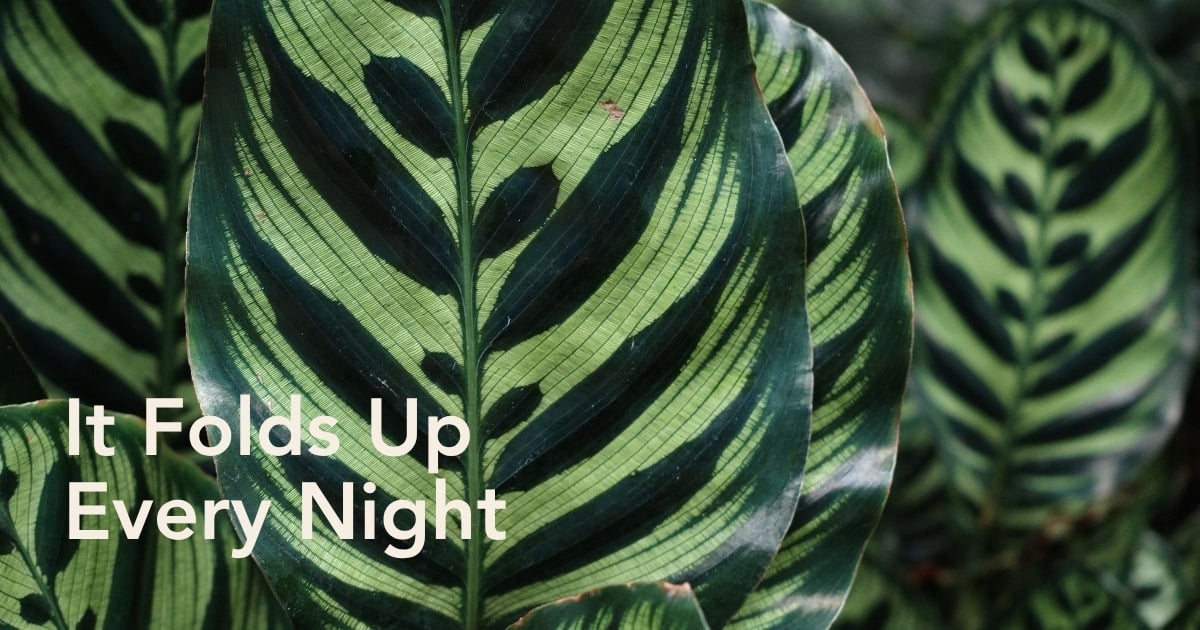
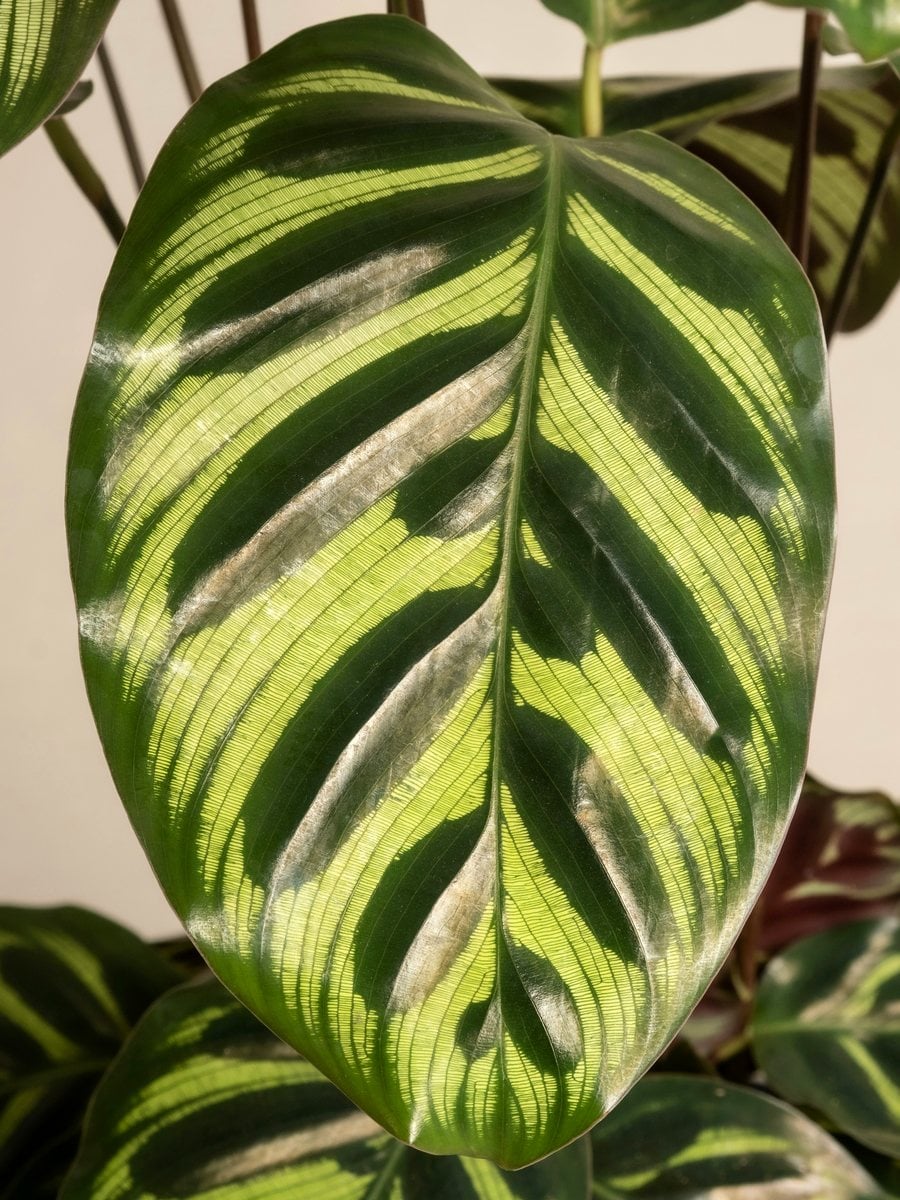
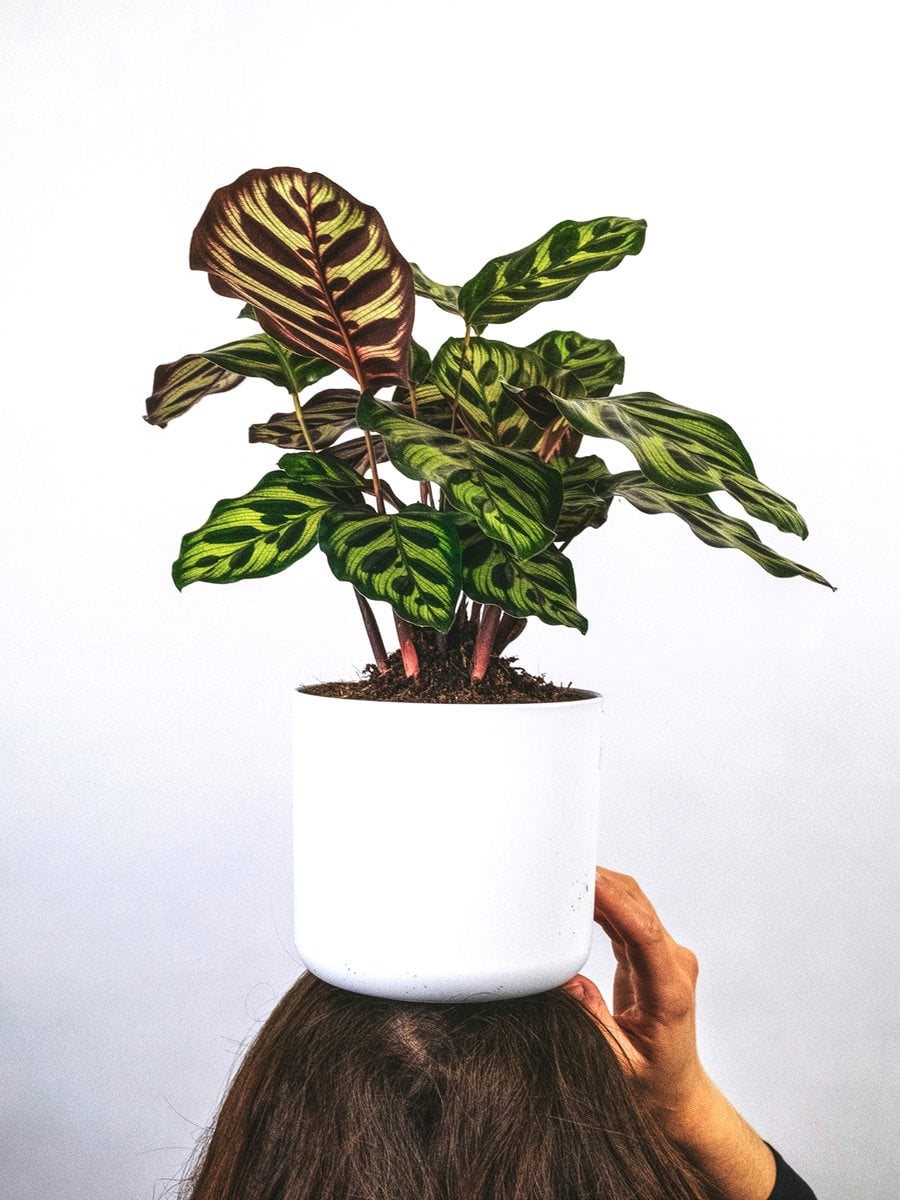
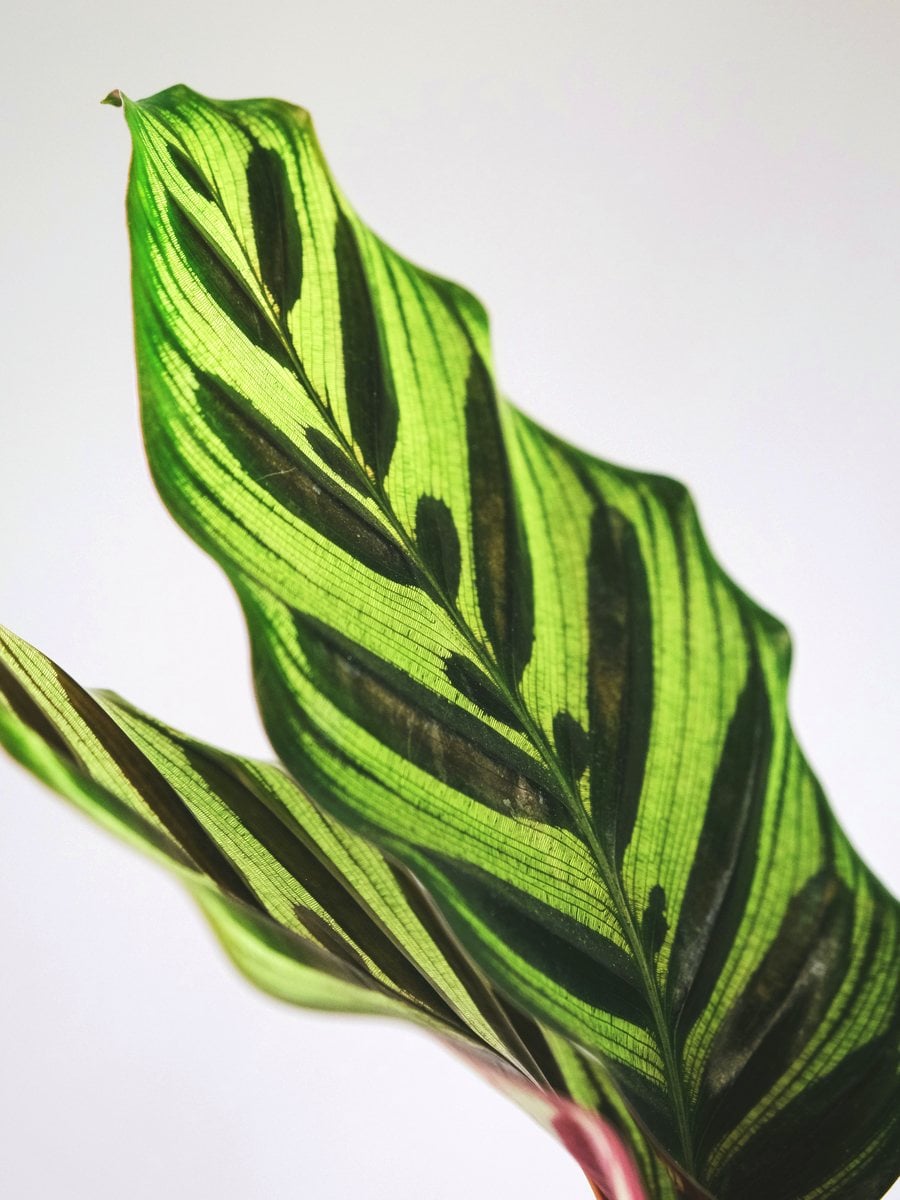
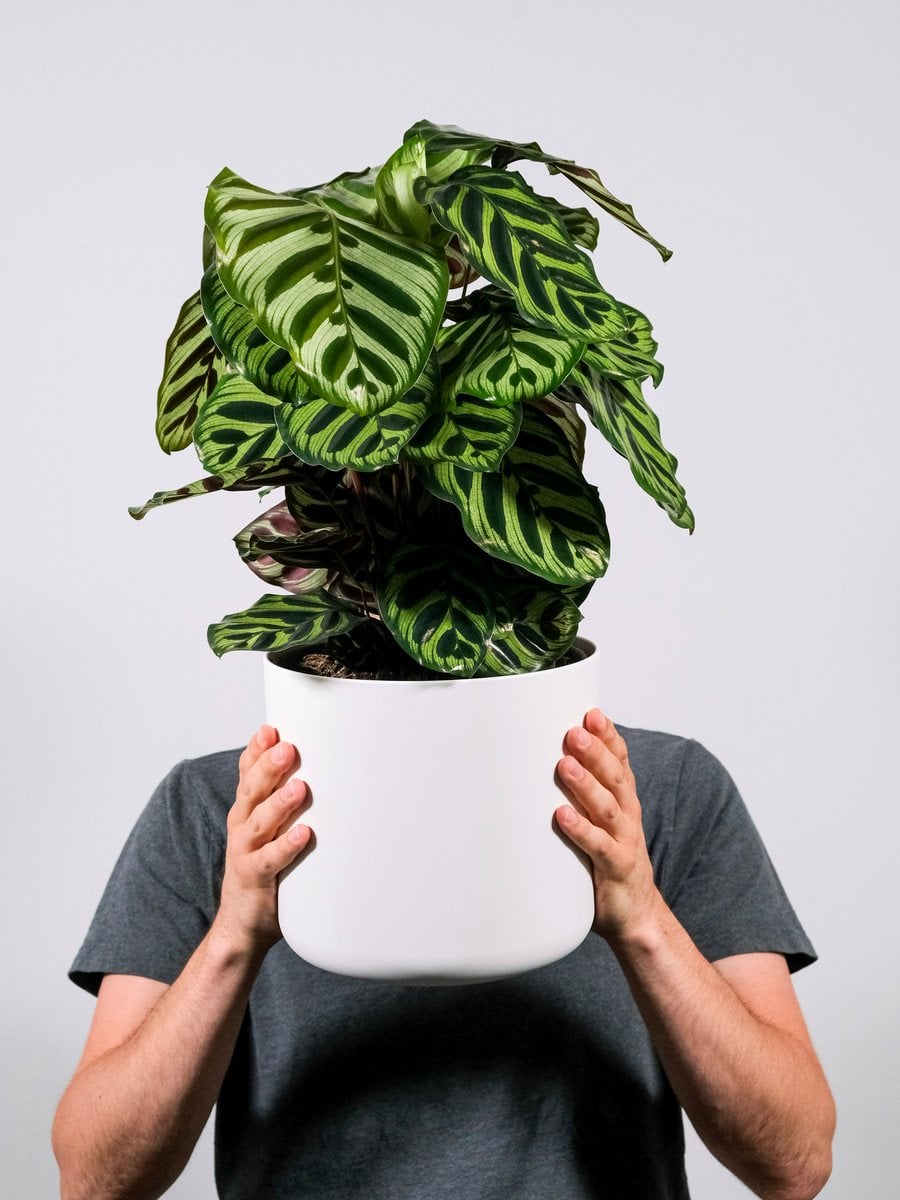
Each leaf is broad, egg-shaped, and papery thin, and it stands upright on a long stalk. The upper side is pale green to cream, with dark green feathering along the midrib, dark oval blotches on either side of it, and a dark green, slightly wavy edge. NC State describes the pattern as resembling a peacock's tail feathers. Turn a leaf over, and the same design shows up again in reddish purple.
Hold a leaf up to a window, and the pale parts glow while the dark markings stay solid. That stained-glass effect suits its other name, cathedral windows. The purple side matters too: Gebr. Valstar, a Dutch Calathea nursery that grows makoyana, notes on its own site that the purple underside gives the plant a different look by day than by night, since the raised leaves show more of it after dark.
Calathea or Goeppertia? The 2012 Name Change
For more than a century, the peacock plant was Calathea makoyana, and most garden centers still label it that way. In 2012, the botanists Finn Borchsenius, Luz Stella Suárez Suárez, and Linda M. Prince published a DNA study of the genus in the journal Systematic Botany. Calathea, then the largest genus of the Marantaceae with an estimated 285 species, turned out not to be one natural group. Its species sat on two separate branches of the family tree, so the authors kept the name Calathea for one branch and brought back the genus name Goeppertia for the other, with 246 new name combinations. The peacock plant became Goeppertia makoyana in that paper, as the International Plant Names Index records.
The plant on your windowsill did not change, and both names are in use. Growers, shops, and most care guides, Thursd's included, still say Calathea. Other familiar 'Calatheas' carry Goeppertia names now as well: the zebra plant is Goeppertia zebrina, the network plant is Goeppertia kegeljanii, and the rattlesnake plant is Goeppertia insignis.
Why Does a Peacock Plant Move at Night?
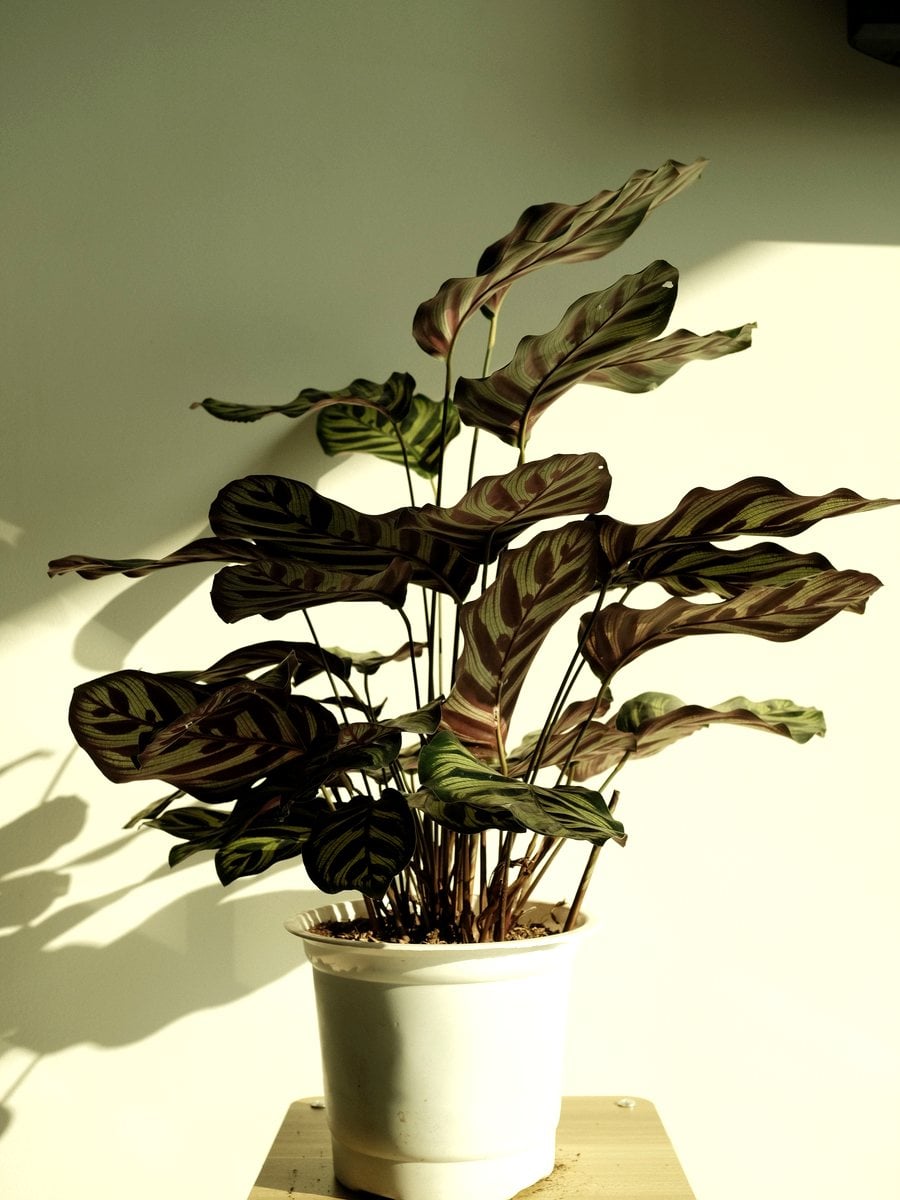
The evening lift has a name, nyctinasty, and the whole prayer plant family shows it. Where each leaf blade meets its stalk sits a small joint called the pulvinus. On a daily rhythm, the water pressure inside that joint changes, which raises the leaves toward evening and lowers them again in the morning, as the Brooklyn Botanic Garden explains. NC State adds that the peacock plant's foliage folds up in the evening and reopens at sunrise in response to changes in light and temperature.
Growers know the rhythm well. Thursd's page on Gebr. Valstar, which has grown Marantaceae since 1978, names the circadian rhythm as what makes the plant special: the leaves close up when it gets dark and open again at dawn. To see it for yourself, take a photo of your plant at noon and another at 10 p.m. from the same spot. Leaves that stay folded in the middle of the day are a different story, covered under curling leaves below.
How to Care for a Peacock Plant
Water: Rainwater or Distilled, Never Soggy
The peacock plant wants a mix that stays evenly moist. NC State lists wet soil and dry soil among the conditions it does not tolerate, and the Brooklyn Botanic Garden's rule of thumb is to water when the top 2.5 to 5 centimeters (1 to 2 inches) of the mix feel dry. Check the pot every few days until you know its rhythm. In winter, the plant grows slowly, and NC State advises watering less.
What you water with matters as much as when. NC State recommends distilled water or rainwater, because the fluoride in tap water can turn the leaves brown, and the Brooklyn Botanic Garden adds that Calatheas do not like hard water. If your tap water is soft, let it stand for an hour or two so the chlorine can escape, as that article suggests. If it is hard or fluoridated, use rainwater or distilled water.
Humidity: Aim for 60 Percent
Humidity is the hard part indoors. NC State puts the target at a relative humidity of 60 percent and warns that low humidity makes the leaves roll and brown. A humidifier is the reliable fix, and the Brooklyn Botanic Garden is blunt about it: get one. Grouping plants together helps, and so does a tray of wet pebbles under the pot, although the same article warns that a pebble tray needs a weekly clean to keep fungus gnats and mold away. A bright bathroom is a natural home, and Thursd's list of bathroom plants that absorb moisture recommends Calatheas for exactly that tolerance of humid air.
Misting divides the experts. Teun Valstar Shadowplant, a Calathea nursery in Honselersdijk that grows makoyana in 14-centimeter pots, tells buyers to mist the plant lightly when brown tips appear, since they come from dry room air. The Brooklyn Botanic Garden calls misting ineffective. Both agree on the cause, so a humidifier in a dry room is the safer bet.
Light: Bright Shade, No Direct Sun
Under the rainforest canopy, the peacock plant gets filtered light, and that is what it wants at home: bright indirect light or partial shade. Direct sun burns the thin leaves, while too little light makes the pattern fade, according to NC State. The Brooklyn Botanic Garden suggests starting a few feet (about a meter) from an east- or west-facing window and watching how the plant responds.
Temperature: 18 to 24 °C and No Drafts
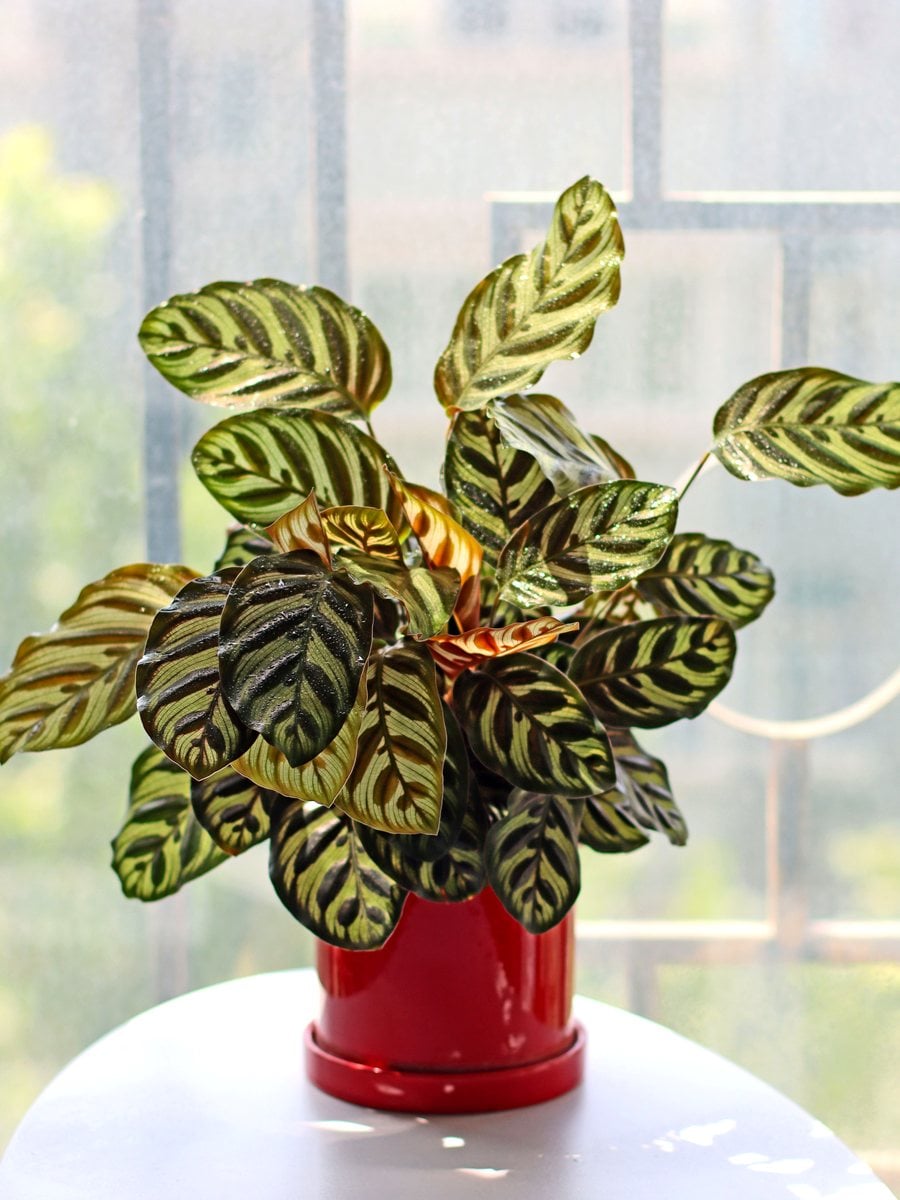
NC State gives 18 to 24 °C (65 to 75 °F) as the range the plant needs, and it lists cold drafts and low or inconsistent temperatures among the things it does not tolerate. Keep it away from outside doors, air conditioning vents, and radiators, and move it off a cold windowsill on winter nights. Teun Valstar gives its buyers the same 18 to 24 °C for several of its Calatheas, with the same warning about cold and drafts.
Soil, Feeding, and Dusting
Pot it in a moist but well-drained mix with plenty of organic matter, opened up with perlite. The Brooklyn Botanic Garden's own blend for Calatheas is half potting mix, 20 percent peat moss, 20 percent perlite, and 10 percent coir. NC State advises a balanced fertilizer every four weeks in the growing season and none in winter. Dust on the broad leaves slows photosynthesis, so wipe them now and then with a soft, damp cloth.
How to Propagate a Peacock Plant by Division
It spreads from rhizomes, the thick underground stems at the base of the clump. NC State names division of the rhizomes in late spring as the preferred way to propagate it and suggests dividing every two years to keep the plant vigorous.
- In late spring, slide the plant out of its pot and loosen enough soil to see where the clumps join.
- Pull the clumps apart, or cut the rhizome with a clean knife, so that every piece keeps several leaves and a good set of roots.
- Pot each piece in fresh, moist mix in a pot just big enough for its roots.
- Keep the new plants warm, humid, and out of direct sun while they settle in.
Peacock Plant Problems and How to Fix Them
Why Are My Peacock Plant's Leaves Curling?
First, check the time. Leaves that stand up and fold in the evening are doing what they should. Leaves that stay rolled during the day are telling you something, and NC State names the main cause: low humidity, which makes the leaves roll and brown. Dry soil is the second suspect, and cold drafts are the third. Feel the soil first, then check the humidity, then look at where the plant stands.
Why Does My Peacock Plant Have Brown Edges?
Brown, crispy edges and tips point to the water or the air. NC State names the fluoride in tap water and low humidity as causes of browning, and Teun Valstar puts brown tips down to dry room air. Switch to rainwater or distilled water, raise the humidity, and trim the brown parts with clean scissors, following the shape of the leaf. Pale or scorched patches on the side that faces a sunny window point to too much sun instead.
Yellow Leaves and Root Rot
NC State warns that overwatering causes root rot. For its close relative, the rattlesnake plant, it notes that yellow leaves can come from overwatering and underwatering alike, so check the soil before you reach for the watering can. Let the top of the mix dry a little between waterings, empty the saucer, and make sure the pot drains.
Faded Leaves and Pests
When the pattern fades, the plant needs more light. Serious pests are rare, but NC State advises watching for aphids, scale, mealybugs, and spider mites, so look at the undersides of the leaves when you wipe them.
The Peacock Plant and Its Relatives
Peacock Plant Versus Rattlesnake Plant
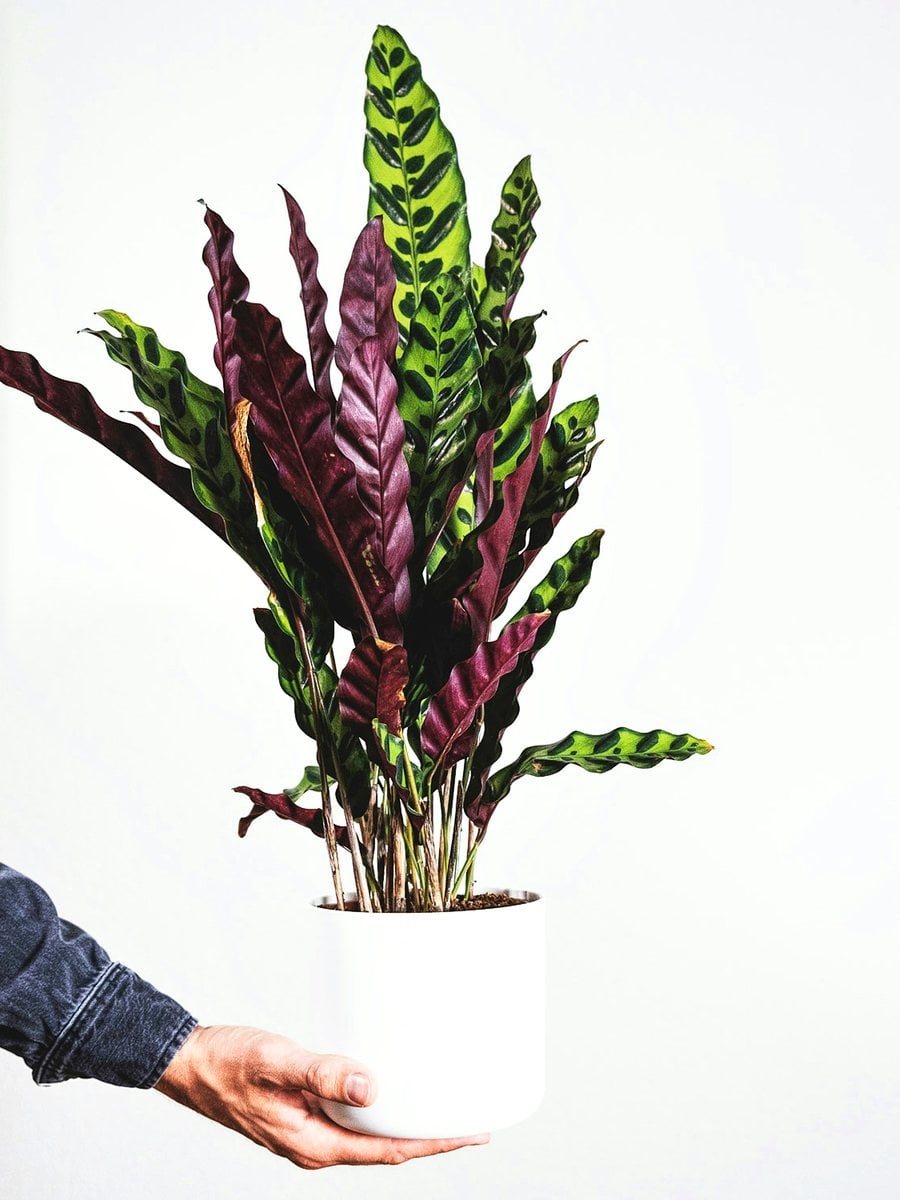
Both come from the rainforests of southeastern Brazil, both have purple undersides, and both fold their leaves in the evening, so it is no surprise that NC State lists the rattlesnake plant among the plants the peacock plant is often confused with. The leaves tell them apart. The rattlesnake plant, Goeppertia insignis, sold as Calathea lancifolia, has long, slender leaves up to 45 centimeters (18 inches) with wavy edges and alternating small and large dark ovals along the midrib. The peacock plant's leaves are broad and egg-shaped, with feathered markings on a pale background. Their care is the same.
Peacock Plant Versus Prayer Plant
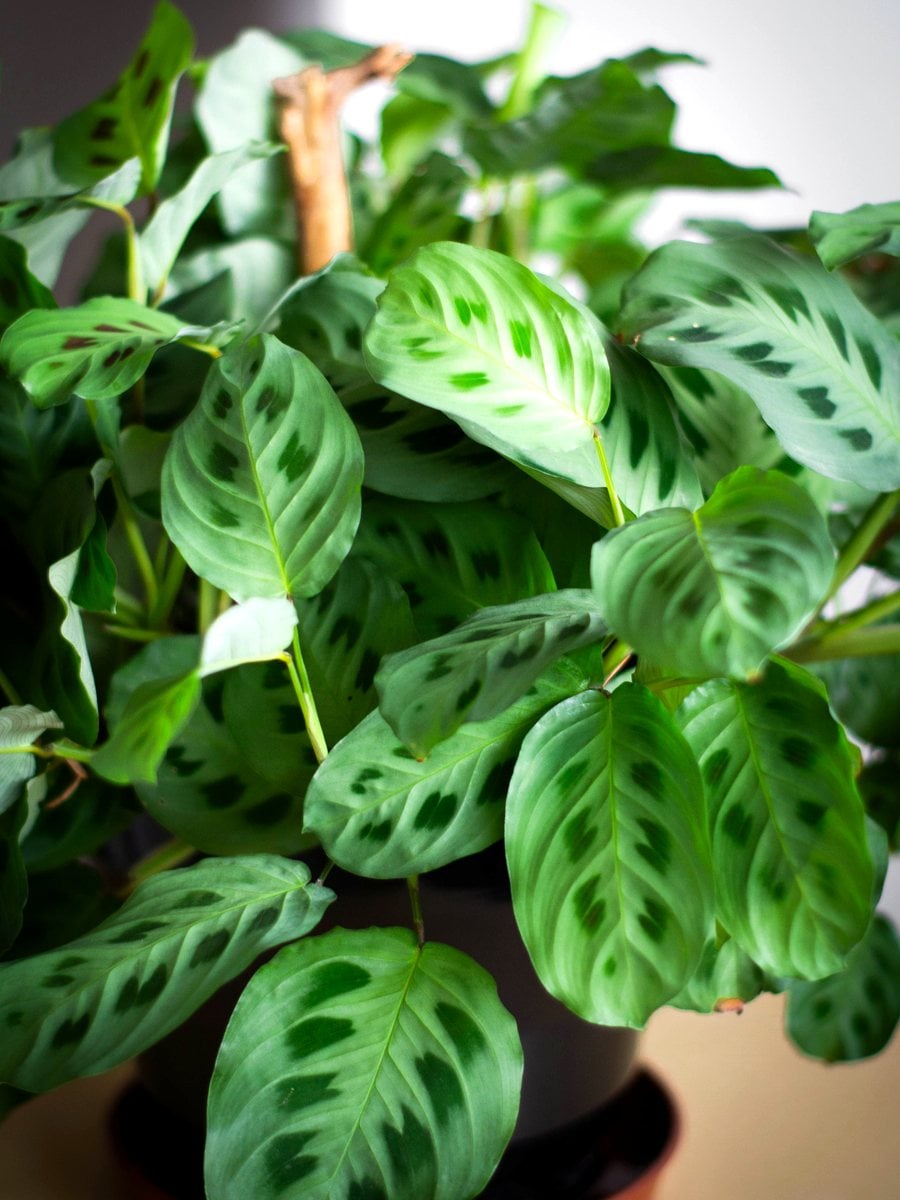
The prayer plant is a different genus in the same family: Maranta leuconeura. The Brooklyn Botanic Garden tells the two apart by the Maranta's oval leaves and its own typical pattern, and it calls the Marantas the most athletic movers of the family, with Calatheas second. Care is close to identical, although some growers find Calatheas a little more demanding. Thursd's prayer plant care guide covers the Maranta side of the family.
Other Plants Called Peacock Plant
The common name travels. NC State lists three other plants that go by peacock plant: Calathea crotalifera, the zebra plant Goeppertia zebrina, and Kaempferia, a member of the ginger family also called peacock ginger. The ASPCA's entry for peacock plant describes that Kaempferia, not the Calathea. When you buy one, check the botanical name on the label.
Other Calatheas to Know
If this one wins you over, the family has plenty more. The round-leaved Calathea orbifolia, the Calathea musaica, Calathea roseopicta, Calathea zebrina, and Calathea vittata each have their own Thursd guide, and the overview of low-maintenance Calathea plants walks through the main types. The product pages for Calathea Medallion, Calathea Dottie, and Calathea Flamestar show which growers supply them.
The Dutch Nurseries Behind the Plant
Two Dutch nurseries with a page on Thursd grow the peacock plant. Gebr. Valstar began with Marantaceae in Honselersdijk in 1978 and now grows Calathea on about 10 hectares at nurseries in Maasland, Roosendaal, and Brazil. It also breeds its own varieties, and its team travels to Brazil to look for new ones in the wild. Makoyana is on its current list, next to Flamestar, Medaillon, Network, and Zebrina, and the nursery sells through garden centers and florists. Teun Valstar Shadowplant in Honselersdijk specializes in Calathea too, and its 14-centimeter range includes Makoyana.
Is a Peacock Plant Safe for Cats and Dogs?
Yes. The ASPCA lists Calathea as non-toxic to dogs, cats, and horses, and NC State tags the species non-toxic for all three. That makes it one of the safer patterned plants for a home with pets, and Thursd's list of pet-friendly houseplants has more. A cat that chews the leaves will still spoil the pattern, so a shelf out of reach keeps both of them happy.
Give a peacock plant soft water, humid air, and a bright spot out of the sun, and it will keep its pattern for years. Then wait for the evening and watch it close.
Sources: NC State Extension Plant Toolbox, Goeppertia makoyana and Goeppertia insignis; Michelle Inciarrano, The Wonderful World of Calatheas, Brooklyn Botanic Garden, 2022; Finn Borchsenius, Luz Stella Suárez Suárez, and Linda M. Prince, Molecular Phylogeny and Redefined Generic Limits of Calathea (Marantaceae), Systematic Botany 37(3), 2012; International Plant Names Index, Goeppertia makoyana; ASPCA: Calathea and Peacock Plant; Gebr. Valstar, assortment; Teun Valstar Shadowplant, 14 cm range.
Featured image: a peacock plant in a white pot by feey on Unsplash. Header image: peacock plant leaves by Blue Arauz on Pexels.