Peperomia is one of the largest genera in the plant world, with well over a thousand species, and almost none of the care advice written about it accounts for that. What links them is not appearance, because they range from trailing strings of bead-like leaves to upright shrubby plants with thick glossy foliage. What links them is how they hold water.
Peperomias are semi-succulent. The leaves store moisture, the roots are shallow and fine, and the whole plant is built for short dry spells. Once you know that, the two things people get wrong become obvious: they water too much, and they pot too big.
Types of Peperomia Worth Knowing
Peperomia obtusifolia, the baby rubber plant, is the upright, thick-leaved one, and the toughest of the group. Glossy oval leaves, often variegated, and is forgiving of neglect. If you have killed Peperomias before, start here.
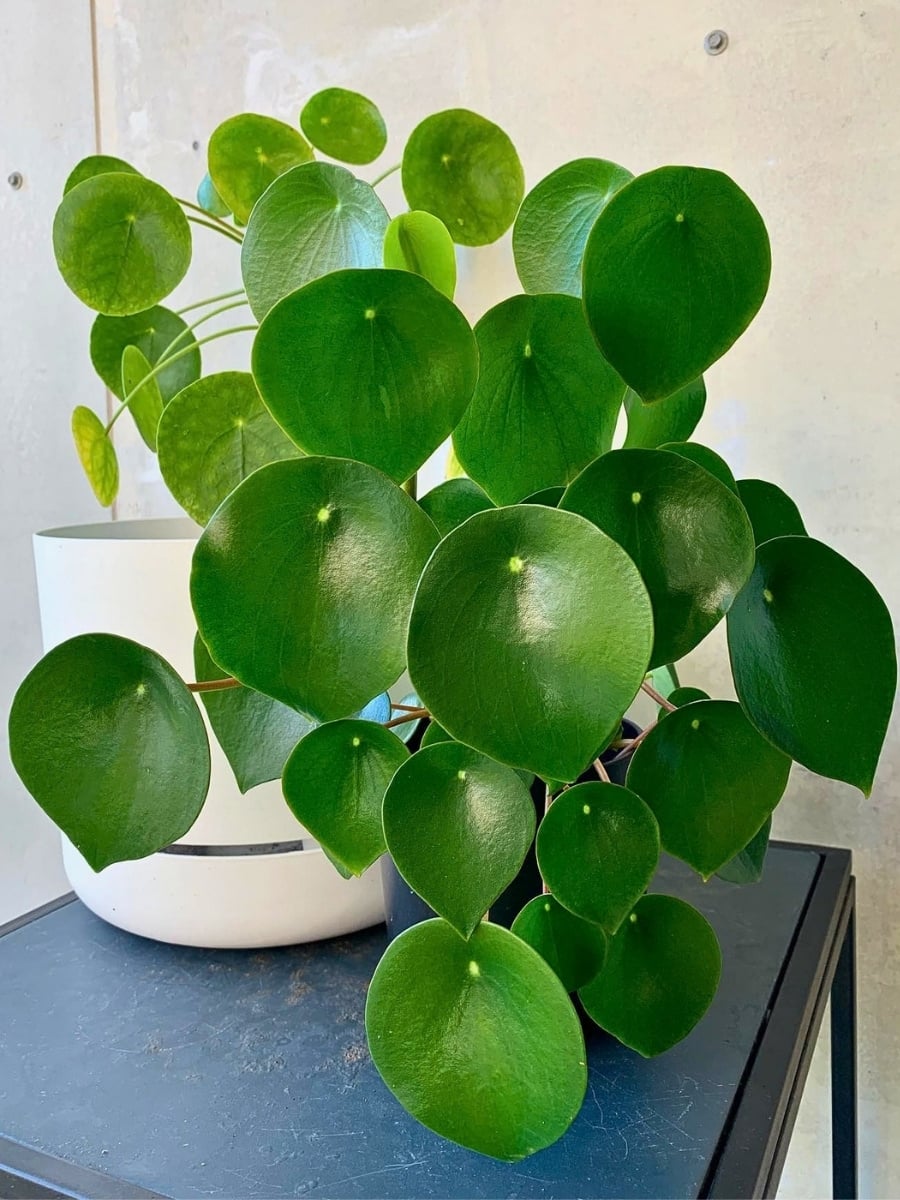
Peperomia caperata, emerald ripple, has deeply corrugated heart-shaped leaves in green, silver, or a near-black red. It is the most decorative of the common types and the most sensitive to sitting wet, because water collects in the leaf crinkles and in the crown. Thursd lists Peperomia caperata with the growing detail.
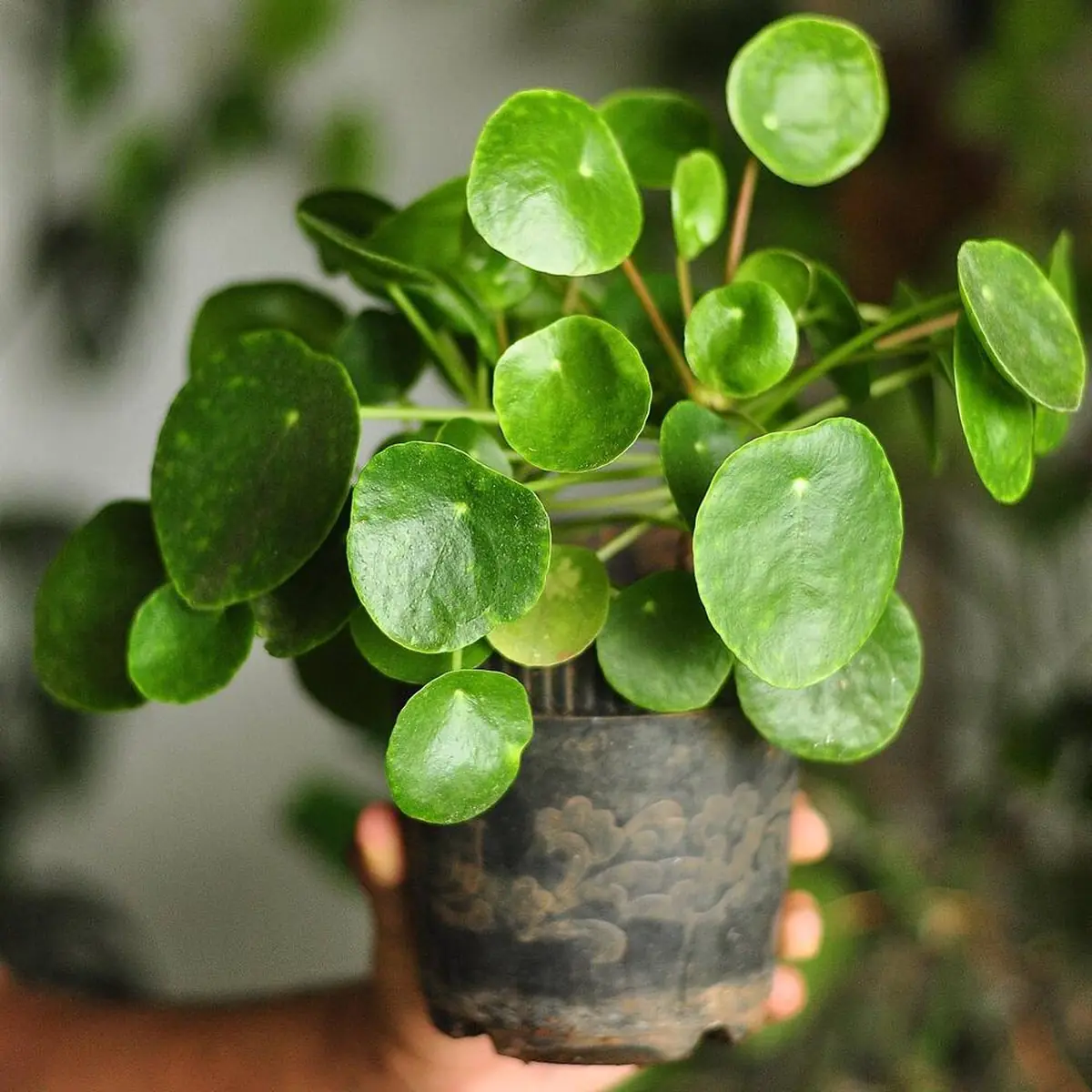
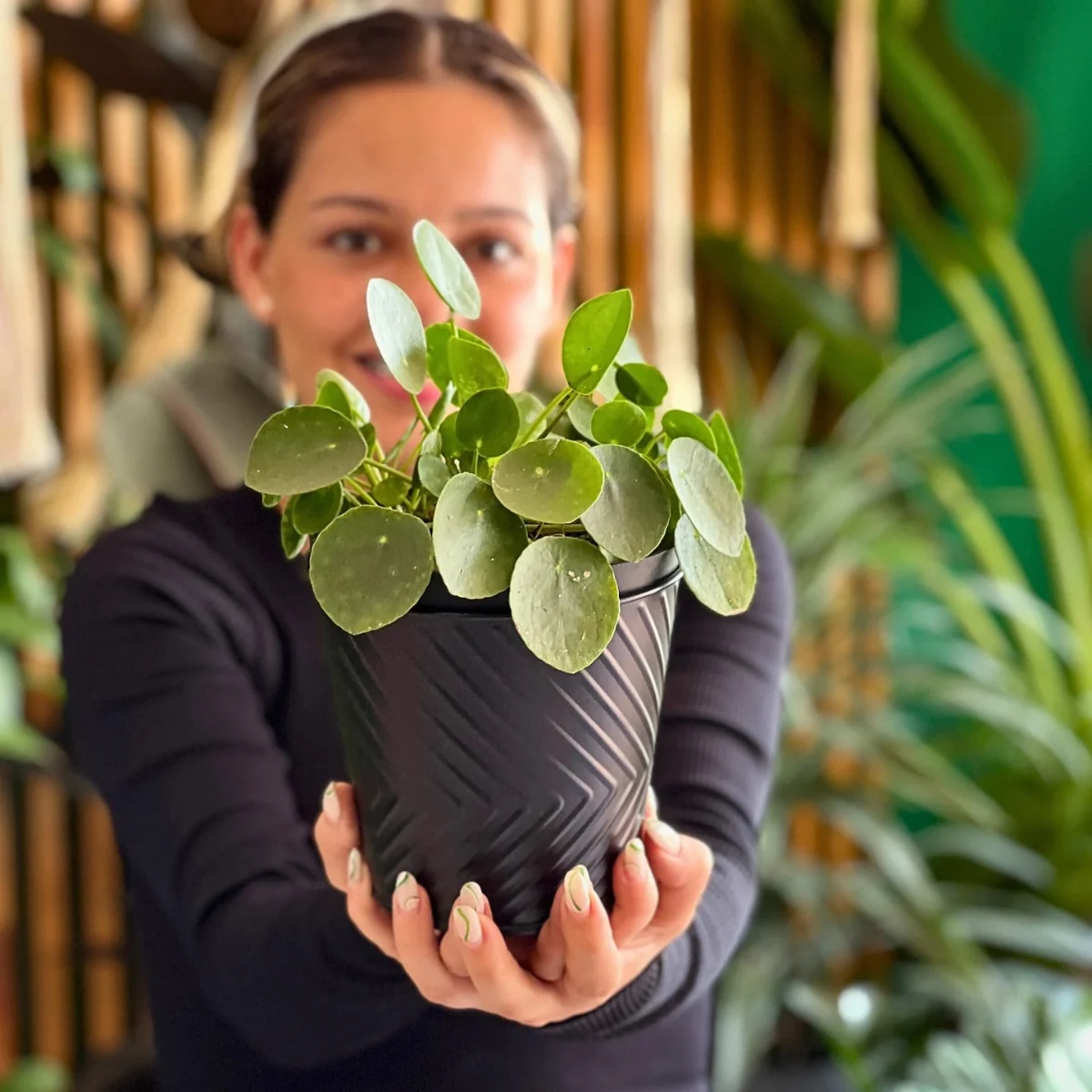
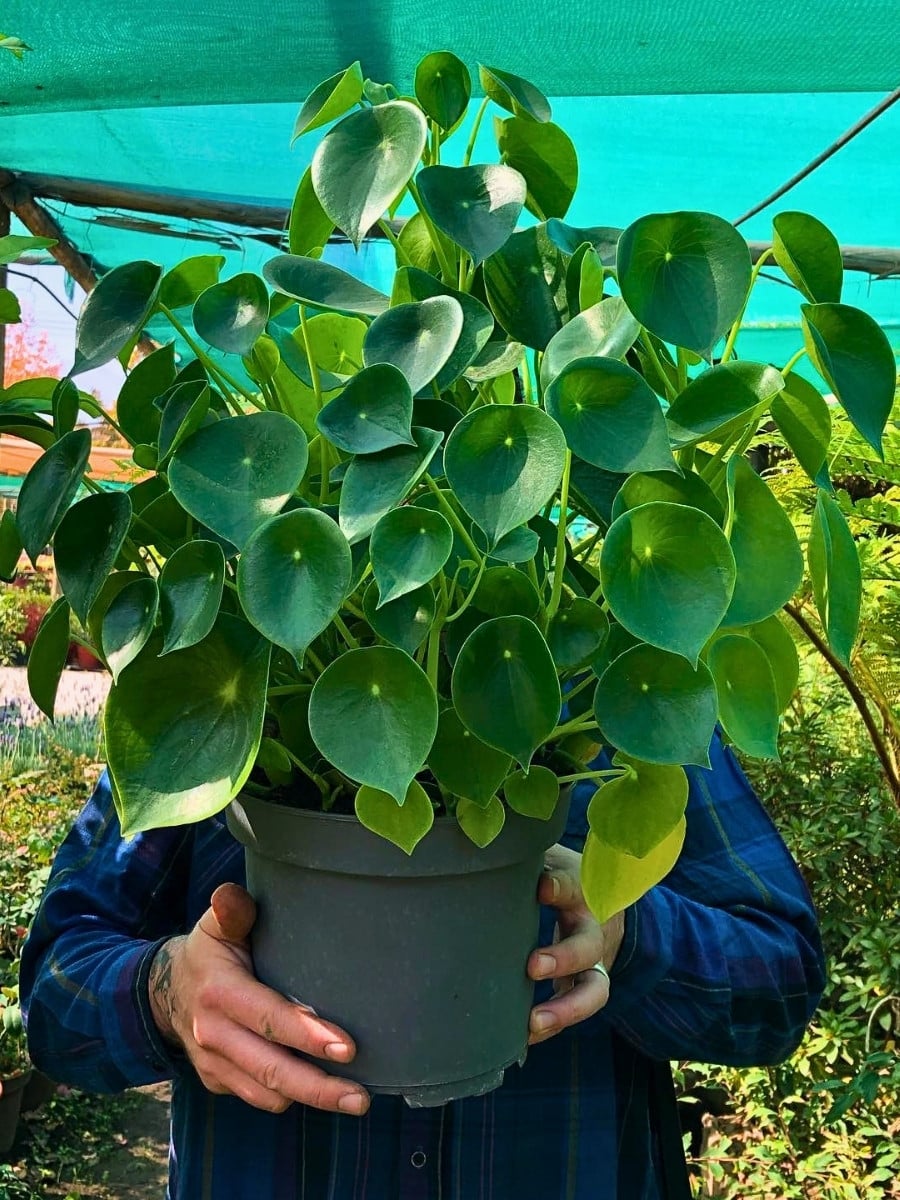
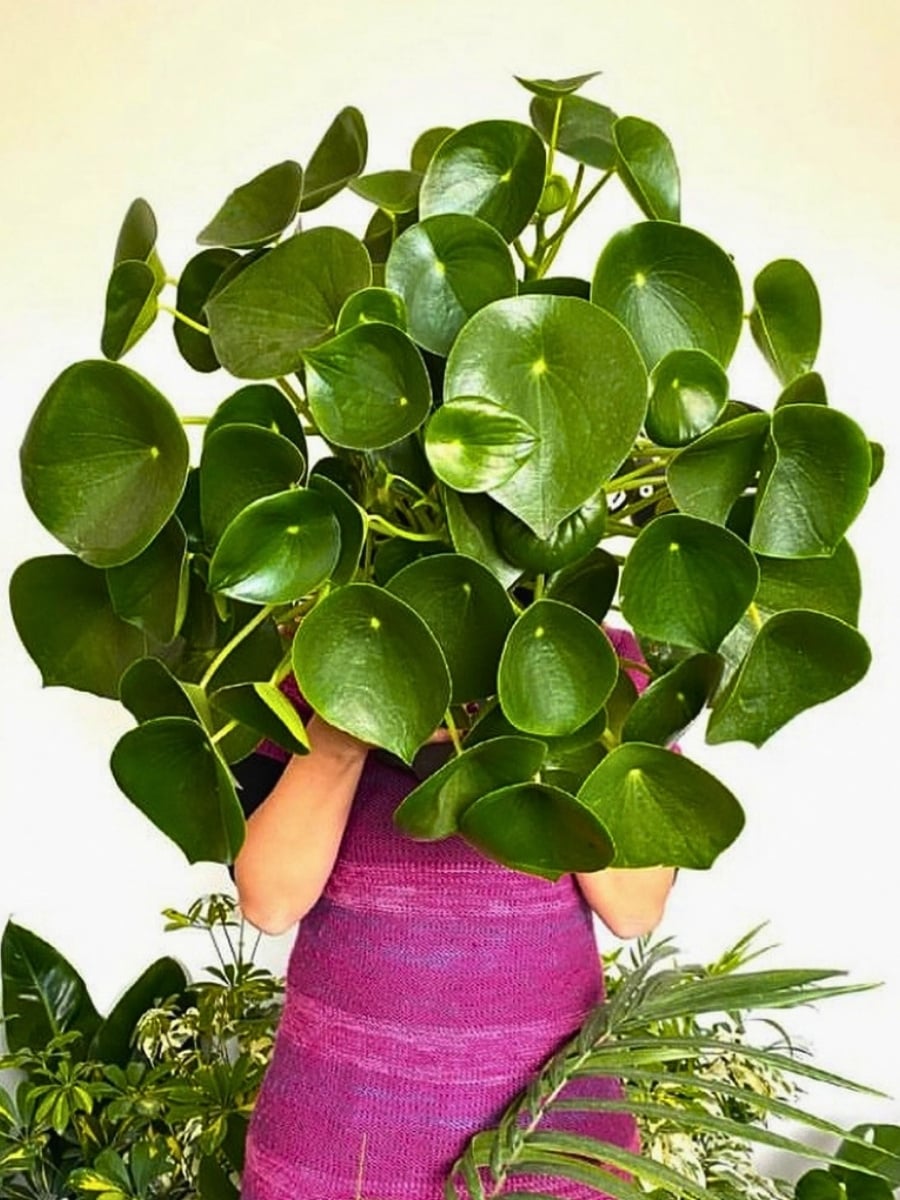
Peperomia polybotrya, raindrop Peperomia, has thick shield-shaped leaves that genuinely look like a drop of water. It is regularly confused with Pilea peperomioides, the pancake plant, which is a completely different genus. The tell is the leaf shape: the raindrop comes to a point; the Pilea is round with the stem in the middle.
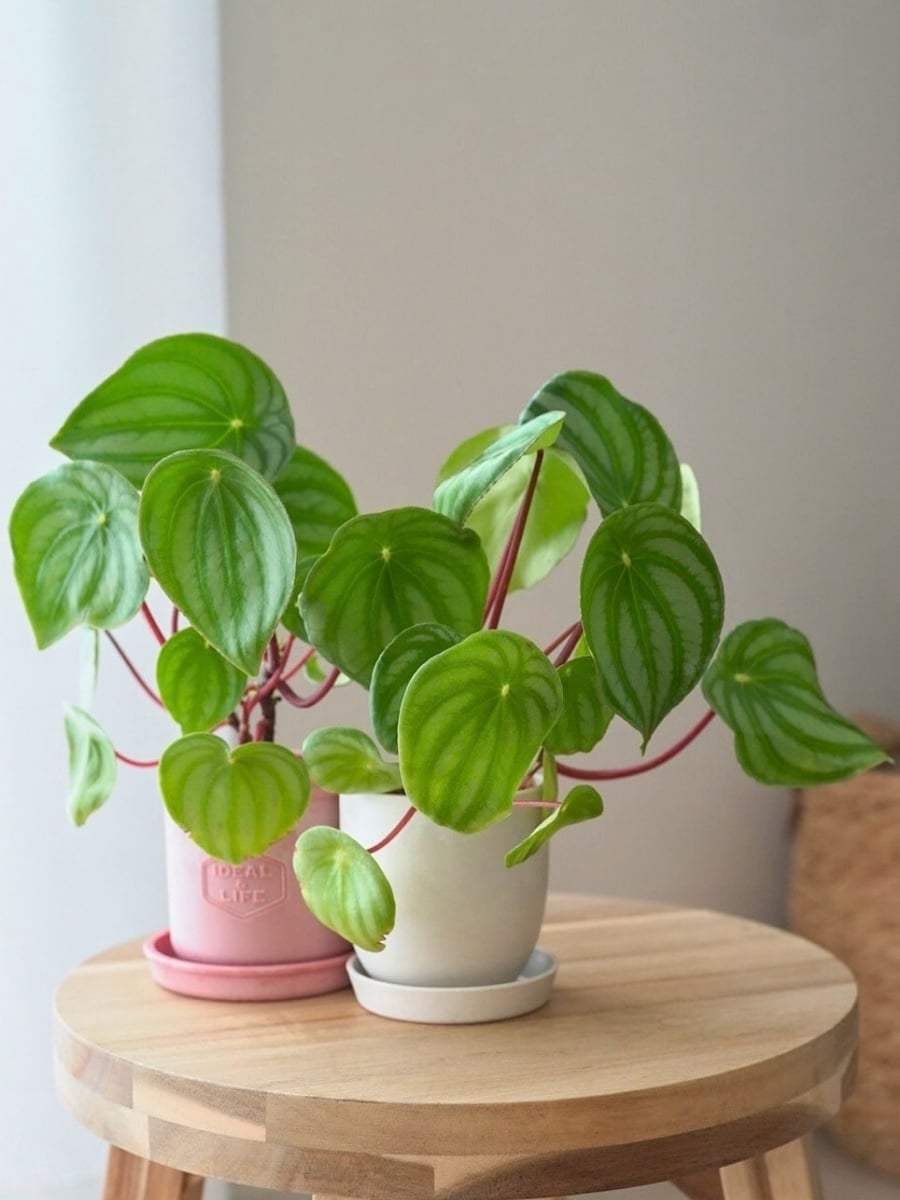
Peperomia argyreia, watermelon Peperomia, is named for the silver striping that really does look like watermelon rind. Striking, and slightly more demanding on humidity than the rest.
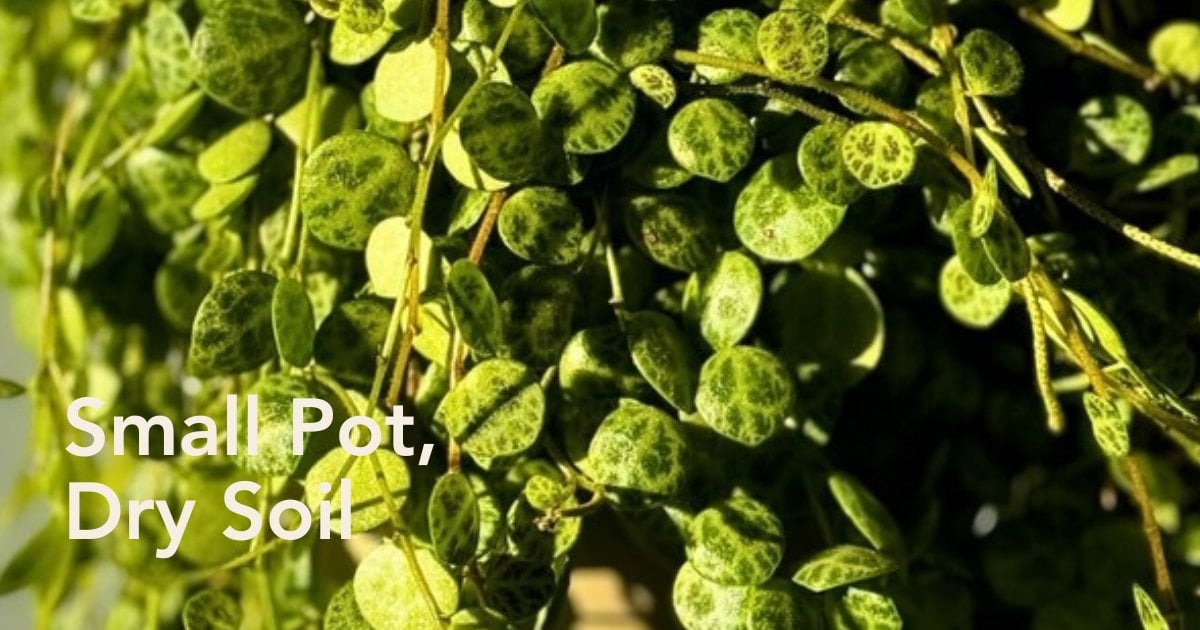
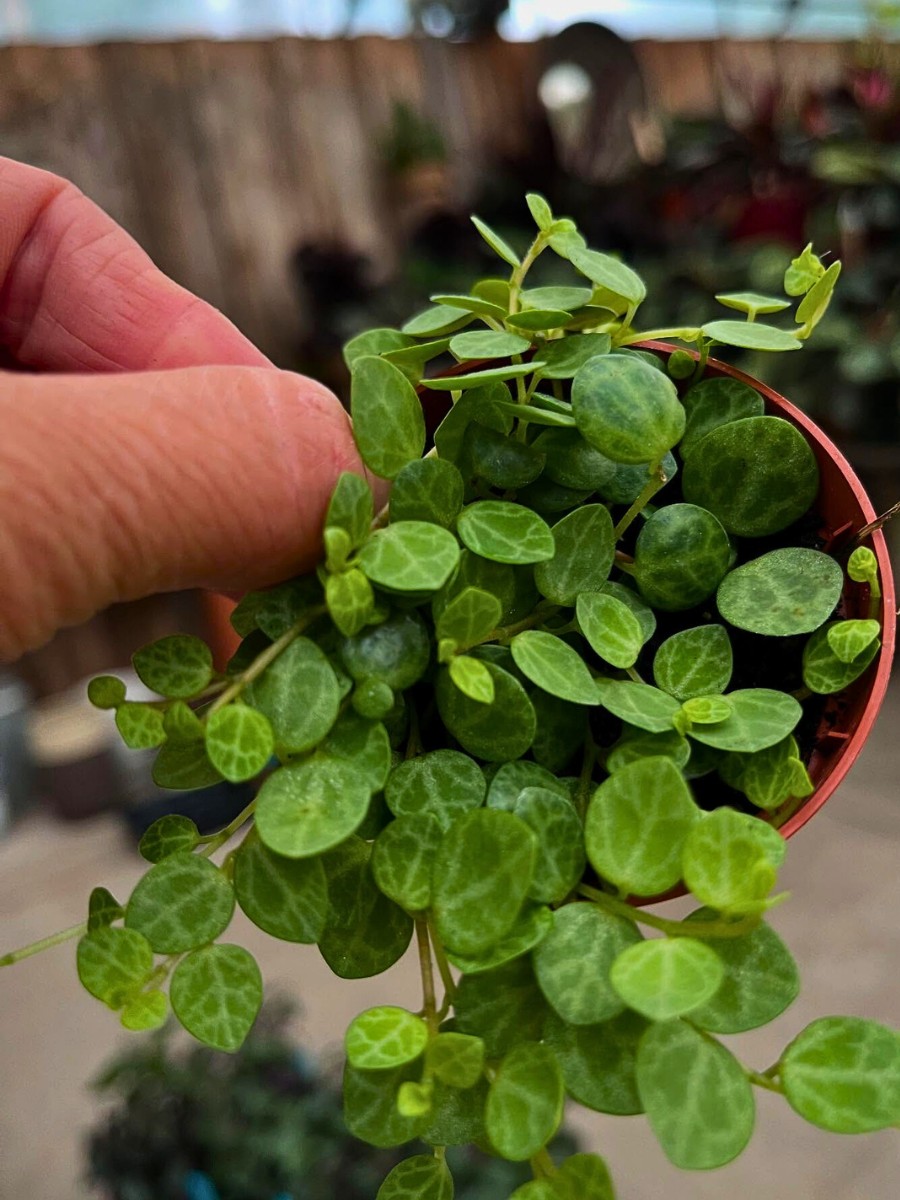
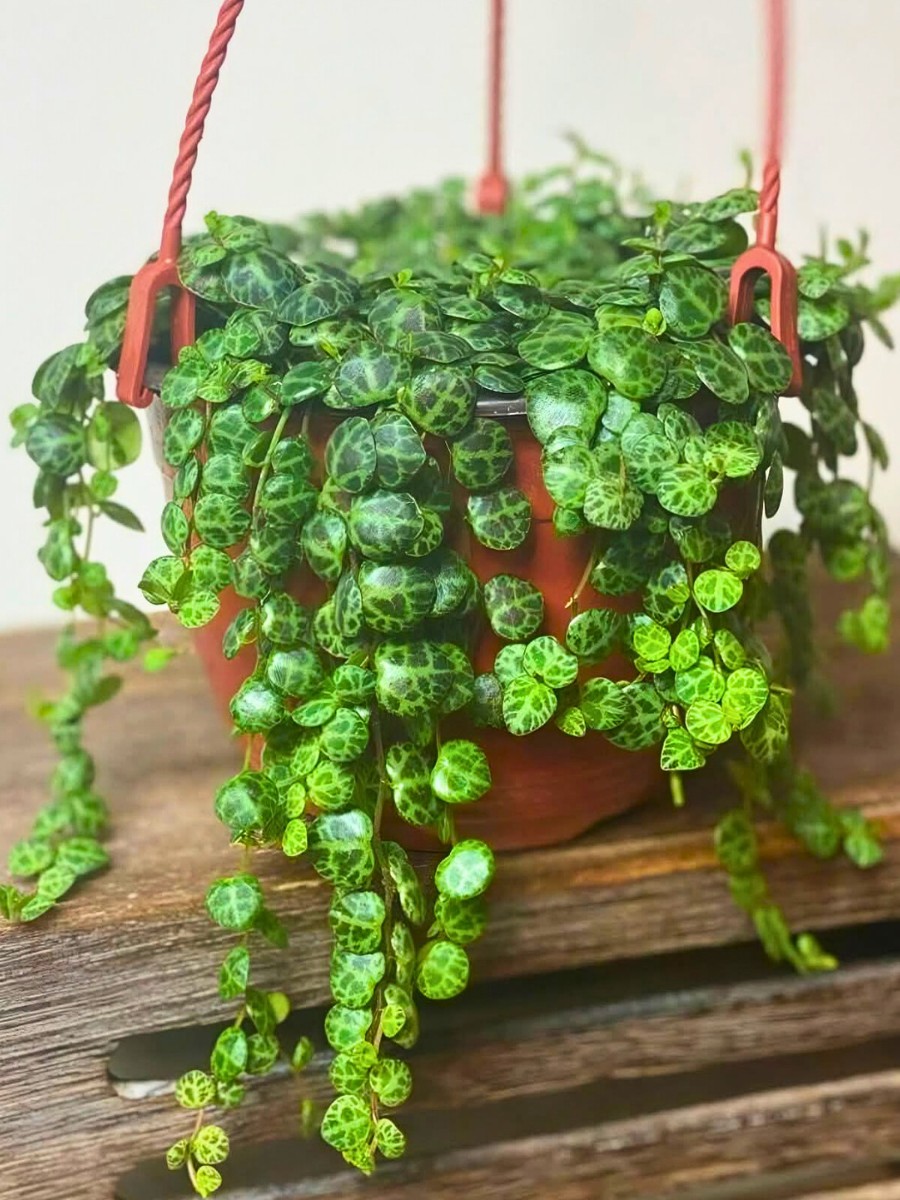
Peperomia prostrata, string of turtles, is the trailing one, with tiny round leaves patterned like a shell. It is slow, it is fragile, and it is the one most likely to be sold in a pot far too large for it. Thursd has a dedicated string of turtle care guide.
Peperomia Care
Water, Which Is the Whole Game
Let the top half of the pot dry out before watering again. Then water properly, let it drain, and empty the saucer. A Peperomia that is slightly too dry recovers in a day. A Peperomia that has been too wet for a fortnight is usually gone because its fine roots rot fast, and there is no visible warning until leaves start dropping from the base.
The classic mistake is reading limp leaves as thirst. Overwatered Peperomia and underwatered Peperomia look almost identical from above. Check the soil before you reach for the watering can, every time.
Pot Size and Soil
Small pots. The root system is shallow and fine, and a large pot holds a large volume of wet soil those roots cannot use, which slowly rots the plant. Repot only when it is genuinely full, and go up one size. Use an airy mix, a standard houseplant compost cut with perlite, bark, or coarse sand.
Full comes much later than most people think. Michel Teekens of Danish mini-plant grower Lundager says a Peperomia in a 6 cm pot can stay in it for months, because it grows slowly and likes a snug pot. "It is only really full when roots come out of the holes and the pot dries out within a day or two," he says. "Then one size bigger is enough. Repotting before that is mostly a risk, because wet soil around few roots causes problems."
Light
Bright indirect light. Peperomias grow as understory plants, and some grow as epiphytes on tree trunks, so they are adapted to dappled light rather than full sun. Direct sun bleaches the leaves, particularly on the variegated forms. Too little light and the variegation fades to plain green, and the plant stretches.
Humidity and Temperature
Average room humidity suits most of them, which is part of why they are good beginner plants. The thin-leaved types such as watermelon Peperomia appreciate more. Keep them above 15°C and away from cold windows in winter. Below 10°C a Peperomia stops growing, below 5 to 8°C the leaves are damaged, and it does not survive frost, Teekens says. The damage shows within one to three days, when the leaves turn glassy and then black. So in winter, don't park it by the door.
Propagating Peperomia
This is where the genus is genuinely rewarding, because leaf propagation works. Take a healthy leaf with a short piece of stalk, push the stalk into damp mix, keep it warm and lightly humid, and a new plantlet forms at the base. It is slow, taking weeks to months, and it is close to free.
For the trailing types, stem cuttings are easier. Lay a length of stem on damp mix and pin it down so the nodes make contact. The upright types can also be divided at the root when they are large enough.
Are Peperomias Safe for Pets
Yes, and this is one of the genus's real advantages. The ASPCA lists both the baby rubber plant and watermelon Peperomia as non-toxic to cats and dogs. For a household with animals, where most of the popular foliage plants are aroids and therefore full of calcium oxalate, that puts Peperomia in a small and useful group.
Non-toxic is not the same as edible, and a pet that eats a large quantity of any plant may still be sick. But there is no oxalate burn risk here, which is the thing that sends people to a vet at midnight.
Common Problems
Leaves dropping from the base. Overwatering, nearly always. Stop watering, check the roots, and repot into fresh, dry mix if they are brown and soft.
Leggy growth and faded variegation. Not enough light. Move it closer to a window, but not into direct sun.
Brown, crispy leaf edges. Too dry or too much direct light. On the thin-leaved types, it can also be low humidity.
Sudden collapse of a healthy-looking plant. Root rot that had been going on invisibly. This is the one that catches people, and it comes back to pot size and drainage every time.
Peperomias are grown commercially at scale in the Netherlands. Specialist houseplant growers such as JK Plant produce them alongside other green assortments, which is why the same handful of species turn up in every garden center across Europe.
Featured image: string of turtles (Peperomia prostrata) in a hanging pot, photo by @meerutgardeninglovers. Header image by @crazyplantcompany.
About the author: Brian Okinda is an editor at Thursd and a trained journalist specializing in agriculture, science, and sustainable floriculture. He covers the flower industry from the inside, from farms and expos to the people behind the flowers. Connect with Brian on LinkedIn.