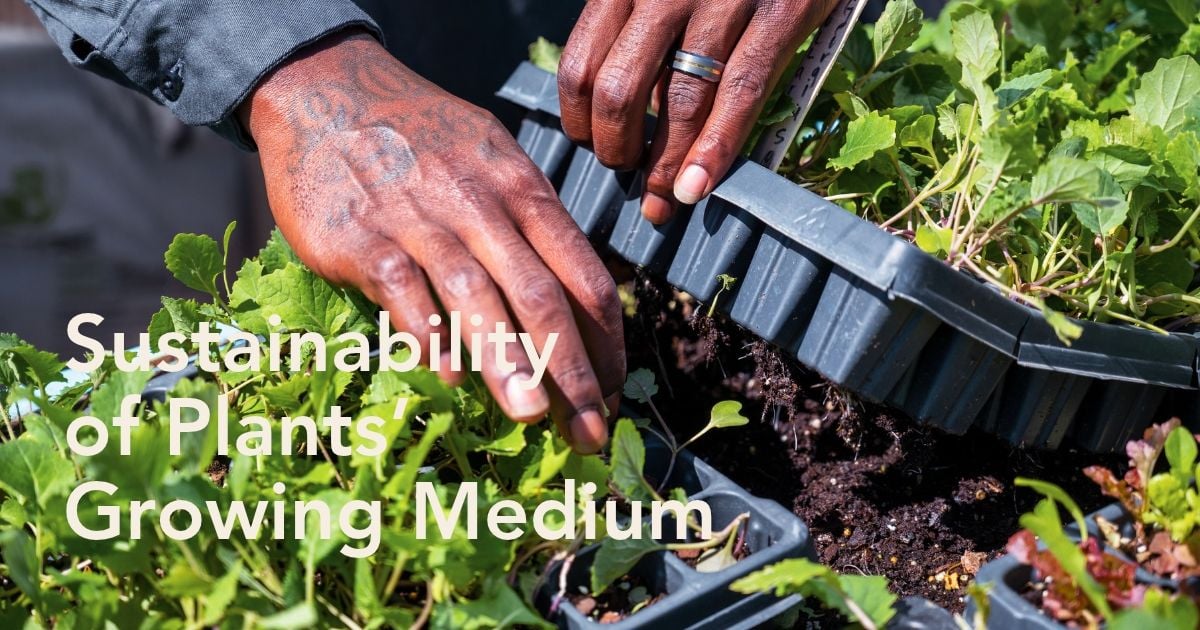
Substrates often get less attention than water or pesticides in floriculture production certification. In many instances, their ecological footprint goes unscrutinized in global standards. While certification frameworks largely focus heavily on chemical runoff, energy use, and environmental conservation, substrate sustainability usually remains an overlooked component, even as peat extraction is documented to deplete and damage peatlands, releasing stored CO₂.
A 2025 review by Germany's Global Nature Fund and Lake Constance Foundation found that there is hardly a standard that gives producers complete details on substrate sustainability. Establishing transparent metrics for growing media, peat reduction, and certified alternatives is, therefore, essential to realizing true supply chain accountability across the floriculture sector.
Findings of the Review on Substrates
The report on biodiversity criteria in floriculture standards examined ten leading schemes, and on substrates, the results were thin. While particulars like soil management guidelines address erosion and field overexploitation, growing media standards are sparse. Most global frameworks fail to provide producers with clear data regarding the environmental impact of substrates.
Furthermore, out of numerous international certification systems, only a small fraction establish explicit benchmarks for peat use. The few criteria that exist mostly cover the recycling of mineral inputs, with one standard referring to CO₂ footprinting. But support for producers who wish to phase out peat is 'not (yet) provided.'
For peat benchmarks, Bioland is, perhaps, the most ambitious. It caps peat use at 50% by volume for nursery, perennial, and ornamental plant cultures and at 80% by volume for young plant soils, with room for plants that need a low pH. Another standard allows up to 70% peat in growing media and 50% in potting substrates, and a further one excludes substrates from designated conservation areas.
Input monitoring is equally limited. Only two of the reviewed standards, MPS and Florverde, track inputs digitally, including peat and substrate ingredients. In other words, across mainstream floriculture, the ambitious peat sustainability requirements remain an outlier rather than the established rule.
Peat extraction, as noted, destroys fragile wetland habitats, releases stored carbon dioxide, and accelerates local biodiversity loss. Addressing this issue, therefore, requires a structural change in how substrates are evaluated, monitored, and integrated into general sustainability frameworks.
Why Peat Remains the Central Point of Concern
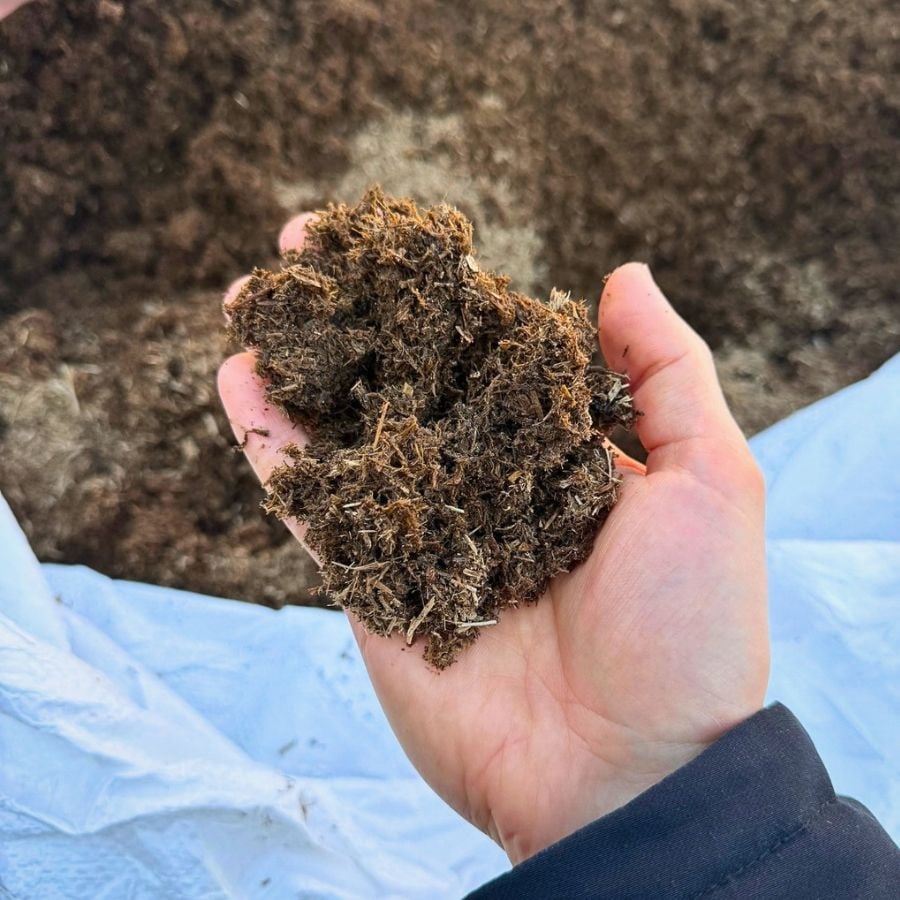
The report on biodiversity criteria in floriculture standards identifies peat as the main substrate input, citing a 73% share in professional floriculture in Germany. The natural recovery of the original peatland ecosystems destroyed by peat extraction is slow. But there are other effects of peat extraction, including disrupted hydrology, loss of soil organisms, and drought or nutrient impacts on neighboring ecosystems.
Furthermore, continued peat use increases CO₂ emissions. Essentially, one would note that peatland destruction remains among floriculture’s hidden environmental costs, and since this resource regrows at roughly 1 millimeter per year, it is effectively non-renewable on a human timescale.
Peat Alternatives and Their Trade-Offs
The report compares peat, wood fiber, coir, tuff, and compost, and each alternative comes with trade-offs, including land use change, emissions, water use, and invasive species risk. Growers, however, often blend these materials to match peat’s water and air balance.
It also discusses Responsibly Produced Peat (RPP), which excludes high-conservation-value areas and focuses on restoring extraction sites, but notes that 'RPP is not sufficient for a long-term strategy,' although it secures baseline restoration requirements. It could, as a result, be termed a ‘transition certification.’
What the Report Recommends
The idea is to have standards to ensure that 50% plus an additional percentage of peat alternatives are used by 2030. Any peat still used during the transition should be RPP-certified or verified under a restoration regime, with time limits and traceability to the source, and producers should draw up detailed transition plans with milestones.
The report calls for criteria that cover all substrate ingredients, supported by life cycle assessments, and that exclude biodiversity-sensitive areas, with preference for certified materials such as FSC, HORTICERT, or EU Ecolabel. Standards should offer training, advisory support, and joint projects such as bog restoration, and customers should be told what their substrates contain.
It adds that a peat reduction of 40 to 50% can be achieved in many crops with reasonable effort. Policy supports this direction, including the Dutch Covenant and Germany's federal peat strategy that aim to principally phase out professional peat use by 2030. But a central question remains whether specialized substrate systems can operate in tandem with established certifications.
About HORTICERT, a Substrate-Specific Certification System
To address the lack of specialized substrate metrics in standard floriculture schemes, dedicated assessment systems have emerged. HORTICERT certification scheme was developed specifically to evaluate and certify the sustainability of peat, peat substitutes, and peat-reduced growing media. While HORTICERT has been noted to provide a very good basis for more sustainable substrates, it is not yet formally integrated into other standards.
In his view on the substrates, certification, traceability, and Germany’s peat targets, Leon Wienbeck, Project Manager for Carbon Footprint Improvement at Meo Carbon Solutions GmbH, explains that the HORTICERT system certifies the sustainability of peat substitutes and peat-reduced substrates, which encompasses ecological, economic, and social sustainability criteria, and a traceability approach along the whole supply chain.
To maintain complete transparency from raw material sourcing to final distribution, the system uses a proprietary digital tracking mechanism known as HORTI-TRACE, which ensures that alternative raw materials, such as wood fiber, coir, composted bark, and green waste, meet strict ecological standards without causing indirect land-use change or environmental degradation.
Leon Wienbeck:
“The system covers a variety of the most important peat substitutes and sets strict requirements that are audited by third-party certification bodies to provide an accurate, believable, and widely accepted sustainability assessment.”
An important feature of the HORTICERT methodology is its comprehensive greenhouse gas emission calculation, which tracks climate impact from cradle to grave. While it focuses solely on the substrates part of the floricultural supply chain, the system was developed with sector-wide alignment in mind.
Its approach follows the Growing Media Europe Environmental Footprint Guideline, and it separates cradle-to-gate from end-of-life emissions. This clear-cut data separation provides a modular structure, enabling third-party floriculture standards to seamlessly adopt HORTICERT data into their wider farm-level assessments. This would allow integration into other schemes down the chain.
Leon therefore sees nothing in principle standing in the way of a major floricultural standard recognizing HORTICERT, particularly as sustainability reporting requirements grow, since it offers a ready-made solution for certification schemes seeking to strengthen their substrate requirements.
Leon Wienbeck:
“HORTICERT could play a key role. So, to answer the question straightforwardly: Yes, there is a way for HORTICERT to be integrated into major floricultural standards, already at this point, and we are interested in pursuing this.”
Low Priority and Uneven National Goals
Leon, nonetheless, also concedes that the substrate part of the floricultural supply chain is “quite a low priority” for many schemes, and interest is still much smaller than for other elements. There is also a lack of harmonized policy targets. National goals for peat reduction vary significantly between countries, creating a fragmented landscape for global exporters and growers.
In Germany, for instance, where peat currently makes up 33% of consumer substrates, political strategies have aimed for ambitious reductions in its use across consumer and commercial sectors. But real-world implementation still reveals the complexity of transitioning away from its use. A round table has, nonetheless, been set up to connect industry and politics on the peat reduction strategy.
Leon Wienbeck:
“We are seeing a growing interest in peat-free growing media by consumers, and the peat content has been decreasing relatively consistently over the past years, but with the current political strategy, it is difficult to accurately predict when the 0% [peat-use] goal will be reached.”
A Practical First Step for Growers
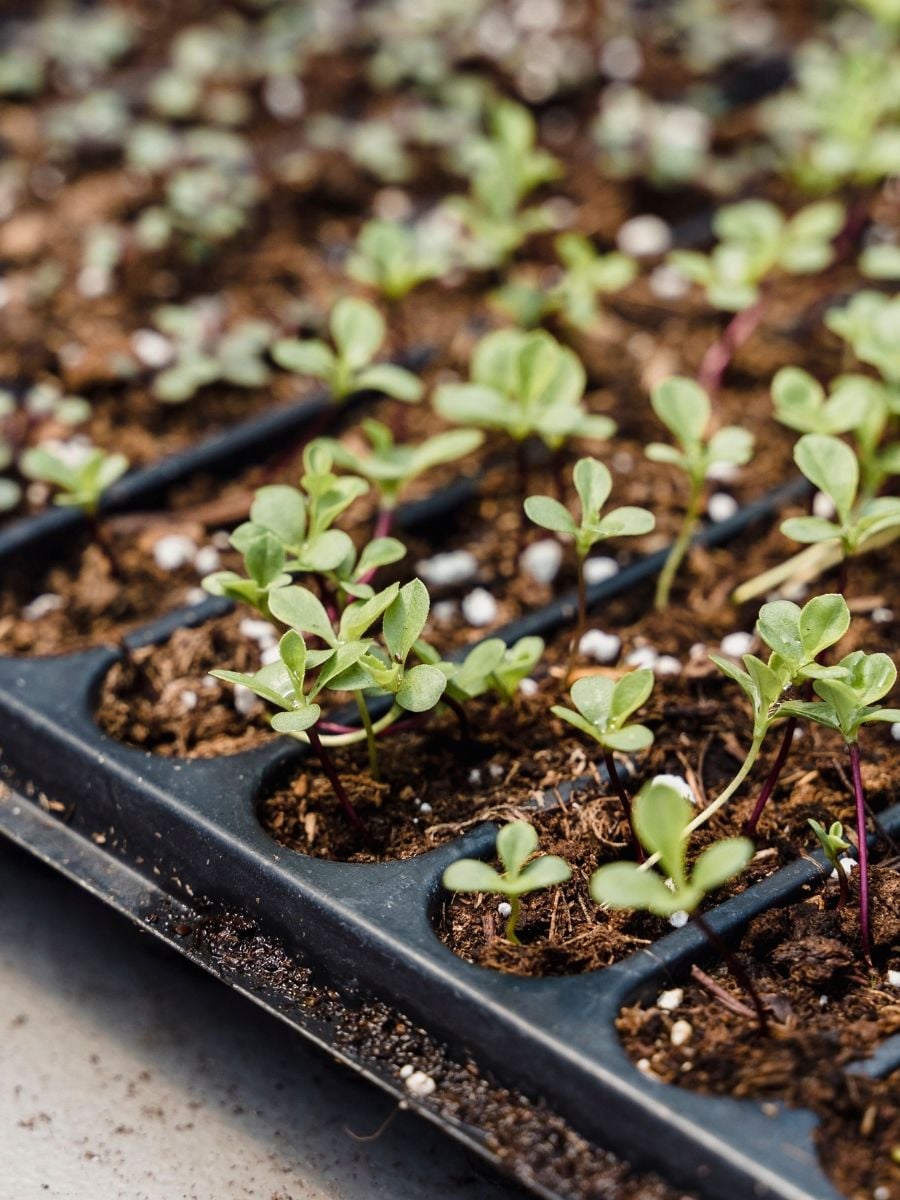
Growers can start by requesting full information on the composition and origin of their substrates, drawing up a dated transition plan, and trialing blends in a few crops. Also, irrigation, fertilization, and pH often need adjustment, and soil health also plays a substantial role.
Worth keeping in mind, however, is that in bridging the gap between substrate frameworks like HORTICERT and major floriculture standards, the industry can create a unified, transparent supply chain that protects natural peatlands and habitats while maintaining high-quality plant production.
Featured and header image: Alfo Medeiros.