Flowers have long played a central role in celebrations, but in recent years, floral design has evolved far beyond traditional arrangements. Today, flowers are increasingly used as storytelling tools, shaping atmosphere, emotion, and visual identity across events, weddings, and special occasions. The rise of themed floral décor reflects a growing desire for experiences that feel immersive, intentional, and memorable.
Rather than serving as background elements, florals are now designed to communicate a narrative, turning spaces into living scenes that engage the senses and invite guests into a story. When thoughtfully executed, floral décor becomes less about individual arrangements and more about the world they create together.
You can find more floral inspiration here: Some of the Best Bedroom Flower Decoration Ideas to Transform Your Space
Why Themed Floral Décor Is Gaining Popularity
Modern celebrations are becoming more experiential by nature. Hosts and planners are looking for ways to create environments that feel transportive and emotionally resonant, rather than purely decorative. Themes help guide design decisions, allowing every element, from florals to lighting and tabletop details, to work together cohesively.
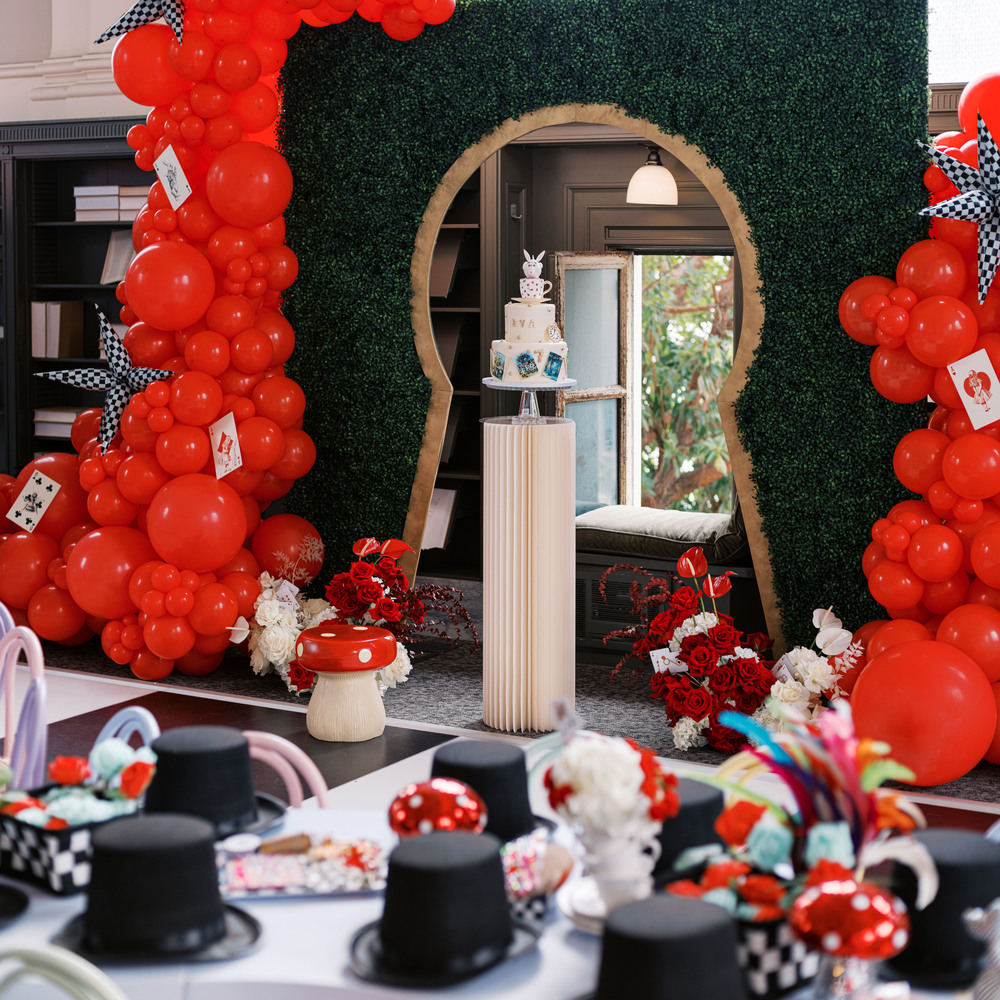
In this context, flowers play a unique role. Through color, scale, texture, and movement, floral décor can instantly set the tone of an event. Guests don’t simply see flowers; they enter a space shaped by them, feeling as though they have stepped into a different world.
Translating a Theme Into Floral Design
Every themed floral concept begins with a narrative. This could be inspired by nature, fashion, a season, or even a story. Once the theme is established, it informs key design choices:
- Color palettes that evoke mood and contrast
- Flower varieties chosen for symbolism, shape, or movement
- Layering and texture to create depth and visual interest
- Scale and composition that balance statement pieces with finer details
The goal is not literal interpretation, but emotional translation, allowing the theme to be felt rather than explained.
Alice in Wonderland–Inspired Floral Styling as a Design Case Study
Storybook themes are a powerful example of how florals can bring imagination to life. Alice in Wonderland, in particular, offers a rich visual language that naturally lends itself to floral storytelling. From the famous rose garden to the playful chaos of the Mad Hatter’s tea party, the story is filled with imagery that can be reinterpreted through flowers.
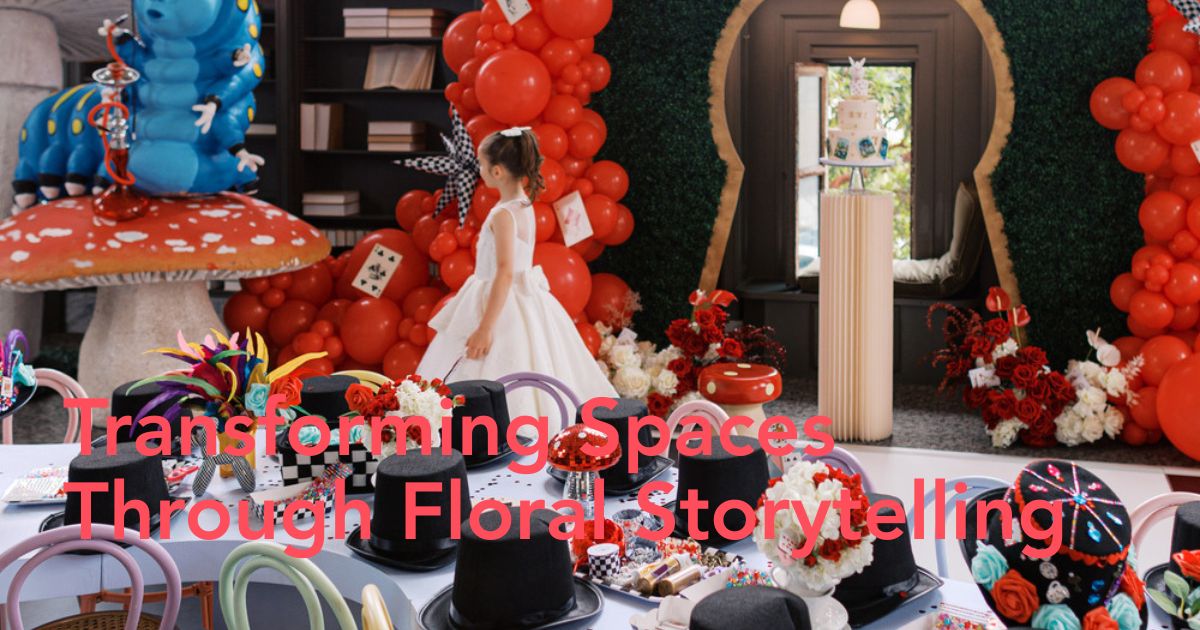
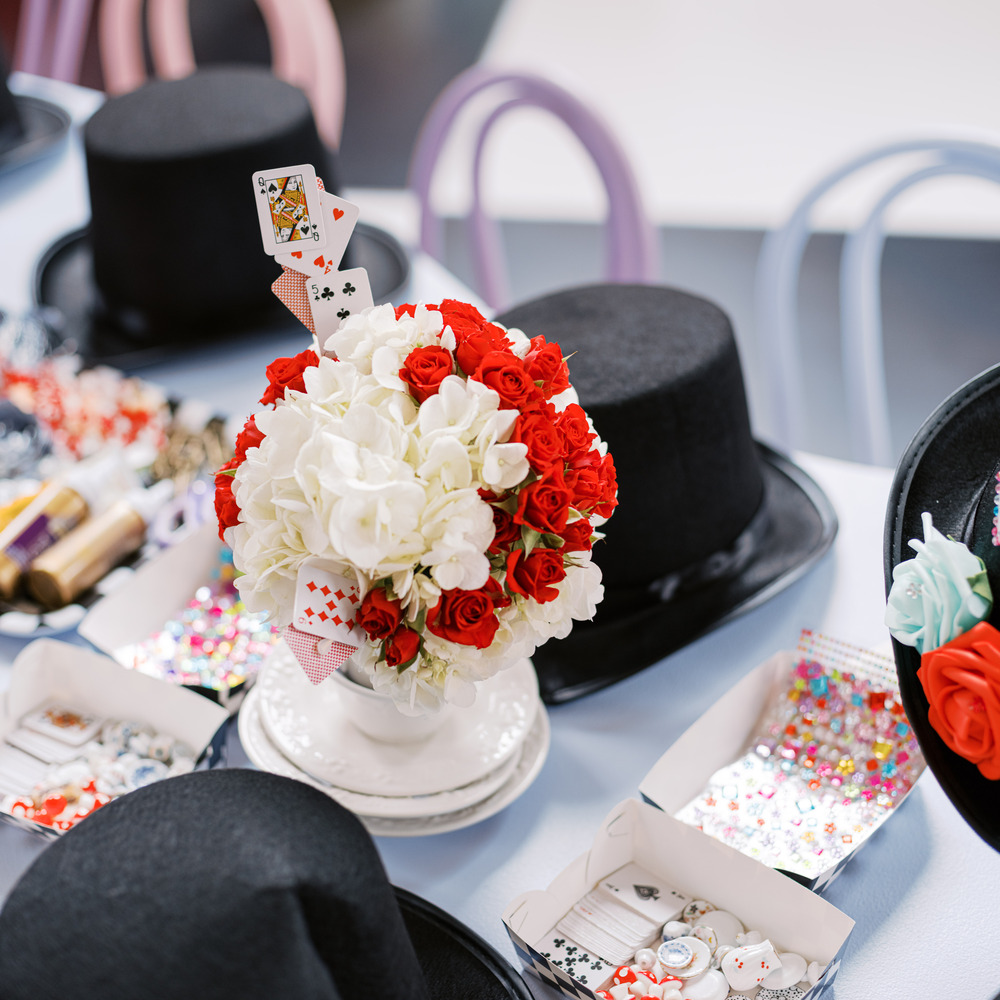
In one Alice in Wonderland–inspired event created by Flower Icon, the design focused on translating the spirit of the story rather than recreating scenes literally. The rose garden, a recurring symbol in the book, became a starting point, influencing both color direction and flower choice. Red and white blooms were used intentionally, echoing the painted roses of the Queen of Hearts while maintaining a refined, modern aesthetic.
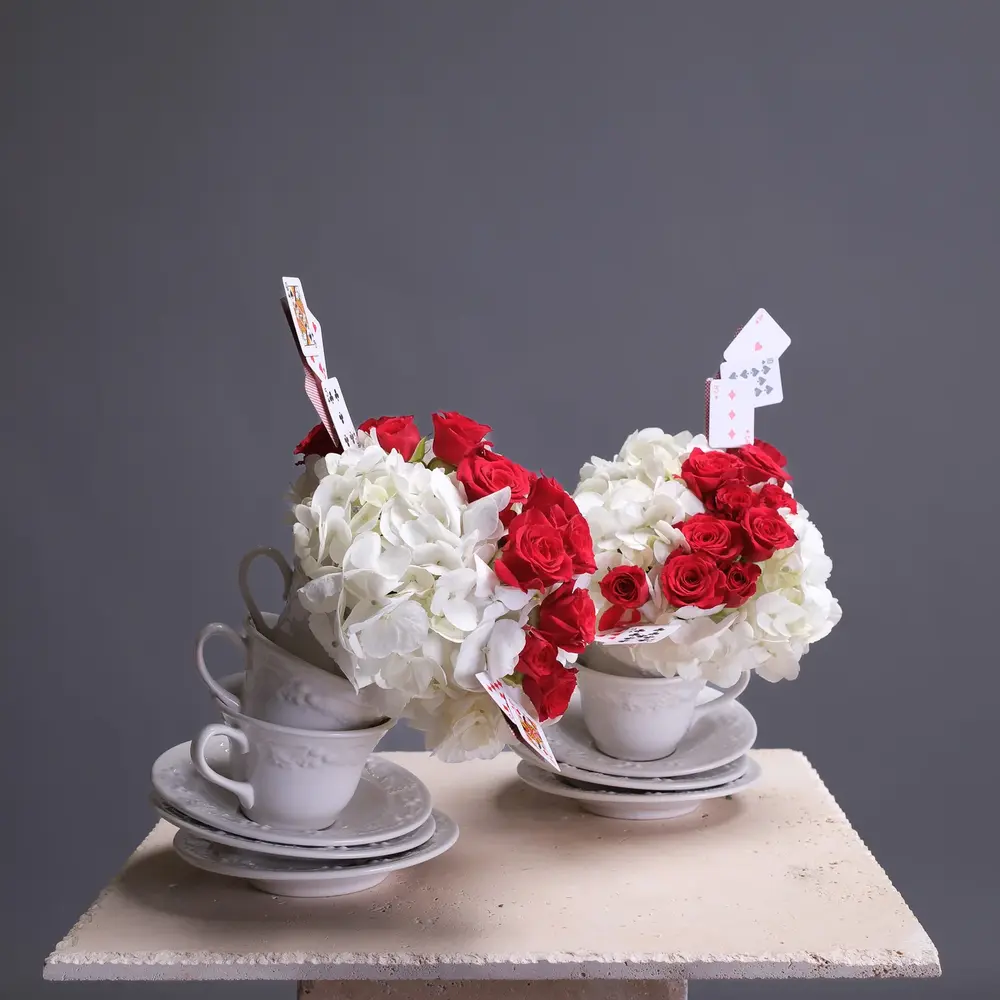
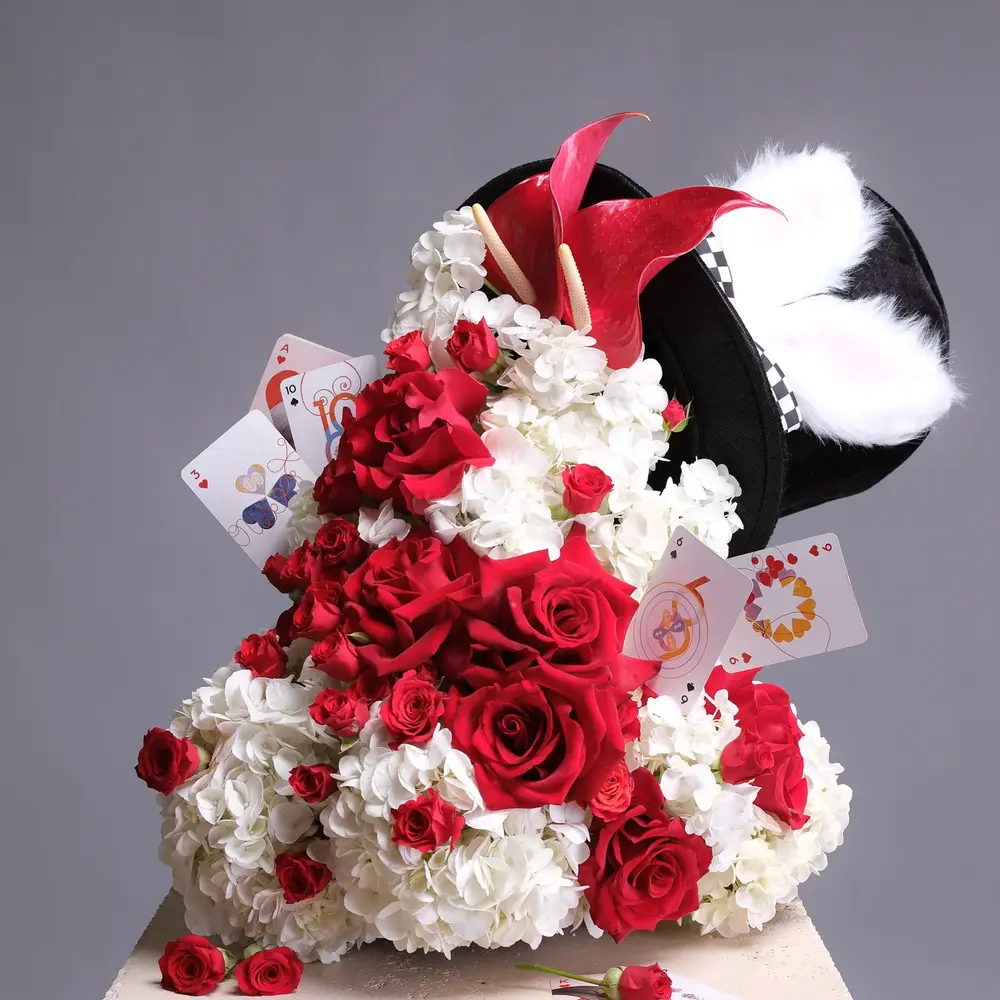
Iconic objects from the story were incorporated directly into the arrangements, becoming part of the floral mechanics rather than decorative afterthoughts. Teacups were stacked vertically and used in place of traditional vases, with flowers appearing to “overpour” from one cup into the next, mimicking the whimsical logic of Wonderland itself. A Mad Hatter–inspired hat was transformed into a floral centerpiece, with blooms flowing outward as though the arrangement had grown organically from the object.
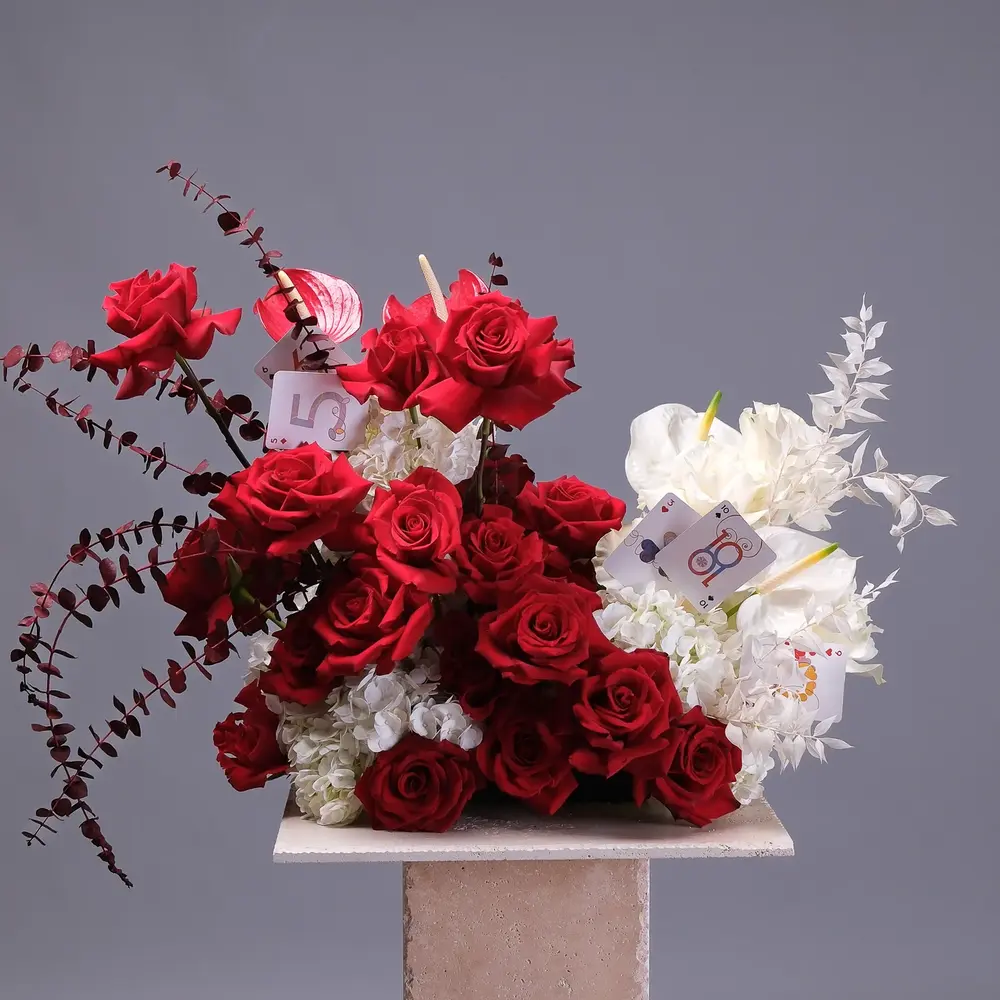
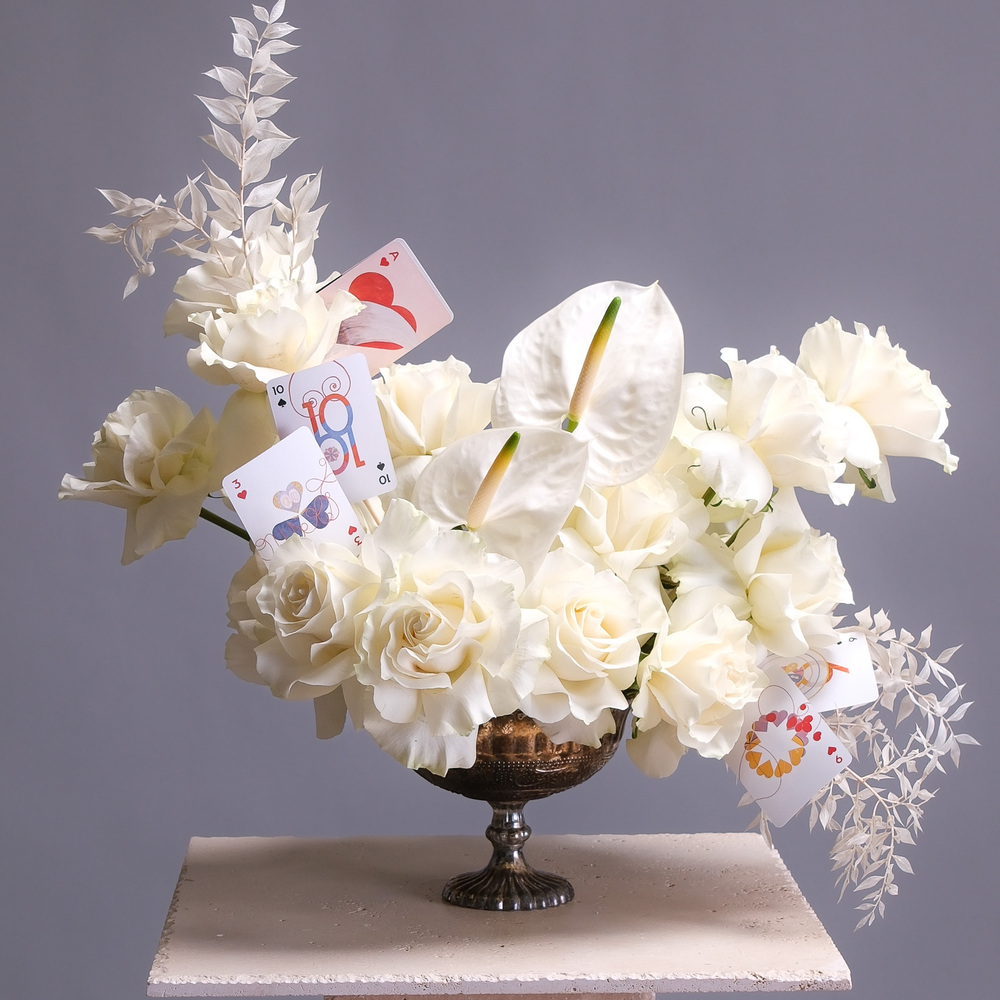
Even smaller details carried narrative weight. Playing cards were integrated into table arrangements, while flower varieties with bold, graphic shapes, such as red and white anthuriums, visually echoed the sharp contrasts and symbolic colors of the cards themselves. These choices allowed the story to unfold subtly across the space, inviting guests to discover it piece by piece.
Rather than relying on overt references, the floral styling captured the mood of Wonderland: playful yet elegant, surreal yet cohesive. The result was an immersive environment that felt imaginative without becoming theatrical.
Using Objects as Part of the Floral Design
One defining aspect of story-driven floral décor is the use of non-traditional vessels and materials. In themed designs, objects are not simply decorative props; they become integral to the arrangement itself.
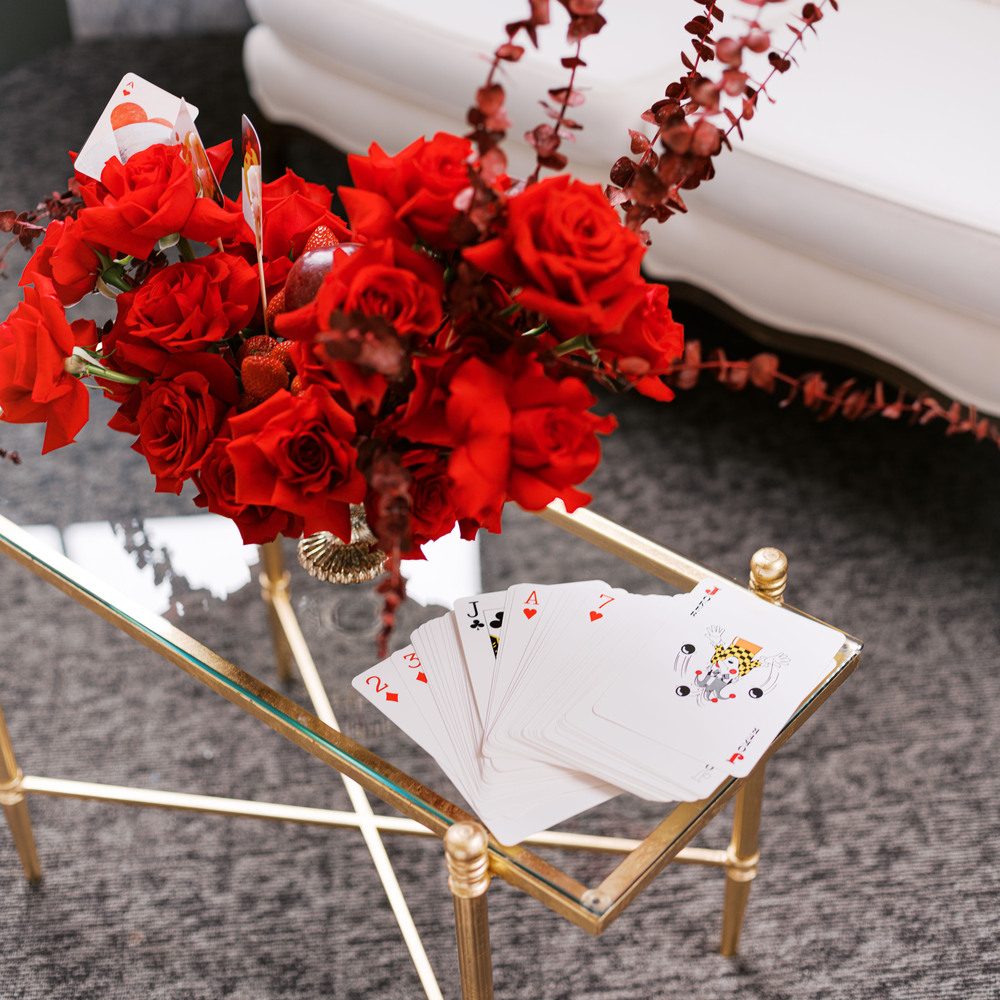
Incorporating items like teacups, hats, books, or cards directly into floral compositions helps blur the line between décor and storytelling. Flowers appear to interact with their surroundings, reinforcing the idea that the entire space belongs to the same narrative world.
This approach also challenges traditional ideas of symmetry and structure, encouraging designers to experiment with unexpected forms and placements that feel organic and alive.
Applying Themed Floral Décor Across Different Events
While whimsical concepts like Alice in Wonderland are popular for private parties and styled celebrations, themed floral décor works across many event types:
- Weddings seeking a romantic or editorial aesthetic
- Engagements and proposals with a creative narrative
- Private celebrations and milestone birthdays
- Brand events and immersive installations
In each case, florals act as the visual anchor, tying together space, mood, and experience.
From Inspiration to Cohesive Execution
Turning a creative concept into reality requires thoughtful planning and consistency. From the choice of blooms to the placement of arrangements, every element must support the central idea.
Design-focused studios often approach this process holistically, ensuring that bouquets, installations, and smaller accents all reinforce the same story. When done well, themed floral décor transforms inspiration into a cohesive environment, allowing guests to experience the theme intuitively as they move through the space.
Execution is what ultimately determines whether a themed design feels immersive or fragmented. Consistency in color, form, and narrative ensures the story remains clear without needing explanation.
Why Floral Storytelling Creates Lasting Impact
Events built around storytelling tend to leave a deeper impression. Guests may forget individual details, but they remember how an environment made them feel. Florals designed with narrative intent help create those emotional connections, turning celebrations into moments that linger long after the final flower is gone.
As floral design continues to evolve, storytelling-driven concepts, from whimsical fantasies to refined editorial interpretations, will remain at the heart of the most memorable experiences. By drawing inspiration from familiar stories and translating them into thoughtful floral design, events gain meaning, cohesion, and a sense of wonder that guests carry with them.